Ants vs. Grass: Are These Tiny Neighbors Ruining Your Yard?
Are Ants Destroying Your Lawn — or Just Living in It?
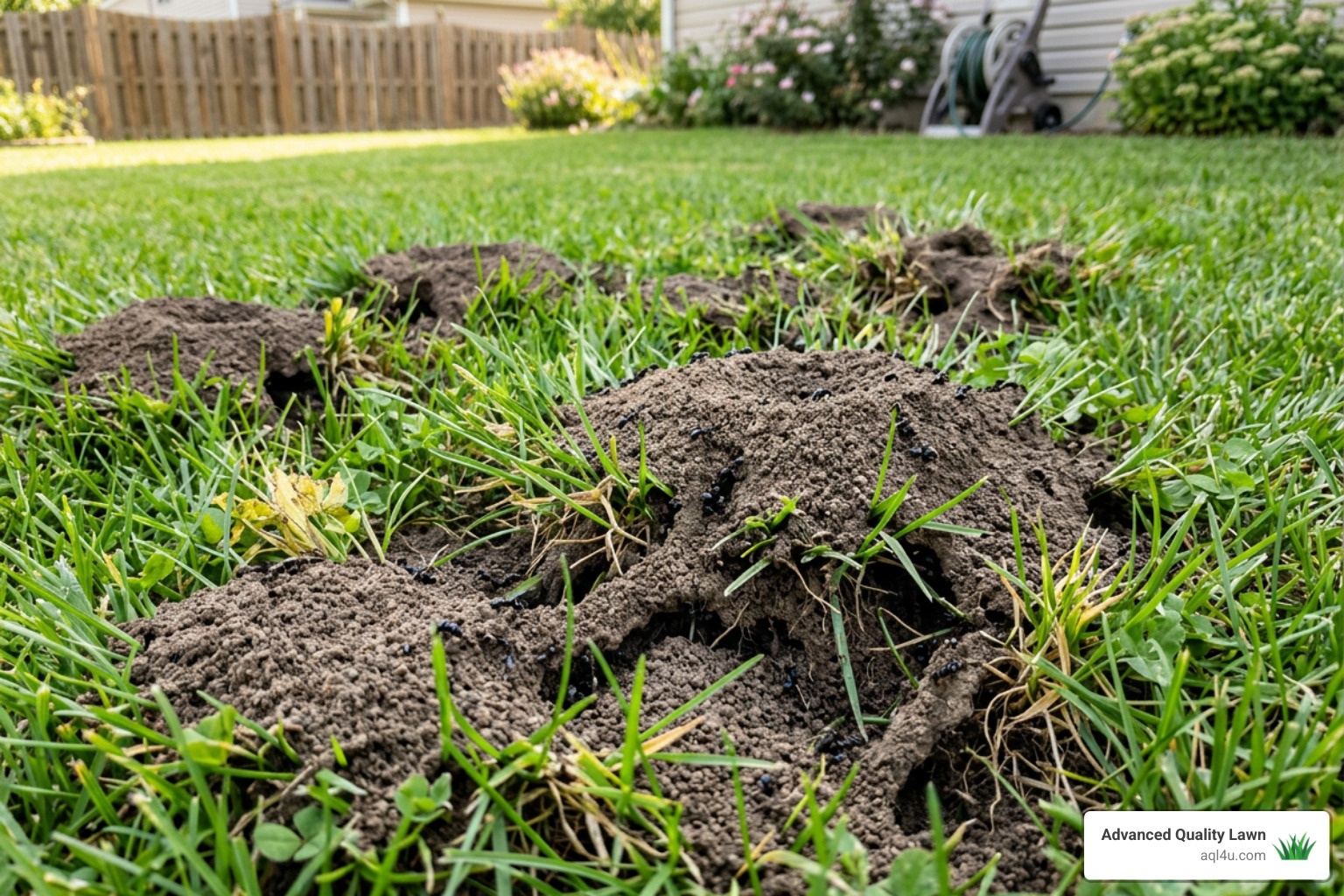
Ants destroying lawn areas is a real problem for many homeowners, but the impact depends heavily on which species has moved in and how large the colony has grown.
Quick answer: Most ants cause only minor lawn damage. But certain species — especially fire ants, field ants, harvester ants, and leafcutter ants — can cause serious, visible harm through large mounds, root disruption, and grass smothering.
The most common ways ants damage lawns:
- Mounds that smother grass, block sunlight, and destroy mower blades
- Tunneling that breaks grass roots and dries out soil
- Bare patches created by harvester ants clearing all vegetation
- Indirect damage from ants farming aphids and mealybugs that feed on your grass
- Formic acid injection into plant roots (field ants) that kills surrounding turf
That said, not every ant colony in your yard is cause for alarm. Many species actually help lawns by aerating soil, preying on harmful insects, and improving nutrient cycling.
The key is knowing which ants you're dealing with — and whether they've crossed the line from harmless neighbor to active threat.
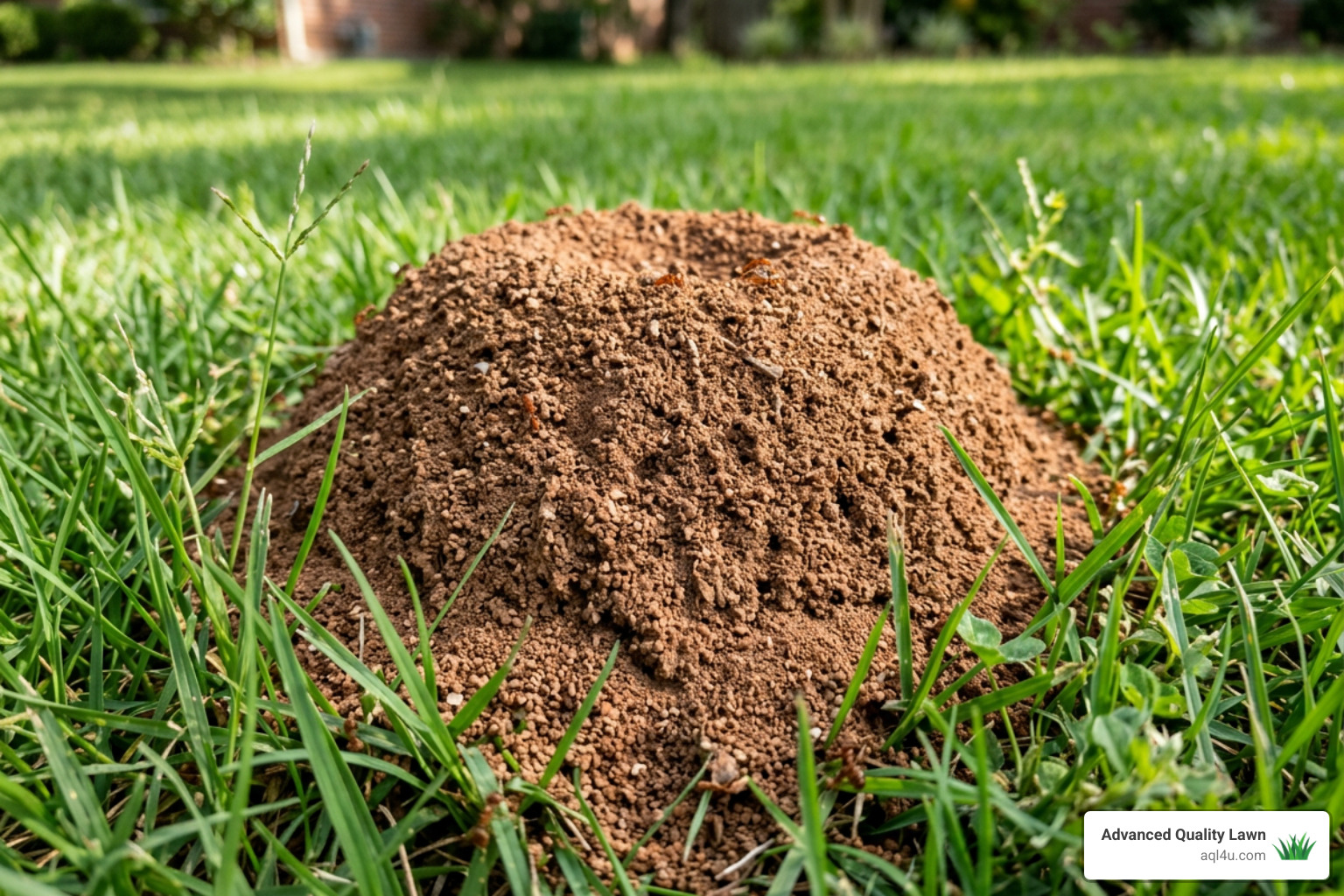
Here in suburban Ohio, the most common troublemakers are field ants and pavement ants, though fire ant territory is steadily expanding. Field ant mounds alone can grow up to four feet wide and two feet tall, making mowing nearly impossible and smothering large sections of turf.
This guide walks you through identifying the culprits, understanding the real damage they cause, and choosing the right treatment — from simple DIY fixes to knowing when to call in a professional.
Identifying the Culprits: Common Species and Their Nests
When we talk about ants destroying lawn health, we aren't talking about a single type of bug. In Northeast Ohio—from the heights of Solon to the yards of Medina—several species make their homes in our soil. Identifying them is the first step because a treatment that works for a pavement ant might not touch a deep-seated field ant colony.
Field Ants (Formica species)
These are perhaps the most notorious mound-builders in our region. Field ants are relatively large (1/5 to 3/8 inches) and can be black, brown, or a mix of red and black. According to scientific research on field ant identification, these colonies can survive for 10 years or more. Their mounds are massive—sometimes reaching four feet in diameter—and they are known to inject formic acid into the roots of nearby plants to keep their "sun deck" clear of shading vegetation.
Pavement Ants (Tetramorium caespitum)
If you see small "volcano" craters of sand or soil between the cracks of your driveway or along the edge of your lawn, you likely have pavement ants. While they are small (1/12 to 1/4 inch), their displaced soil can create unsightly bumps in the turf and lead to localized drying of the grass.
Fire Ants (Solenopsis invicta)
While more common in the South, these aggressive ants have been moving northward. They are reddish-brown and build dome-shaped mounds that lack a visible central opening. Unlike other ants, fire ants don't just ruin the grass; they deliver painful stings to pets and children.
Other Notable Species
- Harvester Ants: These ants are famous for "clearing the land." They will strip all vegetation in a wide circle around their nest, leaving a literal bald spot in your beautiful green lawn.
- Leafcutter Ants: These ants harvest grass and leaves not to eat, but to grow a specific type of fungus underground. Their massive excavation can cause "sunken" areas in the lawn where the ground literally gives way.
- Cornfield Ants: Often found in the open areas of the yard, these ants are known for their association with aphids, which can lead to secondary plant health issues.
Signs of Ants Destroying Lawn
How do you know if you have an infestation or just a few visitors? Look for these tell-tale signs:
- Mound Density: A few small mounds are normal. Dozens of mounds per square yard indicate a population explosion.
- Thinning Grass: If the grass around a mound is yellowing or thinning, the ants are likely disrupting the root zone.
- Foraging Trails: Look for "highways" of ants moving from the lawn toward your home foundation. This is a sign you might need perimeter pest control to keep them from becoming indoor roommates.
- Bare Soil: Large circles of dead or missing grass are a classic sign of harvester ants or heavy field ant activity. For more on identifying yard invaders, check out our info about common bugs.
The Hidden Toll: How Ants Damage Grass and Soil
It’s easy to see a mound and think the problem is purely aesthetic. However, the real reason we worry about ants destroying lawn vitality is what’s happening beneath the surface.
Root Desiccation and Disruption
As ants tunnel, they create air pockets around the roots of your grass. Grass roots need contact with moist soil to absorb water and nutrients. When ants "loosen" the soil too much, the roots dry out—a process called desiccation. This leads to yellowing patches that look like drought stress, even if you’re watering regularly.
Formic Acid: The Chemical Warfare
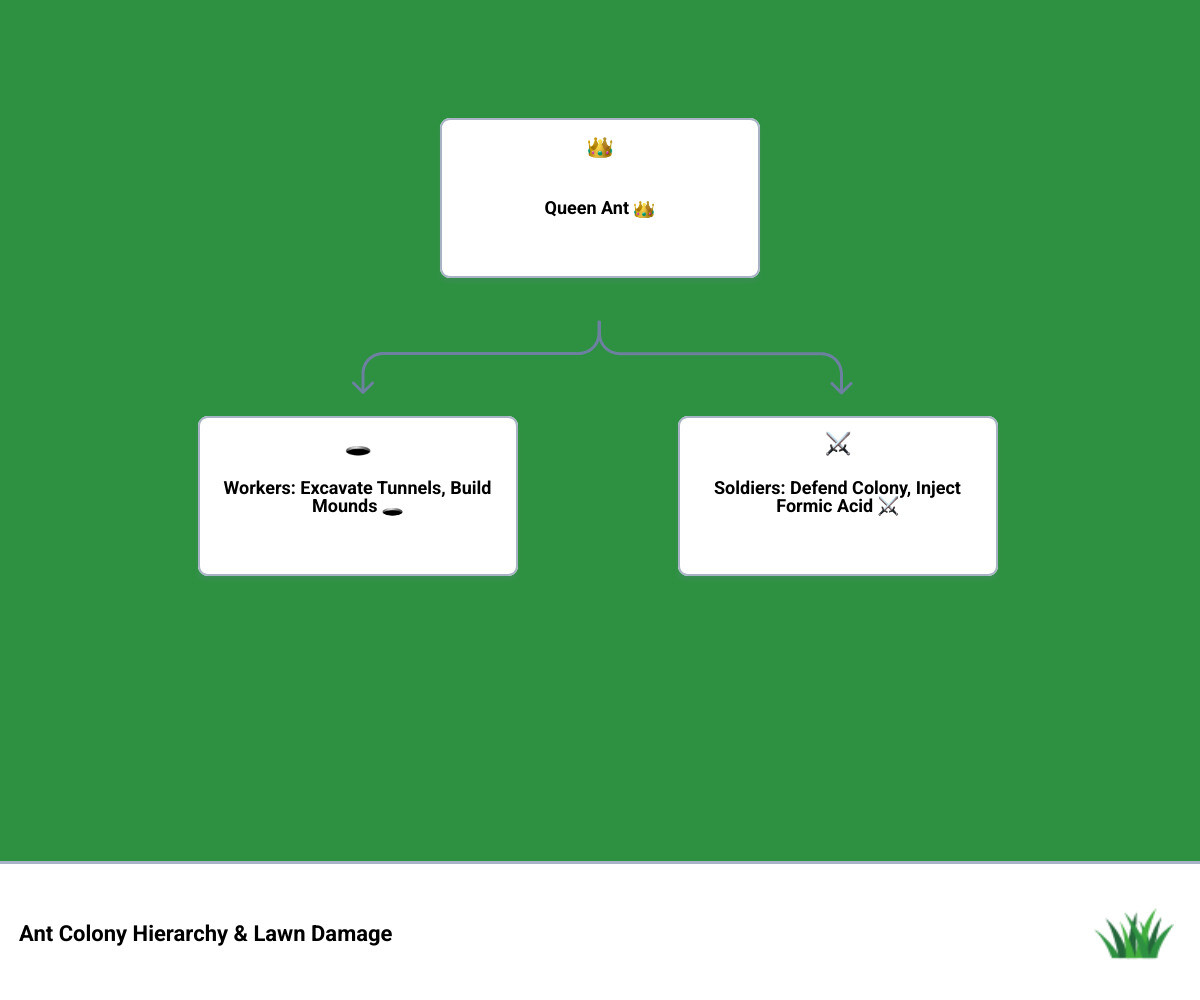
Field ants are particularly destructive because they don't just move soil; they use chemical warfare. They produce formic acid, which they may spray or inject into the roots of grass and small plants. This kills the vegetation, ensuring the ant mound receives full, direct sunlight to keep the brood warm. This results in permanent dead spots that won't grow back until the colony is gone.
Farming Other Pests
Believe it or not, some ants are "farmers." They protect and herd pests like aphids and mealybugs because these insects secrete a sugary substance called honeydew that ants love to eat. By protecting these pests from natural predators like ladybugs, ants indirectly cause more damage to your turf and ornamental shrubs. If you see an increase in ants, you might also be dealing with other invaders; see our info about armyworms and turf damage for more on how different pests can gang up on your yard.
Indirect Damage from Ants Destroying Lawn
- Mower Damage: Large, hardened mounds (especially from field ants) can be as solid as a rock. Hitting one of these with your lawnmower can dull or even break your blades, leading to expensive repairs.
- Safety Hazards: Large mounds create uneven ground, which can lead to tripped ankles for athletes or children playing in the yard.
- Nutrient Depletion: By constantly churning the soil and removing certain types of organic matter, heavy infestations can alter the local soil chemistry, making it harder for grass to compete with weeds.
Comparison: Ant Mounds vs. Termite Swarms
It is common for homeowners in Northeast Ohio to panic when they see winged insects emerging from the ground. Use this table to tell the difference:
| Feature | Ants | Termites |
|---|---|---|
| Waist | Thin, pinched "wasp" waist | Broad, straight waist |
| Antennae | Elbowed (bent) | Straight and bead-like |
| Wings | Front wings longer than back | All four wings equal length |
| Visibility | Often seen in the open/mounds | Usually hidden in wood or mud tubes |
Eradication Methods: How to Stop Ants Destroying Lawn
If you've determined that the "tiny neighbors" are indeed ants destroying lawn quality, it's time to take action. Effective control requires reaching the queen; if she survives, the colony will simply move a few feet away and rebuild.
Broadcast Treatments vs. Spot Treatments
For widespread issues, a broadcast treatment using granules is often the most effective. These are spread across the entire lawn and then watered in. For individual, large mounds (like those from field ants), a "drench" is often better. This involves mixing a liquid insecticide and pouring it directly into the nest.
Active Ingredients to Look For
- Bifenthrin: A very common and effective insecticide used in many high-quality lawn products. It provides a long-lasting barrier.
- Permethrin/Deltamethrin: These are fast-acting contact killers that are excellent for immediate knockdown of visible ants.
- Cyfluthrin: Often used in professional-grade sprays to create a perimeter around the home.
According to scientific research on fire ant control, the timing of these applications is critical. Ants are most active when soil temperatures are between 70°F and 95°F. Applying treatments during a cold snap or a heatwave when ants are deep underground will often result in failure. If you're overwhelmed, you can find more info about professional pest control to help target the specific species in your zip code.
Natural Remedies for Ants Destroying Lawn
If you prefer a greener approach, there are several DIY methods that can reduce ant populations:
- Boiling Water: Pouring 2-3 gallons of boiling water directly into a mound can kill a significant portion of the colony instantly. Be careful, as this will also kill the grass surrounding the hole.
- Dish Soap Solution: A mixture of water and biodegradable dish soap can be poured into nests. The soap breaks down the ants' exoskeletons and suffocates them.
- Diatomaceous Earth (DE): Sprinkle food-grade DE around ant trails and mound entrances. This naturally occurring powder is sharp on a microscopic level and dehydrates the ants. Note: it must stay dry to be effective.
- Boric Acid Baits: Mixing boric acid with sugar and water creates a slow-acting poison. The workers take the "food" back to the queen, eventually killing the whole nest.
Prevention and Cultural Practices for a Pest-Free Yard
The best way to stop ants destroying lawn areas is to make your yard less attractive to them in the first place. Ants love "stressed" lawns—those that are dry, thin, and full of debris.
Lawn Maintenance Basics
- Mowing Height: Keep your grass at a healthy height (usually 3 to 4 inches for Ohio lawns). Taller grass shades the soil, keeping it cooler and less attractive to sun-loving ants like field ants.
- Moisture Management: Many ants prefer dry, well-drained soil. Regular, deep watering encourages healthy turf and discourages ants from nesting in the parched earth.
- Dethatching and Aeration: Removing excess thatch reduces the "housing" available for ants and allows water to reach the roots, making the grass more resilient to any tunneling that does occur.
Removing Attractants
Ants are scavengers. If you have outdoor trash cans, pet food bowls, or fallen fruit from trees, you are inviting them to dinner.
- Seal Trash: Ensure all outdoor bins have tight-fitting lids.
- Clean Up Food: Don't leave pet food out overnight.
- Manage Mulch: Keep mulch layers to 2-3 inches and keep them a few inches away from your home's foundation.
Encouraging Beneficial Predators
A healthy ecosystem is your best defense. Birds, spiders, and even other "good" ants can keep pest populations in check. By avoiding broad-spectrum insecticides that kill everything, you allow these natural defenders to do their jobs. For homeowners in Northeast Ohio, maintaining a thick, healthy lawn is the #1 defense against all pests; see more info about perimeter pest control for integrated strategies.
Frequently Asked Questions about Lawn Ants
Are there any ants that are actually beneficial to my grass?
Yes! Many ants are "nature's tillers." Their tunneling aerates the soil, allowing oxygen and water to reach plant roots. They also act as scavengers, cleaning up dead insects and organic debris, and some species even prey on lawn-damaging pests like flea larvae and fly maggots. Unless you see large mounds or dying grass, a few ants are actually a sign of a healthy ecosystem.
How can I tell the difference between ants and termites?
As mentioned in our table above, the easiest way is to look at the "waist." Ants have a very distinct, pinched waist, while termites have a thick, straight body. Also, if you see them flying, ants have two sets of wings of different lengths, while termite wings are all the same size and usually fall off shortly after they land.
When is the best time of year to treat for ants?
In Northeast Ohio, the best time to treat is late spring (May) or early fall (September). This is when ants are most active near the surface, foraging for food to build up the colony or prepare for winter. Treating in the middle of a hot July often fails because the ants retreat deep into the cooler, moist soil where your treatments can't reach them.
Conclusion
While the idea of ants destroying lawn beauty can be frustrating, most infestations are manageable with the right knowledge and tools. Whether you’re dealing with massive field ant mounds in Hudson or pavement ants in Cleveland, the key is to identify the species and target the nest directly.
At Advanced Quality Lawn, we’ve seen it all across Northeast Ohio. We provide expert lawn care, tree, and shrub services throughout Akron, Cuyahoga County, Summit County, and beyond. Our USP is simple: we offer excellent customer service backed by service calls and full-program guarantees. We cover 99+ zip codes, ensuring that whether you’re in Medina or Willoughby, your lawn stays lush and pest-free.
If those tiny neighbors have turned into destructive squatters, don't wait for the grass to disappear. For more info about professional lawn care maintenance, reach out to us today. We’ll help you reclaim your yard and keep it looking its best all season long!