
Why Dithiopyr is the Secret Weapon for Your Lawn
Why Dithiopyr Post Emergent Timing Can Make or Break Your Lawn
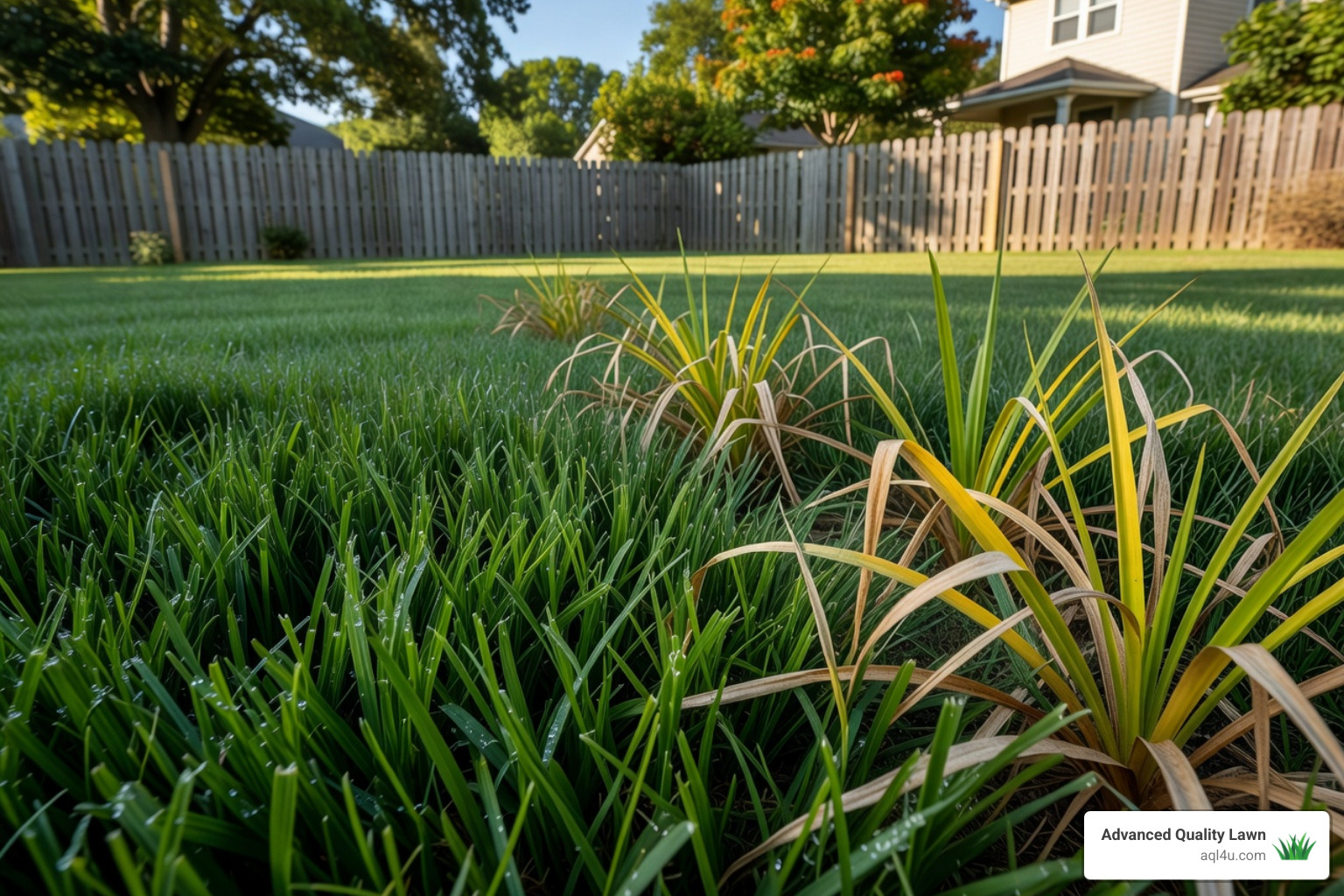
Dithiopyr post emergent control is real — but it only works within a narrow window. Here's the quick answer:
Dithiopyr post-emergent control at a glance:
- What it controls: Crabgrass that has already sprouted, before it starts tillering
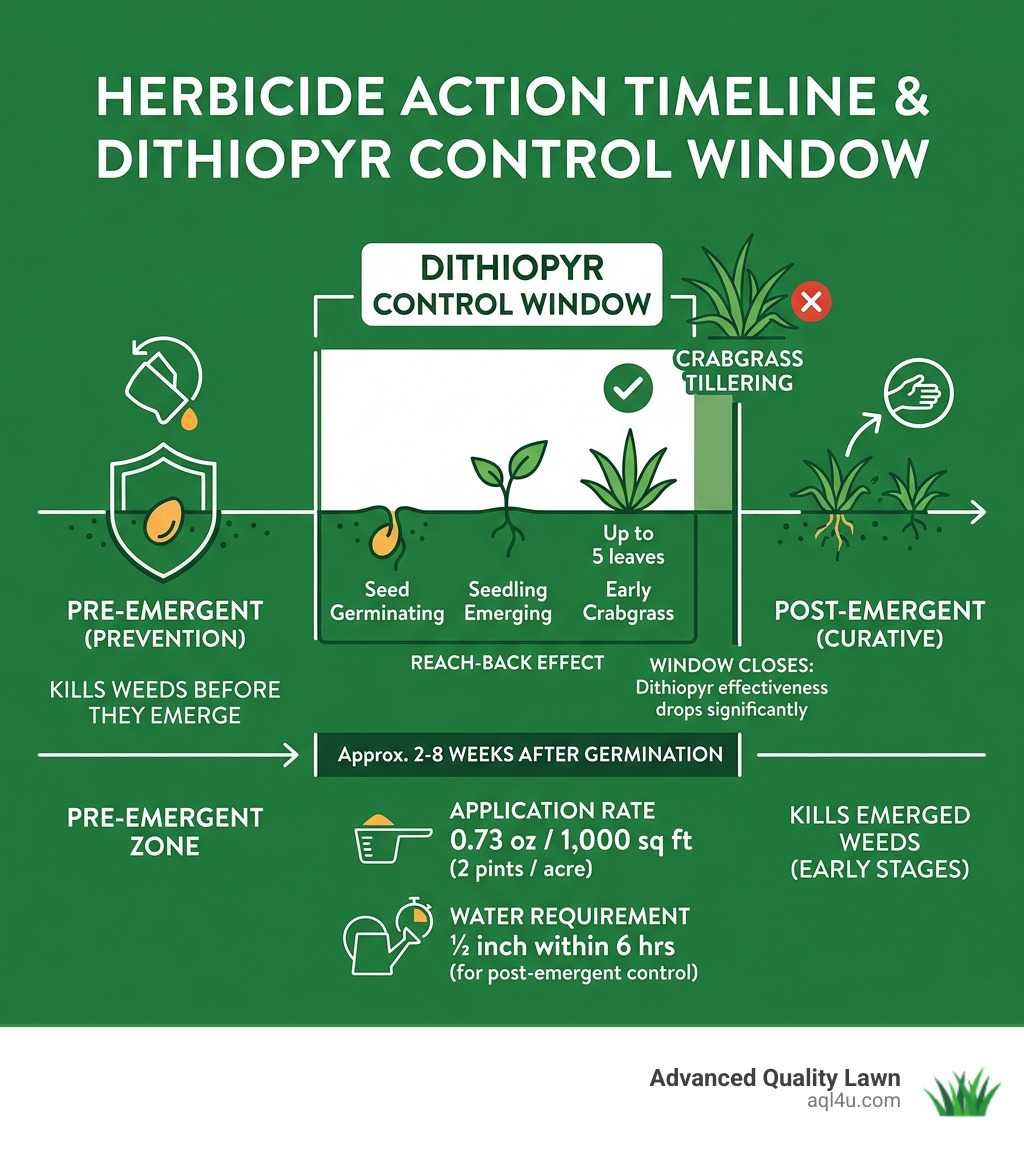
- When it works: After crabgrass emerges but while it still has 5 or fewer leaves
- Window of opportunity: Roughly 2 to 8 weeks after germination, depending on weather
- Application rate: 0.73 oz per 1,000 sq ft (2 pints per acre)
- Key requirement: Follow with at least ½ inch of water unless targeting post-emergent weeds (then wait 6 hours)
- What it won't do: Kill mature crabgrass that has already begun to tiller
If you've ever walked out to your lawn in late spring, spotted crabgrass seedlings pushing through, and wondered if it's too late to do anything — you're not alone. That moment of doubt is exactly where dithiopyr either saves the season or gets written off too early.
Most homeowners think of dithiopyr as a pre-emergent only herbicide. That's mostly true. But it has a valuable — and often overlooked — early post-emergent capability that can rescue a lawn when timing slips.
The catch? That window is short. Once crabgrass starts to tiller, dithiopyr's post-emergent power drops off significantly.
I'm Andrew Day, owner of Advanced Quality Lawn, and after 30+ years serving Northeast Ohio lawns, I've seen how knowing the right moment to apply dithiopyr post emergent can be the difference between a clean, green lawn and a summer full of crabgrass battles.
Understanding Dithiopyr Post Emergent Capabilities
When we talk about dithiopyr, we are discussing a powerhouse in selective herbicides. For those of us living in Northeast Ohio—from Akron and Hudson up to Cleveland and Solon—crabgrass is the "Final Boss" of lawn care. Dithiopyr is unique because it offers a dual-action approach: it creates a pre-emergent barrier to stop seeds from ever seeing the sun, but it also possesses a "reach-back" effect.
This reach-back effect is what makes dithiopyr post emergent applications so famous among turf professionals. While most pre-emergents like prodiamine are strictly "birth control" for weeds, dithiopyr can actually eliminate crabgrass that has already broken through the soil surface.
The Science Behind Dithiopyr Post Emergent Action
At its core, dithiopyr belongs to the pyridine chemical family. Its mode of action is fascinating: it acts as a root growth inhibitor. Specifically, it disrupts microtubule polymerization and stability within the plant's cells. According to scientific research on dithiopyr mode of action, the herbicide causes mitotic arrest. This means it essentially "freezes" cell division in the meristematic tissue (the growth points) of the weed.
When applied as a post-emergent, dithiopyr is absorbed by the foliage and roots. Once inside, it stops the young crabgrass plant from producing the new cells it needs to grow. The plant stops developing, its roots stunt, and it eventually withers away.
However, there is a biological "deadline." This effectiveness is limited to the early growth stages—specifically before the "tillering" stage. In weeds, a "tiller" is a side shoot. Dithiopyr is most effective when the crabgrass has 5 or fewer leaves and has not yet begun to branch out. This provides us with a critical early-season flexibility that other products simply don't offer.
Optimal Timing and Application for Success
In Northeast Ohio, timing is everything. We often joke that you can experience all four seasons in a single Tuesday in Summit or Cuyahoga County. For dithiopyr to work its magic, we have to pay attention to soil temperatures.
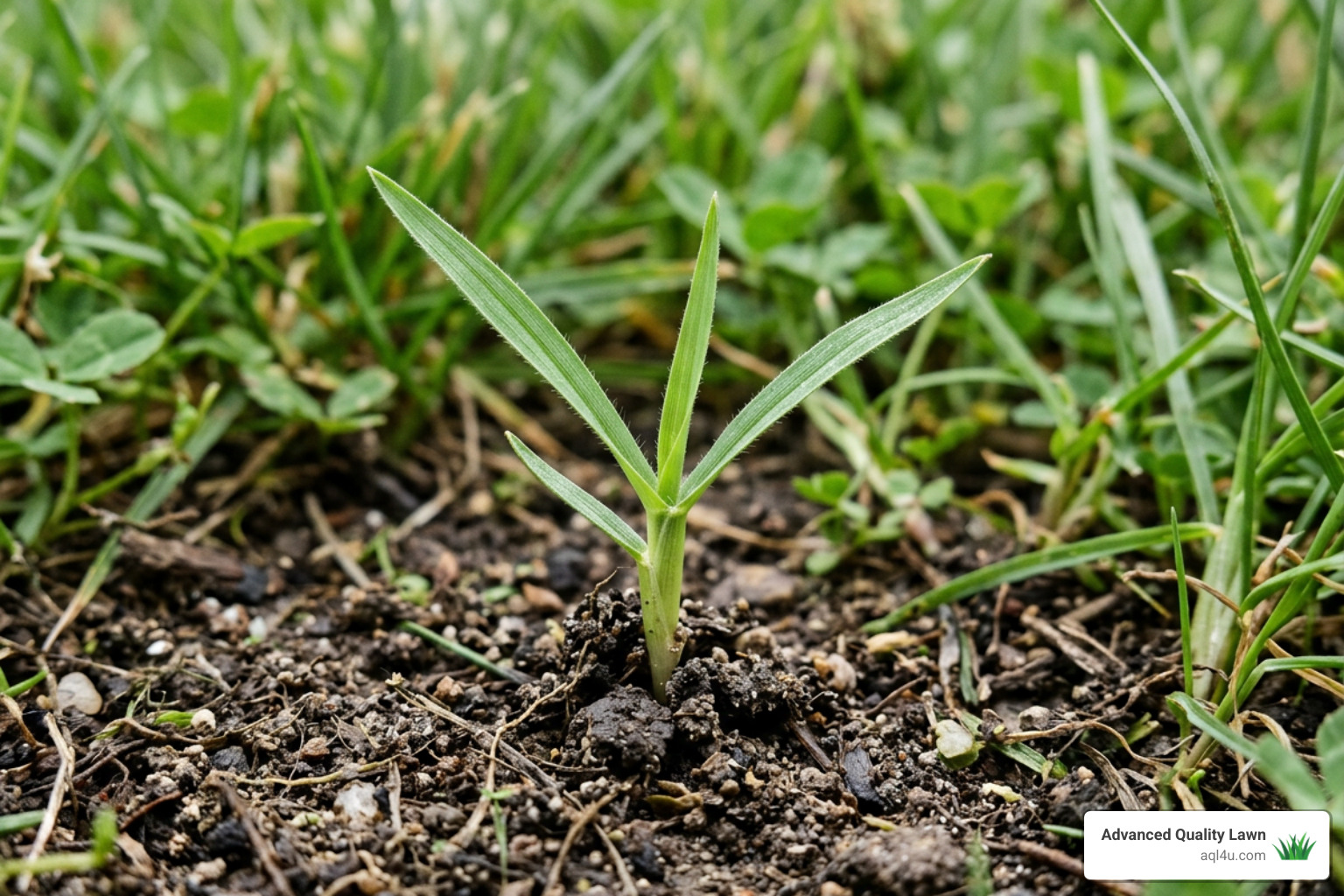
Crabgrass generally begins to germinate when soil temperatures hit a consistent 55°F. However, we always tell our clients in places like Stow and Twinsburg to watch their "hardscapes." Sidewalks, driveways, and patios act as heat sinks. They warm the surrounding soil much faster than the middle of the yard. This "concrete heat effect" means crabgrass often sprouts along the edges of your driveway weeks before it appears elsewhere.
If you see those tiny green spikes along your sidewalk, it’s time for a dithiopyr post emergent treatment. The window for this post-emergent control typically lasts between 2 to 8 weeks after the first weeds emerge, depending on how quickly the spring warms up.
Best Practices for Dithiopyr Post Emergent Application
To get the best results, you can't just "spray and pray." Following the Dithiopyr 2EW Product Label is essential for safety and efficacy.
- The Rate: For effective post-emergent control of crabgrass through the 3 to 5 leaf stage, the recommended rate is 0.73 oz per 1,000 sq ft (which equates to 2 pints per acre).
- Spray Volume: Ensure you are using enough water to get uniform coverage. We generally recommend at least 0.5 to 2 gallons of water carrier per 1,000 sq ft.
- Split Applications: In areas with high weed pressure, like new constructions in Medina or Lorain County, split applications can be a game-changer. Applying a dose in early spring and a follow-up 5–10 weeks later extends the residual barrier while catching late-germinating crabgrass.
- Uniformity: Whether using a liquid spray or a granular spreader, skips in coverage will result in "streaks" of crabgrass later in the summer.
Turf Tolerance and Weed Control Spectrum
One of the reasons we love dithiopyr at Advanced Quality Lawn is its incredible safety profile for established turfgrasses. It is a "selective" herbicide, meaning it knows the difference between your prized lawn and the invading weeds.
In our Northeast Ohio service area, we primarily deal with cool-season grasses. Dithiopyr is exceptionally tolerant on:
| Grass Type | Tolerance Level | Notes |
|---|---|---|
| Kentucky Bluegrass | High | Excellent safety on established lawns |
| Tall Fescue | High | Standard for most Ohio residential yards |
| Fine Fescue | Moderate | Use caution with higher rates |
| Perennial Ryegrass | High | Very common in local seed mixes |
| Zoysiagrass | High | Found in some transitional areas |
| St. Augustine | High | Safe for all varieties (Pro Vista included) |
Weeds Controlled by Dithiopyr Post Emergent Treatments
While crabgrass is the primary target, dithiopyr post emergent applications don't stop there. It provides suppression or control for a variety of annual grasses and some broadleaf weeds.
- Smooth and Large Crabgrass: The primary targets for post-emergent reach-back.
- Barnyardgrass: A common, coarse grass that loves moist soils.
- Goosegrass: Often confused with crabgrass but harder to kill; dithiopyr helps if caught early.
- Yellow Foxtail: Frequently found in Northeast Ohio fields and lawns.
- Kikuyugrass: A creeping grass that can be problematic in specific turf settings.
- Early Broadleaves: While primarily a grass killer, dithiopyr can assist in suppressing dandelions, chickweed, and oxalis if they are in the very early seedling stage.
Maximizing Results: Activation and Tank Mixing
Applying the product is only half the battle. To turn dithiopyr into a true "secret weapon," you have to activate it correctly.
For pre-emergent use, dithiopyr needs to be "watered in" to create that protective barrier in the soil. We recommend at least 0.5 inches of irrigation or rainfall within a few days of application.
However, when using dithiopyr post emergent to kill weeds that are already there, the rules change slightly. You want the herbicide to sit on the weed leaves long enough to be absorbed. We recommend a 6-hour delay between spraying and any irrigation or rainfall. This "dry time" allows the active ingredient to penetrate the leaf tissue of the young crabgrass.
Enhancing Performance with Tank Mixes
If you've missed the early window and your crabgrass has already started tillering (growing those side shoots), dithiopyr alone might struggle. This is where professional tank mixing comes in.
We often mix dithiopyr with other post-emergent herbicides like Acclaim Extra or Quinclorac to extend the control window. This "one-two punch" uses dithiopyr to provide residual protection against future seeds while the partner herbicide takes out the larger, established weeds.
Additionally, using a nonionic surfactant can improve the "stickiness" of the spray, ensuring it stays on the waxy leaves of the crabgrass long enough to do its job. Always refer to the Dithiopyr 40 WSB Safety Data Sheet and label for compatibility before mixing.
Frequently Asked Questions about Dithiopyr
How long should I wait to reseed after application?
This is the most common question we get in places like Cuyahoga Falls and Independence. Because dithiopyr is so good at stopping seeds from growing, it doesn't know the difference between a crabgrass seed and your expensive Kentucky Bluegrass seed.
The standard rule of thumb is a 90-day interval. If you apply dithiopyr in mid-May, you should not attempt to overseed until mid-August at the earliest. If you seed too soon, the dithiopyr residue in the soil will inhibit the new grass's root development, leading to a "patchy" and failed renovation.
Is dithiopyr safe for use around pets and children?
Safety is our top priority at Advanced Quality Lawn. Dithiopyr carries the signal word "Caution," which is the lowest toxicity category for herbicides. For liquid applications, the general rule is a 12-hour Restricted Entry Interval (REI), or simply waiting until the spray has completely dried. Once dry, the product binds to the soil and leaf tissue and is safe for foot traffic. As always, we follow all label requirements and wear the necessary PPE during application to ensure the safety of your family and our technicians.
Are there regional restrictions for using dithiopyr?
While dithiopyr is widely used across Northeast Ohio, it is worth noting that some states have very specific rules. For example, New York has significant restrictions on dithiopyr, and Nassau/Suffolk counties have even stricter limits. Fortunately for our clients in Geauga, Stark, and Wayne counties, we can utilize dithiopyr's full potential within the EPA-approved guidelines for our region.
Conclusion: Let the Professionals Handle the Timing
Maintaining a pristine lawn in Northeast Ohio is a full-time job. Between the unpredictable weather in Cleveland and the stubborn soil in Medina, getting the timing of a dithiopyr post emergent application exactly right can be stressful for many homeowners.
That’s why we’re here. At Advanced Quality Lawn, we don't just "spray weeds"—we manage the health of your entire outdoor environment. Our team knows exactly when the soil temperatures in Brecksville are hitting that 55°F mark and when the crabgrass in Solon is about to hit its fifth leaf.
We offer a full-program guarantee and 99+ zip code coverage across Northeast Ohio. If you're tired of guessing whether it's "too late" to save your lawn, give us a call. We'll deploy the secret weapon of dithiopyr with professional precision, ensuring your lawn stays thick, green, and weed-free all season long.
For more information on how we can transform your yard, check out our professional lawn care services and let us take the guesswork out of your lawn care routine.