Top Picks for the Best Cheap Lawn Fertilizer
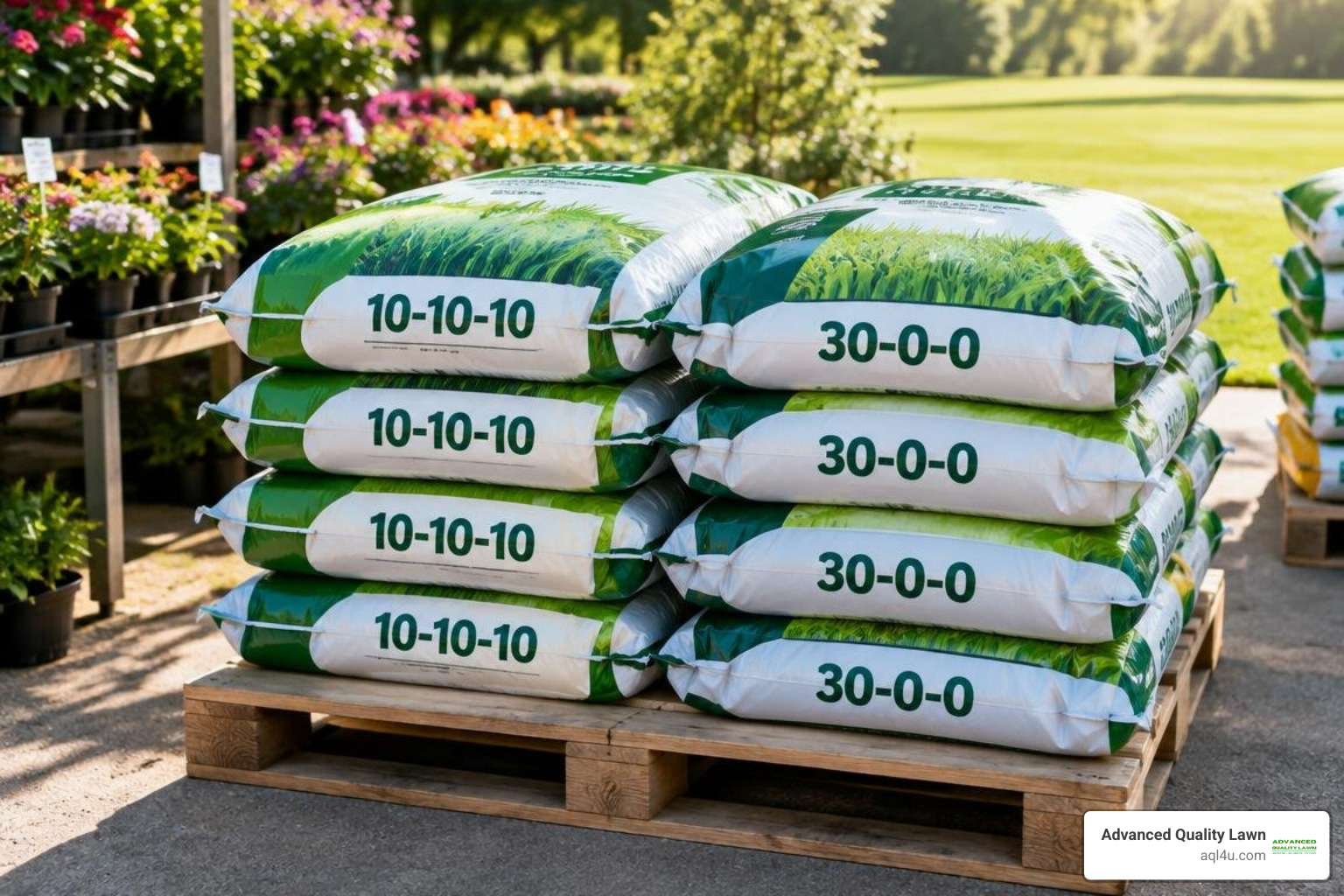
The best cheap lawn fertilizer options include agricultural urea (46-0-0) and ammonium sulfate (21-0-0) for the lowest cost per pound of pure nitrogen, alongside budget retail granular blends like Expert Gardener and balanced 13-13-13 formulas. For gentle organic nutrition, agricultural feed store grain meals and Milorganite offer affordable slow-release feeding without burning turf. Finding an effective budget fertilizer requires looking past sticker prices to evaluate actual nitrogen content, square footage coverage, and release speed.
Criteria for Choosing the Best Cheap Lawn Fertilizer
Every bag of fertilizer lists three numbers on the front, representing the NPK ratio: nitrogen (N), phosphorus (P), and potassium (K). Nitrogen fuels blade growth and deep green color. Phosphorus supports root development, which is helpful when seeding but rarely needed on established lawns. Potassium improves cell wall strength, helping your lawn resist heat, cold, and disease.
When we evaluate budget lawn care products, we balance several factors:
- Pounds of actual nitrogen: The bag weight multiplied by the nitrogen percentage tells you how much usable plant food you are buying.
- Release mechanism: Quick-release nitrogen gives rapid color but requires cautious spreading. Slow-release nitrogen feeds turf steadily over six to eight weeks.
- Cost per square foot: Dividing the purchase price by the total square footage covered gives you the true financial baseline.
- Format pricing: Granular products generally provide more nutrient weight per dollar than liquid sprays, though liquids work quickly for foliar greening. You can explore the differences in granular vs liquid fertilizer pricing to decide which application style fits your equipment and schedule.
Urea and Agricultural Synthetics
If your only goal is paying the lowest price per pound of pure nitrogen, agricultural synthetics lead the pack. Urea (46-0-0) contains 46% nitrogen by weight. A standard 50-pound bag delivers 23 pounds of actual nitrogen and often sells for around $15 to $20 at local agricultural co-ops and farm supply outlets.
Ammonium sulfate (21-0-0) is another budget synthetic containing 21% nitrogen alongside 24% sulfur. It works well in early spring when soils are cool, costing roughly $15 per bag at farm centers.
The trade-off with these pure agricultural products is the high salt index and rapid release rate. Because they contain zero slow-release coatings, applying too much in warm weather will burn your turf. You must apply these materials at very low rates, spread them evenly, and water them into the soil right away.
Budget-Friendly Retail Granular Blends
Homeowners who want convenience without paying top-shelf prices often turn to retail store brands. Bags like Expert Gardener Lawn Food Fertilizer Plus 2% Iron 14 lb. Covers 5,000 sq ft, Slow-Release Nitrogen, Deep Green from Walmart provide slow-release nitrogen and supplemental iron for under $20 per bag, treating up to 5,000 square feet. The added iron gives turf a deep hue without forcing excessive top growth.
Another reliable option is picking up all-purpose starter and maintenance blends during store promotions. General balanced formulas like 13-13-13 can feed newly seeded patches or nutrient-depleted soil at a fraction of the cost of boutique blends.
For yards needing a balanced ratio with extra potassium for summer resilience, premium DIY choices like Flagship 24-0-6 Lawn Fertilizer (3% Iron + Bio-Nite) | Yard Mastery blend quick-release nitrogen with bio-solids and iron to provide sustained color across a 6,000 to 15,000 square foot area.
Cost-Effective Organic Options
Organic fertilizers feed soil microbes while slowly releasing nutrients as soil temperatures rise.
- Milorganite (6-4-0): A 32-pound bag covers 2,500 square feet for around $20 to $23. Its slow-release formula provides steady feeding over eight to ten weeks without burning the grass, making it safe for warm weather.
- Soybean Meal (7-1-2): Available at rural feed stores, a 50-pound bag costs roughly $10 to $15. Because it contains about 7% natural nitrogen, a 7,000 square foot lawn requires two 50-pound bags to provide adequate feeding.
- Alfalfa and Corn Meal: Also sourced from grain elevators, these meals deliver low concentrations of nitrogen along with natural plant growth stimulants, improving soil structure over time.
While organic grain meals cost more per pound of nitrogen than raw urea, they eliminate burn risk and build soil organic matter.
How to Calculate the True Cost per Application
To find out which bag offers the best value, do not rely on the sticker price. Instead, calculate the cost per pound of nitrogen and the cost per 1,000 square feet.
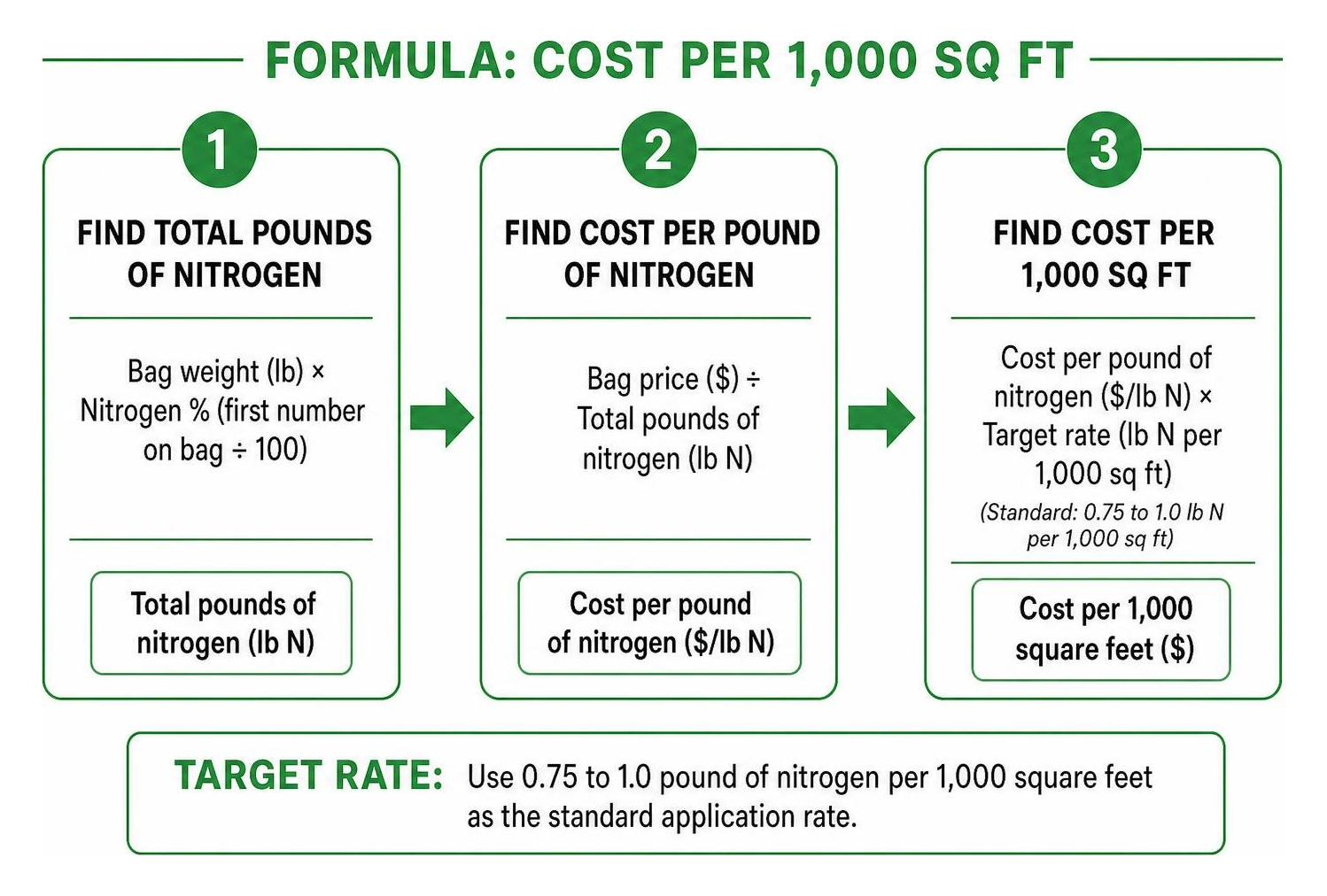
Here is the simple mathematical formula:
- Multiply the bag weight by the nitrogen percentage (the first number on the bag divided by 100) to find total pounds of nitrogen.
- Divide the bag price by the total pounds of nitrogen to find your cost per pound of nitrogen.
- Multiply the cost per pound of nitrogen by your target application rate (standard is 0.75 to 1.0 pound of nitrogen per 1,000 square feet).
| Fertilizer Product | NPK Ratio | Bag Weight | Bag Price | Total Nitrogen in Bag | Cost per Pound of Nitrogen | Cost per 1,000 Sq. Ft. (at 1 lb N) |
|---|---|---|---|---|---|---|
| Agricultural Urea | 46-0-0 | 50 lbs | $20.00 | 23.0 lbs | $0.87 | $0.87 |
| Ammonium Sulfate | 21-0-0 | 50 lbs | $15.00 | 10.5 lbs | $1.43 | $1.43 |
| Retail Store Blend | 30-0-4 | 14 lbs | $18.00 | 4.2 lbs | $4.29 | $4.29 |
| Flagship Granular | 24-0-6 | 18 lbs | $34.00 | 4.3 lbs | $7.91 | $7.91 |
| Milorganite | 6-4-0 | 32 lbs | $22.97 | 1.9 lbs | $12.09 | $12.09 |
| Feed Store Soybean Meal | 7-1-2 | 50 lbs | $12.00 | 3.5 lbs | $3.43 | $3.43 |
A 24-0-11 maintenance fertilizer priced at $36 per 50-pound bag delivers 12 pounds of actual nitrogen, meaning you need roughly 4.1 pounds of product per 1,000 square feet to apply 1 pound of nitrogen, working out to $3.00 per 1,000 square feet.
Insider Strategies to Save Money on Lawn Fertilization
A smart buying strategy can cut your annual lawn care expenses in half without lowering the quality of your turf.

- Buy Larger Bag Sizes: Purchasing 15,000 square foot bags is almost always cheaper per square foot than buying multiple 5,000 square foot bags. A large 15,000 square foot bag often costs around $30, while individual 5,000 square foot bags sell for $15 to $18 each.
- Shop Agricultural Co-Ops and Feed Mills: Traditional farm centers stock agricultural-grade fertilizers, pure grain meals, and soil amendments at bulk prices far below retail lawn centers.
- Target End-of-Season Clearance: As summer winds down in September, big-box retailers discount leftover pallets of fertilizer to clear floor space for winter merchandise. You can often find premium bags marked down to a few dollars per bag. As long as you store them in a cool, dry place off concrete floors, granular fertilizers will remain usable for years.
- Separate Pre-Emergents from Fertilizers: All-in-one weed-and-feed bags are convenient, but they force you to pay for expensive herbicide blends every time you fertilize. Buying a dedicated, concentrated pre-emergent like Prodiamine and applying a basic, low-cost nitrogen source separately provides better weed control at a fraction of the seasonal cost.
Free and DIY Fertilizer Alternatives
You can also use natural, free inputs around your property to lower your chemical fertilizer needs.
- Mulch Your Grass Clippings: Leaving grass clippings on your lawn every time you mow returns organic matter and up to 25% of your lawn's seasonal nitrogen needs for free.
- Topdress with Finished Compost: Spreading a thin quarter-inch layer of screened compost across your turf introduces beneficial microorganisms and improves water retention.
- Used Coffee Grounds: Coffee grounds contain roughly 2% nitrogen along with trace minerals. While collecting enough grounds from local coffee shops takes effort and works best for small patches rather than whole yards, it acts as a mild, safe soil conditioner.
Proper Application and Environmental Safety
Using affordable fertilizers effectively means putting the nutrients where your grass can use them, rather than losing them to evaporation or stormwater runoff.
Always test your soil every two to three years. A simple test costs between $15 and $30 and reveals whether your lawn actually needs phosphorus or potassium. Applying phosphorus to a lawn that already has sufficient soil levels wastes money and contributes to algae blooms in local waterways.
Applying the Best Cheap Lawn Fertilizer for Maximum Results
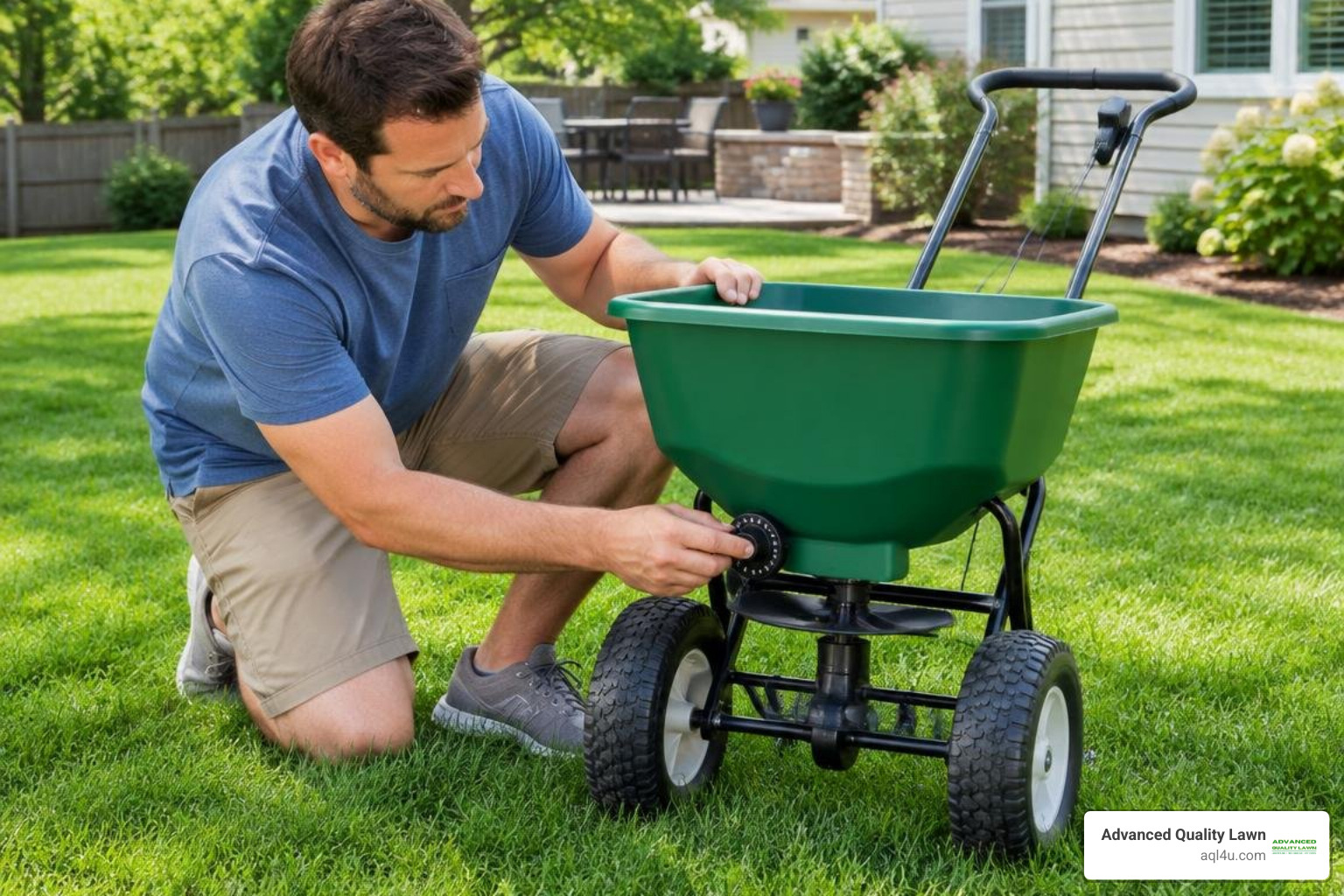
- Calibrate Your Spreader: Always set your broadcast spreader to deliver half the target rate, then make two perpendicular passes across your lawn (north-south, then east-west). This method prevents striping and avoids accidental over-application.
- Water Correctly: Synthetic granular fertilizers need roughly a quarter-inch of water within 24 to 48 hours of application to dissolve the granules and move nutrients into the root zone.
- Time for the Season: In Northeast Ohio, cool-season turf grasses like Kentucky bluegrass, fine fescue, and perennial ryegrass do best with an application in late spring (May to early June) and a primary feeding in early to late fall (September to October). Avoid heavy nitrogen applications during the heat of July to prevent stress and disease outbreaks.
- Sweep Hard Surfaces: Always sweep stray fertilizer granules off driveways, sidewalks, and patios back onto the grass to keep chemicals out of local storm sewers.
Frequently Asked Questions About Budget Lawn Care
Is cheap fertilizer as good as expensive brands?
Yes, grass roots absorb nitrogen in the form of nitrate and ammonium ions regardless of whether the source was a bargain agricultural bag or an expensive designer blend. The main difference lies in the release rate and added micronutrients. Budget synthetics provide fast greening but require careful spreading, while expensive products often include polymer coatings for longer feeding windows and extra iron for color.
What is the absolute cheapest source of lawn nitrogen?
Agricultural-grade urea (46-0-0) is the most economical source of pure nitrogen available, typically costing less than $1.00 per pound of actual nutrient. However, because it quickly converts to ammonia gas if left on dry turf, it must be applied at low rates and watered in immediately. Buying in bulk from local agricultural co-ops or farm supply outlets further reduces the cost per application across a full growing season.
Will cheap fertilizer burn my grass?
Cheap fertilizers with a high salt index can burn grass blades if applied too heavily, applied to wet foliage, or left without water during hot weather. You can prevent fertilizer burn by sticking to light application rates (0.5 to 0.75 pounds of nitrogen per 1,000 square feet), spreading granules evenly, and irrigating right after application. Always calibrate your spreader to the product label before applying any synthetic nitrogen source.
Conclusion
Caring for a thick, resilient lawn does not require spending hundreds of dollars on brand-name products every season. By understanding NPK ratios, calculating the true cost per pound of nitrogen, and shopping smart at local feed stores or clearance sales, you can maintain healthy turf on a realistic budget.
If you ever need expert guidance, customized soil treatments, or a hassle-free seasonal program, our local team is here to help. You can rely on our dedicated team for professional lawn care maintenance across our Northeast Ohio service areas.