
The Best Mature Crabgrass Killer for a Fall Lawn Rescue
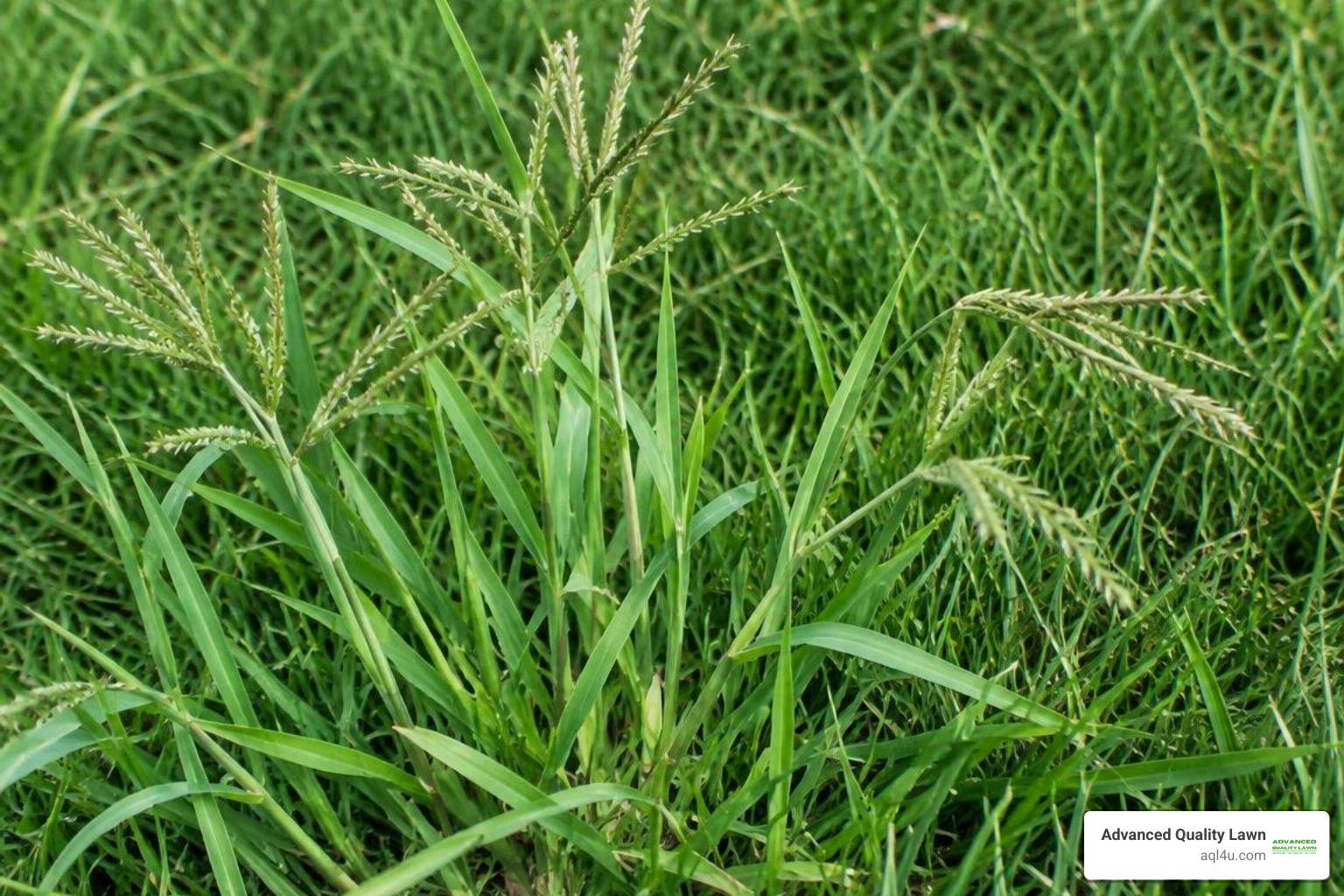
For established crabgrass, the best mature crabgrass killer is usually a selective post-emergent herbicide with quinclorac, topramezone, or fenoxaprop-p-ethyl, matched to your lawn grass. In Ohio's cool-season fescue, bluegrass, and ryegrass lawns, quinclorac based products are often a strong choice because they target crabgrass while also controlling many broadleaf weeds.
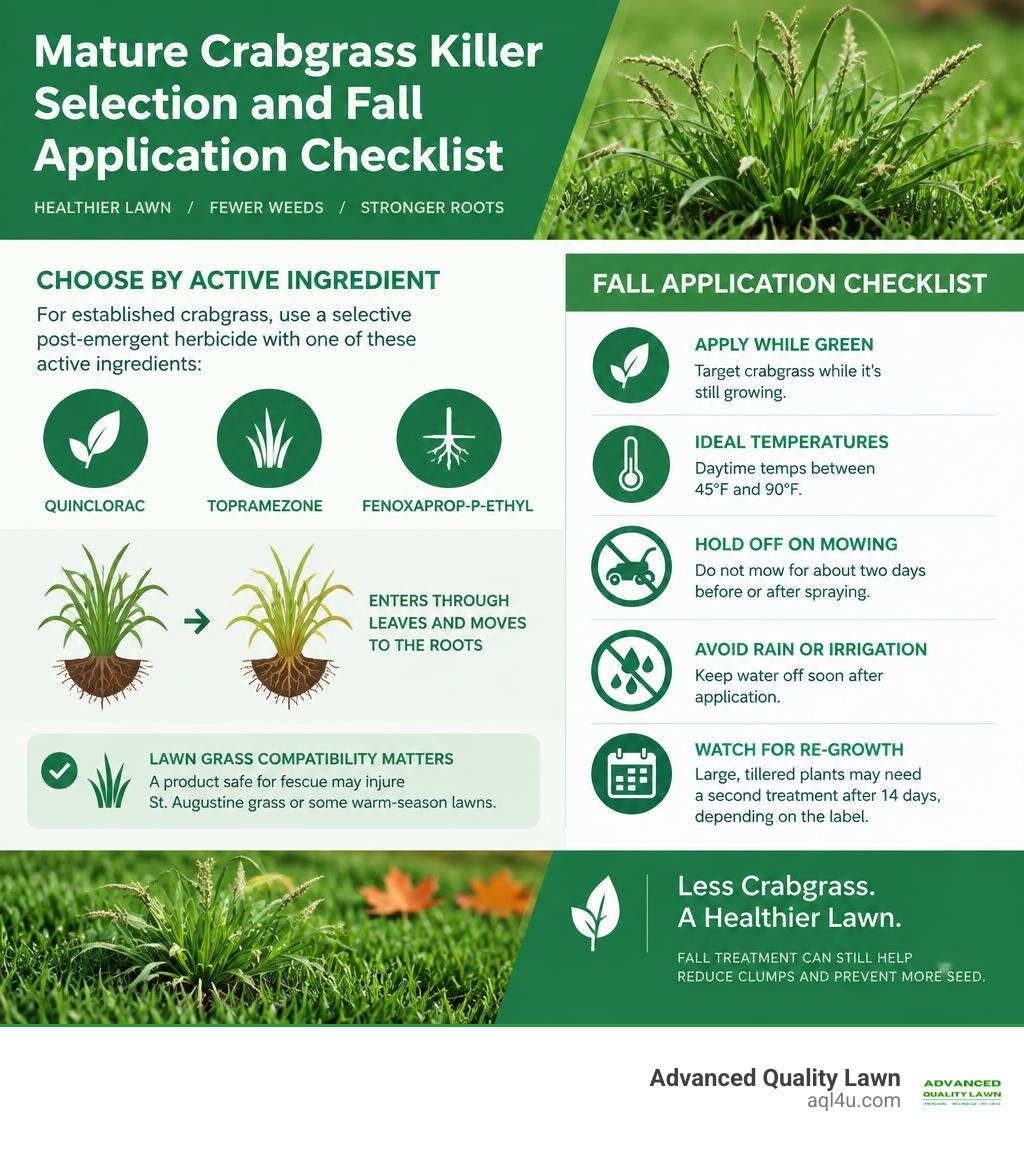
Apply while crabgrass is still green and growing, ideally when daytime temperatures are between 45 F and 90 F. Do not mow for about two days before or after spraying, and avoid rain or irrigation soon after application. Large, tillered plants may need a second treatment after 14 days, depending on the label.
Fall treatment can still reduce ugly clumps and help prevent more seed from reaching the soil. But check turf compatibility first. A product that is safe on fescue may injure St. Augustine grass or certain warm-season lawns.
I am Andrew Day of Advanced Quality Lawn. Our team has more than 30 years of lawn care experience in Northeast Ohio, including helping homeowners choose the best mature crabgrass killer and apply it without sacrificing healthy turf.
Choosing the Best Mature Crabgrass Killer by Active Ingredient
When dealing with late season crabgrass, pre-emergent treatments will not help. You need a selective post-emergent herbicide that enters the weed through foliar uptake and moves systemically to destroy the root system.
Mature crabgrass develops thick stems called tillers. Once a plant reaches multiple tillers, it develops resistance to weak contact herbicides. The secret to knocking out large, sprawling plants lies in choosing the correct active ingredient for your turfgrass variety. For a broader look at how these products fit into lawn care, see this overview of herbicide use in turf management.
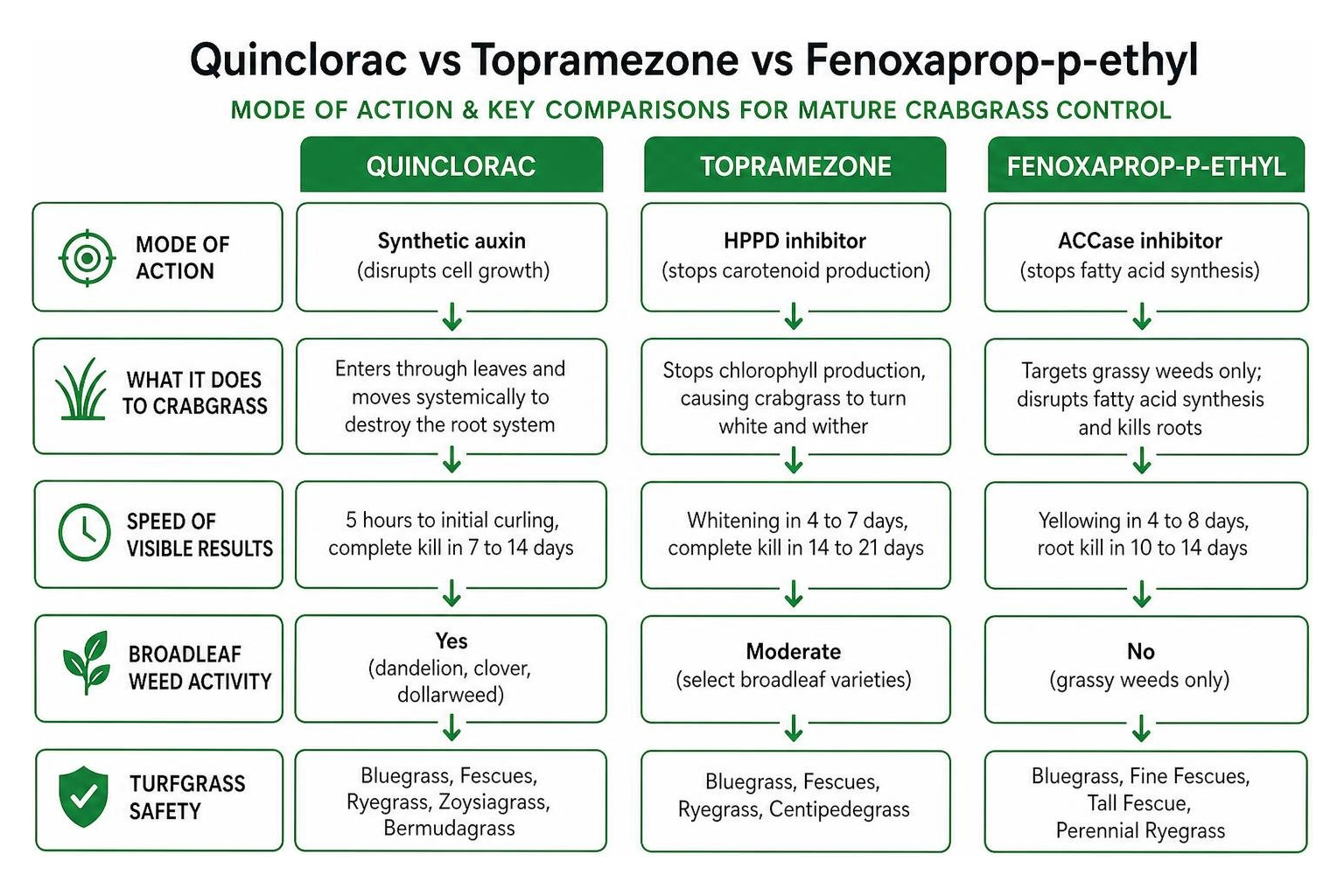
| Active Ingredient | Primary Mode of Action | Typical Speed of Visible Results | Broadleaf Weed Activity | Key Turf Grass Safety |
|---|---|---|---|---|
| Quinclorac | Synthetic auxin (disrupts cell growth) | 5 hours to initial curling, complete kill in 7 to 14 days | Yes (dandelion, clover, dollarweed) | Bluegrass, Fescues, Ryegrass, Zoysiagrass, Bermudagrass |
| Topramezone | HPPD inhibitor (stops carotenoid production) | Whitening in 4 to 7 days, complete kill in 14 to 21 days | Moderate (select broadleaf varieties) | Bluegrass, Fescues, Ryegrass, Centipedegrass |
| Fenoxaprop-p-ethyl | ACCase inhibitor (stops fatty acid synthesis) | Yellowing in 4 to 8 days, root kill in 10 to 14 days | No (grassy weeds only) | Bluegrass, Fine Fescues, Tall Fescue, Perennial Ryegrass |
Evaluating Quinclorac and Topramezone in the Best Mature Crabgrass Killer Options
Quinclorac has long been an industry standard for post-emergent grassy weed control. Many multi-ingredient blends combine quinclorac with 2,4-D, dicamba, and sulfentrazone. A great example is Spectracide Weed Stop For Lawns Plus Crabgrass Killer. This combination delivers a rapid contact response that produces visible wilting within 5 hours while quinclorac works on the root system. It also controls over 470 types of broadleaf weeds. Homeowners who want comprehensive weed control often choose a best herbicide for crabgrass containing this active ingredient.
Topramezone offers another powerful pathway to eliminate tough weeds. Found in formulations like Roundup for Lawns Crabgrass Destroyer2 at a 0.0092% concentration, this chemical stops the weed from producing chlorophyll. Within 4 to 7 days of spraying, mature crabgrass turns stark white before withering away. It also offers unique flexibility for fall lawn renovations because it can be used right around your seeding schedule.
Fenoxaprop-p-ethyl for Tough Grassy Weed Control
Fenoxaprop-p-ethyl targets grassy weeds without disturbing desirable cool-season grasses. It functions as an ACCase inhibitor, shutting down fatty acid synthesis in grass weed cells.
Products like Bayer Advanced Crabgrass Killer rely on a 0.41% fenoxaprop-p-ethyl formula. This chemical absorbs quickly through the leaves and becomes rainfast within one hour. Because it targets only grass species, it leaves desirable cool-season turf unharmed while systematically killing crabgrass down to the roots. Many homeowners prefer this chemistry in a convenient best lawn spray for crabgrass to clean up late summer infestations before winter sets in.
Turfgrass Compatibility and Fall Lawn Safety
Even the most potent herbicide is useless if it ruins your good grass. Matching the product to your turf species is essential to avoid severe turf injury, especially when summer stress has weakened the lawn.

Maintaining proper crabgrass control for lawns requires paying close attention to lawn health, grass species, and weather conditions.
Cool-Season Turf Tolerance: Fescue, Bluegrass, and Ryegrass
Homeowners across Northeast Ohio grow cool-season grasses such as Kentucky bluegrass, tall fescue, and perennial ryegrass. These grasses tolerate quinclorac, topramezone, and fenoxaprop-p-ethyl exceptionally well under normal weather conditions.
Applying a best crabgrass killer that wont kill grass keeps your lawn lush while taking down weeds. However, never spray lawns suffering from severe drought stress. Wait until the soil has moderate moisture before applying chemicals, and avoid applications when daytime temperatures exceed 90 F.
Warm-Season Grass Precautions: Bermuda, Zoysia, and St Augustine
Warm-season lawns have different chemical sensitivities:
- Bermudagrass: Tolerates quinclorac well, but spraying when temperatures exceed 90 F can cause temporary yellowing. Fenoxaprop-p-ethyl must never be sprayed on Bermudagrass.
- Zoysiagrass: Highly compatible with quinclorac, but sensitive to fenoxaprop-p-ethyl.
- St. Augustinegrass: Sensitive to most mature crabgrass killers, including quinclorac and fenoxaprop-p-ethyl. Spraying these products on St. Augustine turf can cause severe grass death.
Always read the product label carefully to select the best crabgrass killer for lawns that matches your specific grass variety.
Application Guidelines: How and When to Spray Late-Season Crabgrass
Late season applications require precision. Large, established crabgrass plants have thicker cuticles on their leaves, making herbicide absorption slower than in early spring.

To discover the best way to get rid of crabgrass, follow these core practices:
- Spray when daytime temperatures remain steadily between 45 F and 90 F.
- Choose a calm day with wind speeds below 10 mph to prevent drift onto ornamental plants and garden beds.
- Use a coarse spray droplet setting rather than a fine mist to improve foliage coverage.
- Ensure target weeds are actively growing so they absorb and transport the chemical downward.
Top Lawn Delivery Formats for the Best Mature Crabgrass Killer
Different property layouts call for different application tools. Reviewing our crabgrass removal guide 2026 can help you decide between these formats:
- Ready-To-Use (RTU) Sprayers: Perfect for light infestations and isolated weed patches. RTU bottles, such as 64 fl oz trigger jugs or 1.33 gallon battery powered AccuShot sprayers, require no mixing and treat 1,000 square feet or up to 1,000 individual weeds.
- Liquid Concentrates: The most economical choice for widespread weed problems. A 32 fl oz bottle of concentrate mixed in a pump sprayer treats up to 5,000 square feet. This format lets you adjust dilution rates according to label directions.
- Ready-To-Spray (RTS) Hose-End Bottles: These attach directly to your garden hose. The bottle automatically meters herbicide into the water stream, making it fast and easy to broadcast across large turf areas up to 5,000 square feet.
Mowing Schedules, Temperature Windows, and Overseeding Intervals
Timing your application around lawn care tasks ensures maximum product absorption and prevents chemical burn:
- Mowing Schedule: Do not mow your lawn for two days before spraying. This leaves ample leaf surface area to catch the spray. Wait another two full days after spraying before mowing so the chemical can move through the vascular system.
- Watering Restrictions: Avoid running sprinklers or applying product right before rain. Most fenoxaprop formulas are rainproof in one hour, while quinclorac mixes generally require 24 hours of dry weather.
- Safety Precautions: Keep children and pets off treated areas until the liquid has completely dried. Wear long sleeves, long pants, and rubber gloves during application. Avoid washing residue into storm drains, ponds, or waterways to protect aquatic wildlife.
Consult our ultimate weeds and crabgrass guide for comprehensive maintenance schedules across every season.
Frequently Asked Questions About Mature Crabgrass Control
How long does it take for post-emergent killers to destroy mature crabgrass?
Visible results depend on the chemical formulation you apply. Quad-action mixes featuring quinclorac and sulfentrazone produce noticeable leaf wilting and browning in as little as 5 hours. Topramezone causes weed leaves to turn bright white within 4 to 7 days before the plant wilts and dies completely over two to three weeks. Fenoxaprop-p-ethyl causes yellowing in 4 to 8 days, leading to total root death within two weeks. For heavily tillered, mature crabgrass, a second follow up spot treatment 14 days after the initial spray may be necessary.
Can I reseed my lawn after spraying mature crabgrass in the fall?
Overseeding windows vary significantly by active ingredient. Topramezone products, such as Roundup for Lawns Crabgrass Destroyer2, offer great flexibility because you can seed your lawn on the exact same day you spray, though you must wait 28 days before applying another dose to new seedlings. On the other hand, quinclorac and fenoxaprop-p-ethyl formulas require waiting periods ranging from 7 to 28 days before dropping grass seed, depending on label guidelines. Always verify the reseeding interval on your product container before planting new seed.
Do mature crabgrass herbicides also control other lawn weeds?
Many mature crabgrass formulas provide broad-spectrum weed control. Blended concentrates containing quinclorac eliminate unwanted grassy weeds like barnyardgrass, foxtail, and goosegrass, while simultaneously killing over 470 broadleaf weeds including dandelions, clover, and plantain. Topramezone also controls troublesome weeds like yellow nutsedge, johnsongrass, panicum, and foxtail. Pure fenoxaprop-p-ethyl sprays target only grassy weeds, leaving broadleaf weeds untouched.
Conclusion
Tackling mature crabgrass in late summer and early autumn stops tough weeds from dropping thousands of viable seeds into your soil for next spring. By picking the right selective active ingredient, respecting temperature limits, and following overseeding timelines, you can clear out weed clumps and prepare your turf for dense fall growth.
If you want a thick, weed-free lawn without the guesswork, trust Advanced Quality Lawn. We back our treatments with outstanding customer service, service calls, and full-program guarantees across Northeast Ohio. Contact us today for professional lawn care and maintenance tailored to your property.