Choose Pet-Safe Yard Spray Without Guesswork

The best bug spray for yard safe for pets is one labeled for outdoor use around pets and children, with clear directions for the pests you need to control. Plant based formulas using ingredients such as cedarwood, cornmint, cinnamon, or lemongrass oils are common options for mosquitoes, fleas, and ticks. Keep pets off the treated area until the label says it is safe to return, and never use products containing DEET directly on a pet.
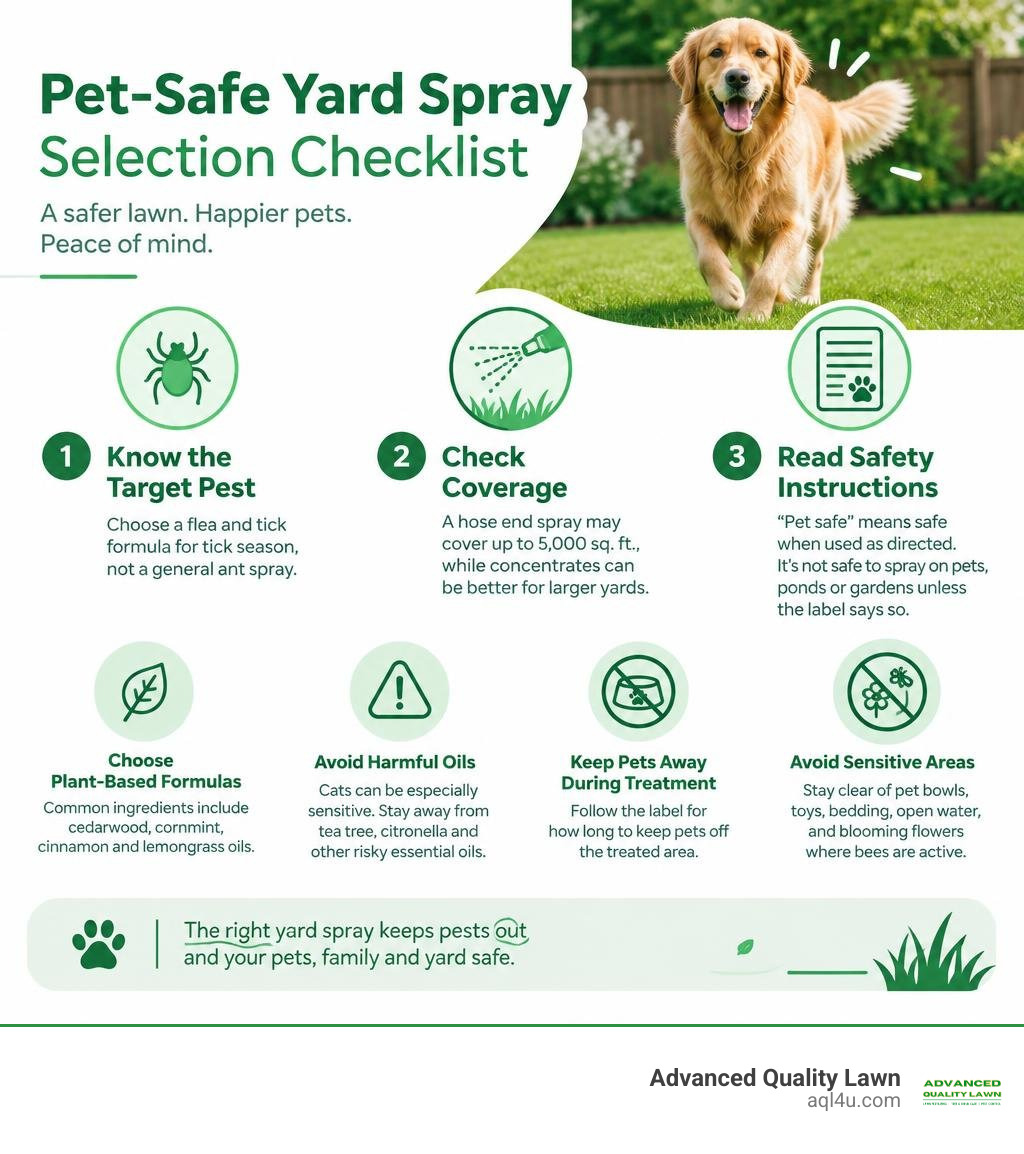
Look for three things before you buy:
- The target pest: Choose a flea and tick formula for tick season, not a general ant spray.
- Coverage: A hose end spray may cover up to 5,000 square feet, while concentrates can be a better fit for larger yards.
- Clear safety instructions: "Pet safe" means safe when used as directed. It does not mean safe to spray on your dog, cat, pond, or vegetable garden unless the label specifically allows it.
Natural does not automatically mean risk free. Cats can be especially sensitive to essential oils, and oils such as tea tree and citronella can be dangerous to pets. Avoid direct spraying near pet bowls, toys, bedding, open water, and blooming flowers where bees are active.
I am Andrew Day, owner of Advanced Quality Lawn, and our team brings more than 30 years of lawn care and pest management experience to helping Northeast Ohio homeowners choose a bug spray for yard safe for pets. The options below can help you protect your lawn from biting pests while keeping practical safety first.
How to Choose a Bug Spray for Yard Safe for Pets
Selecting the right outdoor pest control means balancing knockdown power with family wellness. When shopping at local home improvement centers, you will see hundreds of insect control products. Major retailers like The Home Depot list 191 results for insect control products that are safe for pets, but finding the exact formulation for your lawn requires checking the active ingredients and understanding how those ingredients target pests.
Conventional yard sprays often use synthetic pyrethroids or organophosphates that linger on turf blades. For households with dogs that roll in the grass or cats that explore garden borders, plant based alternatives offer a lower toxicity profile. Many natural sprays work by targeting octopamine, a neurotransmitter that regulates heart rate and movement in insects. Mammals, birds, and reptiles do not possess octopamine receptors, allowing these botanicals to disrupt pest systems without harming domestic animals.
DEET is a major chemical hazard to avoid around pets. According to the Animal Humane Society, DEET products should never be used on pets as they can cause neurological problems, seizures, or even death. Always verify that your outdoor repellent relies on botanical extracts or non-toxic minerals rather than synthetic compounds that build up in the soil.
Coverage needs also dictate your choice. A small patio lawn requires a different volume than a sprawling two-acre lot in Medina or Summit County. Matching product bottle sizes to your yard dimensions prevents under-application, which leaves pests alive, or over-application, which wastes money and stresses turfgrass.
Key Ingredients in Bug Spray for Yard Safe for Pets
Botanical insecticides utilize concentrated plant defenses to repel and eliminate unwanted insects. The most dependable active ingredients include:
- Cedarwood Oil: Steam-distilled cedarwood oil is the gold standard for natural tick and flea management. It dissolves the exoskeleton of soft-bodied insects and disrupts their octopamine pathways. Formulations like Ready-to-Use Flea & Tick Spray for Yard and Garden leverage cedarwood oil at 12.63% to deliver high contact knockdown.
- Cornmint and Cinnamon Oil: Cornmint oil provides an immediate masking scent that confuses mosquito sensory organs, while cinnamon oil acts as an effective natural larvicide and ant barrier.
- Lemongrass Extract: Lemongrass offers natural mosquito defense with a crisp citrus scent. Products such as Yardsafe Outdoor Bug Control for Families utilize lemongrass and cedarwood blends that remain gentle on soil microbes.
- Sesame and Soybean Oils: These plant oils serve as organic carriers and stickers. They help active botanicals adhere to grass blades, extending protection against rain and morning dew.
When severe infestations occur, starter kits like the Flea & Tick Yard Spray Refill Starter Kit provide reusable hose-end equipment with concentrate refills. To eliminate persistent colonies in deep grass, homeowners can also consult our complete flea elimination guide to break the reproductive cycle across turf and bedding.
Be cautious with formulations containing high concentrations of clove oil or synthetic phenols. While clove oil repels crawling bugs, concentrated eugenol can irritate sensitive canine skin. Stick to phenol-free formulas to maintain maximum pet safety.
Ready-to-Use Sprays vs. Concentrates for Large Yards
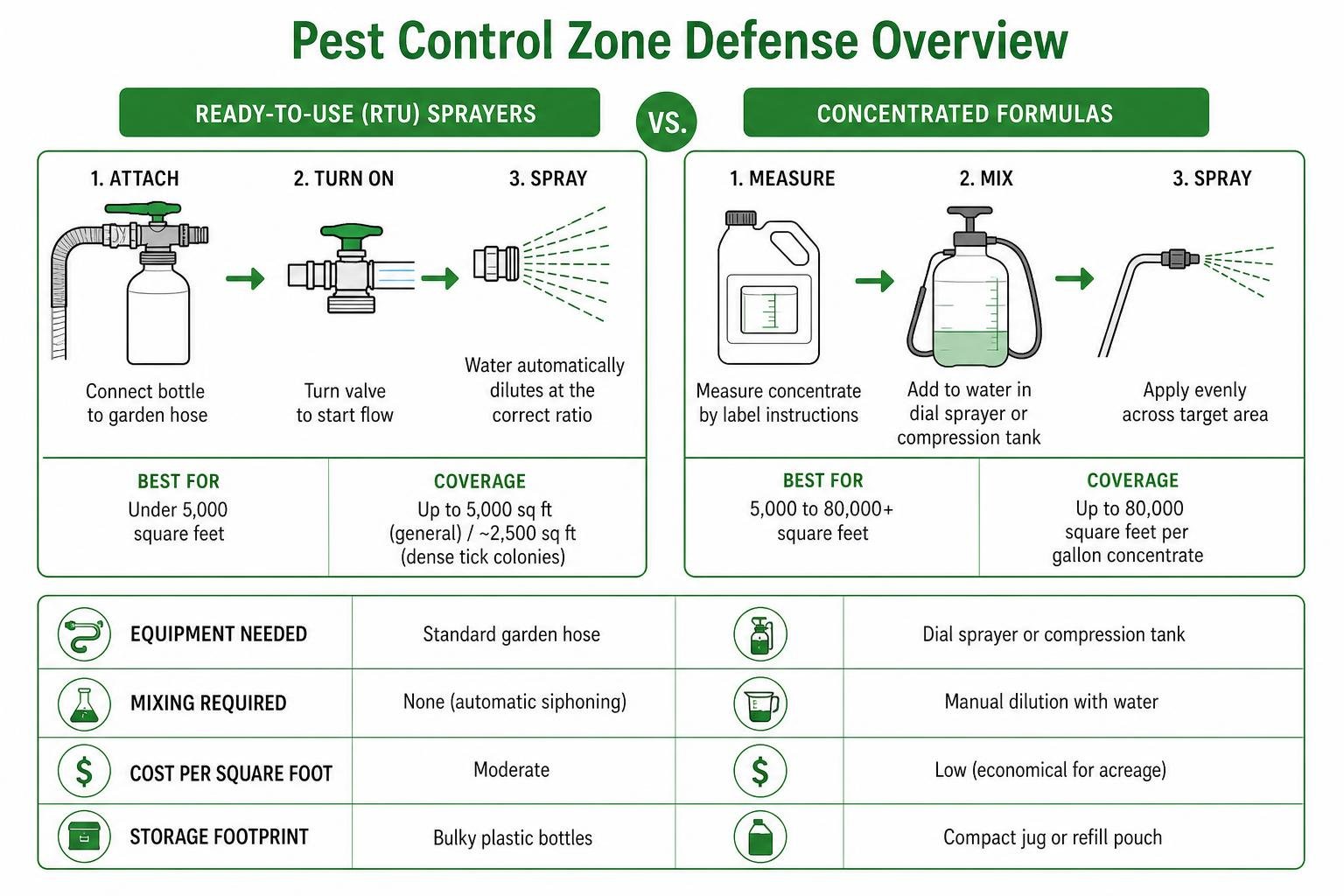
Pet-safe yard sprays come in two main forms: ready-to-use hose-end bottles and concentrated liquids.
Ready-to-use sprayers feature a built-in siphon nozzle. You attach the bottle to your garden hose, turn the valve, and the water stream automatically dilutes the solution at the correct ratio. A standard 32-ounce bottle, such as Ready-to-Use Outdoor Pest Control Spray for Mosquitoes & Ants, covers up to 5,000 square feet for general insect suppression and roughly 2,500 square feet for dense tick colonies.
Concentrates, such as the 128 oz Outdoor Flea & Tick Control for Yard + Garden or Outdoor Pest Control Concentrate, are mixed in dedicated pump tanks or dial-hose attachments. A single gallon concentrate can treat up to 80,000 square feet. For homeowners managing large properties across Northeast Ohio, pairing liquid concentrates with the best insect control for lawns creates an affordable, comprehensive defense strategy.
Top Natural Formulations for Outdoor Pest Defense
Evaluating commercial botanical sprays helps you pick the right balance of pest knockdown and residual performance. Highly rated products like Wondercide Outdoor Pest Control Spray, which holds a 4 out of 5-star rating from 10,409 customer reviews, demonstrate that plant oils can rival synthetic choices when applied correctly.
| Product Formulation | Primary Active Ingredients | Target Pests | Standard Coverage | Residual Action |
|---|---|---|---|---|
| Cedarwood Concentrate | Steam-distilled cedar oil (12.63%), Sesame oil (2.73%) | Fleas, ticks, mosquitoes, ants, gnats | Up to 5,000 sq ft per 32 oz RTU | 30 to 45 days |
| Cornmint & Cinnamon Blend | Cornmint oil (1.00%), Cinnamon oil (0.75%), Clove oil (0.25%) | Mosquitoes, ticks, aphids, chinch bugs | Up to 5,000 sq ft per quart | 14 to 21 days |
| Lemongrass & Cedar Mix | Cedarwood oil (7.00%), Lemongrass oil (2.00%) | Mosquitoes, chiggers, roaches, wasps | Up to 5,000 sq ft (1/8 acre) | 30 days |
| Topical Cedar & Soybean Spray | Cedarwood oil, Soybean oil carrier | Fleas, deer ticks, blackflies | Spot treat bedding / coat | 2 to 4 days (topical) |
When property edges border deep woods, combine liquid yard sprays with Best Pet Friendly Outdoor Bug Control options and proven yard tick control strategies to stop migrating arachnids before they reach your dog run.
Essential Oils to Use and Avoid Around Dogs and Cats
Essential oils are powerful organic compounds. While they provide fantastic pest control properties, dogs and cats metabolize botanicals differently than humans.
Cats lack a specific liver enzyme (glucuronyl transferase) required to break down phenols and hydrocarbons found in select plant oils. Direct exposure to undiluted tea tree, wintergreen, pennyroyal, or citrus extracts containing d-limonene can cause liver strain or respiratory distress in felines. Citronella plants and concentrated citronella oils are also toxic if pets chew the leaves or ingest the liquid.
Safe botanical choices include steam-distilled cedarwood oil, cornmint oil, lemongrass oil, and soybean oil carriers when properly diluted in commercial formulations. Topical options like Pet Protect Bug Spray & Repellent repel ticks for 2 to 4 days on dogs and up to 1 week on pet bedding using diluted cedar extracts. Always keep pets indoors during lawn application, and browse our resources on safe pet lawn care to keep your property pet-friendly across all seasons.
Application Strategies and Yard Safety Protocols
Applying a natural yard spray requires proper technique to maximize pest control and protect your landscaping. Spraying on an unmaintained yard reduces the spray's effectiveness because tall weeds and thick thatch block the liquid from reaching ground-level bug nesting zones.
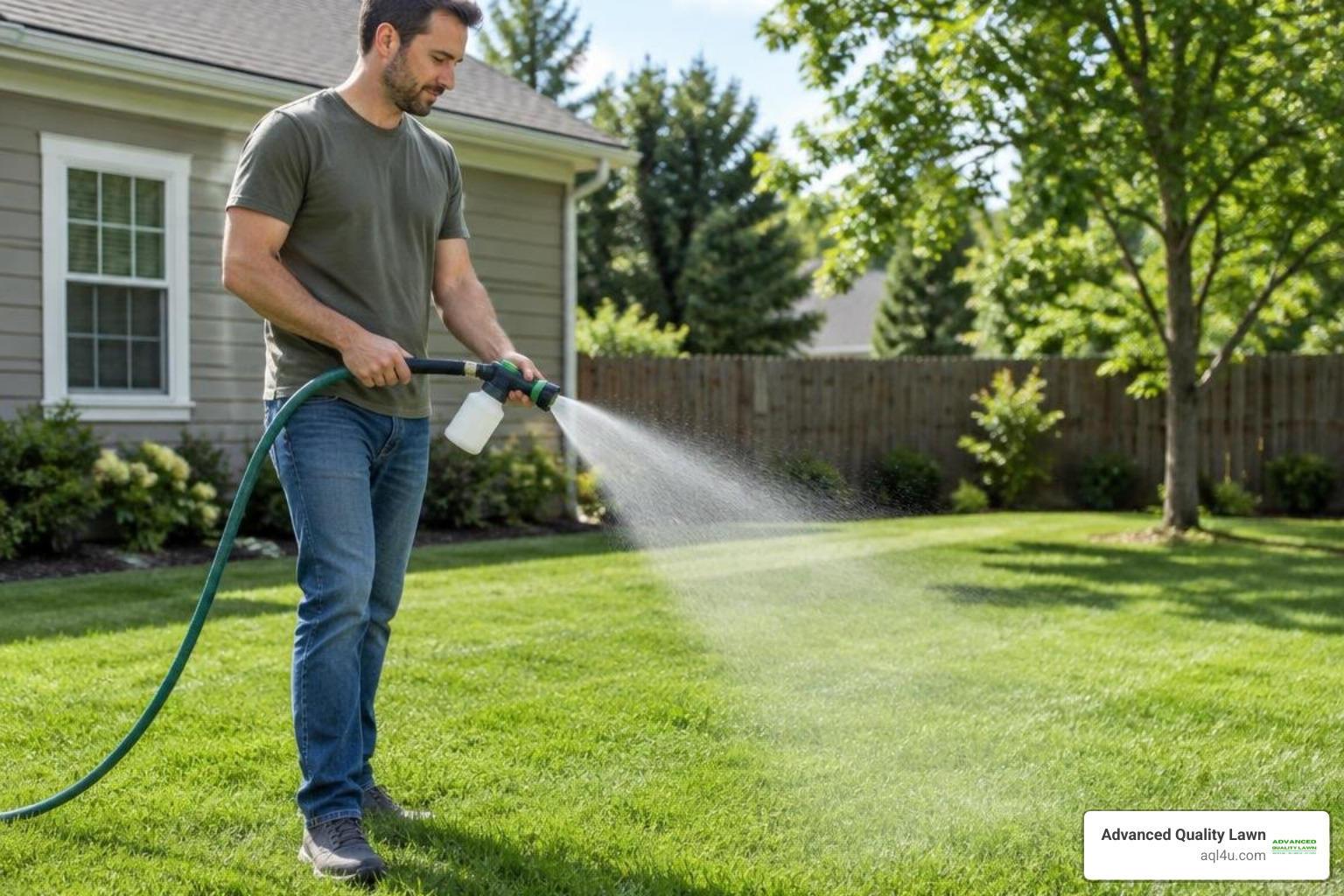
Follow these field-tested steps for the best results:
- Mow and Clear Debris: Mow the grass 24 hours before application. Rake away damp leaf piles, brush clippings, and fallen branches where ticks and fleas hide.
- Check Ambient Temperature: Only apply botanical sprays when ambient temperatures are below 90 degrees Fahrenheit. High heat combined with plant oils can cause phytotoxic leaf burn on tender turf and shrubs.
- Calibrate Your Spray Pattern: Set your nozzle to a broad fan spray. Walk at a steady pace, holding the wand waist-high to lay down even, overlapping sweeps across the turf.
- Target High-Shade Zones: Focus on shaded dirt patches under decks, fence lines, ornamental shrub bases, and dense groundcovers. Fleas and ticks avoid direct, hot sunlight and congregate in cool, damp turf margins.
- Secure Perimeter Foundations: Apply an uninterrupted 3-foot band up the foundation wall and 3 feet out onto the soil to stop crawling pests from entering living quarters. Professional perimeter pest control treatments provide an extra layer of perimeter defense around basement windows, vents, and siding joints.
Applying Bug Spray for Yard Safe for Pets Without Harming Pollinators
Protecting honeybees, bumblebees, and butterflies is just as vital as protecting household pets. Fortunately, cedarwood oil acts on octopamine pathways that do not harm foraging pollinators once the product has settled on turf. Independent laboratory testing confirms that dried residues of steam-distilled cedar formulas do not harm honeybees or painted lady butterflies.
To protect beneficial insects, adopt these eco-friendly habits:
- Spray at Dawn or Dusk: Apply treatments in the early morning or late evening when pollinator activity is lowest.
- Avoid Open Blossoms: Never spray flowering clover, vegetable blossoms, fruit tree blooms, or floral pollinator gardens. Direct wet droplets can weigh down bee wings and disrupt their foraging flights.
- Protect Natural Waterways: When treating yards near decorative fish ponds, drainage ditches, or creeks, maintain a 10-foot buffer zone. Plant oils floating on stagnant water surfaces can restrict oxygen transfer for aquatic life.
For complete yard care without harming helpful bugs, review our expert guide on best practices to treat yards for bugs.
Reapplication Frequency and Weather Considerations
Botanical bug sprays break down faster than harsh synthetic insecticides due to ultraviolet sunlight and microbial activity in the soil. Maintaining long-term protection requires a consistent reapplication schedule based on regional weather patterns.
For moderate bug pressure across Northeast Ohio, reapply every 30 to 45 days from spring thaw until the first hard frost. If you are battling an active, severe flea or tick infestation, apply two treatments 7 to 10 days apart to eliminate newly hatched eggs before transitioning to a monthly maintenance schedule.
Heavy rainfall over one inch can wash away essential oil coatings from lawn foliage. If a summer thunderstorm rolls through immediately after you spray, let the lawn dry thoroughly and reapply a light maintenance pass. Explore our ultimate bug control guide for 2026 for comprehensive regional seasonal calendars.
Frequently Asked Questions About Pet-Safe Yard Sprays
How long should pets stay off the lawn after spraying?
Most plant-based, essential oil bug sprays feature no formal drying restriction, and manufacturers often advertise immediate yard access. However, the safest protocol is to keep dogs, cats, and children inside until the spray has dried completely, which usually takes 1 to 2 hours. This drying window prevents curious pets from tracking wet oils onto indoor carpets, licking liquid residues off wet grass blades, or absorbing damp oils through their paw pads.
Can pet-safe yard sprays damage grass or ornamental gardens?
When applied according to label instructions, natural sprays will not harm standard turfgrass varieties or established shrubs. Damage only occurs if products are applied during the hottest part of the day under blazing sun above 90 degrees Fahrenheit, which magnifies solar heat through oil droplets and scorches tender leaves. Always avoid spraying delicate food crops or leafy vegetables unless the product label explicitly approves edible garden applications.
Are natural yard sprays as effective as synthetic chemicals?
High quality botanical yard sprays provide contact kill rates and short-term repelling power comparable to synthetic pyrethroids. While synthetic chemicals may persist in the soil for 60 to 90 days, natural essential oils break down naturally within 30 to 45 days without leaving harmful chemical residues. Regular monthly applications maintain a strong scent barrier that keeps mosquitoes, fleas, and ticks off your property all season long.
Conclusion
Protecting your pets from biting pests should never come at the expense of their daily health. By choosing non-toxic, botanical bug sprays made with cedarwood, cornmint, and lemongrass oils, you can stop fleas, ticks, and mosquitoes while keeping your yard safe for four-legged family members. Combine smart ingredient choices with proper application timing, regular mowing, and perimeter defense to maintain an enjoyable outdoor space.
At Advanced Quality Lawn, we provide proven lawn, tree, and shrub solutions across Northeast Ohio, backed by our full-program guarantees and responsive service calls across 99+ zip codes. Explore our comprehensive lawn care and maintenance programs today to keep your lawn thick, healthy, and bug-free all season long.