Stop the Invasion with the Best Selective Crabgrass Herbicides
Why Finding the Best Herbicide for Crabgrass Matters for Your Ohio Lawn

The best herbicide for crabgrass depends on your timing and grass type — here's a quick-reference guide:
| Situation | Best Choice | Type |
|---|---|---|
| Early spring prevention | Prodiamine 65WG or Dithiopyr | Pre-emergent |
| Existing crabgrass, cool-season lawn | Tenacity (Mesotrione) or Quinclorac 75 DF | Post-emergent |
| Existing crabgrass, warm-season lawn | Fusilade II or Q4 Plus | Post-emergent |
| Broadleaf weeds + crabgrass together | Q4 Plus or Trimec Crabgrass Plus | Post-emergent combo |
| Organic option | Corn gluten meal | Pre-emergent |
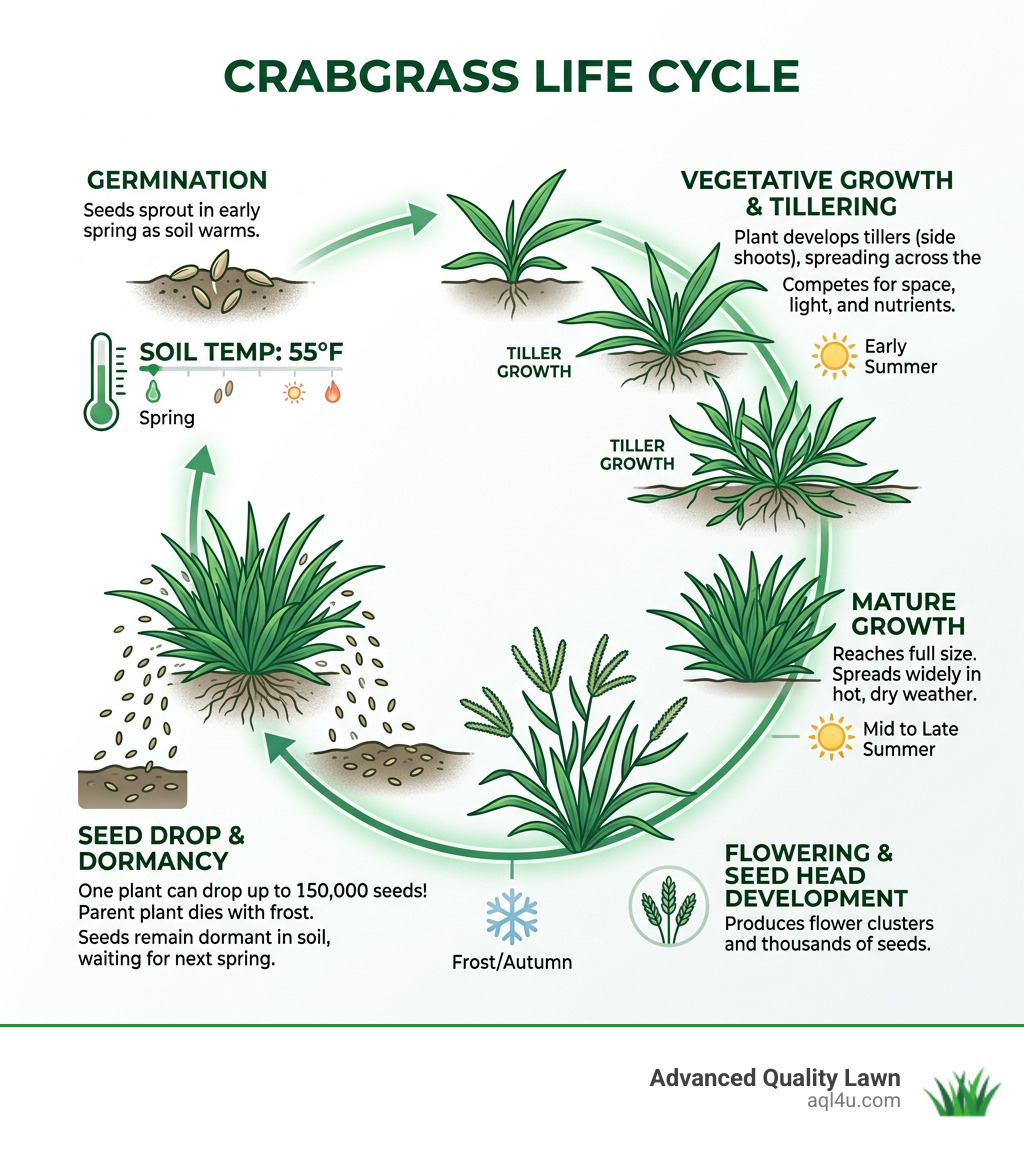
If you've ever watched crabgrass creep across a lawn you've worked hard to maintain, you know how frustrating it is. One plant can produce up to 150,000 seeds in a single season. Those seeds don't all sprout at once either — they stay dormant in the soil and keep coming back year after year.
Crabgrass doesn't just look bad. It competes directly with your lawn grass for water, nutrients, and sunlight. Once it takes hold, it spreads fast — especially in thin or patchy areas common in Northeast Ohio yards.
The good news? The right herbicide, applied at the right time, can stop it.
This guide breaks down the top pre-emergent and post-emergent options so you can choose what works for your specific lawn — and stop the invasion before it starts.
I'm Andrew Day, owner of Advanced Quality Lawn and a lawn care professional with over 30 years of experience helping Northeast Ohio homeowners find the best herbicide for crabgrass for their specific grass type and conditions. Whether you're dealing with a few patches or a full-scale invasion, the strategies in this guide are the same ones we use every season to keep local lawns healthy and weed-free.
Understanding the Enemy: Crabgrass Biology and Identification
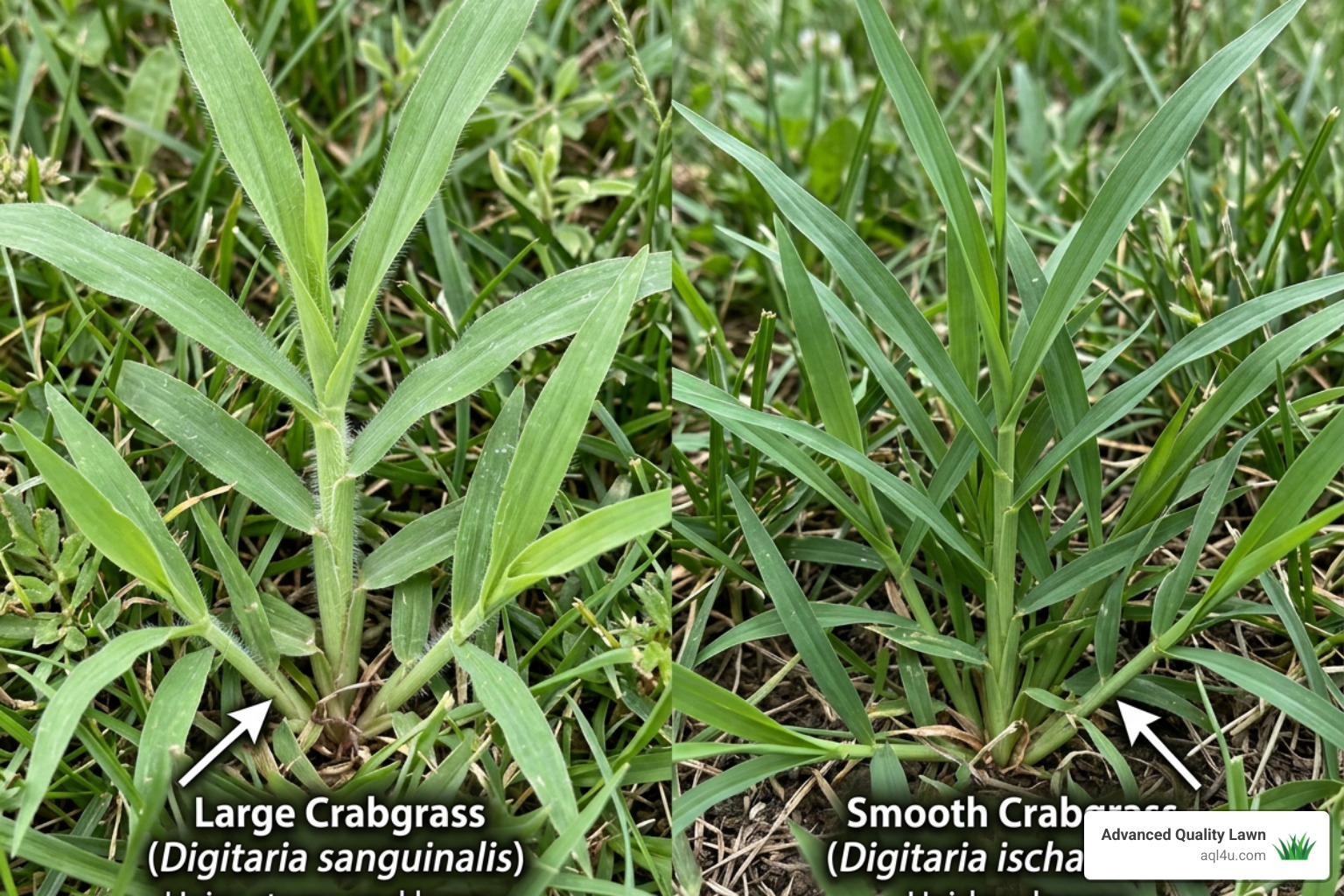
Before we can kill it, we have to know exactly what we’re looking at. In Northeast Ohio, we primarily deal with two main culprits: Large crabgrass (Digitaria sanguinalis) and Smooth crabgrass (Digitaria ischaemum).
Large crabgrass, often called "hairy crabgrass," is easy to spot because of the tiny hairs along its stems and leaves. Smooth crabgrass, as the name suggests, lacks those hairs and tends to stay a bit lower to the ground. Both are warm-season annuals, meaning they sprout in the spring, grow like crazy in the summer heat, drop their seeds, and die off with the first hard frost of autumn.
The "magic number" for crabgrass is 55°F. When soil temperatures hit 55°F for four to five consecutive days, the germination party begins. For us in the Akron and Cleveland areas, this usually happens right around the time the yellow forsythia bushes start blooming. If you wait until you see the crabgrass in your lawn, you’ve already missed the easiest window for control.
Crabgrass is an opportunistic invader. It loves full sun and thin turf. Because each plant can produce up to 150,000 seeds, the "seed bank" in your soil can stay viable for years. This is why identifying weeds early is so critical to maintaining a healthy lawn. For a deeper dive into the science, the UMass Extension offers an excellent resource on the Biology and Management of Crabgrass.
The Best Herbicide for Crabgrass: Top Pre-Emergent Picks
If you want to work smarter, not harder, pre-emergents are your best friend. These products create a chemical barrier in the top layer of soil that stops crabgrass seeds from successfully developing roots and shoots.
Why Prodiamine is the Best Herbicide for Crabgrass Prevention
In our professional opinion, Prodiamine 65WG is often the best herbicide for crabgrass prevention for the average DIYer. It has a long residual effect, meaning one application can provide protection for up to five months.
- Timing: Apply in early spring before soil temps hit 55°F.
- Watering: It must be "watered in" with about 0.25 inches of rain or irrigation within 48 hours to activate the barrier.
- Stability: It has low solubility, so it stays exactly where you put it—right in the germination zone.
Another heavy hitter is Dithiopyr (often sold as Dimension 0-0-7). What makes Dithiopyr unique is that it has "reach-back" potential. It can kill crabgrass that has already germinated but hasn't reached the "tiller" stage yet. This is a lifesaver if you're a week or two late with your spring application.
For those looking for weed prevention tips, timing is everything. If you apply too early, the barrier might wear off before the late-summer germination window. If you apply too late, the seeds have already sprouted.
Synthetic vs. Organic: The Effectiveness Gap
While we all love eco-friendly options, it's important to manage expectations. Corn gluten meal is the primary organic pre-emergent. However, research shows it is generally only about 65% effective compared to synthetic counterparts. It also acts as a mild fertilizer, which can actually feed the weeds it fails to kill!
Choosing the Best Herbicide for Crabgrass in Cool-Season Lawns
Most of our customers in Northeast Ohio have cool-season grasses like Tall Fescue, Kentucky Bluegrass, or Perennial Ryegrass. When choosing a preventer, you must ensure it won't harm your specific grass type.
For example, if you plan on overseeding in the spring, you generally cannot use standard pre-emergents like Prodiamine because they will prevent your new grass seed from growing too. In this specific case, Tenacity (Mesotrione) is a game-changer because it can be applied at the time of seeding without killing the new grass.
Effective Post-Emergent Solutions for Existing Crabgrass
So, you missed the spring window and now your lawn looks like a crabgrass farm. Don't panic. Post-emergent herbicides are designed to kill the weed after it has sprouted.
Top Post-Emergent Products
- Quinclorac 75 DF: This is the "gold standard" for post-emergent crabgrass control. It is highly effective and works through foliar uptake, meaning the leaves soak it up.
- Tenacity (Mesotrione): Famous for turning weeds bright white. It’s a great selective herbicide for cool-season lawns, though it may require multiple applications for mature crabgrass.
- Q4 Plus Turf Herbicide: A powerful "4-way" blend (Quinclorac, Sulfentrazone, 2,4-D, and Dicamba). This is the best herbicide for crabgrass if you also have a major dandelion or clover problem. It has a 4.5 out of 5-star rating from professionals for a reason—it flat-out works.
- Trimec Crabgrass Plus: A reliable 3-way blend that is rainfast in just one hour, making it perfect for Ohio's unpredictable spring weather.
When using these, crabgrass removal becomes a game of patience. You’ll usually see yellowing or whitening within 7–14 days, with complete death by day 28.
Post-Emergent Application for Warm-Season Grasses
While less common in the North, some lawns in our service area feature Zoysia or Bermuda grass. These require different care. Fusilade II is an excellent choice for Zoysia and Fescue, but you must be extremely careful with application rates to avoid thinning your turf. Always check the label—some products like Q4 Plus can cause temporary yellowing on Bermuda grass during high heat. For more on this, see our guide on weed and pest removal.
Managing Late-Season Crabgrass Infestations
By August, crabgrass is often huge and "tillering" (spreading out with multiple stems). This is the hardest stage to kill. Quinclorac works best on crabgrass with fewer than two tillers OR more than four tillers. If the plant is in that middle "three-tiller" stage, it’s surprisingly resistant.
If it's very late in the season (September), we sometimes recommend doing nothing. A hard frost will kill the crabgrass for free. However, you must ensure it doesn't drop its seeds, or you'll be right back in the same boat next year.
Application Strategies for Maximum Efficacy
The best herbicide for crabgrass is only as good as the person applying it. Here are the professional secrets to making sure your DIY application actually works.
The Surfactant Secret
Most professional-grade herbicides like Quinclorac 75 DF require a non-ionic surfactant. Think of this as "sticker soap" for weeds. Crabgrass leaves have a waxy coating that causes water to bead off. A surfactant breaks that surface tension, allowing the chemical to stick to the leaf and soak in.
Equipment Matters
For the most precise application, we recommend a battery-powered sprayer equipped with a TeeJet foliar spray tip. Hose-end sprayers are often too inconsistent for selective herbicides, leading to either missed weeds or "burnt" grass.
Temperature and Mowing Restrictions
- The 90°F Rule: Never apply post-emergent herbicides when temperatures exceed 90°F. This stresses your good grass and can lead to permanent turf damage.
- Mowing: Do not mow for 48 hours before or after application. You want plenty of leaf surface for the herbicide to hit, and you want to give the plant time to move the chemical down to the roots before you cut the top off.
- The 3-Inch Rule: Keeping your lawn mowed at 3 inches or higher naturally shades the soil, keeping it cooler and preventing crabgrass seeds from getting the sunlight they need to germinate.
For more maintenance advice, check out our lawn tips for weed control.
Frequently Asked Questions about Crabgrass Control
When is the best time to apply crabgrass preventer?
In Northeast Ohio, the window is usually between late March and mid-April. A great natural indicator is the blooming of forsythia bushes. Once those yellow flowers drop, the window is closing fast!
Is crabgrass herbicide safe for pets and children?
Generally, yes—once the product has completely dried. For liquid applications, this usually takes 1–4 hours depending on the sun and humidity. For granules, you should water them in and wait for the lawn to dry before letting the dog out. Always read the specific product label for re-entry instructions.
How do I tell the difference between crabgrass and quackgrass?
This is a common point of confusion!
- Crabgrass is an annual with a long, membranous ligule (a tiny flap where the leaf meets the stem). It dies in winter.
- Quackgrass is a perennial, meaning the same plant comes back every year from the roots. It has "clasping auricles"—two little finger-like growths that wrap around the stem.
Selective herbicides for crabgrass usually will not kill quackgrass. For quackgrass, you often have to spot-treat with glyphosate (Roundup) and reseed the bare spot.
Conclusion
Finding the best herbicide for crabgrass is the first step toward a lawn you can actually enjoy. Whether you choose the preventive power of Prodiamine or the targeted strike of Quinclorac, consistency and timing are your two greatest allies.
At Advanced Quality Lawn, we’ve spent decades perfecting these treatments across Summit, Cuyahoga, and Medina counties. We know that DIY lawn care can be a rewarding hobby, but it can also be a full-time job. If you’re tired of fighting the invasion alone, we offer professional programs with full-service guarantees. We cover over 99 zip codes in Northeast Ohio, from Hudson and Brecksville to Stow and Twinsburg.
Ready for a lush, weed-free lawn without the guesswork? Contact us for expert lawn maintenance today and let us handle the crabgrass for you!