How to Find the Best Way to Kill Grub Worms for Good
Why Grubs Could Be Destroying Your Ohio Lawn Right Now
The best way to kill grubs in lawn areas depends on timing. Use a preventive insecticide in June or July before eggs hatch, or a curative treatment in late summer if grubs are already active. Here is a quick overview:
Best ways to kill grubs in your lawn:
- Preventive insecticide (June to July): Products containing imidacloprid, thiamethoxam, clothianidin, or chlorantraniliprole. Apply before eggs hatch and water in with half an inch of irrigation. Reduces grubs by 75 to 100%.
- Curative insecticide (August to October): Products containing trichlorfon or carbaryl. Use when grubs are already present and actively feeding. Kills 20 to 80% of grubs.
- Beneficial nematodes: A natural option applied to moist soil in spring or fall. Can achieve 60 to 100% control when used correctly.
- Milky spore: A biological option targeting Japanese beetle grubs only. Works slowly and provides about 20 to 25% infection rate.
- Improve lawn health: Mow at 3.5 to 4 inches, aerate, and fertilize. A healthy lawn tolerates low grub populations without visible damage.
Grubs are sneaky. They live just below the soil surface, quietly quietly chewing through grass roots before you ever notice a problem. By the time you see brown patches or find skunks tearing up your yard at night, the damage is already done.
Not every product on the store shelf actually works. Many products marketed for grub control contain the wrong active ingredients and will do nothing to stop an infestation. Picking the right product at the right time is everything.
I'm Andrew Day, owner of Advanced Quality Lawn, and with over 30 years of experience helping Northeast Ohio homeowners protect their lawns, I know that choosing the best way to kill grubs in lawn areas is less about working harder and more about knowing exactly what to apply and when. Let's walk through everything you need to know.
Understanding the Grub Life Cycle and Damage
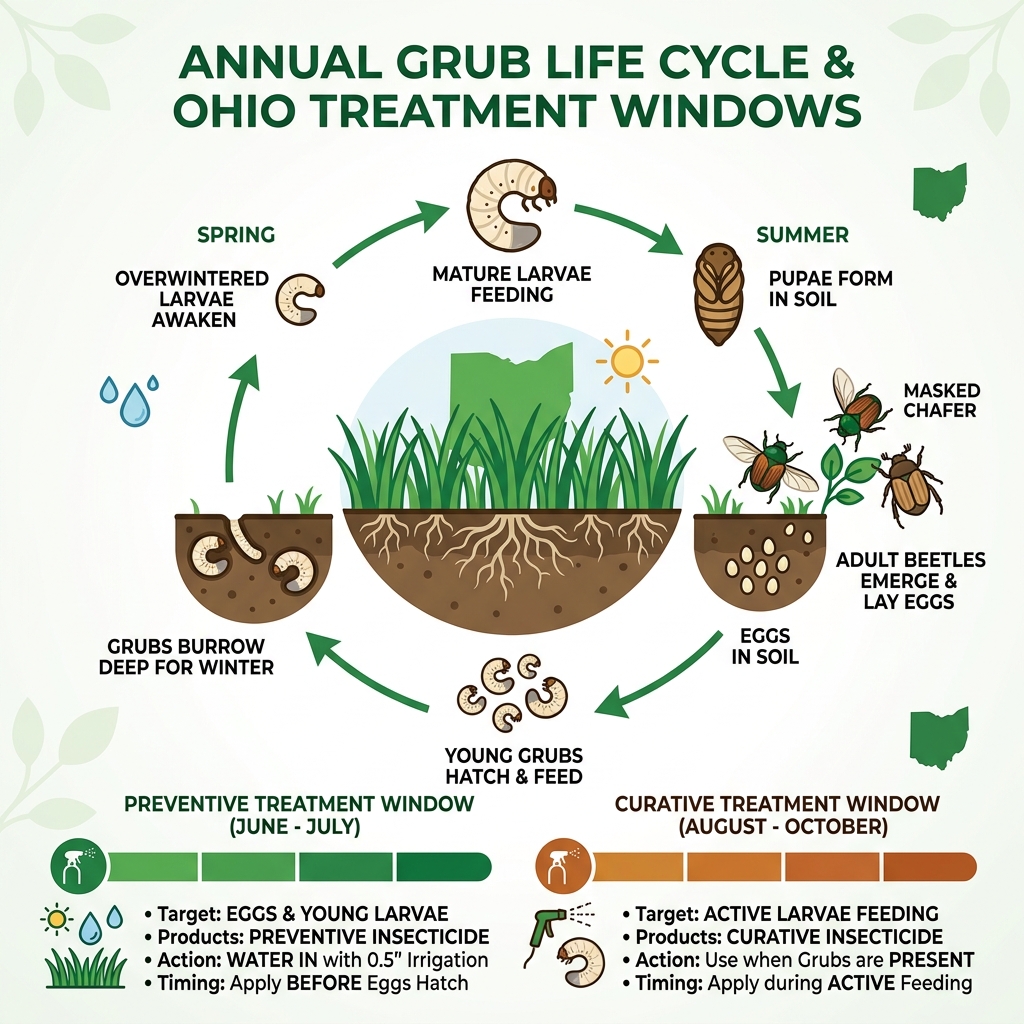
To stop an enemy, you have to understand how they live. Lawn grubs are the larval stage of several types of scarab beetles. In our corner of Northeast Ohio, the most common culprits are Japanese Beetles, European chafers, and June bugs. These beetles follow a predictable annual cycle that dictates when your lawn is most at risk.
The cycle begins in mid-summer when adult beetles emerge from the ground to feast on your ornamental plants and trees. After they have had their fill, they burrow back into the soil to lay eggs. About 10 days after they are laid, those eggs hatch into tiny, hungry larvae. This usually happens from the beginning of August through October.
These "unwelcome guests" spend their autumn months devouring the roots and crowns of your turfgrass. As the soil cools in late October, they move deeper into the earth (about 2 to 6 inches down) to sleep through the winter. When spring arrives, they move back toward the surface to feed briefly before turning into pupae and eventually emerging as adult beetles in June or July.
The damage they cause is purely mechanical. By eating the root system, they disconnect the grass from its water and nutrient source. This is why infested lawns often look like they are suffering from drought even if you are watering regularly. To learn more about how these pests interact with other garden visitors, check out our guide on The Unwelcome Guests: Tent Caterpillars and White Grubs in Your Yard.
How to Identify and Scout for a Grub Infestation
You might suspect you have a problem if your lawn feels "spongy" when you walk on it. This happens because the grubs have eaten the roots that normally anchor the turf to the soil. Another major red flag is the appearance of irregular brown patches that do not green up after a heavy rain.
However, the most obvious sign often comes from local wildlife. If you see skunks, raccoons, or crows tearing up chunks of your grass at night, they are likely looking for a high-protein grub snack. While it is frustrating to see your yard dug up, these animals are actually doing you a favor by pointing out exactly where the infestation is located.

Before you run to the store for chemicals, you must scout for them to confirm the population size. Here is the best way to do it:
- Find a spot on the edge of a suspected brown patch.
- Use a shovel to cut a square foot of turf about 2 to 3 inches deep.
- Peel the grass back like a piece of carpet.
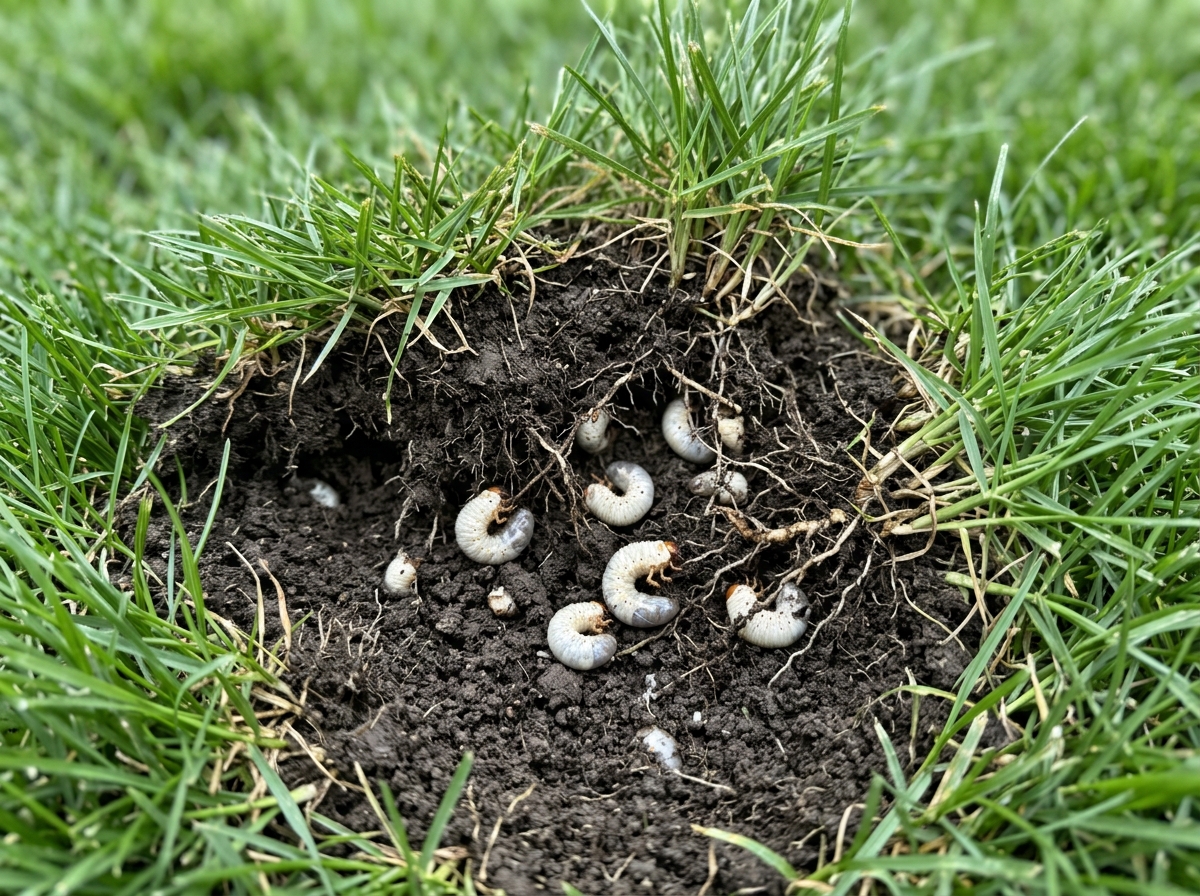
- Count the C-shaped, white larvae you see in the soil and tangled in the roots.
Healthy turf can actually support up to five grubs per square foot without showing any damage. If you find 10 or more grubs per square foot, you have a serious infestation that requires immediate treatment. It is also worth noting that other pests can cause similar damage. For example, Armyworms Are Devouring Turf Lawns in Ohio right now, and their damage can sometimes be mistaken for grub issues if you do not look closely.
The Best Way to Kill Grubs in Lawn Areas with Preventive and Curative Treatments
When it comes to the best way to kill grubs in lawn settings, we generally categorize products into two groups: preventives and curatives. Choosing the wrong one for the current season is the most common mistake homeowners make.
For a comprehensive look at all the tools in our arsenal, you can read about the Best Insect Control for Lawns. Below is a breakdown of how these chemical options compare:
| Feature | Preventive Treatments | Curative (Rescue) Treatments |
|---|---|---|
| Best Timing | June to mid-July | August to October |
| Active Ingredients | Imidacloprid, Chlorantraniliprole | Trichlorfon, Carbaryl |
| Effectiveness | 75% to 100% | 20% to 80% |
| Primary Goal | Kill newly hatched larvae | Kill large, active larvae |
| Residual Effect | Long-lasting (months) | Very short (days) |
Preventive products are much more effective because they target the grubs when they are tiny and most vulnerable. Curative treatments are "rescue" missions used when damage is already visible.
Regardless of the product you choose, irrigation is the secret to success. You must water your lawn with at least half an inch of water immediately after application. This washes the insecticide off the grass blades and down into the soil where the grubs are actually living. Without water, the product will sit on the surface and eventually break down in the sunlight, becoming useless.
Choosing the Best Way to Kill Grubs in Lawn with Active Ingredients
Reading the label is the only way to ensure you are getting a product that works. Look for these specific active ingredients:
- Chlorantraniliprole: This is the gold standard for preventives. It is very effective (65% to 80% reduction) and is much safer for bees and other pollinators. It can be applied as early as April because it lasts a long time in the soil.
- Imidacloprid / Thiamethoxam: These are popular neonicotinoids. They are highly effective (75% to 100%) but must be applied in June or July. To protect bees, always mow your lawn before applying these to remove any flowering weeds like clover.
- Trichlorfon: This is the most common curative ingredient. It works fast but only stays active in the soil for a few days. It is used in late summer when you find active grubs.
- Carbaryl: Another curative option that provides a 20% to 80% kill rate on older grubs in the fall.
Timing Your Application for the Best Way to Kill Grubs in Lawn
Timing is the difference between a beautiful lawn and a dirt patch. If you apply a preventive treatment in September, it will not work on the large grubs already eating your roots. Similarly, applying a curative treatment in May is often a waste of money because the grubs are about to pupate and stop feeding anyway.
The "sweet spot" for most Northeast Ohio lawns is late June through mid-July. This ensures the medicine is in the soil exactly when the new generation of eggs begins to hatch. If you missed that window and see skunks digging in September, switch to a rescue product like trichlorfon immediately.
Organic and Natural Methods for Effective Grub Control
If you prefer to avoid synthetic chemicals, there are several biological ways to manage populations. These methods require more precision but can be very effective when handled correctly.
Beneficial nematodes are microscopic roundworms that hunt down grubs in the soil. They enter the grub and release bacteria that kill it within days. Experienced users can get 60% to 100% control with nematodes. The key is to apply them to very moist soil on an overcast day or in the evening, as sunlight and dry soil will kill them instantly.
Milky Spore is a bacterium that only affects Japanese beetle grubs. While it sounds like a perfect solution, research shows it only results in a 20% to 25% infection rate at best in our region. It also takes several years to build up enough spores in the soil to provide real protection.
Other organic options include Bt galleriae, a natural soil bacterium that is more effective than milky spore, and Neem oil, which can kill or weaken grubs by disrupting their growth and feeding cycles.
Cultural Practices to Prevent Future Grub Problems
The best way to kill grubs in lawn areas is to make your lawn so healthy that grubs cannot survive or do not want to be there. Beetles love to lay eggs in short, manicured, well-watered grass.
One of the easiest things you can do is adjust your mowing height. We recommend keeping your grass at 3.5 to 4 inches. Taller grass grows deeper roots, which makes the plant much more resilient to a little bit of root feeding. It also shades the soil, making it less attractive to egg-laying beetles.
Properly identifying and managing Common Ohio Garden Pests and How to Get Rid of Them will also help keep your ecosystem in balance. Annual core aeration is another great practice. It breaks up thatch where grubs like to hide and allows oxygen and nutrients to reach the root zone.
Finally, you can use weather to your advantage. If we have a very dry July, you can choose not to water your lawn. This causes the beetle eggs to dry and die before they ever have a chance to hatch. Your grass might go dormant and turn brown, but it will recover in the fall, while the grubs will not.
Frequently Asked Questions about Grub Control
Which products do not work for grubs?
Many "all-purpose" lawn insecticides are completely ineffective against grubs. Avoid products where the only active ingredients are Bifenthrin, Lambda-cyhalothrin, or Gamma-cyhalothrin. These chemicals are great for killing surface pests like ants or fleas, but they bind to the organic matter in the thatch and never reach the soil where the grubs are feeding.
How much should I water after treatment?
You need a minimum of a half-inch of water. If you do not have a rain gauge, you can place an empty tuna can on the lawn while watering. Once the can is full, you have applied enough. This irrigation is critical for chemical activation and ensuring root zone penetration.
Should I call a professional for severe infestations?
If you have a recurring problem or a very large property, calling local lawn pest control professionals is often the smartest move. Professionals have access to commercial-grade products that are more effective and safer for the environment when applied correctly. Plus, at Advanced Quality Lawn, we offer full-program guarantees, which means we take the guesswork out of the timing and application for you.
Conclusion
Finding the best way to kill grubs in lawn areas does not have to be a mystery. By understanding the life cycle of these pests and choosing the right products for the season, you can keep your yard green and spongy-free. A thick, healthy lawn is your best defense.
At Advanced Quality Lawn, we are proud to serve our neighbors in Hudson, Copley, Solon, Medina, and throughout Northeast Ohio. We understand the specific challenges our local climate and soil types present. If you are tired of fighting grubs on your own, we are here to help with expert service and a commitment to excellence. For More info about lawn care maintenance, reach out to our team today. Let's make this the year your lawn finally stays healthy for good.