Stop the Tiny Invaders with the Best Insect Control for Lawns
Why Finding the Best Insect Control for Lawns Matters More Than You Think
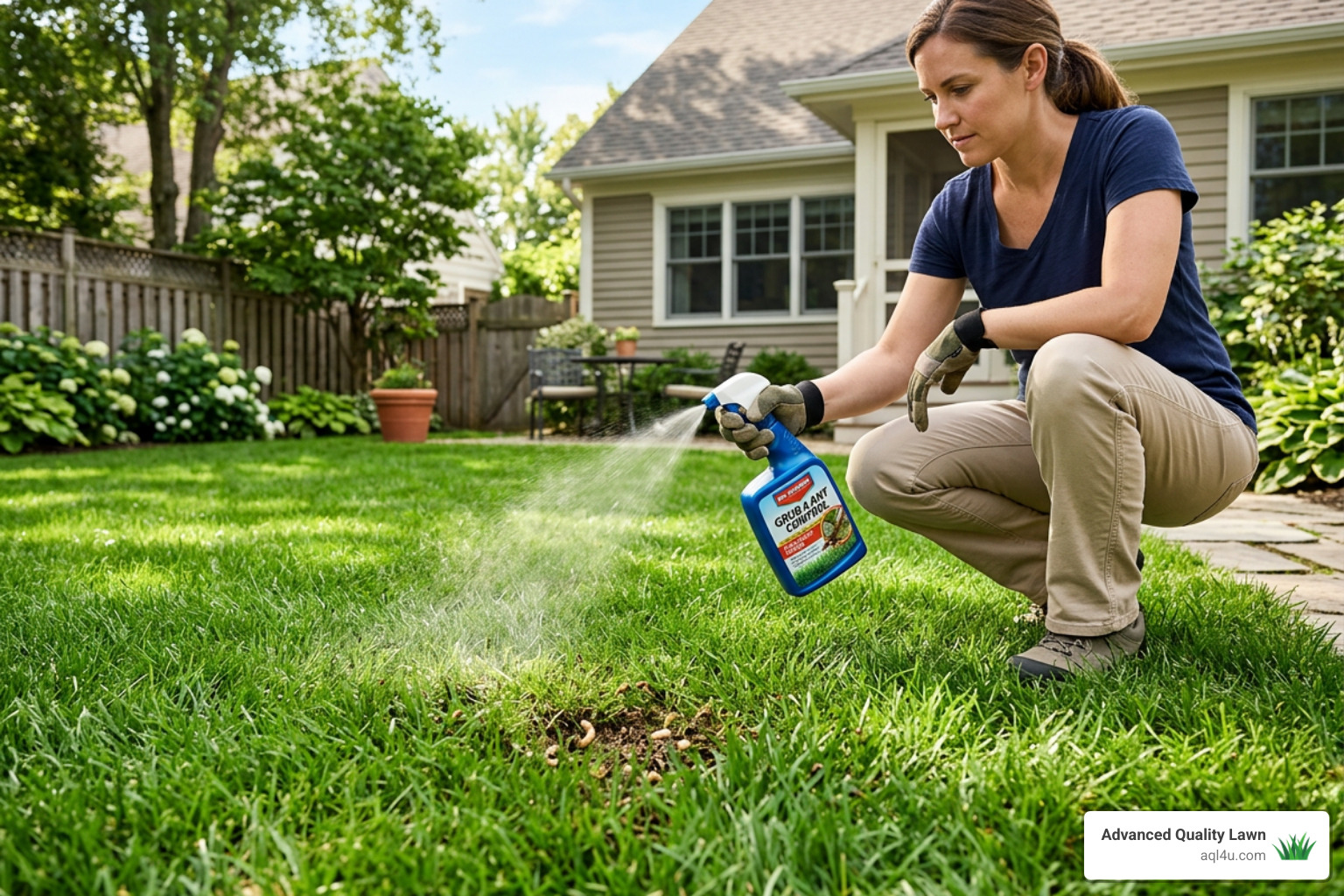
The best insect control for lawns comes down to matching the right product or treatment to the right pest, at the right time. Here's a quick look at the top options:
| Product | Best For | Type | Coverage |
|---|---|---|---|
| Scotts GrubEx | Grubs (season-long) | Granular | 5,000 sq ft / 14.35 lb |
| Ortho Bug B-Gon | 142+ insects | Granular | 16,500 sq ft / 10 lb |
| Spectracide Triazicide | Ants, chinch bugs, armyworms | Granular | 12,500 sq ft / 10 lb |
| Cutter Backyard Bug Control | Surface insects, crickets, ants | Liquid spray | 5,000 sq ft / qt |
| Dylox 6.2 | Grubs, sod webworms (fast-acting) | Granular | 10,000–15,000 sq ft / 30 lb |
| Scotts Turf Builder SummerGuard | Summer pests + fertilizer combo | Granular | 5,000 sq ft / 13.35 lb |
| Acelepryn G | Grubs, armyworms (slow-release) | Granular | Season-long |
While insects are a natural part of any yard ecosystem, the wrong ones can quietly destroy a lawn from the roots up — before you even notice something is wrong. Grubs chew through grass roots underground. Chinch bugs turn turf purple, then yellow, then brown. Armyworms can strip a lawn in days.
By the time you see dry patches, small holes, or irregular brown spots, the damage is already underway.
And in Northeast Ohio, where summer drought already stresses turf, a pest infestation on top of that can mean a full lawn recovery project — not just a quick fix.
I'm Andrew Day, owner of Advanced Quality Lawn, and with over 30 years of experience diagnosing and treating lawn pest problems across the Akron area, I've seen which approaches to the best insect control for lawns actually work — and which ones waste your time and money. In the sections ahead, we'll break down exactly what to look for, what to use, and when to act.
Identifying Common Lawn Pests and Their Damage
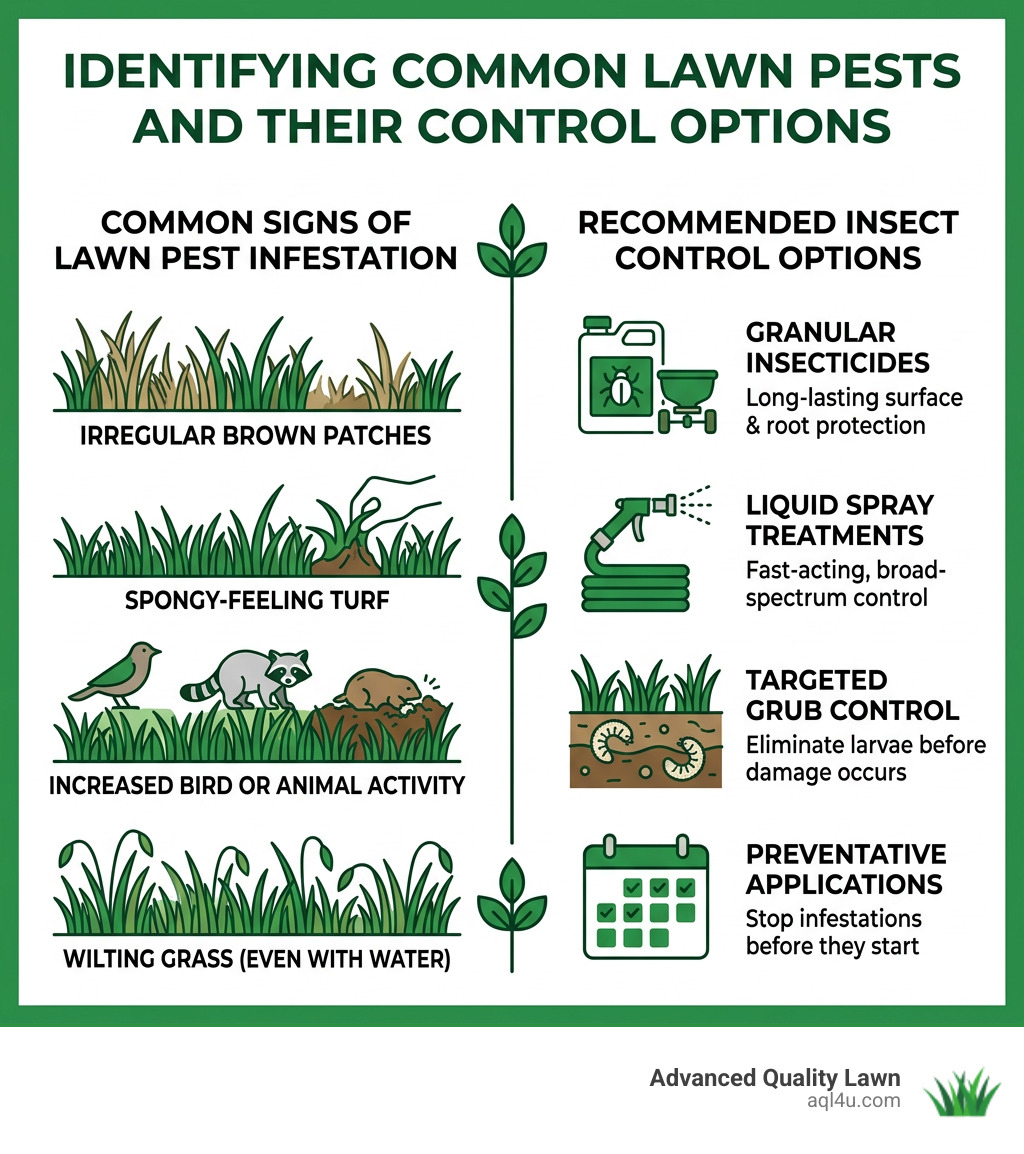
To win the war against Lawn Bugs, we first have to know who we are fighting. In Northeast Ohio—from the heights of Brecksville down to the valleys of Cuyahoga Falls—our lawns face a specific roster of "unwelcome guests." Identifying them early is the difference between a minor spot-treat and a total lawn renovation. As noted by the Ohio State University Extension, early detection of turfgrass pests can prevent significant structural damage to your lawn.
The Underground Destroyers: White Grubs
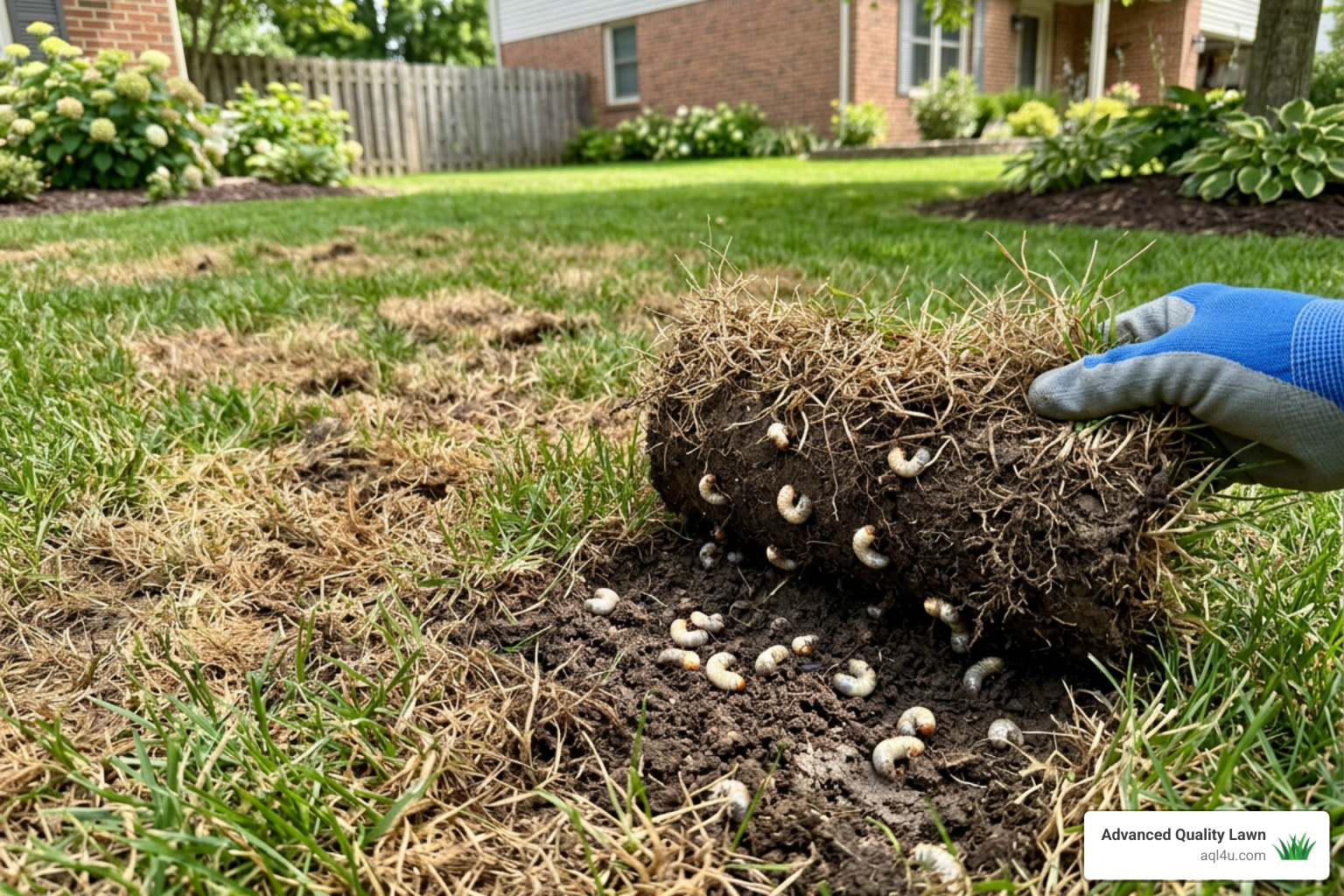
White Grubs are perhaps the most notorious villains in our region. These C-shaped, milky-white larvae are the offspring of Japanese Beetles and other beetles. They live in the soil and feast exclusively on grass roots.
- The Damage: Because they eat the "anchor" of your grass, the turf will begin to feel spongy. Eventually, you’ll see brown patches that can be rolled up like a piece of carpet because there are no roots left to hold it down.
- The Secondary Threat: If you notice skunks or raccoons digging up your yard at night, they aren't just being rude—they are hunting for a grub snack.
The Surface Shredders: Armyworms and Sod Webworms
Armyworms Are Devouring Turf Lawns in Ohio isn't just a headline; it's a seasonal reality. These Caterpillars march across your turf in large numbers, eating the blades as they go.
- The Damage: They leave the lawn looking "scalped" or transparent. Sod webworms, the larvae of certain Moths, create small, silk-lined tunnels in the thatch and eat grass at night, leaving small, ragged brown spots.
The Sap Suckers: Chinch Bugs
Chinch bugs are tiny, but they pack a punch. They thrive in hot, dry conditions—exactly what we see during a typical Hudson or Solon July.
- The Damage: They pierce the grass blade and suck out the juice while injecting a toxin. Interestingly, chinch bug damage often makes the grass turn a distinct purple hue before it eventually withers into yellow and brown patches.
Health Risks: Ticks and Fleas
Not all Lawn Pests destroy the grass; some target your family and pets. Ticks and fleas hide in tall grass and shaded areas, waiting for a host. These aren't just nuisances; they are vectors for diseases like Lyme or spotted fever.
For a deeper dive into these critters, check out The Unwelcome Guests: Tent Caterpillars and White Grubs in Your Yard.
Choosing the Best Insect Control for Lawns: Granular vs. Liquid
When you decide to Get Rid of Pests, you'll generally choose between two delivery methods: granular or liquid. Both have their place in a professional Pest Control strategy.
Granular Insecticides
Granular products are small pellets spread across the lawn. They are the workhorses of long-term protection.
- How they work: Most granules require "watering in." Once wet, they dissolve and create a protective barrier in the soil or thatch.
- Pros: They often provide longer residual control (up to 3 months). They are excellent for sub-surface pests like grubs because the active ingredient moves down into the root zone.
- Cons: They take longer to start working compared to liquids.
Liquid Insecticides
Liquid treatments are sprayed directly onto the grass blades or soil.
- How they work: These often provide a "knockdown" effect, killing Bugs on contact.
- Pros: Fast-acting. Great for surface-dwellers like ants, spiders, and mosquitoes.
- Cons: They typically don't last as long as granules and can be more easily washed away by heavy rain if not applied correctly.
Comparison Table: Granular vs. Liquid
| Feature | Granular | Liquid |
|---|---|---|
| Primary Target | Sub-surface (Grubs, Mole Crickets) | Surface (Ants, Fleas, Ticks) |
| Speed of Action | Slower (requires dissolving) | Fast (Contact kill) |
| Residual Life | Long (Up to 90 days) | Short to Medium (4-6 weeks) |
| Application Tool | Broadcast or Drop Spreader | Hose-end or Tank Sprayer |
Professional-Grade Solutions for Effective Insect Control
While big-box stores offer many DIY options, professional-grade solutions often provide higher concentrations of active ingredients and more sophisticated "systemic" protection. At Advanced Quality Lawn, we use products that are formulated for golf-course quality results, ensuring your Garden Pests don't stand a chance.
Key Characteristics of Effective Professional Treatments
- Systemic Protection: Some products, like those containing Imidacloprid or Acelepryn, are absorbed by the grass itself. When a bug takes a bite, it’s their last meal. This provides season-long peace of mind.
- Broad-Spectrum Control: Professionals often use "cocktails" or specialized formulas like Caravan G, which combines an insecticide with a fungicide to protect against both bugs and lawn diseases simultaneously.
- Rapid Knockdown: For active infestations (like an armyworm invasion), we use fast-acting contact killers like Dylox 6.2, which can start neutralizing pests in minutes.
- Targeted Application: We don't just "blanket spray" your whole property with harsh chemicals. We target the specific zones where pests live, such as the perimeter of your home or known "hot spots" in the turf.
Benefits of Professional Pest Control Services
You might wonder if you should just grab a bag of Triazicide and do it yourself. While DIY is possible, professional service offers several advantages:
- Expert Diagnosis: Is that brown spot a grub, a chinch bug, or just a fungus? We know the difference. Check out our guide on Common Ohio Garden Pests and How to Get Rid of Them to see why identification is so tricky.
- Precise Equipment: Our calibrated spreaders and sprayers ensure that you aren't over-applying (which wastes money and hurts the environment) or under-applying (which doesn't kill the bugs).
- Safety First: We handle the concentrated chemicals and ensure they are applied according to the strict guidelines on the Safety Data Sheet (SDS).
Application Tips and Safety Precautions for Professional Services
Whether we are performing Perimeter Pest Control or treating your entire lawn, safety is our top priority. The best insect control for lawns is only "best" if it keeps your family safe. We follow all EPA safety protocols to ensure that our treatments are effective yet responsible.
Safety for Kids and Pets
Modern insecticides are designed to be used in residential areas, but precautions are still necessary:
- The "Dry" Rule: For most liquid and granular applications, children and pets should stay off the lawn until the product has been watered in and the grass is completely dry.
- Non-Toxic Options: We often recommend organic-based options like Spinosad for homeowners who are particularly concerned about pollinators or sensitive pets. Spinosad is a natural substance that effectively controls Worms and caterpillars without the heavy chemical footprint.
Environmental Stewardship
Using Weed and Pest Removal products responsibly prevents runoff into our local Northeast Ohio waterways.
- Sweep it up: We always sweep granules off driveways and sidewalks back onto the grass.
- Weather Watching: We never apply treatments right before a heavy rainstorm, which could wash the product into storm drains.
- Water Source Protection: In areas like Summit or Cuyahoga County, we are careful to maintain "buffer zones" around ponds and streams.
When to Apply the Best Insect Control for Lawns for Maximum Effect
Timing is everything. Apply too early, and the product wears off; apply too late, and the damage is done.
- Grub Prevention: The window for products like Scotts GrubEx or Acelepryn G is typically late spring to early summer (May through June). This catches the young grubs before they grow large enough to destroy the root system.
- Surface Feeders: Treat for Armyworms and chinch bugs at the first sign of activity, usually during the heat of July and August.
- Curative Treatments: If you already have a massive infestation, a "curative" product like Dylox should be applied immediately to stop the bleeding.
Preventing Infestations Through Routine Lawn Maintenance
The best defense is a good offense. A thick, healthy lawn is naturally more resistant to Lawn Pest damage. If your grass is stressed, it’s like an "open for business" sign for bugs.
- Mowing Height: Keep your grass at roughly 3 to 4 inches. Taller grass shades the soil, keeping it cooler and less hospitable to some pests, while also encouraging deeper root growth.
- Proper Watering: Aim for 1 to 1.5 inches of water per week. Avoid frequent, shallow watering; instead, do two long sessions per week. This prevents the "thatch" layer from becoming a soggy home for bugs.
- Core Aeration: This reduces soil compaction and breaks up heavy thatch. Thatch is the layer of dead organic matter between the grass and soil—it's basically a luxury hotel for chinch bugs and sod webworms.
- Debris Removal: Clear away piles of leaves, wood, or grass clippings. These provide the dark, moist environments that crickets, ants, and earwigs love.
- Gutter Maintenance: Clogged gutters create stagnant water, which is the primary breeding ground for mosquitoes. Clean them at least twice a year.
Frequently Asked Questions about Lawn Pest Control
What safety precautions are taken during and after professional pest control treatments?
We ensure all products are applied at the correct label rates. We advise homeowners to keep pets and children inside during the application and for 1-2 hours afterward until the lawn is dry. If using granules that require watering, the lawn is safe once the water has soaked in and the blades are dry to the touch.
How do professional applications of granular and liquid insecticides differ?
Professionals use commercial-grade equipment that provides a much more even distribution than a standard hand-held spreader. Liquids are often used for immediate "knockdown" of active pests, while granules are used for long-term residual protection. We often use a combination of both for a comprehensive shield.
What is the most effective long-term strategy for grub prevention?
The "Gold Standard" is a preventative application in the late spring. Using a slow-release product like Acelepryn G provides season-long protection. This is much more effective (and cheaper) than trying to kill large, mature grubs in the fall after they've already eaten your roots.
Conclusion
Finding the best insect control for lawns shouldn't be a guessing game. Whether you are dealing with a sudden invasion of armyworms in Stow or trying to prevent grubs in Chagrin Falls, the key is proactive care. By combining smart routine maintenance with the right professional-grade treatments, you can enjoy a backyard that belongs to your family—not the bugs.
At Advanced Quality Lawn, we’ve spent decades perfecting our approach to lawn care in Akron, OH, and the surrounding Northeast Ohio communities. We believe in excellent customer service, backed by full-program guarantees and a deep understanding of our local soil and climate.
Ready to protect your investment? Let us handle the tiny invaders so you can get back to enjoying your lawn. Explore our Lawn Care Maintenance programs today and see the difference professional expertise makes.