Don't Let Crabgrass Win the War in Your Garden Beds
Why Crabgrass Invades Flower Beds (And How to Stop It Before It Starts)
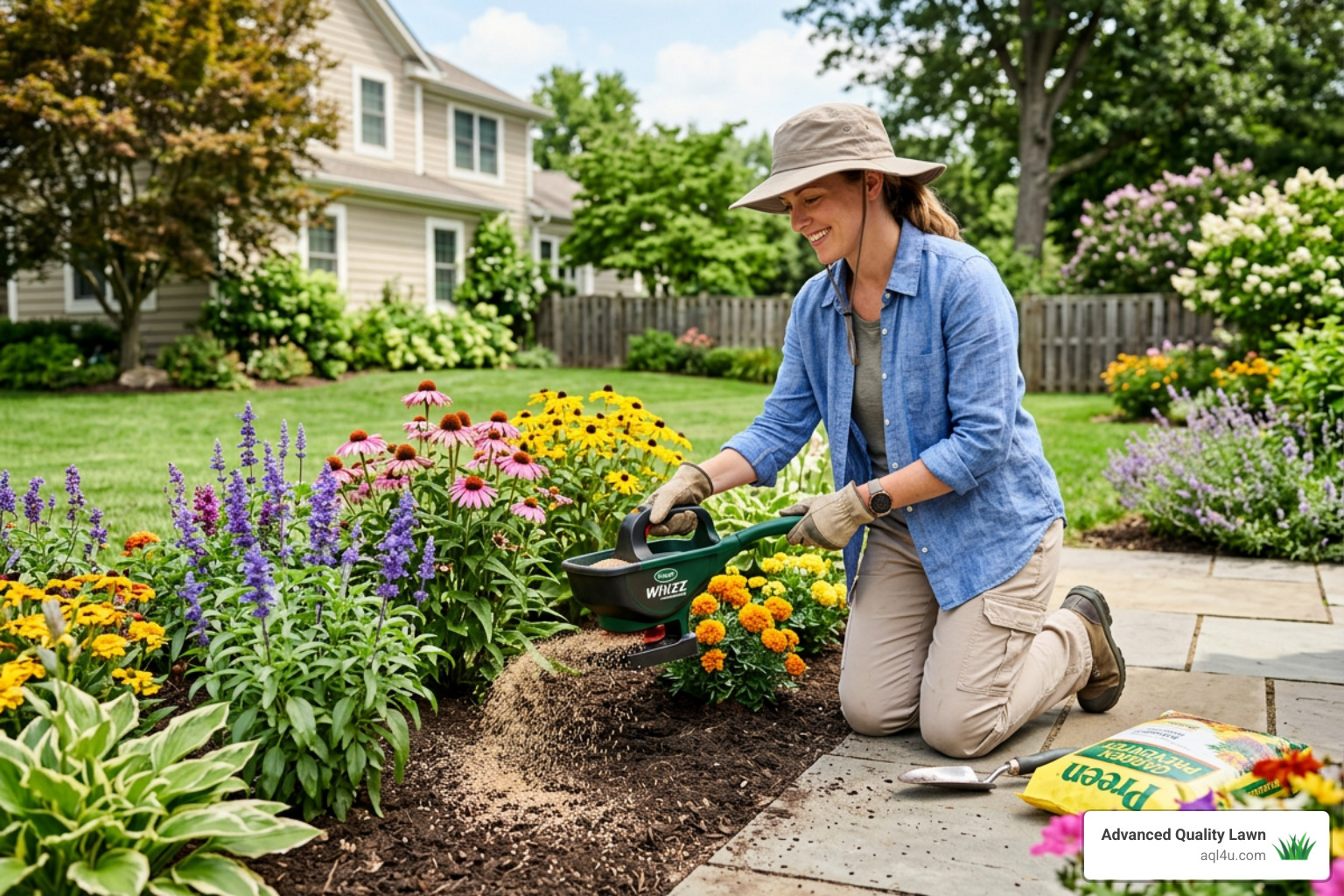
Using a crabgrass preventer in flower beds is one of the most effective ways to stop this stubborn weed before it ever breaks the soil surface. Here's what you need to know right away:
Quick answer: How to prevent crabgrass in flower beds
- Apply a granular pre-emergent herbicide labeled safe for ornamentals (such as Snapshot 2.5 TG or a trifluralin/dithiopyr-based product)
- Time your application for early spring, when soil temperatures consistently reach 50-55°F
- Water in the granules with about ¼ to ½ inch of water to activate the barrier
- Reapply in fall to stop winter annual weeds like Poa annua
- Combine with 2-3 inches of mulch for best results
Crabgrass is an annual weed, meaning it dies each fall and comes back entirely from seed the following year. That sounds manageable — until you learn that a single plant can produce more than 100,000 seeds. Those seeds can stay viable in your soil for at least three years, quietly waiting for the right soil temperature and a patch of bare ground.
Flower beds, especially sunny ones with thin or disturbed soil, are just as vulnerable as lawns. Once crabgrass gets a foothold among your perennials and shrubs, it competes aggressively for water and nutrients — and it spreads fast.
The good news? Because it's an annual, it's actually one of the earlier weeds to prevent with the right approach and timing.
I'm Andrew Day, owner of Advanced Quality Lawn, and over more than 30 years serving Northeast Ohio homeowners I've seen how the right crabgrass preventer in flower beds — applied at the right time — can transform a high-maintenance bed into a low-effort one. In this guide, I'll walk you through exactly what works.
How Pre-Emergent Crabgrass Preventer in Flower Beds Works
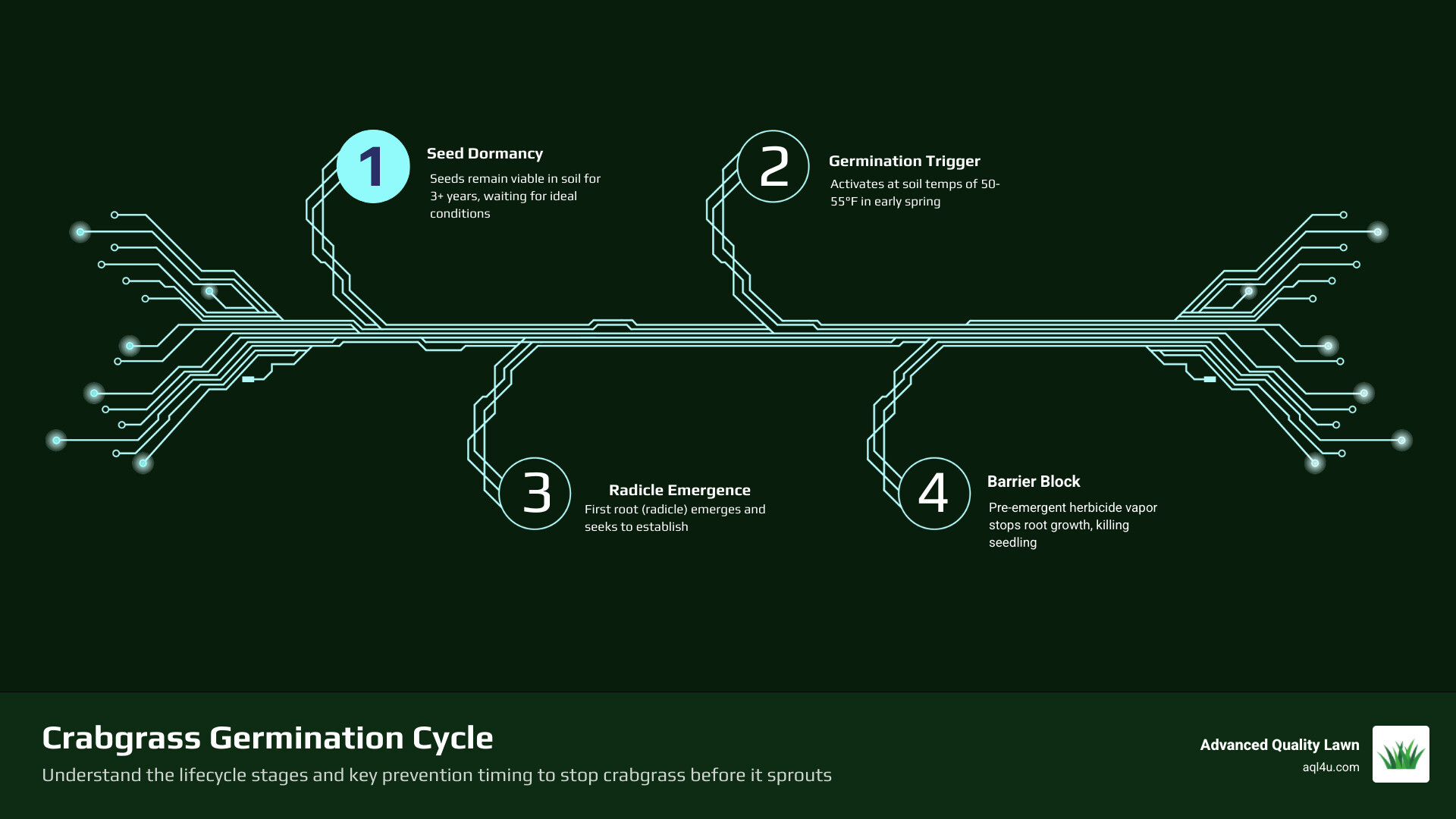
To win the war against weeds, we first have to understand how the "enemy" operates. Crabgrass is a master of opportunism. It thrives in the sunny, bare patches of soil often found between your prize hostas or under a thin layer of mulch. Because a single large crabgrass plant can produce over 100,000 seeds, the soil in an average Northeast Ohio garden is essentially a "seed bank" waiting to withdraw its interest.
When we apply a crabgrass preventer in flower beds, we aren't actually killing the seeds themselves. Instead, these products—known as pre-emergent herbicides—create a chemical vapor barrier in the top inch of the soil. As the seed begins to germinate and sends out its first tiny root (the radicle), it hits this barrier. The herbicide inhibits root development, causing the weed seedling to die before it ever pokes its head above the mulch.
This is why weed prevention is so much more effective than playing "catch-up" with a hoe later in the summer. By stopping the root before it takes hold, we keep the garden's nutrients and water reserved for your desirable plants.
Selective Control for Ornamentals
One of the most common concerns we hear at Advanced Quality Lawn is: "Will this kill my flowers?" The short answer is no—provided you use a product labeled for ornamental use and your plants are already established.
Pre-emergents are designed to target seeds, not established root systems. Because your perennials, shrubs, and trees already have deep, mature roots well below that one-inch "barrier zone," they remain completely unaffected. However, this is also why you shouldn't use these products in a bed where you’ve just scattered flower seeds (like zinnias or marigolds), as the preventer won't distinguish between a "weed" seed and a "flower" seed. If you've just put in new transplants, we generally recommend waiting 8 to 12 weeks for them to settle in before applying a preventer. For more on the manual side of things, check out our tips on weed removal.
Interaction with Mulch and Soil
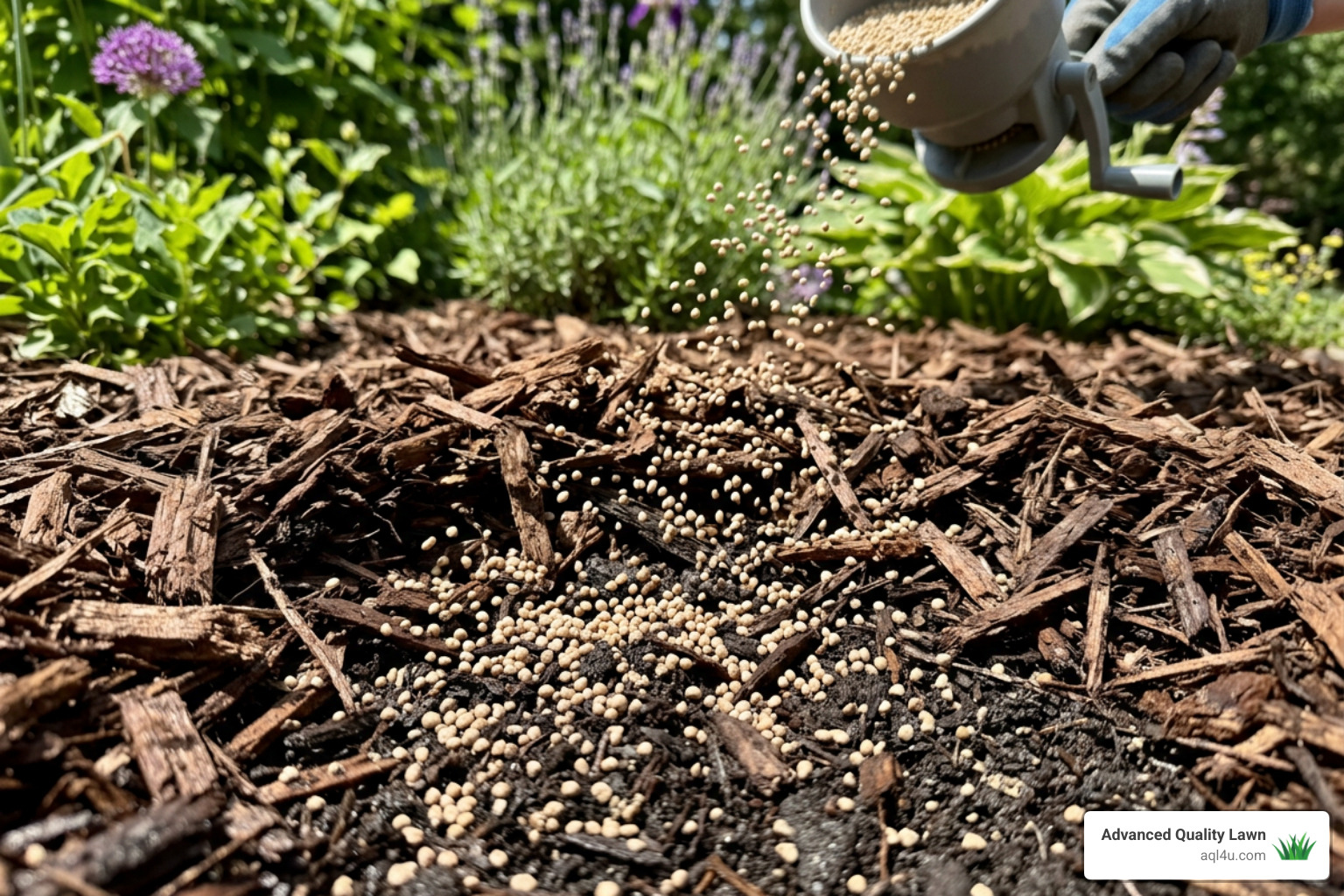
Many homeowners ask if they should apply the preventer before or after mulching. In an ideal world, you apply it directly to the bare soil and then mulch over it. However, granular formulations are designed to sift through the gaps in wood chips or bark.
The key is the "three-inch rule." If your mulch is thicker than three inches, the granules might get hung up and never reach the soil where the seeds are germinating. If you have heavy mulch, we recommend raking it lightly after application to help the granules settle, followed by a thorough watering. This moisture "activates" the herbicide, moving it into the soil to form that protective seal.
Timing Your Application for Maximum Success
In Northeast Ohio, timing is everything. Apply too early, and the barrier might break down before the seeds wake up. Apply too late, and the crabgrass has already germinated, making the pre-emergent useless.
| Application Season | Primary Target | Key Indicator | Soil Temp Trigger |
|---|---|---|---|
| Spring | Crabgrass, Foxtail, Spurge | Forsythia in peak bloom | 55°F (for 3 days) |
| Fall | Poa Annua, Henbit, Chickweed | Night temps drop to 45°F | Below 70°F |
Crabgrass seeds begin to germinate when the soil temperature hits a consistent 55°F for several days in a row. A great natural "thermometer" is the Forsythia bush. When those bright yellow flowers are in full bloom, it’s time to get your crabgrass preventer in flower beds. If you see dandelions starting to puff into white seed heads, you are likely at the tail end of your window. For more detailed timing, you can follow our prevent weeds tag.
Spring Application Windows
For our neighbors in Akron, Hudson, and Stow, the spring window usually opens in early to mid-April. However, because soil warms up faster next to "heat sinks" like concrete sidewalks, driveways, and stone edging, you might see crabgrass popping up there first. We often suggest a "split application" strategy: one round in early spring and a second round about 8 to 10 weeks later to ensure the barrier lasts through the heat of July. You can read more about the biology of this weed on our crabgrass tag page.
When to Reapply Crabgrass Preventer in Flower Beds
Most high-quality professional products, like Snapshot 2.5 TG, provide about 4 to 6 months of protection. However, heavy rains—which we get plenty of in Northeast Ohio—can gradually wash away the barrier.
If you applied your first round in April, a re-application in late June or early July will carry you through the rest of the growing season. Don't forget the fall! Applying a preventer in late August or September (when soil temps drop below 70°F) is the secret to stopping winter annuals like Poa annua (annual bluegrass) from taking over your beds next spring. Keeping up with this schedule is a core part of our Weeds category advice.
Step-by-Step Guide to Applying Crabgrass Preventer in Flower Beds
Ready to take action? Here is the process we use to ensure a weed-free landscape.
Preparing the Landscape Bed
You cannot apply pre-emergent over existing weeds and expect them to disappear. Remember: pre-emergents prevent new seeds from growing; they do not kill weeds that are already green and growing.
- Hand Pull Existing Weeds: Start with a clean slate. It’s best to do this after a rain when the soil is soft so you can get the entire root.
- Clear Debris: Remove fallen leaves or thick mats of old grass that might prevent granules from reaching the soil.
- Rake the Mulch: If your mulch has become "crusted" or compacted, give it a light raking to open up the surface. For more on identifying your garden foes, see our guide on Dandelions and Crabgrass.
Best Practices for Crabgrass Preventer in Flower Beds
When you're ready to spread, follow these pro tips:
- Use Granules, Not Sprays: In a crowded flower bed, granular products are much safer. They roll off the leaves of your perennials and settle on the soil. Liquid sprays can "drift" in the wind and damage sensitive foliage.
- The "Bucket Shield" Trick: If you have a very sensitive or rare plant, cut the bottom out of a five-gallon bucket. Place the bucket over the plant, spread your granules around it, and then lift the bucket. This keeps the herbicide away from the plant's "crown" (where the stems meet the roots).
- Even Distribution: Use a hand-held spreader for better control than a large push spreader. You want an even "peppered" look across the mulch.
- Water It In: This is the most important step. If it doesn't rain within 24-48 hours, use a hose to give the bed about half an inch of water. This "sets" the barrier. Without water, the granules just sit on top and eventually break down in the sunlight. You can find more specific product advice in our Crabgrass category.
Choosing the Right Products and Alternatives
Not all preventers are created equal. When shopping for a crabgrass preventer in flower beds, look for these active ingredients:
- Trifluralin: Found in many consumer-grade products (like Preen). It's excellent for general garden use and safe around hundreds of flower varieties.
- Dithiopyr: Often sold under the brand name Dimension. It's unique because it has a small "reach back" effect—it can kill very young crabgrass that has just sprouted (up to the 4-leaf stage).
- Prodiamine: Known for its incredible longevity. This is a "pro-grade" choice for those who want to apply once and be done for the season.
Chemical vs. Organic Options
If you prefer to stay away from synthetic chemicals, you have options!
- Corn Gluten Meal: This is a byproduct of corn processing. It acts as a mild pre-emergent by drying out the tiny roots of germinating seeds. It also contains about 10% nitrogen, so it gives your flowers a little snack while it works. Just be aware it is less "bulletproof" than synthetic options and requires very precise timing.
- Thick Mulching: A 3-to-4-inch layer of clean wood chips or bark is a mechanical preventer. It blocks the sunlight that crabgrass seeds need to wake up.
- Soil Solarization: For a new bed, you can lay clear plastic over the soil during the heat of summer for 4-6 weeks. This "cooks" the weed seeds in the top few inches of soil.
Post-Emergent Spot Treatments
If a few crabgrass plants do sneak through, you'll need a post-emergent "killer." However, be extremely careful. Most "grass killers" will also kill your ornamental grasses.
For tough invaders like nutsedge (which looks like grass but is actually a sedge), products containing sulfentrazone or halosulfuron-methyl are effective but should be used as a spot treatment only. When spraying near flowers, always use a shield (like a piece of cardboard) to prevent the mist from touching your "good" plants. For more on identification, scientific research on weed management can help you tell the difference between a grassy weed and a desirable plant.
Frequently Asked Questions about Crabgrass Prevention
Will pre-emergent harm my flower bulbs?
Generally, no. Established bulbs like daffodils, tulips, and crocuses are buried deep in the soil—well below the one-inch herbicide barrier. As long as the bulbs are dormant or already established, the preventer won't affect their growth or flowering. In fact, many professionals apply preventers right over the top of bulb beds in early spring to keep the beds clean after the flowers fade.
Can I apply preventer on top of thick mulch?
You can, but it’s less effective. If your mulch is over 3 inches deep, the granules may never reach the soil. If you have a "mulch mountain," we recommend raking it back, applying the crabgrass preventer in flower beds, and then raking the mulch back over it. This ensures the chemical barrier is exactly where the seeds are trying to sprout.
Is it safe to use around my vegetable garden?
Check the label! Most ornamental pre-emergents (like Snapshot or Preen Extended Control) are not labeled for use around edible crops. If you are fighting crabgrass in your tomatoes or peppers, look for a product specifically labeled for vegetable gardens, or stick to organic methods like corn gluten meal, straw mulching, or good old-fashioned hand-weeding.
Conclusion
A beautiful garden shouldn't be a source of back-breaking labor. By understanding the lifecycle of crabgrass and using a high-quality crabgrass preventer in flower beds, you can stop the "war" before the first shot is even fired.
At Advanced Quality Lawn, we’ve spent decades perfecting the science of landscape maintenance across Northeast Ohio—from Akron and Canton up to Cleveland and the surrounding suburbs. We know the local soil, the local weather patterns, and exactly when those stubborn weeds are planning their invasion.
If you’d rather spend your weekends enjoying your flowers instead of pulling weeds out from under them, we’re here to help. Our professional crews use commercial-grade preventers and precise timing to keep your landscape beds looking pristine all season long. Whether you're in Brecksville, Medina, or Hudson, give us a call. We provide full-program guarantees and excellent customer service to ensure your home has the curb appeal it deserves.
Contact Advanced Quality Lawn for professional lawn care services today and let us take the "work" out of your yard work!