When Gophers Take Over Your Ohio Yard
The best way to get rid of gophers in your yard is to use mechanical traps set directly inside the main tunnel runway. Here is a quick overview of the most effective methods, ranked by reliability:
- Mechanical trapping (most reliable): Set paired traps facing opposite directions inside the main tunnel. Block all light from the opening.
- Underground wire mesh barriers: Install hardware cloth at least 2 feet deep to prevent new gophers from entering garden beds.
- Peppermint oil or castor oil repellents: Apply around yard perimeters as a secondary deterrent. Requires regular reapplication.
- Natural predators: Barn owl boxes can support long-term population control. A single barn owl family can consume up to 1,000 gophers per year.
- Poison bait (use with caution): Effective but carries serious risks to pets, wildlife, and soil health.
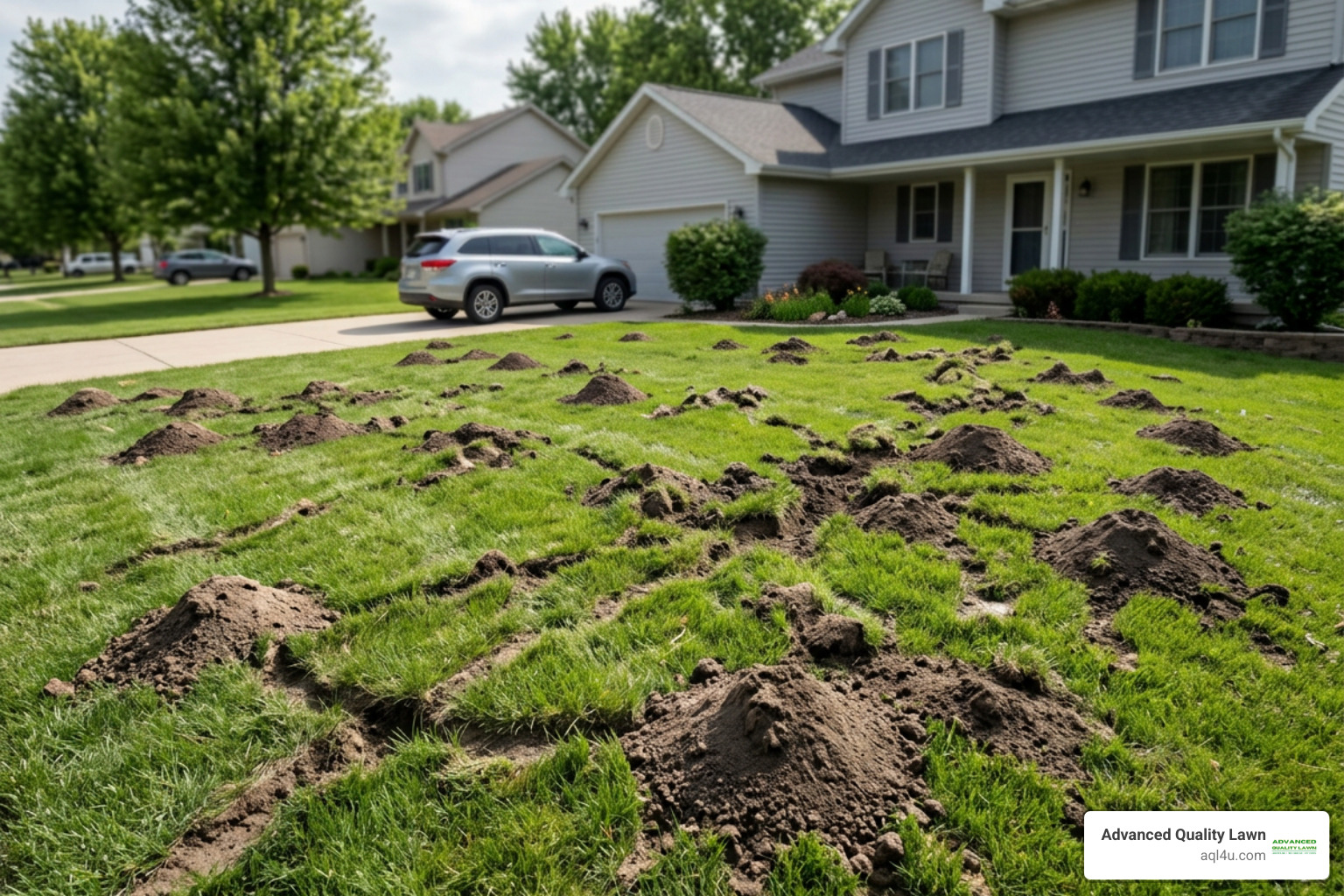
One fresh gopher mound in your yard can quickly become three. A single gopher can build up to three mounds per day, and its burrow system can spread across hundreds or even thousands of square feet of your lawn. By the time most homeowners notice the damage, roots are already gone and tunnels run in every direction beneath the surface.
I'm Andrew Day, owner of Advanced Quality Lawn, and with more than 30 years of lawn care experience serving Northeast Ohio homeowners, I know how fast gopher activity can undo months of careful yard maintenance. In this guide, I'll walk you through the best way to get rid of gophers in your yard for good, using proven methods that actually work in Ohio's soil conditions.
Identifying Gopher Damage vs Moles and Voles
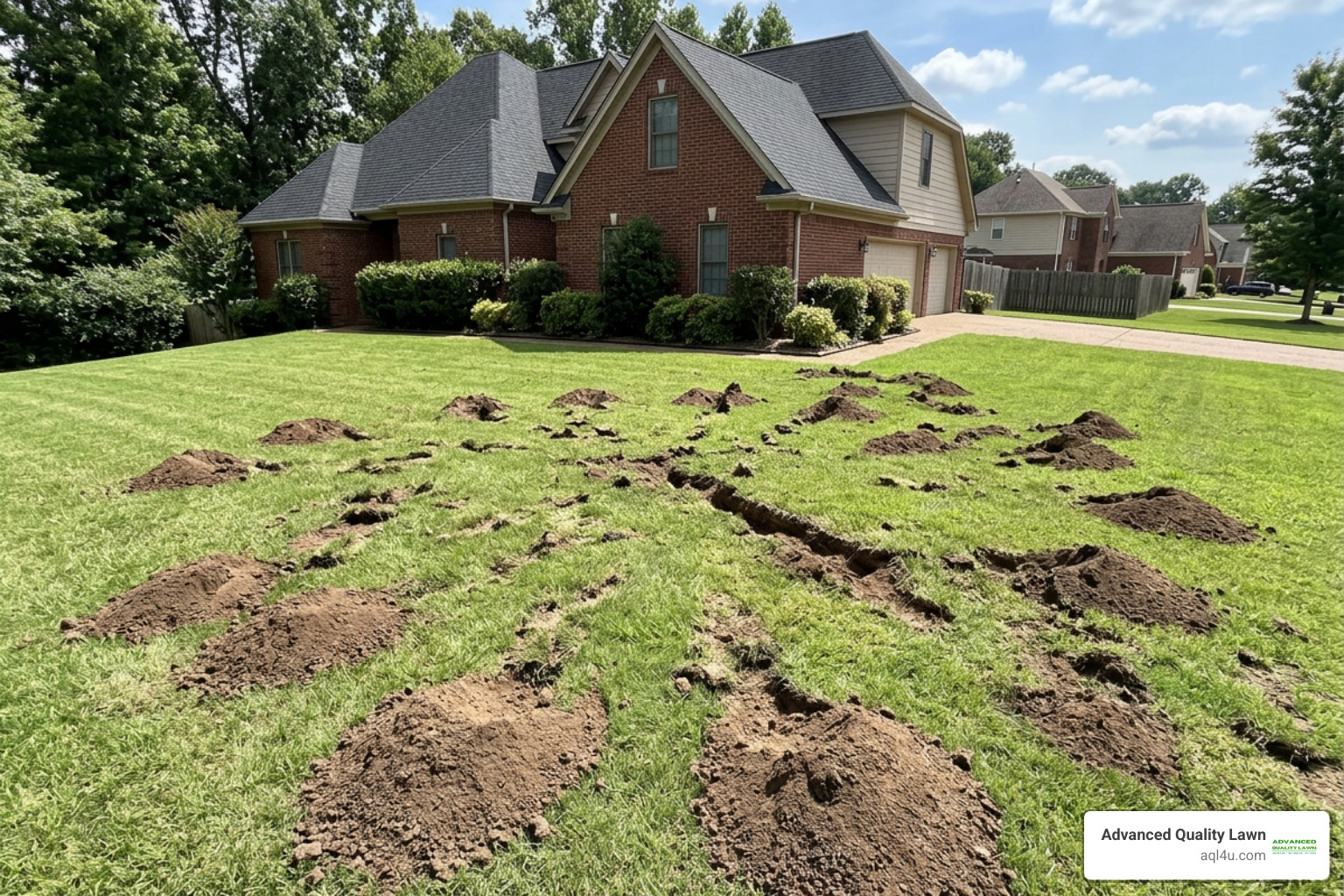
Before taking action, you must confirm which animal is tearing up your property. Treating a gopher problem with mole solutions will waste both time and money because their diets and tunneling habits are completely different.
Crescent Mounds and Active Tunnel Indicators
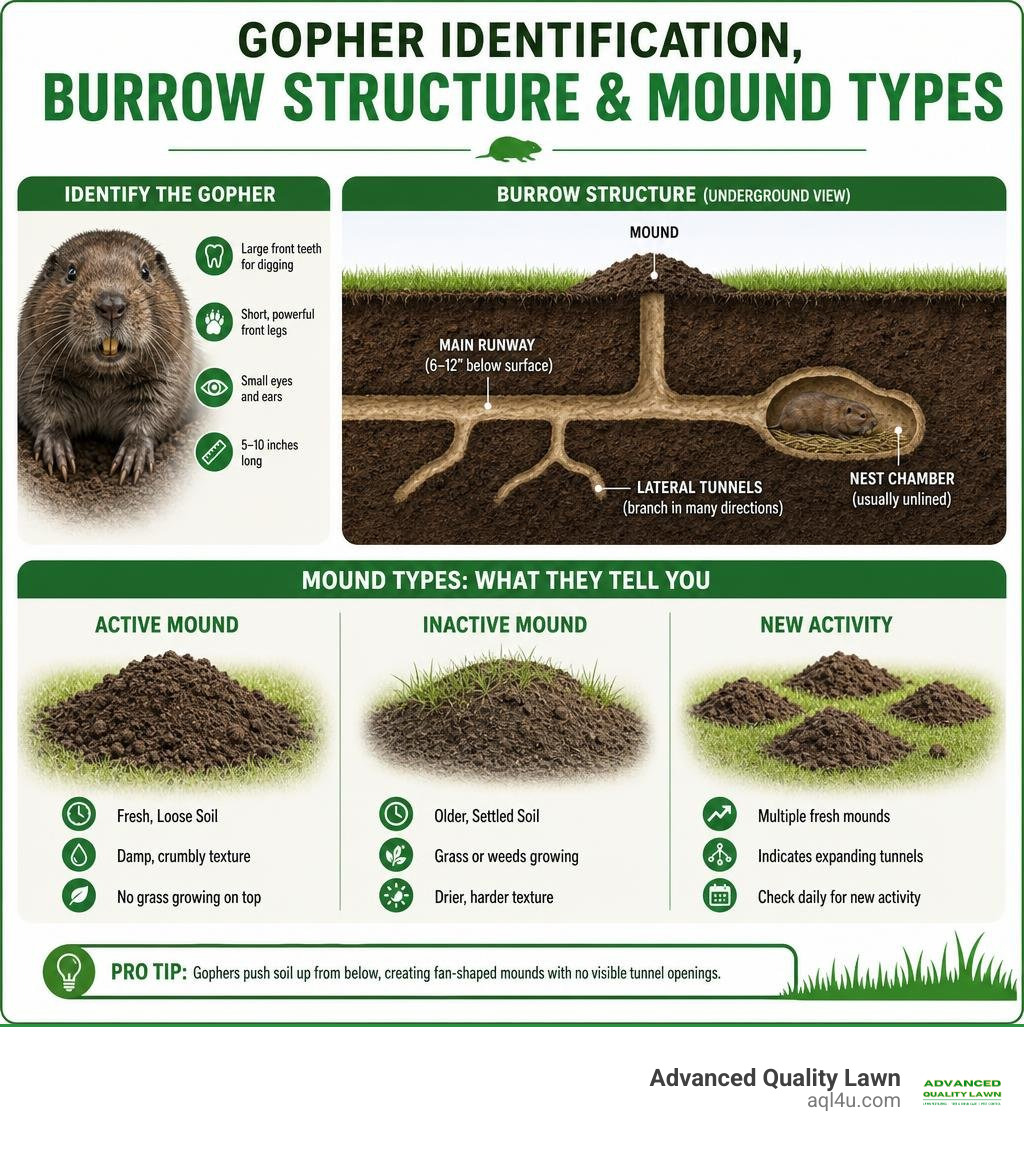
Gophers are master diggers that spend almost their entire lives underground. As they excavate their extensive main tunnels, which run anywhere from 4 to 18 inches below ground level, they push loose dirt up to the surface through short side runs called lateral tunnels.
You can easily spot gopher activity by looking at the shape of the dirt piles on your grass. Gopher mounds are crescent shaped or fan shaped. The dirt is pushed out in one direction, leaving a distinct plugged hole on the inner flat side of the crescent. This soil plug acts as a front door that the gopher seals tightly to keep out predators, light, and drafts. When you see soft, dark soil forming a fresh crescent mound, you are looking at an active tunnel system that needs immediate attention.
Differences Between Gophers Moles and Voles
Understanding the diet and surface signs of each pest is essential for effective removal. Pocket gophers are strict herbivores that feed on succulent roots, bulbs, tubers, and turf grass. If you see a prized plant suddenly wilt and discover that its entire root system has been eaten from below, a gopher is almost certainly responsible.
Moles are insectivores that search for earthworms, grubs, and soil insects. They do not eat plants or roots, though their digging can loosen soil around root systems. Moles push dirt straight up to create symmetrical cone shaped mounds that look like small volcanoes. Voles are tiny plant eating rodents that create open surface runways through clipped grass along with small entry holes about 1.5 inches in diameter without giant soil mounds.
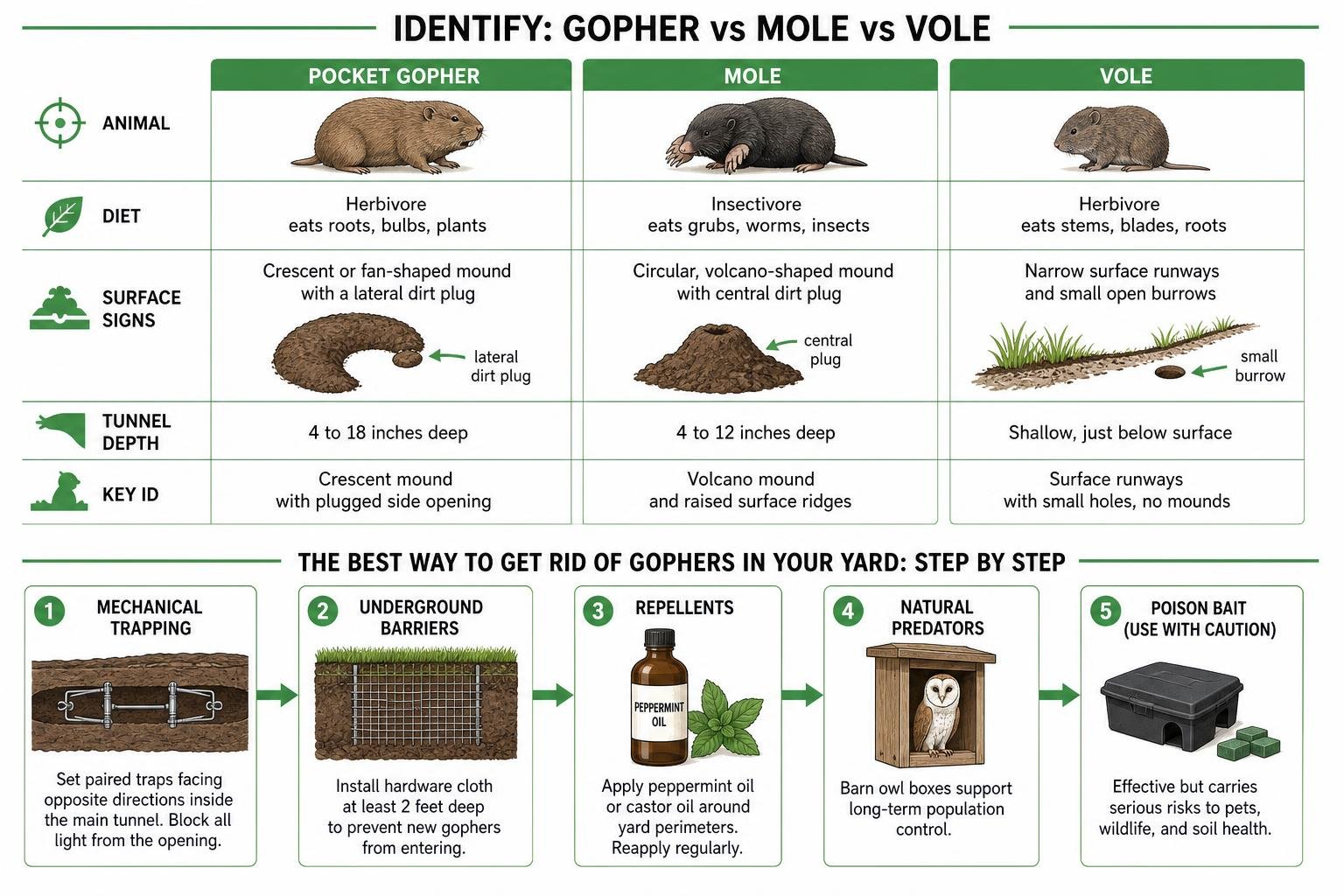
- Pocket Gophers: Herbivores eating roots and plants. Mounds are crescent or fan shaped with a lateral dirt plug. Tunnels sit 4 to 18 inches deep.
- Moles: Insectivores eating grubs and worms. Mounds are circular and volcano shaped with a central plug. They also create raised surface ridges.
- Voles: Herbivores eating stems, blades, and roots. They leave narrow surface runways and small open burrows without large dirt mounds.
The Best Way to Get Rid of Gophers in Your Yard Step by Step
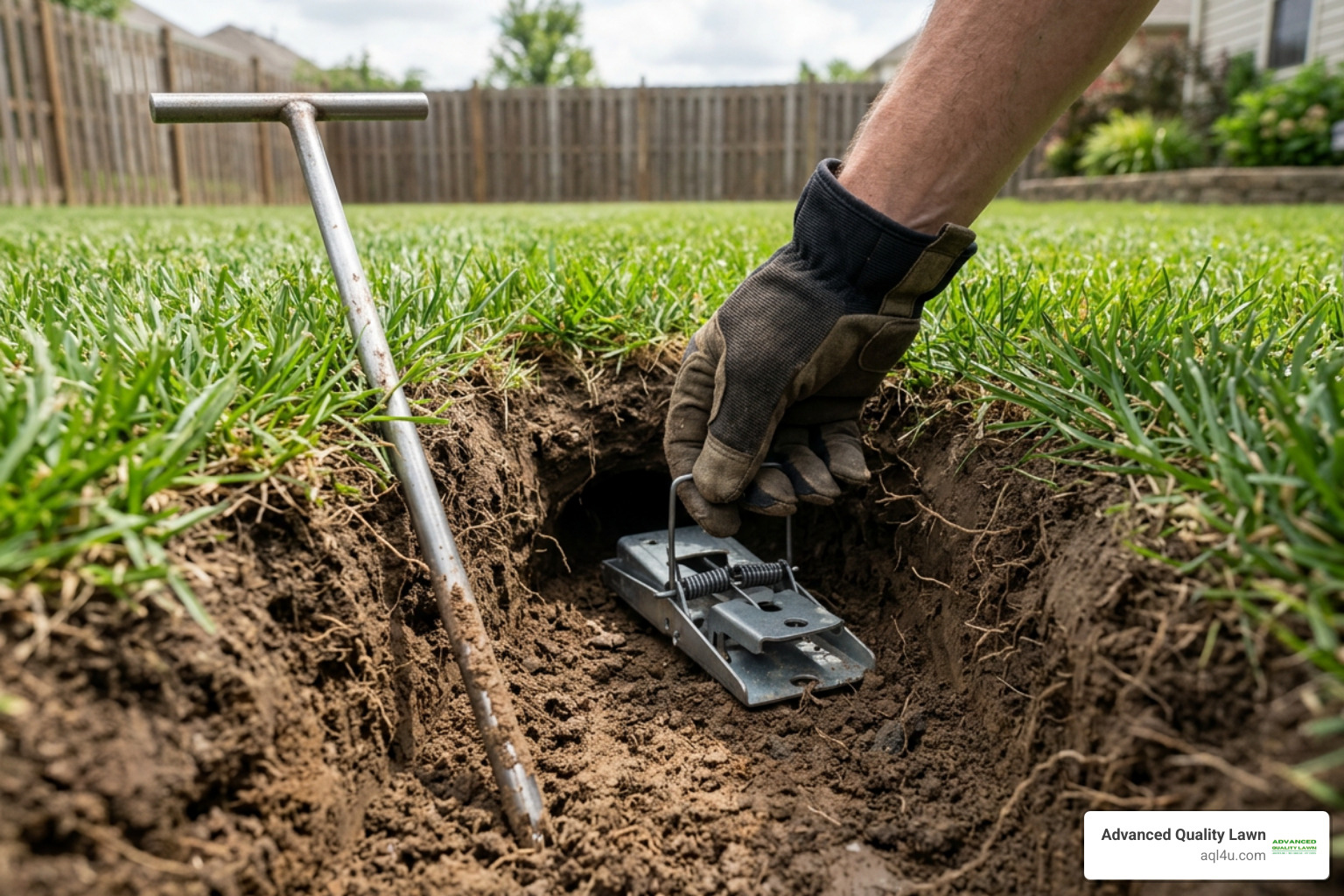
When homeowners ask us about the best way to get rid of gophers in your yard, our answer is always physical trapping inside active main runways. Trapping gives you immediate physical proof of capture and avoids introducing toxic chemicals into your soil.
Locating Main Runway Tunnels With a Soil Probe
Setting a trap inside a lateral dirt mound is a common mistake. Lateral tunnels are frequently packed with soil and abandoned after excavation. You must set your traps inside the main horizontal runway tunnel.
- Find a fresh mound: Scout your lawn early in the morning for a new crescent pile of moist soil.
- Identify the plugged side: Look for the indented dirt plug along the inner edge of the crescent.
- Probe for the main run: Insert a metal soil probe, a long screwdriver, or a metal rod into the lawn about 4 to 12 inches away from the plugged side of the mound.
- Feel for the void drop: Push the probe straight down into the dirt. When the tip drops suddenly by 2 to 4 inches, you have pierced the roof of the main runway tunnel, which usually runs 6 to 12 inches below the turf.
Setting Mechanical Traps as the Best Way to Get Rid of Gophers in Your Yard
Once you have located the main run, you need to open a small section of the tunnel using a trowel or spade.
- Excavate carefully: Dig out a small square of soil to expose the main tunnel opening. You should see open runs leading in two opposite directions.
- Clear away debris: Remove loose dirt clods from inside the tunnel using your hand or a small spoon so the trigger mechanism moves freely.
- Prepare paired traps: Always set two mechanical traps back to back. Place one trap facing left and the second trap facing right into the opposing run. This ensures you catch the gopher regardless of which direction it travels through its tunnel.
- Anchor with wire and stakes: Secure both traps to wooden stakes or metal pins pushed into the lawn using heavy string or wire. Gophers or scavengers can drag unanchored traps deep into the burrow system.
Blocking All Daylight to Prevent Trap Failure
The single most critical step in gopher trapping is sealing out all light and air drafts. Gophers are extremely sensitive to light entering their dark burrows. If light shines into an open tunnel excavation, the gopher will perceive danger and push a wall of loose dirt ahead of itself to block the hole. This dirt wall will trigger or clog your traps before the gopher ever steps inside.
After setting your paired traps in the runway, place a piece of rigid cardboard, a wooden board, or a wide piece of sod completely over the excavated hole. Seal all the outer edges of the cover with loose dirt to make the tunnel completely dark and airtight.
Natural Repellents and Non-Lethal Control Methods
Many property owners prefer starting with non-lethal repellents before moving to mechanical traps. While natural deterrents rarely eliminate an established gopher infestation on their own, they can help drive pests away from high value planting beds.
Using Peppermint Oil and Castor Oil Deterrents
Gophers possess a highly developed sense of smell that helps them navigate dark underground environments. Strong essential oils irritate their sensitive nasal passages and make treated soil uncomfortable for feeding.
- Peppermint oil spray: Mix concentrated peppermint oil with warm water and a few drops of liquid dish soap to act as an emulsifier. Pour or spray this liquid solution directly down active tunnel entrances.
- Castor oil soil drench: Castor oil creates a lingering scent and coats plant roots, making them unpalatable. Combine castor oil with dish soap and water, then soak the root zones of vulnerable garden plants using a hose end sprayer.
- Granular deterrents: Apply castor oil granules along garden perimeters and water them thoroughly to push scent barriers into the top layers of soil.
Evaluating Peppermint Oil as the Best Way to Get Rid of Gophers in Your Yard Naturally
Using essential oils is appealing because it is safe for pets, children, and beneficial garden organisms. However, peppermint oil offers temporary relief rather than a permanent cure.
Rainfall, irrigation, and natural soil microbial activity break down essential oils over time. Gophers will often bypass scented areas simply by digging a new tunnel a few feet away. For long term success, treat peppermint oil as a supportive perimeter barrier while using mechanical traps to remove active animals from your lawn.
Debunking Ultrasonic Devices and Chewing Gum Myths
Internet forums are full of home remedies that claim to eliminate burrowing rodents without effort. Unfortunately, university research and field testing show that most of these popular quick fixes do not work.
- Ultrasonic stakes: Solar powered spike devices emit sound waves or vibrations intended to drive rodents away. Field tests demonstrate that gophers quickly adapt to continuous vibrations and often dig tunnels right next to active stakes.
- Chewing gum: The myth suggests that feeding gophers fruit flavored chewing gum causes fatal intestinal blockages. In reality, gophers are strict herbivores that will not eat synthetic gum.
- Tunnel flooding: Running a garden hose down a gopher hole usually accomplishes little more than wasting water. Gophers construct complex burrows with deep drainage chambers, and water simply soaks into surrounding soil while alerting the animal to plug its side runs.
Poison Bait Risks and Long-Term Prevention
Chemical poisons like zinc phosphide or anticoagulant baits are available at home improvement stores, but they come with significant environmental risks.
Poisoned gophers often crawl to the surface before dying, creating a severe secondary poisoning hazard for neighborhood cats, dogs, hawks, and owls that scavenge carcasses. Additionally, zinc phosphide off-gasses rapidly in damp soil, which can cause bait failure during wet Ohio spring seasons. For detailed eco-friendly strategies, review the NCAT IPM guidelines on vertebrate pest management and consult Today's Homeowner gopher removal guide alongside our breakdown of the Best Ways to Get Rid of Pests.
Underground Wire Mesh and Physical Root Protection
Physical exclusion is the single most reliable way to protect valuable plants and flowerbeds from underground burrowing.
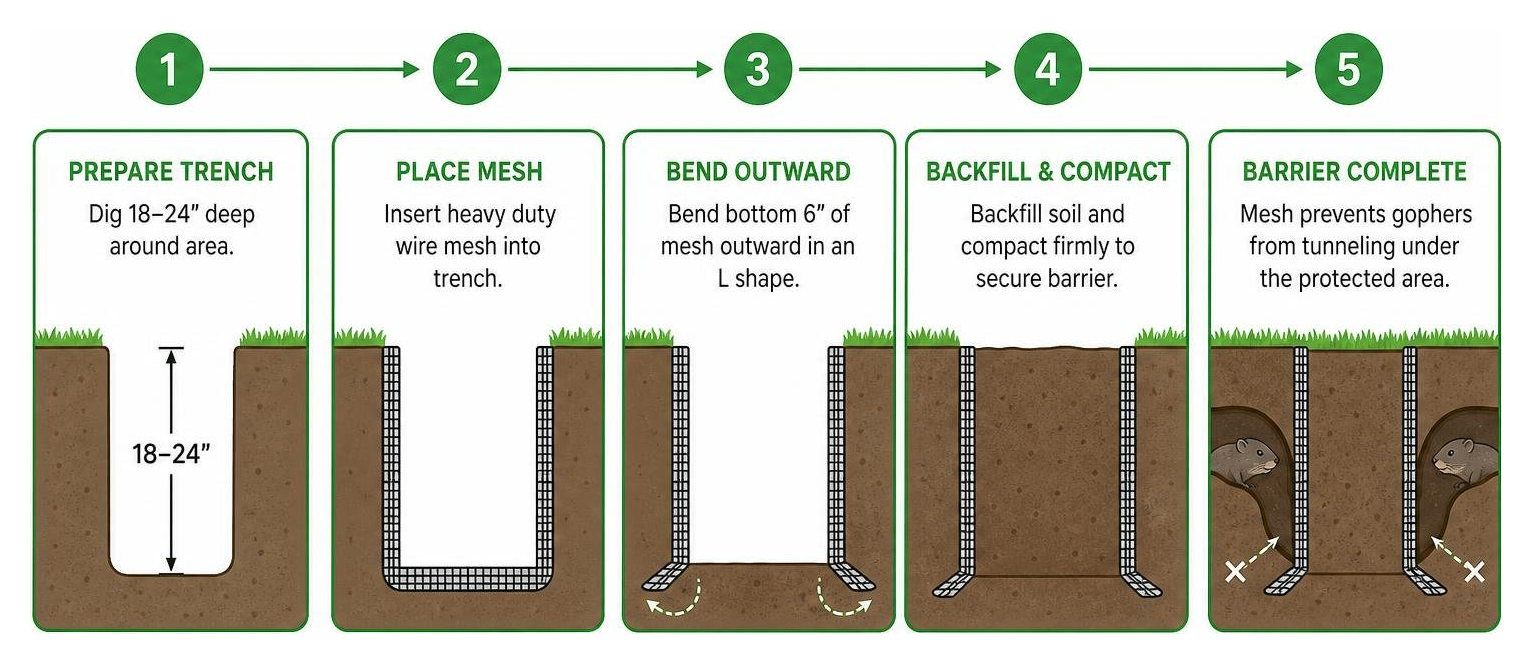
- Install subterranean mesh: When installing new garden beds, line the bottom and sides with galvanized wire mesh or hardware cloth featuring openings no larger than 0.5 to 0.75 inches. Standard poultry wire has 1 inch openings that allow young gophers to squeeze right through.
- Set root protection baskets: Place wire gopher baskets directly into planting holes before setting new shrubs, young trees, or perennial flowers into the ground. These baskets shield tender root balls while allowing fine root tips to expand.
- Bury deep boundary fences: Dig an 18 to 24 inch deep trench around protected lawn areas. Drop heavy duty mesh into the trench, bending the bottom 6 inches outward in an L shape toward the outside of the yard to prevent gophers from digging underneath.
Collapsing Abandoned Tunnels and Lawn Maintenance
Gophers are naturally solitary creatures, but an empty tunnel network will not stay vacant for long. When you remove a gopher from your yard, neighborhood gophers searching for new territory will quickly move into the pre-made tunnel system.
After successful trapping, collapse all empty runways by slicing down into the lateral dirt runs with a sharp shovel and stomping the soil flat. Flatten all surface mounds with a heavy lawn rake to restore turf uniformity. You can also explore our detailed guide on Common Ohio Garden Pests and How to Get Rid of Them to keep your landscape healthy year around.
Deep, infrequent lawn watering encourages deep root growth and creates a firmer topsoil crust that makes digging more difficult for small rodents. Clean up fallen fruit, manage weed patches, and keep lawn perimeters mowed short to eliminate attractive surface shelter.
Frequently Asked Questions About Gopher Control
Managing subterranean pests takes patience and practice. Here are straightforward answers to the most common questions homeowners ask during gopher removal.
What Should I Do If My Traps Are Not Catching Anything
Follow the 48 hour rule when trapping gophers. Gophers continuously inspect and maintain their active main runways. If your traps remain unsprung and empty after 48 hours, one of three things has occurred:
- Light leak: Light entered the tunnel through an unsealed gap, causing the gopher to block the run with dirt before reaching the trigger.
- Inactive run: You set your traps inside an abandoned tunnel or a temporary lateral run rather than the main runway.
- Trap clogged: Loose dirt collapsed onto the trigger mechanism during trap installation.
Carefully lift your cover, clear any dirt, check for active airflow, or move your traps to a fresh mound site nearby.
How Many Traps Should I Set in an Active Network
Always set a minimum of two traps back to back inside a single excavated tunnel opening. In larger yards with multiple fresh mounds, set four to six traps across two or three distinct mound clusters simultaneously. Because a single gopher burrow system can span hundreds of square feet, setting multiple trap pairs increases your chances of fast capture.
Does Flooding Gopher Holes With Water Actually Work
Flooding gopher burrows with a standard garden hose is generally ineffective. Gophers dig extensive underground networks that feature high ground chambers and deep drainage runs. The water simply absorbs into the surrounding topsoil, warning the rodent of a disturbance and prompting it to plug its tunnels with mud.
Flooding is only useful if you have an open lawn area and a hunting dog ready on the surface to catch the animal if it is forced to evacuate through an open exit hole. In all other scenarios, flooding creates muddy lawn conditions that make physical trapping much more difficult.
Conclusion
Finding dirt piles across a beautiful lawn is frustrating, but executing a clear removal plan will restore your property quickly. The best way to get rid of gophers in your yard relies on accurate mound identification, setting paired mechanical traps inside active main runways, blocking all light from tunnel openings, and reinforcing vulnerable garden beds with subterranean wire mesh barriers. Natural repellents like peppermint oil offer helpful perimeter support, while avoiding dangerous chemical baits protects local pets and wildlife.
Taking prompt action at the first sign of fresh digging stops a single gopher from expanding its tunnel system into a massive lawn disaster. If you want professional support maintaining healthy, resilient turf across Akron, Cuyahoga County, Summit County, or Medina County, contact us today to learn more about our comprehensive Advanced Quality Lawn maintenance services.