
Why Crabgrass Keeps Taking Over Your Flower Beds
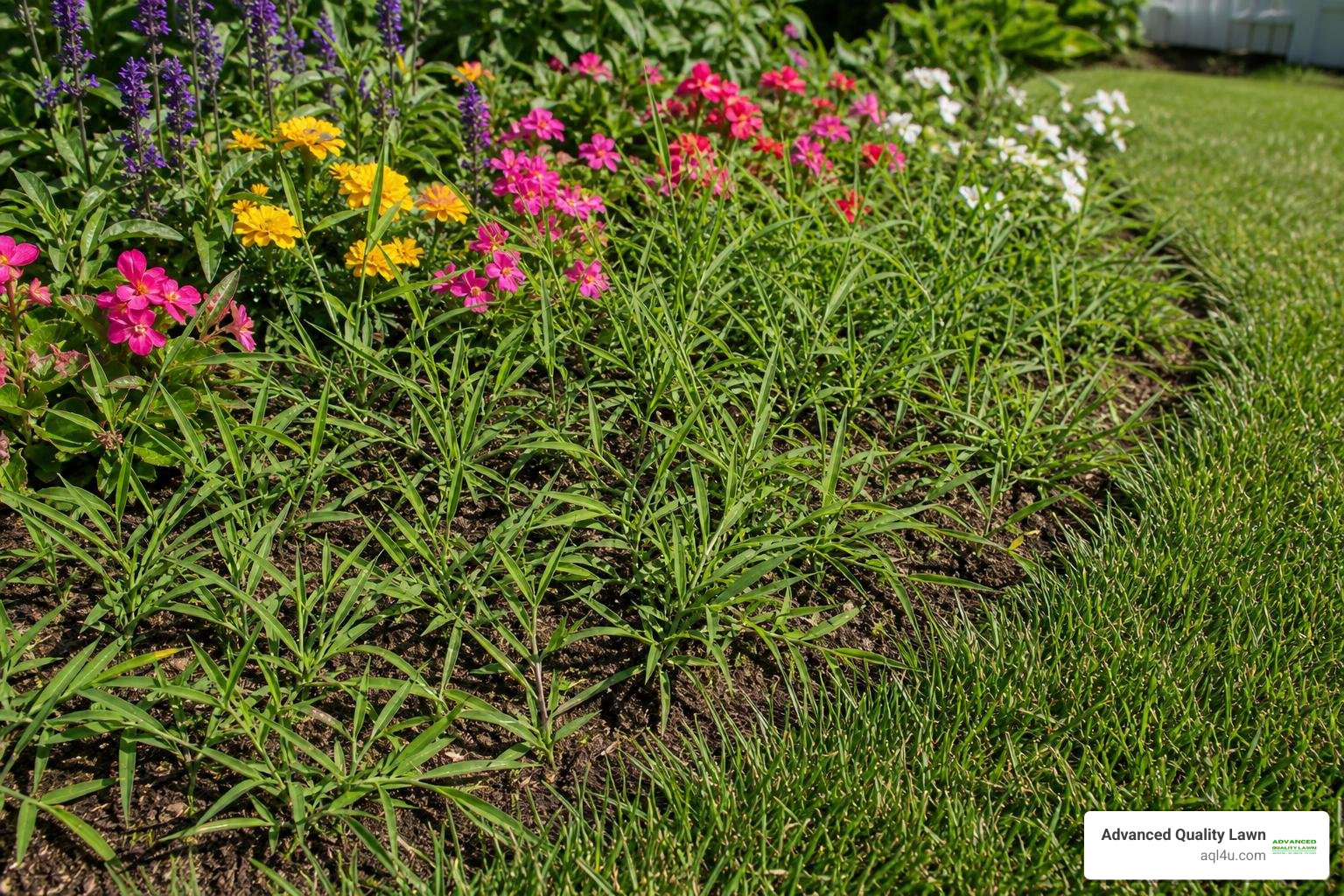
The best way to kill crabgrass in flower beds depends on how far the weed has spread and whether you prefer chemical or natural methods. Here is a quick overview:
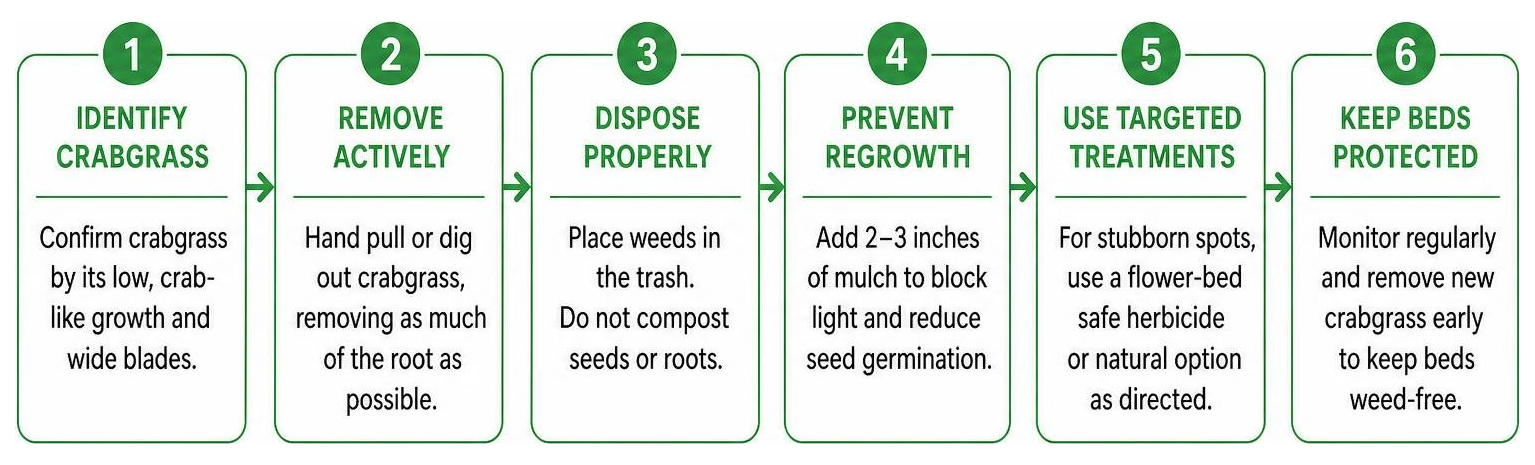
- Hand pull young crabgrass after rain when the soil is soft, removing the full root system.
- Apply a selective grass herbicide (containing sethoxydim or fluazifop) directly over flowers to kill crabgrass without harming broadleaf plants.
- Spot treat with a non-selective herbicide using a cardboard shield to protect nearby flowers.
- Use organic options like corn gluten meal as a pre-emergent or boiling water for small patches.
- Prevent regrowth by applying 2 to 3 inches of bark mulch and a pre-emergent herbicide each spring before soil temperatures hit 55°F.
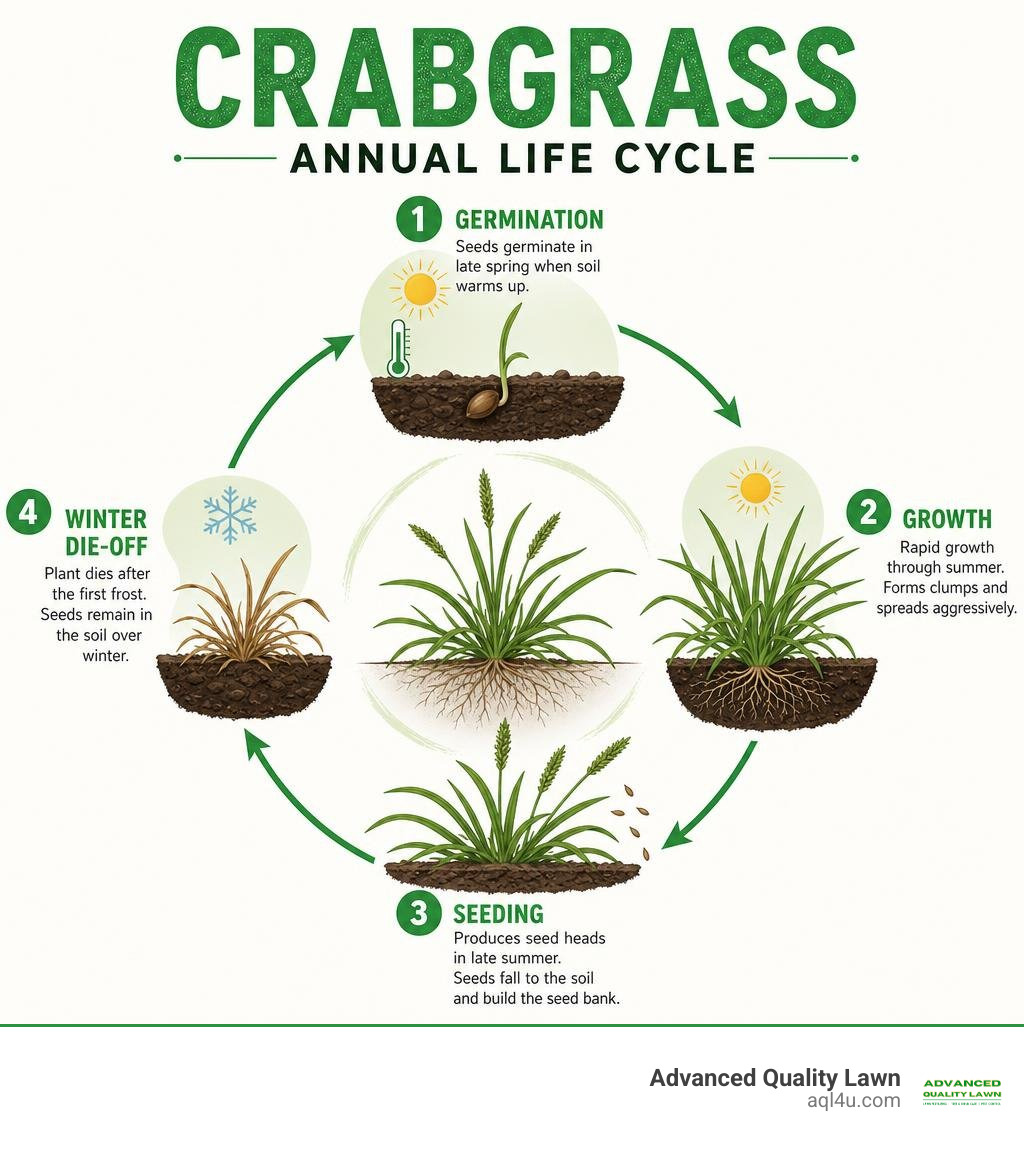
Crabgrass is one of the most stubborn annual weeds a homeowner can face. It thrives in bare, sunny soil and spreads with alarming speed during Ohio's hot summer months. A single plant can produce up to 150,000 seeds in one growing season, and those seeds can stay viable in the soil for up to three years. That means one neglected patch in your flower bed can fuel weed problems for seasons to come.
The good news is that crabgrass is an annual. It dies with the first frost every fall. The challenge is stopping it from seeding before that happens, and reducing the seed bank already waiting in your soil.
I'm Andrew Day, owner of Advanced Quality Lawn, and with more than 30 years of experience helping Northeast Ohio homeowners fight back against weeds like crabgrass, I know that the best way to kill crabgrass in flower beds combines the right timing, the right tools, and a consistent prevention plan. This guide will walk you through every proven method so you can protect your flower beds and keep them looking their best.
Identifying Crabgrass in Your Garden Beds
Before you start pulling or spraying, you need to make sure you are actually dealing with crabgrass. It is easy to mistake other weedy grasses for crabgrass, but identifying the specific weed helps you choose the most effective treatment.
In Northeast Ohio, we primarily deal with two species of this weed:
- Smooth Crabgrass: This variety is hairless and grows to a mature height of about six inches. It is incredibly resilient to close mowing and can even produce seeds when cut down to just one-quarter of an inch tall.
- Large Crabgrass: Also known as hairy crabgrass, this species has noticeably hairy leaves and stems. Its leaves grow to about three inches long, and its branches can stretch up to five inches wide in a sprawling, crab-like pattern.
Both varieties grow in low clumps that branch outward from a central root system. The stems resemble the legs of a crab, which is how the weed gets its name.
Crabgrass is a warm-season annual. This means it only germinates when the soil temperature reaches 55°F for three to five consecutive days. In areas like Summit County, Medina County, and Cuyahoga County, this soil warming typically occurs in mid-April to early May.
You will often notice crabgrass germinating first along driveway edges, sidewalks, and concrete borders. Concrete and blacktop absorb heat from the sun and warm the adjacent soil much faster than the rest of your garden.
For more details on identifying common weeds, you can check out the guide on How to Control Crabgrass.
The Best Way to Kill Crabgrass in Flower Beds Safely
When crabgrass invades a flower bed, you cannot simply spray a standard weed killer everywhere. Doing so will likely kill your prized perennials, annuals, and shrubs. Developing safe weed control strategies is all about targeting the weed while protecting your desirable plants.
If you are dealing with a severe infestation across your property, you might also want to review our comprehensive Crabgrass Removal Guide 2026 for broader landscape control tips.
Manual Removal Techniques for Active Weeds
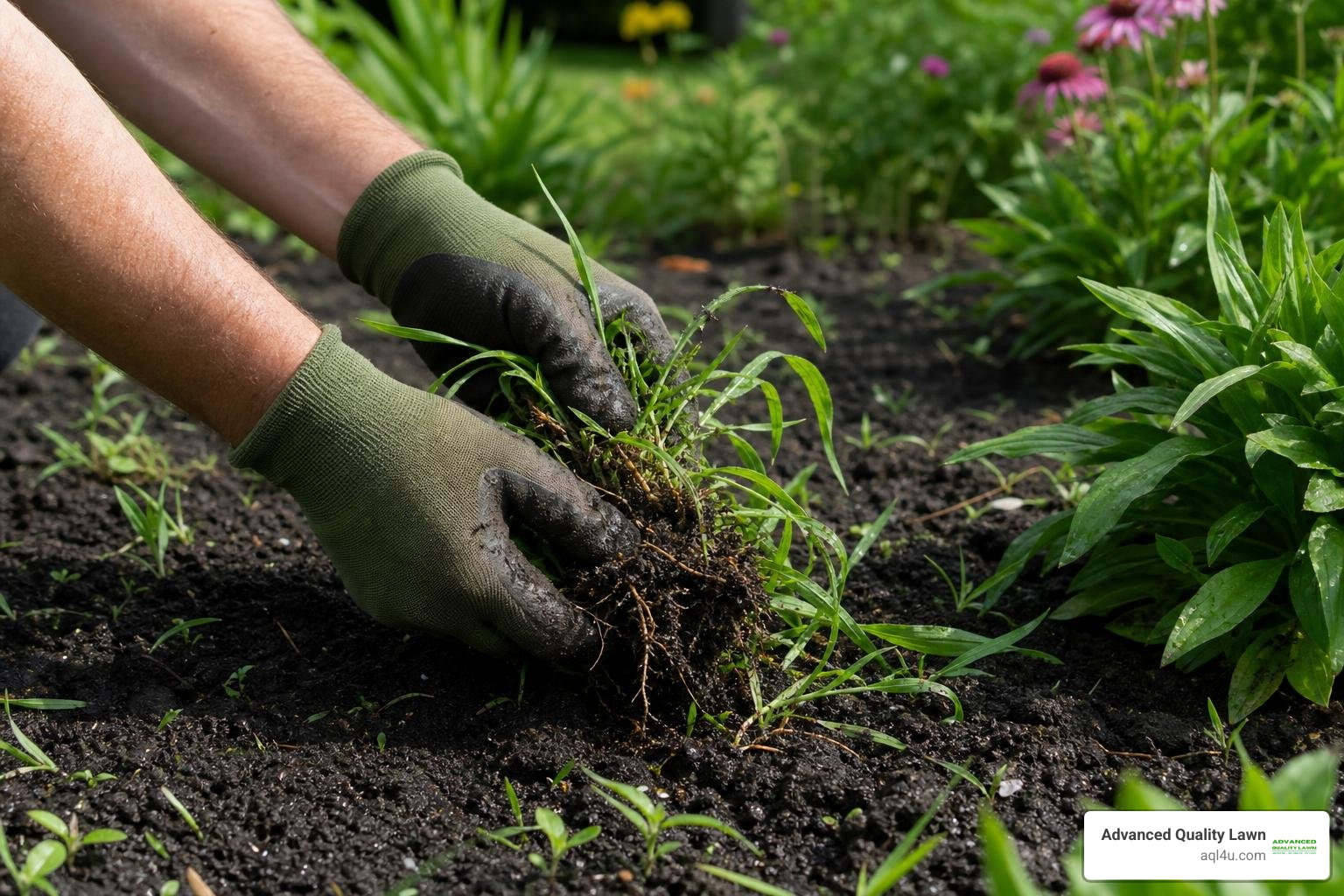
For small infestations or tight spaces around delicate flowers, manual removal is often the safest and most direct method. It protects your soil health and eliminates the risk of chemical drift.
To make hand pulling as easy and effective as possible, follow these practical tips:
- Wait for Moist Soil: Hand pulling is most effective when the soil is damp and loose, such as after a good rain or a thorough watering. Dry soil holds onto the roots, causing the weed stem to snap off at the base.
- Extract the Entire Root System: Crabgrass can easily regrow if you leave the root system behind. Grip the plant firmly at its base, close to the soil line, and pull upward with a gentle twisting motion.
- Use the Right Weeding Tools: For stubborn, mature clumps, use a hand trowel or a weeding fork to loosen the soil around the roots before pulling.
- Avoid Deep Tillage: Do not use a large rototiller or dig deeply into your flower beds. Deep tillage cuts the shallow roots of your desirable flowers and brings buried weed seeds to the surface, where sunlight will trigger their germination.
Chemical Herbicides as the Best Way to Kill Crabgrass in Flower Beds
If your flower beds are completely overrun, manual weeding might feel like an endless battle. In these cases, using chemical herbicides is often the most practical solution. The key is understanding the difference between selective and non-selective formulas.
Selective Herbicides: These products target specific plant types. For flower beds, you want a selective post-emergent grass killer. Active ingredients like sethoxydim and fluazifop-p-butyl kill weedy grasses but will not harm broadleaf plants, flowers, or shrubs. You can spray these products directly over the top of your established flowers to kill the crabgrass. However, always read the product label first to confirm that your specific ornamental plants are tolerant.
Non-Selective Herbicides: Products containing glyphosate will kill any plant they touch. If you use a non-selective herbicide, you must use precise shielding techniques to protect your flowers.
Here are two highly effective DIY shielding methods:
- The Cardboard Shield: Hold a large piece of cardboard between the weed and your flowers while spraying to block any drifting chemicals.
- The Milk Jug Method: Cut the top and bottom off a plastic milk jug. Place the hollow jug directly over the crabgrass clump to isolate it, and then spray the herbicide down through the top opening.
For a detailed look at chemical options, you can read How to Kill Weedy Grasses | Growing & Mowing in Bartow County .
| Herbicide Type | Common Active Ingredients | Target Weeds | Safety in Flower Beds |
|---|---|---|---|
| Selective Grass Killers | Sethoxydim, Fluazifop-p-butyl, Clethodim | Annual and perennial weedy grasses | Highly safe, can be sprayed directly over most broadleaf flowers and shrubs. |
| Non-Selective Herbicides | Glyphosate | All vegetation (grasses and broadleaf plants) | Extreme caution required, must use physical shields to prevent contact with desirable plants. |
For more options on tackling tough weeds, read our guide on the Best Herbicide for Crabgrass or explore the Best Weed Killer for Nutsedge and Crabgrass.
Natural and Organic Methods to Eliminate Crabgrass
Many homeowners prefer to avoid synthetic chemicals in their gardens, especially if they plan to grow edible plants in those beds in the future. Fortunately, there are several highly effective organic weed control methods available.
To learn more about natural approaches across your entire yard, check out our resource on the Best Way to Get Rid of Crabgrass.
Organic Solutions and the Best Way to Kill Crabgrass in Flower Beds Naturally
You can easily make highly effective, non-chemical weed killers using simple household ingredients:
- Boiling Water: This is a fantastic, instant remedy for young crabgrass. Carefully pour boiling water directly over the weed clump. The intense heat scalds the plant tissue and kills the root system. Be very careful not to splash nearby flowers, as boiling water will damage any plant tissue it touches.
- Horticultural Vinegar: Standard household vinegar contains about 5% acetic acid, which can weaken young weeds. For stronger results, use horticultural vinegar, which contains 20% or more acetic acid. Mix the vinegar with a spoonful of dish soap to help the liquid stick to the waxy crabgrass leaves, and spray it on a hot, sunny day.
- Corn Gluten Meal: This is a highly popular organic pre-emergent. It contains natural proteins that disrupt the root development of germinating seeds. It also contains about 10% nitrogen, which gently fertilizes your established plants. Apply it in early spring to stop new crabgrass seeds from growing.
For a deeper dive into organic prevention, explore our article on Natural Pre-Emergent Weed Killer.
Preparing Beds for Future Vegetable Gardens
If you have an overgrown flower bed that you want to convert into a vegetable garden next season, you must be careful with the products you use. Many chemical pre-emergents can linger in the soil and damage your future vegetable crops.
Instead, use these highly effective physical smothering techniques:
- Soil Solarization: This process uses the heat of the sun to bake weeds and their seeds. First, pull or mow the weeds down to soil level. Wet the soil thoroughly, and then cover the area with a sheet of clear plastic. Secure the edges with heavy stones or soil. Leave the plastic in place for four to six weeks during the hottest part of the summer. The trapped heat will destroy the active weeds and the shallow seed bank.
- Sheet Mulching: Also known as the smothered and covered method, this technique is highly effective. Lay down several layers of newspaper or cardboard directly over the weeds. Wet the cardboard thoroughly, and then cover it with three to four inches of organic compost, wood chips, or leaves. This blocks all sunlight, suffocating the weeds while naturally building rich soil for next year.
To learn more about preparing your beds safely, read How to Kill Crabgrass in Flower Beds: Effective Tips That Work | (2026) .
How to Prevent Crabgrass from Returning to Your Landscape
Killing the active weeds in your garden is only half the battle. Because a single plant can release thousands of seeds, long-term success requires a solid prevention plan.
For comprehensive lawn and garden protection, you can read our Pre-Emergent for Garden Beds guide.
Timing Pre-Emergent Herbicides for Maximum Protection
Pre-emergent herbicides work by creating a chemical barrier in the top inch of soil. When a weed seed germinates, it contacts this barrier and fails to grow.
Because pre-emergents do not kill existing plants, timing is absolutely critical:
- Watch the Soil Temperature: Apply your pre-emergent in the spring before soil temperatures consistently reach 55°F. In Northeast Ohio, this is usually between mid-April and early May.
- Use Nature's Cues: If you do not have a soil thermometer, watch your local landscape. The peak bloom of yellow forsythia bushes is a classic indicator that it is time to apply your pre-emergent.
- Water It In: Pre-emergents require about one-half inch of rain or irrigation within three to five days of application to activate the chemical barrier.
- Follow a Reapplication Schedule: Standard granular pre-emergents provide protection for about 12 weeks. For continuous coverage throughout our long growing season, reapply the product every two and a half to three months.
To keep your entire property weed-free, you may also want to explore our guides on the Best Pre-Emergent Weed Killer for Lawns and Crabgrass Control for Lawns.
Using Mulch and Groundcovers to Block Germination
A thick layer of organic mulch is one of the most effective and attractive ways to prevent crabgrass. Mulch blocks the sunlight that crabgrass seeds need to germinate.
Keep these mulching best practices in mind:
- Maintain the Right Depth: Apply organic bark mulch to a depth of two to three inches. Anything thinner will let light slip through, while anything thicker can suffocate your flower roots.
- Keep It Clear of Stems: Pile mulch around your plants, but keep it a few inches away from the actual stems and trunks of your flowers and shrubs to prevent moisture buildup and rot.
- Choose the Right Materials: Use high-quality wood chips, shredded bark, or pine needles. Avoid using hay or grass clippings, as they often carry weed seeds directly into your clean beds.
- Plant Green Mulch: You can also use living groundcovers to crowd out weeds. Planting low-growing, dense perennials like creeping thyme, clover, or black-eyed Susan creates a natural canopy that shades the soil and prevents crabgrass seeds from taking root.
For more strategic weed prevention tips, check out our Ultimate Weeds and Crabgrass Guide.
Frequently Asked Questions about Garden Weed Control
Will vinegar kill crabgrass without hurting my flowers
No. Vinegar is a non-selective herbicide. The acetic acid in vinegar destroys the protective waxy coating on plant leaves, causing them to dry out and die. Because it is non-selective, it will damage or kill your flowers just as easily as it kills crabgrass. If you use vinegar, you must apply it directly to the crabgrass leaves using a targeted spray or a sponge, ensuring it does not touch your desirable plants.
How deep should mulch be to stop crabgrass seeds
To effectively block sunlight and prevent crabgrass seed germination, you should maintain a mulch depth of two to three inches. If you are refreshing existing mulch, you usually only need to add a light layer of one to two inches to restore this depth. Avoid piling mulch too deep, as this can prevent water and oxygen from reaching your flower roots.
Can I plant flowers immediately after applying pre-emergent
It depends on how you are planting them. Pre-emergent herbicides prevent all seeds from growing, so you should never plant flower seeds in an area treated with pre-emergents. However, pre-emergents will not harm established plants. You can safely transplant established flowers and shrubs into treated beds, as long as they already have several sets of mature leaves and a developed root system.
Conclusion
Keeping your flower beds free of stubborn weeds requires a mix of timely manual weeding, proper mulching, and strategic pre-emergent applications. By taking action early in the spring and staying consistent throughout the summer, you can enjoy a beautiful, vibrant landscape all season long.
If you find yourself overwhelmed by stubborn weeds, we are here to help. At Advanced Quality Lawn, we provide expert lawn care, tree, and shrub services throughout Northeast Ohio, including Akron, Cleveland, Solon, Medina, and Stow. Our full-program guarantees and exceptional customer service make it easy to keep your entire property looking its best.
Contact us today at Advanced Quality Lawn Care Services to schedule your professional landscape maintenance plan.