The Ultimate Guide to 16-4-8 Liquid Fertilizer for a Greener Lawn
Understanding the NPK Ratio in Lawn Food
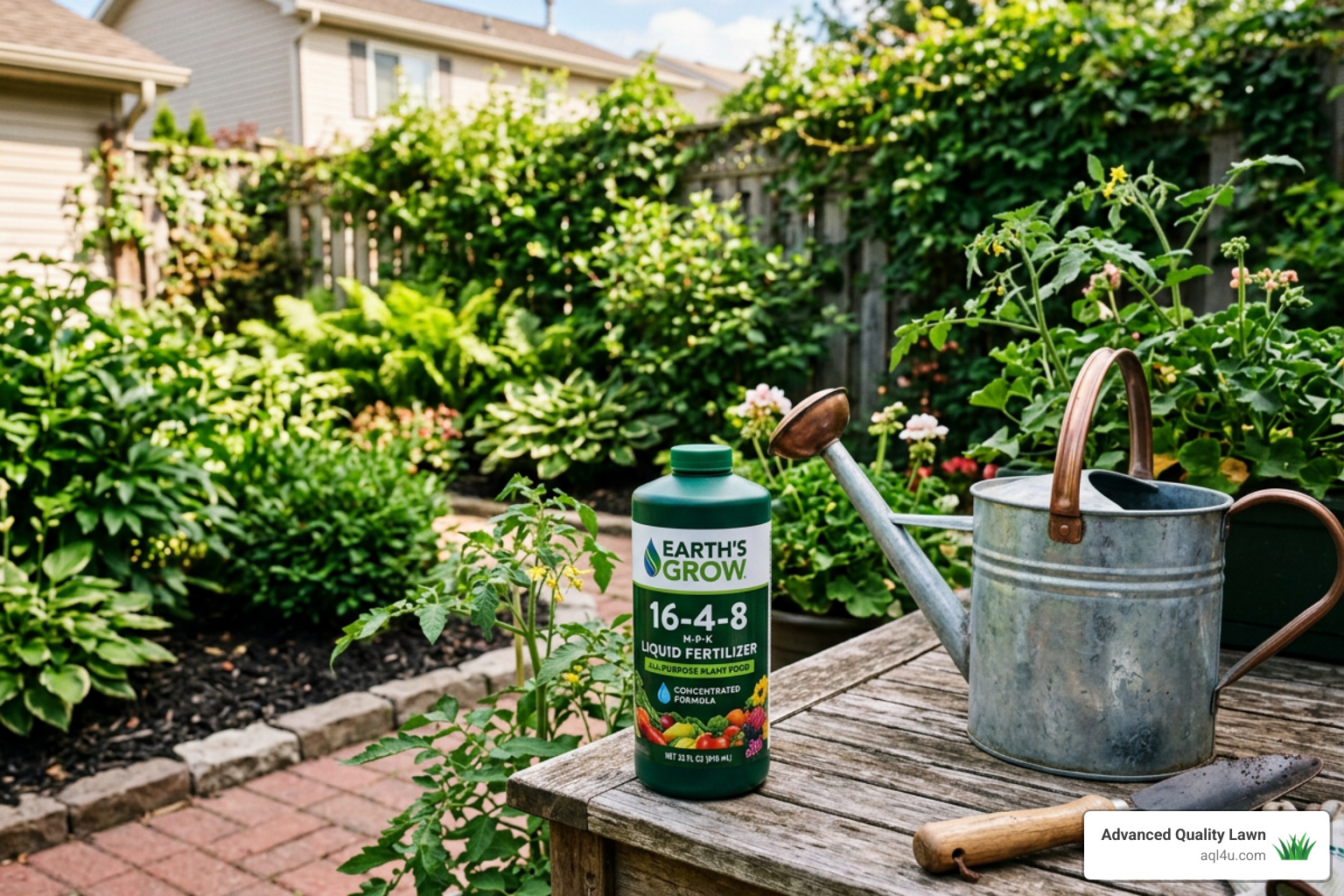
When you see the numbers on a bottle of 16 4 8 liquid fertilizer, you are looking at the NPK ratio. These three macronutrients are the "Big Three" of plant nutrition. In our decades of providing lawn care in Northeast Ohio, from the rolling hills of Geauga County to the suburban yards of Cuyahoga Falls, we’ve found that understanding these numbers is the first step toward a professional-grade lawn.
- Nitrogen (16%): This is the engine of growth. Nitrogen is a primary component of chlorophyll, the compound plants use to harness sunlight through photosynthesis. A 16% concentration provides a robust "punch" of nitrogen that results in that deep, enviable emerald green color and rapid vertical and lateral growth.
- Phosphorus (4%): While the percentage is lower, its role is vital. Phosphorus is essential for energy transfer within the plant and vigorous root development. Even in established lawns, a bit of phosphorus helps grass plants recover from the stresses of an Ohio winter or a particularly humid summer.
- Potassium (8%): Think of potassium as the lawn's immune system. It regulates water movement within the plant cells, which directly impacts stress tolerance. Whether your lawn is facing a July heatwave in Akron or a sudden cold snap in Medina, potassium helps the grass withstand extreme temperatures and drought.
For a deeper dive into how these elements interact with your soil, check out our guide on Fertilizer 101: What is it and when should you use it.
Key Benefits of Using 16 4 8 Liquid Fertilizer
Why choose a liquid formula over traditional pellets? At Advanced Quality Lawn, we often discuss the "speed of feed." Liquid fertilizers are essentially "predigested" for the plant.
- Rapid Greening: Because the nutrients are already in a liquid state, the grass blades can absorb them through foliar feeding (through the leaves) almost immediately. You aren't waiting for a rainstorm to break down a hard granule.
- Uniform Coverage: It is much easier to get an even "blanket" of nutrition with a spray than with a spreader that might leave stripes or missed spots.
- Organic Enhancers: Many high-quality 16 4 8 liquid fertilizer products are enriched with seaweed extract and fish emulsion. These ingredients don't just add nutrients; they provide amino acids and organic matter that improve nutrient uptake and soil biology.
- No "Burn" Risk: When used at the recommended rates, liquid versions are often more "mellow" on the grass than high-concentrate synthetic salts found in some cheap granular bags.
Research from organizations like Amazon Science and industry experts confirms that the delivery method of nutrients significantly impacts how much of the product actually reaches the root zone versus being lost to the environment. To see how this fits into the broader world of lawn care, explore the different Types of Fertilizer available for Northeast Ohio homes.
Application and Coverage Rates for Liquid Nutrients
One of the biggest mistakes we see homeowners in places like Solon or Hudson make is "guesstimating" how much fertilizer they need. Precision is key.

A typical 32-ounce bottle of concentrated 16 4 8 liquid fertilizer is designed to cover approximately 12,800 square feet. If you have a larger property in Bath or Richfield, you might opt for a 1-gallon container, which provides coverage for up to 25,600 square feet for a single coat.
Liquid vs. Granular: A Quick Comparison
| Feature | Liquid 16-4-8 | Granular 16-4-8 |
|---|---|---|
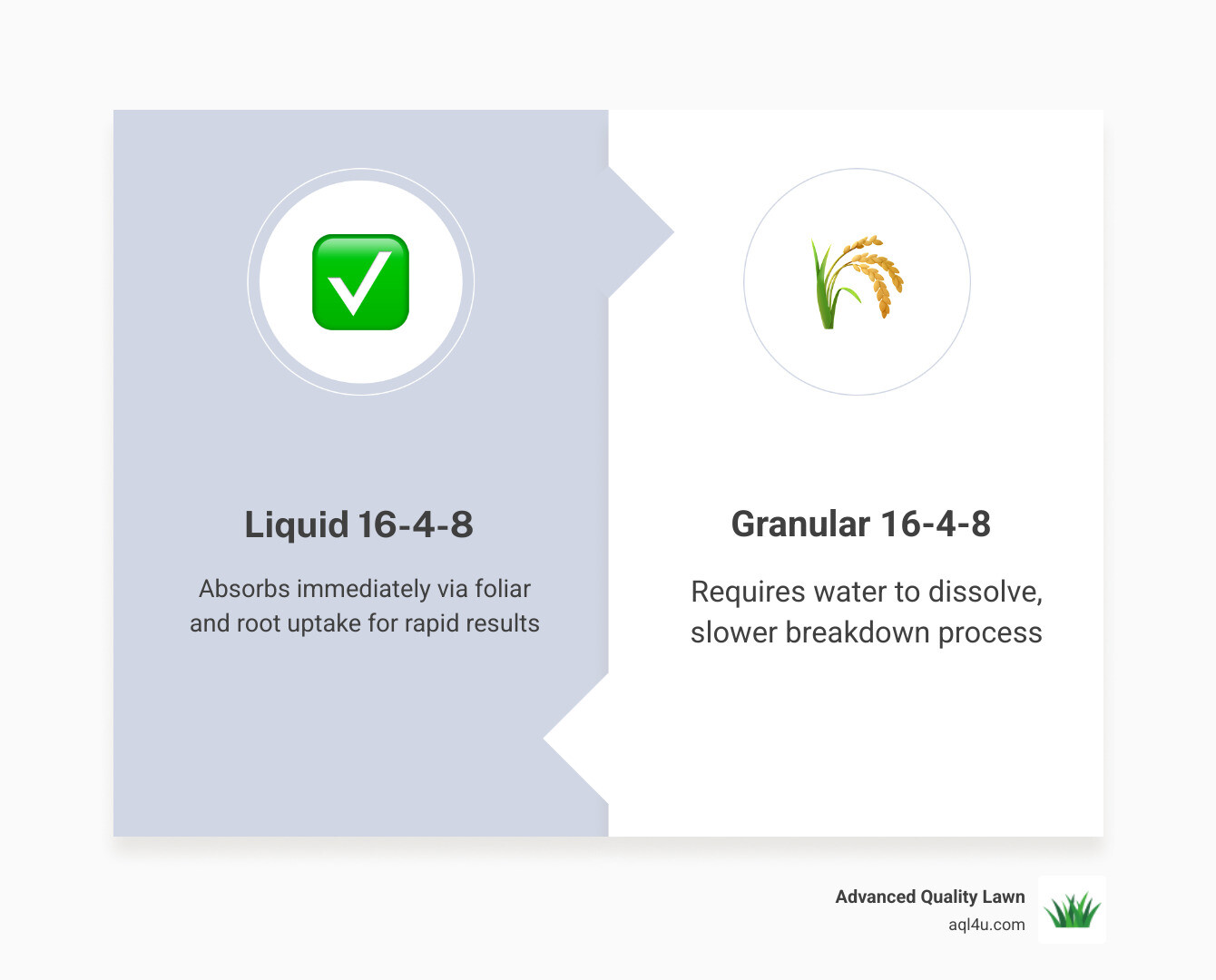
| Absorption Speed | Immediate (Foliar + Root) | Slow (Requires water to break down) |
| Greening Results | 3–5 Days | 7–14 Days |
| Application Tool | Hose-end or Tank Sprayer | Broadcast or Drop Spreader |
| Coverage (Standard) | 32 oz covers ~12,800 sq. ft. | 50 lbs covers ~8,000 sq. ft. |
| Ease of Use | High (Attach to hose) | Moderate (Requires heavy lifting) |
Best Practices for Applying 16 4 8 Liquid Fertilizer
To get the best results without wasting product, follow these professional tips:
- The Right Tool: For most homeowners, a hose-end sprayer is the easiest option. It automatically mixes the concentrate with water at the correct ratio. For more precision, a backpack sprayer or battery-powered sprayer allows you to control the flow exactly.
- Timing is Everything: Always apply in the early morning or late afternoon. Applying liquid fertilizer in the heat of a 90°F day can cause the liquid to evaporate too quickly or, worse, cause "leaf scorch."
- Moisture Matters: Apply to a moist lawn (after a light rain or morning dew) but not a soaking wet one.
- Post-Application Care: Most 16-4-8 liquids benefit from a light watering (about 20 minutes) within 24 hours of application to move the nutrients from the leaf surface down into the soil's root zone.
- Mowing: Avoid mowing for at least 24 hours after application to give the grass blades time to absorb the nutrients. For more tips, read our guide on How to Fertilize Your Lawn.
Safety and Grass Type Compatibility
At Advanced Quality Lawn, we know that your yard isn't just a patch of grass; it's a playground for your kids and a sanctuary for your pets.

The good news is that 16 4 8 liquid fertilizer is generally considered pet-safe and kid-safe once it has completely dried. This usually takes only a few hours depending on the humidity in Northeast Ohio. Unlike granular fertilizers, which can leave small pellets that curious pets might try to eat, the liquid binds to the plant and soil, leaving no debris behind.
From an environmental standpoint, using a liquid formula can actually be more sustainable. Because the absorption rate is higher, there is often less nutrient runoff into local waterways—a major concern for our communities near Lake Erie or the Cuyahoga River. You can learn more about the industry's move toward greener practices at Sustainability.
Grass Types Compatible with 16 4 8 Liquid Fertilizer
In our service areas like Parma, Cleveland, and Stow, we deal with a variety of grass types. The 16-4-8 ratio is remarkably versatile:
- Kentucky Bluegrass: Loves the high nitrogen for its aggressive spreading habit.
- Tall Fescue & Fine Fescue: Benefits from the potassium to help survive the summer heat in Northeast Ohio.
- Perennial Ryegrass: Responds almost instantly with a bright green "pop."
- Bermuda & Zoysia: While less common in the north, these warm-season grasses thrive on this ratio during their peak summer growth.
A Note on Centipede Grass: Use caution here. Centipede grass is sensitive to high nitrogen levels. If you have a Centipede lawn, we recommend a lower nitrogen formula to avoid "Centipede decline." For most of our clients in Summit and Cuyahoga counties, however, 16-4-8 is a perfect match. For more details on specific grass needs, visit our Fertilizing category page.
Frequently Asked Questions about 16-4-8 Fertilizer
How quickly will I see results after application?
One of the most satisfying parts of using 16 4 8 liquid fertilizer is the speed. Most homeowners report visible greening within 3 to 5 days. You’ll notice the grass looks "happier"—the color deepens, and the blades stand a bit more upright. Within two weeks, you should see a noticeable increase in the thickness of the turf as the phosphorus and nitrogen work together to boost growth.
How often should I reapply liquid fertilizer?
For a maintenance schedule in Northeast Ohio, we typically recommend applications every 4 to 8 weeks during the growing season. If your lawn is severely nutrient-deficient or you are trying to fill in bare spots, you can apply every 2 to 4 weeks, provided you don't exceed the annual nitrogen limits for your grass type. We always suggest a soil test once a year to ensure you aren't over-applying nutrients that your soil might already have in abundance.
Is 16-4-8 safe for all seasons?
It is best used in the Spring and Summer when the grass is actively growing.
- Spring: Kickstarts the lawn after dormancy.
- Summer: Provides the potassium needed to fight heat stress.
- Fall: While 16-4-8 can be used in early fall, we often transition to a "winterizer" formula later in the season that is even higher in potassium.
- Dormancy/Drought: Do not fertilize a lawn that is brown and dormant due to drought. Wait until the grass has received moisture and has begun to green up naturally before applying fertilizer.
Conclusion
Achieving a professional-looking lawn doesn't have to be a mystery. By using a balanced 16 4 8 liquid fertilizer, you are giving your grass exactly what it needs to stay green, grow thick, and resist the stresses of our Northeast Ohio climate. Whether you are in Brecksville, Macedonia, or North Royalton, the principles of good nutrition remain the same.
If you find that your lawn needs a bit more than a "DIY" boost, or if you'd rather spend your weekends enjoying your yard rather than working on it, we are here to help. At Advanced Quality Lawn, we provide expert service across Summit, Medina, Cuyahoga, and surrounding counties with a full-program guarantee.
Ready for a lawn that stays green all season long? Explore our Lawn Care Maintenance services and let us take the guesswork out of your yard care.