The Ultimate List of Pre Emergent for Garden Beds
Why Choosing the Right Pre Emergent for Garden Beds Saves You Hours of Weeding

Pre emergent for garden beds is one of the most effective tools you can use to stop weeds before they ever break the surface. If you want a quick answer, here are the top options:
| Product | Best For | Protection Duration |
|---|---|---|
| Snapshot 2.5 TG | Ornamental beds, 600+ plants | Up to 6 months |
| Preen Extended Control | General landscape beds | Up to 6 months |
| Preen Garden Weed Preventer | Flowers, shrubs, vegetables | Up to 12 weeks |
| Preen Natural Vegetable Garden | Edible gardens, organic use | 4-6 weeks |
| Vegetable and Ornamental Weeder | Veggies and ornamentals | Up to 5 months |
| Preen Weed Preventer + Ant/Flea/Tick | Foundation beds | Up to 4 months |
Weeds in garden beds are a different challenge than weeds in your lawn. They push up through mulch, crowd out flowers, and seem to come back no matter how much you pull. The frustrating reality is that hand-weeding alone rarely solves the problem — weed seeds blow in from miles away and sit in your soil waiting to sprout.
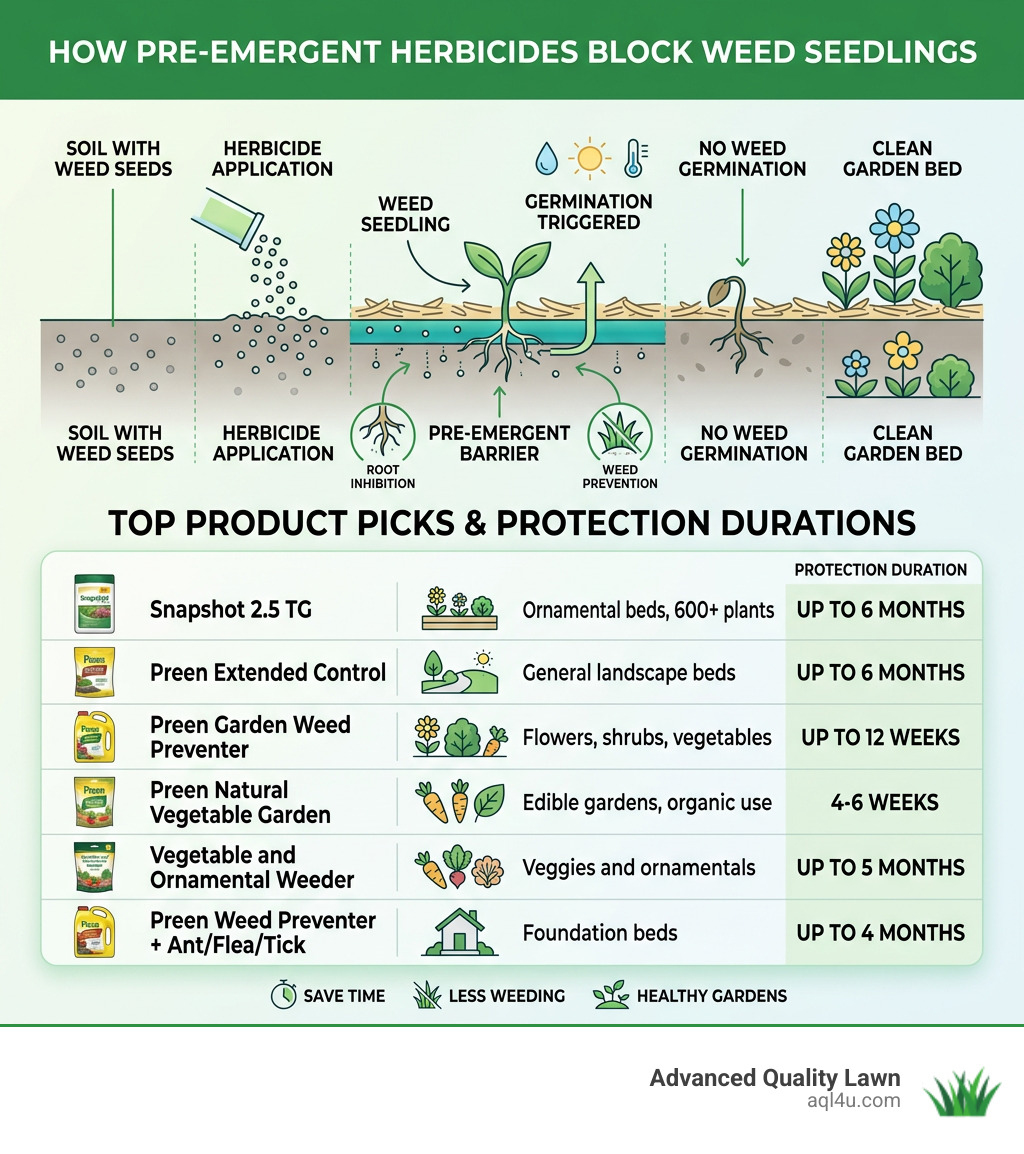
Pre-emergent herbicides solve this by creating a barrier in the soil that stops weed seeds from ever taking root. They don't kill existing weeds — but they prevent new ones from germinating, cutting your weed problem off at the source.
The right product depends on what's growing in your beds: ornamentals, vegetables, shrubs, or a mix. Get that choice wrong and you could damage the plants you're trying to protect.
I'm Andrew Day, owner of Advanced Quality Lawn, and over 30 years of working with Northeast Ohio landscapes has shown me how the right pre emergent for garden beds can transform a high-maintenance yard into something nearly weed-free with minimal effort. In the sections below, I'll break down the best products, when to apply them, and how to get the most out of every application.
How Pre Emergent for Garden Beds Works
To understand why a pre-emergent weed killer is so effective, you have to look at the life cycle of a weed. Most of the weeds that plague our Northeast Ohio gardens, like crabgrass or common chickweed, are annuals. They drop thousands of seeds into the soil, which then wait for the right temperature and moisture to sprout.
When you apply a pre emergent for garden beds, you aren't actually "killing" a plant in the traditional sense. Instead, these herbicides create a chemical vapor barrier in the top inch or two of soil. As the weed seed germinates and attempts to send out its first tiny root (the radicle), it hits this barrier. The active ingredients provide root inhibition, stopping the seedling from establishing itself. Because it can't take up water or nutrients, the weed dies before you ever see a green leaf poke through your mulch.
This is the direct opposite of a post-emergent herbicide, which you spray on weeds that are already actively growing. Using a pre-emergent is a proactive way to prevent weeds rather than reacting to an infestation that has already taken over your Shrubbery.
Granular vs. Liquid Applications
In our experience serving areas from Hudson to Medina, homeowners often ask whether they should use granules or liquids. Both have their place in weed prevention.
| Feature | Granular Pre-Emergent | Liquid Pre-Emergent |
|---|---|---|
| Ease of Use | High; easy to spread by hand or shaker | Moderate; requires mixing and calibration |
| Precision | Great for tight spaces around flowers | Better for large, open landscape areas |
| Safety | Less likely to drift onto sensitive leaves | Risk of "overspray" on windy days |
| Activation | Requires rain or irrigation to "wash in" | Already in solution; needs less water to move |
Top Rated Types of Pre Emergent for Garden Beds
When selecting a pre emergent for garden beds, the active ingredient is the most important factor. In professional landscaping across Northeast Ohio, we look for products that offer a broad spectrum of control without harming desirable ornamentals.
- Snapshot 2.5 TG / Snapshot DG: This is often considered the "gold standard" for landscape beds. It uses a combination of Isoxaben and Trifluralin. It is labeled safe for use around over 600 ornamental plants and controls more than 120 different types of broadleaf and grassy weeds.
- Freehand 1.75G: This is a powerful granular option that combines dimethenamid-P and pendimethalin. It is excellent for controlling tough weeds like sedges and spurge that other products might miss. You can find more details on its professional application here.
- Gallery SC: If you prefer a liquid spray for broadleaf weed control, Gallery SC contains high-quality Isoxaben. It provides long-term prevention of problematic weeds like white clover and dandelion.
- Dimension 2EW: While often used on lawns, Dimension 2EW (Dithiopyr) is also labeled for use in landscape and ornamental beds. It is unique because it offers some early post-emergent control on crabgrass, which is helpful if you are a few days late with your spring application.
Best Pre Emergent for Garden Beds with Ornamentals
Protecting your Shrub Garden and Shrubs requires a delicate balance. You want to stop the weeds but keep your expensive healthy trees and ornamentals thriving.
Products like Snapshot or Preen Extended Control are ideal here because they are formulated to be "over-the-top" safe for established plants. For the best results, we often recommend combining these with ornamental fertilizers. This dual approach feeds your Shrub Hedges while keeping the soil "locked down" against weed encroachment.
If you are managing a large property with extensive Tree & Shrub Care needs, professional-grade products like Crew Herbicide provide excellent broad-spectrum control that lasts through the peak growing season in Northeast Ohio.
Safe Pre Emergent for Garden Beds with Vegetables
When it comes to the food you eat, the rules change. You cannot use standard landscape pre-emergents like Snapshot in your vegetable patch. However, you aren't stuck with hand-pulling every weed.
- Vegetable and Ornamental Weeder: This is a concentrated trifluralin product that is specifically labeled for use around a variety of vegetables. It provides up to 5 months of control and is very economical for home gardeners.
- Preen Natural Vegetable Garden Weed Preventer: This product is 100% corn gluten meal. It works by releasing a peptide that dries out the first root of a germinating seed. It is safe for children and pets immediately after application and can be used around established vegetables and herbs.
Always check the Label instructions before applying anything near edibles. "Established" is the keyword here — usually meaning the plants are at least 2-3 inches tall with a strong root system before the preventer is applied.
Professional Application: When and How to Apply
Timing is everything. If you apply pre emergent for garden beds after the weeds have already sprouted, you’ve essentially missed the bus.
The Magic Number: 55 Degrees
In Northeast Ohio, we keep a close eye on soil temperatures. Most weed seeds, particularly crabgrass, begin to germinate when soil temperatures consistently hit 55 degrees Fahrenheit. This usually happens in late March or early April in areas like Cuyahoga Falls and Stow. A second application in the fall (around September) is also beneficial to stop winter annuals like henbit and purple deadnettle.
Application Steps for Success
- Clear the Area: Pre-emergents do not kill existing weeds. You must hand-pull or use a post-emergent like Drive XLR8 or Speedzone EW to clear the bed first.
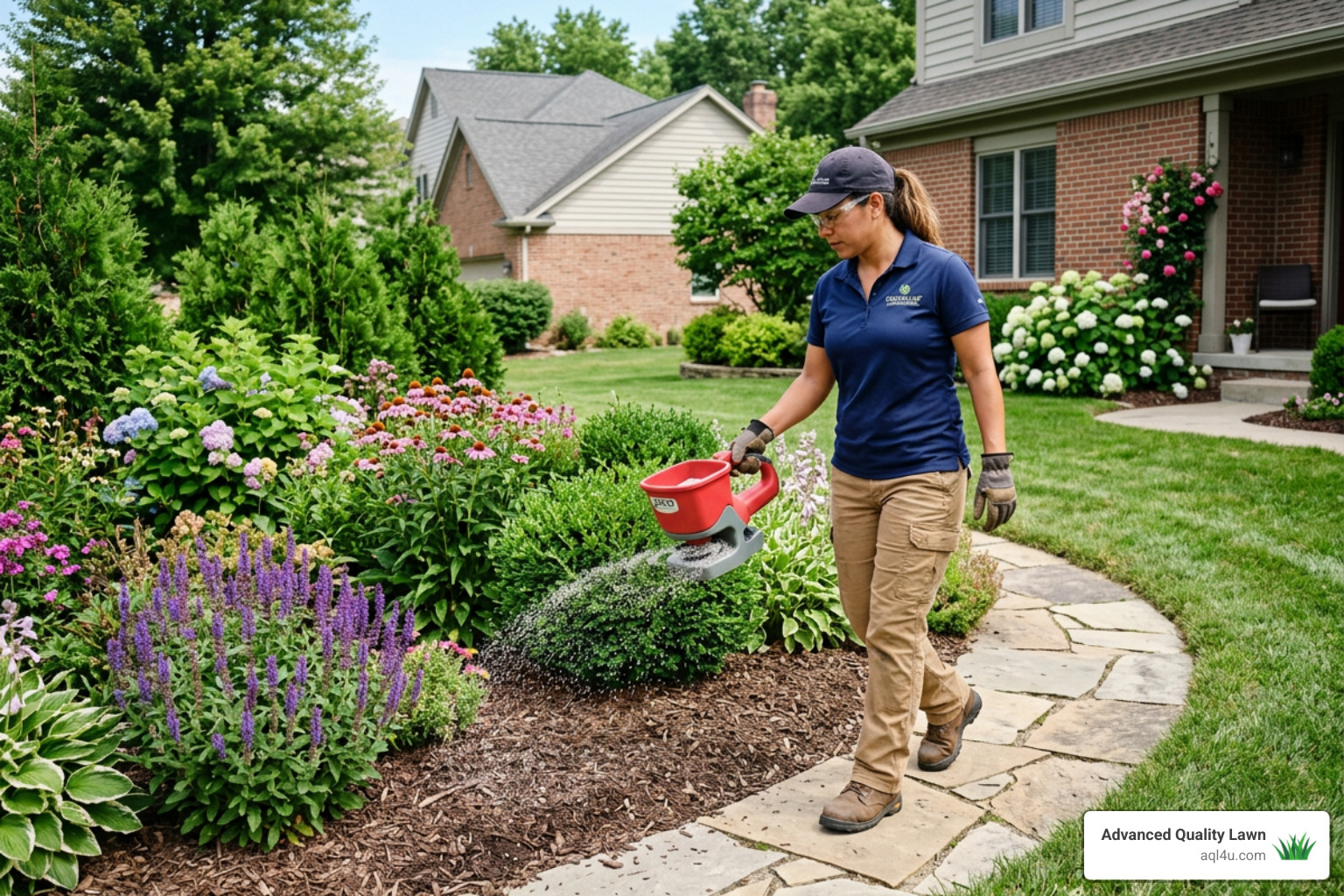
- Choose Your Equipment: For granules, a hand-held shaker or a small rotary spreader works best. For liquids, a hand sprayer or a backpack sprayer allows for even coverage.
- Spread Evenly: Follow the bag rate. For Snapshot, this is typically 2.3 to 4.6 lbs per 1,000 square feet.
- Water It In: This is the most critical step. Most pre-emergents require at least 0.5 inches of water (rain or irrigation) within 24–48 hours to move the chemical from the surface down into the "germination zone" of the soil. If it sits on top of dry mulch in the sun, it can break down and become useless.
- Don't Disturb the Soil: Once the barrier is set, don't rake or hoe the bed. Breaking the soil surface breaks the chemical "seal," allowing weeds to poke through.
Proper Landscaping maintenance means respecting this chemical barrier once it's established.
Maximizing Weed Control with Mulch and Maintenance
While pre emergent for garden beds is powerful, it works best as part of a "defense in depth" strategy. Combining herbicides with a thick layer of mulch creates a nearly impenetrable environment for weeds.
The Power of Mulch
Mulch provides a physical barrier that blocks sunlight from reaching weed seeds. When you add a pre-emergent to the mix, you get a "belt and suspenders" approach. For example, Preen Mulch with Extended Control already has the preventer mixed into the wood chips. This product is effective at just 2 inches of depth, whereas regular mulch usually requires 3 inches to be effective.
Healthier Plants, Fewer Weeds
Weeds are opportunists. They fill in gaps where your desirable plants are weak. By following Fertilizing best practices, you ensure your flowers and shrubs grow densely, shading out potential weed sites. If you’re new to this, checking out a Fertilizer 101 guide can help you understand the nutrient needs of your specific plants.
Proper Tree Maintenance and tree trimming also play a role. By keeping your canopy healthy, you manage the light levels reaching the garden floor, which influences which types of Weeds are likely to try and grow there.
Frequently Asked Questions about Garden Weed Preventers
Can I use lawn pre-emergents like Prodiamine in my garden beds?
Yes, but with caution. Prodiamine (the active ingredient in Barricade) is safe for many established landscape plants, but it is not labeled for nearly as many species as Snapshot or Preen. Always check the label for your specific ornamentals. Never use a "Weed and Feed" designed for lawns in your garden beds, as the post-emergent weed killers in those products will likely kill your flowers and shrubs.
How long does a single application of pre-emergent last?
It depends on the product and the weather. Standard Preen Garden Weed Preventer lasts about 3 months (8–12 weeks). Professional products like Snapshot or Preen Extended Control can last up to 6 months. In Northeast Ohio, heavy spring rains or extreme summer heat can break down the barrier faster, so we often recommend a "split application" or a re-application in mid-summer.
Will pre-emergent herbicides hurt my established flowers or shrubs?
Generally, no. Because pre-emergents target the very first stage of root development in a tiny seed, they do not affect plants that already have an established root system. However, you should avoid using them in areas where you plan to plant flower seeds (like zinnias or marigolds) or where you have recently put down new sod or young transplants that haven't "hardened off" yet.
Conclusion
A beautiful, weed-free garden shouldn't require you to spend every weekend on your knees pulling crabgrass. By choosing the right pre emergent for garden beds and applying it at the correct time, you can stop the problem before it starts. Whether you are protecting a prize-winning Shrub Garden in Solon or a backyard vegetable patch in Akron, there is a solution that fits your needs.
At Advanced Quality Lawn, we specialize in taking the guesswork out of landscape maintenance. From tree and shrub care to comprehensive lawn care programs, we help homeowners across Northeast Ohio achieve the lush, healthy yards they deserve.
If you're tired of fighting a losing battle against weeds, let us help. We provide expert service with a full-program guarantee across Summit, Medina, Cuyahoga, and surrounding counties. Contact us today to see how we can make your landscape the envy of the neighborhood.