Why Your Akron Lawn Starts With What's Under the Grass

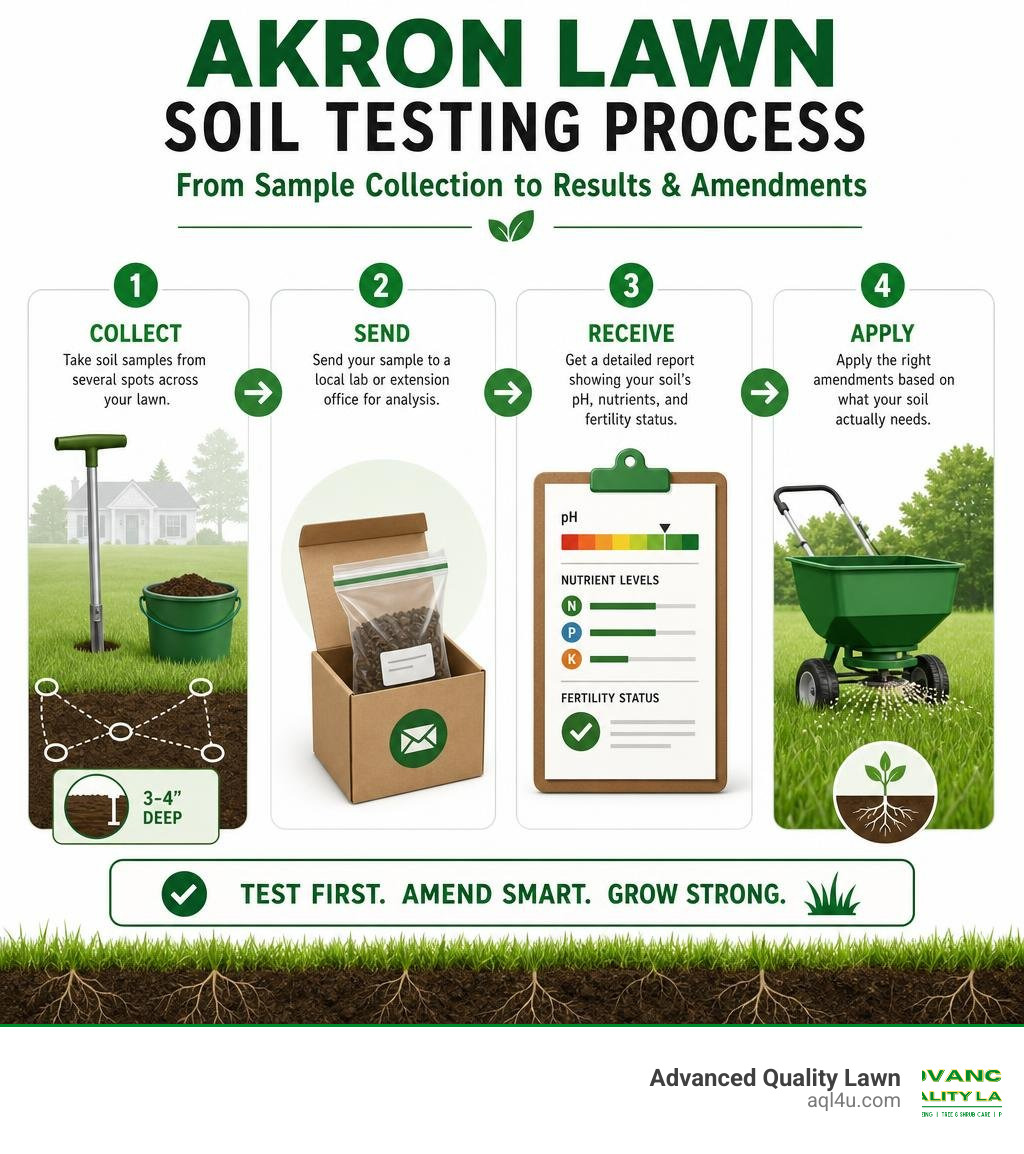
Akron lawn soil testing is the single most reliable way to find out exactly what your grass needs to thrive. Before you spend another dollar on fertilizer or lawn treatments, here is a quick answer to what soil testing involves:
- Collect soil samples from multiple spots across your lawn (3 to 4 inches deep)
- Send samples to a local lab or extension office for analysis
- Receive a report showing your soil's pH, nutrient levels, and fertility status
- Apply targeted amendments based on what your soil actually needs
Most Akron homeowners should test their lawn soil every two to three years. The OSU Extension Office at 440 Vernon Odom Blvd in Akron offers test kits for just $15.
You can follow every lawn care tip you find online and still end up with thin, patchy, or yellowing grass. The reason is often invisible because your soil chemistry is off. When pH is too high or too low, your grass simply cannot absorb the nutrients it needs, even if those nutrients are already in the soil.
Northeast Ohio soils can vary a lot from one yard to the next. That means what works for your neighbor may not work for you. A soil test removes the guesswork entirely. It gives you a clear picture of what is actually happening below the surface, so every product you apply works harder and goes further.
I'm Andrew Day, owner of Advanced Quality Lawn, and with more than 30 years of experience providing Akron lawn soil testing and lawn care services across Northeast Ohio, I know how much of a difference a simple soil test can make. In this guide, I'll walk you through everything you need to get it right.
Why Akron Lawn Soil Testing is Essential for Your Turf
Think of a soil test as a routine health screening for your yard. You would not take random vitamins without knowing what your body actually lacks, and you should not dump random bags of fertilizer on your grass without knowing what your soil needs. Testing your soil is the very first step toward proper care of your turf. This practice is so critical that the ANSI A300 standards, which are the national consensus standards for tree and landscape maintenance, recommend soil testing before designing, selecting plants, planting, or developing management plans for any landscape.

When you invest in akron lawn soil testing, you are addressing the fundamental chemistry of your yard. Soil chemistry dictates how well your grass can access essential elements like nitrogen, phosphorus, and potassium. If your soil pH is out of balance, your turfgrass will experience nutrient lock. This is a frustrating state where the nutrients are physically present in the dirt, but the grass roots are chemically blocked from absorbing them.
Without a test, you might notice your grass looking pale and assume it needs more nitrogen. You apply more fertilizer, but nothing changes. The grass remains yellow, the excess fertilizer washes away into local waterways, and you have wasted both your time and money.
By testing your soil, you unlock several major benefits:
- Targeted Plant Health: You learn exactly which macro and micronutrients are missing, allowing you to feed your grass exactly what it needs for deep roots and thick green blades.
- Cost Savings: You stop buying expensive fertilizers and lime treatments that your lawn does not actually need.
- Environmental Protection: You avoid over-fertilizing, which prevents excess nutrients from leaching into our local Northeast Ohio watersheds and streams.
- Early Diagnostics: You can easily distinguish between a nutrient deficiency and a lawn disease, which often look identical to the untrained eye.
To learn more about keeping your grass lush throughout the changing Ohio seasons, you can read our guide on Lawn Maintenance Akron Ohio. You can also discover why Soil Testing Is an Excellent Investment for Garden, Lawn, and Landscape Plants, and Commercial Crops to see how this simple process protects both your landscape and your wallet. For a deeper look at why this is the ideal starting point for your yard, check out the insights in Soil Testing, The Right First Step Toward Proper Care of Your Lawn ... .
How to Collect a Perfect Soil Sample in Summit County
To get accurate results from a lab, you must submit a high quality, representative sample. If you only scoop up dirt from one single spot in your yard, your results will only reflect that specific corner. If that spot happens to be right next to a concrete driveway or under a pine tree, the chemistry will be skewed and will not represent the rest of your lawn.
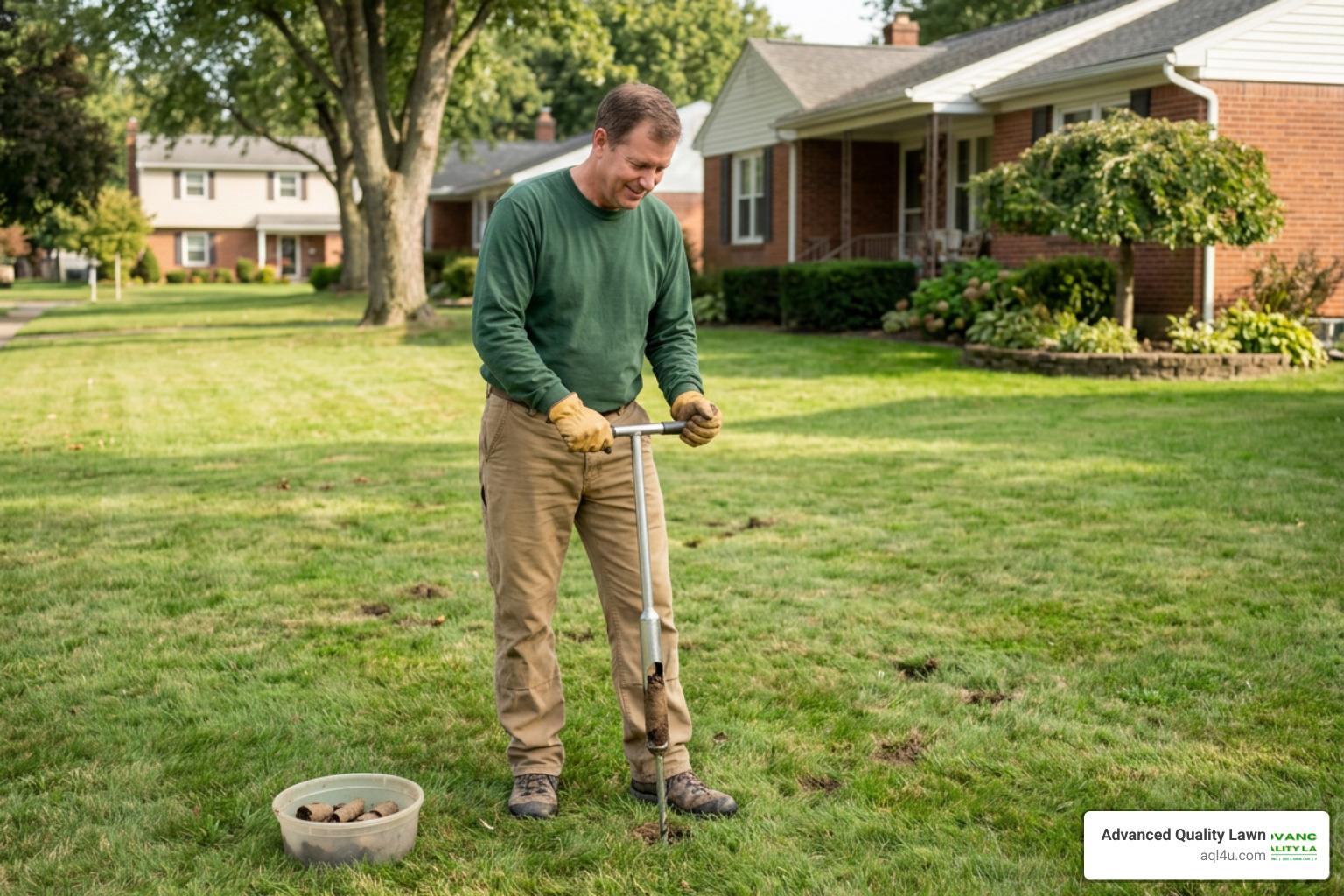
To get a true average of your lawn's health, you need to collect what is called a composite sample. This means gathering small cores of soil from several different spots across your yard and mixing them together.
Step-by-Step Guide to Sampling Your Lawn
To collect your sample like a professional, you will need a few basic tools. A soil probe or auger is the best tool for the job because it pulls a clean, consistent core of earth. If you do not have one, a clean garden trowel, spade, or butter knife will work just fine. Make sure your tools are clean and free of rust, and always use a clean plastic bucket to collect your soil. Avoid metal buckets because they can leach trace elements like zinc or iron into your sample, which will ruin your lab results.
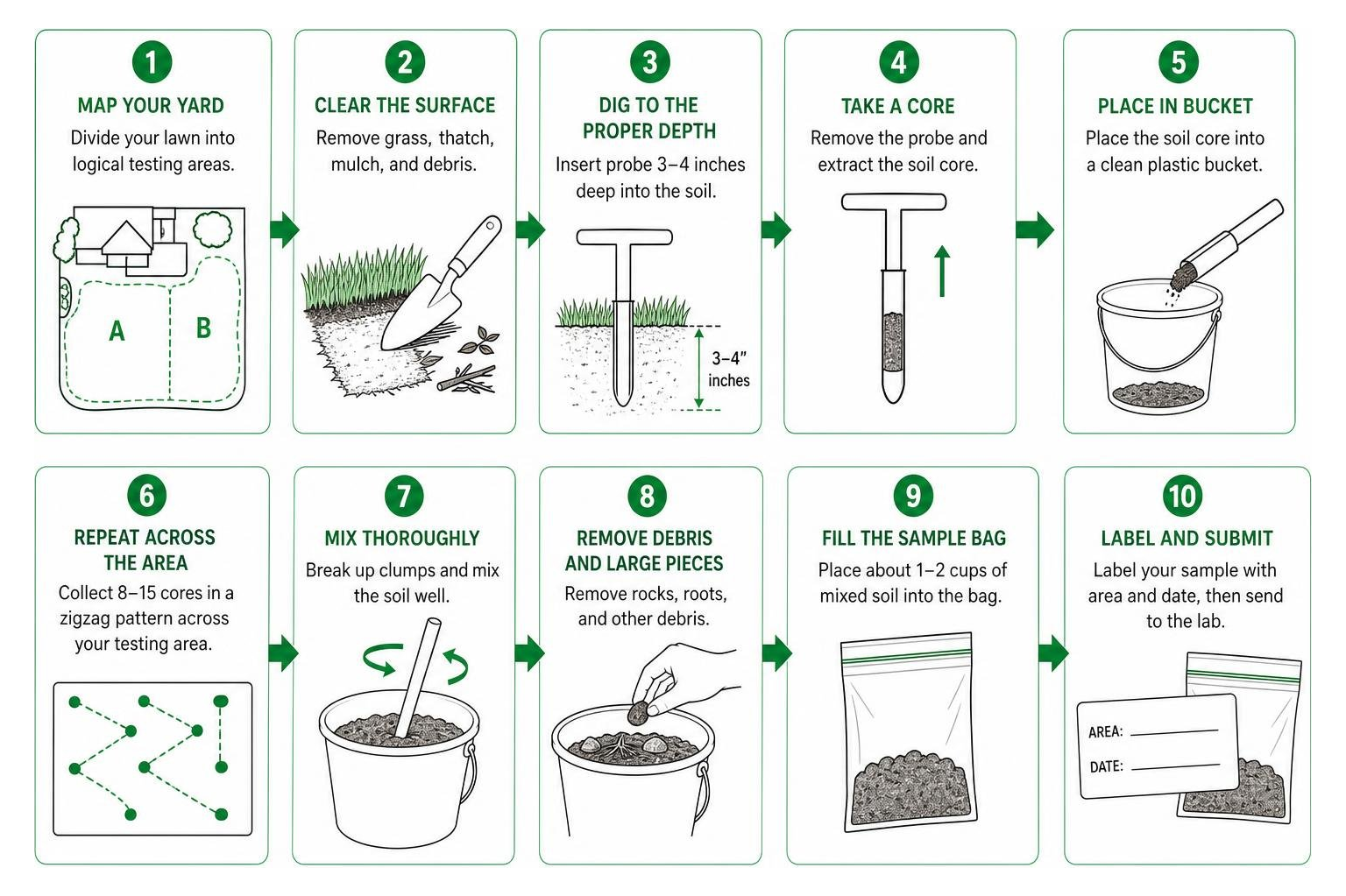
Here is how to collect your sample step by step:
- Map Your Yard: Divide your lawn into logical testing areas. If your front yard is bright and sunny but your backyard is shady and mossy, treat them as two separate areas and run a separate test for each.
- Clear the Surface: At each sampling spot, scrape away the grass, thatch, mulch, and any surface debris so you are only testing the actual soil.
- Dig to the Proper Depth: For established lawns, you want to sample to a depth of exactly 3 to 4 inches. This is where the vast majority of your grass roots live and feed.
- Take Multiple Subsamples: Walk across your testing area in a random zigzag pattern. Collect between 10 and 15 individual soil cores or slices from different spots across the lawn, dropping each one into your plastic bucket.
- Mix Thoroughly: Once you have collected all your subsamples in the bucket, break up any large dirt clumps, remove any remaining roots, stones, or grass blades, and stir the soil thoroughly to create a uniform mixture.
- Air Dry the Sample: If your soil is wet, spread it out on a clean sheet of paper or a paper plate and let it air dry at room temperature. Never use an oven, microwave, or hair dryer to speed up this process, as excessive heat can alter the chemical composition of the soil.
- Package and Label: Pack about one to two cups of the dry, mixed soil into a clean plastic bag or the sample bag provided by your testing kit. Label the bag clearly with your name, a unique name for the lawn area, and the current date of July 2026.
Local Resources for Akron Lawn Soil Testing
Akron homeowners have several excellent local options for processing their soil samples. You do not have to look far to find professional, affordable testing services right here in Northeast Ohio.
One of the most convenient options is the Ohio State University Extension Office for Summit County. Their office is located at 440 Vernon Odom Blvd, Akron 44302. You can stop by their office Monday through Friday between 9 am and 4 pm to purchase a soil test kit for $15 in cash or check. It is important to note that the extension office does not analyze the soil on site. Instead, they provide you with the official sample bag, instructions, and a mailing envelope to send your sample to a certified partner lab.
Another fantastic local resource is the Summit Soil and Water Conservation District. They offer residents excellent guidance on soil health and collaborate with university laboratories to make testing easy and accessible.
If you are looking for detailed instructions on the science of soil sampling across our region, you can read the OSU Extension Soil Testing Guide. For residents in neighboring counties, the Soil Testing | Lorain County Master Gardeners page offers wonderful local insights. You can also explore options with regional commercial laboratories like Lawn and Garden Sampling | A&L Great Lakes , which is located in Fort Wayne, Indiana, and processes samples incredibly fast.
Interpreting Your Soil Test Results to Optimize Chemistry
Once the lab finishes analyzing your sample, you will receive a report packed with numbers, charts, and chemical abbreviations. It can look a little intimidating at first, but once you know what to look for, it is quite simple to read.
Here is a quick reference table showing what healthy soil metrics look like for cool-season grasses in Northeast Ohio:
| Soil Metric | Ideal Range for Akron Lawns | What It Measures |
|---|---|---|
| Soil pH | 6.1 to 6.9 | The acidity or alkalinity of your soil |
| Phosphorus (P) | 15 to 30 ppm | Root development and early growth energy |
| Potassium (K) | 100 to 150 ppm | Disease resistance and overall stress tolerance |
| Calcium (Ca) | 50% to 75% base saturation | Cell wall strength and soil structure |
| Magnesium (Mg) | 10% to 20% base saturation | Chlorophyll production and greening |
| Cation Exchange Capacity (CEC) | 10 to 25 meq/100g | The soil's ability to hold onto nutrients |
Understanding pH and Nutrient Levels
The most important number on your report is the soil pH. The pH scale runs from 0 to 14, with 7.0 being completely neutral. Numbers below 7.0 are acidic, while numbers above 7.0 are alkaline. Most cool-season turfgrasses, including Kentucky bluegrass, perennial ryegrass, tall fescue, and fine fescue, grow best in slightly acidic soils with a pH of 6.1 to 6.9.
When your pH falls within this sweet spot, nutrients are highly soluble, meaning your grass roots can easily drink them in. If your soil pH drops below 6.0, the soil becomes too acidic. This is a common issue in Northeast Ohio due to our clay soils and natural rainfall patterns. In highly acidic soils, essential nutrients like phosphorus and calcium become tightly bound to soil particles, making them unavailable to your grass. To raise the pH and sweeten the soil, you will need to apply agricultural lime based on the lime requirement listed on your test report.
Conversely, if your soil pH rises above 7.2, it is too alkaline. This reduces the availability of iron and manganese, often leading to a pale, yellowing lawn. To lower your pH, you can apply elemental sulfur in the spring.
Maintaining a balanced pH is also one of your best natural defenses against weeds. Many invasive weeds thrive in poor, acidic soils where weak grass cannot compete. Keeping your soil chemistry optimized makes your turf thick and robust, which naturally crowds out weeds. You can read more about managing weeds in our guide on Akron Lawn Weed Control.
Your report will also show your Cation Exchange Capacity, or CEC. This number indicates how well your soil can hold onto nutrients. Heavy clay soils, which are very common in Akron, Stow, and Cuyahoga Falls, typically have a high CEC. They can hold a lot of nutrients, but they can also be prone to compaction. Sandy soils have a low CEC, which means nutrients leach through them quickly, requiring more frequent, lighter applications of fertilizer.
How Much Does Akron Lawn Soil Testing Cost
One of the best things about soil testing is how incredibly inexpensive it is. It is easily one of the highest return investments you can make in your property.
If you choose the DIY route, a basic soil test kit from the local OSU Extension Office costs just $15. If you order a mail-in kit through other regional programs, you can expect to pay around $13 to $18 per sample, plus a few dollars for shipping. Commercial labs, such as A&L Great Lakes, offer basic testing packages starting around $30 and comprehensive packages that include detailed micronutrient analyses for around $45.
According to national pricing surveys, including the How Much Does a Soil Test Cost? [2026 Data] | Angi guide, professional soil testing services are highly affordable and offer massive value. When you factor in the cost of buying fertilizers you do not need, or the price of replacing dead grass, spending a small amount on a soil test is a no-brainer.
If you prefer to leave the work to the experts, we include soil testing as a foundational part of our professional lawn care programs. To explore our comprehensive services, visit our page on Lawn Care Services Akron.
Frequently Asked Questions About Soil Testing
We talk to homeowners every day across Summit, Medina, and Cuyahoga counties, and they often have similar questions about managing their soil chemistry. Here are the answers to some of the most common questions we receive.
How often should I test my lawn soil in Ohio
For a healthy, established lawn, testing your soil every two to three years is a great rule of thumb. This frequency is usually adequate for maintaining optimal soil fertility in Ohio lawns and landscapes. It allows you to monitor how your soil chemistry is changing over time and adjust your fertilization program before any major deficiencies develop.
However, if you are struggling to get your lawn to thrive, or if you are dealing with persistent patches of thin, yellowing grass, you should test your soil immediately. You should also always test your soil before planting a brand new lawn, laying sod, or doing major landscaping renovations.
The best time of year to test is either in the early spring or the fall. Fall is actually the absolute best time to test if you need to apply lime to raise your soil pH. Lime takes several months to break down and react with the soil, so a fall application ensures your soil chemistry is perfectly balanced by the time spring growth begins.
How long does it take to get soil test results back
The turnaround time depends entirely on the lab you use and the time of year you submit your sample. Spring is the busiest season for agricultural labs, so testing can take a bit longer during those months.
On average, you can expect to receive your results within two weeks of the lab receiving your sample. Some high volume commercial labs can return results digitally via email within two to three business days, while university extension offices processing samples during peak seasons might take up to five or six weeks.
Can a soil test identify lawn diseases or pests
A standard soil test is designed to measure soil pH and available plant nutrients. It is incredibly useful, but it does have some limitations.
A standard soil test cannot:
- Identify lawn diseases like brown patch or dollar spot
- Detect lawn pests like grubs, chinch bugs, or sod webworms
- Identify chemical pollutants, herbicides, or gasoline spills in the dirt
- Measure soil compaction or physical drainage issues
If you are dealing with yellowing grass and your soil test report shows perfect pH and nutrient levels, you can rule out a fertility issue. This helps you narrow down the problem to a potential pest or disease issue. For more information on what a soil test can and cannot do, you can read the resources on Soil Testing | K-State | Kansas State University .
Conclusion
Achieving a beautiful, thick green yard in Northeast Ohio does not have to be a guessing game. By investing in akron lawn soil testing, you gain a clear, scientific roadmap that tells you exactly how to care for your turf. You will save money, protect our local environment, and finally get the lush lawn you have always wanted.
If you are ready to take the guesswork out of your lawn care, we are here to help. At Advanced Quality Lawn, we provide expert lawn care, tree, and shrub services across Akron, Hudson, Stow, Medina, and the surrounding Northeast Ohio communities. We pride ourselves on delivering excellent customer service, backed by our helpful service calls and full-program guarantees.
Let our team of experienced professionals handle the sampling, testing, and custom treatment of your soil. Visit our Advanced Quality Lawn Care and Maintenance Services page today to request a free quote and start your journey toward a healthier, greener lawn.