Why Your Lawn Needs a Crabgrass Preventer Akron Ohio Style
Identifying Common Invaders in Akron Lawn Weed Control
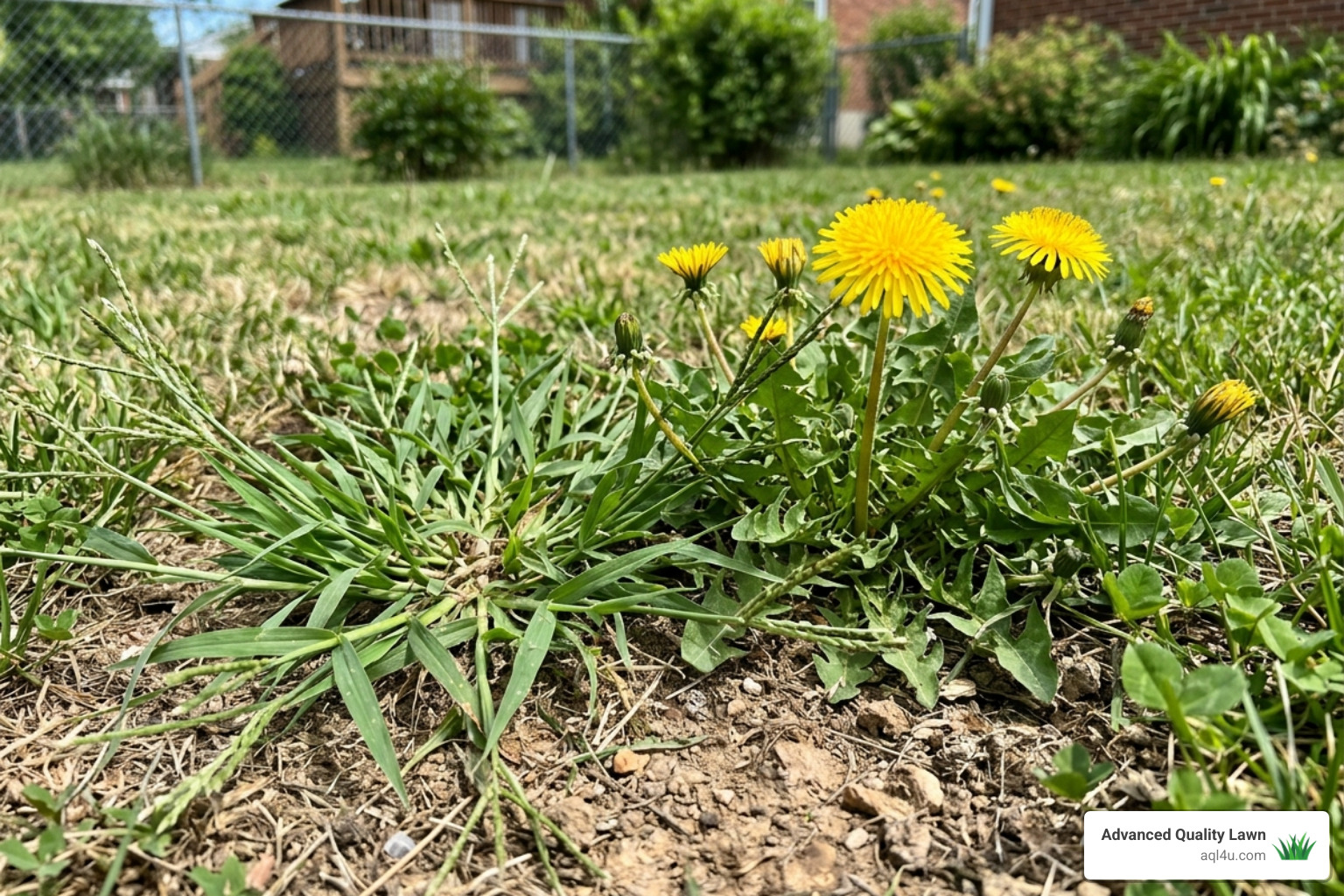
To win the battle for your backyard, you first need to know who the enemy is. In Northeast Ohio, our lawns face a specific set of invaders that thrive in our heavy clay soil and fluctuating temperatures. The most notorious of these is crabgrass. This opportunistic annual weed waits for the first sign of thinning grass or bare soil to strike. It grows in low-spreading clumps that can quickly smother your desired turfgrass.
Dandelions are another staple of the Ohio spring. Unlike crabgrass, which dies off with the first frost, dandelions are perennials. This means they have deep taproots that survive the winter, ready to pop up those yellow flowers as soon as the ground warms up. You can learn more about the differences between these two in our guide on Dandelions and Crabgrass.
White clover is also common, often signaling that your soil might be low in nitrogen. While some people do not mind a little clover, it can quickly take over and create an uneven texture in your lawn. Then there is yellow nutsedge. This is not actually a grass or a broadleaf weed but a sedge. It grows much faster than your regular grass and has a triangular stem that is easy to identify if you know what to look for. Because it is so hardy, you often need the Best Herbicide for Crabgrass and nutsedge-specific products to keep it under control.
The clay soil in Akron plays a huge role here. Clay stays wet longer in the spring and becomes rock-hard in the summer. This stress weakens traditional Kentucky Bluegrass or Tall Fescue, but weeds like crabgrass and nutsedge love it. Understanding whether a weed is an annual (growing from seed each year) or a perennial (returning from the same root) is the first step in choosing the right akron lawn weed control strategy.
Mastering Akron Lawn Weed Control with Two Applications
At Advanced Quality Lawn, we do things a little differently than the national chains. Most companies apply a single round of crabgrass preventer in the spring and call it a day. However, our experience in the Akron and Hudson areas has shown that one application is rarely enough for a full Ohio growing season.
We utilize a two-application barrier system. The first application goes down in early spring to stop the very first seeds from germinating. The second application follows about four to six weeks later. This extended protection ensures that the barrier remains strong even if we have a very wet spring that might wash away or dilute a single treatment. This is the gold standard for Best Pre-Emergent Weed Killer for Lawns.
The timing for this is vital. As we look at the weather patterns for April 2026, we see that the germination window can shift by a week or two depending on how fast the soil warms up. By using two applications, we widen that window of protection, ensuring your lawn stays clear even if Mother Nature decides to be unpredictable.
Post-Emergent Strategies for Akron Lawn Weed Control
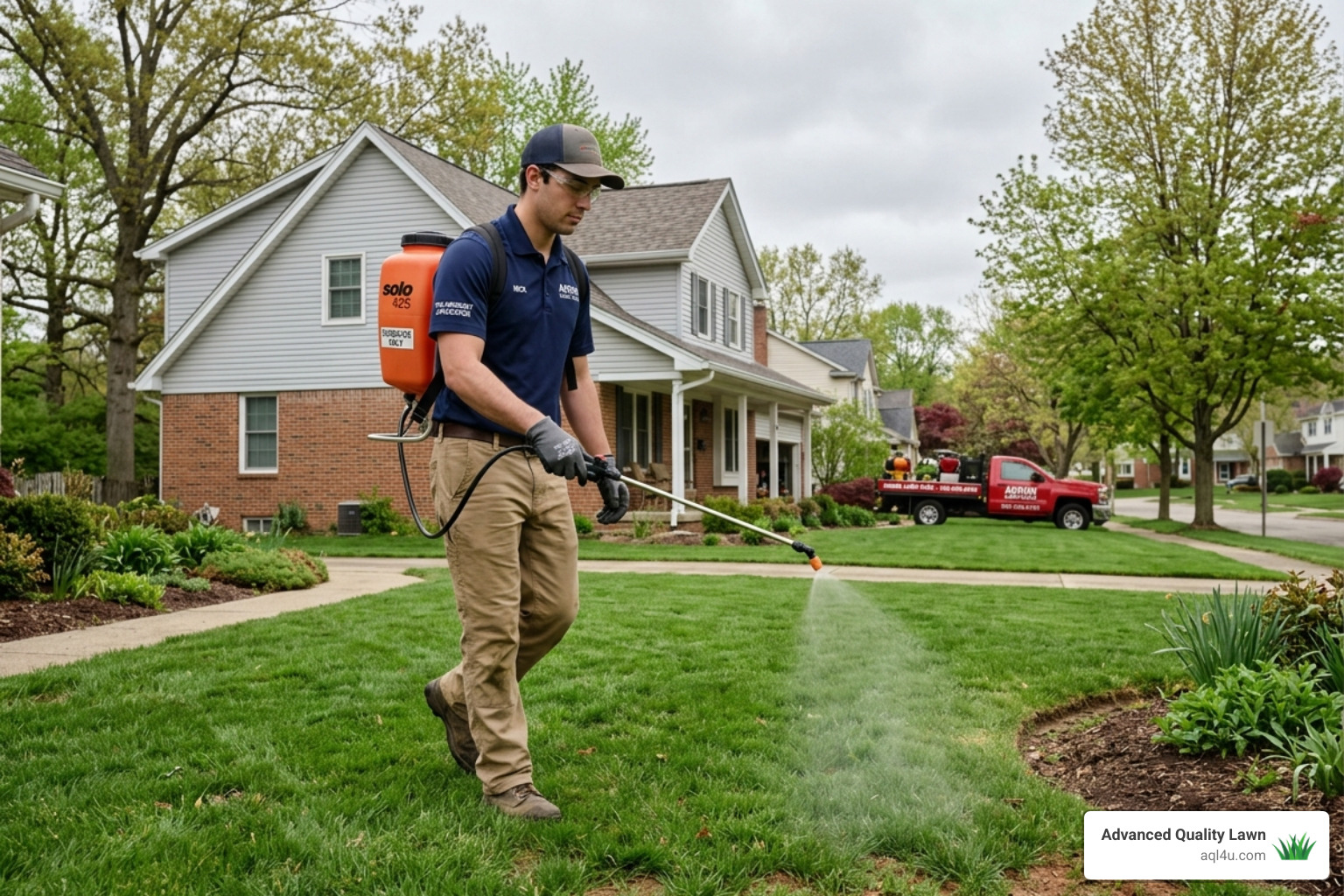
Even with the best pre-emergent program, a few stubborn weeds might try to sneak through, especially in the heat of an Ohio summer. This is where post-emergent strategies come into play. Broadleaf treatments are designed to target weeds like dandelions, clover, and thistle without harming your grass.
We use a combination of blanket applications and precision spot spraying to handle these invaders. If you are dealing with a mix of grassy and broadleaf issues, a Broadleaf and Crabgrass Herbicide can be a powerful tool. For those particularly nasty patches of nutsedge that pop up in July, we utilize the Best Weed Killer for Nutsedge and Crabgrass to ensure root system eradication. We do not just want to turn the weed brown; we want to make sure it does not come back.
The Science of Pre-Emergent Timing for Northeast Ohio
Success in akron lawn weed control is all about the soil temperature. Crabgrass seeds begin to germinate when the soil temperature consistently hits 55 degrees Fahrenheit for several days in a row. If you apply your preventer too late, the seeds have already sprouted, and the pre-emergent will not do its job.
We often tell our neighbors in Stow and Cuyahoga Falls to watch their landscape for natural cues. When the forsythia bushes start dropping their bright yellow blooms, that is usually the end of the ideal window for the first application. Moisture levels also matter. Pre-emergents need to be "washed in" with a light rain or watering to move the product into the top layer of soil where the seeds live.
For families with furry friends, we prioritize safety. Using a Pet Safe Pre-Emergent and following the proper drying times ensures your backyard remains a safe place for everyone to play. By creating this preventative barrier in the early spring, we stop the problem before it even starts, which is much easier than trying to kill a fully grown weed in August.
How Aeration and Overseeding Strengthen Your Defense
The best defense against weeds is a thick, healthy lawn. Weeds are like uninvited guests at a party; they only show up if there is an empty seat. By keeping your grass dense, you naturally crowd out weed seeds and prevent them from getting the sunlight they need to grow.
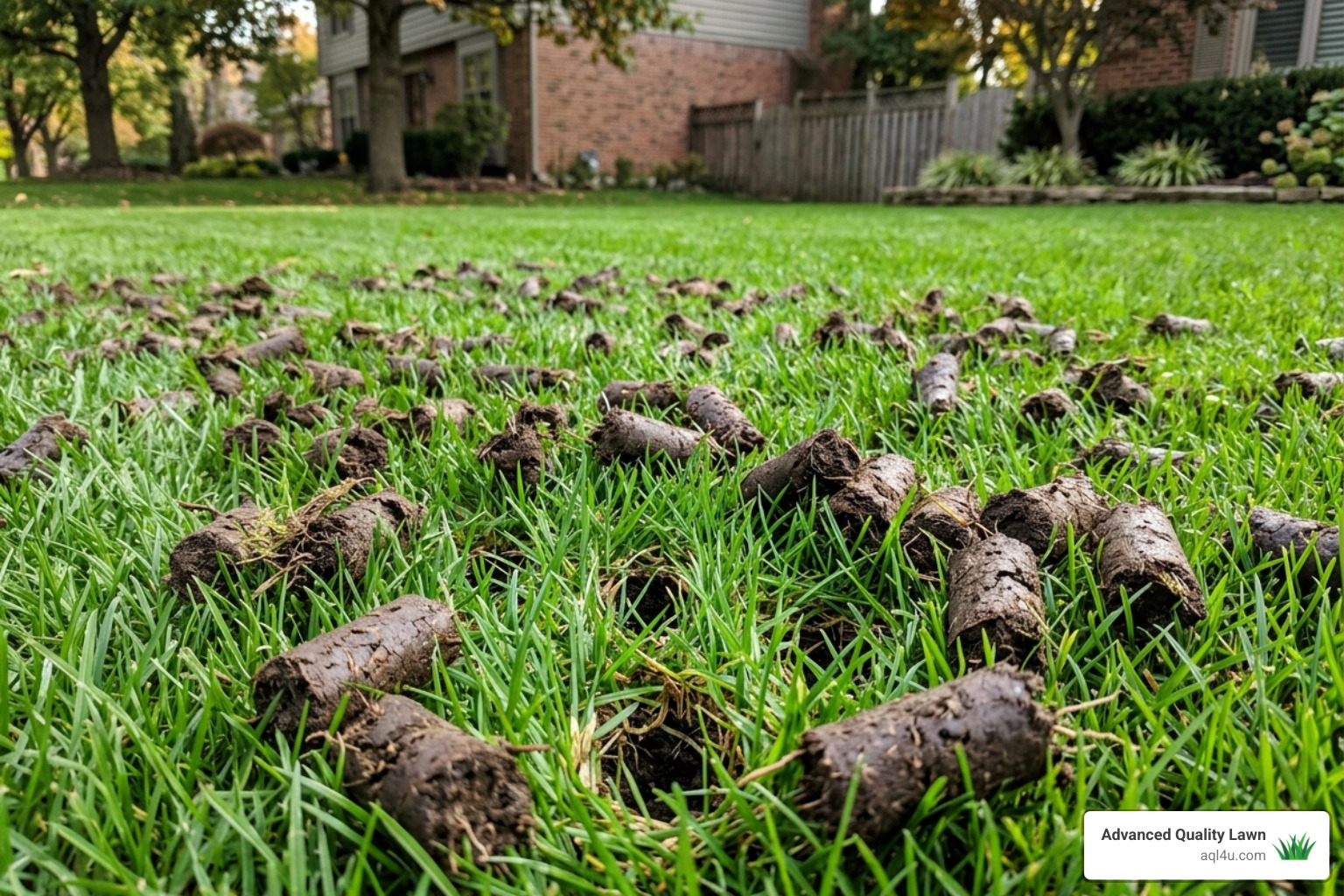
In Akron, our clay soil gets compacted very easily. This compaction squeezes the life out of grass roots by cutting off oxygen circulation and nutrient absorption. Core aeration is the process of pulling small plugs of soil out of the ground to relieve this pressure.
Aeration is the perfect time for overseeding. By introducing new, high-quality grass seed into those freshly pulled holes, you ensure excellent seed-to-soil contact. This leads to a thicker turf that acts as a natural carpet, blocking out invaders. We find that lawns that receive regular aeration and overseeding require significantly less chemical weed control over time because the grass is simply too strong for the weeds to compete with.
Professional vs DIY Weed Management in Summit County
Many homeowners in areas like Solon or Brecksville wonder if they should just buy a bag of weed and feed at the local big-box store. While DIY is possible, there are several reasons why professional akron lawn weed control often ends up being more cost-effective.
First, there is the issue of product concentration. Professional-grade products are often more effective and longer-lasting than what is available to the general public. Then there is application accuracy. Our technicians use calibrated equipment to ensure that the exact right amount of product is applied to every square inch of your lawn. Over-applying can damage your grass, while under-applying leads to weed breakthroughs.
We also take care of the details that DIYers often miss. This includes using a Pre-Emergent for Garden Beds to keep your mulch looking fresh. Preventing weeds in your landscape is just as important as the lawn itself, which is why a Crabgrass Preventer in Flower Beds is a standard part of a comprehensive property plan. Plus, you do not have to worry about storing chemicals in your garage or maintaining expensive spreaders and sprayers.
Frequently Asked Questions about Akron Weed Control
When is the best time to apply crabgrass preventer in Akron?
In Northeast Ohio, the first application should ideally happen between late March and mid-April, depending on the year's specific weather patterns. The goal is to have the barrier in place before the soil temperature reaches 55 degrees. Our two-application system ensures coverage even if the spring is unusually long or wet.
Are professional weed control treatments safe for my pets?
Yes, when applied correctly. We always recommend keeping pets and children off the lawn until the liquid treatments have completely dried or the granular treatments have been watered in and dried. Once dry, the products are bonded to the soil and plants and are safe for normal activity.
Why does crabgrass keep returning to my Ohio lawn?
Crabgrass is a survivor. A single plant can drop thousands of seeds that can stay dormant in the soil for years. If your lawn is thin, mowed too short, or has compacted clay soil, those seeds will find a way to grow. This is why a consistent, multi-year program of prevention and aeration is necessary to truly break the cycle.
Conclusion
Managing a beautiful yard in Northeast Ohio does not have to be a full-time job for you. At Advanced Quality Lawn, we take pride in our local expertise and our commitment to the communities we serve, from Medina to Macedonia. We understand the local soil, the local weeds, and exactly what it takes to make a lawn thrive in our climate.
With our service call guarantees and coverage across more than 99 zip codes, we are always nearby when you need us. Whether you need Fertilizer and Weed Control Stow, OH | Hudson, OH or a full-season program in Cleveland, we have the tools and the experience to get the job done right.
Do not let the weeds win this year. Take the first step toward a lush, green, weed-free lawn by reaching out to our team of experts. We are ready to help you achieve the backyard you have always wanted.