Why Your Yard Deserves a Bug-Free Summer

Finding the best way to treat your yard for bugs does not have to be complicated. Here is a quick answer to get you started:
The most effective ways to treat your yard for bugs:
- Apply a granular insecticide in early spring to target grubs and subsurface pests before they hatch
- Spray a liquid concentrate or hose-end spray for surface insects like mosquitoes, ants, fleas, and ticks
- Use natural options like cedar granules or diatomaceous earth for a chemical-free approach
- Eliminate standing water and cut grass short to remove breeding and hiding spots
- Repeat treatments every 4 to 12 weeks depending on the product and pest type
The right approach depends on your yard size, the pests you are dealing with, and whether you have kids or pets who spend time outside.
Bugs are more than just a nuisance. Mosquitoes, ticks, fleas, and grubs can damage your lawn, bite your family, and in some cases spread disease. For homeowners in suburban Ohio, summer should mean backyard barbecues and time outdoors, not swatting and scratching.
The good news is that with the right treatment plan, most yards can be protected quickly and kept that way all season long.
I am Andrew Day, owner of Advanced Quality Lawn, and with more than 30 years of lawn care experience in Northeast Ohio, I have helped countless homeowners find the best way to treat their yard for bugs using safe, proven methods tailored to our region's climate. In this guide, I will walk you through everything you need to know to stop the swarm for good.
What is the Best Way to Treat Yard for Bugs Safely and Effectively
When you look out at your lawn in the middle of July 2026, you want to see lush green grass instead of brown patches and swarms of flying pests. Achieving this goal requires a strategic approach. The best way to treat your yard for bugs involves understanding the difference between surface pests and subsurface pests.
Surface pests include mosquitoes, ticks, fleas, and ants. These insects live on the grass blades, in the thatch layer, or in surrounding foliage. Subsurface pests include white grubs and chinch bug nymphs, which feed directly on the root system of your lawn.

To treat these pests safely and effectively, you must combine proper lawn maintenance with targeted applications. If you only apply products without changing the underlying environment, the bugs will return. Our team always recommends starting with an integrated pest management framework. This framework focuses on reducing pest habitats before applying any chemical or natural treatments.
When choosing a treatment method, safety must remain your top priority. You must protect your children, your pets, and the beneficial insects like bees and ladybugs that keep your garden healthy. By reading the Ultimate Bug Control Guide 2026, you can learn how to balance pest elimination with environmental safety. Finding the Best Insect Control For Lawns means selecting products that target the bad bugs while leaving the good ones unharmed.
Comparing Chemical and Natural Pest Control Options
Homeowners have two primary pathways when treating their yards: chemical insecticides and natural alternatives. Both options have distinct advantages and drawbacks.
Chemical treatments usually use active ingredients such as Bifenthrin, Lambda-Cyhalothrin, and Chlorantraniliprole. They often work within hours, can provide protection for up to 12 weeks for surface pests, and are safe for children and pets once completely dry. They usually cost less per square foot, but they can be highly toxic to aquatic life and bees.
Natural treatments often use cedarwood oil, lemongrass oil, or diatomaceous earth. They usually require more frequent reapplication, often every 4 to 6 weeks, but they have a lower environmental impact and help preserve most beneficial insects. They may cost more per square foot, but many homeowners prefer them for a lower-toxicity approach.
Chemical Treatments as the Best Way to Treat Yard for Bugs
Chemical treatments are highly popular because they work quickly and provide long-lasting residual control. If you are dealing with a severe infestation of ticks or fleas, chemical options provide the fast knockdown you need to protect your family.
Many homeowners prefer using Best Lawn Insect Killer Granules for subsurface and thatch-dwelling pests. A prime example is Roundup® For Lawns Bug Destroyer | Roundup US . This dual-action formula contains Chlorantraniliprole and Bifenthrin. It kills over 100 listed insects on contact and keeps protecting your lawn for up to three months. One 10-pound bag treats up to 2,500 square feet of lawn.
For surface-dwelling pests like mosquitoes and ants, liquid concentrates applied with a hose-end sprayer are incredibly efficient. The Backyard Bug Control Spray Concentrate (Ready-To-Use) | Cutter is a staple for DIY yard care. This product uses Lambda-Cyhalothrin at a concentration of 0.16 percent.
One quart of this concentrate can treat up to 5,120 square feet of lawn for surface insects. If you are dealing with thatch-infesting insects, the same quart will cover 2,500 square feet. It provides up to 12 weeks of control against pests like house crickets, carpenter ants, harvester ants, lady beetles, and earwigs. You can easily find these chemical solutions and application tools by browsing Pest Control - The Home Depot .
Natural Methods as the Best Way to Treat Yard for Bugs
If you prefer to avoid synthetic chemicals, natural pest control methods have come a long way. These options are excellent for homeowners who want to minimize their environmental footprint and protect local pollinators.
Cedarwood oil is one of the most effective natural active ingredients. It works by blocking the octopamine receptors in pests, which leads to dehydration and death, but it is completely harmless to mammals. The Bug-Free Lawn Kit from Cedarcide is a highly rated natural system. It has earned a 4.88 out of 5 rating from 209 customer reviews. This kit uses a combination of cedar oil spray and dry cedar granules to create a protective barrier around your property.
Diatomaceous earth is another fantastic natural tool. This powder consists of fossilized algae that scratch the exoskeletons of crawling insects, causing them to dehydrate. It is highly effective against ants, fleas, and ticks when sprinkled in dry areas.
You can discover more natural solutions and expert advice by visiting our category/Pest+Control section or exploring the articles in category/Bugs.
How to Target Specific Lawn Pests
Different pests require different strategies. Applying a general spray across your lawn might help temporarily, but a targeted approach will yield much better results. Let us look at how to handle the most common pests in Northeast Ohio.
Eliminating Fleas and Ticks
Fleas and ticks are dangerous because they carry pathogens like Lyme disease and Rocky Mountain spotted fever. These pests do not spend their time in the middle of a hot, sunny lawn. Instead, they thrive in shady areas, tall grass, and along the wooded edges of your property.
To eliminate them, you must focus your treatments on these specific zones. Keep your grass cut short to remove their climbing platforms. Apply a perimeter barrier treatment along the edge of your woods and around your patio. If you live in Northeast Ohio, professional lawn care teams can help you establish these protective barriers. Whether you live in Brecksville, Broadview Heights, Solon, or Chagrin Falls, local experts can customize a treatment plan for your property. For those who want to tackle this project themselves, we have compiled comprehensive instructions in our Ultimate Guide Kill Fleas Yard and our Ultimate Guide Kill Ticks Yard.
Controlling Grubs and Chinch Bugs
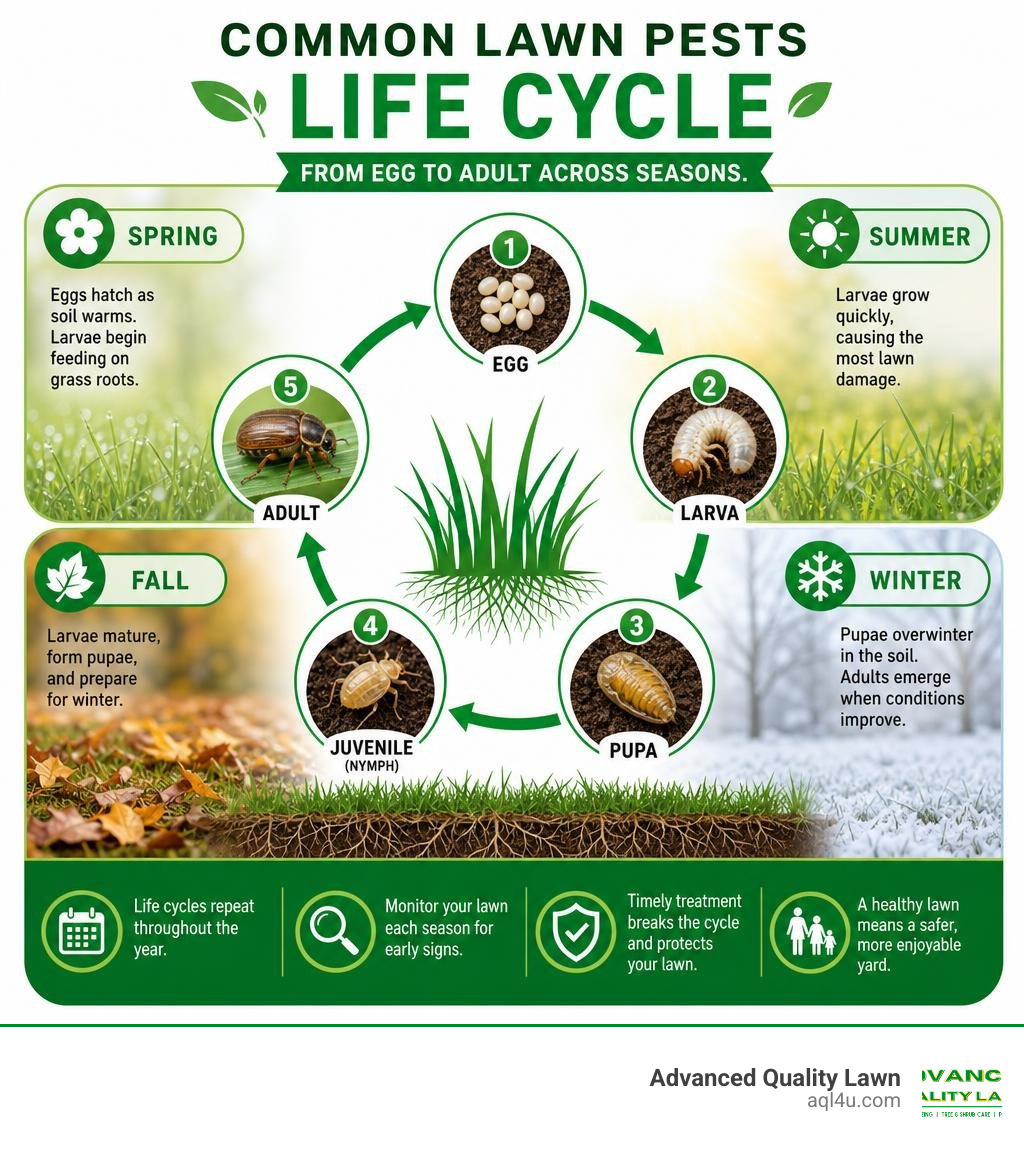
Subsurface pests can destroy a beautiful lawn before you even realize they are there. White grubs are the larval stage of Japanese beetles. They hatch in the soil and feed on your grass roots, causing large patches of turf to die and roll up like a carpet. Chinch bugs are tiny insects that suck the sap from grass blades while injecting a toxin that causes the grass to turn brown and die.
To protect your lawn from these hidden threats, you must apply systemic treatments at the right time. For grubs, applying a preventative treatment in late spring or early summer is crucial. Once the grubs grow larger in the autumn, they become much harder to kill.
You can read about the best timing and products in our guides on the Best Way To Kill Grubs In Lawn and the Best Way To Kill Chinch Bugs. Managing adult Japanese Beetles in your garden will also reduce the number of eggs laid in your turf, protecting your soil for the following year.
Understanding local pest behavior is essential for homeowners in Summit, Medina, and Portage counties. You can find more regional tips in our article on Common Ohio Garden Pests And How To Get Rid Of Them and learn about other destructive pests in The Unwelcome Guests Tent Caterpillars And White Grubs In Your Yard.
Best Practices for Application Timing and Prevention
Applying pest control products is only half the battle. If you apply them at the wrong time, the rain might wash them away, or the sun might break them down before they can do their job.
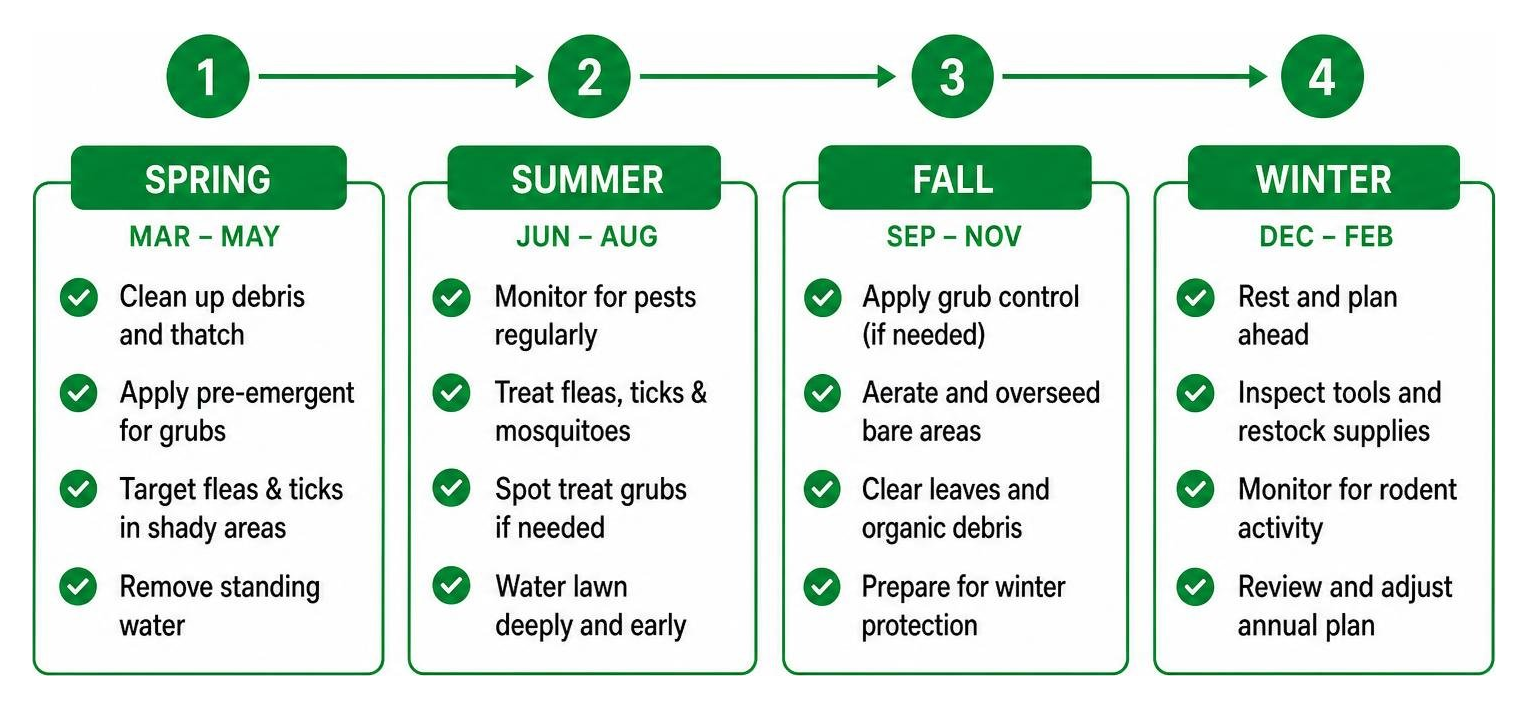
To get the most out of your efforts, follow these best practices:
- Check the Weather: Never apply liquid sprays when rain is in the immediate forecast. You want the product to dry completely on the foliage. For granular products, a light watering after application is often required to activate the ingredients, but heavy downpours will wash them away.
- Mow Before You Spray: Cut your grass to its proper height before applying treatments. This allows the spray to reach the lower sections of the grass blades and the soil surface where pests hide.
- Eliminate Standing Water: Mosquitoes need only a tiny amount of water to breed. Empty your birdbaths, clean your gutters, and turn over empty flowerpots to disrupt their breeding cycle.
- Keep a Clean Yard: Remove piles of leaves, grass clippings, and fallen branches. These damp piles are prime real estate for spiders, ants, and ticks.
For visual learners, you can watch this video on Affordable DIY Pest Control in your Lawn on YouTube to see how to apply granular products correctly. If you want to see how professionals apply liquid barriers, check out this guide on DIY Pest Spray Just Like a Professional for inside, outside, and garage areas.
Frequently Asked Questions About Yard Bug Control
How often should I treat my yard for bugs
The frequency of your treatments depends on the products you choose and the severity of your pest problems. Synthetic chemical sprays usually provide protection for 4 to 12 weeks. For example, Cutter Backyard Bug Control can last up to 12 weeks against specific surface pests, but you should repeat the application every 8 weeks if you have a heavy infestation of ants or crickets.
Natural treatments like cedarwood oil and essential oils break down more quickly in the sun and rain. You should apply these products every 4 to 6 weeks to maintain a strong barrier. Granular preventative treatments for grubs are typically applied just once per year in the late spring.
Is yard bug treatment safe for pets and children
Yes, yard bug treatments can be used safely around children and pets, but you must follow the product label instructions exactly. For liquid chemical applications, keep your children and pets inside during the application and do not let them back onto the lawn until the product has dried completely. This usually takes 1 to 2 hours depending on the humidity and sunlight.
For granular products, you must water the lawn thoroughly to wash the active ingredients into the soil, then let the grass dry before allowing pets and kids to play on it. Natural products like cedar oil are generally safe immediately, but it is still wise to let the spray dry first.
When is the best time of day to spray the yard
The best time of day to spray your yard is in the early morning or late evening. During these hours, wind speeds are usually at their lowest, which prevents the spray from drifting into vegetable gardens or neighboring properties.
Spraying in the early morning or late evening also protects beneficial pollinators like honeybees, which are active during the warm, sunny parts of the day. Avoid spraying in the heat of the midday sun, as the rapid evaporation can reduce the effectiveness of the product and potentially scorch your grass blades.
Conclusion
Finding the best way to treat your yard for bugs is about choosing the right tools for your specific lawn and staying consistent with your maintenance. Whether you prefer the fast knockdown of chemical treatments or the eco-friendly protection of natural cedarwood oil, taking action will help you reclaim your outdoor space.
If you live in Akron, Hudson, Copley, Bainbridge, Medina, or anywhere else in Northeast Ohio, you do not have to tackle this chore alone. At Advanced Quality Lawn, we provide professional, worry-free solutions to keep your yard healthy and pest-free all season long. We back our services with excellent customer care, convenient service calls, and full-program guarantees across 99 plus zip codes in multiple counties.
Let us handle the bugs so you can enjoy your summer. Contact us today to learn more about our professional lawn care and maintenance services.