How to Kill Chinch Bugs the Right Way
Why Your Grass Is Dying Even Though You Keep Watering It
If you are looking for the best way to kill chinch bugs, here is a quick answer:
The most effective approach combines two steps:
- Confirm the infestation using the coffee can float test (details below)
- Apply a targeted insecticide containing bifenthrin or imidacloprid to the affected area and 5 to 10 feet beyond the visible damage
| Method | Speed | Best For |
|---|---|---|
| Bifenthrin (pyrethroid) | 24 to 48 hours | Active, heavy infestations |
| Imidacloprid (neonicotinoid) | 3 to 7 days | Systemic, longer-term control |
| Neem oil | 1 to 3 weeks | Light infestations, organic preference |
| Beneficial nematodes | 1 to 3 weeks | Prevention and mild pressure |
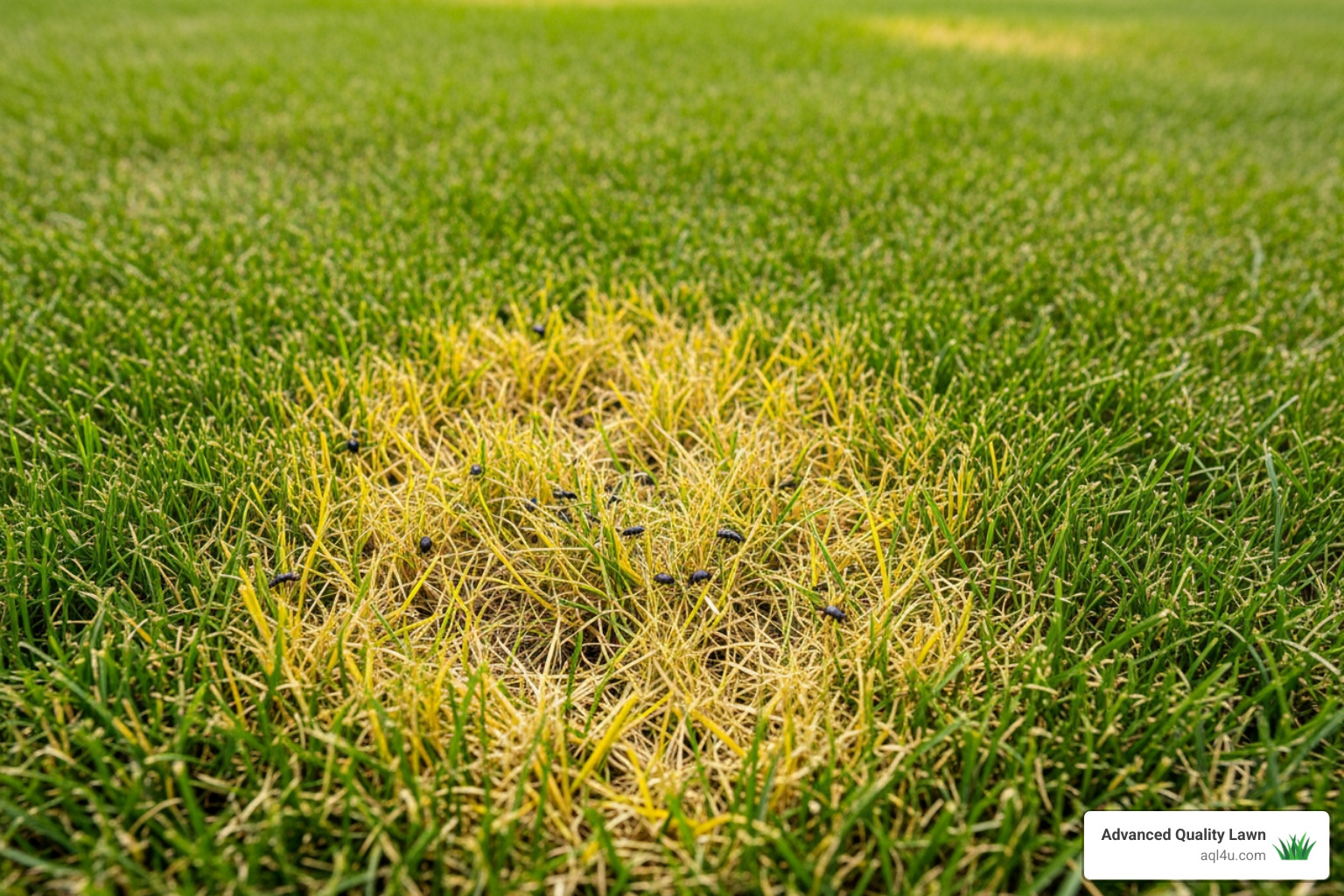
You water. You feed your lawn. Yet a spreading patch of yellow-brown grass keeps getting bigger. If those patches are in sunny areas near your driveway or sidewalk, and they do not bounce back no matter how much you water, chinch bugs are likely the cause.
These tiny pests do not just suck the moisture from grass blades. They inject a toxin that blocks water and nutrient movement inside the plant, killing the grass from the inside out. By the time the damage is visible, they have often already moved on to the next section of your lawn.
The frustrating part is that chinch bug damage looks almost identical to drought stress. Many Ohio homeowners spend weeks watering dead grass, not realizing the real problem is underneath.
Acting fast matters. A single female can lay 250 to 300 eggs in her lifetime, and populations in untreated turf can exceed 200 insects per square foot during peak summer months.
I'm Andrew Day, owner of Advanced Quality Lawn, and with more than 30 years of lawn care experience serving Northeast Ohio homeowners, I have seen how quickly a chinch bug problem can go from a small patch to a full lawn replacement. In this guide, I will walk you through the best way to kill chinch bugs and keep them from coming back.
Identifying Chinch Bug Damage and Life Stages
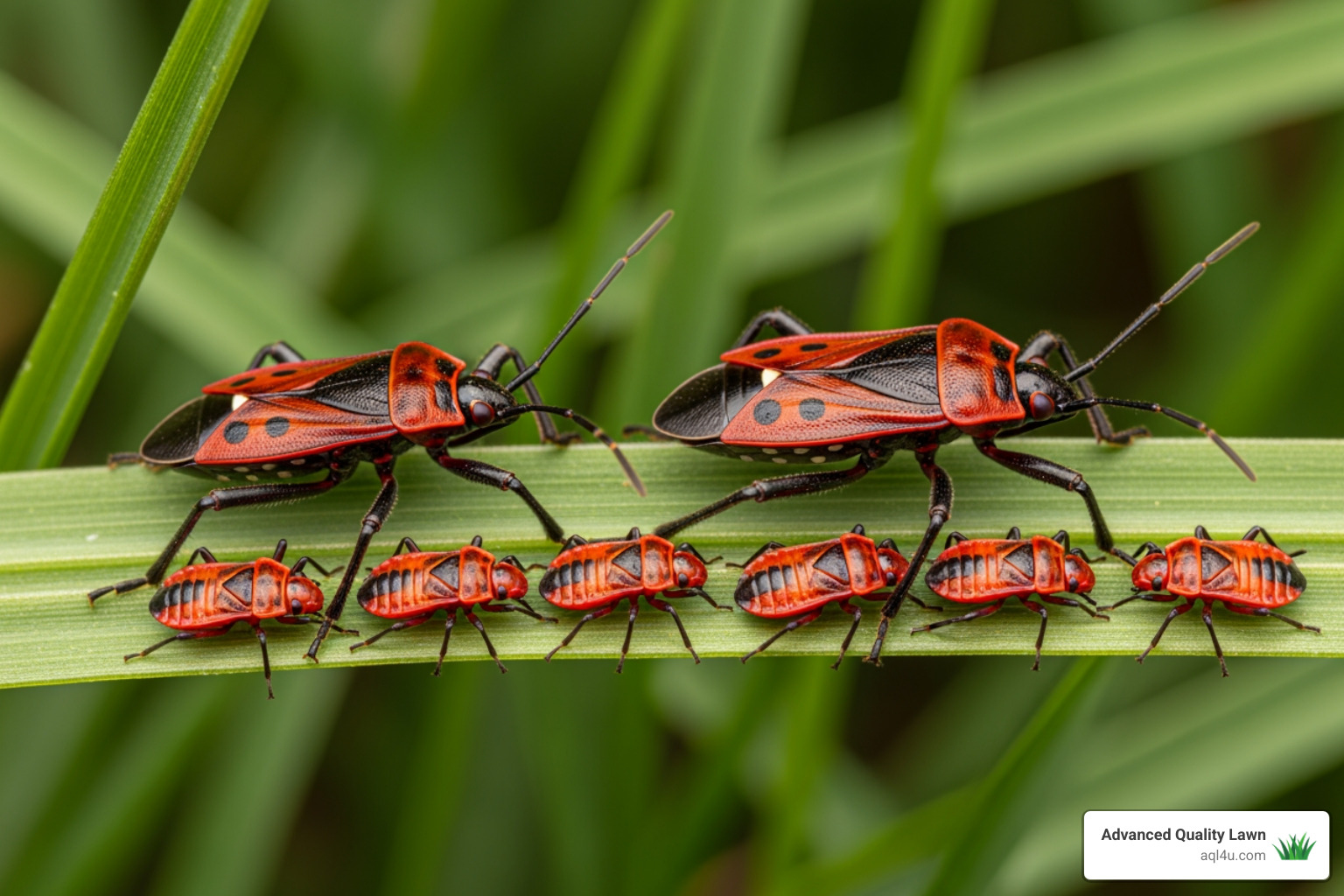
To win the battle against these pests, you first need to know what you are looking for. Chinch bugs are masters of disguise because they are incredibly small. An adult chinch bug is only about 1/5 of an inch long. They have black bodies and white wings that fold over their backs, often creating a distinctive X shape or black triangular marks on their wings.
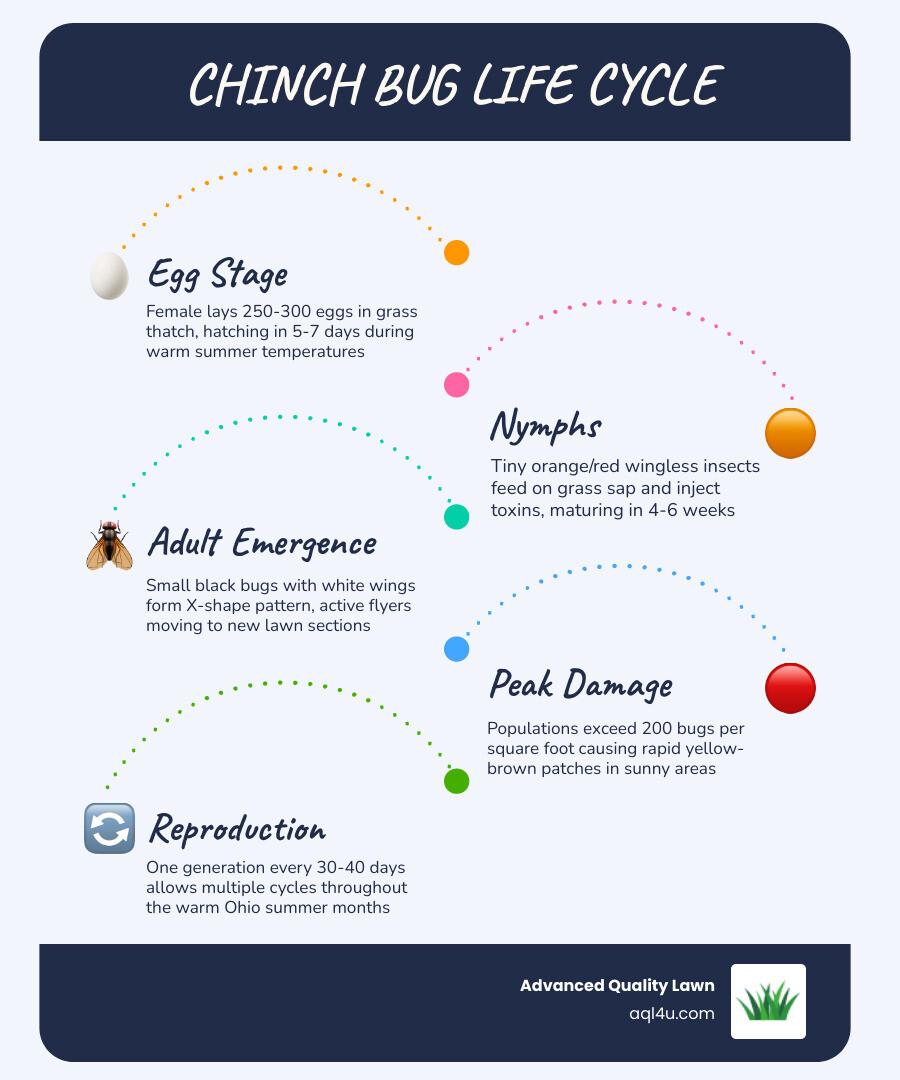
The younger versions, known as nymphs, look quite different. They go through several color changes as they grow. When they first hatch, they are tiny and bright orange or red. As they mature, they develop a white stripe across their middle. Eventually, they darken to a brownish-black color before becoming winged adults.
Understanding their reproductive habits is key to realizing how fast an infestation can explode. A single mated female can lay between 250 and 300 eggs over her lifetime. In our Northeast Ohio climate, these eggs typically hatch in late spring or early summer as temperatures rise.
The maturity timeline for a chinch bug is about 4 to 6 weeks. This means that by July and August, you could have multiple generations of Lawn Bugs all feeding on your turf at the same time. Because they love the heat, you will almost always find them in the sunniest parts of your yard. If you see brown patches in the shade, you are likely dealing with a different issue, as chinch bugs rarely attack shaded grass.
The Best Way to Kill Chinch Bugs Using Confirmation Tests
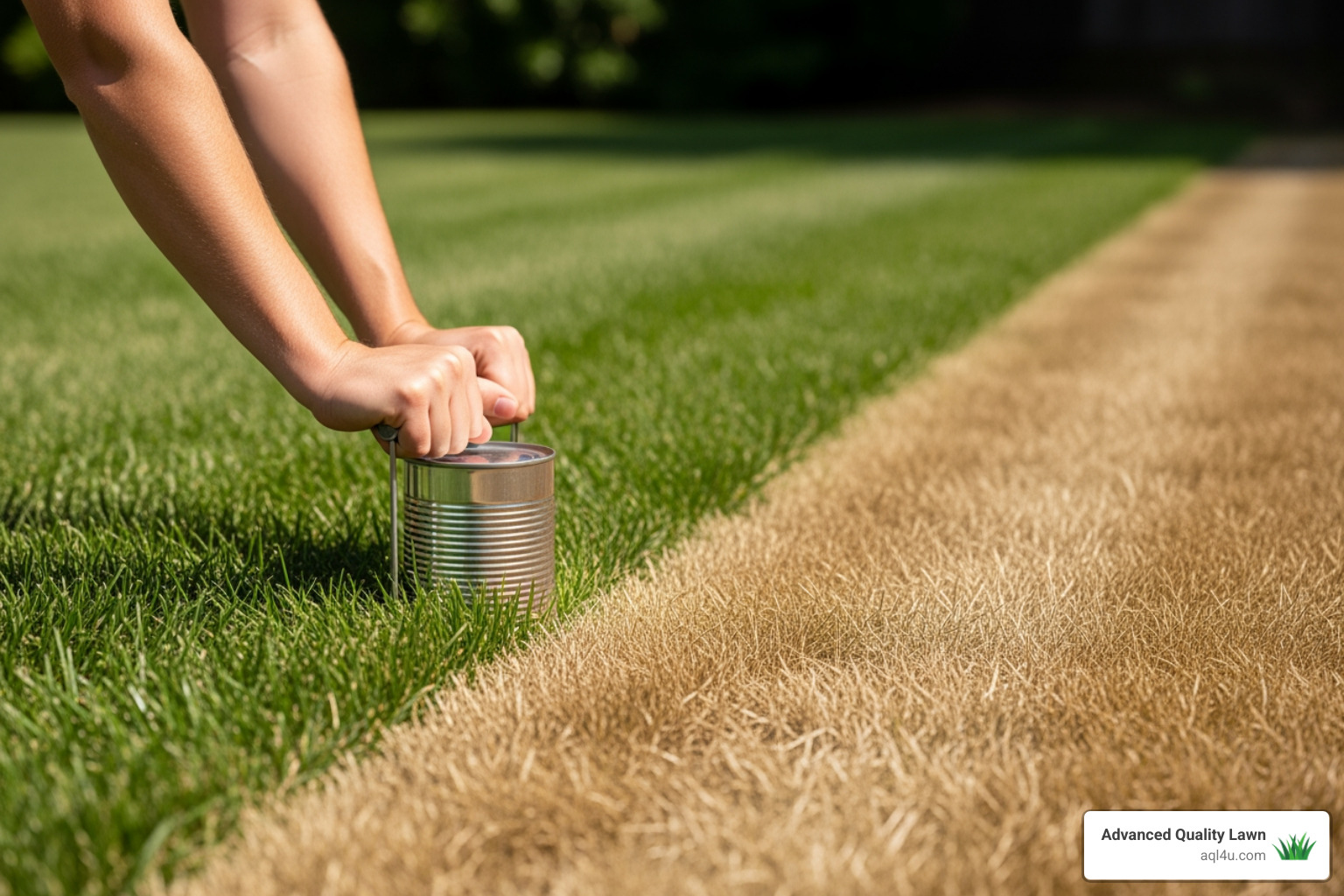
Before you start spreading products across your yard, you must confirm that chinch bugs are actually the culprits. Since their damage looks so much like drought, we recommend using a simple DIY detection method called the coffee can float test.
To do this, find a coffee can or a similar large tin can and cut out both the top and the bottom to create a metal cylinder. Push one end of the can about two or three inches into the soil at the edge of a suspected brown patch. You want to place it where the yellowing grass meets the green grass, as that is where the bugs are actively feeding.
Fill the can with water and keep it full for about 10 minutes. If chinch bugs are present, they will float to the surface. According to Chinch Bug Management in Lawns, finding 3 to 5 chinch bugs floating in the can within that 10 minute window confirms a damaging infestation.
On a broader scale, a threshold of 20 to 25 chinch bugs per square foot indicates that your lawn is under serious threat and requires immediate treatment. If you do not have a can handy, a soap flush test using two tablespoons of dish soap mixed in a gallon of water poured over a square yard of turf can also force Lawn Pests to the surface for identification.
Best way to kill chinch bugs with chemical treatments
When the infestation is confirmed, chemical treatments are often the most reliable way to stop the damage before it reaches the point of no return. We generally recommend two main types of active ingredients:
- Contact Pyrethroids (like Bifenthrin): These work by touching the insect. They are incredibly fast, typically showing results within 24 to 48 hours. They are excellent for knocking down a massive population quickly.
- Systemic Neonicotinoids (like Imidacloprid): These are absorbed by the grass plants. When the chinch bugs suck the sap, they ingest the medicine. These provide longer-lasting protection but take a bit more time to work.
For the most effective application, using Best Lawn Insect Killer Granules is a great choice for homeowners. Granules can fall through the grass blades and reach the thatch layer where the bugs hide. Always water the granules in lightly after application to activate the product and ensure it reaches the soil surface. Be sure to treat at least 5 to 10 feet beyond the visible damage to catch the bugs that are currently moving into your healthy green grass.
Best way to kill chinch bugs using natural methods
If you prefer an organic approach, there are several natural ways to manage these pests. While these methods may take 1 to 3 weeks to show full results, they can be very effective when used correctly.
- Neem Oil: This natural oil disrupts the growth and feeding of the bugs. It is best applied in the early morning or late afternoon to prevent the sun from evaporating the oil too quickly.
- Dish Soap Solution: A mixture of mild dish soap and water can suffocate the bugs on contact. Many homeowners have found success by spraying this solution annually as a preventative measure.
- Beneficial Nematodes: These are microscopic organisms that hunt and kill soil-dwelling pests. They work best when the soil is kept moist.
- Diatomaceous Earth: This powder is made of tiny fossilized organisms that cut through the exoskeletons of insects, causing them to dehydrate.
- Natural Predators: Encouraging insects like earwigs can help, as a single earwig can consume up to 50 chinch bugs per day.
For more details on managing your yard safely, you can check out this guide on How to Kill, Control, and Prevent Chinch Bugs.
Preventing Future Infestations Through Lawn Maintenance
The best way to kill chinch bugs is to make your lawn a place where they do not want to live in the first place. Proper maintenance is your best defense. In fact, lawns maintained with proper cultural practices have 60 percent fewer chinch bugs than neglected lawns.
Thatch management is perhaps the most important factor. Thatch is the layer of living and dead organic matter that sits between the green grass blades and the soil surface. Chinch bugs love to live and lay their eggs in thick thatch. You should aim to keep your thatch layer below 0.5 inches. If it gets thicker than that, it is time to dethatch or aerate.
Your mowing and watering habits also play a huge role. We recommend mowing at a height of 3 to 4 inches. Taller grass shades the soil, which keeps it cooler and less attractive to heat-loving chinch bugs. When it comes to irrigation, water deeply and infrequently. This encourages deep root growth and reduces plant stress.
Be careful with your nitrogen rates as well. Over-fertilizing with high-nitrogen products can actually attract chinch bugs and make your lawn more susceptible to damage. Using Best Insect Control for Lawns as part of a balanced program will keep your turf strong without over-stimulating growth.
Finally, consider the type of grass you have. While St. Augustine grass is a favorite for chinch bugs in other regions, here in Northeast Ohio, we focus on cool-season varieties. Choosing endophyte-enhanced grass seeds can provide natural resistance to many leaf-feeding insects.
Frequently Asked Questions about Chinch Bug Control
How do I distinguish chinch bug damage from drought stress?
This is the most common question we hear. The easiest way to tell the difference is to water the area heavily. If the grass is just thirsty, it will begin to green up and recover within a few days. If the grass stays brown and continues to wilt, it is likely chinch bug damage. Also, chinch bugs prefer full sun and areas near heat-conducting surfaces like sidewalks. If the damage is in a shady spot, it is probably not chinch bugs.
When is the best time of year to treat for chinch bugs?
In our region, the best time to treat is typically in early summer, around June or July, when the first generation of nymphs begins to hatch. Treating early prevents the population from exploding in August when the heat is at its peak. However, if you see active damage at any point during the summer, you should treat immediately to stop the spread.
Will my grass recover after a chinch bug infestation?
It depends on how much damage has been done. Because chinch bugs inject a toxin that kills the grass cells, the affected blades will not turn green again. However, if the "crown" or the base of the plant is still alive, the lawn can recover through new growth. If more than 40 to 50 percent of the area is dead, you have reached the point of no return, and sod replacement or heavy overseeding will be necessary.
Conclusion
Dealing with chinch bugs can be a frustrating experience, but it does not have to mean the end of your beautiful yard. By catching the problem early with a coffee can test and applying the right treatments, you can save your turf from permanent damage.
The 'point of no return' for a lawn is typically when 40 percent to 50 percent of the area shows active damage and the grass crowns are dead. At that stage, you are looking at expensive sod replacement rather than a simple treatment.
At Advanced Quality Lawn, we are dedicated to helping our neighbors in Akron and throughout Northeast Ohio keep their lawns healthy and pest-free. We provide expert lawn care, tree, and shrub services across more than 99 zip codes, including Summit, Medina, Cuyahoga, and Portage counties. Whether you are in Hudson, Stow, or Cleveland, our team is ready to help with service calls and full-program guarantees.
If you are tired of fighting lawn pests on your own and want the peace of mind that comes with excellent customer service, we are here for you. Don't let chinch bugs take over your summer. Check out our Advanced Quality Lawn Maintenance programs today and let us help you get back to enjoying your outdoor space.