
Give Your Sir Walter Buffalo the Royal Treatment with These Fertilisers
Sir Walter Buffalo Deserves Better Than Generic Fertiliser
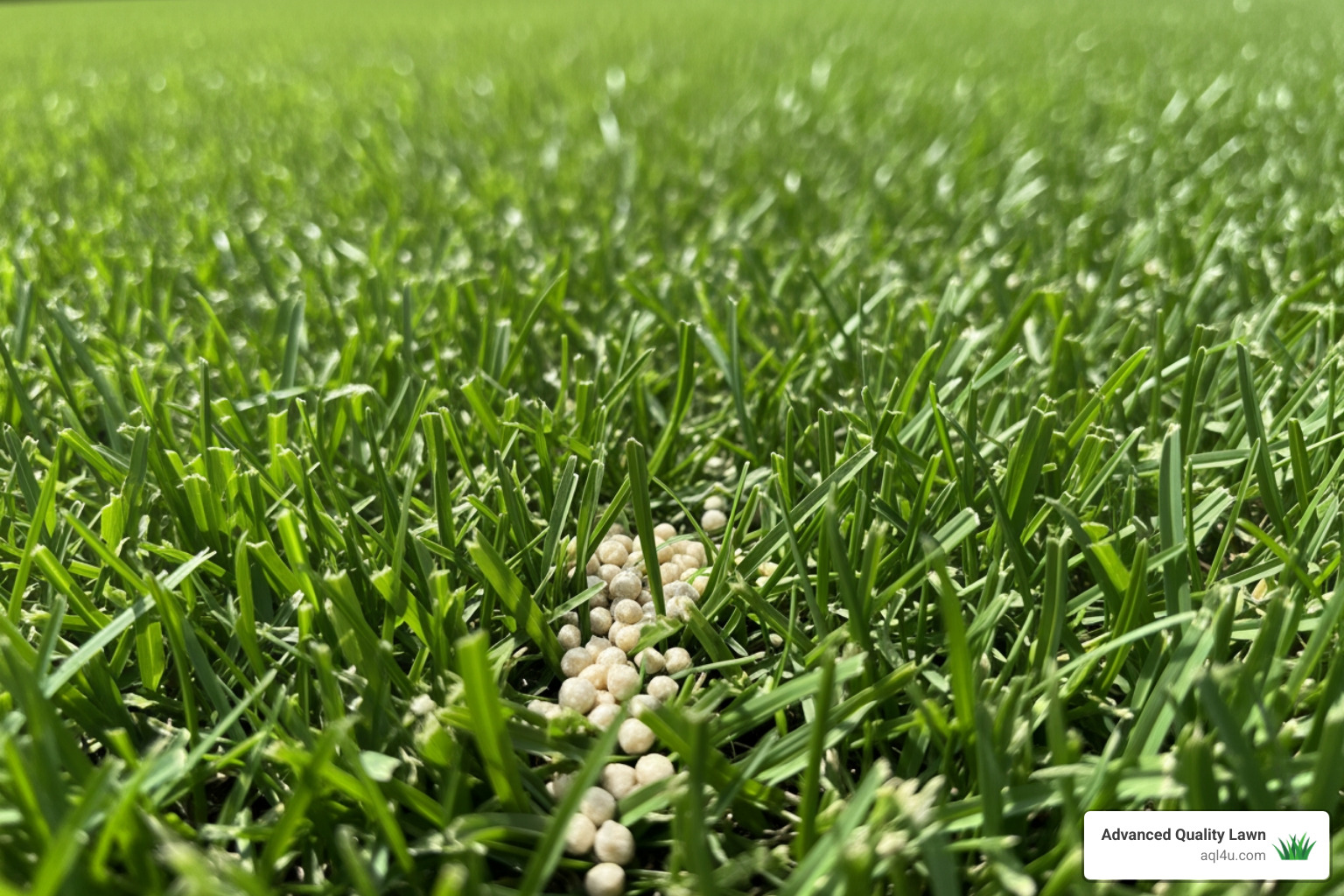
The best fertiliser for Sir Walter Buffalo is a slow-release granular product with a balanced NPK ratio around 10-5-10, ideally with added iron for deep green colour. Here is a quick snapshot to get you started:
| Priority | What to Look For |
|---|---|
| Nitrogen (N) | Lush, green leaf growth |
| Phosphorus (P) | Strong root development (keep low) |
| Potassium (K) | Heat and drought tolerance |
| Iron (Fe) | Rich colour, especially in cooler months |
| Release type | Slow-release granules for steady feeding |
Quick answer: Apply a slow-release granular fertiliser with a ratio close to 10-5-10 three times a year (spring, summer, and autumn). Water it in well after every application.
Sir Walter Buffalo is one of Australia's most popular soft-leaf turf varieties. It is hardy, shade-tolerant, and handles family traffic well. But even the toughest grass needs the right nutrition to stay thick, green, and weed-resistant. Feed it wrong and you will end up with patchy colour, thatch problems, or a lawn that struggles through summer heat.
I'm Andrew Day, owner of Advanced Quality Lawn, and with over 30 years of industry experience helping homeowners choose the best fertiliser for Sir Walter Buffalo and other warm-season grasses, I have seen how the right feeding programme transforms a tired lawn into a standout yard.
Understanding the Nutritional Needs of Sir Walter Buffalo
Sir Walter Buffalo is not a heavy drama queen, but it does have preferences. If you want strong colour, dense coverage, and better recovery from wear, you need to match the fertiliser to the grass.
At the most basic level, Sir Walter Buffalo needs nitrogen, phosphorus, potassium, and a few supporting nutrients like iron, sulphur, and calcium. If you want a simple refresher on how lawn foods work, our guide on Fertilizer 101: What is it and When Should You Use It is a helpful starting point. For an Australian turf focused overview, this guide on best fertiliser for Sir Walter Buffalo also covers common nutrient priorities.

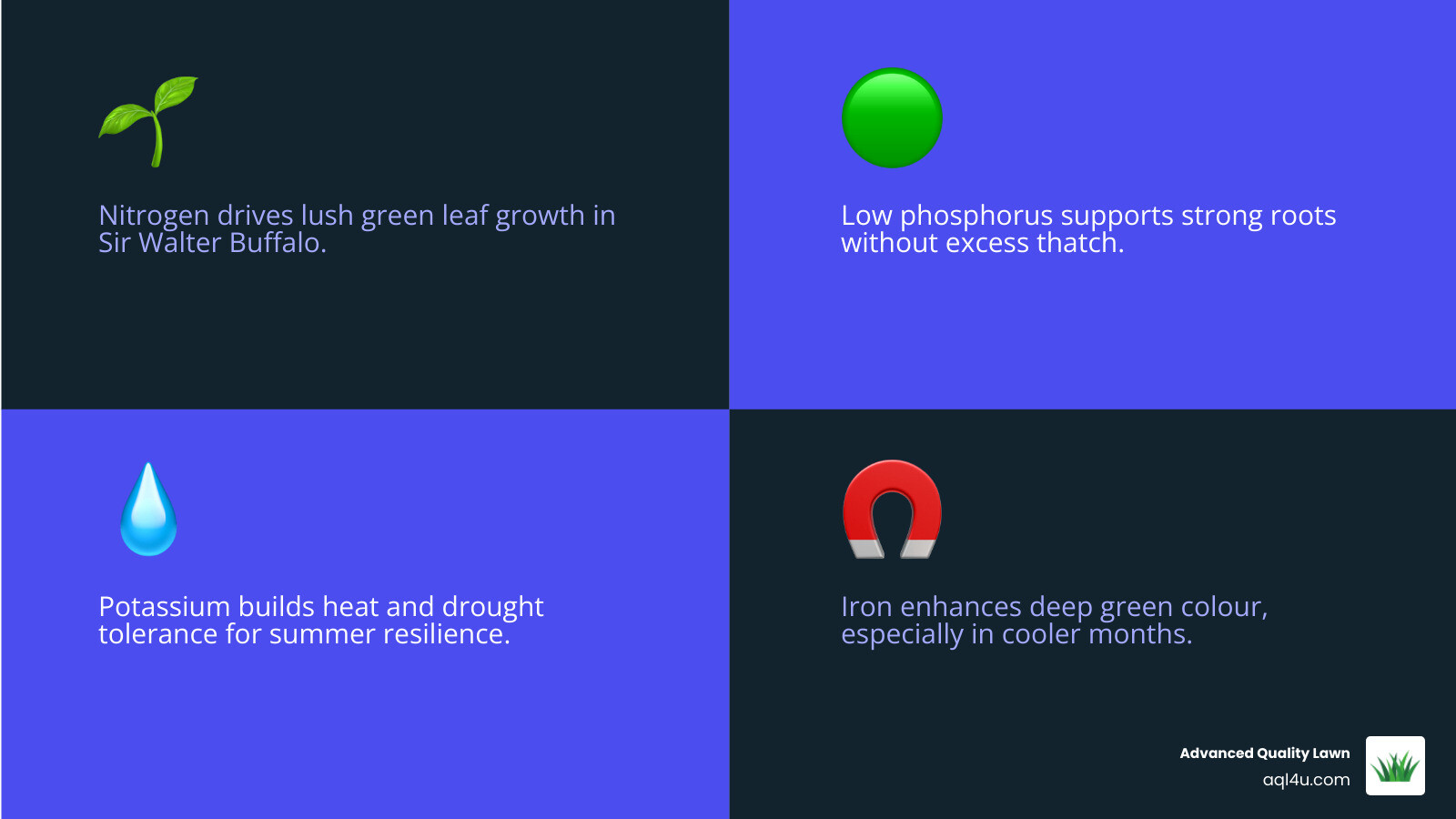
Here is what each major nutrient does:
- Nitrogen helps produce top growth and green colour
- Phosphorus supports root development, especially in new turf
- Potassium improves stress tolerance, wear recovery, and drought resistance
- Iron deepens colour without forcing too much growth
- Sulphur and calcium help support overall plant health and nutrient use
The trick is balance. Too much nitrogen can create a burst of soft growth that needs constant mowing and may contribute to thatch. Too much phosphorus is not usually necessary for established buffalo lawns. Too little potassium can leave the lawn struggling in heat or dry periods.
Essential NPK Ratios for Buffalo Grass
For most established Sir Walter Buffalo lawns, a balanced analysis around 10-5-10 works well. Research also points to lower phosphorus formulas and balanced blends such as 3.1.1 style products for ongoing maintenance.
One premium example mentioned in the research contains:
- 16% nitrogen
- 0.7% phosphorus
- 4% potassium
- 20% sulphur
- 1.5% calcium
- 2% iron
That sort of profile tells us something important. Buffalo grass often performs best with higher nitrogen than phosphorus, moderate potassium, and some added iron for colour.
As a general rule:
- New turf benefits from a starter feed with some phosphorus after establishment
- Established turf usually prefers lower phosphorus and steady nitrogen
- Summer feeding should still include enough potassium to help stress tolerance
- Iron is especially useful when colour fades but you do not want a big flush of growth
Soil pH and Quality Requirements
Even the best fertiliser cannot do much if the soil is fighting back.
Sir Walter Buffalo grows best in soil with a pH between 6 and 7. In that range, nutrients are more available to the roots. Outside that range, fertiliser can be present in the soil but less available to the grass.
A soil test helps you answer three big questions:
- Is the pH in range
- Are nutrients actually deficient
- Is the soil compacted, sandy, or low in organic matter
If the soil is too acidic, lime may be used to help raise pH. If it is too alkaline, sulphur may help lower it. Poor sandy soils also lose nutrients faster, so they often benefit from smaller, regular feeds and extra organic matter.
Good soil quality supports better fertiliser efficiency. That means:
- Less waste
- Better root uptake
- More even colour
- Fewer patchy areas
If your lawn gets fertilised but still looks hungry, the issue may be the soil, not the product.
Choosing the Best Fertiliser for Sir Walter Buffalo
There is no single magic bag that solves every lawn problem. Still, if we had to choose one type as the overall winner, slow-release granular fertiliser is usually the safest and most reliable option for Sir Walter Buffalo.

The main fertiliser types are:
- Slow-release granules
- Liquid fertilisers
- Organic fertilisers
- Combined formulas with iron or soil conditioners
Organic products can be useful for improving soil biology and gentler feeding. Synthetic products can deliver more predictable nutrient analysis. If you want a deeper comparison, see Is Organic Fertilizer Better Than Synthetic Fertilizer.
Why Slow Release Granules are the Best Fertiliser for Sir Walter Buffalo
Slow-release granules are usually the best fit because they feed the lawn gradually. Research shows these products can feed for up to 12 weeks after application.
That steady release matters because Sir Walter Buffalo responds better to controlled nutrition than to sudden growth spurts. You get:
- More consistent colour
- Lower risk of leaf burn
- Fewer growth surges
- Reduced thatch build-up compared with overusing quick nitrogen
That is why many lawn care guides recommend seasonal applications in spring, summer, and autumn rather than constant heavy feeding. For more on buffalo maintenance principles, see How to Fertilise & Maintain Sir Walter Buffalo Grass.
In practical terms, slow-release granules are the best choice when you want dependable results without needing to fertilise every few weeks.
Selecting the Best Fertiliser for Sir Walter Buffalo New Turf
Newly installed Sir Walter turf is a little different. Right after installation, do not rush in with fertiliser. Fresh turf needs time to root in first.
A sensible schedule is:
- At installation, no fertiliser
- Around 6 weeks after installation, apply a starter fertiliser with phosphorus to support roots
- Around 3 months after installation, move to a balanced slow-release feed
Research supports that timing. New Sir Walter turf commonly needs its first fertiliser around the 5 to 6 week mark, then another balanced feed at about 3 months.
This matters because new turf is trying to do two jobs at once. It is growing roots and leaf blades. That uses nutrients quickly, but feeding too early can stress the turf rather than help it.
For more early stage lawn feeding guidance, read Best Fertilizer for New Grass.
Liquid Fertilisers for Quick Results
Liquid fertilisers are great when you want a quick visual lift. They are absorbed fast, often through both leaf tissue and roots, and can green up a lawn more quickly than granular products.
They are especially useful for:
- In-season colour correction
- Mild nutrient deficiencies
- Follow-up feeding between major granular applications
- Smaller lawns where easy hose-on application is preferred
A 16-4-8 liquid analysis is one common style for warm season lawns, and you can learn more in our 16-4-8 Liquid Fertilizer guide.
That said, liquids are usually not the best stand-alone long term plan for Sir Walter Buffalo. They work best as a supplement, not a replacement, for a good slow-release base programme.
Seasonal Fertilising Schedule for a Lush Lawn
Timing matters almost as much as product choice. Fertilise at the wrong time and the lawn may not use the nutrients efficiently. Fertilise at the right time and you support colour, density, and root strength.
For established Sir Walter Buffalo, research consistently supports either:
- Every 6 to 8 weeks during active growth
- Or three key feeds per year in spring, summer, and autumn
Those two ideas are not really in conflict. A basic homeowner programme often uses three major seasonal applications. A more intensive appearance focused programme may use lighter feeds every 6 to 8 weeks during strong growth.
For a season by season perspective, see How & When to Fertilise Sir Walter DNA Certified Buffalo?.
Spring and Summer Growth Phases
Spring is when warm season buffalo begins to wake up and push new growth. This is the time for a nitrogen supportive fertiliser that encourages green up and recovery.
In spring:
- Apply a slow-release fertiliser once active growth starts
- Fertilise in the morning
- Water it in well
- Avoid applying during extreme heat
In summer:
- Feed every 6 to 8 weeks if the lawn is actively growing and being mowed regularly
- Make sure potassium is part of the analysis
- Do not overdo nitrogen during peak heat
- Keep irrigation consistent after feeding
Potassium is especially useful through summer because it helps with heat tolerance and drought stress. If the lawn is under pressure from traffic, high temperatures, or dry conditions, potassium becomes even more important.
Autumn and Winter Maintenance
Autumn feeding helps prepare the lawn for cooler weather. This is often one of the most important applications because the grass can store nutrients in the root system before growth slows.
In autumn:
- Use a balanced fertiliser
- Make sure potassium is included
- Apply early enough for the lawn to use it before cold weather settles in
Winter is different. In cooler conditions, growth slows. In frost prone areas, heavy nitrogen feeding in winter is usually not a smart move.
If winter colour is the only issue, an iron-rich product can help improve appearance without forcing too much soft growth. Research supports minimal winter fertilising unless the climate stays warm enough for the lawn to continue active growth.
For our service areas in Northeast Ohio, winter fertilising warm season turf is generally limited and cautious. If the lawn is dormant, pushing top growth is not the goal. At that point, patience is often the better lawn product.
Application Techniques and Common Mistakes
A great fertiliser can still fail if you apply it badly. Most lawn fertiliser problems come from timing, uneven coverage, overapplication, or poor watering.
Aeration can also improve results. If soil is compacted, nutrients and water struggle to move into the root zone. Aerating before a feeding programme can improve uptake and reduce runoff.
Step by Step Application Guide
Use this simple process for established Sir Walter Buffalo:
- Mow the lawn first, but do not scalp it
- Check the weather and avoid very hot, windy, or stormy conditions
- Measure your lawn area so you apply the correct amount
- Set your spreader to the recommended rate
- Apply in even passes with slight overlap
- Water the lawn thoroughly after application
A few extra tips help a lot:
- Use a broadcast spreader for larger areas
- Use a hand spreader only for small sections
- Keep passes consistent so you do not create dark green stripes and pale strips
- Sweep fertiliser off paths and driveways
- Water in promptly to reduce leaf burn risk
If you are applying a liquid, spray evenly and avoid mowing for 2 to 3 days afterward if the label recommends it.
Avoiding Common Fertilising Mistakes
The most common mistakes we see are very fixable:
- Over-fertilising
- Applying high phosphorus products to established buffalo lawns
- Feeding during heat stress
- Uneven application
- Skipping seasonal feeds and then trying to overcorrect later
- Fertilising without checking soil pH or compaction
Over-fertilising is the classic error. More is not more. More is often a fast ticket to burn, surge growth, and regret.
Uneven distribution is another big one. It causes patchy colour and inconsistent growth. If your lawn looks striped after feeding, your spreader technique probably needs work, not your grass.
Frequently Asked Questions about Sir Walter Buffalo

How often should I fertilise an established lawn?
For established Sir Walter Buffalo, a simple plan is three applications per year:
- Spring
- Summer
- Autumn
That lines up with common recommendations for buffalo lawns and suits most home lawns well. If you want a more intensive programme during active growth, fertilising every 6 to 8 weeks through the growing season can also work, as long as rates are adjusted properly.
The right frequency depends on:
- Lawn appearance goals
- Soil quality
- Rainfall and irrigation
- How much wear the lawn gets
- Whether you use slow-release or quick-release products
Can I fertilise Sir Walter Buffalo in winter?
Yes, but usually only lightly and only for a specific reason.
If the lawn is still active in a mild climate, a light winter application may help. If growth has slowed sharply or the lawn is dormant, avoid strong nitrogen products. An iron-rich formula is often a better option for colour without forcing a weak flush of leaf growth.
For cooler service areas like Akron, Hudson, Medina, Solon, Stow, Twinsburg, and the rest of Northeast Ohio, we would be careful with winter feeding on warm season grass. Winter is not the season to chase summer looks.
What are the signs my lawn needs nutrients?
Your lawn will usually tell you when it is hungry. Common signs include:
- Yellowing or pale green blades
- Slow growth during the active season
- Thin or weak patches
- Poor recovery after mowing or traffic
- Increased weed pressure in bare spots
- Leaf curling when stressed
- Dull colour that does not improve with watering
That not every ugly lawn is a fertiliser problem. Compaction, shade, drainage, disease, and improper mowing can mimic nutrient deficiency. That is why soil testing and a broader lawn assessment are so useful.
Conclusion
The best fertiliser for Sir Walter Buffalo is usually a slow-release granular formula with balanced nutrients, moderate potassium, low phosphorus for established turf, and added iron for colour. New turf needs a different start, with a phosphorus supportive fertiliser at about 6 weeks and a balanced slow-release feed around 3 months. Established lawns generally do best with three key applications a year, or every 6 to 8 weeks during strong growth if you want a tighter maintenance programme.
The big ideas are simple:
- Feed steadily, not heavily
- Match the product to the season
- Water it in well
- Keep soil pH around 6 to 7
- Avoid overdoing phosphorus and nitrogen
- Watch the lawn for signs of deficiency
At Advanced Quality Lawn, we help homeowners make smart lawn care decisions with clear advice, responsive service, and real support across Akron and surrounding Northeast Ohio communities. If you want help building a feeding plan that actually fits your lawn, explore our lawn care maintenance services.
For more lawn nutrition reading, you may also like:
- Best Fertilizer for New Grass
- Fertilizer 101: What is it and When Should You Use It
- Is Organic Fertilizer Better Than Synthetic Fertilizer
Give your lawn the royal treatment and it will return the favour with a thicker, greener carpet that looks far more expensive than it really is.