The 24-24-0 Fertilizer Deep Dive: Double the Power
What Is 24-24-0 Fertilizer and What Is It Used For?
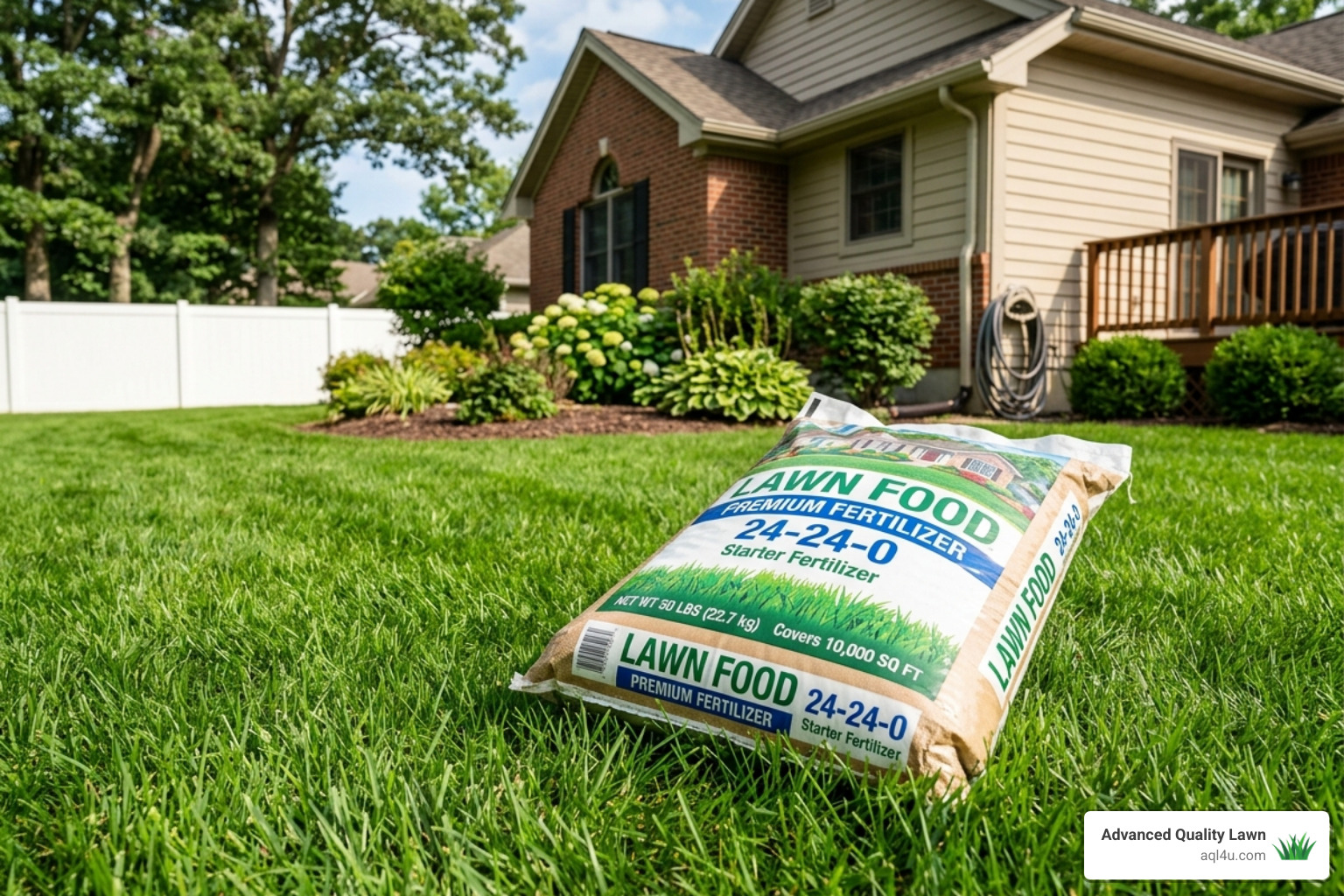
24-24-0 fertilizer is a plant nutrient blend containing equal parts nitrogen and phosphorus — 24% each — with no potassium added.
Here's a quick look at its most common uses:
- Vegetable gardens — supports leafy greens and flowering plants during key growth stages
- Lawns — promotes rapid grass growth, density, and greening during the growing season
- Cereal crops, pulses, and oil seeds — widely used in agriculture for both root and shoot development
- Fruit trees and ornamentals — boosts flowering, fruit set, and foliage
- Alkaline soils — its acidic nature can help improve soil pH over time
The fertilizer is available in granular, liquid, and water-soluble forms, and it works best when potassium is already present in the soil (or supplemented separately).
Maintaining a lush lawn in Northeast Ohio means understanding your soil's needs — and knowing when a fertilizer like 24-24-0 is the right call versus when it's not. With over 30 years of hands-on lawn care experience, I'm Andrew Day, owner of Advanced Quality Lawn, and I've seen how the right NPK ratio can make or break a yard's health through every season. Let's break down everything you need to know about 24-24-0 fertilizer so you can make a smarter choice for your lawn or garden.
Understanding the 24-24-0 Fertilizer NPK Ratio
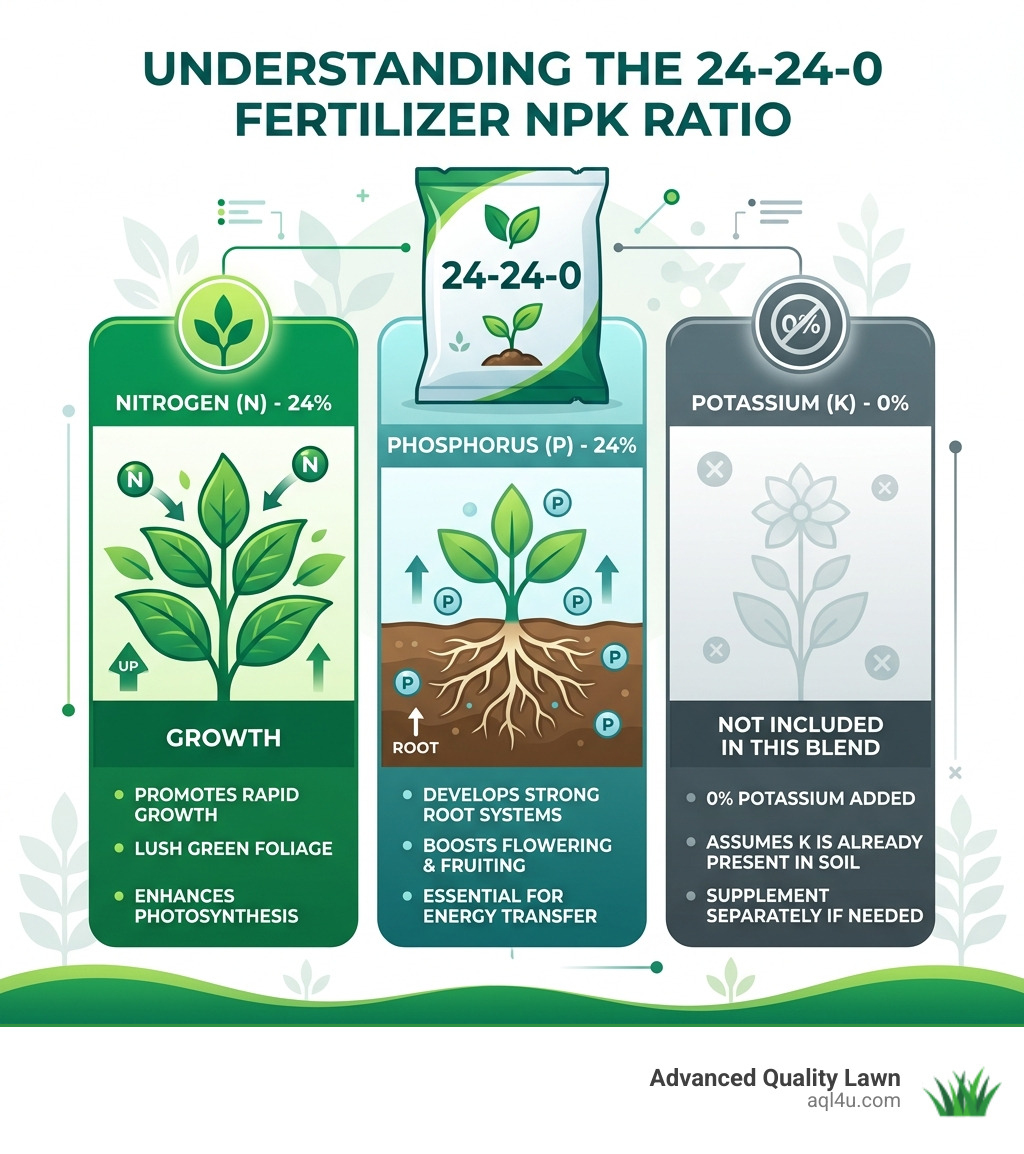
When you walk into a garden center in Bainbridge or Aurora and look at a bag of fertilizer, those three numbers on the front—the NPK ratio—tell the whole story. For 24-24-0 fertilizer, the numbers represent the percentage of Nitrogen (N), Phosphorus (P), and Potassium (K) by weight.
In this specific blend, we are looking at a "high-octane" starter or maintenance mix. It contains 24% Nitrogen and 24% Phosphorus, but completely skips the Potassium. This might seem like leaving the bassist out of a rock band, but in many Northeast Ohio soils, it’s exactly what the "lead singer" (your plants) needs to thrive.
According to research on Understanding the Composition and Benefits of 24-2024-0 Fertilizer for Optimal Plant Growth, this ratio is designed to provide a balanced punch of vegetative growth and root foundation. If you are curious about how this fits into the wider world of soil health, you can find More info about different types of fertilizer on our blog.
The Role of High Nitrogen in 24-24-0 Fertilizer
Nitrogen is the gas in the tank for any plant. It is the primary component of chlorophyll, which plants use to turn sunlight into energy via photosynthesis. In 24-24-0 fertilizer, the nitrogen often comes in two distinct forms: ammoniacal and nitrate nitrogen.
- Nitrate Nitrogen: This is the "fast food" version. It’s immediately available for the plant to soak up, leading to that quick green-up we all love to see in our Stow or Hudson backyards.
- Ammoniacal Nitrogen: This is more like a slow-cooked meal. It stays in the soil longer and resists leaching (washing away) better than nitrate forms, providing a sustained release of energy over several weeks.
This dual-action nitrogen ensures your grass or crops don't just flash-green and then fade; they maintain that deep emerald hue and continue developing strong leaves and shoots throughout the early growing season.
Why 24% Phosphorus Matters
If Nitrogen is the gas, Phosphorus is the engine. It is essential for energy transfer within the plant, specifically in the production of ATP (Adenosine Triphosphate). Without enough phosphorus, your plants won't have the "budget" to move energy from their leaves down to their roots.
The 24% phosphorus content in a product like Mahadhan 24:24:0 is particularly effective because it is often highly water-soluble. This means it can reach the root zone quickly, encouraging a dense, sprawling root architecture. This is vital for new lawns in Cuyahoga Falls or when you're starting a vegetable patch in Medina. Strong roots mean the plant can survive the humid Ohio summers and the occasional dry spell much more effectively.
Primary Benefits for Lawns and Agriculture
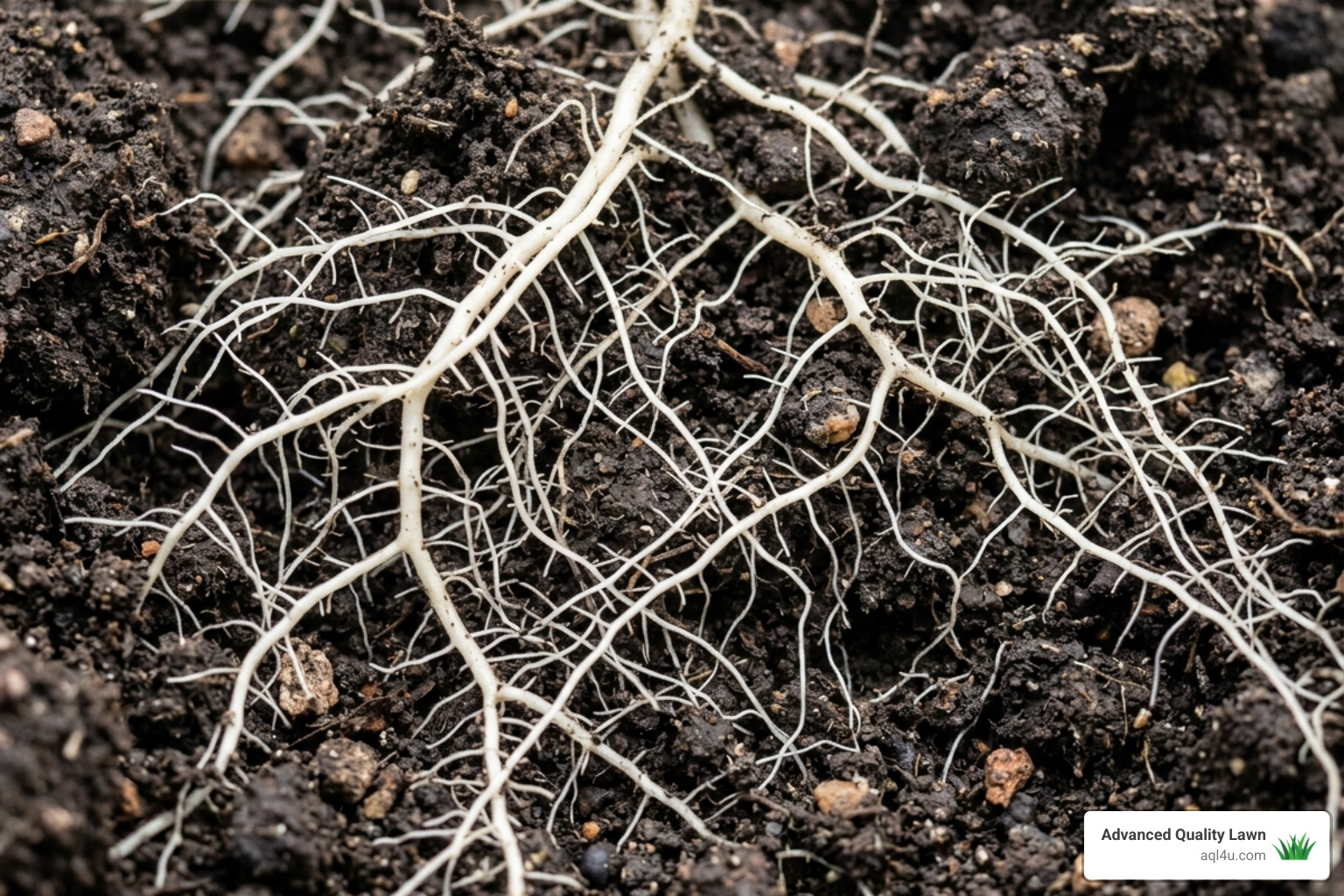
Why would we choose 24-24-0 fertilizer over a standard balanced mix? The benefits are quite specific. First, it makes crops and turf more resilient. By focusing heavily on root development (thanks to the phosphorus), plants become much more capable of withstanding drought. They can reach deeper into the soil for moisture when the top layer dries out.
In agricultural settings across Wayne or Lorain County, this blend is a favorite for cereals and oilseeds. It ensures that the "shoot" (the part above ground) and the "root" (the part below) grow in harmony. Furthermore, many 24-24-0 blends are slightly acidic. For those of us dealing with alkaline soil—which can sometimes happen in certain pockets of Northeast Ohio—this helps lower the pH, making other locked-up micronutrients more available to the plant. For those looking to optimize their yard, you can check out More info about the best fertilizer for your lawn.
How 24-24-0 Fertilizer Promotes Root and Leaf Health
The magic of 24-24-0 fertilizer lies in the synergy between its two main components. While the nitrogen is busy building proteins and stimulating leaf growth, the phosphorus is fueling the cell division required for new roots.
This "double power" approach is especially useful for:
- Faster Establishment: If you’ve just laid sod or seeded a new area in Solon, the high phosphorus helps those roots "knit" into the soil quickly.
- Prolonged Greenery: Because of the stable nitrogen forms, your plants stay green longer, resisting the yellowing that often happens when nitrogen levels dip mid-season.
- Better Yields: In gardens, more energy (ATP) means more flowers, and more flowers mean more tomatoes, peppers, or beans.
Application Guide: When and How to Use 24-24-0
Applying fertilizer isn't just about tossing it on the ground and hoping for the best (though we’ve all been there). To get the most out of 24-24-0 fertilizer, you need a plan.
First and foremost: Soil Testing. We cannot stress this enough. Before you add a high-phosphorus fertilizer to your lawn in Akron or Cleveland, you need to know if your soil actually needs it. Some areas in Northeast Ohio already have high phosphorus levels, and adding more can lead to environmental runoff. A quick soil test will tell you if your potassium is already sufficient, justifying the "0" at the end of the 24-24-0 ratio. For a deeper dive into the basics, read our guide on fertilizer-101-what-is-it-and-when-should-you-use-it.
Best Practices for Applying 24-24-0 Fertilizer
When you're ready to apply, timing is everything. For most residential lawns and gardens in places like Twinsburg or Macedonia, early spring is the "Golden Hour." This is when plants are waking up and need that kickstart of nitrogen and root-building phosphorus.
Application Methods:
- Granular: This is the most common for homeowners. Use a high-quality broadcast spreader to ensure even distribution. Avoid the "hand-toss" method unless you want your lawn to look like a checkerboard of dark green and yellow.
- Liquid/Water-Soluble: If you have a smaller garden or want a quick foliar (leaf) feeding, liquid versions of 24-24-0 fertilizer are excellent. They offer 100% solubility, meaning the plant can absorb the nutrients almost immediately.
- Irrigation: Always water your lawn lightly after applying granular fertilizer. This helps move the nutrients off the grass blades and down into the soil where they can get to work.
If you are looking for alternatives for different growth stages, you might compare this to an Effective 6-24-24 Fertilizer for Optimal Plant Growth and Nutrient Enhancement, which provides that missing potassium for late-season stress resistance.
Comparing 24-24-0 to Other Common Blends
Choosing a fertilizer can feel like trying to read a foreign language. Here is a quick breakdown of how 24-24-0 fertilizer stacks up against its cousins:
| Fertilizer Ratio | Best Use Case | Key Difference |
|---|---|---|
| 24-24-0 | New lawns, starter gardens, P-deficient soil | High N and P, No Potassium |
| 24-0-0 | Established lawns needing only a green-up | No Phosphorus or Potassium |
| 6-24-24 | Stressed plants, root crops, winterizing | Low Nitrogen, High P and K |
| 24-24-24 | All-purpose heavy feeder | Balanced, includes Potassium |
As you can see, 24-24-0 is a specialist. It’s perfect when your soil already has plenty of potassium but needs a massive boost in growth and root strength. If you are debating between chemical and natural options, it's worth asking: is-organic-fertilizer-better-than-synthetic-fertilizernbsp? While 24-24-0 is typically a synthetic blend, its efficiency in targeted nutrient delivery is hard to beat. For those who want the full trio of nutrients, you might Unlock the Benefits of 24-24-24 Fertilizer for Your Lawn and Garden.
Frequently Asked Questions about 24-24-0
Is 24-24-0 fertilizer safe for all crops?
Generally, yes! It is a powerhouse for cereal grains (like corn or wheat), pulses, and oilseeds. In the home garden, it’s a favorite for leafy greens and fruiting vegetables like tomatoes. However, because of the high nitrogen, you should be careful with extremely delicate ornamentals—always follow the application rates on the bag to avoid "burning" the plants.
Why does this fertilizer have 0% Potassium?
This is the most common question we get at Advanced Quality Lawn. Potassium (the "K" in NPK) is vital for disease resistance and water regulation. However, many soils—especially clay-heavy soils found in parts of Summit and Medina County—can naturally hold onto potassium quite well. If a soil test shows your K levels are already "Optimal" or "High," adding more is a waste of money and can actually interfere with the uptake of other nutrients like calcium and magnesium.
Can 24-24-0 be used on established lawns?
It can, but with a caveat. In many states, including parts of the Midwest, there are strict regulations on applying phosphorus to established lawns unless a soil test proves a deficiency. This is to prevent phosphorus from washing into our beautiful local waterways. If your lawn is already thick and healthy, you might be better off with a 24 0 4 lawn fertilizer, which provides the nitrogen for greening and a little potassium for health without the extra phosphorus.
Conclusion
At Advanced Quality Lawn, we’ve spent decades perfecting the art of the "Green Thumb" across Akron and the surrounding Northeast Ohio communities. We know that every lawn in Seven Hills or North Royalton has its own personality and its own set of nutritional needs. 24-24-0 fertilizer is a fantastic tool in the shed—offering "Double the Power" for root and leaf development—but it works best when used as part of a professional, data-driven plan.
If you’re feeling overwhelmed by NPK ratios or just want the best-looking yard on the block without the guesswork, we’re here to help. From Streetsboro to Richfield, our team provides expert service with a full-program guarantee. Whether you need a one-time nutrient boost or a season-long maintenance plan, we have the local expertise to get it done right.
Ready to take your lawn to the next level? Explore More info about professional lawn maintenance services and let us handle the science while you enjoy the results!