Is Your Lawn Being Ruined by an Ant-pocalypse?
Is Your Lawn Being Ruined by Ants? Here's What You Need to Know
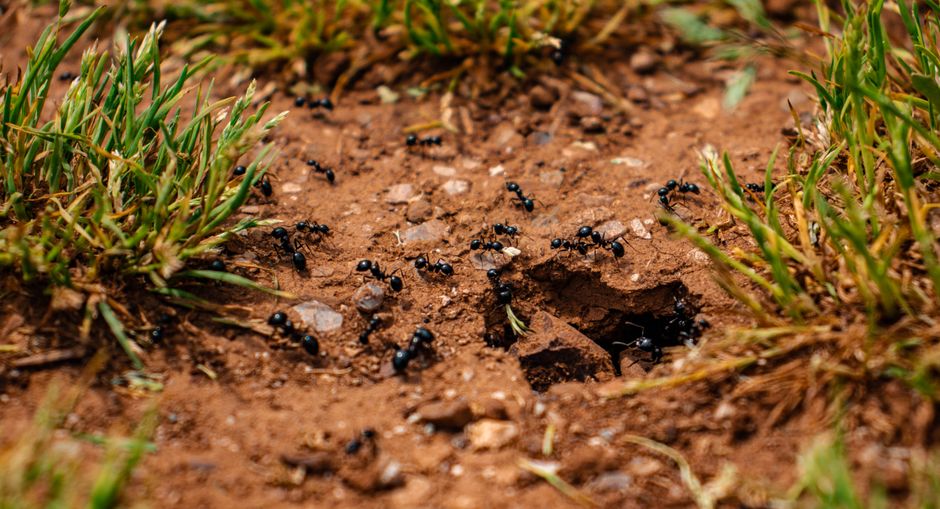
Ants killing grass is a real problem for Ohio homeowners, but the good news is that not every ant you see is destroying your lawn.
Quick answer: Can ants actually kill grass?
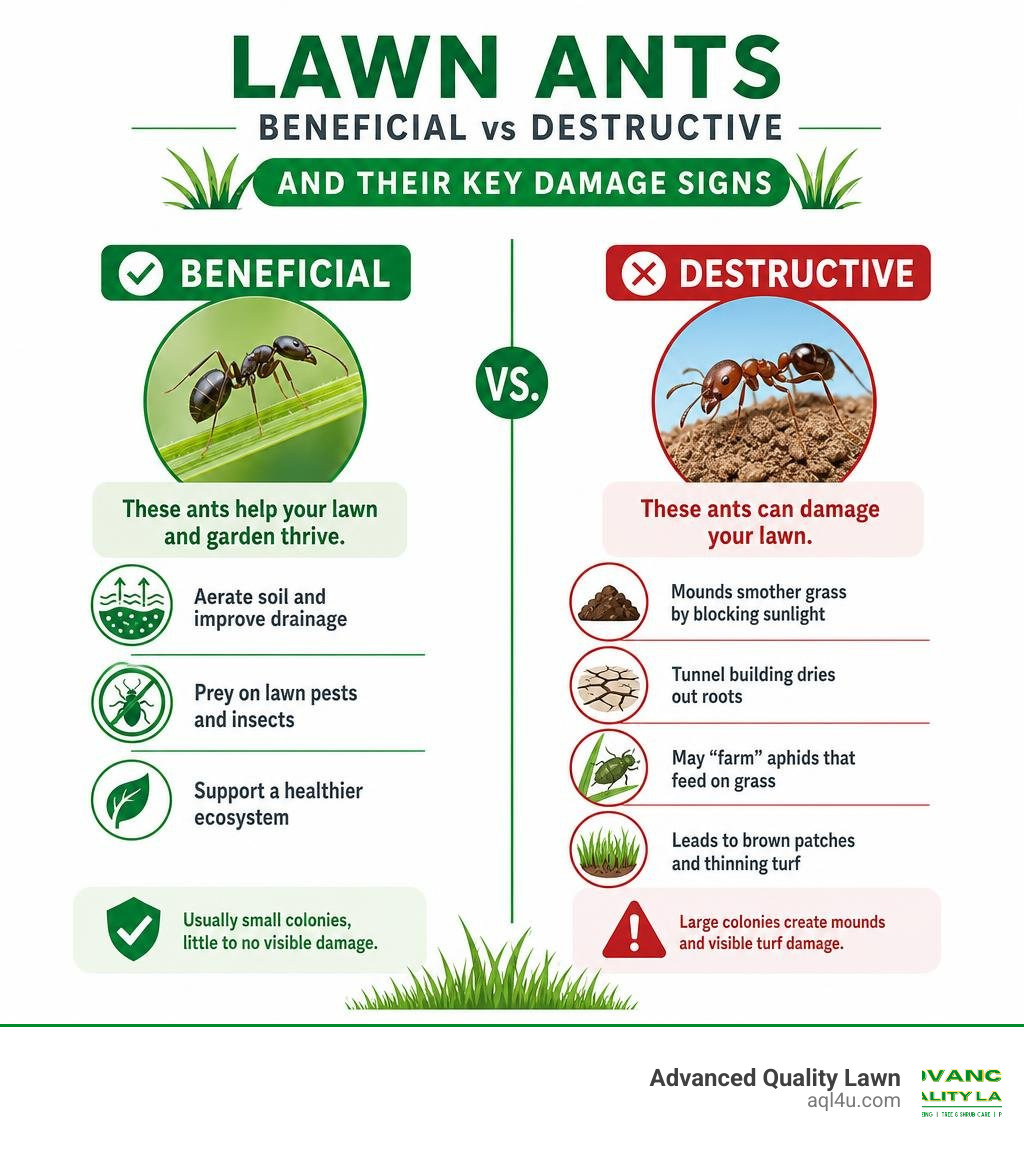
- Yes, some species can. Field ants, fire ants, and harvester ants cause the most damage.
- Mounds smother grass by blocking sunlight and compacting soil.
- Tunnel building dries out roots, causing patches of turf to die.
- Some ants "farm" aphids, which feed on grass and spread plant disease.
- Many ants are harmless or even helpful, aerating soil and preying on other pests.
- The damage is usually aesthetic, but large infestations can kill significant patches of turf.
The scale of damage depends heavily on which species has moved in and how large the colony has grown. A handful of small brown ants near your sidewalk is very different from a field ant mound the size of a basketball sitting in the middle of your yard.
I'm Andrew Day, owner of Advanced Quality Lawn, and after more than 30 years serving Northeast Ohio homeowners I've seen how quickly ants killing grass can go from a minor nuisance to a patchy, mower-wrecking headache. In this guide I'll walk you through exactly how to identify the problem, stop the damage, and keep your lawn looking its best.
Identifying the Culprits Behind Ants Killing Grass
Before you wage war on every insect in your yard, you need to know who you are fighting. Different ants have vastly different behaviors, and treating them with a one-size-fits-all approach is a recipe for frustration.

In Northeast Ohio, we see a handful of common species. Some are just passing through, while others are actively trying to claim your turf as their personal kingdom. To understand the wider scope of how these insects interact with your lawn, you can check out the Laidback Gardener guide on lawn ants.
Let us break down the main offenders you are likely to encounter in places like Akron, Cuyahoga Falls, and Medina.
How to Spot Field Ants and Fire Ants
Field ants are the most common culprits when it comes to visible lawn damage in our region. These ants range from brown to black or even a reddish-black color, and they measure about one-fifth to three-eighths of an inch in length.
What makes field ants such a headache is the sheer scale of their construction projects. A single field ant colony can build a mound that reaches up to four feet in diameter and two feet tall. These massive mounds do not just look bad, they can easily swallow up your grass and destroy your lawnmower blades if you run over them. Field ants are also known to inject formic acid into the roots of the grass surrounding their nests to clear out vegetation and let more sunlight reach their mounds.
Fire ants are a much more painful problem. While historically a southern pest, we are increasingly seeing fire ants expand their range. They are small, reddish-brown, and incredibly aggressive. If you accidentally step on a fire ant mound, they will swarm and deliver painful, stinging bites that leave itchy white pustules. Their mounds are typically flat, sandy, and lack a clear entry hole on top. If you suspect you have these aggressive stingers, our Ultimate Guide to Killing Ants in Your Yard covers the best strategies to handle them safely.
Other Species Associated with Ants Killing Grass
Beyond field ants and fire ants, you might encounter several other species that disrupt your lawn and soil.
Pavement ants are very small, measuring only about one-twelfth to one-fourth of an inch. They are dark brown or black and love to build nests under hard surfaces. You will often see their tiny, volcano-shaped dirt craters popping up between the cracks of your driveway, sidewalk, or patio. While they rarely kill grass directly, they can displace a surprising amount of soil and cause the edges of your lawn near paved areas to dry out and die.
Carpenter ants are much larger, often reaching up to half an inch in length. They are typically black and are famous for nesting in wood. If you have an old decaying tree stump, a pile of firewood, or rotting landscape timbers in your yard, carpenter ants will quickly move in. They do not eat wood, but they excavate tunnels inside it. While they do not eat your grass, their presence near your home is a major red flag because they can easily migrate indoors and damage your home structure.
Harvester ants are another species to watch out for. They are famous for clearing out large, circular zones of vegetation around their nests. They strip the grass away entirely to make room for their trails and to prevent plants from shading their underground chambers. This leaves large, bare patches of soil that are highly prone to erosion.
How Ants Damage Turf and How Lawn Care Affects Them
To stop ants killing grass in your yard, you have to understand the mechanics of how they do it. Ants do not feed on grass blades the way grubs or sod webworms do. Instead, their damage is almost entirely a byproduct of their nesting habits and their ecological relationships.
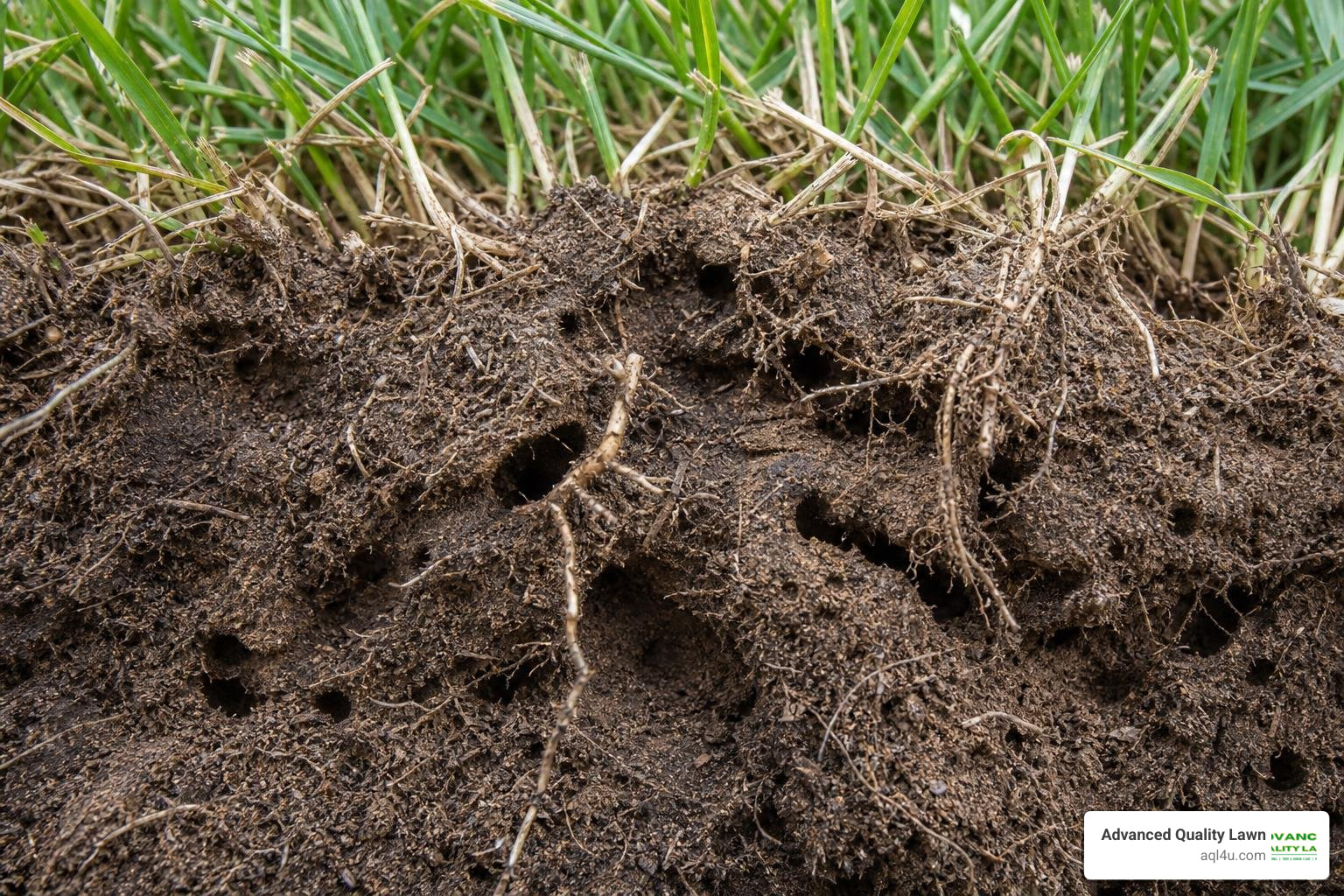
When ants move into your turf, they alter the physical structure of the soil. The University of Illinois Extension on turfgrass ants notes that while ants are generally classified as nuisance pests, their nesting activities can cause serious aesthetic and structural damage to high-quality turf.
Root Disruption and Soil Desiccation
The primary way ants kill grass is through root desiccation, which is a fancy term for drying out. As ants excavate their elaborate network of underground tunnels, they remove the soil from around the roots of your grass.
Without soil to hold moisture and nutrients, the grass roots are left hanging in empty pockets of air. This causes the root structure to dry out rapidly. During hot summer days in Northeast Ohio, grass with disrupted roots cannot absorb enough water to survive, leading to brown, dead patches of turf directly above the nesting site. For a deeper look at this process, read our article on More details on ants destroying lawns.
Additionally, the soil that ants excavate has to go somewhere. They pile it on the surface of your lawn, creating mounds. These mounds smother the grass underneath by blocking out sunlight, which prevents photosynthesis. Over time, the smothered grass suffocates and dies, leaving bare dirt spots that are perfect invitations for weeds to take over.
How Farming Pests Leads to Ants Killing Grass
One of the most fascinating, and frustrating, aspects of ant behavior is their relationship with other yard pests. Ants are big fans of sugary foods, and they have figured out how to get a constant supply by farming sap-sucking insects like aphids, scale, and mealybugs.
These tiny pests feed on your grass and garden plants, secreting a sweet, sticky liquid called honeydew. Ants absolutely love honeydew. To keep the supply flowing, ants will actively protect these pests from natural predators like ladybugs. They will even carry aphids to new, healthy patches of grass to start new colonies.
This indirect damage can quickly devastate a lawn. As the aphids suck the life out of your turfgrass, the ants ensure that no beneficial insects can stop them. This relationship is incredibly strong in many ecosystems. In fact, a Scientific study on invasive ant predation highlights just how dominant and aggressive invasive ant species can be, sometimes consuming nearly half of the local insect populations within 24 hours while protecting their preferred honeydew producers.
The Impact of Mowing and Grass Height
Your daily and weekly lawn care habits have a massive impact on the size and health of ant populations. Many homeowners do not realize that keeping their grass too short actually encourages ants to move in.
When you mow your grass very short, you make it much easier for ants to build mounds and receive direct sunlight, which warms their nests. Taller grass, on the other hand, shades the soil, keeps temperatures cooler, and hides small ant mounds from view. Keeping your lawn mowed at a height of three to four inches is one of the easiest ways to discourage ant activity. If you need help keeping your turf at the perfect height, you can explore our professional Lawn care tips.
Scientific research shows that human land-use decisions play a major role in ant community structures. According to a Research on land-use effects on ant communities, intensive mowing has the strongest negative impact on overall ant species richness, while fertilization has very little effect. When rare and beneficial ant species are driven out by intensive management, a few highly resilient, pest-like ant species often take over the entire area.
Here is a quick look at how different management practices affect ant populations in grasslands:
| Management Practice | Effect on Ant Species Richness | Effect on Ant Nest Abundance |
|---|---|---|
| Frequent Mowing | Strongly Decreased | Decreased |
| Intensive Grazing (Cattle) | Decreased | Decreased |
| Light Grazing (Sheep) | Increased | Increased |
| Heavy Fertilization | No Significant Effect | No Significant Effect |
Step-by-Step Guide to Eradicating and Preventing Lawn Ants
If you have confirmed that ants are indeed destroying your beautiful turf, it is time to take action. You do not have to immediately drench your entire yard in harsh chemicals. A balanced approach using natural remedies first, followed by targeted professional solutions if needed, is always the best path forward.
If you are dealing with aggressive species like fire ants, you will want to read our specialized guide on the Best way to kill fire ants in yard. For general lawn ants, follow the steps below.
Natural and DIY Control Methods
For light infestations or small mounds, you can often get great results using simple household items.
- The Boiling Water Method: This is the simplest natural remedy available. Carefully pour two to three gallons of boiling water directly into the center of the ant mound. This will collapse the tunnels and kill many of the ants on contact. That boiling water will also kill any grass it touches, so use this method only on driveways, patios, or bare soil areas where you do not mind sacrificing a bit of surrounding vegetation.
- Soapy Water Drench: Mix two tablespoons of biodegradable dish soap into a gallon of warm water and pour it directly into the nest. The soap breaks down the outer waxy coating on the ants' bodies, causing them to dehydrate and die without harming your soil.
- Diatomaceous Earth: This is a natural powder made from fossilized algae. Sprinkle food-grade diatomaceous earth around ant trails and mound entrances. The microscopic, sharp edges of the powder cut through the ants' exoskeletons, drying them out. It is completely safe for pets and children, but you will need to reapply it after it rains.
- Borax Baits: Mix equal parts borax and sugar with a small amount of water to create a paste. Place it in a shallow container near the ant trails. The ants will be attracted to the sugar and carry the borax back to the queen. Once the queen consumes it, the colony will collapse. Keep this bait out of reach of pets and curious wildlife.
- Natural Barriers: Ants hate the smell of cinnamon and citrus oils. Spraying a mixture of water and orange oil or sprinkling cinnamon around the perimeter of your patio can create a natural barrier that keeps them from crossing into your living spaces.
Chemical and Professional Solutions
When natural remedies are not enough to stop ants killing grass across a large yard, professional-grade treatments are the next step.
Broadcast treatments involve spreading granular insecticide across your entire lawn. This is highly effective for widespread infestations or when you have dozens of small mounds scattered across the yard. The granules are watered into the soil, creating a protective barrier that controls ants for several weeks.
Spot treatments are used for targeting specific, large mounds. A liquid insecticide is mixed and poured directly into the colony opening, ensuring it penetrates deep into the underground chambers to reach the queen.
When choosing a chemical treatment, look for active ingredients like bifenthrin, beta-cyfluthrin, or permethrin. If you are also trying to prevent crabgrass and other weeds while managing your lawn health, using a high-quality pre-emergent herbicide like dithiopyr can help keep your turf thick and competitive, leaving less room for ants to establish their nests.
Frequently Asked Questions about Lawn Ants
We get a lot of questions from homeowners in Cuyahoga County and Summit County about how to handle these tiny invaders. Here are some of the most common questions we hear.
Are there any beneficial ants that help my grass?
Yes, absolutely. Most ant species are actually beneficial to your lawn. They act as nature's tillers by digging tunnels that naturally aerate the soil, allowing water, oxygen, and nutrients to reach the roots of your grass.
Ants are also excellent clean-up crews. They scavenge for dead insects and organic debris, recycling nutrients back into the soil. Some species even prey on major lawn pests like flea larvae, fly maggots, and young grubs. Unless they are building massive mounds or actively killing your grass, it is usually best to let them coexist peacefully with your lawn.
How can I tell the difference between ants and termites?
It is very common for homeowners to mistake winged swarming ants for termites, which can lead to unnecessary panic.
The easiest way to tell them apart is by looking at their body shape. Ants have a very distinct, pinched waist that looks like an hourglass. Termites have a thick, straight waist with no distinct separation between their chest and abdomen. Additionally, if you look at their antennae, ants have bent or elbowed antennae, while termites have straight, beaded antennae. Finally, if they have wings, an ant's front wings are longer than its back wings, while a termite's wings are all the exact same size.
When is the best time of year to treat for ants?
In Northeast Ohio, the absolute best times of year to treat for ants are late spring (May) and early fall (September).
During these periods, soil temperatures are typically between 70°F and 95°F, which is the optimal range for ant activity. The ants will be actively foraging near the surface of the soil, making them much more likely to come into contact with your baits or treatments. Treating during the extreme heat of mid-summer or the cold of winter is far less effective because the ants retreat deep underground to regulate their temperature.
Conclusion
At the end of the day, dealing with ants killing grass does not have to be an overwhelming battle. By identifying the specific species in your yard, keeping your grass mowed tall, and using targeted treatments when necessary, you can easily maintain a healthy, beautiful lawn.
If you live in Akron, Hudson, Solon, or any of the surrounding Northeast Ohio communities and find yourself overwhelmed by a lawn ant invasion, we are here to help. At Advanced Quality Lawn, we provide expert pest control and lawn care services backed by our full-program guarantees and exceptional customer service.
Do not let ants turn your beautiful yard into a patchy, dusty wasteland. Schedule professional lawn care maintenance with our team today and let us help you keep your lawn healthy, green, and pest-free all year long.