
Why Crabgrass Control in Lawns Is Harder Than It Looks

Effective crabgrass control in lawns comes down to timing, turf health, and choosing the right treatment. Here is a quick overview:
| Step | What to Do | When |
|---|---|---|
| Apply pre-emergent | Before seeds germinate | Soil temp reaches 55°F (forsythia bloom) |
| Apply post-emergent | Kill young plants already growing | 1 to 4 tiller stage, before mid-July |
| Mow high | 3 to 4 inches to shade soil | All season |
| Overseed thin spots | Crowd out future crabgrass | Fall |
| Consider professional help | For large infestations or missed timing windows | Spring or summer |
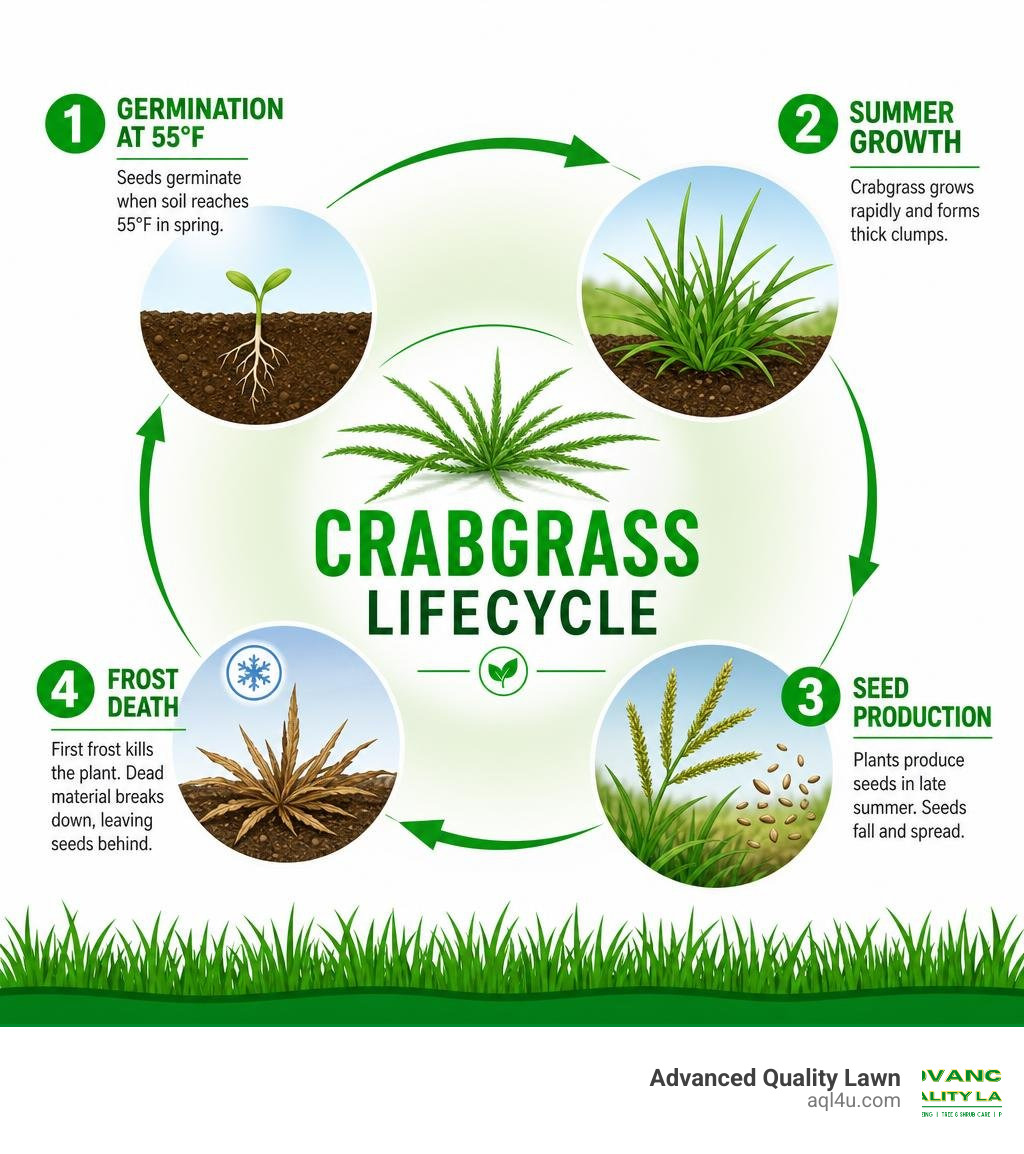
Crabgrass is the most common lawn weed in America, and it is easy to see why it frustrates so many Ohio homeowners. A single plant can produce up to 150,000 seeds in one season. Those seeds can stay dormant in your soil for up to 30 years, waiting for the right moment to sprout.
The problem is not just the weed itself. Crabgrass fills in the bare, thin, and compacted spots that a stressed lawn leaves behind. Once it takes hold in summer, it spreads fast and crowds out the grass you actually want. When the first frost hits and it dies off, it leaves bare patches that invite the next round of weeds.
Missing the narrow treatment window by even a week or two can mean losing control of your lawn for an entire season.
I'm Andrew Day, owner of Advanced Quality Lawn, and after more than 30 years of hands-on experience with crabgrass control in lawns across Northeast Ohio, I've seen every mistake and every success a homeowner can have with this stubborn weed. In this guide, I'll walk you through exactly what works so you can stop fighting crabgrass and start winning.
Identifying the Need for Crabgrass Control in Lawns
Before you can build an effective plan, you need to know exactly what you are fighting. Many homeowners mistake other grassy weeds like quackgrass, tall fescue, or nimblewill for crabgrass. This mistake leads to using the wrong products at the wrong times.
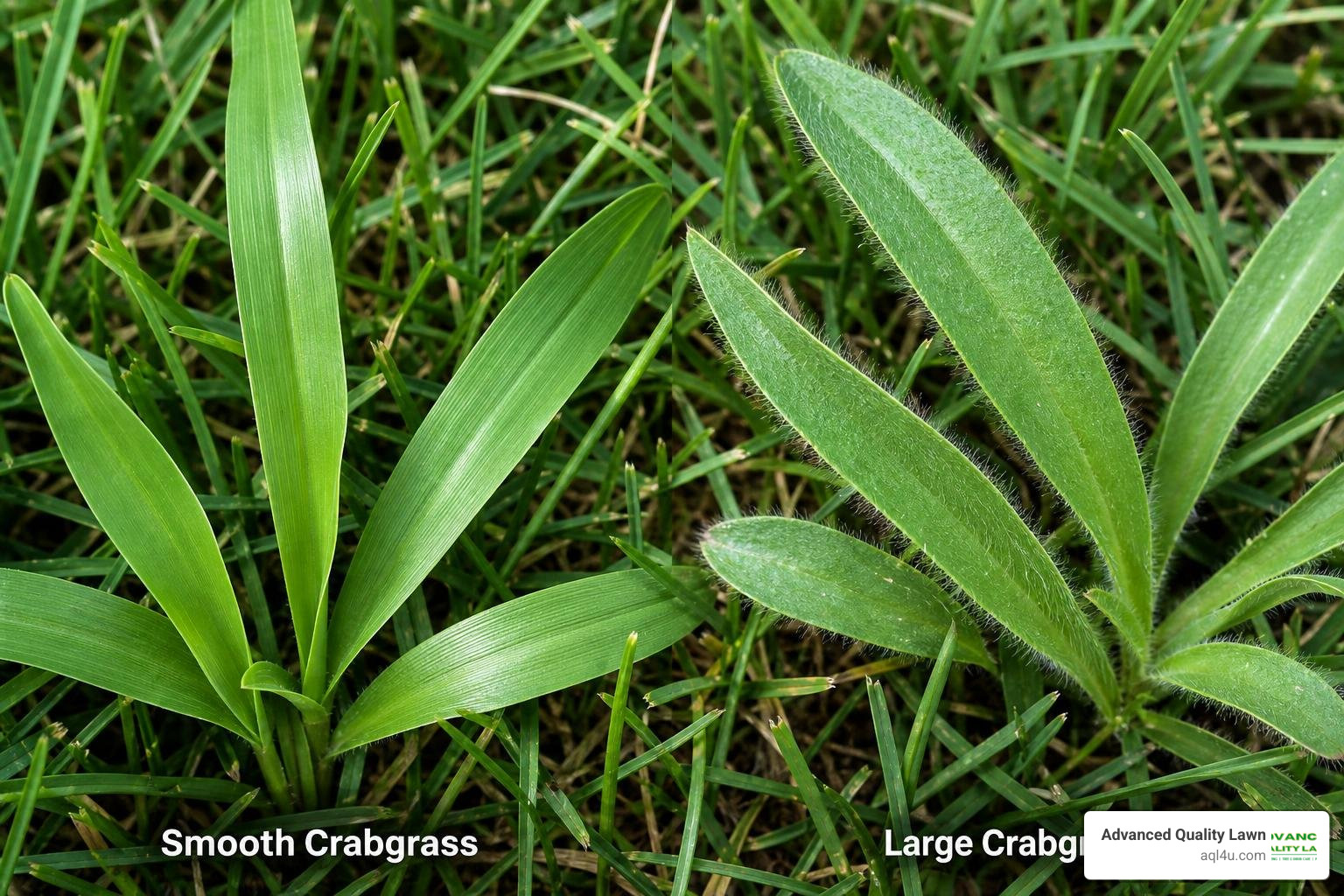
In Northeast Ohio, we primarily deal with two species of this warm-season annual weed:
- Large Crabgrass (Digitaria sanguinalis): This variety features hairy leaves and stems. It can grow up to three feet tall if left unmowed, and its stems can root at the lower joints or nodes as they touch the ground.
- Smooth Crabgrass (Digitaria ischaemum): This species is smaller, usually growing up to twelve inches high. It has mostly hairless leaves and stems, but it is just as aggressive at spreading.
Both types grow in a low, sprawling rosette pattern. The stems radiate outward from a central point, which makes them look like the legs of a crab. As they mature in late summer, they send up finger-like seedheads that can turn a reddish-purple color.
If you are trying to distinguish this pest from other weeds in your yard, you can read more in the How to Control Crabgrass | Yard and Garden guide.
Why Crabgrass Appears and Spreads
Crabgrass does not just show up by accident. It is an opportunistic weed that thrives where your desirable turf is weak, thin, or stressed.
There are three main reasons why crabgrass takes over a yard:
- Massive Seed Production: Because a single plant can release up to 150,000 seeds, there is always a massive seed bank waiting in your soil.
- Soil Compaction: Crabgrass has a tough, fibrous root system that easily penetrates hard, compacted clay soils where cool-season grasses struggle to survive.
- Bare and Thin Spots: Whenever sunlight can directly reach the soil surface, it warms the ground and triggers weed germination. Lawn edges along hot concrete driveways and sidewalks are prime targets.
To understand how this weed interacts with other common yard invaders, check out our Ultimate weeds and crabgrass guide for a deeper look at seasonal weed cycles.
Cultural Practices to Prevent Crabgrass Infestations
Many homeowners believe that the only way to achieve crabgrass control in lawns is by pouring heavy chemicals onto their grass. In reality, the best defense is a thick, healthy turf canopy. When your grass is dense and robust, it naturally blocks sunlight from reaching the soil, which prevents weed seeds from ever germinating.

Mowing and Watering for Natural Crabgrass Control in Lawns
How you mow and water your grass plays a massive role in weed prevention. If you scalp your lawn, you are practically rolling out the red carpet for weeds.
- Mow High: We recommend keeping your grass cut to a height of 3 to 4 inches. Taller grass blades shade the soil, which keeps soil temperatures cooler and prevents weed seeds from getting the light they need to sprout. In fact, regular high mowing can eliminate approximately 80% of weedy species over time.
- Water Deeply and Infrequently: Light, daily watering keeps the top inch of soil wet, which is perfect for shallow-rooted weed seedlings. Instead, apply 1 to 1.5 inches of water per week in a single watering session. This encourages your grass to grow deep, drought-resistant roots while the soil surface dries out, starving young weeds of moisture.
For more practical tips on maintaining your yard, you can read about the Best way to get rid of crabgrass to keep your turf in top shape.
Aeration and Overseeding to Thicen Turf
Compacted soil is a major friend to weeds and a primary enemy of healthy grass. Core aeration pulls small plugs of soil out of your lawn, which allows air, water, and nutrients to reach the root zone of your grass.
Immediately following aeration in the fall is the perfect time to overseed. Introducing high-quality grass seed into thin areas fills in the bare spots before weeds can claim them the following spring.
If you plan to seed your lawn, you must be careful with your weed preventer timing. Learn how to balance these two tasks in our Crabgrass preventer safe seeding guide.
Chemical Strategies for Effective Crabgrass Elimination
While cultural practices are essential for long-term prevention, chemical treatments are often necessary to clean up active infestations or establish a reliable barrier in the spring.
| Herbicide Type | How It Works | Best Growth Stage to Apply | Key Active Ingredients |
|---|---|---|---|
| Pre-Emergent | Creates a chemical barrier at the soil surface to stop sprouting seeds | Before germination (soil temp under 55°F) | Prodiamine, Dithiopyr, Pendimethalin |
| Post-Emergent | Kills actively growing weeds through leaf absorption | 1 to 4 tiller stage (young, small plants) | Quinclorac, Mesotrione, Topramezone |
Timing Pre-Emergent Applications for Crabgrass Control in Lawns
Timing is everything when using a pre-emergent. If you apply it too early, the barrier can break down before the seeds start to sprout. If you apply it too late, the seeds have already germinated, and the product will not work.
The magic number to watch is 55°F. Crabgrass seeds begin to germinate when soil temperatures reach 55°F at a depth of 2 to 3 inches for several consecutive days.
In Northeast Ohio, this window typically opens in mid-April. A great natural indicator is the local forsythia bush. When you see these bright yellow bushes drop their blossoms, it is time to have your pre-emergent on the ground.
For a complete breakdown of timing and product comparisons, you can consult the Crabgrass Control: Complete Prevention & Treatment Guide (2026) or read our localized Crabgrass removal guide 2026.
Selecting the Best Post-Emergent Herbicides
If some weeds slip through your spring barrier, you will need a selective post-emergent herbicide to knock them down without killing your desirable grass.
- Quinclorac: This is one of the most effective active ingredients for killing emerged crabgrass. It is highly effective when the weed is small, specifically before it reaches the 5-tiller stage.
- Mesotrione: This is an excellent option if you are seeding your lawn at the same time, as it prevents weeds while allowing new cool-season grass seedlings to grow safely.
Post-emergent products provide a 90% to 95% success rate when applied to young weeds with 1 to 4 tillers. Once the plant matures and produces seedheads, it becomes incredibly difficult to control.
To find the right product for your specific lawn situation, browse our guide on the Best herbicide for crabgrass.
Tailoring Your Strategy by Grass Type and Region
Lawn care is never a one-size-fits-all solution. Your treatment plan must match the specific grass types growing in your yard.
Cool-Season vs Warm-Season Grass Care
In Northeast Ohio, our lawns consist of cool-season grasses like Kentucky bluegrass, tall fescue, fine fescue, and perennial ryegrass. These grasses grow actively in the spring and fall, but they often go dormant or struggle during the hot, dry summer months.
Because warm-season weeds thrive in the exact same heat that stresses our cool-season turf, we must be extra vigilant.
For instance, certain herbicides that are safe for southern warm-season grasses like Bermuda or Zoysia can severely injure or kill our local fescues and bluegrasses. Always read product labels carefully to ensure compatibility.
To learn more about selecting products that protect your cool-season turf, read our guide on choosing a Broadleaf and crabgrass herbicide.
Evaluating DIY vs Professional Lawn Care Services
Many homeowners enjoy the hands-on work of caring for their own yards. However, achieving perfect weed control requires specialized equipment, precise calibration, and access to commercial-grade products.
When deciding between a DIY approach and hiring a professional, consider these factors:
- Product Quality: Over-the-counter retail products often lack the longevity of professional-grade options. At Advanced Quality Lawn, we use a two-application split program in the spring to extend your protection through the entire summer.
- Equipment Calibration: Applying too much herbicide can damage your grass, while applying too little will fail to stop the weeds. Professional technicians use precisely calibrated sprayers and spreaders to ensure even coverage.
- Guarantees and Service: A professional service takes the guesswork out of your hands and often includes service-call guarantees if stubborn weeds emerge later in the season.
Common Mistakes to Avoid in Crabgrass Management
If you decide to tackle this project yourself, make sure to avoid these common pitfalls:
- Applying Too Late: Waiting until you see the weed growing in summer to apply a pre-emergent is a waste of time and money.
- Skipping the Second Application: A single spring application often breaks down by mid-summer, allowing a late flush of weeds to germinate.
- Not Watering It In: Pre-emergent granules must be watered in with about a half-inch of rain or irrigation within a few days of application to activate the chemical barrier in the soil.
- Aerating After Pre-Emergent: Aerating your lawn in late spring will puncture the protective chemical barrier you just applied, allowing weeds to break through. Save your aeration for the fall.
If you are dealing with a mix of different weeds, you can read about the Best solution to kill weeds to help get your yard back on track.
Frequently Asked Questions about Crabgrass
We hear many of the same questions from homeowners in Akron, Hudson, and across Northeast Ohio. Here are some quick answers to help you navigate your lawn care choices.
Can I plant grass seed after applying a crabgrass preventer?
In most cases, no. Standard pre-emergent herbicides cannot tell the difference between a weed seed and a high-quality grass seed. If you apply a preventer, you must typically wait 8 to 16 weeks before planting new grass seed.
However, there are specialized products like mesotrione that can be used at the time of seeding. For more details on how to navigate this timeline, check out our Crabgrass preventer safe seeding guide.
Does mowing crabgrass spread the weed further?
If the weed has already produced finger-like seedheads, mowing can spread those seeds across your yard. However, regular mowing before the plant sets seed is actually highly beneficial. It weakens the weed, prevents it from photosynthesizing efficiently, and helps keep your desirable grass tall enough to shade out new sprouts.
How long do crabgrass seeds remain viable in the soil?
This is the most frustrating part of dealing with this weed. The seeds can remain viable in the soil for up to 30 years. This is why a lawn that looks great one year can suddenly explode with weeds the next if the turf thins out or if you skip your spring pre-emergent application.
Conclusion
Winning the battle against aggressive summer weeds requires a strategic combination of proper mowing, deep watering, timely pre-emergent barriers, and targeted post-emergent spot treatments.
If you are tired of spending your weekends pushing spreaders and guessing on application dates, let our local team of experts handle the hard work for you. We provide guaranteed results, excellent customer service, and coverage across 99+ zip codes in Summit, Medina, Cuyahoga, and surrounding counties.
Ready for a beautiful, weed-free lawn? Schedule professional lawn care maintenance with Advanced Quality Lawn today!