The Definitive Guide to the Best Fertilizer for New Grass
Why Choosing the Right Fertilizer for New Grass Makes or Breaks Your Lawn
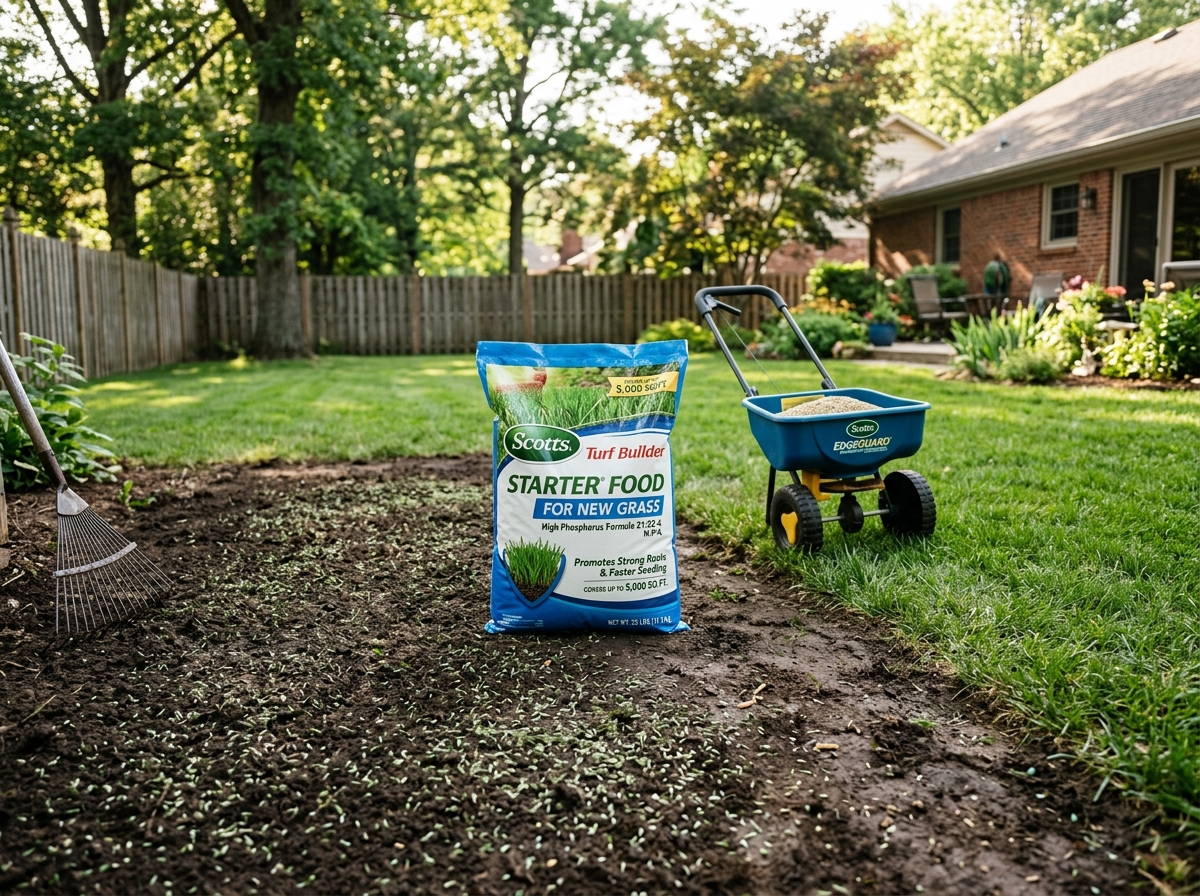
The best fertilizer for new grass is a high-phosphorus starter fertilizer with an N-P-K ratio around 20-27-5 or 24-25-4, applied at 0.5 to 1 pound of nitrogen per 1,000 square feet before or right after planting.
Top starter fertilizers for new grass:
| Product | N-P-K Ratio | Coverage |
|---|---|---|
| Scotts Turf Builder Starter Food | 24-25-4 | 14,000 sq. ft. (42 lb.) |
| Vigoro Starter Fertilizer | 20-27-5 | 15,000 sq. ft. (48 lb.) |
| Lawnifi New Lawn Starter Box | 8-8-8 (Grow bottles) | 5,000 sq. ft. per bottle |
| Milorganite (organic option) | Slow-release organic | 12.5 lbs. per 1,000 sq. ft. |
Starting a new lawn is exciting. But a lot of Ohio homeowners put down seed or sod, water faithfully, and then wonder why the results are patchy or slow. Most of the time, the problem started before the first blade of grass ever broke through the soil.
The nutrient your new grass needs most is phosphorus. It drives root development underground, where you can't see it. Without enough phosphorus in the soil at the right time, even the best grass seed will struggle to take hold. And once your soil dries out or gets compacted, adding fertilizer later won't fix what was missed early on.
Ohio's heavy clay soils make this even more important. Nutrients don't move through clay the way they do in looser soils, so getting the right fertilizer down before planting is critical.
I'm Andrew Day, owner of Advanced Quality Lawn, and after more than 30 years helping Northeast Ohio homeowners establish and maintain healthy lawns, I've seen how the right approach to the best fertilizer for new grass can be the difference between a lush, thick lawn and a frustrating restart. In this guide, I'll walk you through exactly what to use and how to use it.
Understanding Starter Fertilizer and Why Your New Lawn Needs It
When we talk about the best fertilizer for new grass, we are almost always talking about "starter fertilizer." You might wonder why you cannot just use the leftover bag of regular lawn food sitting in your garage. The answer lies in what the grass is trying to achieve at different stages of its life.
An established lawn focuses on top growth and maintaining its green color. A brand-new seedling or a fresh piece of sod has a much bigger job: it has to build an entire root system from scratch. Starter fertilizer is specifically formulated to provide an "extra push" that turns vulnerable seeds into a thick, resilient carpet.
The primary difference is the concentration of phosphorus. In many states, phosphorus is restricted in standard fertilizers to prevent runoff into waterways. However, exceptions are usually made for establishing new turf because phosphorus is essential for root establishment. Because phosphorus does not move easily through the soil, applying it right at the time of planting ensures the tiny, emerging roots can reach it immediately.
Using the best fertilizer for new grass can lead to impressive results. Statistics show that using a quality starter food can grow new grass 70% thicker and 35% quicker than leaving the lawn unfed. In our experience across Northeast Ohio, from Hudson to Stow, that quick start is vital for outcompeting aggressive weeds that are always looking for a bare spot to call home.
To learn more about the fundamentals of feeding your lawn, check out our guide on Fertilizer 101: What is it and when should you use it.

How to Choose the Best Fertilizer for New Grass Based on N-P-K Ratios
If you look at any bag of fertilizer, you will see three prominent numbers separated by hyphens. This is the N-P-K ratio, representing Nitrogen (N), Phosphorus (P), and Potassium (K). Understanding these numbers is the first step in choosing the best fertilizer for new grass.
- Nitrogen (N): This boosts leafy, green growth and overall density.
- Phosphorus (P): This is the "root maker." It is the most critical component for new lawns.
- Potassium (K): This helps with cellular health and stress resistance, protecting your new grass from Ohio's unpredictable weather.
Before you buy any product, we highly recommend getting a soil test. Your soil might already be rich in certain nutrients, or it might be so acidic that the grass cannot actually "eat" the fertilizer you provide. Most lawn grass thrives in a pH between 6 and 7. If your pH is below 5.5, even the best fertilizer for new grass will not work effectively. You can get a detailed report from the University of Minnesota Soil Testing Lab or a similar local facility to know exactly what your dirt needs.
Determining the Best Fertilizer for New Grass Ratios
For a new lawn, you want that middle number (phosphorus) to be high. Common effective ratios include 24-25-4 or 20-27-5. These ratios provide a massive jump-start to the roots while still giving the blades enough nitrogen to begin photosynthesizing.
If you are unsure about your local soil conditions in Summit or Cuyahoga County, you can reach out to your local Cooperative Extension office for guidance. They often have data on regional nutrient deficiencies that can help you pick the perfect bag.
Selecting Nutrients by Grass Type
Different grass types have slightly different appetites. In Northeast Ohio, we primarily deal with cool-season grasses.
- Tall Fescue: This is a hardy choice for our region. Using a specialized mix like a rapid grass fescue blend can sometimes grow grass 2x faster than seed alone.
- Kentucky Bluegrass: This grass takes longer to germinate (up to 21 to 28 days), so a steady supply of slow-release nitrogen is important to keep it fed during its long "nap" underground.
- Bermuda Grass: While less common here, it is a "heavy feeder" that requires consistent nitrogen once it starts running.
Some premium fertilizers now use "Catalyst Technology." This sounds like science fiction, but it just means the nutrients are nano-sized. This allows the plant to absorb them much more efficiently, reducing waste and ensuring your new lawn gets every bit of nutrition you paid for.
The Step-by-Step Process for Applying Fertilizer to New Seed or Sod
Success with the best fertilizer for new grass is not just about what you apply, but how you apply it. You want to avoid "fertilizer burn," which happens when too much nitrogen pulls moisture out of the young plants, effectively cooking them.
First, you must prepare the soil. This is like cleaning up for a job interview. You want to remove debris, rocks, and old dead grass. We recommend raking the top 2 inches of soil to loosen it up. If your soil is heavily compacted clay, which we see often in places like Medina and Cuyahoga Falls, you should consider Preparing Your Lawn for Spring by adding a layer of organic matter or compost.
Applying the Best Fertilizer for New Grass During Seeding
- Prep the Seedbed: Loosen the soil so the seeds have a soft place to land.
- Spread the Fertilizer: Use a broadcast or drop spreader to apply the starter fertilizer at the recommended rate (usually 0.5 to 1 pound of nitrogen per 1,000 square feet).
- Spread the Seed: Apply your chosen grass seed evenly.
- Rake Lightly: You want seed-to-soil contact. Lightly rake the area so the seeds are about 1/8 to 1/4 inch deep.
- Water Immediately: This "activates" the fertilizer and starts the germination process.
For those looking to thicken an existing lawn, the process is similar. You can learn more about this on our Core Aeration & Overseeding page.
Fertilizing New Sod and Plugs
Sod is a bit different because it already has a layer of soil and established blades. However, it has had its roots cut, so it is in a state of shock.
For sod, you should apply the starter fertilizer directly to the bare soil before you lay the rolls down. This encourages the roots to grow downward into your yard's soil rather than just staying in the sod layer. Level the soil, apply the phosphorus-rich fertilizer, lay the sod, and then water heavily. You want the soil underneath to stay moist for the first 3 to 5 weeks until the roots have knitted into the ground.
Liquid vs Granular: Selecting the Best Fertilizer for New Grass Delivery
Homeowners often ask us which delivery method is the best fertilizer for new grass. Both have their place in a professional lawn care program.
| Feature | Granular Fertilizer | Liquid Fertilizer |
|---|---|---|
| Speed of Results | Slower (needs to break down) | Faster (immediate absorption) |
| Ease of Application | Easy for DIYers with a spreader | Requires precise mixing/spraying |
| Longevity | Long-lasting (up to 6 to 8 weeks) | Shorter (usually 2 to 4 weeks) |
| Burn Risk | Moderate (if over-applied) | Lower (if diluted correctly) |
Granular fertilizers are excellent for new seed because they provide a slow, steady "trickle" of nutrients as the seeds germinate. Many high-quality granular products use "All-in-One Particle" technology, ensuring every single grain contains the exact N-P-K ratio needed.
Liquid fertilizers, like those found in a starter box kit, are fantastic for sod or for giving a quick "boost" to seedlings that have already emerged. They can be absorbed through the leaves as well as the roots.
You might also consider organic options. Milorganite is a popular choice for seeding. It is a slow-release, non-burning organic fertilizer that also adds organic matter to the soil. We often suggest applying it at a rate of 12.5 lbs per 1,000 square feet directly on top of the seed. To weigh your options, read our article on Is Organic Fertilizer Better Than Synthetic Fertilizer.
Post-Establishment Care and Avoiding Common Fertilization Mistakes
Once you have applied the best fertilizer for new grass, the job is not quite done. The biggest mistake we see is "setting and forgetting."
Common Mistakes to Avoid:
- Over-fertilizing: More is not better. Applying too much nitrogen can kill tender seedlings. Always follow the label rates.
- Using Weed and Feed: Never use a fertilizer with weed control (herbicides) on new grass. Most herbicides are designed to stop seeds from growing, and they do not know the difference between a dandelion seed and your expensive grass seed. Wait until you have mowed your new lawn at least 3 to 4 times before applying any weed control.
- Mowing Too Early: Let the grass reach about 3 to 4 inches tall before its first haircut. Ensure your mower blades are sharp, as dull blades can pull the shallow-rooted seedlings right out of the ground.
- Under-watering: Fertilizer is a salt. If it sits on the soil without water, it can dehydrate the plants. Keep the soil surface moist (but not flooded) until the grass is at least 2 inches tall.
Frequently Asked Questions about New Grass Fertilizer
Can I over-fertilize new grass? Yes. Over-application can lead to fertilizer burn, which looks like yellow or brown streaks in the lawn. It can permanently damage the "crown" of the grass plant, meaning it will not grow back.
When should I apply the second round of fertilizer? Usually, you should wait about 6 to 8 weeks after the initial starter application. By then, the grass should be established enough to handle a standard maintenance fertilizer with a higher nitrogen-to-phosphorus ratio.
Is a soil test really necessary? While you can grow grass without one, a soil test is the only way to be 100% sure you are not wasting money on nutrients your soil already has or missing a critical pH imbalance that will prevent growth.
Conclusion
Establishing a new lawn in Northeast Ohio is a big investment of time and money. By choosing the best fertilizer for new grass and following a science-backed application process, you are giving your yard the best possible start. Whether you are in Akron, Cleveland, or any of the surrounding counties, the principles remain the same: focus on the roots, keep things moist, and be patient.
At Advanced Quality Lawn, we pride ourselves on excellent customer service and a deep understanding of our local environment. We cover over 99 zip codes across Summit, Medina, Cuyahoga, and surrounding counties, providing professional-grade applications that are often superior to what you can find at a big-box store.
If you would rather spend your weekends enjoying your yard instead of worrying about N-P-K ratios and spreader settings, we are here to help. Our state-certified technicians can tailor a program specifically for your soil type and grass species.
Give us a call today for a free estimate and let us help you grow the lawn of your dreams. You can also explore our full range of services on our Lawn Care Maintenance page.