Stop the Spread with the Best Lawn Spray for Crabgrass
Why Finding the Best Lawn Spray for Crabgrass Matters for Ohio Homeowners

The best lawn spray for crabgrass depends on how mature the weed is when you treat it. Here is a quick look at the top options:
| Herbicide | Active Ingredient | Best For | Cost Per Application |
|---|---|---|---|
| Drive XLR8 | Quinclorac | Mature crabgrass (3+ tillers) | ~$1.60/gallon |
| Acclaim Extra | Fenoxaprop-p-ethyl | 4 to 5 tiller stage | ~$3.50/gallon |
| Tenacity | Mesotrione | Young crabgrass, new seedings | Low |
| Quinclorac 75 DF | Quinclorac | Mature crabgrass, budget pick | Very low |
| Q4 Plus | Quinclorac + Sulfentrazone | Crabgrass + broadleaf weeds | ~$1.70/application |
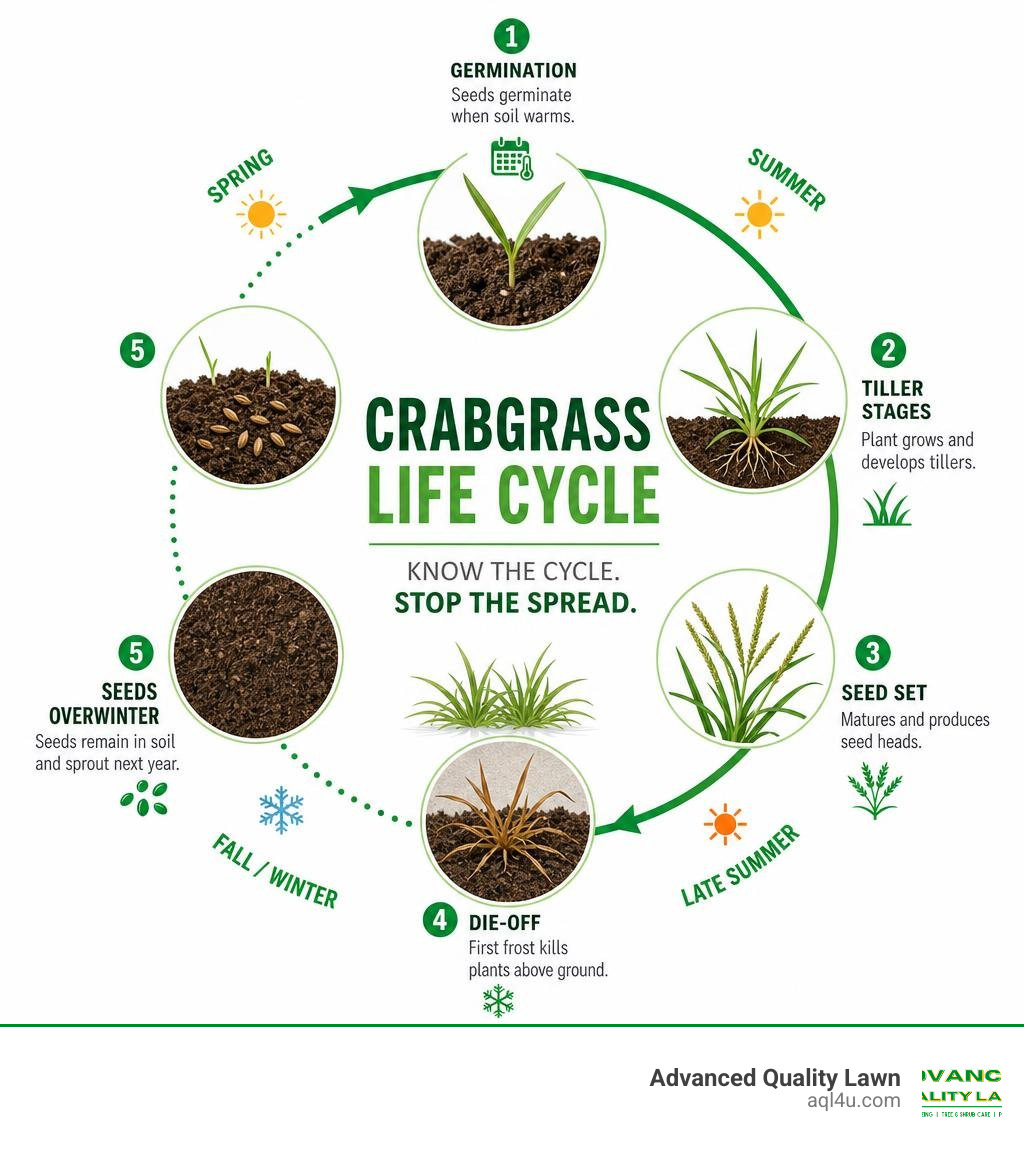
Crabgrass is one of the most stubborn weeds an Ohio lawn can face. It germinates when soil temperatures hit around 55°F, spreads fast in thin or stressed turf, and a single plant can drop thousands of seeds before the first frost. Those seeds overwinter and come back harder the following year.
By the time most homeowners notice it, the crabgrass is already several inches tall and rooted in. That is when choosing the right post-emergence spray makes all the difference.
I'm Andrew Day, owner of Advanced Quality Lawn, and with more than 30 years of lawn care experience in Northeast Ohio, I have tested and applied every major best lawn spray for crabgrass option on the market across a wide range of turf types and conditions. In the sections below, I will walk you through exactly what works, when to use it, and how to apply it without damaging the lawn you are trying to protect.
Identifying Crabgrass and Timing Your Treatment

Before you run to the store or order professional products online, you must make sure that the weed invading your lawn is actually crabgrass. Treating the wrong weed with the wrong product is a quick way to waste money and potentially damage your grass. Our team always recommends starting with a proper diagnosis, which you can learn more about in our Ultimate Weeds and Crabgrass Guide.
How to Spot Crabgrass in Your Turf
Crabgrass is an annual grassy weed that stands out easily once you know what to look for. It has a coarse texture and a bright lime green color that contrasts sharply with dark green cool-season grasses.
Unlike your desirable turfgrass which grows upright, crabgrass grows sideways. It branches out from a central hub and hugs the ground in a pattern that looks like the legs of a crab. As it matures, the stems become thicker and tougher, making it much harder to pull by hand. If you need a complete breakdown on how to pull or treat this weed manually, check out our Crabgrass Remover Guide 2026.
When to Apply the Best Lawn Spray for Crabgrass
Timing is everything when dealing with annual grassy weeds. Post-emergence herbicides are designed to kill weeds that are actively growing. According to research on the Postemergence Control of Crabgrass and Other Summer Annual Grasses, these sprays work best when applied to young weeds with fewer than 4 tillers.
A tiller is simply a branch that shoots out from the main stem of the grass. When crabgrass is young and only has 1 to 3 tillers, it is highly vulnerable to selective herbicides. Once it matures past the 4 tiller stage, it becomes incredibly tough. At that point, you will need stronger active ingredients or multiple applications to knock it down completely.
Top Post-Emergence Herbicides for Crabgrass Control
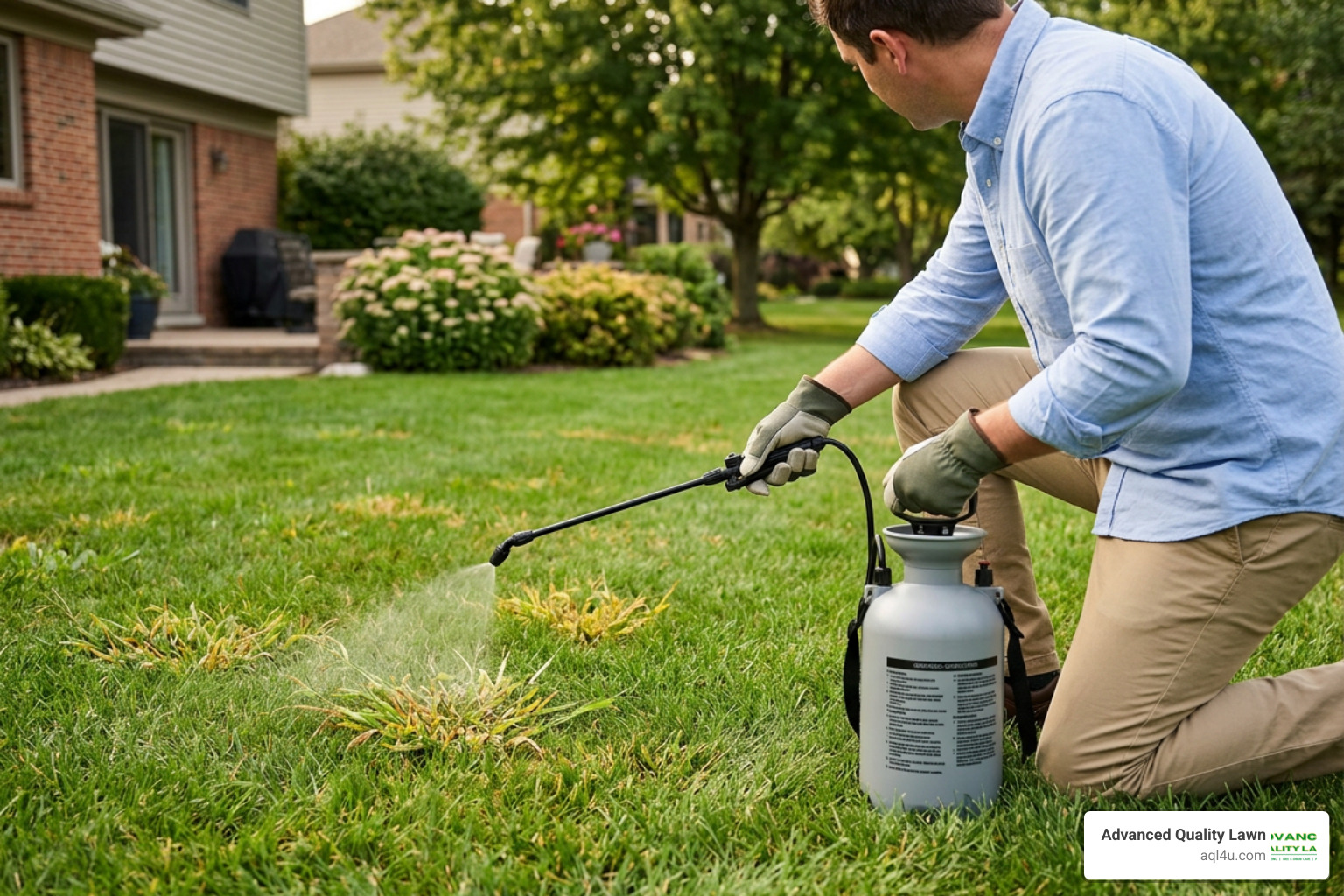
When cultural control methods fail and crabgrass breakthrough occurs, you must choose a selective herbicide that targets the weed while leaving your turfgrass unharmed. You can read our detailed breakdown on the Best Herbicide for Crabgrass to see how different active ingredients behave on various grass types.
Drive XLR8 and Quinclorac 75 DF
Quinclorac is the undisputed king of post-emergence crabgrass control. Drive XLR8 is a liquid formulation containing 18% quinclorac dimethylamine salt. It is highly effective on mature crabgrass and often shows visible results like twisting and yellowing within 3 to 7 days.
For those on a tight budget, Quinclorac 75 DF is a dry flowable powder that contains 75% active ingredient. It is highly affordable but requires careful weighing and mixing. Both of these options must be mixed with a surfactant, preferably methylated seed oil, to help the chemical stick to the waxy coating of the crabgrass leaves. Homeowners and professionals alike rank quinclorac highly in tests, as noted in Testing The 5 Best Crabgrass Killers of 2026.
Acclaim Extra and Tenacity Herbicide
Acclaim Extra uses the active ingredient fenoxaprop-p-ethyl. It is incredibly effective on mature crabgrass even at the 4 to 5 tiller stage. It can control large, tillered annual grasses with a single application, but it is one of the more expensive options on the market.
Tenacity Herbicide uses mesotrione as its active ingredient. Tenacity is unique because it is safe to apply at the exact same time you put down new grass seed. However, mesotrione is best used on young crabgrass with fewer than 4 tillers. It also causes a bright white bleaching effect on susceptible weeds before they die, which can look alarming but shows that the product is working. For more details on targeting multiple stubborn weeds, read about the Best Weed Killer for Nutsedge and Crabgrass.
Q4 Plus Turf Herbicide
If your lawn is being overrun by a mix of grassy weeds and broadleaf invaders, Q4 Plus is an outstanding choice. It combines quinclorac, sulfentrazone, 2,4-D, and dicamba.
The addition of sulfentrazone allows Q4 Plus to knock out yellow nutsedge in addition to crabgrass and over 200 broadleaf weeds. This makes it a great all-in-one spray for summer cleanups. To learn more about broad-spectrum weed control strategies, check out our guide on the Best Way to Get Rid of Crabgrass.
Choosing the Best Lawn Spray for Crabgrass in 2026
For everyday homeowners who want a simple solution without the hassle of mixing professional concentrates, retail products are widely available.
Using a product like Spectracide® Weed Stop® For Lawns Plus Crabgrass Killer Concentrate allows you to treat up to 5,000 square feet with a standard 32 ounce bottle. This formula contains a 4-way blend of active ingredients that delivers visible results in as little as 5 hours. Ready-to-use options like Bayer Advanced All-In-One Lawn Weed & Crabgrass Killer RTU are perfect for spot treating isolated patches along driveways and sidewalks without mixing any chemicals.
Application Rates and Best Practices for Maximum Efficacy
Applying the best lawn spray for crabgrass requires precision. Simply spraying chemical all over the yard without a plan can lead to poor results or dead grass. For a full breakdown of cultural and chemical prevention tips, read our article on Crabgrass Control for Lawns.
Mixing and Spraying Tips for the Best Lawn Spray for Crabgrass
To get the most out of your herbicide, you must use the correct surfactant. Surfactants break the surface tension of the water, allowing the spray to coat the weed leaf evenly instead of rolling off. While methylated seed oil is highly effective with quinclorac, using a non-ionic surfactant can reduce the risk of turf burn during hot summer days.
Additionally, adjusting your tank water pH to around 5.0 can improve the stability and performance of quinclorac. Always make sure to apply the spray on a calm day to prevent wind drift onto sensitive garden plants.
Precautions to Protect Desirable Turfgrass
Most post-emergence crabgrass sprays are safe for common Ohio cool-season grasses like Kentucky bluegrass, perennial ryegrass, and tall fescue. However, you must avoid applying these chemicals when the lawn is under extreme drought stress or when daily high temperatures exceed 85°F to 90°F. Applying herbicides to heat-stressed turf can cause severe yellowing or permanent damage to your desirable grass.
Frequently Asked Questions About Crabgrass Control
Will pre-emergent herbicides kill existing crabgrass?
No, pre-emergent herbicides like prodiamine will not kill crabgrass that has already sprouted. Pre-emergents work by forming a chemical barrier in the soil that stops weed seeds from developing roots after they germinate. Once you can see the crabgrass growing in your lawn, you must use a post-emergence spray to kill it.
Can I apply crabgrass killer to a newly seeded lawn?
Most post-emergence herbicides require you to wait until new grass seedlings have been mowed at least 3 times before applying. Tenacity is the major exception to this rule, as it can be applied during seeding to keep crabgrass away while your new lawn grows. Always read the product label carefully to avoid killing your new grass.
How long should I wait to mow after spraying crabgrass?
For best results, do not mow your lawn for 2 days before applying the spray and wait at least 2 days after spraying before you mow again. This allows the crabgrass plants to have plenty of leaf surface area to absorb the herbicide and gives the chemical enough time to travel down to the roots.
Conclusion
Getting rid of crabgrass can feel like an uphill battle, but choosing the best lawn spray for crabgrass and applying it at the right growth stage will help you reclaim your lawn.
If you prefer to leave the mixing, calibration, and spraying to the professionals, Advanced Quality Lawn is here to help. We provide expert lawn care, tree, and shrub services throughout Northeast Ohio, including Akron, Hudson, Brecksville, Copley, Bainbridge, Solon, Chagrin Falls, Broadview Heights, Parma, Medina, Macedonia, Cleveland, Richfield, Stow, Twinsburg, Streetsboro, Boston Heights, Cuyahoga Falls, Peninsula, Independence, Seven Hills, North Royalton, and Sagamore Hills.
We back our work with full-program guarantees and outstanding customer service. Contact us today to learn more about our lawn care maintenance services and get a free quote for your property.