Bug B Gone Pest Control: Product or Professional Service?
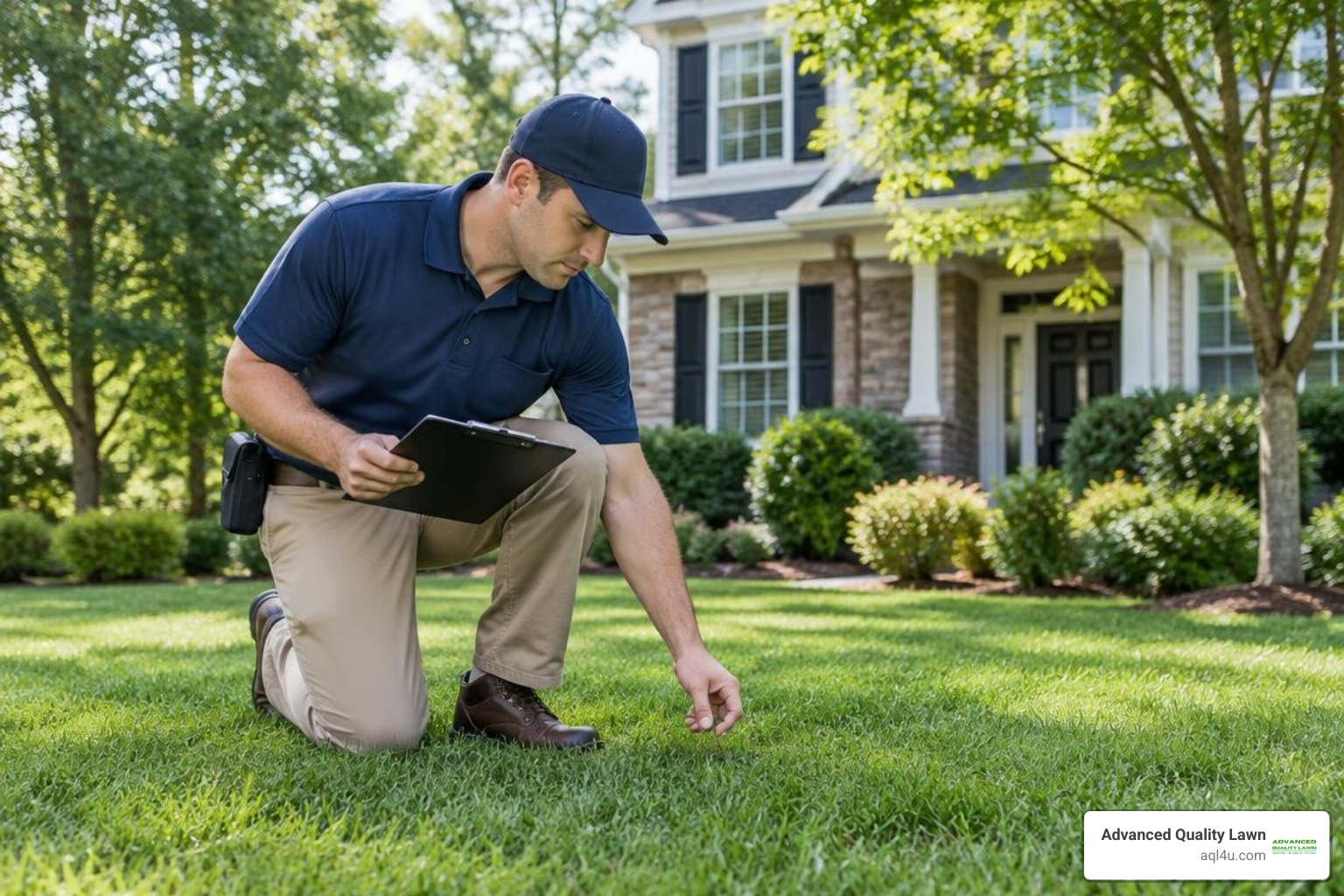
Retail products such as Ortho Bug B-Gon are intended for the outdoor pests named on the label, while a professional service selects treatment after identifying the problem on the property. For a lawn problem, bug b gone pest control is worth considering only when the product label covers both the pest and the treatment area.
Andrew Day owns Advanced Quality Lawn in the Akron area and brings 30 years of lawn care experience to Northeast Ohio properties.
Understanding Retail Pest Control: DIY Products vs. Professional Services
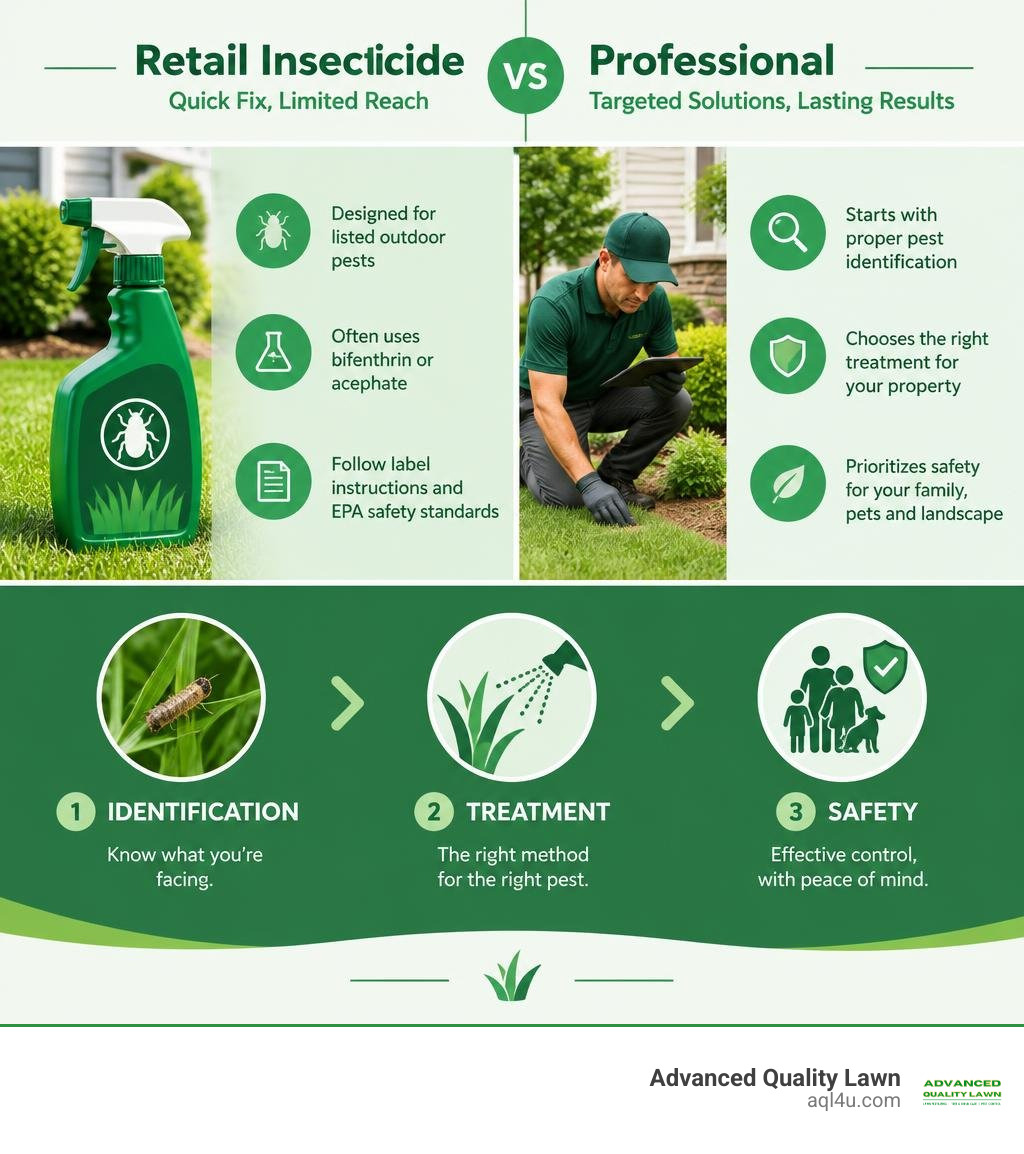
When you spot chewed blades of grass or uninvited creeping guests along your patio, you might instinctively run to the local hardware store. Retail pest products like Ortho Bug B-Gon are designed to offer quick, accessible treatments for standard surface insects. Most of these off-the-shelf formulas rely on active ingredients such as bifenthrin or systemic chemicals like acephate.
Bifenthrin works as a synthetic pyrethroid that impacts the nervous system of an insect upon contact or ingestion. On the other hand, systemic options like acephate absorb directly into the plant vascular tissue to target pests that feed on stems and leaves. However, these retail options come with strict usage parameters outlined by official EPA label safety standards, which limit where and how you can spray them.
While a store-bought jug provides a temporary fix, professional lawn care programs approach pest suppression as an ongoing discipline. Here in Northeast Ohio, soil temperatures, moisture levels, and seasonal breeding cycles all dictate how treatments should be deployed.
| Feature | Retail Off-The-Shelf Insecticides | Professional Lawn Pest Management |
|---|---|---|
| Primary Goal | Fast contact knockdown of visible bugs | Root-cause control and seasonal barrier defense |
| Active Ingredients | Low-concentration bifenthrin or acephate | Commercial-grade, targeted multi-compound blends |
| Application Accuracy | Handheld triggers or homeowner spreaders | Calibrated commercial spray rigs and granular tools |
| Residual Longevity | 30 to 90 days depending on rainfall | Extended residual protection with planned re-treatments |
| Underground Penetration | Minimal penetration past heavy thatch | Specialized root-zone treatments for subsurface grubs |
| Service Guarantee | Limited to retail product return policies | Full-program guarantees with dedicated service calls |
How Retail Insecticide Formulations Target Common Lawn Pests
Over-the-counter formulas boast broad lists of targets. You will often see claims that a single bottle kills over a hundred insect varieties, ranging from nuisance ants and ticks to fleas and surface-feeding caterpillars. These products perform reasonably well when bugs physically walk across a freshly treated surface.
Surface feeders such as chinch bugs and sod webworms damage turf by sucking plant juices or clipping grass blades right at the crown. A simple retail contact spray can reduce their numbers if you catch the infestation early in the summer.
However, lawn pests follow distinct lifecycles that easily bypass a single DIY application. For example, beetle larvae feed deeply on root systems where simple surface liquids cannot easily reach. To understand how various turf invaders operate across every season, exploring our complete lawn bug control guide will help you identify the precise insect damaging your turf.
Granular Insecticides vs. Liquid Sprays in Lawn Pest Control
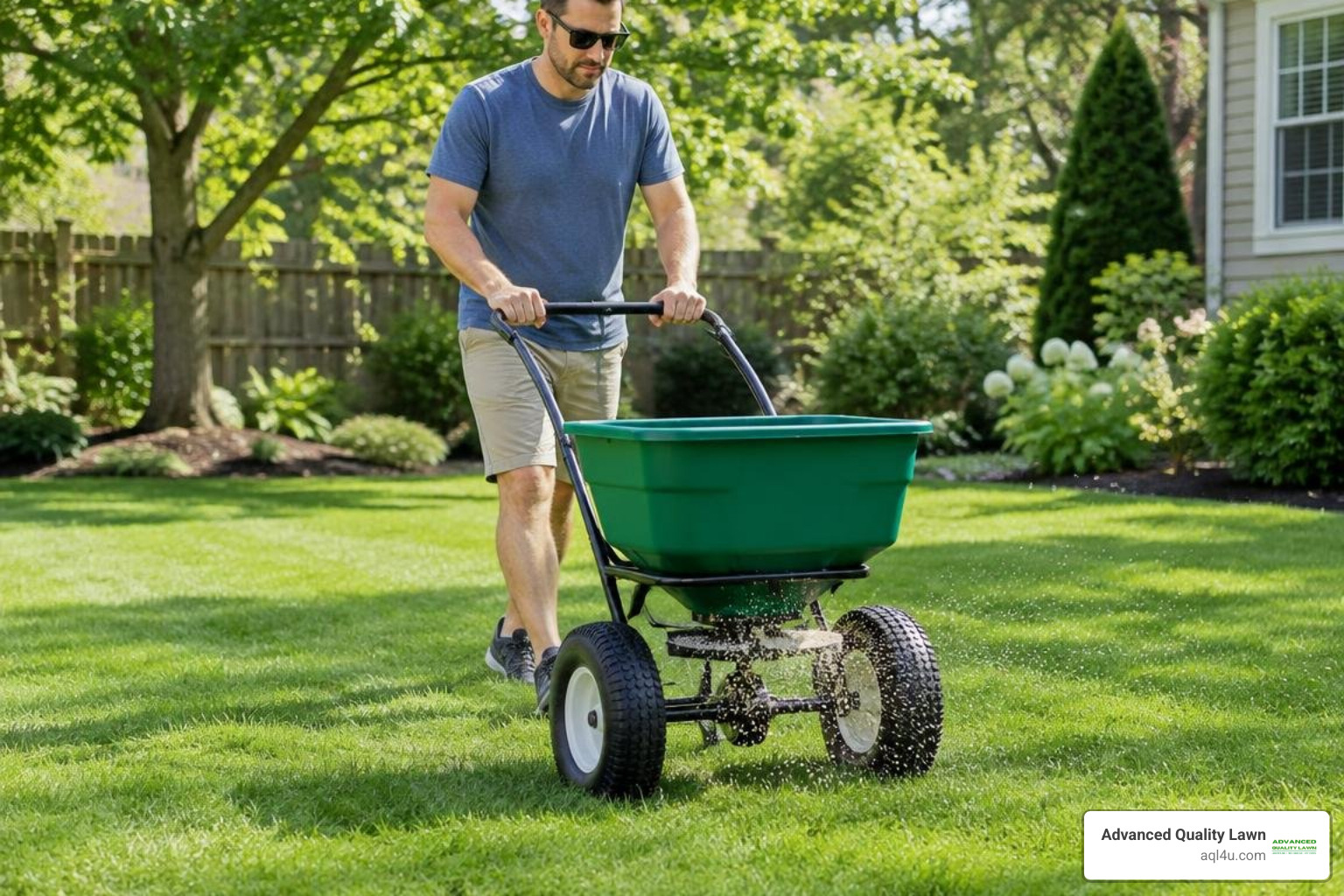
Choosing between a bag of dry granules and a liquid concentrate spray comes down to where the insects live and feed.
Liquid concentrate sprays are ideal for perimeter barriers along foundations, patio edges, and vertical foliage. Liquids coat the grass blades evenly, creating an immediate contact zone for active, mobile pests like ticks, fleas, and spiders. The downside is that outdoor liquids break down faster when exposed to direct sunlight and heavy rainfall.
Granular insecticides provide a slower, sustained release. When you spread dry granules across the lawn, they settle past the turf canopy down into the thatch layer. For best results, homeowners need a properly calibrated broadcast spreader and must water the lawn thoroughly right after application to activate the active ingredient.
If you are looking for long-lasting surface protection against perimeter invaders and thatch dwellers, learning about the best lawn insect killer granules can help you decide which delivery method matches your current lawn setup.
Active Ingredients, Application Safety, and Environmental Impact
The backbone of many retail bug sprays is bifenthrin, a synthetic pyrethroid engineered to mirror the natural insecticidal compounds found in chrysanthemum flowers. In residential retail formulas, bifenthrin is typically packaged at low concentrations, often around 0.2 percent in granular forms.
While synthetic pyrethroids are effective against target insects, they are non-selective contact compounds. That means they do not distinguish between a destructive chinch bug and a beneficial pollinator. To protect honeybees and native pollinators, never spray flowering plants, clover patches in bloom, or garden blossoms when bees are actively foraging.
Environmental management is another crucial responsibility. Bifenthrin and related compounds bind tightly to soil particles, but they are exceptionally toxic to fish and aquatic life. If loose granules bounce onto driveways, sidewalks, or curbs, the next rainstorm can wash them directly into municipal storm drains and local streams. Always sweep stray granules back into the turf and avoid applying any pest control products right before heavy downpours.
Safe Handling and Application for Families and Pets

Safety should always come first whenever you handle pest control products around your home. Personal protective equipment is essential during application. Always wear chemical-resistant gloves, protective eye gear, long pants, and closed-toe shoes to prevent accidental skin contact.
The most important rule for household safety is respecting the re-entry interval. Whether you use a retail spray or schedule a professional service, keep children and pets off the treated grass until the product has completely dried. Once dry, the liquid binds tightly to the turf and soil, drastically reducing transfer risks.
If you are worried about your furry companions spending time outdoors, reviewing how to select a bug spray for yard safe for pets will give you peace of mind while keeping troublesome pests out of your lawn.
Professional Outdoor Pest Management Strategies
Professional outdoor pest management is built on the principles of Integrated Pest Management. Instead of blanket-spraying chemicals across an entire property, a professional strategy uses targeted techniques that address pest pressure at its source.
Our approach establishes multiple defense perimeters:
- Foundation and Structural Barriers: A protective band applied along the home foundation blocks crawling insects from moving indoors.
- Targeted Foliage Applications: Low-pressure sprays treat the undersides of dense ornamental leaves and shaded resting areas where mosquitoes shelter.
- Thatch and Turf Treatments: Targeted applications suppress surface-feeding pests without harming beneficial soil microbes.
Implementing a structured perimeter pest control plan stops pests before they ever step foot inside your living room. For seasonal flyers that disrupt outdoor gatherings, following our mosquito yard treatment guide 2026 ensures you take back your patio during warm summer evenings.
When to Transition from Store-Bought Sprays to Professional Services
Retail products are great for small, isolated surface problems. If you have a few ants near a patio stone, an off-the-shelf bottle can solve the issue quickly. But when pest problems become chronic, store-bought products often fail to deliver lasting relief.
You should consider stepping up to professional service when:
- You notice widespread brown patches: Subterranean pests like white grubs chew through grass roots beneath the soil surface, causing turf to roll up like loose carpet. Retail surface sprays cannot penetrate deeply enough to eliminate active root infestations.
- Infestations return every few weeks: Repeatedly buying retail bottles adds up quickly in cost without breaking the reproductive lifecycle of the pest.
- Pests enter your home foundation: Heavy perimeter pressure requires commercial equipment that can place an unbroken protective barrier around every access point.
Comparing DIY costs against the best way to treat yard for bugs shows that professional management saves time, eliminates guesswork, and delivers guaranteed results backed by experienced technicians.
Frequently Asked Questions About Retail Pest Control Products
How long does retail insecticide protection last after application?
Most retail insecticides advertise protection lasting anywhere from 30 days up to 3 or 6 months under ideal conditions. In reality, outdoor exposure to ultraviolet sunlight, high humidity, and regular lawn mowing degrades active ingredients much faster. In Northeast Ohio, heavy rainfall can break down retail surface barriers within 3 to 4 weeks, often requiring timely reapplication to maintain protection.
Is retail bug control safe for pets and children once dry?
Yes, retail insecticides are generally safe for people and pets once the application has dried completely. During application and while the grass remains wet, keep dogs, cats, and children indoors. Once the liquid dries, the active compounds bond with the plant surfaces and soil, minimizing the risk of residue transfer to skin or paws. Always store unused concentrate containers in a secure, cool location out of reach of children.
Does retail bug control eliminate deep soil pests like grubs?
Most standard retail bug sprays do not effectively eliminate deep soil grubs. Retail liquid sprays sit primarily on the upper foliage and thatch layer. Grubs feed several inches down in the root zone. Controlling them requires specialized preventive products applied at precise seasonal timings, followed by deep watering to move the active ingredient directly into the root zone before larvae grow large enough to destroy the turf.
Conclusion
Keeping your lawn healthy, green, and pest-free requires balance and consistent care. While retail products like Ortho Bug B-Gon serve a purpose for quick spot treatments, a beautiful lawn requires an integrated approach that strengthens turf from the soil upward. Strong turf roots, balanced fertilization, and proper watering build natural resilience against insect damage.
At Advanced Quality Lawn, we provide comprehensive lawn care, tree, and shrub services across Akron and surrounding Northeast Ohio communities, including Hudson, Solon, Medina, and Cuyahoga Falls. Our team takes the stress out of property care with dedicated service calls and full-program guarantees across more than 99 local zip codes. To give your grass the complete care it deserves all season long, explore our comprehensive lawn care and maintenance programs and let our team protect your outdoor space.