
Identifying Common Turf and Yard Insects
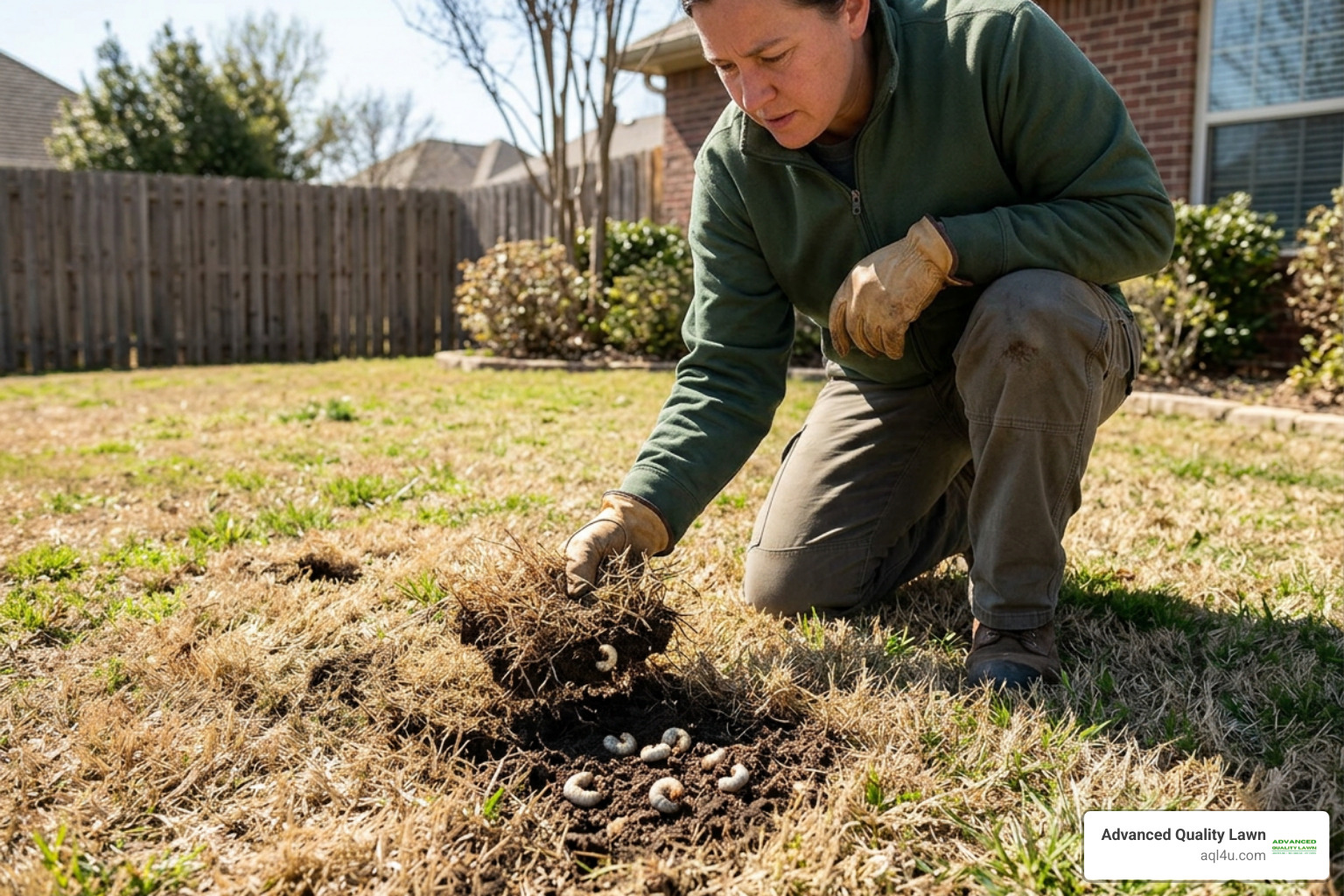
A successful treatment plan starts with accurate pest identification. Different insects attack distinct parts of the grass plant, and treating surface feeding pests with subsurface products wastes both time and money. By recognizing turf symptoms early, you can take action before small patches turn into widespread lawn failure. Learning how to identify common lawn pests helps pinpoint whether the issue is beneath the soil, at the thatch layer, or around the perimeter of your yard.
Subsurface Root Feeders
Subsurface pests do their damage beneath the soil line, feeding directly on the root system. The most widespread subsurface threats are white grubs, which are the C-shaped larvae of beetles such as Japanese beetles, European chafers, and June beetles. Billbug larvae also chew through grass crowns and root zones.
As these insects chew through the root layer, the turf loses its anchor. The grass feels spongy underfoot and can often be rolled up like a loose rug. Left untreated, severe infestations cause entire sections of turf to die from moisture stress. In addition, an abundance of grubs attracts digging predators. Knowing the right approach for destroying white grubs in turf is essential, and exploring complete grub control methods can help prevent significant root loss. Controlling these larvae is also the primary strategy for preventing lawn mole activity, as moles actively tunnel through yards in search of subsurface food sources.
Surface Feeders and Foliage Chewers
Surface feeding insects dwell in the thatch layer and feed on the grass blades, stems, and crowns above the soil.
- Chinch bugs: These tiny insects pierce grass blades and suck out essential plant juices while injecting a toxin that causes the grass to turn yellow and then reddish-brown. Damage often mimics drought stress and peaks in sunny, dry areas. Utilizing effective chinch bug control helps halt this rapid moisture loss.
- Sod webworms and cutworms: The caterpillar stages of these moths chew notches into grass blades or clip young shoots off right at the crown during the evening hours.
- Armyworms: Rapidly multiplying caterpillars that feed in large groups, skeletonizing grass blades down to the soil line in a matter of days. Keeping an eye out for destructive armyworm outbreaks prevents severe late summer turf devastation.
- Japanese beetles: While the larvae feed underground, adult beetles swarm during midsummer to feed on garden foliage, ornamental shrubs, and nearby grass crowns. Proactively managing Japanese beetles limits both canopy defoliation and future egg deposits in your lawn.
Biting and Nuisance Pests
Not all lawn pests focus on destroying grass blades. Some target humans and pets, turning outdoor living spaces into uncomfortable environments:
- Ticks and fleas: Ticks hide in tall grasses, shaded groundcovers, and transition zones near wooded areas. Following guidelines for controlling yard ticks reduces the risk of tick-borne illnesses. Similarly, implementing dedicated yard flea treatments breaks the pest lifecycle before infestations spread indoors.
- Chiggers: Microscopic mite larvae that inhabit low, damp vegetation and heavy leaf litter, causing intense skin irritation. Establishing chigger control strategies in early summer keeps shaded perimeters comfortable.
- Ants and fire ants: Nuisance ants build extensive mounds that disrupt root contact and smother surrounding grass blades. Formulating a plan for eliminating nuisance yard ants prevents unsightly dirt mounds and foundation encroachment.
- Mosquitoes: Adult mosquitoes rest on the undersides of dense foliage and around standing water during the heat of the day, emerging at dawn and dusk.
Proven Methods for Effective Bug Control for Lawns
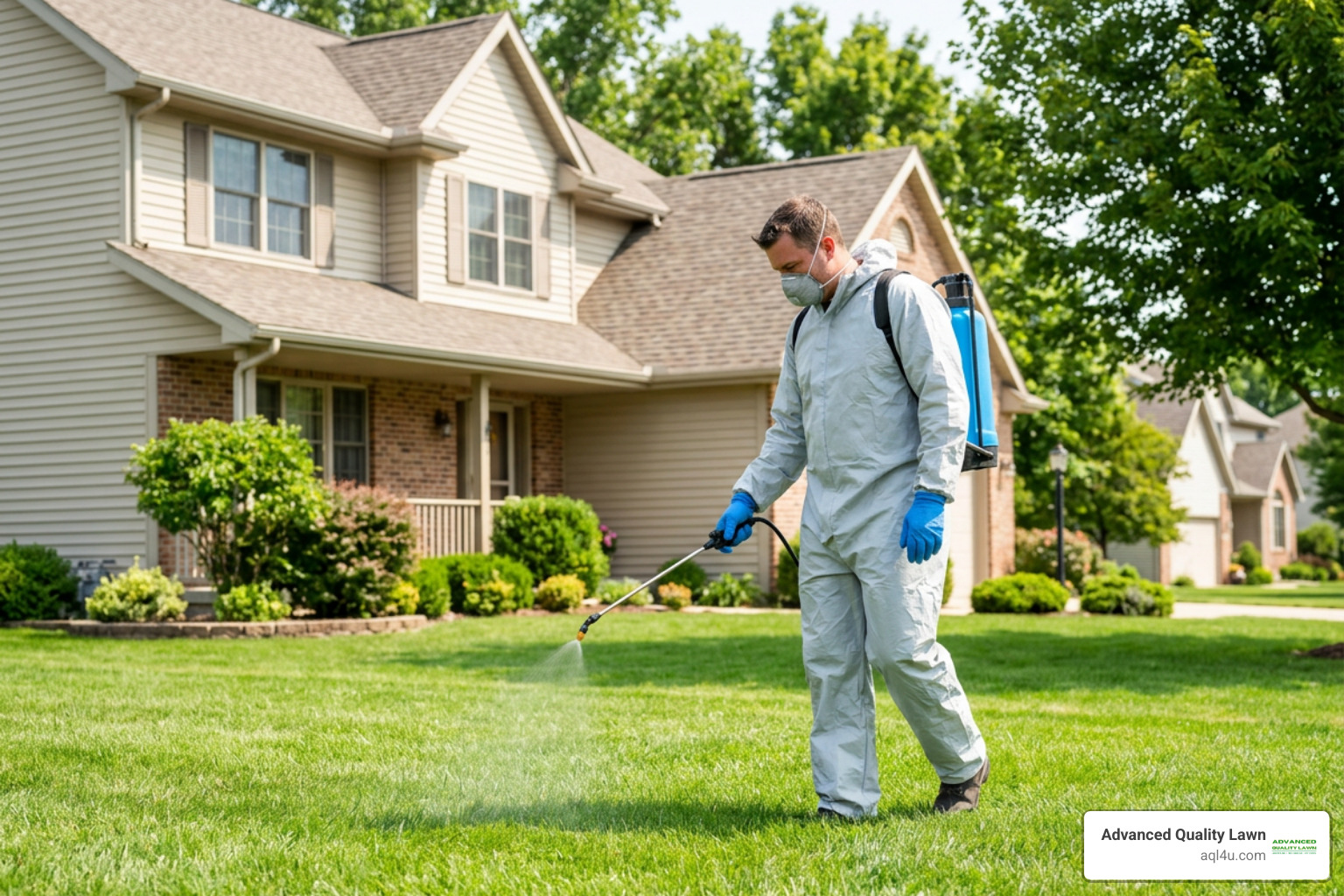
Achieving dependable insect control requires selecting products tailored to the exact biology of the target pest. Combining broad-spectrum solutions with targeted localized treatments creates an effective barrier against pests. Following the best way to treat yard for bugs ensures that applications protect desirable turf without overusing active chemistry.
Choosing the Right Bug Control for Lawns: Sprays vs. Granules
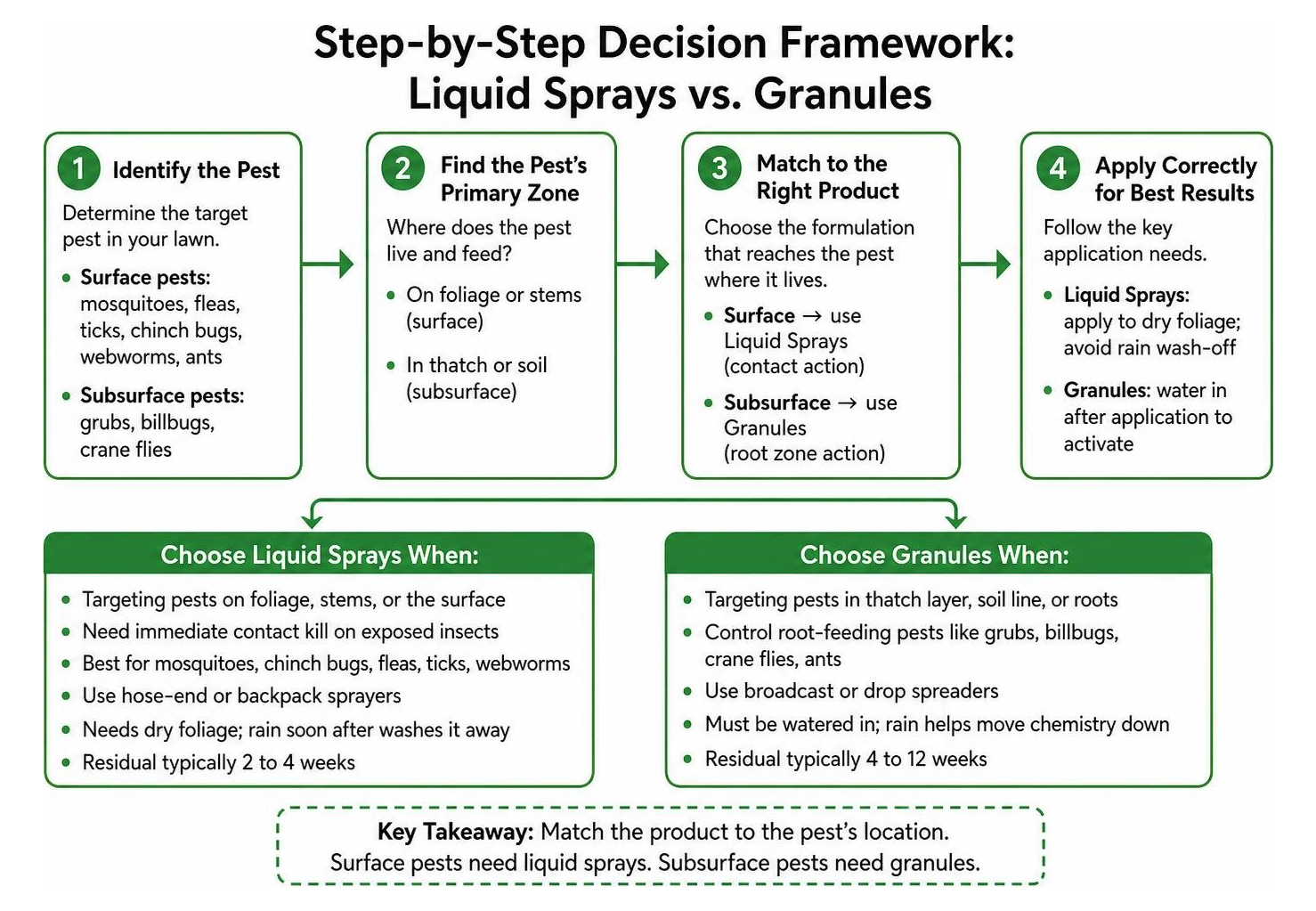
Choosing between liquid sprays and granular formulations depends on whether the pest lives on the grass blades, in the thatch layer, or below the soil line.
| Feature | Liquid Insecticide Sprays | Granular Formulations |
|---|---|---|
| Primary Target Zone | Foliage, stems, surface insects, perimeters | Thatch layer, soil line, subsurface roots |
| Common Equipment | Hose-end sprayers, backpack tank sprayers | Broadcast spreaders, drop spreaders |
| Speed of Action | Immediate contact kill on exposed insects | Slower release and requires watering for activation |
| Pests Controlled | Mosquitoes, chinch bugs, fleas, ticks, webworms | White grubs, billbugs, crane flies, ants |
| Weather Dependency | Needs dry foliage, as rain immediately after washes it away | Must be watered in, as rain helps move chemistry down |
| Residual Longevity | Typically 2 to 4 weeks on outdoor foliage | Typically 4 to 12 weeks depending on active ingredient |
Using lawn insect killer granules is often the top choice for treating root-feeding grubs because the heavy particles drop past the grass canopy and dissolve directly into the root zone when watered. For products like Spectracide Triazicide Insect Killer For Lawns Granules or Sevin Insect Killer Lawn Granules, precise calibration is critical. Always review granule application safety label instructions prior to loading your spreader.
Chemical Active Ingredients vs. Plant-Based Treatments
When selecting targeted insect control, you can choose between synthetic chemistries and botanical alternatives.
- Bifenthrin: A widely used pyrethroid that provides rapid knockdown and long-lasting residual control against surface pests including ants, ticks, fleas, and spiders. Formulations such as Ortho Bugclear Lawn Insect Killer utilize bifenthrin to form a reliable contact barrier.
- Zeta-Cypermethrin: A fast-acting pyrethroid commonly paired with bifenthrin in broad-spectrum products like Sevin Lawn Insecticide Granules to deliver immediate knockdowns on tough pests.
- Chlorantraniliprole: An advanced active ingredient that targets the muscle systems of chewing insects like grubs and caterpillars while maintaining low toxicity toward beneficial pollinators, earthworms, and mammals. Products featuring dual-action active ingredients combine chlorantraniliprole with bifenthrin for simultaneous root and surface defense.
- Gamma-Cyhalothrin: A potent synthetic pyrethroid that provides high efficacy at very low application rates against armyworms, crickets, and cutworms.
- Cedarwood Oil and Botanical Oils: Natural alternatives that disrupt insect pheromone receptors and dissolve the exoskeletons of soft-bodied insects like fleas, ticks, and chiggers without synthetic residuals.
- Spinosad: An OMRI-listed natural compound derived from soil bacteria that acts as an effective ingestion toxicant for nuisance ants and caterpillars.
- Pyrethrins: Botanical extracts derived from chrysanthemum flowers that deliver quick contact knockdown for flying and crawling pests before breaking down rapidly in sunlight.
Seasonal Application Timing and Safety Protocols
Applying bug control treatments at the right time ensures maximum efficacy while minimizing unnecessary chemical use.
Temperature Thresholds and Treatment Schedules
Most outdoor insects emerge and feed once soil and air temperatures consistently reach the 50 to 60 degree range.
- Early Spring (April to May): Apply pre-emergent grub controls when soil temperatures hit 55 degrees before beetle eggs hatch. Refresh granular ant baits around emerging colonies every 2 to 4 weeks depending on local pressure.
- Late Spring to Early Summer (May to June): Apply perimeter treatments for ticks and fleas as nymph populations peak. Tick barrier sprays work best when reapplied every 30 days after an initial reinforcement application at day 7.
- Mid to Late Summer (July to August): Monitor for surface feeding chinch bugs and sod webworms during hot, dry spells. Mosquito control applications should be maintained every 14 days during wet conditions or every 28 days during dry weather cycles.
- Late Summer to Early Fall (August to September): Deliver curative grub treatments if subsurface larvae are actively feeding near the surface before they move deeper into the soil profile to overwinter.

Step-by-Step Safe Application for People and Pets
- Wear Proper Gear: Always put on long sleeves, long pants, chemical-resistant gloves, and closed-toe footwear when handling insecticides.
- Calibrate Equipment: Measure your lawn square footage and set your broadcast spreader or tank sprayer according to the label instructions.
- Avoid Drift and Runoff: Never spray on windy days or when heavy downpours are forecast within 24 hours. Keep applications away from storm drains, ponds, and open water sources.
- Water Granules Appropriately: Activate granular treatments with 0.1 to 0.5 inches of water immediately after spreading to carry active chemistry off the grass blades and into the soil.
- Protect Pollinators: Avoid spraying flowering weeds, clover, or ornamental plants in bloom, and apply treatments in the early morning or late evening when bees are inactive.
- Observe Re-Entry Intervals: Keep people and pets completely off treated areas until liquid sprays have dried thoroughly and granular applications have been watered in and dried, which usually takes 1 to 2 hours.
Long-Term Pest Management and Prevention Strategies
Relying solely on reactive chemical sprays can create pesticide resistance and disrupt beneficial soil organisms. Establishing the ultimate bug control strategy involves combining chemical treatments with cultural lawn care practices that strengthen turf defense naturally.
Integrating Cultural Care with Bug Control for Lawns
A thick, properly managed lawn naturally tolerates moderate insect presence without showing visible damage:
- Mow at the Proper Height: Maintain cool-season grasses at 3 to 4 inches. Taller grass fosters deep root systems and shades the soil, deterring heat-loving pests like chinch bugs.
- Manage Thatch: Layers of dead organic material exceeding half an inch create an ideal habitat for surface feeding bugs while blocking treatments from reaching the soil. Annual core aeration breaks up heavy thatch and relieves soil compaction.
- Water Deeply and Infrequently: Light, daily watering keeps roots shallow and creates constant moisture at the surface. Irrigate lawns with 1 to 1.5 inches of water per week in the early morning hours.
- Manage Grass-Damaging Mounds: Maintain steady turf density to prevent bare patches that invite soil-nesting insects, applying focused ants in grass treatment to localized colonies before mounds expand.
Perimeter Defense and Biological Alternatives
Establishing outdoor barrier defenses stops pests before they reach your home or patio:
- Foundation Barrier Treatments: Applying specialized perimeter pest control treatments in a 2 to 3-foot band around your home foundation prevents ants, spiders, and centipedes from finding pathways inside.
- Beneficial Nematodes: Microscopic roundworms applied to moist soil actively hunt down and parasitize soil-dwelling grubs, flea larvae, and cutworms.
- Diatomaceous Earth: Utilizing diatomaceous earth for ants in lawn provides a non-chemical barrier that scratches the outer cuticle of crawling insects, causing them to dehydrate.
- Physical Traps: Deploying outdoor traps for wasps and flies away from gathering areas helps reduce flying pests without broadcast sprays.
Frequently Asked Questions About Lawn Bug Control
How soon can kids and pets return to the grass after treatment?
Children and pets should remain off treated lawns until the area is completely dry. For liquid insecticide sprays, this drying period typically takes 1 to 2 hours in dry, sunny weather. For granular products, the lawn must be watered in according to label instructions and allowed to dry so that active residues move off the turf canopy and settle into the soil.
What is the ideal temperature to start applying yard bug treatments?
The best time to begin applying lawn insect treatments is in early spring when consistent outdoor temperatures reach 50 to 60 degrees. At these temperatures, overwintering insects become active, beetle eggs begin their development cycles, and pre-emergent controls can establish an effective barrier before pest populations peak.
Do granular insecticides need to be watered in immediately?
Yes, almost all granular lawn insecticides require watering in with 0.1 to 0.5 inches of water shortly after application. Water dissolves the carrier granule and carries the active ingredients into the thatch and root zones where pests reside. Leaving dry granules sitting on top of the grass reduces treatment efficacy and increases exposure risks for birds and pets.
Conclusion
A healthy, resilient lawn is your best defense against damaging insect infestations. By accurately identifying pests, selecting the right granular or liquid treatment, and pairing applications with sound cultural lawn care practices, you can protect your turf all season long.
At Advanced Quality Lawn, we provide comprehensive, guaranteed solutions tailored to properties across Summit County, Medina County, Cuyahoga County, and surrounding Northeast Ohio communities. Our trained technicians know how to eliminate destructive turf pests while keeping your family and pets protected. Explore our professional lawn care and maintenance programs today to keep your yard green, healthy, and insect-free.