
How to Start Chafer Bug Treatment
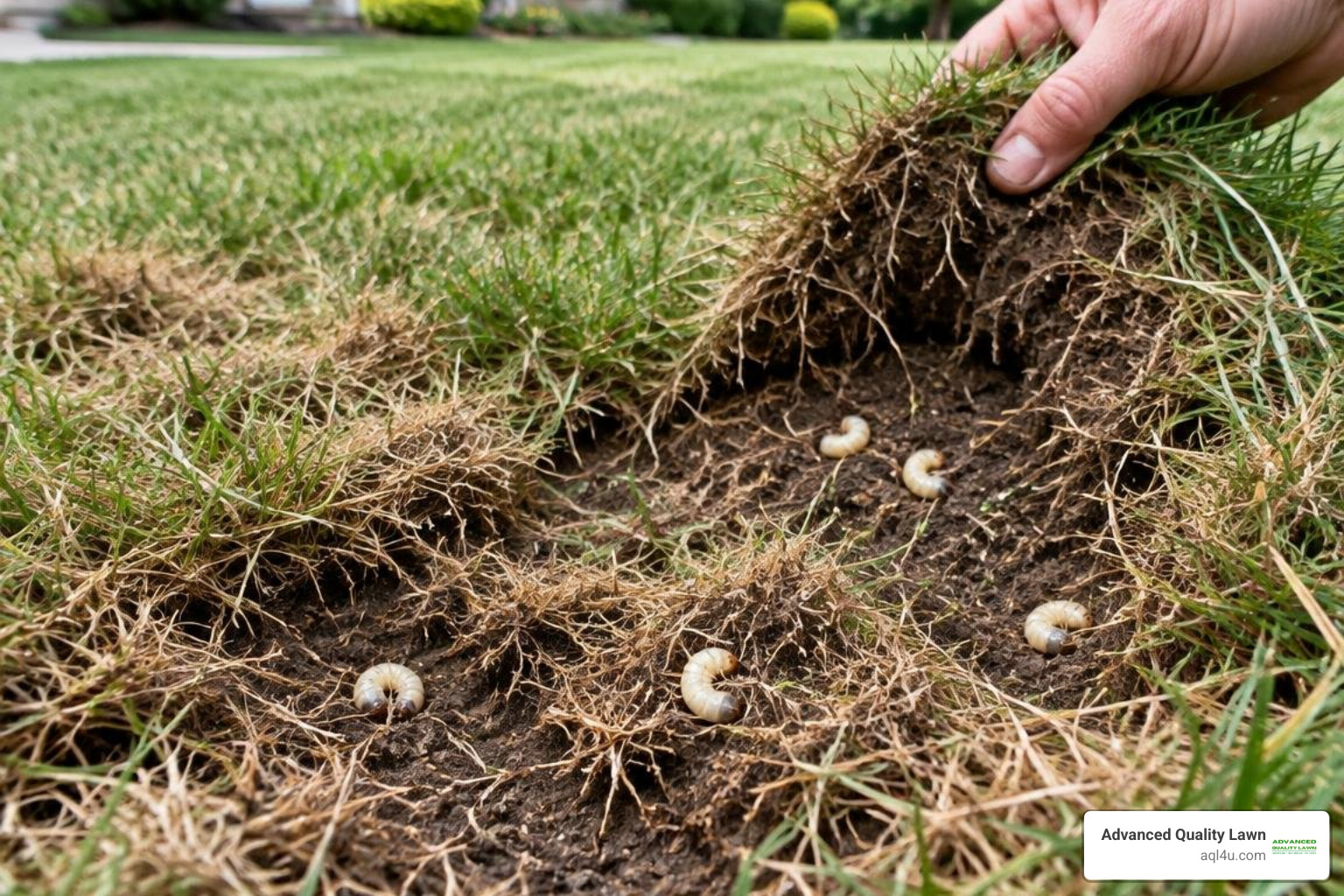
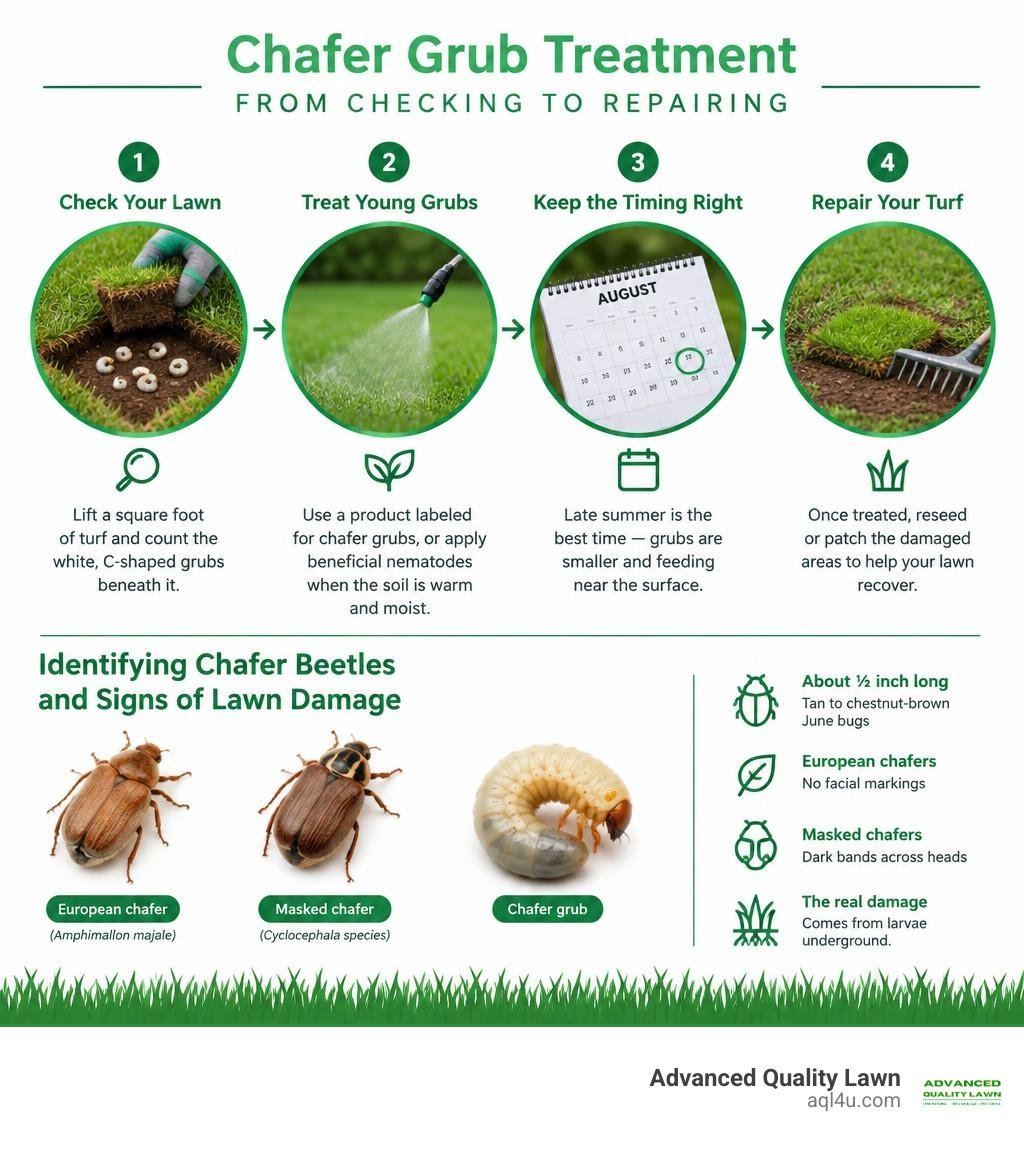
For effective chafer bug treatment, first confirm that grubs are the cause. Lift a square foot of loose or browning turf and count the white, C-shaped grubs beneath it. In a lawn without irrigation, five or more grubs per square foot may call for treatment. The best time to target them is late summer, when they are small and feeding near the surface. Use a product labeled for chafer grubs, or apply beneficial nematodes when the soil is warm and moist.
Brown patches alone do not prove you have chafers. Drought can look similar, but grub-damaged grass often pulls up easily because its roots have been eaten.
I'm Andrew Day, owner of Advanced Quality Lawn in Akron. From more than 30 years of lawn care experience behind our team, I'll walk you through chafer bug treatment, prevention, and lawn repair.
Identifying Chafer Beetles and Signs of Lawn Damage
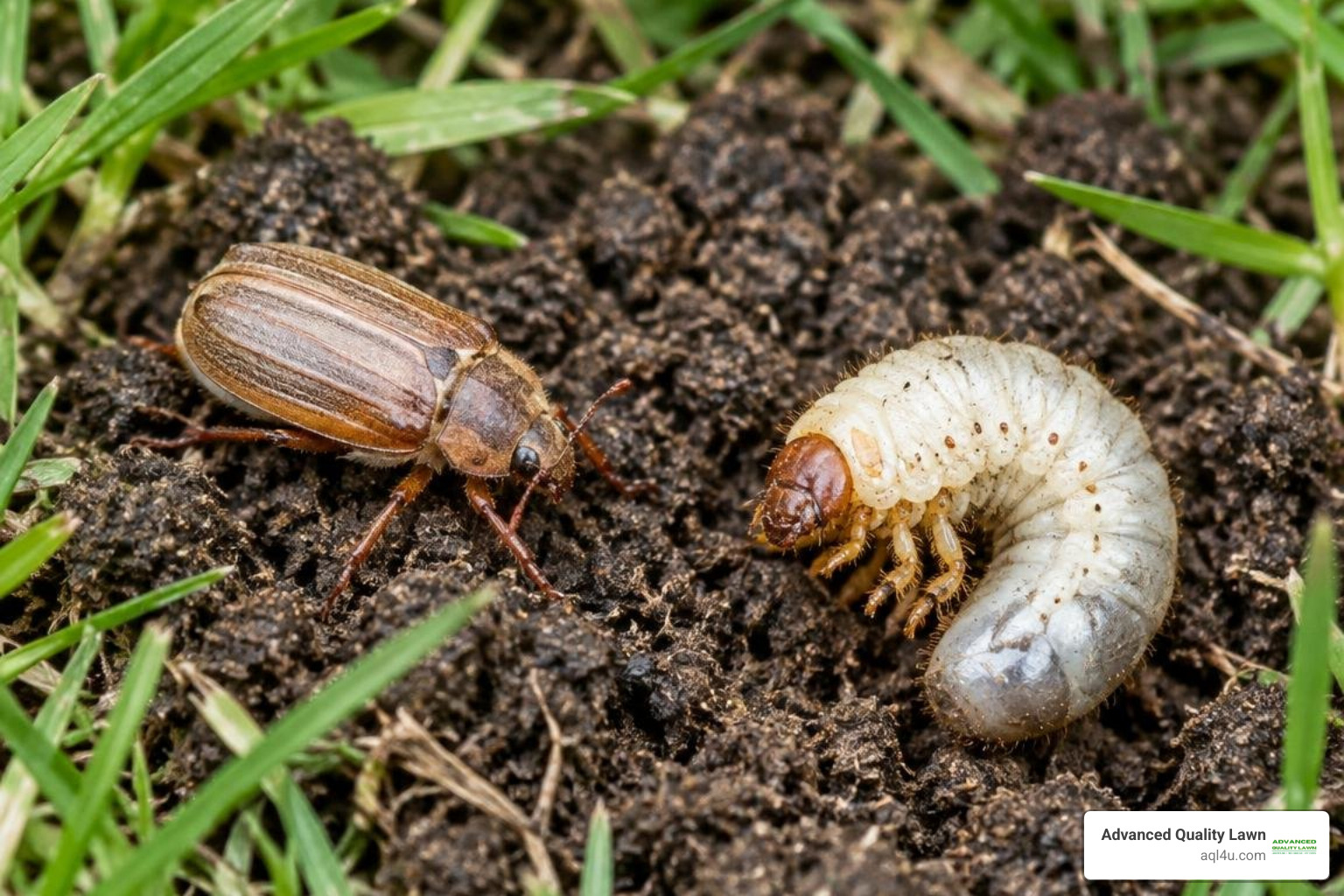
Spotting a chafer problem early saves your turf from extensive devastation. European chafer (Amphimallon majale) and masked chafer (Cyclocephala species) adults look like small, tan to chestnut-brown June bugs, measuring about a half-inch long. European chafers lack distinctive facial markings, while masked chafers sport dark bands across their heads. While the adult beetles chew mildly on tree leaves, their underground larvae cause massive damage.
Chafer grubs are plump, grayish-white larvae with dark brown heads and six distinct legs near the front of the body. When you dig them up, they immediately curl into a tight C-shape. Because these larvae feed voraciously on the root system of your lawn, the turf loses its physical anchor to the soil.
Early symptoms of an infestation include:
- Grass that turns wilted, yellow, or brown despite regular watering
- Spongy, springy turf that feels like walking on a soft mattress
- Turf that peels back cleanly like a loose rug or roll of carpet
- Increased digging from wildlife searching for a high-protein insect meal
To know whether you need to act, conduct a simple sampling test. Cut a one-foot by one-foot square of sod down to three inches deep in several problem areas and peel it back. Count the larvae in the soil and root zone. A healthy lawn can support up to 5 grubs per square foot without visible damage. If you find more than 5 grubs per square foot in a non-irrigated lawn, or 15 or more in an irrigated yard, treatment is recommended. When counting grubs, using proven grub control strategies ensures you take the right corrective steps.
Secondary animal damage is often the final clue. Skunks, raccoons, and birds love feasting on grubs, tearing up large sections of turf overnight.
Chafer Beetle Life Cycle and Treatment Timing
European chafers complete their entire life cycle in a single year. Understanding this timeline is the secret to successful pest control.
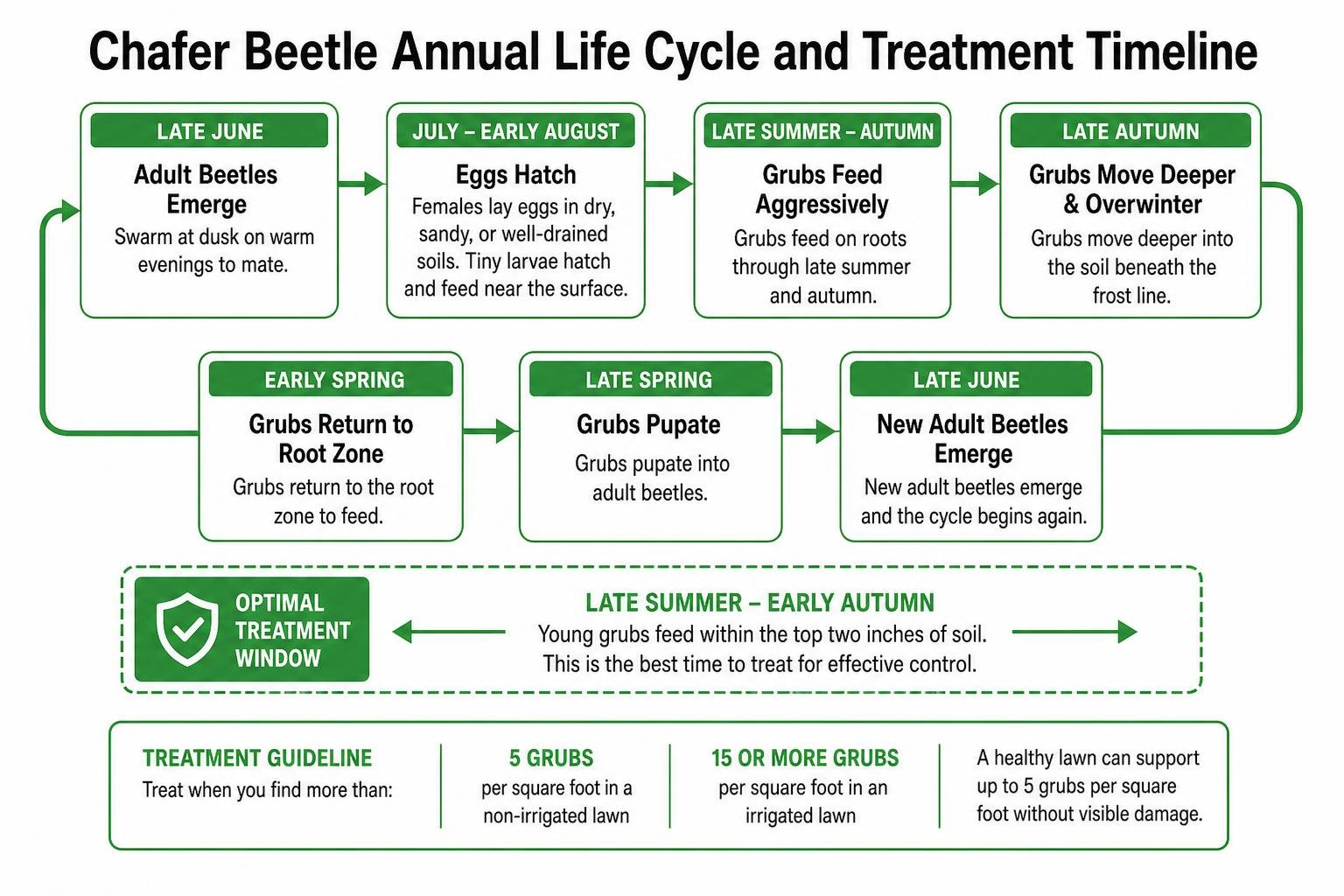
Adult beetles emerge from the soil in late June and swarm around dusk on warm evenings to mate. Females burrow into dry, sandy, or well-drained soils to deposit eggs. By July and early August, tiny young larvae hatch and begin chewing on tender grassroots near the surface.
These grubs feed aggressively through late summer and autumn. As soil temperatures drop in late autumn, they move deeper into the soil profile to overwinter beneath the frost line. In early spring, grubs return to the root zone to feed until late spring before pupating into adult beetles.
According to MSU Extension research on European chafer biology and control timing, timing treatments to match this life cycle is critical. The optimal treatment window arrives in late summer when young grubs feed within the top two inches of soil, making them highly vulnerable to control measures.
Comprehensive Chafer Bug Treatment Options
Managing chafer beetles requires an integrated pest management approach that combines chemical, biological, and cultural controls.
| Treatment Type | Key Options | Best Application Timing | Strengths and Considerations |
|---|---|---|---|
| Preventive Chemical | Chlorantraniliprole, Neonicotinoids, Halofenazide | Late June through mid-July | Delivers 90%+ grub reduction and controls newly hatched larvae |
| Curative Chemical | Trichlorfon, Carbaryl | Late August through October or early spring | Achieves 40% to 65% control and acts quickly on active grubs |
| Biological Controls | Heterorhabditis bacteriophora nematodes, BTG | July through September | Non-toxic and pollinator-safe, but requires moist soil and cloud cover |
| Cultural Practices | High mowing (2.5 to 3 in), core aeration, deep watering | Ongoing throughout growing season | Boosts turf tolerance and prevents female beetles from laying eggs |
Chemical Chafer Bug Treatment: Preventive vs. Curative
Chemical controls fall into two main categories: preventive and curative.
Preventive insecticides target eggs and newly hatched grubs. Active ingredients such as chlorantraniliprole, halofenazide, and neonicotinoids deliver outstanding protection when applied between late June and mid-July. When applied properly, preventive products provide over 90% grub control. Halofenazide mimics natural insect molting hormones, stopping larvae from maturing without threatening beneficial pollinators.
Curative insecticides step in when an active infestation is already chewing through roots in late summer or early spring. Active ingredients such as trichlorfon and carbaryl work on contact to knock down feeding grubs, achieving roughly 40% to 65% population reduction. If you discover severe damage late in the season, exploring effective methods to kill lawn grubs will help halt immediate turf loss.
Always water in chemical treatments with at least a half-inch of water right after application. This washes the active ingredients off the blades of grass and down into the soil where grubs live. Mow flowering weeds before application to protect foraging honeybees.
Biological and Natural Treatment for Chafer Bugs
Biological controls provide an effective, chemical-free path for eliminating chafer grubs.
Beneficial nematodes are microscopic roundworms that hunt down grubs in the soil. The species Heterorhabditis bacteriophora and Steinernema feltiae enter chafer grubs and release natural bacteria that eliminate the pest within 24 to 48 hours. A single application can provide up to six weeks of protection.
Because nematodes are sensitive to ultraviolet light, apply them during overcast days or in the early evening. Soil temperatures must stay above 50°F (10°C), with the optimal range sitting above 57°F (14°C). Soak your lawn thoroughly before applying nematodes and keep the top layer of soil evenly moist for two weeks so the organisms can travel through the soil pores. Products such as NemaKnights Nematodes biological control or The Environmental Factor Grub Busters Beneficial Nematodes work well for natural control.
Another biological option is Bacillus thuringiensis galleriae (BTG), a naturally occurring soil bacterium found in products like Grub B Gon Max. When ingested by beetle larvae, BTG proteins disrupt the grub's digestive tract without harming pets, earthworms, or birds.
Municipalities frequently share information on biological pest management. The City of Burnaby guidance on European chafer management and biological controls highlights how microbial and nematode controls help protect residential turf while preserving natural ecosystems. For broader pest management strategies across your landscape, check our complete lawn bug control guide.
Preventing Chafer Infestations and Restoring Damaged Turf
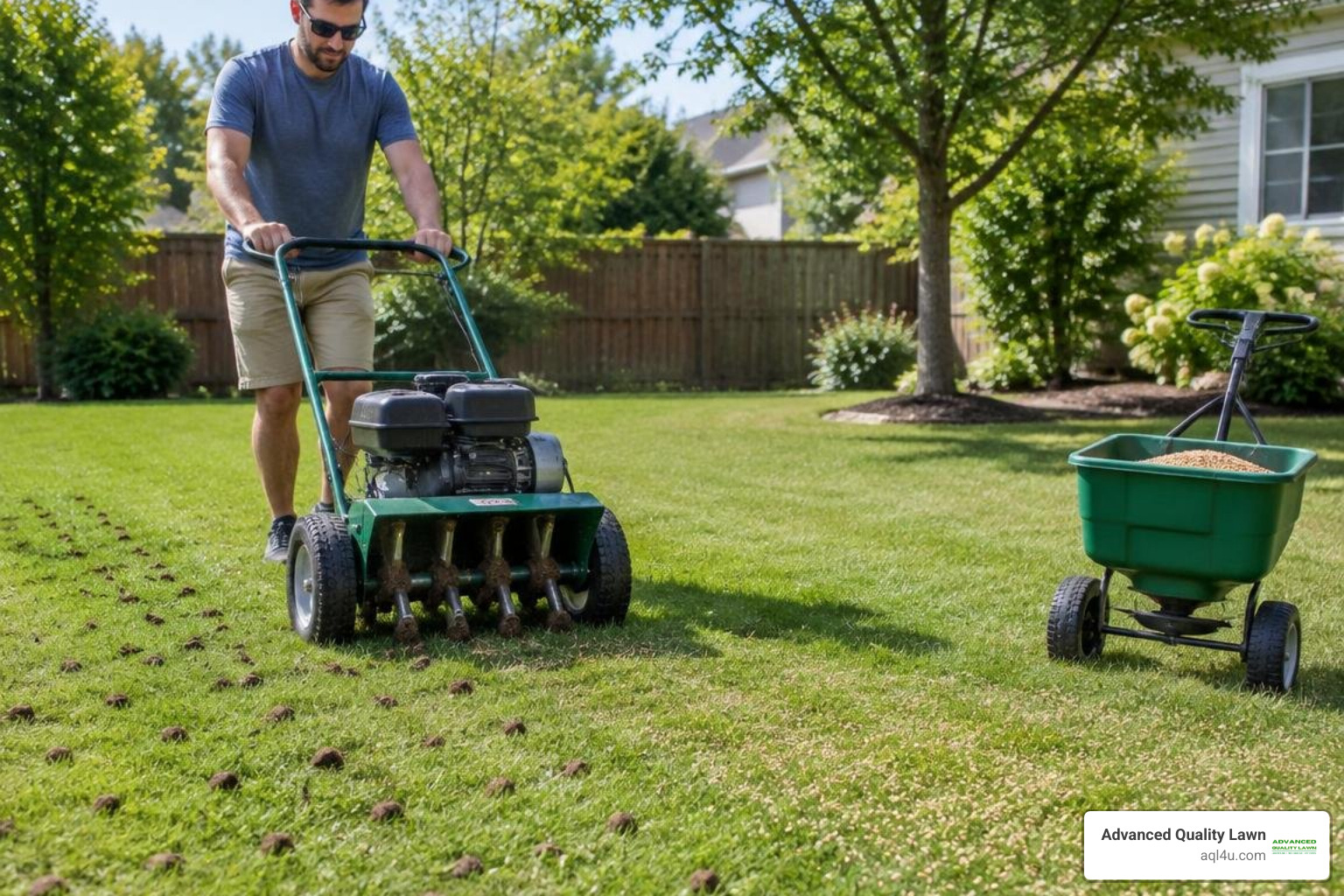
A dense, robust lawn is your greatest defense against chafer beetles. Female chafers seek out sparse, closely cropped grass to deposit their eggs. By raising your mower deck to maintain a cutting height of 2.5 to 3 inches (6 to 9 cm), you create a dense turf canopy that makes it difficult for beetles to reach the soil.
Follow these cultural practices to strengthen your lawn:
- Core Aeration: Compacted soil creates shallow root systems. Aerate every autumn to relieve compaction and encourage deeper root growth.
- Balanced Nutrition: Apply balanced fertilizers in late spring and early autumn to fuel steady root development.
- Deep Watering: Water deeply once or twice a week rather than giving light daily sprinkles, encouraging grass roots to stretch deep into the soil.
- Overseeding: Introduce drought-hardy turf varieties, such as turf-type tall fescues or perennial ryegrasses, into thin turf. Adding microclover creates a resilient lawn that tolerates root feeding.
For wider lawn pest defense tactics, review our comprehensive lawn insect control resources.
When repairing damaged turf, rake away dead grass, spread a thin layer of rich topsoil, sow quality grass seed, and keep the area consistently damp until new seedlings establish.
Deterring Foraging Wildlife and Protecting Turf
Skunks, crows, and raccoons can cause more visible lawn damage in one night than grubs cause in a month. They treat your lawn like an all-you-can-eat buffet.
While lowering the grub population is the only permanent fix, you can protect damaged turf in the short term by:
- Pinning temporary plastic netting or chicken wire over vulnerable lawn areas
- Setting up motion-activated sprinklers or bright lights to scare away nocturnal foragers
- Firmly rolling and tamping torn sod back into place so surviving roots can re-anchor
For persistent perimeter wildlife and pest problems around foundations and outdoor living areas, our perimeter pest management services help keep pests away from your property.
Frequently Asked Questions About Chafer Beetle Control
How do I tell the difference between chafer grub damage and drought stress?
Drought-stressed turf stays firmly rooted in the ground when tugged. Turf damaged by chafer grubs has had its root system eaten away, allowing it to lift and roll back easily like a piece of carpet. If the soil is moist but the grass remains brown and pulls up freely, grubs are likely present.
When is the best time of year to apply nematodes for chafer grubs?
The best window is late summer through early autumn, typically July through September. During this period, newly hatched grubs are young, small, and feeding near the surface where nematodes can reach them. Soil temperatures should be above 57°F (14°C) for maximum nematode activity.
Can a lawn tolerate a low population of chafer grubs without treatment?
Yes. A healthy, vigorous lawn can easily support up to 5 grubs per square foot without showing signs of stress or thinning. If your turf receives regular fertilization, aeration, and deep watering, the roots will outgrow minor feeding damage naturally.
Conclusion
Guarding your property against chafer beetle damage requires proper identification, well-timed treatments, and reliable lawn maintenance. By spotting grub damage early and combining biological or targeted chemical treatments with strong turf care, you can maintain a resilient green lawn. At Advanced Quality Lawn, our team is proud to offer trusted expertise across Northeast Ohio. Contact us today to learn more about our professional lawn care and maintenance services and protect your outdoor space all season long.