
How to Make Your Chigger-Infested Yard Usable Again
Your Yard Has Chiggers. Here Is How to Get Rid of Them.
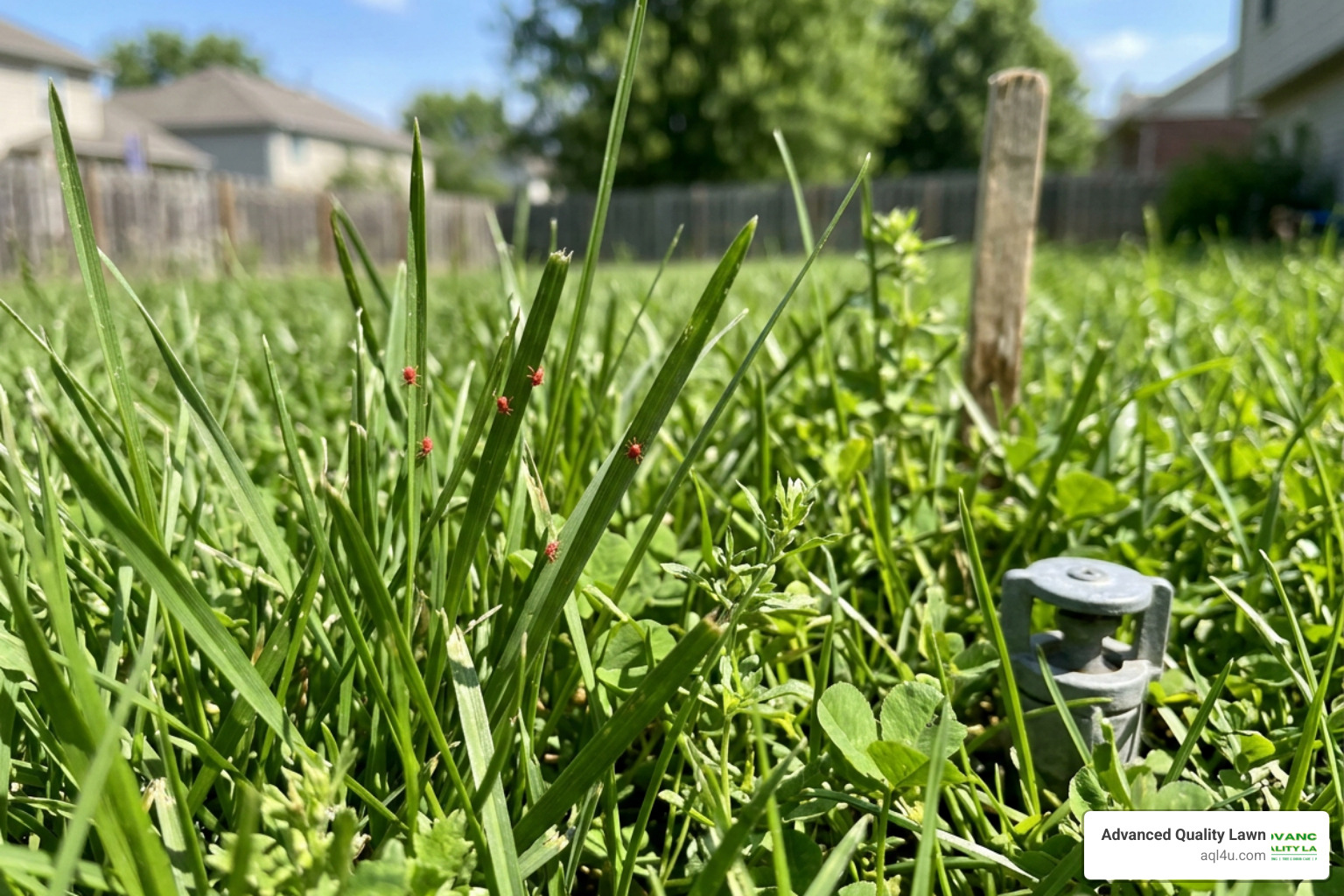
The best way to get rid of chiggers in your yard combines two things: removing the habitat they love and treating the areas where they live. Here is a quick summary:
- Mow your lawn regularly and keep grass at 3 inches or shorter
- Clear brush, leaf piles, and weeds to eliminate shaded, moist hiding spots
- Apply diatomaceous earth to shaded areas at 2 to 5 ounces per 100 square feet
- Create a dry barrier of gravel or mulch between your lawn and any wooded edges
- Spray a liquid insecticide containing bifenthrin or permethrin for severe infestations
- Shower immediately after time outdoors and wash clothes in hot water
These steps work together. Skipping the habitat work and only spraying chemicals will not give you lasting results.
You step outside on a warm summer afternoon, the grass looks great, the kids are playing. Then the next morning, itchy red welts show up around your ankles and waistband. Sound familiar?
Chiggers are almost impossible to see with the naked eye, measuring less than 1/150th of an inch. You will not notice them while they are on you. By the time the itching starts, usually 3 to 6 hours after contact, they are already gone. That delay is exactly what makes chiggers so frustrating for Ohio homeowners trying to enjoy their yards during the warm months from May through September.
The good news is that with the right approach, you can make your yard usable again.
I'm Andrew Day, owner of Advanced Quality Lawn, and with more than 30 years of lawn care experience serving Northeast Ohio, I have helped countless homeowners find the best way to get rid of chiggers in their yards for good. In this guide, I will walk you through exactly what works.
What Are Chiggers and Why Are They a Problem in Your Lawn
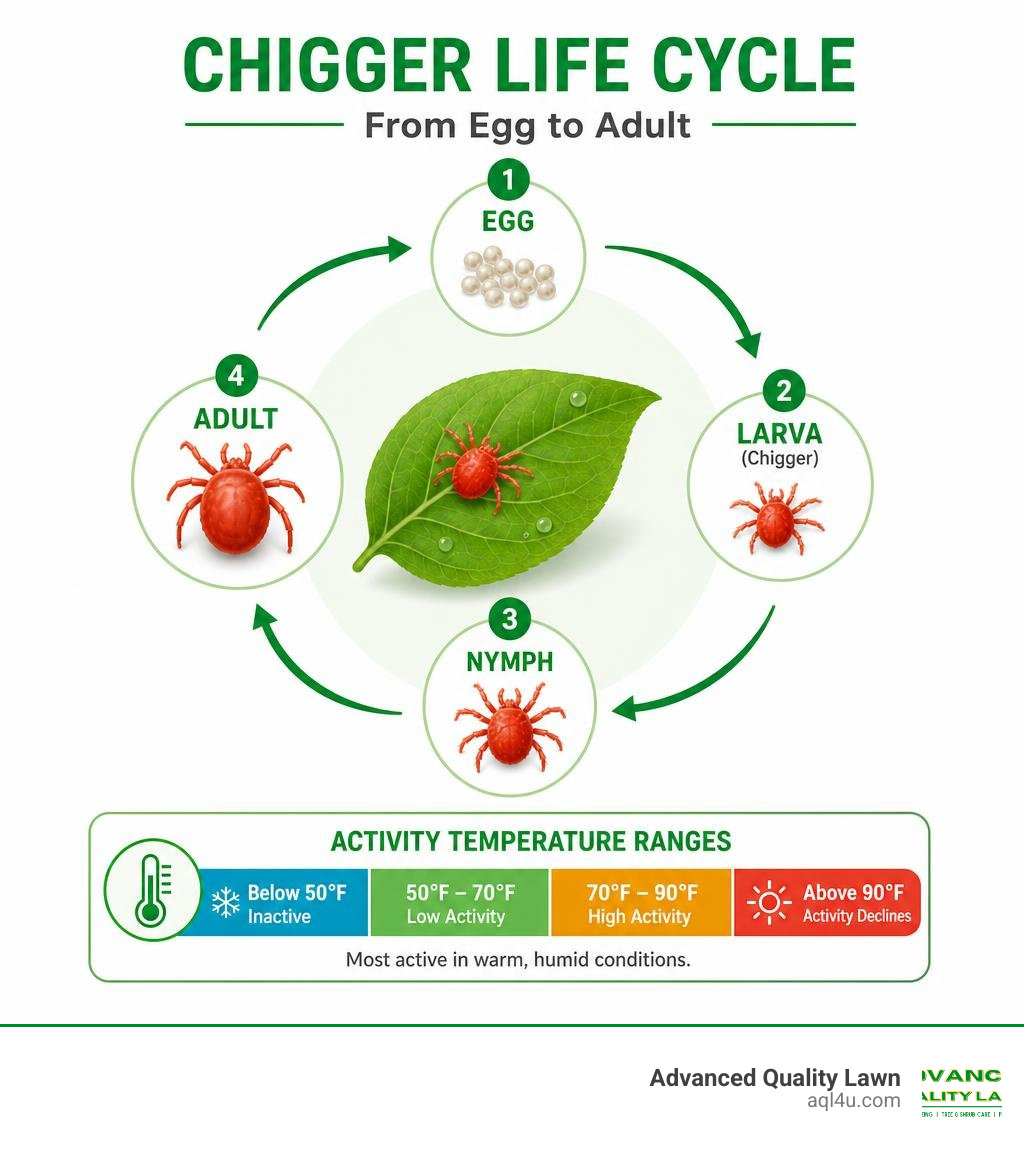
To defeat these microscopic pests, we first need to understand what they actually are. Many people mistake them for insects, but chiggers are actually arachnids. They are the larval stage of the harvest mite, which belongs to the Trombiculidae family. While the adult mites are completely harmless and feed on soil organisms, the tiny larvae are parasitic and need a host to survive.
These microscopic lawn bugs are tiny red specks that measure no more than 0.3 millimeters in diameter. They are so small that you would need a strong magnifying glass just to see their shape.
Chiggers become active when the ground temperature rises between 77 and 86 degrees Fahrenheit. In Northeast Ohio, this window typically spans from late spring through early autumn. When temperatures drop below 60 degrees Fahrenheit, their activity slows down significantly. Once the ground temperature drops below 42 degrees Fahrenheit, they cannot survive.
One of the biggest myths about chiggers is how they bite. Many people believe that chiggers burrow under the skin or suck blood. This is completely false. Chiggers have very weak mouthparts. They attach themselves to the surface of your skin, often around hair follicles or tight clothing lines like your socks and waistband. Once attached, they inject specialized digestive enzymes via their saliva. These enzymes liquefy your skin cells, turning them into a food source.
Your body reacts to this foreign saliva by hardening the surrounding skin cells into a tiny straw-like tube called a stylostome. The surrounding skin then swells, which creates the illusion that the chigger has burrowed deep under your skin. This process causes intense itching that peaks within 24 to 48 hours. If you want to learn more about the medical side of these bites, you can read the details on Chigger Bites: What They Look Like and How To Treat Them.
For local homeowners in places like Hudson, Brecksville, and Copley, chiggers are a major nuisance because they make beautifully manicured lawns feel like danger zones. Because they gather in large clusters on the tips of tall grass blades, you rarely get just one bite. Walking through an infested patch can leave your legs covered in dozens of extremely itchy welts.
How to Tell If You Have Chiggers in Your Yard
Before we start applying treatments, we need to confirm that chiggers are actually the source of your lawn troubles. Since they are nearly invisible, we have to use clever detection methods to find them.
Chiggers love shade and moisture. They cannot handle the hot, drying effects of direct sunlight, so they gather in transition zones. These are areas where your manicured lawn meets wooded borders, tall weeds, overgrown brush piles, or heavy ground cover.
We recommend using two simple, low-cost diagnostic tests to check for lawn pests like chiggers.
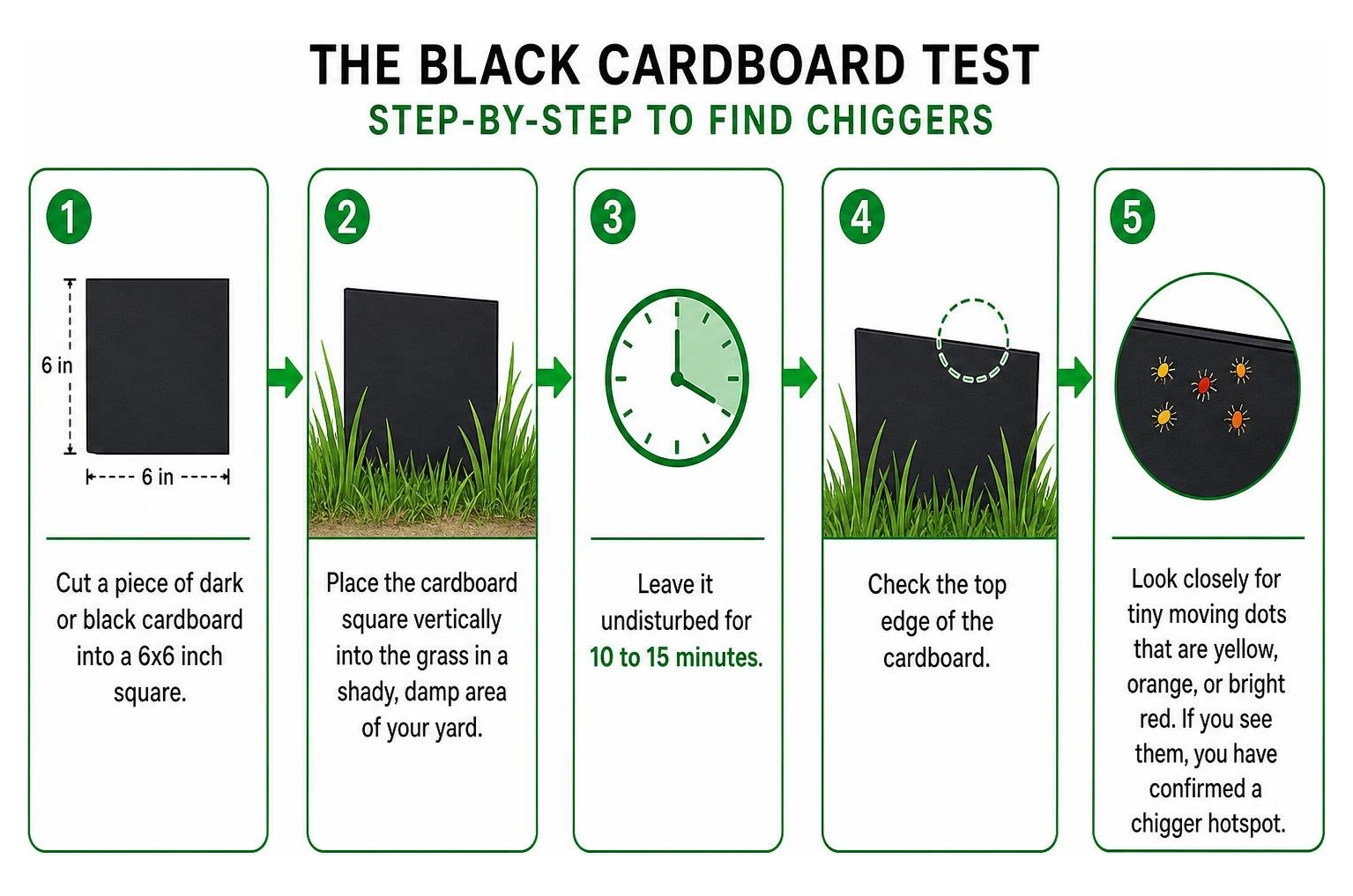
The Black Cardboard Test
This is a highly reliable detection method recommended by university extension offices.
- Cut a piece of dark or black cardboard into a 6x6 inch square.
- Place the cardboard square vertically into the grass in a shady, damp area of your yard.
- Leave it undisturbed for 10 to 15 minutes.
- Check the top edge of the cardboard. Because chiggers are attracted to carbon dioxide and movement, they will climb to the highest point of the cardboard.
- Look closely for tiny moving dots that are yellow, orange, or bright red. If you see them, you have confirmed a chigger hotspot.
The White Sock Test
This test helps you map out the boundaries of an infestation.
- Put on a pair of tall white socks and pull them up over your pant legs.
- Walk slowly through suspected areas of tall grass or brush for about 10 minutes.
- Stop and inspect your socks. The tiny reddish-yellow larvae will stand out clearly against the bright white fabric.
Using these tests allows you to target your treatments to specific areas of your yard rather than wasting time and money treating your entire property.
The Best Way to Get Rid of Chiggers in Yard Areas Naturally
If you prefer to avoid synthetic chemicals, there are several highly effective natural methods to reclaim your lawn. The absolute best way to get rid of chiggers in your yard naturally is to combine habitat modification with organic physical barriers.
To help you decide on the right path for your property, we have put together a comparison table of natural and chemical control methods:
| Method Type | Treatment Option | How It Works | Best Used For |
|---|---|---|---|
| Natural | Habitat Modification | Lowers humidity and increases sunlight by keeping grass short | Long-term prevention across the whole yard |
| Natural | Diatomaceous Earth | Dehydrates chiggers physically by cutting their outer shells | Shady areas, garden beds, and under hedges |
| Natural | Sulfur Powder | Repels mites with a strong, pungent scent they hate | Property borders and clothing protection |
| Chemical | Liquid Insecticide Sprays | Kills chiggers on contact and leaves a residual barrier | Severe, active infestations in transition zones |
If you want to get rid of pests naturally, your first line of defense is food-grade diatomaceous earth. This is a natural powder made from the fossilized remains of tiny aquatic organisms called diatoms.
When chiggers crawl across diatomaceous earth, the microscopic, razor-sharp edges of the powder cut through their protective waxy outer coating. This causes the pests to dry out and die within 24 to 48 hours.
To apply it, sprinkle the dry powder over shaded vegetation, under hedges, and along wooded borders at a rate of 2 to 5 ounces per 100 square feet. For hard-to-reach areas, you can mix 4 tablespoons of diatomaceous earth per gallon of water in a garden sprayer to create a wet spray that sticks to upright plant leaves. Always wear a dust mask when handling the dry powder, and remember to reapply it after heavy rain.
To learn more about natural management, you can read How To Get Rid Of Chiggers In Your Yard Naturally 2026 for additional organic strategies.
Landscaping Modifications as the Best Way to Get Rid of Chiggers in Yard Borders
The most powerful weapon against chiggers is a lawn mower. Because chiggers require high humidity and shade to survive, proper yard care completely ruins their habitat.
We recommend keeping your grass mowed to a height of 3 inches or shorter. Regular mowing lets sunlight penetrate down to the soil level, which raises ground temperatures and dries out the moisture chiggers need to stay alive.
Beyond mowing, you should take these steps to eliminate potential habitats:
- Clear out brush piles and leaf litter: Remove fallen leaves, dead twigs, and overgrown weeds immediately.
- Trim low-hanging branches: Prune your trees and shrubs to let more natural sunlight shine on your lawn.
- Improve lawn drainage: Aerate your lawn to prevent standing water and soggy soil patches.
- Manage wildlife: Chiggers enter your yard by hitching a ride on small mammals like rodents, rabbits, and deer. Secure your trash cans, remove bird feeders, and seal off crawl spaces under your porch to keep these host animals away.
If you want to read more about how proper yard design stops these pests, check out How to Get Rid of Chiggers in Your Yard Before They Bite You and Your Pets on AOL.
Natural Repellents and Barriers as the Best Way to Get Rid of Chiggers in Yard Spaces
Creating physical and aromatic barriers is another brilliant way to protect your outdoor living spaces. Chiggers hate certain strong scents, and we can use this to our advantage to manage garden pests.
- Sulfur Powder: This is one of the oldest and most reliable natural repellents. You can apply granular sulfur along your property lines or around patios at a rate of 5 pounds per 1,000 square feet. The strong scent keeps chiggers from crossing into your active living areas.
- Essential Oil Sprays: You can mix 15 drops of peppermint, rosemary, clove, or cinnamon essential oil with a teaspoon of mild dish soap and a gallon of water. Spray this mixture around your deck, patio, and children's play areas. These oils disrupt the nervous systems of the mites on contact.
- Cedar Mulch Barriers: Create a 3-foot wide barrier of dry cedar mulch or gravel between your lawn and any adjacent wooded areas. Chiggers hate crossing hot, dry surfaces, and the natural oils in cedar act as a strong repellent.
- Repellent Plants: Plant beautiful, natural deterrents like marigolds, lavender, mint, and garlic around your garden beds to keep pests at bay.
For more detailed tips on natural yard setups, you can read How to Get Rid of Chiggers in Your Yard? | Garden Cure.
Chemical Treatments for Severe Chigger Infestations
When natural methods are not enough to handle a massive chigger population, chemical treatments offer fast and reliable relief. If you are dealing with a severe infestation, applying a targeted liquid insecticide is the most effective approach.
The most successful chemical active ingredients for chigger control are:
- Bifenthrin: A highly effective pyrethroid that provides quick knockdown and long-lasting residual control.
- Permethrin: A versatile active ingredient that targets the nervous systems of mites and insects.
- Cyfluthrin: Excellent for clearing out heavy pest populations in thick ground cover.
University extension guidelines consistently show that liquid sprays are much more effective than granular treatments for chiggers. This is because chiggers climb up to the tips of grass blades and foliage to wait for passing hosts. Liquid sprays coat the upright vegetation where the pests are actively waiting, whereas granules fall directly to the soil surface and may miss the target.
When applying these products, focus your efforts on transition zones, shaded garden borders, and the edges of wooded areas. Always read and follow the product label instructions carefully.
Safety is our top priority. Many of these professional-grade products are toxic to beneficial pollinators and pets before they dry. Keep your children and pets off treated areas of the lawn for at least 24 to 48 hours, or until the liquid spray has dried completely.
If you are looking for the right products to use, we have compiled the top choices in our guide on the best insect control for lawns. You can also find professional advice on chemical safety by reading How to Get Rid of Chiggers in Your Yard Safely (and Keep From Coming Back) .
Frequently Asked Questions About Chiggers
Dealing with chiggers often involves separating scientific facts from common neighborhood myths. Let us clear up some of the most common questions we hear from homeowners in Northeast Ohio.
Can Chiggers Live in Your Bed
No, chiggers cannot live or reproduce in your bed. This is a very common fear because people often wake up with itchy welts and assume they were bitten during the night.
Unlike bed bugs, chiggers are outdoor parasites. They require a warm-blooded host to feed, and once they finish feeding, they drop off to continue their development outdoors in moist soil. If a chigger happens to hitchhike into your home on your skin or clothing, it cannot survive in the dry indoor air of your bedroom. They typically die within 1 to 3 days when trapped indoors.
How to Treat Chigger Bites on Humans and Pets
If you or your pets get bitten, quick action can prevent days of scratching.
For humans, the moment you realize you have been exposed to chigger-prone areas, take a hot shower. Scrub your skin vigorously with warm, soapy water and a washcloth. This physically removes any unattached larvae before they can bite.
If welts have already formed, apply over-the-counter anti-itch creams containing hydrocortisone, calamine, or menthol to soothe the irritation. Avoid scratching the bites, as this can break the skin and lead to secondary bacterial infections.
For your pets, chiggers can cause severe skin irritation, redness, and bald patches from scratching. Wash your dog with warm, soapy water after they spend time in tall grass. If your pet shows signs of intense discomfort, consult your veterinarian for safe, pet-friendly topical treatments or antihistamines.
For more details on identifying and managing these bites, read Chiggers Pest Control: How to Eliminate These Tiny Pests and Reclaim Your Yard on Iluvenvy.
When to Call a Professional Lawn Care Service
While DIY methods work well for mild cases, severe chigger infestations can be incredibly difficult to eliminate on your own. If you have tried mowing and applying natural remedies but your family is still getting bitten, it is time to call in the professionals.
Professional lawn care services have access to specialized commercial equipment, such as high-capacity liquid sprayers and fogging machines, which can reach deep into heavy brush and wooded borders. We can help you identify the exact hotspots on your property and design a seasonal treatment plan to keep these pests away all summer.
Homeowners in Cuyahoga County, Summit County, and Medina County can rely on our local expertise to handle the job safely and effectively.
Conclusion
Reclaiming your backyard from chiggers does not have to be an exhausting battle. By keeping your lawn mowed short, clearing away organic debris, and using targeted natural or chemical treatments, you can enjoy your outdoor space without the fear of itchy welts.
At Advanced Quality Lawn, we are proud to serve communities across Northeast Ohio, including Cuyahoga Falls, Twinsburg, Stow, and Cleveland. We offer excellent customer service with full-program guarantees to ensure your lawn stays healthy, green, and completely comfortable for your family and pets.
If you want to protect your property from all kinds of seasonal invaders, check out our ultimate bug control guide 2026 and explore our helpful lawn care tips.
Ready to hand the hard work over to the experts? Contact us today to learn more about our professional Professional Lawn Care Services and get your custom lawn care quote. We are here to help you make your yard usable again.