A Homeowner's Guide to the Best Way to Kill Bugs in Yard
Why Finding the Best Way to Kill Bugs in Your Yard Matters This Season

The best way to kill bugs in yard spaces combines several approaches: remove bombardment water, mow regularly, use repellent plants, apply targeted treatments like mosquito dunks or fire ant baits, and bring in beneficial predators like bats and ladybugs.
Quick answer: Top methods for killing yard bugs
- Remove standing water to stop mosquitoes from breeding
- Mow and trim regularly to eliminate hiding spots for ticks, fleas, and other pests
- Plant natural repellents like lavender, marigolds, and basil
- Use targeted treatments such as mosquito dunks, diatomaceous earth, or fire ant baits
- Encourage beneficial predators like bats, birds, and ladybugs
- Apply insecticides or organic sprays only when infestations are severe
Nothing ruins a summer evening in your backyard quite like a sudden mosquito ambush or the discovery that something has been quietly destroying your lawn from the roots up. In Ohio, homeowners deal with a wide range of yard pests, from chinch bugs and white grubs to fire ants and armyworms. Each one causes a different type of damage, and each one responds best to a specific approach.
The good news is that most yard pest problems are manageable. With the right combination of prevention, natural controls, and targeted treatments, you can take back your outdoor space without spending every weekend fighting bugs.
I'm Andrew Day, owner of Advanced Quality Lawn, and with more than 30 years of experience helping Northeast Ohio homeowners protect their lawns from damaging insects, I know what works and what wastes your time when searching for the best way to kill bugs in yard. In the sections below, I'll walk you through every effective method, from simple yard maintenance to step-by-step pest treatments, so you can choose the right strategy for your specific situation.
Identify Common Yard Pests and Their Damage
Before we can talk about the best way to kill bugs in yard areas, we have to know what we are fighting. In our region of Northeast Ohio, from Akron to Cleveland, we see a handful of usual suspects that cause the most trouble.
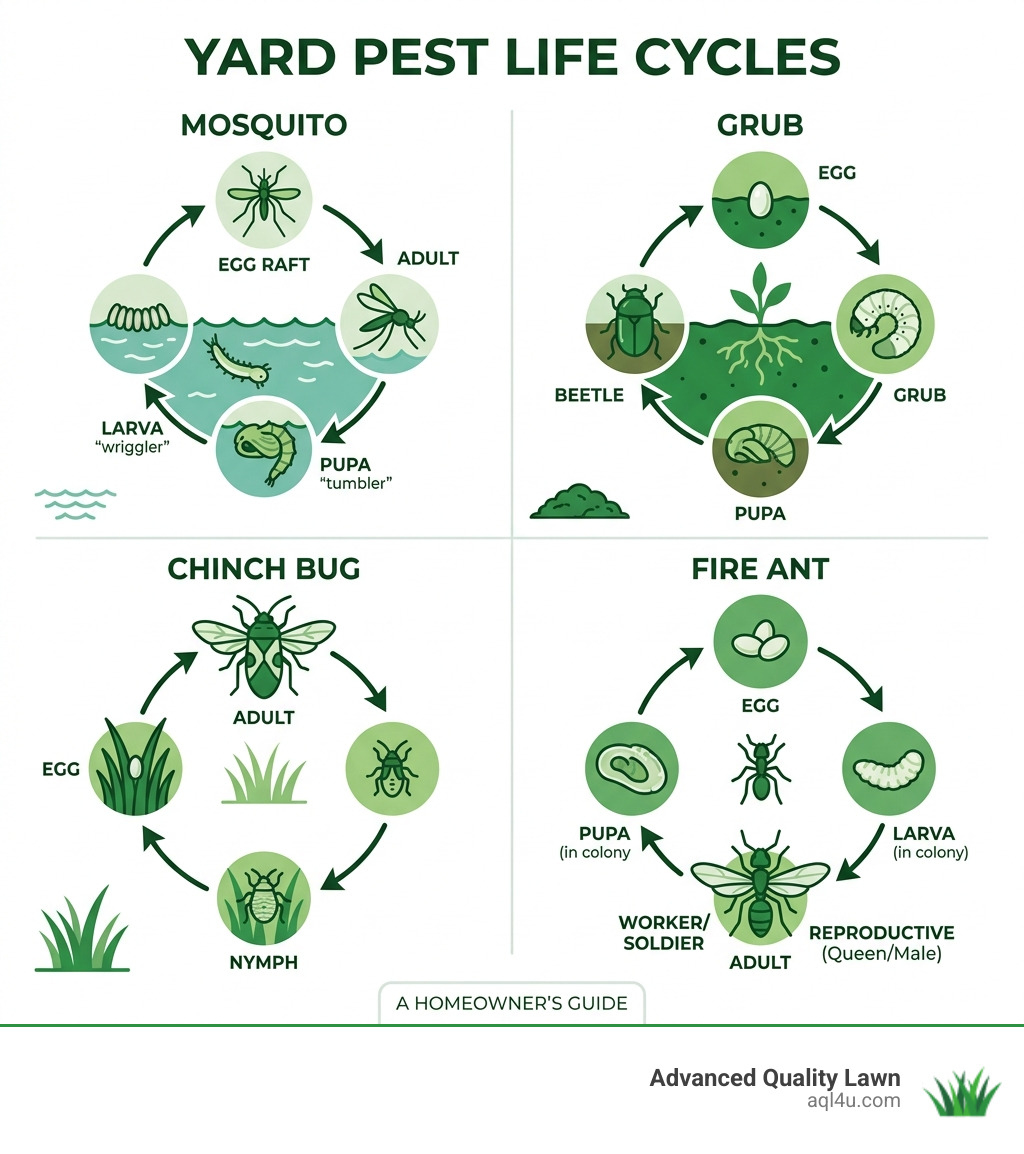
Mosquitoes
Everyone knows these biting pests. They breed in as little as a bottle cap of water and can turn a nice evening in Hudson or Stow into a nightmare. Beyond the itchy bites, they can also carry diseases.
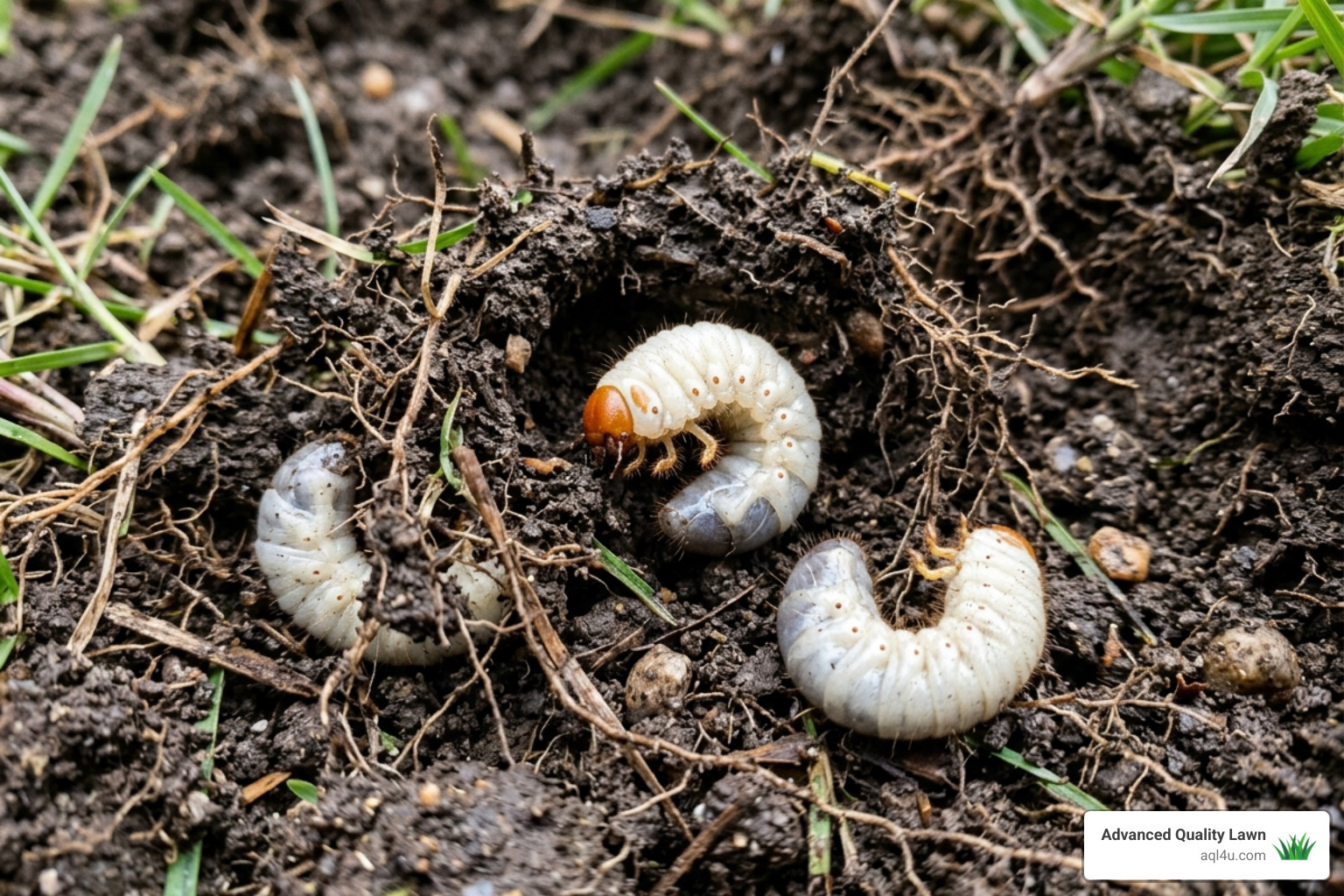
White Grubs
These are the C-shaped larvae of beetles like Japanese beetles or June bugs. They live underground and eat grass roots. If you notice brown patches that you can pull up like a piece of carpet, you probably have a grub problem. We often tell our neighbors in Medina and Cuyahoga Falls to look for animals like skunks or raccoons digging in the lawn, as they love to eat these grubs. You can learn more about these pests in our guide on The Unwelcome Guests Tent Caterpillars And White Grubs In Your Yard.
Chinch Bugs
These tiny insects are hard to see because they are very small. They have black bodies with white wings folded in an X shape. They love sunny spots in the lawn and inject a toxin into the grass as they feed, which causes the grass to turn yellow and then brown.
Fire Ants
While more common in the south, we do see aggressive ant species that can build large mounds. They are protective of their territory and will bite or sting if you disturb them.
Armyworms
These caterpillars can appear in huge numbers and eat through a lawn in just a few days. They are especially fond of Bermuda grass but will eat many types of turf. We have seen cases where Armyworms Are Devouring Turf Lawns In Ohio at an alarming rate during certain years.
Best Way to Kill Bugs in Yard Using Natural Methods
Many of our customers in places like Brecksville and Broadview Heights prefer to start with natural methods. These are often the best way to kill bugs in yard spaces where children and pets play.
Citronella and Fire Pits
Citronella candles and fire bowls are classic for a reason. Bugs generally dislike the smell of citronella oil. If you enjoy a fire pit, you are already doing some bug control. Most insects hate smoke. You can even throw some dried herbs like rosemary or eucalyptus onto the wood to create a more fragrant smoke that bugs will avoid.
Fans
This is a simple trick that many people overlook. Mosquitoes are weak fliers. Using an oscillating fan on your patio in Solon or Twinsburg creates enough of a breeze to keep them from landing on you. It also helps dissipate the carbon dioxide we breathe out, which is what draws mosquitoes to us in the first place.
Garlic Cloves
Bugs have a very strong sense of smell. Some people find that placing garlic cloves in potted plants or around the patio acts as a cheap repellent. The chemicals emitted by the garlic are very off-putting to many flying pests. For a deeper dive into these methods, check out this Bug Off! The Ultimate Guide to Backyard Bug Control.
Repellent Plants as the Best Way to Kill Bugs in Yard Naturally
Nature has its own way of fighting back. Planting certain flowers and herbs can create a natural barrier.
- Lavender: While we love the scent, moths, fleas, flies, and mosquitoes find it repulsive.
- Marigolds: These contain pyrethrum, which is an ingredient found in many insect repellents. They are great for deterring aphids and mosquitoes.
- Basil: This herb is great for your kitchen and bad for flies and mosquitoes.
- Rosemary: When you are grilling in your backyard in Macedonia, throwing some rosemary on the coals can help keep the bugs away.
To find more local advice, see our post on Common Ohio Garden Pests And How To Get Rid Of Them.
Encouraging Beneficial Predators as the Best Way to Kill Bugs in Yard
Not all bugs are bad. In fact, some are your best allies.
- Bats: A single bat can eat over 6,000 insects in one night! Installing a bat house in a high spot on your property is a fantastic way to reduce the mosquito population naturally.
- Ladybugs: These are the natural enemies of aphids and other soft-bodied pests.
- Birds and Lacewings: Encouraging birds with feeders or planting flowers that attract lacewings will help keep the "bad" bug population in check.
For more tips on making your yard a fortress, read How To Bug-Proof Your Backyard.
Mechanical Barriers and Traps for Targeted Control
Sometimes you need to get a bit more hands-on. Mechanical barriers and traps are very effective for specific pests without the need for broad chemical sprays.
Diatomaceous Earth
This is a powder made from tiny, fossilized aquatic organisms. To us, it feels like soft flour. To a bug with an exoskeleton, like an ant or a flea, it is like walking over broken glass. It dehydrates them and kills them on contact. It is a great best way to kill bugs in yard areas near entryways or in gardens. Just remember to reapply it after a heavy Ohio rain.
Sticky Cards and Beer Traps
Yellow sticky cards are great for catching flying pests in your garden. For slugs that might be eating your hostas in Chagrin Falls, a shallow dish of beer buried at ground level works wonders. The slugs are attracted to the yeast, fall in, and cannot get out.
Row Covers
If you have a vegetable garden, floating row covers are a physical barrier that prevents bugs from ever reaching your plants. This is especially helpful for preventing cabbage worms or vine borers. For more ant-specific tips, see our Ultimate Guide Kill Ants Yard.
Chemical and Organic Solutions for Severe Infestations
When the natural methods are not enough, it might be time to look at more intensive solutions. This is often necessary for pests that live in the soil or when an infestation has gotten out of control.
Beneficial Nematodes
These are microscopic roundworms that live in the soil. They are completely harmless to humans and pets but are deadly to grubs and other soil-dwelling pests. They enter the host and release bacteria that kills the pest from the inside. They work best when the soil is moist and the temperature is between 60 and 75 degrees. For more on this organic powerhouse, see How to Use Nematodes for a Grub-Free Lawn and Garden.
Milky Spore
This is a natural bacteria that specifically targets Japanese beetle grubs. Once it is in your soil, it can last for 15 years. It takes some time to build up, but it is a very effective long-term solution.
Bt and Spinosad
These are biological pesticides. Bt (Bacillus thuringiensis) is a bacteria that targets caterpillars like armyworms. Spinosad is derived from a soil bacterium and is effective against a wider range of pests but is still considered an organic option.
For those looking for the most effective store-bought options, we have a list of the Best Lawn Insect Killer Granules that we trust.
Step-by-Step Treatment for Lawn-Specific Pests
If you decide to take the DIY route for specific pests, here is how to do it right.
For Fire Ants: Use a two-step method. First, apply a broadcast bait over the whole yard. This targets the foragers who take the bait back to the queen. Second, treat individual mounds with a liquid drench for immediate results. Most baits require about 1 to 2.5 pounds per acre.
For Grubs: Timing is everything. You want to apply treatments in early summer when the grubs are young and close to the surface. If you find more than 3 to 5 grubs per square foot when you dig a small test hole, it is time to treat. We recommend checking out the Best Way To Kill Grubs In Lawn for more details.
For Chinch Bugs: Use the "can method" to see if you have an infestation. Cut the bottom out of a coffee can, push it into the turf, and fill it with water. If chinch bugs are present, they will float to the top. If you see more than 20 bugs per square foot, you should apply a treatment.
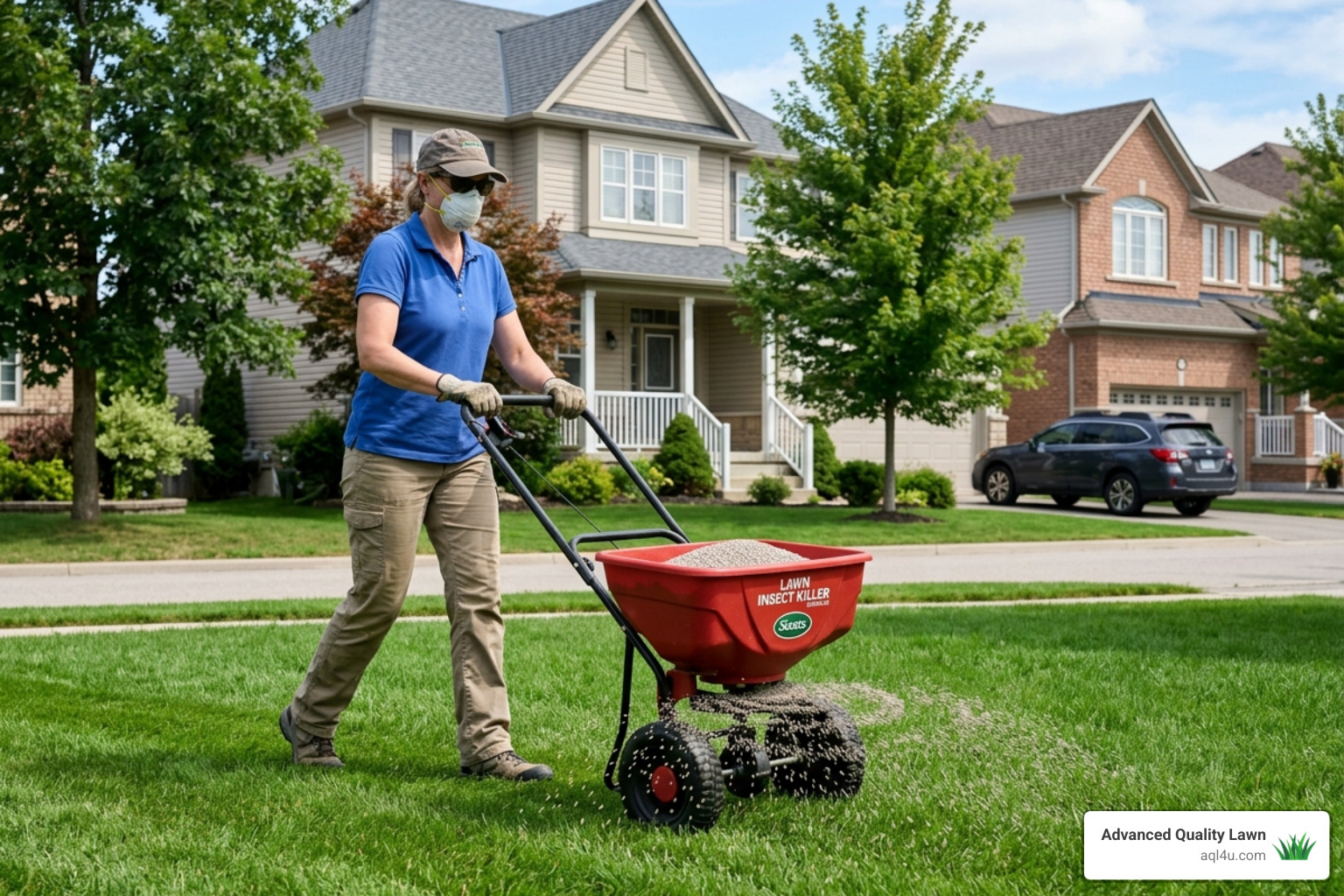
When using products like Roundup For Lawns Bug Destroyer, always follow the label. Generally, you apply the granules with a spreader and then water them in to activate the ingredients.
Yard Maintenance as a Preventative Strategy
The best way to kill bugs in yard spaces is often to make sure they never want to live there in the first place. Good maintenance is your first line of defense.
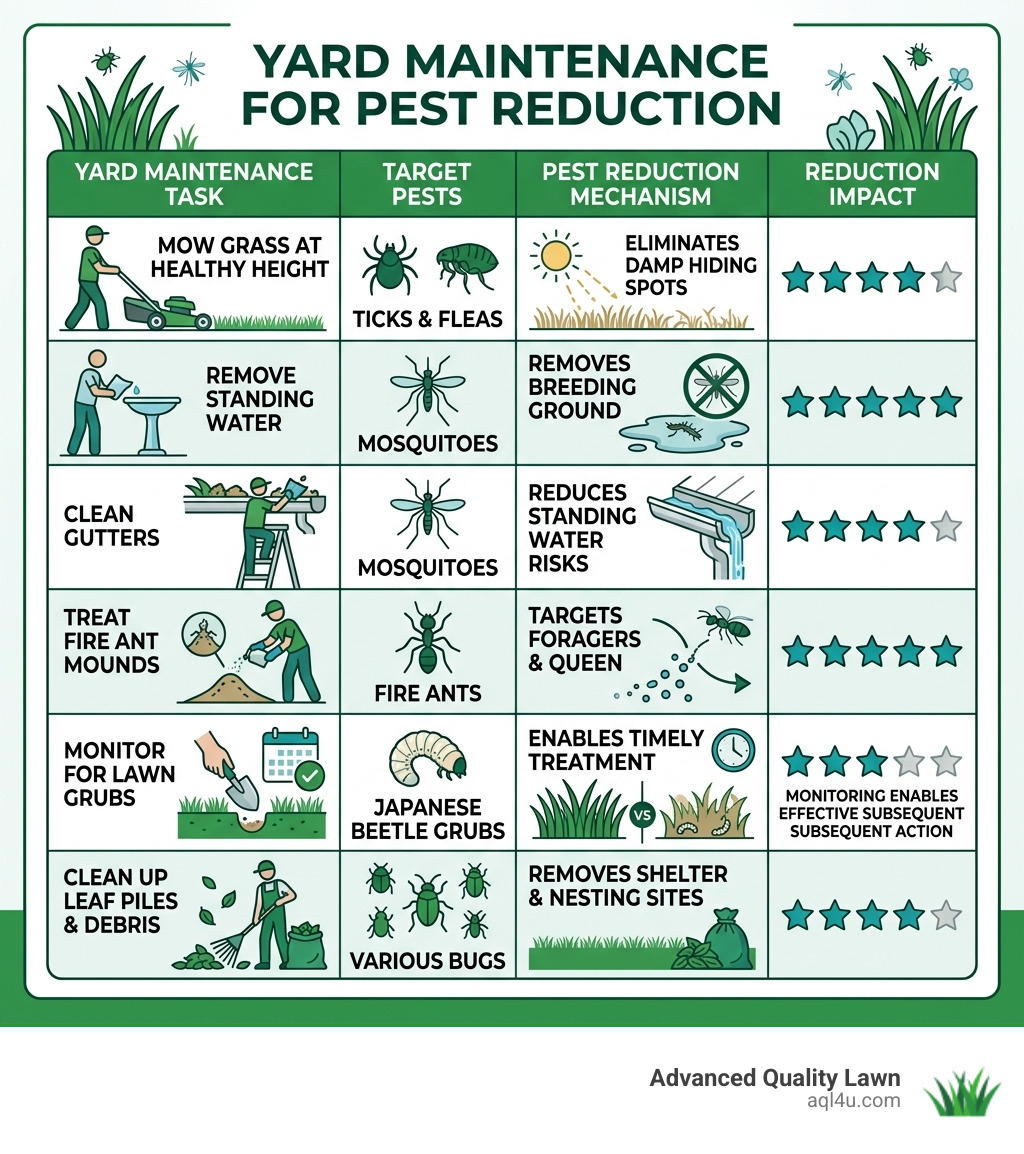
Standing Water
This is the big one. Mosquitoes need water to breed. Check your gutters in Streetsboro and North Royalton for clogs. Empty birdbaths every few days. If you have a low spot in your yard that stays wet, consider a mosquito dunk. These contain a bacteria that kills larvae for up to 30 days and are safe for birds and fish.
Mowing Height
Keep your grass at a healthy height, usually around 3 inches. If the grass is too short, it stresses the lawn and makes it easier for pests to move in. If it is too long, it provides a damp, dark hiding spot for ticks and fleas.
Thatch Management
Thatch is the layer of dead grass and roots that builds up between the green grass and the soil. A little is okay, but more than half an inch can protect bugs from treatments and prevent water from reaching the roots. Regular aeration and dethatching can help. For more maintenance tips, see our guide on the Best Insect Control For Lawns. You can also find professional advice on How to Get Rid of Lawn Grubs Fast Before They Damage Your Yard.
Frequently Asked Questions about Yard Pest Control
Are organic pesticides safe for pets and children?
Most organic options like Neem oil and Bt have very low toxicity. However, even with natural products, we recommend keeping children and pets off the treated area until it is completely dry. This usually takes about 2 to 4 hours.
When is the best time to apply lawn bug treatments?
The early morning or late evening is usually best. This helps you avoid the mid-day heat which can cause some products to evaporate or burn your grass. It also protects beneficial pollinators like bees, which are most active during the middle of the day.
How many insects can a single bat eat in one night?
As we mentioned earlier, a single bat can eat over 6,000 insects! They are one of the most effective natural mosquito controls you can have on your property in Northeast Ohio.
Conclusion
Finding the best way to kill bugs in yard areas does not have to be a source of stress. Whether you choose to go completely organic with nematodes and ladybugs or you need the heavy-hitting power of targeted granules, the key is to be proactive. Regular maintenance and keeping an eye out for early signs of damage will save you a lot of work in the long run.
At Advanced Quality Lawn, we have been serving the Akron and Greater Cleveland area for decades. We know the local soil, the local weather, and exactly which bugs are trying to move into your lawn this month. If you are feeling overwhelmed by a pest problem or just want to make sure your yard stays healthy all season long, we are here to help.
From Hudson to Medina and everywhere in between, we provide expert Lawn Care Maintenance that takes the guesswork out of bug control. Give us a call today and let us help you get back to enjoying your backyard!