
How to Control Crabgrass in New Lawns
Why New Lawns Are So Vulnerable to Crabgrass in Spring
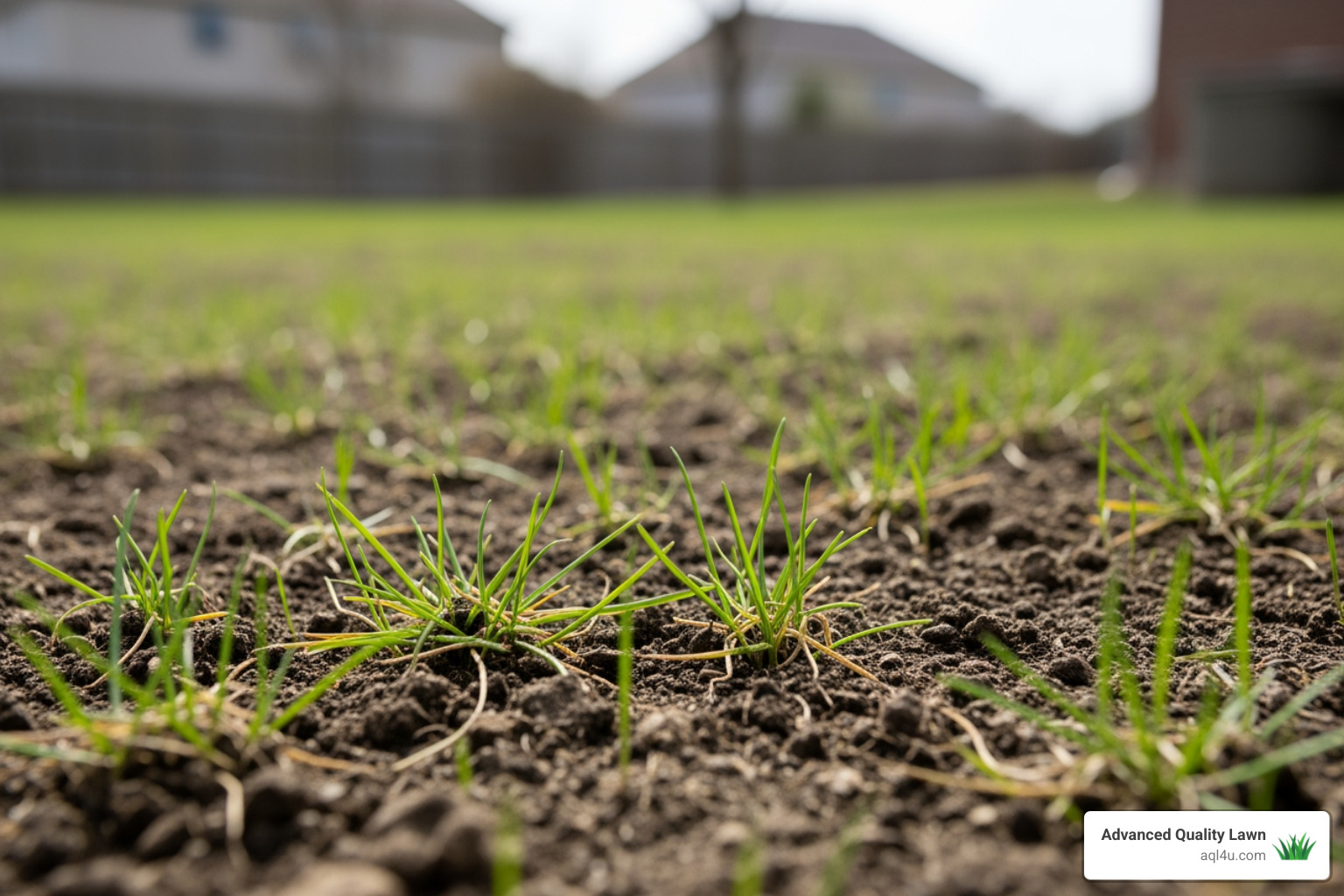
Crabgrass control for newly seeded lawns is one of the trickiest challenges a homeowner can face in spring. Here is what you need to know right away:
Quick Answer: How to Control Crabgrass in a Newly Seeded Lawn
- Use a seeding-safe pre-emergent like mesotrione (Tenacity) or siduron (Tupersan) if seeding in spring
- Wait three mowings before applying a standard pre-emergent after seeding
- Avoid standard pre-emergents like prodiamine or pendimethalin at seeding time because they will block your grass seed too
- Mow high (3 to 4 inches) and water deeply to help new grass outcompete crabgrass
- Fall seeding is the easiest path because it sidesteps the spring timing conflict entirely
The core problem is simple. The same barrier that stops crabgrass seeds from sprouting will also stop your new grass seed from sprouting. Standard pre-emergents do not know the difference. Apply one at the wrong time and you lose both the weeds and the lawn you were trying to grow.
In Northeast Ohio, this timing conflict is especially tight. Crabgrass starts germinating once soil temperatures hit around 55 F for several consecutive days, which can happen as early as late April or early May. That window overlaps almost perfectly with the spring seeding season, leaving very little room for error.
A single crabgrass plant can produce up to 150,000 seeds in one season. Those seeds stay viable in the soil for years. Miss your window once and you are dealing with the consequences for a long time.
I'm Andrew Day, owner of Advanced Quality Lawn, and with more than 30 years of industry experience helping homeowners across Northeast Ohio navigate exactly this kind of challenge, I have seen how the right approach to crabgrass control for newly seeded lawns can mean the difference between a lush, thick lawn and a yard taken over by weeds. Let me walk you through what actually works.
Understand the Timing Conflict With Crabgrass Control for Newly Seeded Lawns
Timing is everything in lawn care but it is especially critical when we talk about crabgrass control for newly seeded lawns. To win this battle we have to understand the biological clock of the crabgrass plant. Crabgrass is a summer annual that relies on heat to wake up.
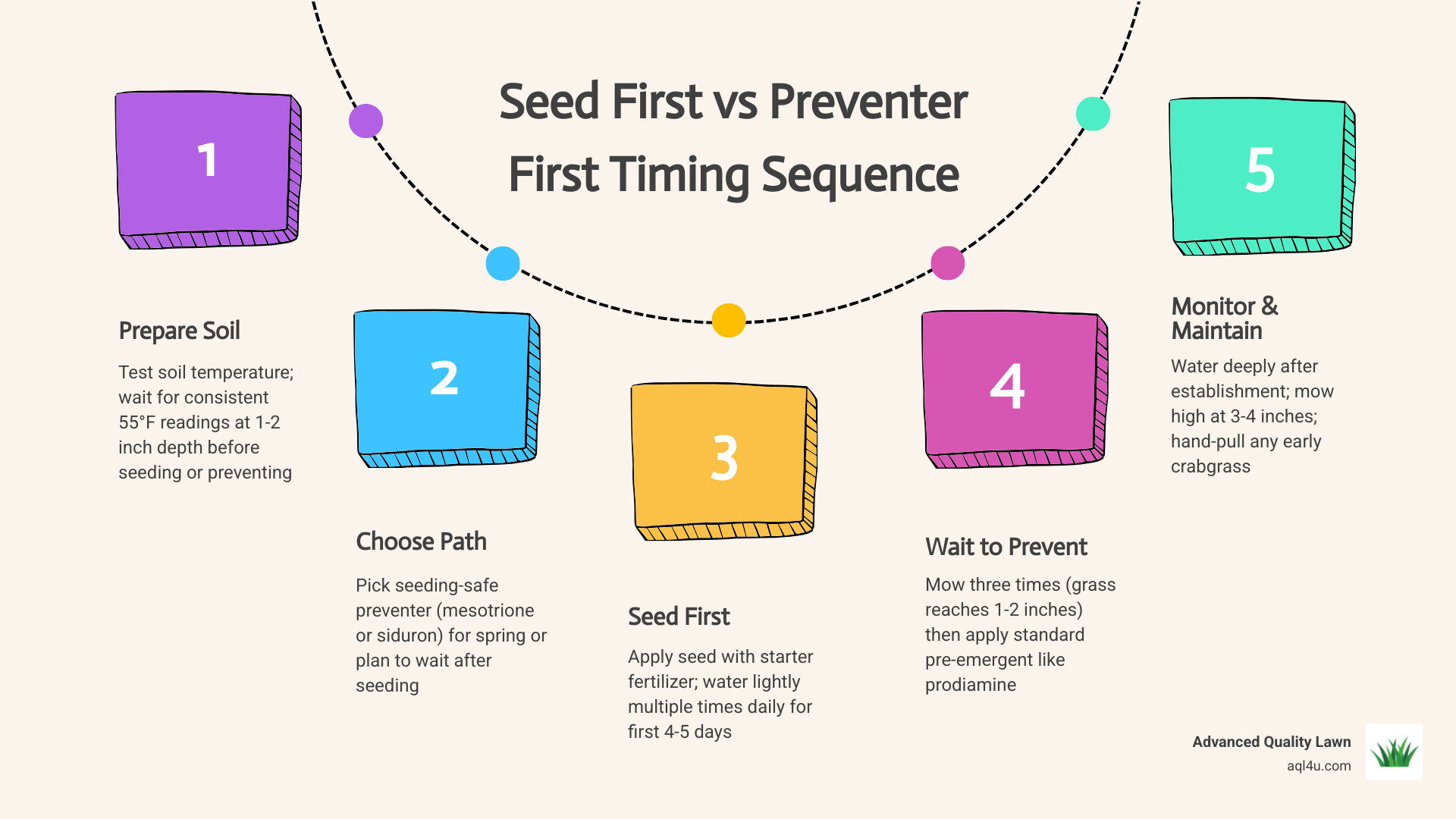
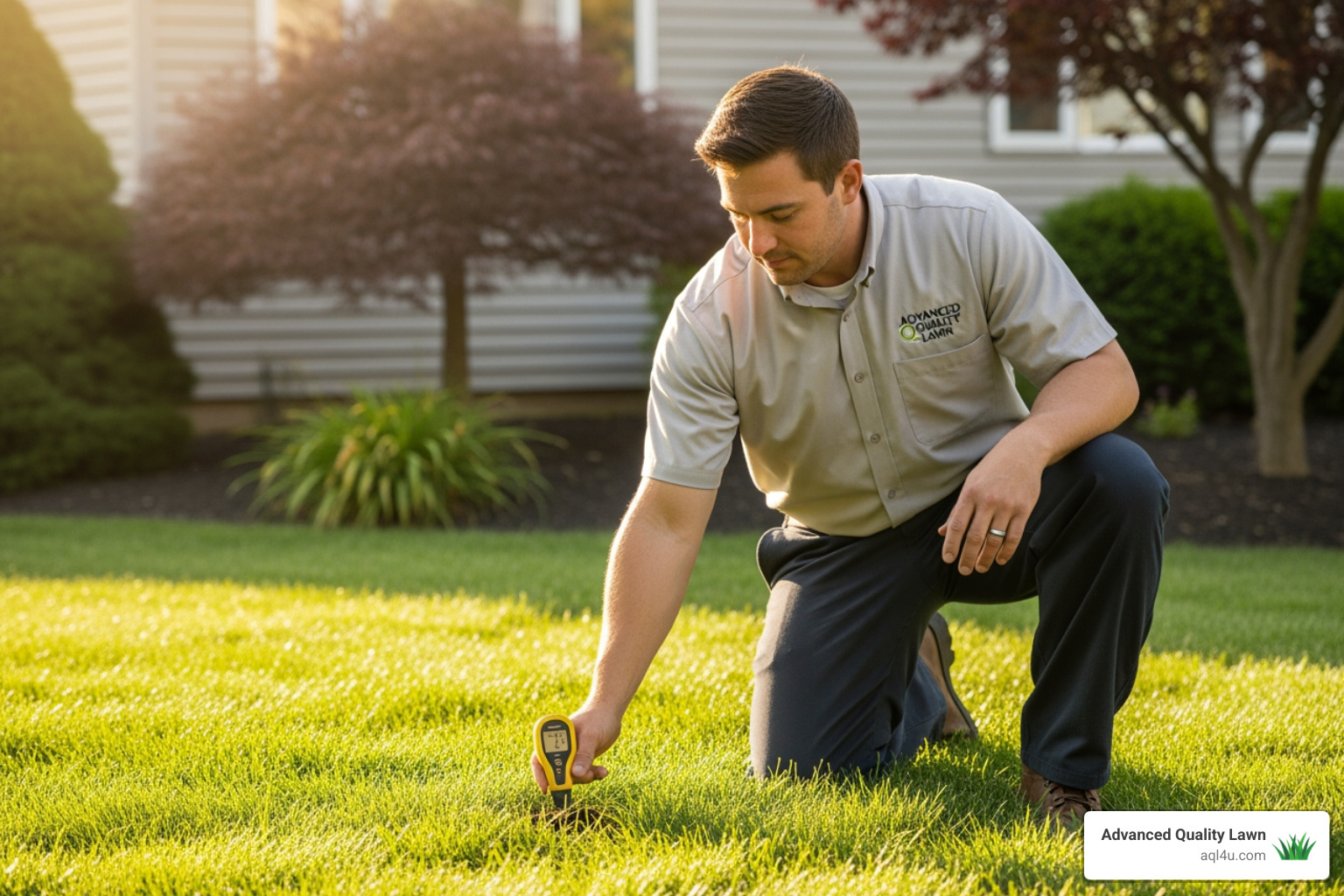
The magic number for germination is 55 F. When soil temperatures reach this mark at a depth of one to two inches for four or five consecutive days the crabgrass seed bank in your soil begins to sprout. In our service areas like Akron and Cuyahoga Falls this typically happens between mid-April and early May.
Why spring seeding and crabgrass prevention clash
The clash happens because the environmental conditions that are perfect for your new Kentucky Bluegrass or Tall Fescue seed are also perfect for crabgrass. Most standard crabgrass preventers work by creating a chemical barrier at the soil surface. This barrier inhibits the development of the root or shoot as the seed tries to germinate.
Unfortunately standard herbicides cannot distinguish between a "bad" crabgrass seed and a "good" grass seed. If you put down a traditional pre-emergent and then spread your seed you have essentially wasted your money on the seed. It will never make it through that barrier. This leaves your lawn with bare spots and thin turf, which is exactly where crabgrass loves to move in. One plant can drop 150,000 seeds, so even a small opening can lead to a massive infestation.
The safest calendar for crabgrass control for newly seeded lawns
If you are planning to seed in the spring you have to be very strategic. One common rule of thumb is the "three mowings rule." This means you should wait until your new grass has been mowed at least three times before applying a standard crabgrass preventer. This ensures the roots are deep enough and the plant is strong enough to handle the herbicide.
Alternatively you might need to wait 60 days after seeding before applying certain products. Some heavy-duty pre-emergents have a six month carryover in the soil. This means if you applied a standard preventer in April you likely cannot successfully seed that area until October. This is why we often recommend late summer or fall seeding for homeowners in Northeast Ohio. By seeding in September you avoid the spring crabgrass pressure entirely and give your grass months to establish before the weeds return.
How soil temperature and rainfall change your plan
Weather is the ultimate wildcard. Soil temperatures at daybreak are the most accurate indicator for timing. If we have a warm spring with early rains the crabgrass will pop sooner than expected. Rainfall is also necessary to "activate" most preventers by moving them into the top layer of soil. However, a massive downpour right after application can wash the product away or move it into low spots, leaving other areas unprotected.
For a deeper dive into how these factors interact you can check out this Crabgrass management fact sheet which details the research behind these timing windows. In regions like Medina and Portage County we monitor these weather patterns closely to ensure our applications hit that narrow window of effectiveness.
Choose the Right Preventer Before You Seed
When you are dealing with crabgrass control for newly seeded lawns you cannot just grab the first bag of "Step 1" fertilizer you see at the big-box store. Most of those contain pre-emergents that will kill your new seedlings. You need a specialized product that is safe at the time of seeding.
Preventers that are safe to use at seeding
There are two primary active ingredients that are safe for use when establishing cool-season turf from seed: Mesotrione and Siduron.
- Mesotrione (Tenacity): This is a favorite among professionals. It provides both pre-emergent and early post-emergent control. It is safe for most cool-season grasses at the time of seeding and helps keep the soil clear of weeds while your grass gets a head start.
- Siduron (Tupersan): This is a classic choice that has been around for decades. It is highly selective and will not inhibit the germination of cool-season grass seeds like fescue or bluegrass.
Using these products allows you to create a seed-safe barrier. You can find More info about best pre-emergent options on our site to help you choose the right one for your specific grass type.
Preventers to avoid on a newly seeded lawn
You must avoid the "big four" active ingredients if you are seeding:
- Prodiamine (Barricade)
- Pendimethalin (Scotts Halts)
- Benefin
- Dithiopyr (Dimension)
These are fantastic products for established lawns but they are the enemy of new seed. They cause what we call "root pruning" in young seedlings, which effectively starves the plant before it can grow. If these are in your spreader you must wait until the grass is fully established before applying them.
How long standard crabgrass preventers stay active in soil
Standard preventers are designed to last. Most provide control for 8 to 16 weeks, but some professional-grade products can last up to 6 months. This residual activity is great for stopping weeds but it is a major roadblock for renovation plans. If you applied a long-lasting preventer in the spring and your lawn still looks thin in June you cannot simply throw more seed down. You have to wait for the chemical barrier to break down.
| Preventer Type | Safe at Seeding? | Residual Duration |
|---|---|---|
| Mesotrione | Yes | 4 to 6 weeks |
| Siduron | Yes | 4 to 6 weeks |
| Prodiamine | No | 4 to 6 months |
| Dithiopyr | No | 3 to 4 months |
Follow the Best Seeding and Preventer Sequence
To get the best results we follow a specific sequence. This ensures the seedbed is prepared and the new grass has every advantage over the weeds.
Option 1: Apply a seeding-safe preventer at the time of seeding
This is the most popular choice for spring projects in Northeast Ohio.
- Prep the soil by raking or aerating.
- Spread your high-quality grass seed.
- Apply a starter fertilizer that contains mesotrione or siduron.
- Water lightly and frequently to keep the seed moist.
- Once the grass reaches its first mowing height you can transition to deeper watering.
This method provides a "clean" window for your grass to sprout without competing with crabgrass. You can find More info about crabgrass preventer and seeding to help you master this sequence.

Option 2: Seed first then wait before applying a standard preventer
If you do not have access to a seeding-safe preventer you can seed first and wait. The risk here is that crabgrass might grow faster than your new grass. If you choose this path you must wait until the new grass is 1 to 2 inches tall and has been mowed three times before you put down a standard preventer. This is a bit of a gamble because if a heat wave hits in May the crabgrass might take over before your grass is strong enough for the treatment.
Option 3: Skip pre-emergent and focus on thick turf
Some homeowners prefer to skip the chemicals entirely during the first spring. This requires a "good defense" strategy. You focus on heavy irrigation and fast establishment to create a canopy so thick that crabgrass seeds cannot get the sunlight they need to germinate. This involves mowing high and potentially hand-pulling any weeds that pop up. For those looking to maximize growth you can see More info about new grass feeding to ensure your lawn has the nutrients it needs to win the race.
Use Cultural Practices That Suppress Crabgrass While New Grass Establishes
Chemicals are only half the battle. Cultural practices, such as how you mow, water, and fertilize, are actually your strongest weapons for crabgrass control for newly seeded lawns.
Mow high and avoid stressing seedlings
One of the best things you can do for a new lawn is to set your mower blade high. We recommend 3 to 4 inches for most lawns in the Cleveland and Akron areas. Taller grass blades shade the soil surface. Since crabgrass seeds need light to germinate keeping the soil in the dark is a natural way to stop them.
Never "scalp" the lawn or remove more than one-third of the grass blade at once. Also make sure your mower blades are sharp. Dull blades tear the grass which stresses the seedlings and makes them more susceptible to disease and weed encroachment.
Water for seed establishment without helping crabgrass
Watering a new lawn is a balancing act. During the first two weeks you need light and frequent watering, sometimes twice a day, to keep the seeds from drying out. However once the grass is an inch tall you should transition to deep and infrequent watering.
Crabgrass has a relatively shallow root system. By watering deeply (about 1 to 1.5 inches per week in one or two sessions) you encourage your grass roots to grow deep into the soil while the top layer dries out enough to discourage shallow-rooted weed seedlings. Morning is the best time to irrigate to avoid soggy soil at night which can lead to fungus.
Fertilize and mulch the right way
New grass needs a different diet than an established lawn. A starter fertilizer with a higher phosphorus count helps with root development. Avoid "summer push" fertilizers with high nitrogen during the heat of July as this can stress cool-season grasses while giving warm-season crabgrass a boost.
Using a seed mulch can also help retain moisture and keep seeds in place. Just be sure the mulch is weed-free so you are not accidentally planting the very thing you are trying to prevent. For more details on these products see our Best grass seed mulch fertilizer guide.
What to Do If Crabgrass Appears After Seeding
Even with the best plan a few crabgrass plants might slip through. If you see those light-green, star-shaped clumps appearing among your new seedlings do not panic.
Can you use post-emergent herbicides on new grass safely?
Using a post-emergent, a "weed killer" for growing plants, on new grass is risky. Most young grass is very sensitive to these chemicals. You generally need to wait until the lawn is well established, usually after several mowings, before applying a selective post-emergent like quinclorac.
Always check the label for turf species limits. Some herbicides might cause temporary discoloration or "yellowing" of the new grass. If the crabgrass is still in the small seedling stage (1 to 3 leaves) it is much easier to kill than when it has multiple tillers.
When hand pulling is the better choice
If you only have isolated patches of crabgrass hand pulling is often the safest and most effective method. It is easiest to do in the early morning or after a rain when the soil is soft. Make sure you remove the central crown of the plant. If you leave the root system behind it may just grow back. Pulling them before they develop seedheads is crucial to breaking the cycle for next year.
How to prevent a repeat infestation next season
The best way to stop crabgrass next year is to have a thick lawn this year. Fall is the perfect time for overseeding thin spots left behind by summer stress. By filling those gaps you leave no room for crabgrass to take hold next spring. For a complete strategy on managing weeds you can read our Ultimate weeds and crabgrass guide.
Frequently Asked Questions About Crabgrass Control for Newly Seeded Lawns
How long should you wait after seeding before using a standard crabgrass preventer?
The standard recommendation is to wait until you have mowed your new grass at least three times. For most homeowners in Northeast Ohio this is about 6 to 8 weeks after the grass first sprouts. This ensures the root system is strong enough to withstand the herbicide barrier.
Is it better to apply crabgrass preventer before or after seeding?
If you are using a seeding-safe product like siduron it is best to apply it at the time of seeding. If you are using a standard preventer you must apply it at least several weeks before seeding (and wait for it to break down) or wait until the grass is established after seeding. The "risk tradeoff" is that applying it before seeding might fail to protect the lawn later in the summer while waiting until after seeding leaves a window for weeds to grow.
What are the biggest mistakes in crabgrass control for newly seeded lawns?
The biggest mistake is using a standard pre-emergent too close to your seeding date. This will effectively kill your investment. Other common errors include not watering in the preventer (which is required for activation) or aerating the lawn after putting down a preventer. Aeration breaks the chemical barrier and allows crabgrass seeds to reach the surface and grow.
Conclusion
Managing crabgrass control for newly seeded lawns requires a bit of patience and the right strategy. Whether you are in Hudson, Solon, or Medina the principles remain the same: time your applications with soil temperatures, choose seed-safe products for spring projects, and never underestimate the power of a thick, tall lawn.
While spring seeding is possible we always remind our neighbors in Northeast Ohio that fall is the gold standard for lawn renovation. It allows you to use the most effective crabgrass preventers in the spring without worrying about your new grass.
If you find the timing and product selection a bit overwhelming we are here to help. At Advanced Quality Lawn we provide expert service across Summit, Cuyahoga, and surrounding counties with a full-program guarantee. You can find More info about lawn care services on our website or give us a call to get your lawn on the right track for 2026. Let's make this the year your lawn finally wins the battle against crabgrass!