Does Diatomaceous Earth Work on Lawn Ants?

Using diatomaceous earth for ants in lawn areas is an effective, non-toxic method to reduce ant populations. Here is a quick overview of how to do it:
- Buy food-grade diatomaceous earth (never pool-grade)
- Wait for dry weather with no rain expected for 24 to 48 hours
- Apply a thin, even layer directly on ant mounds and along visible trails
- Reapply after rain or heavy dew to maintain effectiveness
- Allow 48 to 72 hours for visible results
Note: Diatomaceous earth kills ants that contact it directly, but it may not eliminate the entire colony on its own.
Ants in a lawn are more than just a nuisance. Fire ants bite, large colonies can damage turf, and ant mounds can make mowing a frustrating chore. Many Ohio homeowners want a solution that is safe for kids, pets, and the environment. Diatomaceous earth is one of the most popular organic options available, and for good reason. It is inexpensive, easy to apply, and registered with the EPA (No. 73739-1-3) for use in and around homes with people and pets.
But it also has real limitations that are worth understanding before you spread it across your yard.
I'm Andrew Day, owner of Advanced Quality Lawn, with over 30 years of experience in lawn care and pest management in Northeast Ohio, including helping homeowners find the right approach to using diatomaceous earth for ants in lawn settings. In the sections below, I'll walk you through exactly how it works, how to apply it correctly, and when you may need to take additional steps.
What is Diatomaceous Earth and How Does It Work
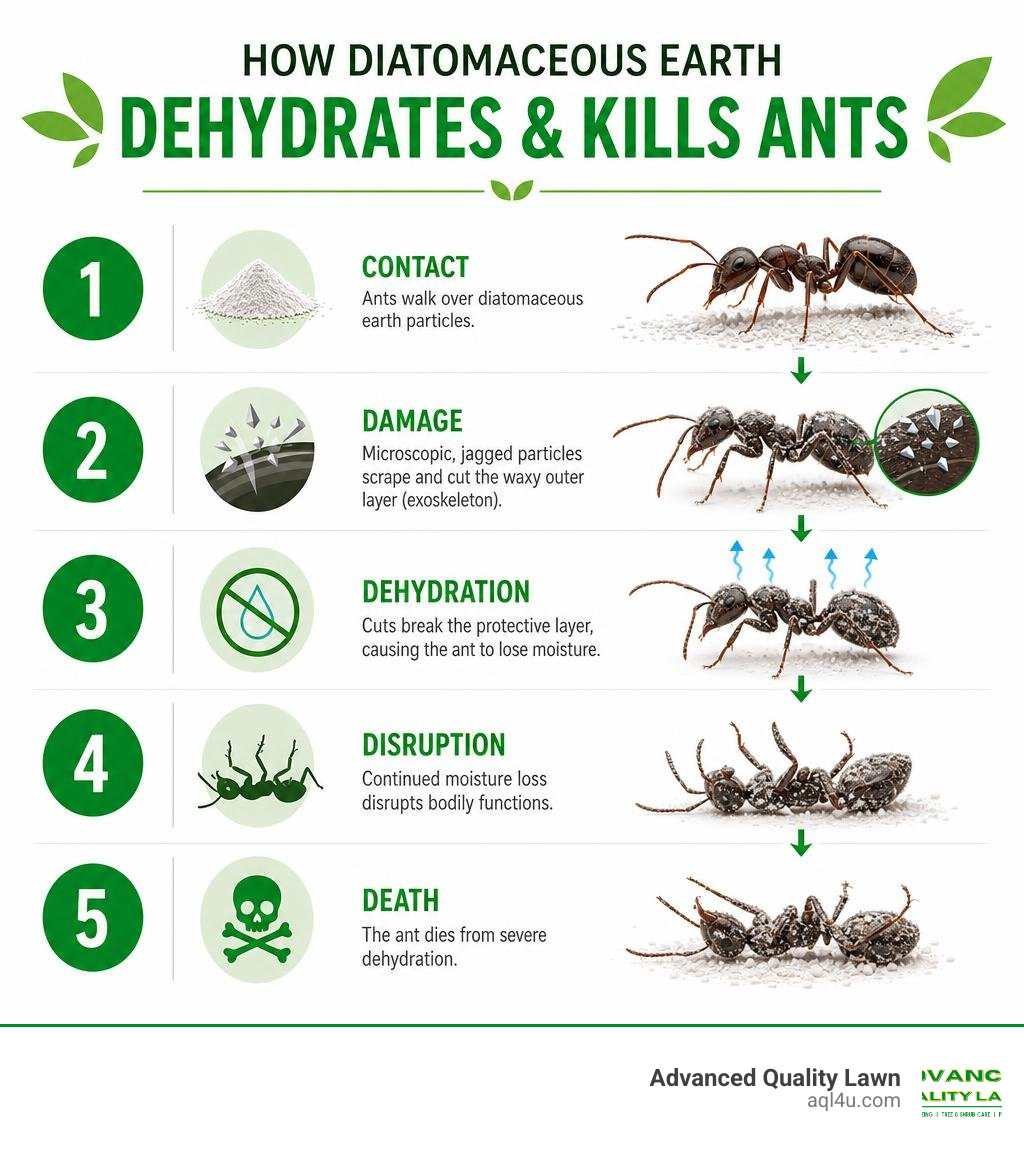
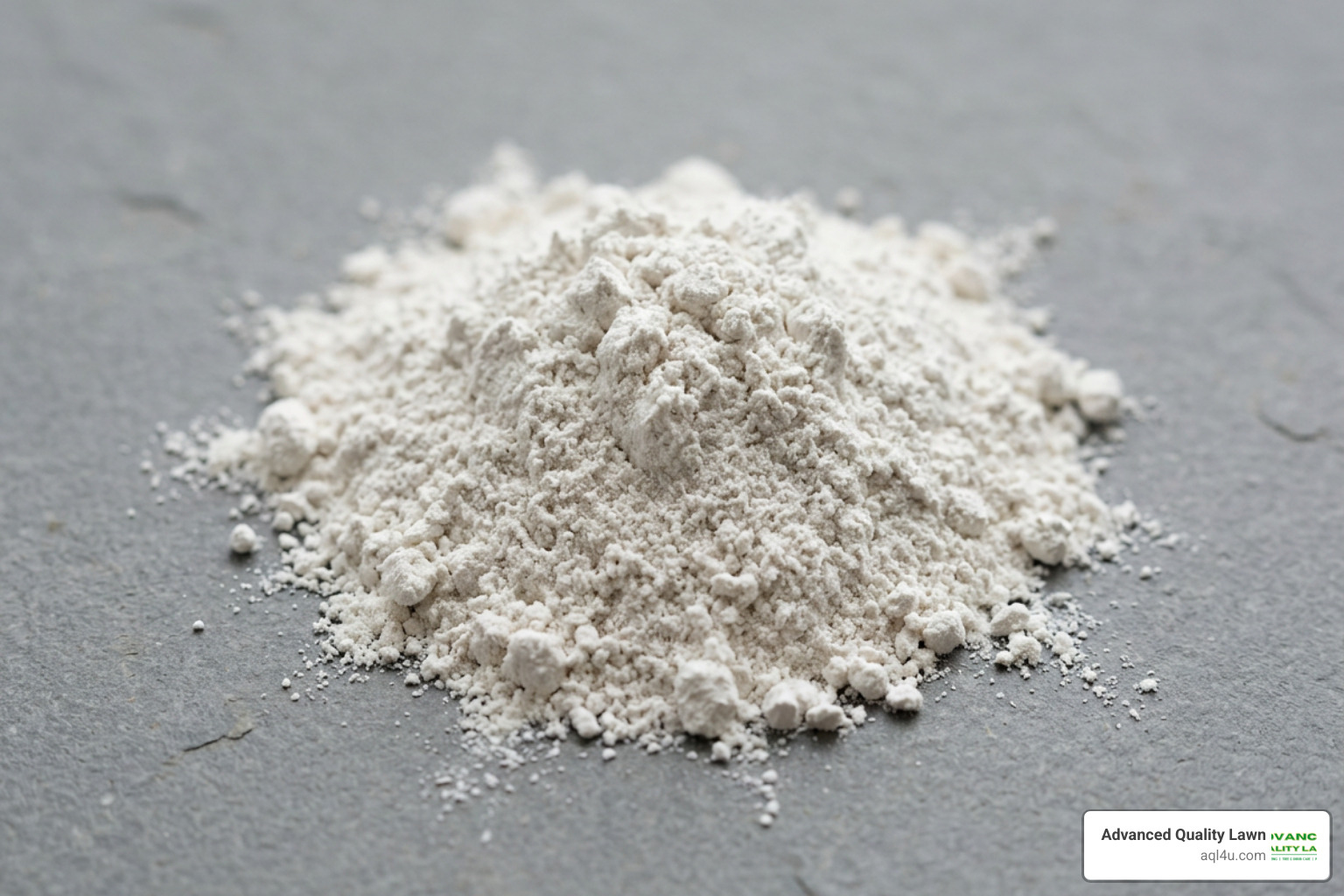
Diatomaceous earth is a naturally occurring soft sedimentary rock that is crumbled into a fine white powder. It is made from the fossilized remains of tiny aquatic organisms called diatoms. These diatoms had skeletons made of silica, which is the same compound found in sand and glass. Under a microscope, these powdery particles look like incredibly sharp shards of glass.
While the powder feels like flour to human hands, it is deadly to insects with exoskeletons. When an ant walks through the powder, the microscopic sharp edges slice through the protective waxy outer coating of the ant exoskeleton. This outer layer, known as the epicuticle, is responsible for keeping moisture inside the body of the insect.
Once this waxy layer is damaged, the high silica content of the powder rapidly absorbs the moisture and essential lipids from the body of the ant. This dual action of physical abrasion and absorption leads to severe dehydration. You can learn more about this natural process by reading about How diatomaceous earth kills ants from pest experts.
Because it works through a physical mechanism rather than a chemical poison, insects cannot develop resistance to it. It remains lethal to any crawling insect that comes into direct contact with it, making it a reliable tool in organic pest management.
Diatomaceous Earth for Ants in Lawn Environments
Using diatomaceous earth outdoors presents unique challenges compared to indoor applications. In Northeast Ohio, our lawns experience high humidity, heavy morning dew, and frequent summer rainstorms. These environmental factors directly impact how well this natural powder performs.
When we look at Ants Destroying Lawn areas, we often find extensive underground nesting networks. A single colony can contain thousands of worker ants and a deeply protected queen. This highlights the primary limitation of diatomaceous earth. It only kills the ants that walk directly through the powder.
If you apply the powder to the surface, worker ants will die, but the queen remains safe underground. She can lay hundreds of eggs daily to replace the lost workers. Additionally, ants are smart. If they detect a thick barrier of powder, they will often find another route, leaving the main colony completely unharmed.
Moisture is another major obstacle. When diatomaceous earth gets wet from rain or lawn watering, it turns into a paste. While it is wet, it loses its abrasive and dehydrating qualities. It becomes active again once it dries completely, but heavy rains can wash the powder deep into the soil or away from the target areas entirely.
To help you decide on the best approach for your yard, we have put together a comparison of this organic powder and traditional liquid treatments.
| Feature | Diatomaceous Earth | Professional Liquid Baits |
|---|---|---|
| Primary Mechanism | Physical abrasion and dehydration | Ingested chemical active ingredients |
| Colony Elimination | Low, only kills contacted ants | High, workers carry bait to the queen |
| Weather Resistance | Low, neutralized by rain and dew | Moderate to high, rainfast once dry |
| Safety Profile | Non-toxic food-grade options | Requires brief drying period for pet safety |
| Speed of Results | Slow, typically 48 to 72 hours | Fast, often controls colonies in days |
If you want to understand more about the wider variety of insects in your soil, you can read our guide on Lawn Pests to see how different treatments compare. For a broader look at managing yard pests, check out our Ultimate Guide Kill Ants Yard to protect your turf.
Step-by-Step Application Guide
To get the best results when using this natural powder, you must prepare your turf and apply it during the right weather window. Follow this step-by-step method to treat your yard.
- Check the Weather: Look for a forecast that promises at least 24 to 48 hours of dry weather. Applying the powder right before a summer thunderstorm is a waste of time and product.
- Mow the Lawn: Cut your grass to a standard height before application. This helps the powder reach the soil surface where ants are actively crawling.
- Clear Lawn Debris: Remove fallen leaves, twigs, and grass clippings. This ensures the powder makes direct contact with the ground and ant trails.
- Locate the Mounds: Walk your yard in the morning or early evening when ants are most active. Look for soil mounds and follow the trails of worker ants.
- Select Your Tool: For large areas of turf, a broadcast spreader is ideal. For targeted applications on individual mounds, a hand-held bulb duster or a simple spoon works best.
- Apply the Powder: Spread the powder lightly and evenly over the target areas.
For more detailed information on spreading techniques, you can refer to this guide on How to spread diatomaceous earth on lawn surfaces. If you are dealing with a severe infestation, you can also read about Killing Ants with Diatomaceous Earth in 7 Easy Steps from Backyard Garden Geek for more practical yard tips.
Best Practices for Spreading Diatomaceous Earth for Ants in Lawn Turf
When applying this powder to your grass, less is often more. Homeowners often make the mistake of pouring thick piles of powder over ant nests. This actually backfires because ants will simply walk around the pile or dig a new exit hole. You want to apply a thin, almost invisible layer that the ants cannot easily detect, forcing them to walk through it.
Always make sure you are using food-grade powder. This type is organic, safe for soil health, and completely free of toxic chemical additives. Never use pool-grade powder, which has been heat-treated and contains high levels of crystalline silica that can be dangerous to humans and animals.
Even though food-grade powder is non-toxic, the fine particles can easily irritate your lungs and eyes during application. You should always wear basic safety equipment when handling the dry powder.
- A well-fitting dust mask or N95 respirator to prevent inhalation
- Protective safety goggles to shield your eyes from airborne dust
- Sturdy garden gloves to prevent your hands from drying out
For additional tips on selecting the right products and tools for organic yard care, you can read this guide on How to Use Diatomaceous Earth for Lawn Pest Control from LawnStarter to keep your property looking its best.
When to Reapply Diatomaceous Earth for Ants in Lawn Soil
Because this powder relies on being dry to physically damage insects, its effectiveness is highly temporary in outdoor environments. You will need to establish a regular reapplication schedule to keep ant populations under control.
Expect to reapply the powder after any moisture event. This includes heavy summer rainstorms, running your lawn sprinklers, or even after a night of heavy morning dew. Once the grass dries, check the treated areas. If the powder has washed away or clumped into a paste, it is time for another light dusting.
Even in dry weather, wind and insect activity will naturally disperse the powder over time. For active infestations, we recommend reapplying every 3 to 7 days until you see a significant reduction in ant activity. For general prevention, a fresh application every 3 to 4 weeks during the peak summer months is a good rule of thumb. You can find more detailed instructions on outdoor application timing by reading How to apply diatomaceous earth for ants from pest control specialists.
Safety Considerations for Pets and Beneficial Insects
One of the greatest benefits of food-grade diatomaceous earth is its safety profile. It is completely non-toxic if accidental ingestion occurs, making it a popular choice for families with dogs, cats, and young children. However, because it is a fine dust, it can cause temporary respiratory irritation. Keep your pets and children indoors during the application process, and allow the dust to settle completely before letting them back out onto the grass.

While it is safe for pets, you must remember that diatomaceous earth is a non-selective insecticide. It does not distinguish between a pesky ant and a beneficial insect. It can harm earthworms, ladybugs, butterflies, and honeybees if they come into direct contact with the dry powder.
To protect our essential pollinators, follow these simple guidelines:
- Apply in the Evening: Most pollinators are active during the day, so applying the powder at dusk reduces the risk of accidental contact.
- Keep It on the Ground: Avoid spraying or dusting the powder on flowering plants, weeds in bloom, or the top leaves of garden shrubs. Keep the application focused strictly on the soil and grass level.
- Target Specific Areas: Instead of treating your entire lawn, focus your efforts directly on active ant mounds and trails.
For more helpful strategies on balancing pest control with pollinator safety in your yard, you can read our Ultimate Bug Control Guide 2026 to maintain a healthy backyard ecosystem.
Frequently Asked Questions about Lawn Ant Control
How long does it take for diatomaceous earth to kill ants
Once an ant comes into direct contact with the dry powder, the dehydration process begins immediately. However, it is a slow-acting physical process rather than a fast-acting chemical one. Individual ants typically die within 12 to 48 hours after contact.
For lawn applications, you can expect to see a visible reduction in surface ant activity within 48 to 72 hours. That because the powder does not easily reach the queen deep underground, it may take several weeks of consistent applications to notice a significant drop in the overall colony population.
Can you mix diatomaceous earth with water for lawn application
Yes, you can mix the powder with water to create a liquid slurry for spraying. A common ratio is 4 tablespoons of powder per gallon of water. This liquid mixture can be sprayed using a standard garden sprayer, which makes it much easier to apply evenly across large areas of turf on windy days.
However, you must remember that the mixture is completely ineffective while it is wet. The physical abrasive qualities only return once the water evaporates and the powder dries completely on the grass blades and soil.
Is food-grade diatomaceous earth safe for grass
Yes, food-grade powder is completely safe for your grass, soil, and garden plants. In fact, it can actually benefit your soil health. The powder is made almost entirely of silica, which is a natural plant nutrient. As the powder breaks down over time, it releases potassium and silica into the soil, which can help strengthen the cell walls of your grass and improve drought tolerance. It will not burn your lawn or alter the soil pH, making it an excellent addition to an organic lawn care program.
Conclusion
Diatomaceous earth is a fantastic organic tool for managing surface-dwelling ants and protecting your family from annoying pests. It is safe, natural, and highly effective when applied correctly in dry conditions.
However, because it cannot easily reach the queen or withstand the frequent rains of Northeast Ohio, it is rarely enough to eliminate a large, established ant infestation on its own. For complete, long-term control, a professional integrated pest management plan is often the best solution.
At Advanced Quality Lawn, we provide comprehensive lawn care and pest control services throughout Northeast Ohio, including Akron, Hudson, Brecksville, Solon, and Medina. We combine decades of local experience with exceptional customer service to keep your turf healthy, green, and free of troublesome pests.
If you are tired of fighting an endless battle against ant mounds in your yard, let our experienced team handle the hard work for you. You can Schedule professional lawn care maintenance with us today to enjoy a beautiful, pest-free lawn all season long.