What Is 3 in 1 Weed and Feed and Why Does It Matter for Your Lawn?
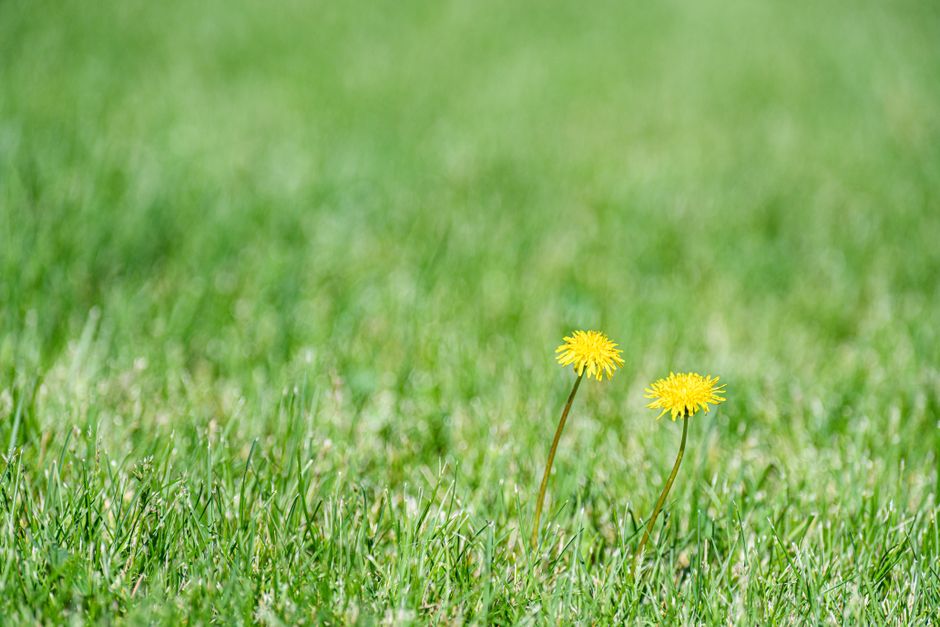
3 in 1 weed and feed is a multi-action lawn treatment that combines three functions in a single application:
- Kills existing broadleaf weeds like dandelions, clover, and dollarweed
- Prevents new weeds including crabgrass for up to 6 months
- Feeds your lawn with slow-release fertilizer to promote thick, green growth
It is designed to replace multiple separate products, saving you time and money in one pass across your yard.
Most 3 in 1 formulas are built for warm-season grasses common in southern states. They work on established turf types like Bermudagrass, St. Augustinegrass, Zoysiagrass, and Centipedegrass. They are not safe for Fescue, Ryegrass, or Bahiagrass lawns.
The ideal time to apply is when air temperatures are between 50 and 90 degrees Fahrenheit and weeds are actively growing, typically in spring or fall.
I'm Andrew Day, owner of Advanced Quality Lawn, with over 30 years of hands-on experience helping Ohio homeowners choose and apply the right treatments, including 3 in 1 weed and feed products, to get lasting results without the guesswork. In this guide, I'll walk you through everything you need to know to pick the right formula, apply it safely, and keep your lawn looking its best all season.
Understanding the Power of 3 in 1 Weed and Feed
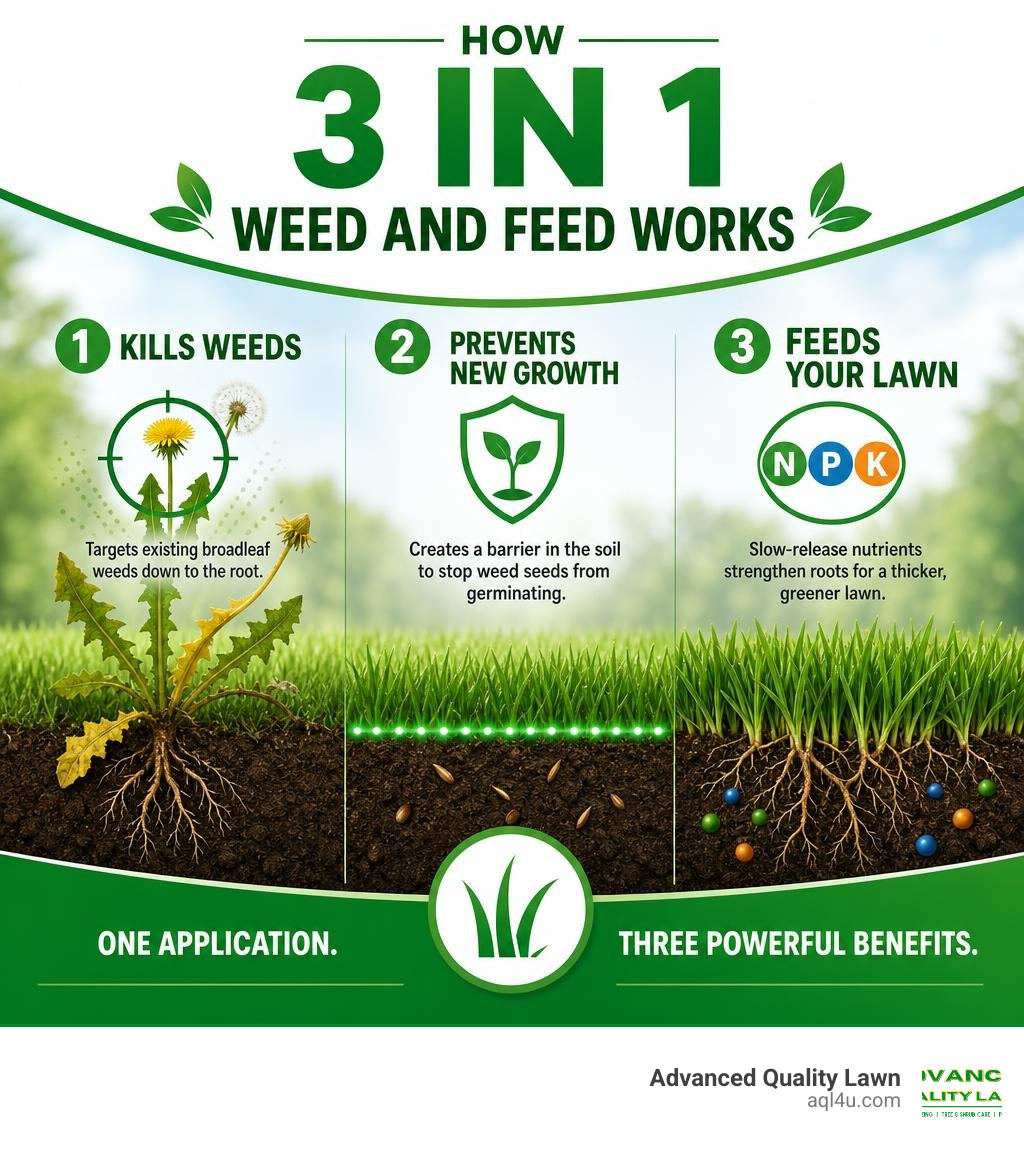
Multi-action lawn treatments have changed the way we look at yard care in 2026. Instead of spending your weekends pushing a spreader three different times, modern chemical engineering allows us to accomplish multiple goals at once. When you use a high quality triple action formula, you are combining lawn fertilization with both post-emergent and pre-emergent weed control.
Post-emergent herbicides target the weeds that you can already see growing in your lawn. They work by absorbing into the leaves and traveling down to the root system to kill the plant. Pre-emergent herbicides work entirely differently. They create a chemical barrier in the top layer of your soil that stops weed seeds from successfully germinating. When you combine these two weed control methods with slow-release nitrogen, you get a powerful tool that clears out pests while giving your grass the nutrients it needs to crowd out future invaders.
How 3 in 1 Weed and Feed Differs from Standard Products
Standard weed and feed products only handle two tasks. They feed the lawn and they kill weeds that are already visible. While this is helpful, it leaves a major gap in your defense. Standard products do nothing to stop new seeds from sprouting.
This is where a 3 in 1 weed and feed makes a massive difference. By adding a pre-emergent herbicide to the mix, these products prevent weeds like crabgrass before they even show their faces. You can learn more about how nutrients support this process in our guide on Fertilizer 101: What Is It and When Should You Use It. Choosing a triple action product means you are not just reacting to problems, you are actively planning ahead to keep your lawn clean for months.
The Science Behind the NPK Ratio and Fertilizer Benefits
Every bag of fertilizer has three numbers on the front which represent the NPK ratio. These numbers show the percentage of nitrogen, phosphorus, and potassium in the bag.
Nitrogen is the most important ingredient for established lawns because it drives leafy green growth. Potassium helps with overall plant health, water retention, and stress tolerance. Phosphorus is essential for root development in new grass, but it is heavily restricted in many regions. In fact, many states have strict phosphorus regulations to prevent environmental runoff from entering local waterways and causing algae blooms. Because of this, you will often see 3 in 1 products with a middle NPK number of zero.
When choosing a product, you should also consider the source of these nutrients. You can read our detailed breakdown on Is Organic Fertilizer Better Than Synthetic Fertilizer to understand how different formulas impact your soil biology over time. Slow-release nitrogen is especially helpful because it feeds your lawn gradually, preventing the rapid growth spikes and chemical burns associated with quick-release synthetic options.
Grass Compatibility and Regional Guidelines

Before you buy any lawn product, you must know what kind of grass you have. This is the single most common mistake homeowners make, and it can result in a completely dead lawn. Lawn care is highly regional, and what works beautifully in the south can be a disaster in Northeast Ohio.
Safe Turf Types for Southern Lawns
Many popular 3 in 1 products on the market are formulated specifically for warm-season grasses. These grasses thrive in hot climates and go dormant in the winter. If you have a lawn made of St. Augustinegrass, Bermudagrass, Zoysiagrass, or Centipedegrass, these southern formulas are generally safe to use when applied according to the label instructions.
For these specific turf types, products like 3-In-1 Weed And Feed For Southern Lawns provide excellent results by targeting southern weeds without harming the warm-season grass blades.
Grass Varieties to Avoid and Regional Restrictions
If you live in Northeast Ohio, you must proceed with extreme caution. Our lawns in cities like Hudson, Brecksville, Copley, Medina, and Cleveland consist of cool-season grasses. These include Fescue, Ryegrass, Kentucky Bluegrass, and Bentgrass.
Southern 3 in 1 formulas are highly toxic to these grass varieties. Applying a southern weed and feed to a Fescue or Ryegrass lawn will yellow, injure, or completely kill your grass. Always read the product label carefully before purchasing. For example, the 3n1 Weed & Feed for Southern Lawns 12.5lb explicitly warns against using the product on Fescue, Ryegrass, Bahiagrass, or Bentgrass.
Additionally, you must be aware of local environmental laws. Many counties in Northeast Ohio have strict rules regarding fertilizer runoff. Working with a professional service ensures you stay compliant with all local environmental regulations while keeping your lawn safe.
Weed Control Spectrum and Prevention Longevity
A great multi-action treatment should target a wide variety of weeds while offering long lasting protection. Understanding what a product can kill and what it can prevent will help you set realistic expectations for your lawn.
Target Weeds Killed and Prevented
A high quality 3 in 1 product targets two distinct groups of weeds.
First, it acts as a post-emergent herbicide to kill actively growing broadleaf weeds. This includes tough pests like dollarweed, dandelions, clover, henbit, and chickweed.
Second, it acts as a pre-emergent herbicide to stop grassy weeds from germinating. This is your primary defense against crabgrass, annual bluegrass, foxtail, and goosegrass. You can find more details on identifying these pests in our Ultimate Weeds and Crabgrass Guide.
If you are dealing with particularly stubborn weeds, you may also want to check out our advice on the Best Weed Killer for Nutsedge and Crabgrass to see how to handle targeted spot treatments.
How Long Does the Weed Prevention Last
One of the biggest selling points of a premium 3 in 1 weed and feed is its residual barrier. A single application can provide up to six months of protection against new weeds.
This long lasting barrier means you only need to apply the product once or twice a year. Typically, a spring application prevents summer weeds like crabgrass, while a fall application stops winter weeds like annual bluegrass. If you want to explore more ways to keep your yard clear, read our guide on the Best Solution to Kill Weeds.
Application Guide and Safety Precautions
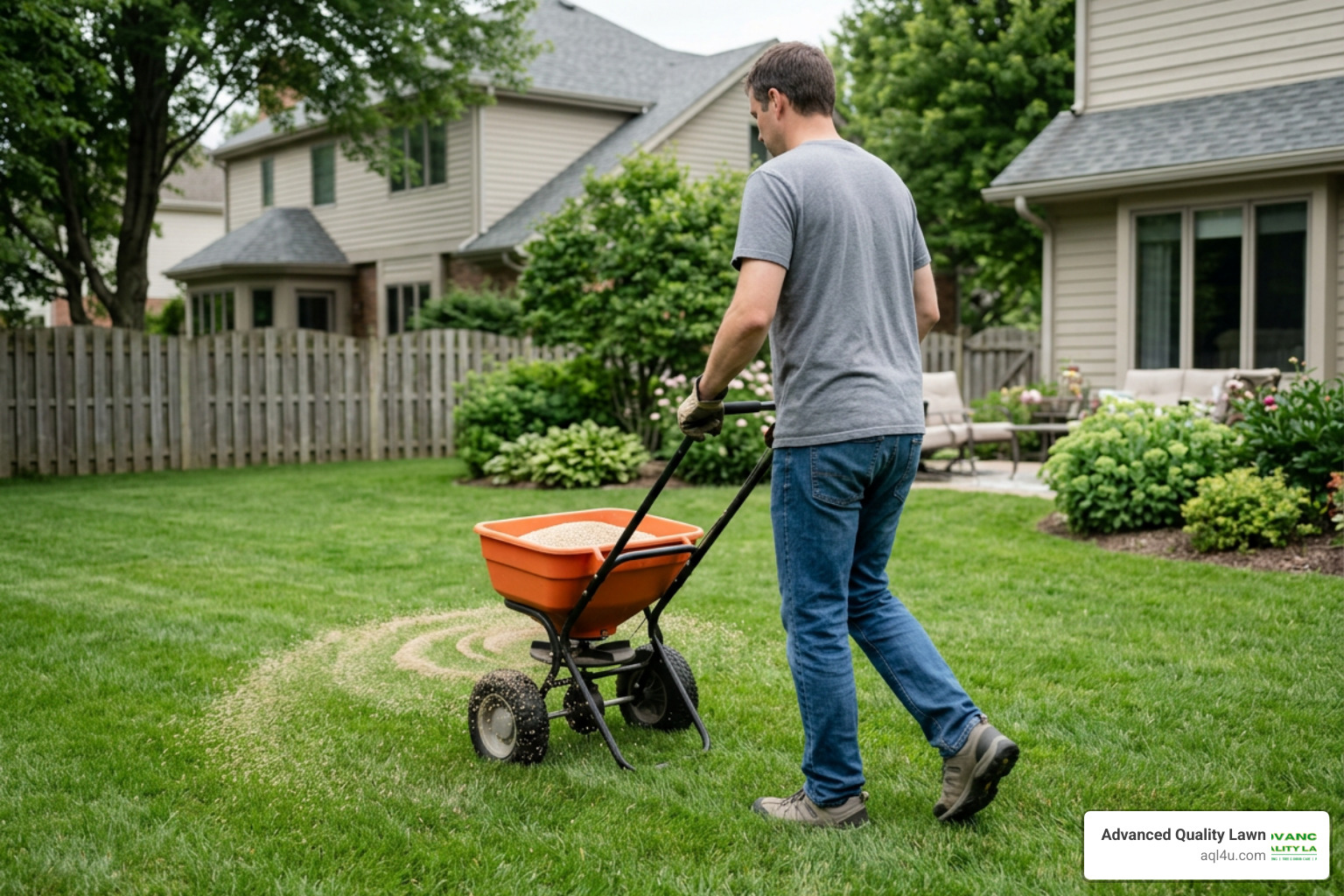
How you apply your lawn care products is just as important as the product you choose. Even the best formula will fail, or worse, burn your lawn, if it is applied incorrectly.
Best Practices for Applying 3 in 1 Weed and Feed
For the best results, timing and weather are everything. You should apply your treatment in the spring or fall when weeds are actively growing and air temperatures are consistently between 50 and 90 degrees Fahrenheit.
Before you start, make sure you know when to use your products. You can find helpful tips in our resource on When to Use Fertilizer.
Follow these steps for a successful application:
- Mow your lawn at your normal height one to two days before applying the product.
- Check the weather forecast to ensure no heavy rain is expected for at least 24 hours.
- Apply the granules to a damp lawn in the morning when dew is still on the grass. This helps the weed-killing granules stick to the leaves.
- Use a calibrated broadcast spreader to ensure even coverage across your entire yard.
- Wait 24 hours, then water the lawn lightly to wash the pre-emergent ingredients down into the soil to activate the protective barrier.
Pet and Child Safety Post-Application
Safety should always be your top priority when applying chemical treatments to your yard. Granular weed and feed products contain active herbicides that can be harmful if touched or swallowed before they are properly processed.
Keep children and pets completely off the treated lawn during the application. Once you have watered the product into the soil, you must wait for the grass to dry completely. Once the lawn is dry, the active ingredients are locked into the soil and plants, making it safe for your family and pets to return to the yard.
Comparing Multi-Action Lawn Treatments
With so many products on shelves in 2026, it can be confusing to choose the right one. Let us look at how different multi-action formulas stack up against each other:
- Standard Weed & Feed: Includes post-emergent control for broadleaf weeds and fertilizer, but lacks pre-emergent control and insect control.
- 3 in 1 Weed & Feed: Includes post-emergent control for broadleaf weeds, pre-emergent control for crabgrass and grassy weeds, and fertilizer, but lacks insect control.
- Triple Action: Includes post-emergent control for broadleaf weeds, pre-emergent control for crabgrass and grassy weeds, fertilizer, and sometimes insect control for ants or fleas.
- 5 in 1 Weed & Feed: Includes post-emergent control for broadleaf and grassy weeds, pre-emergent control for up to six months, fertilizer, insect control, and heat or drought protection.
Comparing 3-in-1 Formulas to Triple Action and 5-in-1 Options
While a 3 in 1 product is a massive upgrade over standard options, some homeowners look for even more coverage. Triple action products often add basic insect control to target pests like fire ants or fleas. 5 in 1 options go a step further by offering advanced heat resistance and broader weed control.
However, these complex chemical mixtures are not always the best choice for every lawn. Synthetic chemicals can sometimes stress your soil biology if overused. To understand the balance between chemical power and natural care, read our discussion on Organic vs. Synthetic treatments.
Frequently Asked Questions About Multi-Action Treatments
Can I apply this product to a newly seeded lawn
No, you should never apply a 3 in 1 weed and feed to a newly seeded lawn. The pre-emergent herbicide in the product cannot tell the difference between a weed seed and a grass seed. It will stop your new grass from growing.
You should wait until your new lawn is fully established and has been mowed at least four times before applying any weed prevention products. If you are looking to feed young grass safely, check out our guide on the Best Fertilizer for New Grass.
What is the best temperature for application
The ideal air temperature range for application is between 50 and 90 degrees Fahrenheit. If you apply the product when it is too cold, the weeds will not be actively growing, meaning they won't absorb the herbicide. If you apply it when temperatures exceed 90 degrees, you risk severe chemical burns on your grass.
How long should I wait to mow after application
You should avoid mowing your lawn for at least 24 to 48 hours after applying a granular treatment. This gives the weed-killing granules enough time to stick to the weed leaves and absorb into the plant tissue. Mowing too soon will knock the granules off the leaves and ruin the effectiveness of the post-emergent herbicide.
Conclusion
Taking care of your lawn does not have to be a stressful chore. While DIY products like 3 in 1 weed and feed offer a convenient way to tackle multiple problems at once, they also come with major risks. If you live in Northeast Ohio, using the wrong product can easily ruin your cool-season turf.
At Advanced Quality Lawn, we take the guesswork out of yard care. We proudly serve homeowners throughout Akron, Hudson, Brecksville, Copley, Medina, Cleveland, and the surrounding counties. Our team provides excellent customer service, easy service calls, and full-program guarantees to ensure your lawn stays thick, green, and weed-free all year long.
Skip the trip to the garden center and let the local experts handle it. Schedule professional lawn care maintenance with Advanced Quality Lawn today!