Cedar Chips and Diatomaceous Earth: The Ultimate Flea-Fighting Guide
The Best Way to Treat Your Yard for Fleas (And Why It Matters)

The best way to treat yard for fleas combines three steps: preparing your lawn, applying targeted treatments to shaded hotspots, and protecting your pets year-round. Here is a quick overview:
- Mow and clear debris to eliminate flea hiding spots and expose soil to sunlight.
- Identify hotspots using the white sock test (walk through shaded areas in white socks and look for fleas jumping on).
- Apply treatment to hotspots only using diatomaceous earth, cedar chips, beneficial nematodes, or a pyrethroid-based insecticide.
- Treat weekly for four weeks, then monthly to catch newly hatched fleas.
- Keep pets on flea prevention medication year-round to stop the cycle at the source.
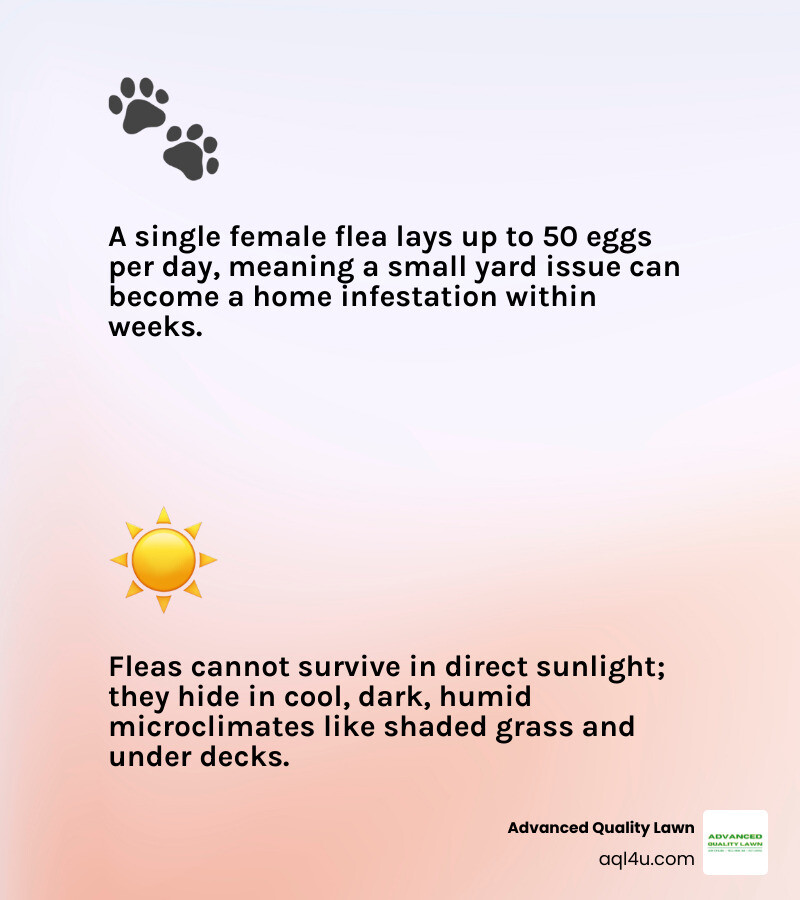
Fleas are not just a nuisance. A single female flea can lay up to 50 eggs per day, meaning a small problem in your backyard can spiral into a full home infestation within weeks. And here is the part most homeowners miss: only adult fleas live on your pets. The eggs, larvae, and pupae are living in your yard, your garden beds, under your deck, and in shaded patches of grass. Treating your pet alone will not solve the problem.
If your dog has been scratching nonstop, or you have noticed tiny dark specks on pet bedding, your yard is almost certainly already involved.
I'm Andrew Day, owner of Advanced Quality Lawn, and with more than 30 years of lawn care experience serving Northeast Ohio homeowners, I have helped countless families find the best way to treat their yard for fleas using methods that are safe, effective, and built around Ohio's specific climate and seasons. In this guide, I will walk you through exactly what works and what does not, so you can get your yard back fast.
Identifying Flea Hotspots and Preparing Your Lawn for Treatment
Before you run out to buy any treatment products, you need to know where the enemy is hiding. Fleas are highly sensitive to their environment. They cannot survive in open, sunny areas of your lawn because direct sunlight dries them out and kills them. Instead, they seek out cool, dark, and humid microclimates.
To find these exact spots, you can perform a simple DIY diagnostic called the white sock test. Put on a pair of thick, tall white socks and walk slowly through the shaded areas of your yard, especially around dog runs, under decks, beneath low-hanging shrubs, and along shaded fence lines. Fleas are attracted to body heat, movement, and carbon dioxide. When they sense you passing by, they will jump onto the white fabric, making them incredibly easy to spot.
Once you have identified these flea hotspots, you must prepare your yard before applying any treatments. Proper yard preparation is half the battle when it comes to effective Pest Control. If you skip this step, your treatments will not reach the soil where flea eggs and larvae are developing.
Start by mowing your lawn to a height of 2 to 3 inches. Mowing frequently exposes the soil to direct sunlight, which naturally discourages fleas from nesting in the grass. Next, rake your yard thoroughly to remove thick thatch, dead leaves, and organic debris. This step is critical because flea larvae feed largely on the droppings of adult fleas, which are known as flea dirt, and this food source accumulates in organic debris. Raking also increases the exposure of remaining fleas to any treatments you apply.
You should also trim back low tree branches and overgrown bushes to increase sunlight and air circulation. Clear out piles of firewood, brush, and rocks where wild animals like raccoons, opossums, and stray cats might nest. These animals are common wildlife vectors that carry fleas into Northeast Ohio yards. Finally, remove all pet toys, food bowls, and standing water from birdbaths or gutters before starting any treatment.
The Best Way to Treat Yard for Fleas Using Natural Methods
For homeowners who want to avoid synthetic chemicals, there are several highly effective natural treatments. These non-toxic solutions are excellent for families with young children and curious pets. The three most reliable natural methods are food-grade diatomaceous earth, cedar wood chips, and beneficial nematodes.
To help you choose the best approach for your property, we have put together a comparison of these natural flea control methods:
- Diatomaceous Earth: Best for dry, shaded soil and patios. It works through mechanical dehydration. Reapply weekly and after rain.
- Cedar Wood Chips: Best for perimeter barriers and under decks. It works as a natural aromatic repellent. Replace every 4 to 6 weeks.
- Beneficial Nematodes: Best for moist, shaded garden beds. It works through biological larval control. Apply once in late spring or summer.
Using these natural methods in combination is often the best way to treat yard for fleas without introducing synthetic chemicals to your property. For a deeper look at managing outdoor pests naturally, check out our Ultimate Guide Kill Fleas Yard.
How to Apply Diatomaceous Earth as the Best Way to Treat Yard for Fleas
Diatomaceous earth is a non-toxic powder made from the fossilized remains of tiny aquatic organisms called diatoms. It is a highly effective mechanical insecticide, which means it kills pests physically rather than chemically. Under a microscope, diatomaceous earth looks like sharp shards of glass that absorb the waxy lipid layer of the flea's exoskeleton, causing them to dehydrate and die within a few hours. Because this is a physical process, fleas cannot develop chemical immunity to it.
When using this method, you must only buy food-grade diatomaceous earth. Industrial-grade versions used for swimming pool filters contain high levels of crystalline silica and are dangerous to inhale. Even with food-grade powder, you should wear safety goggles, a face mask, and gloves during application to avoid irritating your lungs and eyes.
To apply it, wait for a calm, dry day when no rain is forecast for at least 48 hours. Use a garden duster or a simple flour sifter to sprinkle a thin, uniform layer of the powder over dry soil, flower beds, and under porches. You can learn more about this process in our guide on applying diatomaceous earth. That diatomaceous earth is only active when it is completely dry. If it rains, or if there is heavy morning dew, the powder loses its effectiveness and you must reapply it.
Spreading Cedar Chips as a Natural Barrier
Cedar wood chips do not kill fleas on contact, but they are an outstanding preventative tool because fleas absolutely hate the scent of cedarwood oil. Spreading fresh, aromatic cedar chips around the perimeter of your yard, under decks, and around pet resting areas creates a natural repellent barrier that discourages migrating pests from entering your lawn.
This natural barrier is especially useful in shaded microclimates where moisture retention is high. The aromatic oils in the cedar wood slowly release over time, disrupting the flea's sensory systems and driving them away. For the best results, choose high-quality cedar chips that have not been de-oiled, as the essential oils are the active component that repels the pests. You should plan to refresh these cedar barriers every 4 to 6 weeks to maintain their aromatic strength.
Deploying Beneficial Nematodes as the Best Way to Treat Yard for Fleas
If you have damp, heavily shaded areas where diatomaceous earth cannot be used, beneficial nematodes are the perfect alternative. These microscopic, worm-like organisms are a highly effective biological control. The specific species Steinernema carpocapsae is an active hunter that seeks out and feeds on flea larvae in the soil.
Studies show that applying beneficial nematodes to your soil can stop 70% to 100% of flea larvae from turning into adult fleas. They can kill flea larvae in under 48 hours without causing any harm to humans, pets, plants, or beneficial pollinators like honeybees.
To deploy them, purchase live nematodes and mix them with water according to the package instructions. Spray the solution onto moist, shaded soil using a garden sprayer. It is best to apply them in the early morning or evening because direct ultraviolet light from the sun can kill these sensitive organisms. Keep the treated soil lightly watered for a few days after application to help the nematodes move through the soil and find their targets. You can find more details on biological lawn care in our resource on natural yard treatments.
Chemical and Professional Treatment Options
While natural methods work wonders for mild infestations, severe flea problems often require professional-grade chemical treatments to achieve rapid control. Synthetic insecticides containing pyrethroids, such as bifenthrin, are highly effective because they target the nervous system of adult fleas on contact.
When we apply these treatments, we combine the adulticide with an insect growth regulator. Insect growth regulators act as birth control for bugs, preventing flea eggs and larvae from maturing into breeding adults. This dual-action approach is crucial because conventional insecticides only kill the active adult stages, leaving the protected pupae and eggs behind.
Instead of blanket-spraying your entire lawn, we focus on targeted spraying. We apply the liquid treatment to the bottom few feet of your home's siding and work outward into the shaded zones, shrubs, and foundation plantings. This targeted application provides excellent residual control while minimizing product use on open, sunny turf where fleas cannot survive.
If you prefer a granular application, we use high-quality products that are watered in to activate the active ingredients for direct soil contact. You can read more about these options in our guide on the Best Lawn Insect Killer Granules or explore our complete Perimeter Pest Control services.
Many homeowners attempt DIY chemical treatments, which typically cost around $30 to $60 per application. However, improper application can lead to poor results and chemical runoff. Our professional services provide a safer, more reliable solution backed by full-program guarantees. For a broader look at managing lawn pests, you can also check out our Ultimate Bug Control Guide 2026 and our review of the Best Insect Control for Lawns.
Frequently Asked Questions About Yard Flea Control
Managing outdoor pests can be confusing, so we have compiled answers to the most common questions we receive from homeowners in Northeast Ohio.
How often should I treat my yard for fleas to break the life cycle?
To successfully break the flea life cycle, you should treat your yard weekly for four weeks, followed by monthly maintenance applications throughout the active season. This frequent schedule is necessary because flea pupae are wrapped in a protective cocoon that resists both chemical and natural insecticides.
These pupae can remain dormant in the soil for weeks. A single application will kill the active larvae and adults, but new fleas will continue to hatch from their cocoons days later. Treating weekly for a month ensures you catch these newly emerged fleas before they have a chance to reproduce.
Is it necessary to treat the entire lawn or just specific areas?
No, you do not need to treat your entire lawn. Broadcasting insecticides across open, sunny turf is a waste of product and money. Fleas require high humidity and shade to survive, meaning they cannot live in the middle of a well-mowed, sunny lawn.
Instead, focus your efforts entirely on shaded zones, under decks, along fence lines, and in dog runs. This targeted treatment approach is highly efficient, protects beneficial insects in other parts of your yard, and keeps your treatment costs down.
How can I prevent fleas from coming back to my yard?
The most effective way to prevent fleas from returning is to combine physical yard maintenance with wildlife exclusion and pet care. Keep your lawn mowed regularly and clear away organic debris to eliminate potential breeding sites.
Prevent wild animals from entering your yard by sealing crawl spaces under decks, securing outdoor trash cans, and storing pet food in airtight containers. Finally, keep all household pets on a year-round, veterinarian-approved flea prevention medication. If wild animals drop flea eggs in your yard, pets on preventive medication will not act as hosts, stopping the infestation before it can start.
Conclusion
Finding the best way to treat yard for fleas does not have to be a stressful trial-and-error process. By preparing your lawn, targeting shaded hotspots, and choosing the right combination of natural or chemical treatments, you can enjoy a safe, flea-free outdoor space all summer long.
At Advanced Quality Lawn, we provide professional pest management services throughout Northeast Ohio, including Akron, Hudson, Solon, and Cuyahoga Falls. Our experienced team uses advanced, pet-safe application techniques backed by our full-program guarantees. If you are ready to hand the job over to the experts, contact us today to learn more about our Lawn Care Maintenance plans and perimeter pest treatments.