
Understanding Soil Compaction and Lawn Aeration
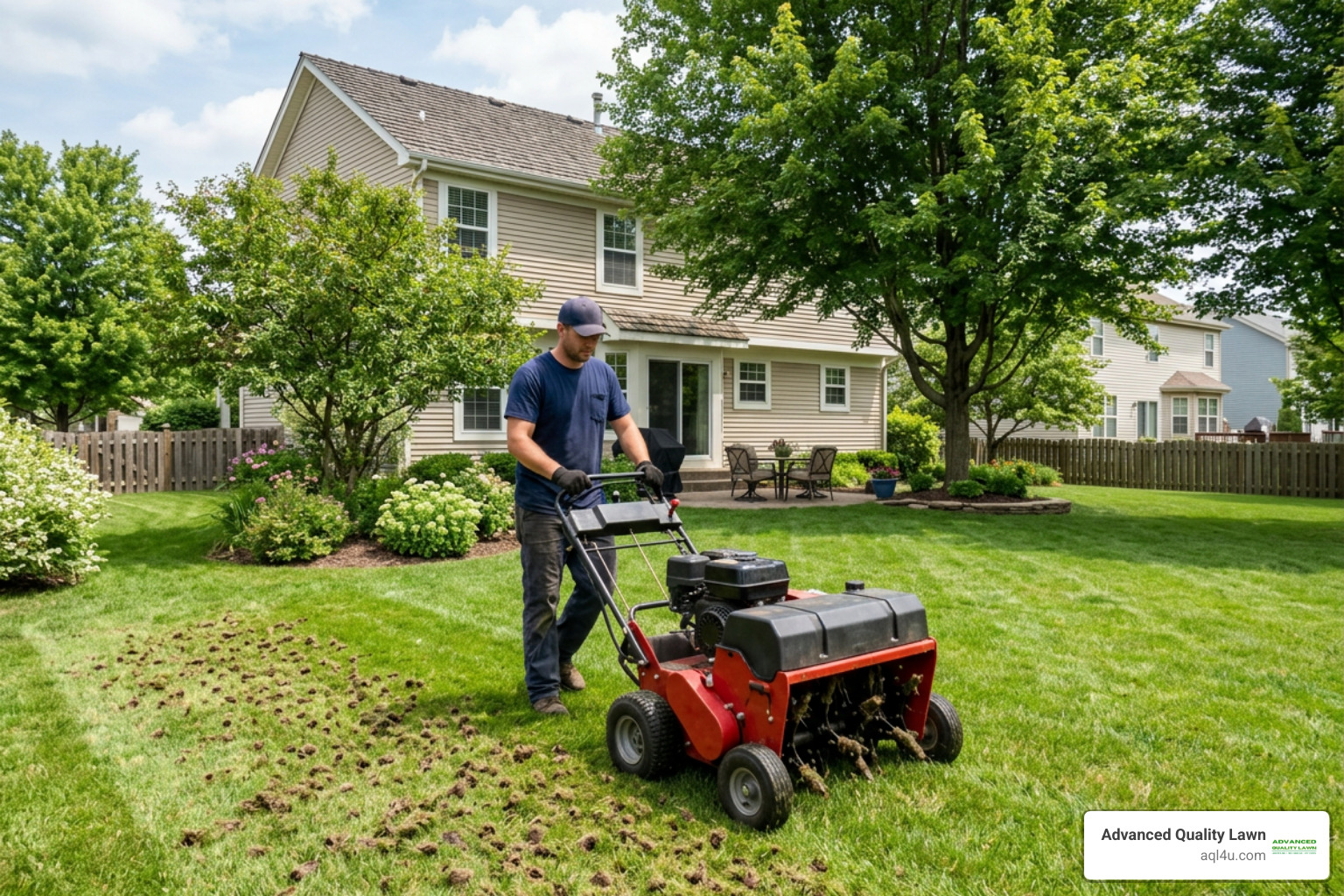
Grass roots need oxygen to stay healthy and support a lush canopy. Soil compaction happens when the spaces between soil particles get squeezed shut. This restricts the natural exchange of gases in the dirt. Oxygen cannot easily get into the root zone, and trapped carbon dioxide cannot escape. When carbon dioxide builds up underground, roots slow down their intake of nutrients and water.
Most soil compaction takes place in the top 2 inches of soil. Different activities create pressure at specific depths:
- Kids and pets playing cause compaction in the upper 1 inch.
- Lawn sports and intense foot traffic compress the top 2 inches.
- Parking cars or riding mowers on grass pushes down the top 3 inches.
- Heavy construction equipment can crush soil layers down to 6 inches deep.
Natural processes like earthworm activity help aerate soil, but heavy clay soils in Northeast Ohio often need extra help. When dense clay combines with foot traffic, air pathways close completely.
Another major issue is thatch buildup. Thatch is a layer of living and dead roots, rhizomes, and stems that sits between the green blades and the soil surface. Grass clippings do not cause thatch because they decompose quickly. Instead, stems and rhizomes from spreading grasses create this dense mat. If your thatch layer grows thicker than 1/2 inch, it acts like a sponge. It absorbs water before moisture can reach the root system.
When you aerate a lawn, you open up pathways through the thatch and compact soil so roots can thrive. For complete lawn care support, exploring our guide on Lawn Maintenance Akron Ohio will help keep your yard looking vibrant.
Signs Your Lawn Needs Aeration
Determining whether your yard needs attention is easy with a few quick tests. Soil compaction signs are often visible, but physical tests confirm what is going on below the surface.
- The Screwdriver Test: Take a standard 6-inch screwdriver and try to push it into moist lawn soil by hand. If it slides in easily up to the handle, your soil has plenty of pore space. If you meet strong resistance after 1 or 2 inches, your lawn is severely compacted.
- Thatch Depth Inspection: Slice a small, 4-inch deep wedge of turf out of the lawn using a garden trowel. Measure the spongy brownish layer sitting directly beneath the green grass blades. If it measures over 1/2 inch thick, aeration is required.
- Water Pooling: When rain or sprinkler water stands on top of the lawn instead of soaking in, poor drainage caused by compaction is usually the culprit.
- Thinning Grass and High Traffic: Paths worn down by walking, pets, or outdoor play often turn thin and patchy due to dense, hard ground.
Checking soil moisture before these tests ensures accurate results. Overly dry soil is naturally tough to penetrate, so test your turf a day after moderate rainfall.
When to Aerate a Lawn by Grass Type
Timing is essential when planning to aerate a lawn. You want to aerate when your grass is in its peak growth phase so it recovers quickly and fills in open holes.
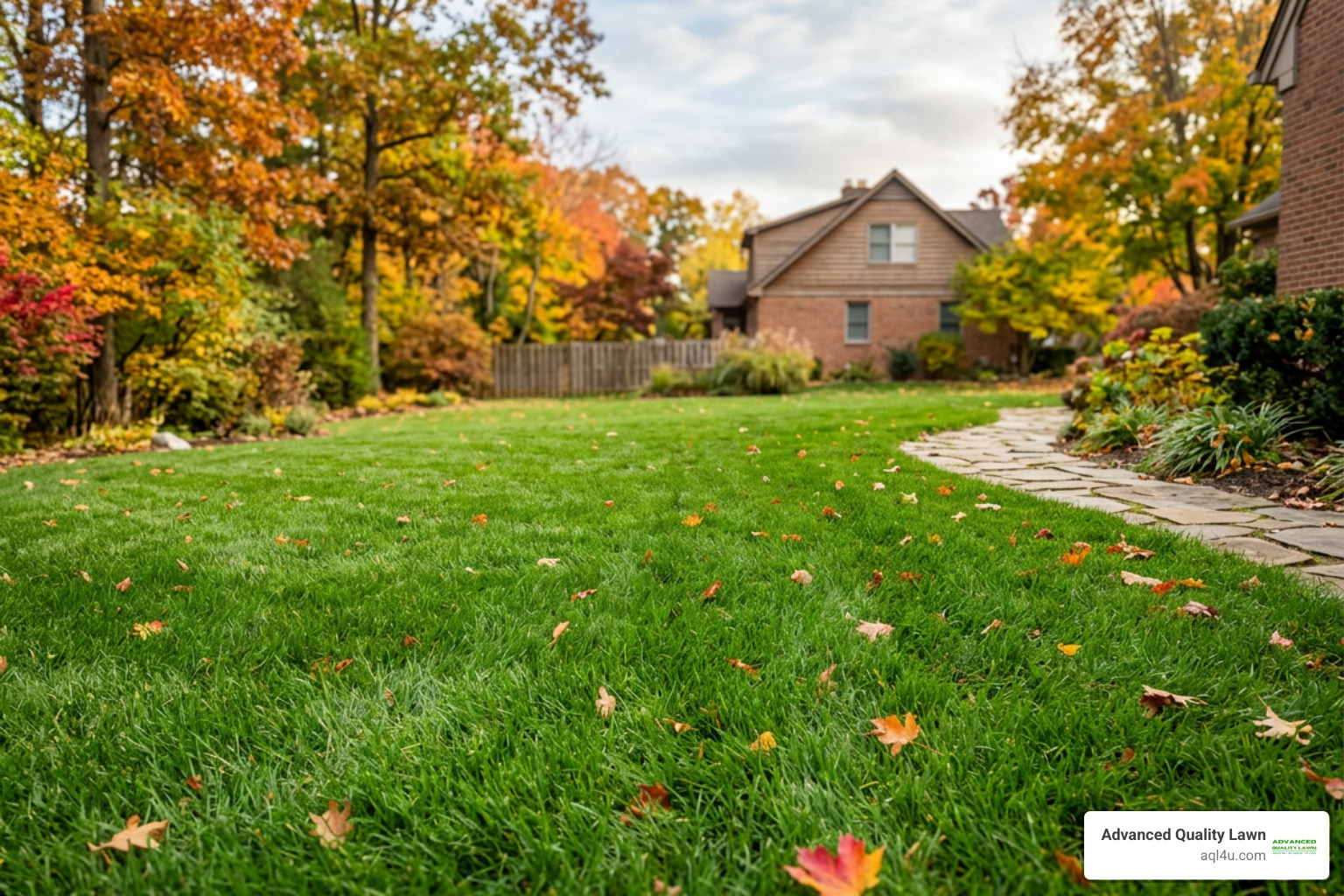
Cool-season grasses like Kentucky bluegrass, perennial ryegrass, and tall fescue thrive across Ohio and northern states. The absolute best time to aerate cool-season lawns is late summer into early fall, specifically from late August through October. During this period, soil temperatures remain warm while air temperatures cool down, creating perfect growing conditions with minimal weed competition. Spring is a acceptable secondary option during March or April, but fall aeration provides better long-term turf development.
Warm-season grasses like Bermuda, zoysia, St. Augustine, and buffalograss are common in southern states. These grasses grow actively during summer heat. The best window for warm-season lawns is late May through July. Never aerate cool-season grasses during midsummer heat or winter dormancy, as this stresses grass roots when they cannot heal.
To keep your turf resilient heading into cold weather, read our expert tips on How to Keep Your Lawn Healthy with Cold Ohio Weather.
Core Aeration vs. Spike Aeration
When choosing how to aerate a lawn, selecting the correct method determines your long-term success. The two primary mechanical approaches are core aeration and spike aeration.
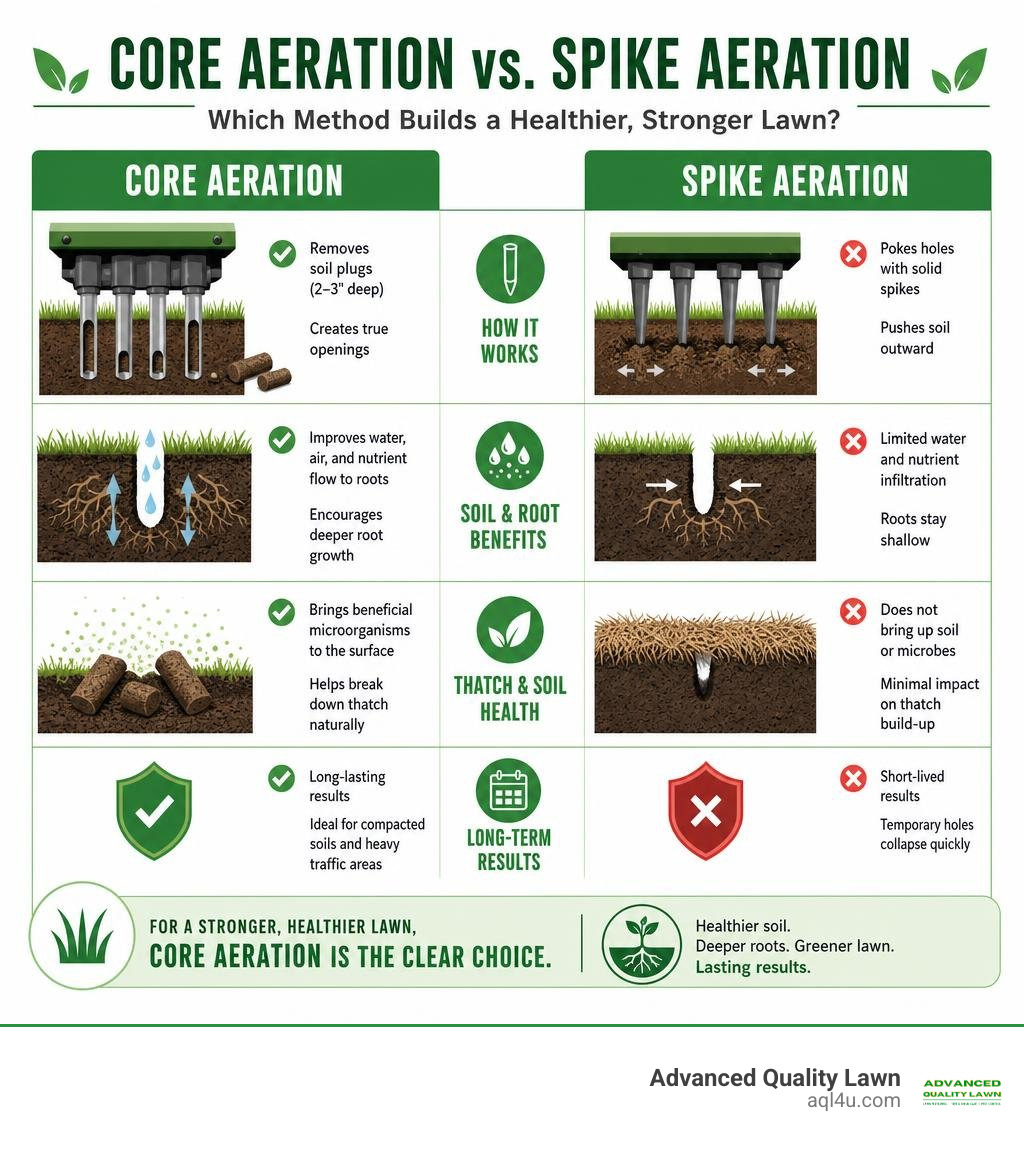
Core aeration uses hollow tines to physically remove plugs of soil from the ground. These tines extract cores that measure 2 to 3 inches deep, roughly 3/4 inch in diameter, and spaced 2 to 3 inches apart. Pulling actual soil plugs creates true open expansion space, allowing surrounding soil to relax and spread out. Additionally, bringing soil cores up to the surface deposits beneficial microorganisms directly onto the thatch layer. These microbes naturally digest organic buildup from above.
Spike aeration relies on solid tines, spikes, or spiked shoes to poke holes in the ground. While this might seem helpful, solid spikes push soil outward to the sides as they press down. In heavy clay soils, spike aeration actually worsens compaction around the hole walls. The temporary holes collapse quickly, providing minimal long-term benefit for deep roots.
| Feature | Core Aeration | Spike Aeration |
|---|---|---|
| Tine Type | Hollow tines that pull soil cores | Solid tines or spikes that press down |
| Compaction Relief | Removes soil to create physical space | Pushes soil sideways, increasing side compaction |
| Plug Dimensions | 2 to 3 inches deep, 3/4 inch wide | Variable depth solid punctures |
| Thatch Impact | Deposits soil microbes to break down thatch | Minimal impact on thatch layer |
| Best For | Heavy clay soils, severe compaction | Temporary surface venting in loose sandy soils |
Step-by-Step Guide: How to Aerate a Lawn
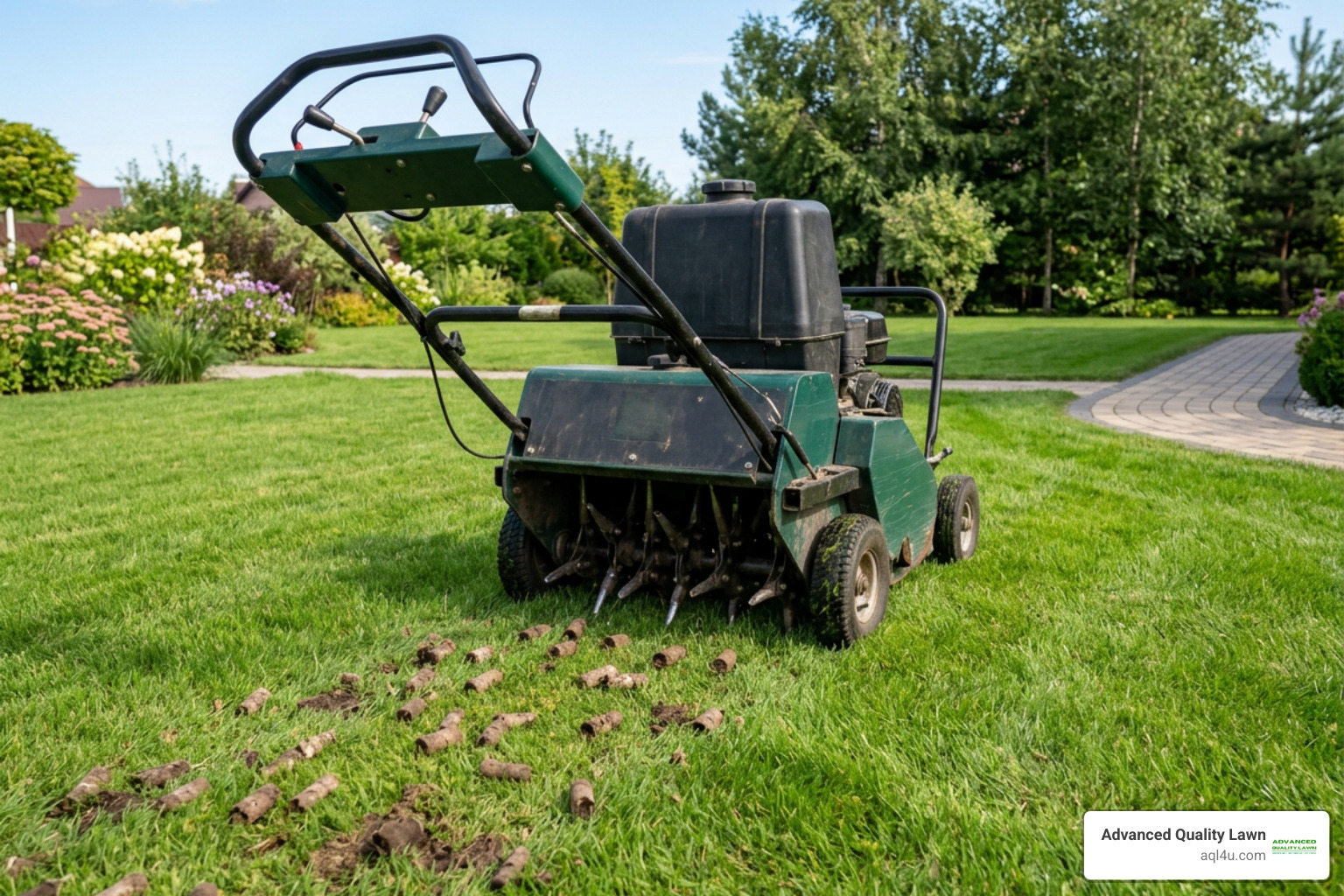
Aerating your lawn correctly takes basic preparation and systematic execution. Renting a walk-behind core aerator typically costs around $70 to $120 per day, making it an affordable annual project. Following proper steps protects your lawn, equipment, and hidden underground utilities. You can also explore detailed steps in this external guide on How to Aerate a Lawn: Step-by-Step Guide (2026) .
Tools Needed to Aerate a Lawn
Before starting, gather the right equipment for your yard size:
- Manual Core Aerator: A foot-press tool with hollow tines. Best for small yards under 1,000 square feet or targeted spot treatments.
- Walk-Behind Power Aerator: A self-propelled gas machine with rotating hollow tines. Ideal for standard residential lawns up to half an acre.
- Tow-Behind Aerator: Attaches to a riding lawn mower or lawn tractor. Excellent for properties larger than half an acre.
- Irrigation Flags: Used to mark hidden obstacles like sprinkler heads, shallow cables, and septic lids.
- Safety Gear: Heavy work boots, hearing protection, and sturdy gloves.
For additional equipment insights, check out this resource on When and How to Aerate Your Lawn for Thicker, Healthier Grass .
Lawn Preparation Steps
Preparing your grass beforehand ensures the machine pulls deep, complete soil cores without damaging property.
- Call Utility Services: Contact 811 at least two days before aerating to identify shallow buried electrical, gas, or cable lines.
- Moisten the Soil: Dry soil prevents aerator tines from penetrating deep enough. Apply about 1 inch of water 24 hours prior to aerating, or schedule work the day after moderate rain. Soil should be moist like a wrung-out sponge, but never overly muddy.
- Mow the Grass: Mow your lawn slightly lower than usual, around 1.5 to 2 inches tall. Shorter grass helps the aerator tines reach soil cleanly and allows extracted cores to drop clear of the turf canopy. For best practices on mowing heights, read our guide on Mowing Your Lawn.
- Flag All Hazards: Place brightly colored irrigation flags over invisible objects including sprinkler heads, valve boxes, shallow tree roots, invisible dog fences, and drain pipes.
- Clear Debris: Rake up sticks, rocks, and fallen leaves that could jam the aerator mechanism.
Proper seasonal preparation pays off, so review our recommendations for Preparing Your Lawn for Spring as well.
Executing the Aeration Process
Once your yard is marked and prepped, start aerating using a structured pattern.
- Start on a Straight Line: Position the core aerator along a straight perimeter edge of your yard. Engage the tines and guide the machine forward in steady rows.
- Work in a Grid Pattern: Complete one full pass across the entire lawn in parallel rows, slightly overlapping each pass by 2 to 3 inches.
- Make a Second Perpendicular Pass: Turn 90 degrees and complete a second pass over the lawn in a crosshatch grid pattern. Making perpendicular passes doubles hole density, ensuring maximum soil expansion.
- Focus on High-Traffic Zones: Make extra passes over heavily compacted areas like play zones, dog runs, or along driveway edges.
- Maintain Proper Hole Density: Aim for 20 to 40 core holes per square foot. Each hole should reach 2 to 3 inches deep with plug spacing every 2 to 4 inches.
For more helpful execution tips on manual tools, look at this guide on How to Manually Aerate Your Lawn by Hand: Tips for Turf .
Essential Care After Aerating Your Lawn
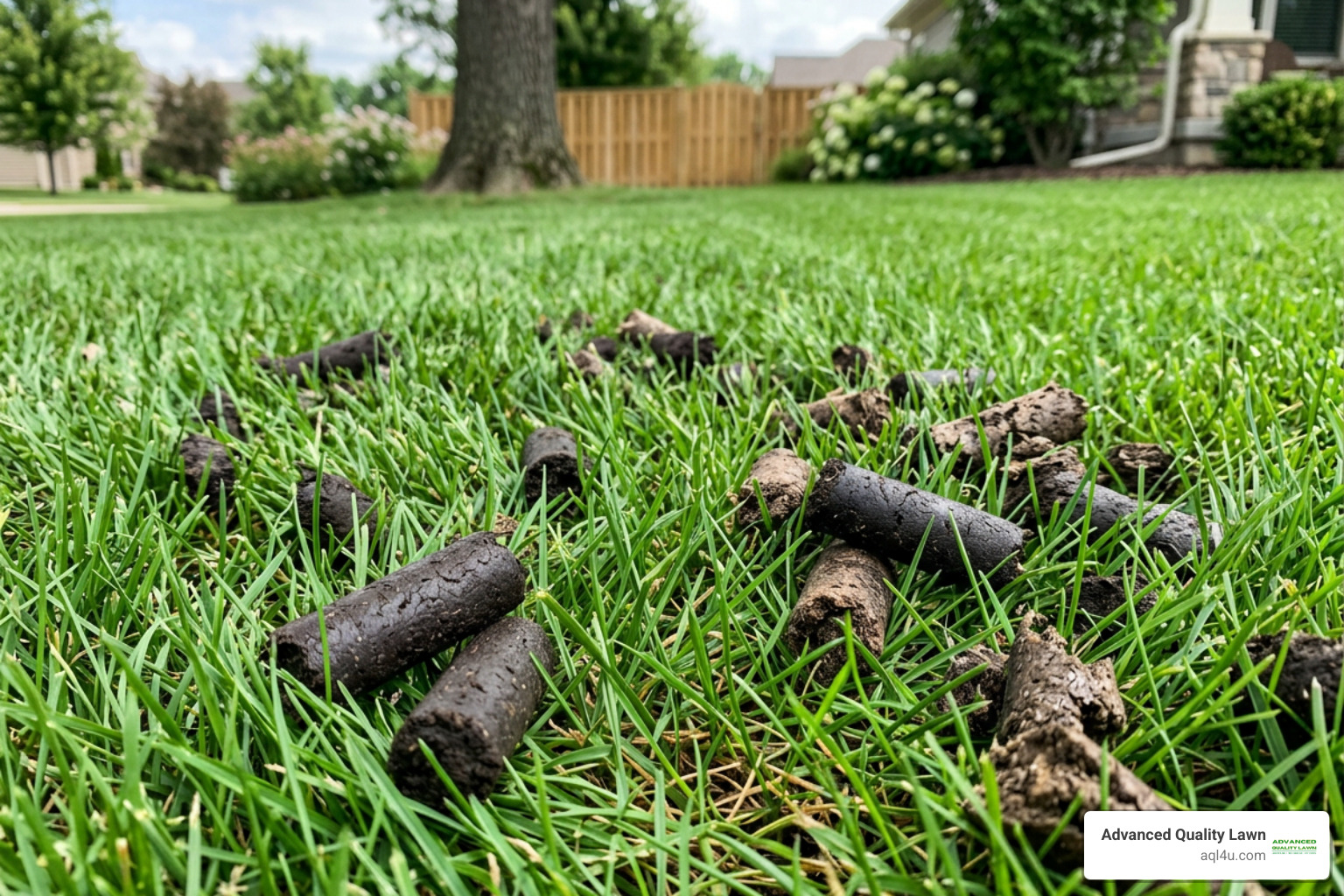
What you do after running a core aerator makes a huge difference in how fast your lawn greens up and thickens.
Soil Plug Decomposition
After completing core aeration, your lawn will look like a field dotted with small soil plugs. Resist the temptation to rake up or remove these cores! Leaving soil plugs on top of the lawn allows them to dry out, crumble, and break down naturally within 2 to 3 weeks.
As rain, foot traffic, and routine mowing break down the plugs, healthy soil microbes drop back down into the thatch layer. These microbes feed on organic thatch material, helping naturally dethatch your yard from above. If you want to speed up breakdown, drag a small piece of chain-link fence or a lawn mat across dry plugs after one week.
Overseeding and Fertilizing
Aeration opens up hundreds of small channels directly into the root zone. This makes immediate post-aeration the single best opportunity for overseeding and fertilizing.
- Seed-to-Soil Contact: Seed dropped onto aerated turf falls directly into core holes. This provides seed protection and constant soil contact, dramatically boosting germination rates.
- Overseeding Rates: For cool-season lawns, apply high quality grass seed right after aerating. Tall fescue works best at 6 to 8 pounds per 1,000 square feet, while Kentucky bluegrass thrives at 2 to 3 pounds per 1,000 square feet.
- Fertilizer Application: Apply a high-phosphorus starter fertilizer immediately after seeding. Phosphorus stimulates strong, rapid root growth in newly opened core holes.
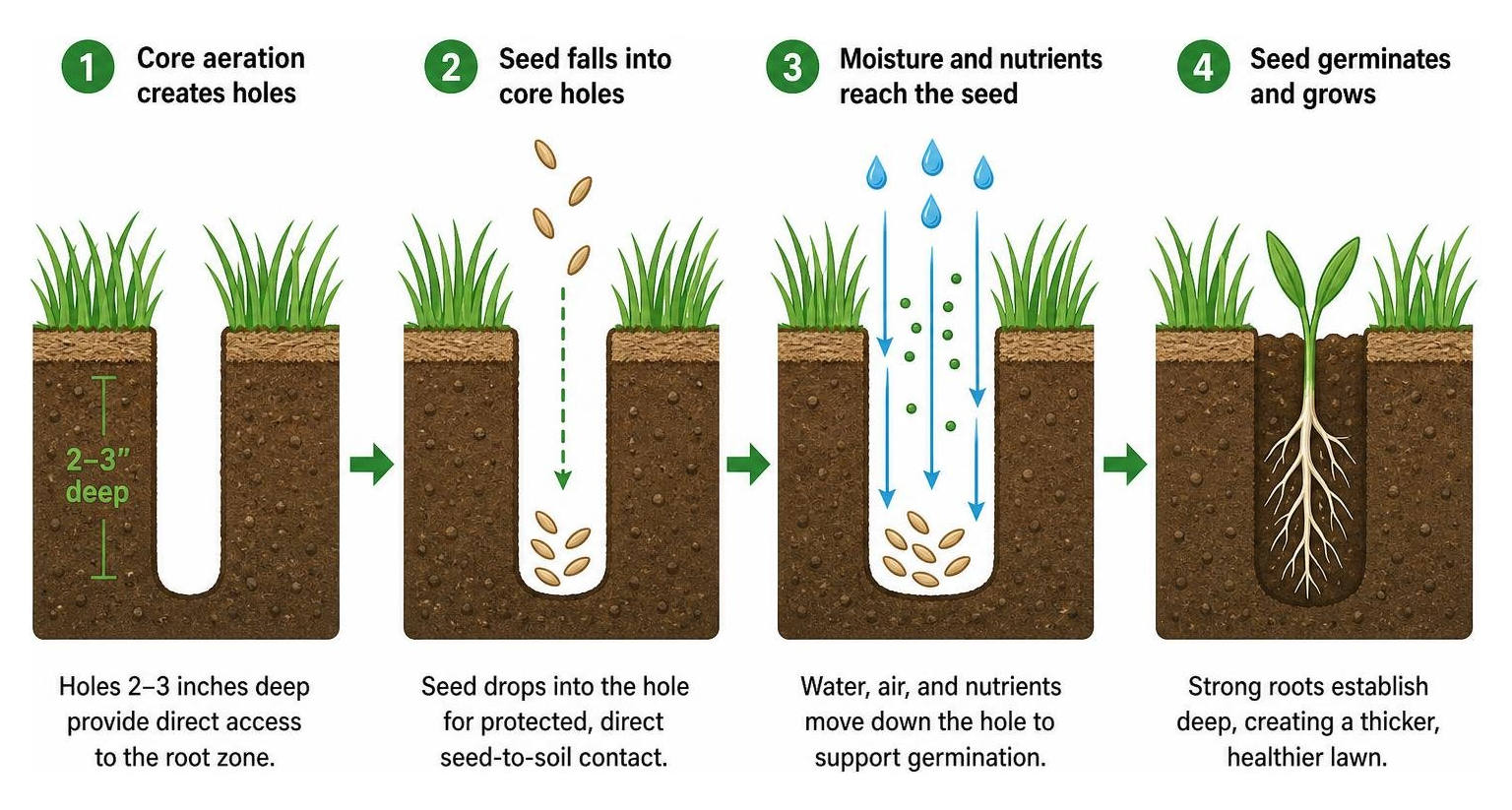
To get the most out of this process, read our comprehensive resource on Core Aeration and Overseeding. You can also learn more about timing in the comprehensive Lawn Aeration Guide: When to Aerate, How to Do It, and Why It Matters from Yardcast Blog .
Watering and Recovery
Post-aeration care requires careful moisture control to establish new seedlings and heal turf.
- Initial Deep Watering: Water the lawn thoroughly right after fertilizing to activate nutrients and settle seed into core holes.
- Daily Moisture Control: Keep the top inch of soil continuously moist for 2 to 4 weeks. Water lightly once or twice daily for 10 to 15 minutes.
- Mowing Pause: Wait 7 to 10 days before mowing your lawn after aeration. This gives soil cores time to break down and allows young seedlings to take root without being disturbed by mower blades.
- Herbicide Pause: Do not apply pre-emergent weed control or crabgrass preventers for at least 4 weeks post-aeration. Pre-emergents stop all seeds from sprouting, which will kill newly planted grass seed.
For full watering guidelines, explore our guide on How to Water Your Lawn for Optimal Growth. Further details on complete post-care routines can be found in How to Aerate Your Lawn: A Complete Guide .
Frequently Asked Questions About Lawn Aeration
Should soil plugs be left on the lawn or removed?
In almost every scenario, soil plugs should be left directly on top of the lawn. Leaving cores in place allows rain, wind, and mowing to break them down over 2 to 3 weeks. The extracted soil contains active soil microorganisms that return to the surface, breaking down thatch and recycling nutrients back into the dirt.
The only exception is on severely compacted, heavy clay soils where you plan to topdress with sandy loam or compost. In that specific scenario, raking away heavy clay cores helps physically remove dense clay from your soil profile before adding organic material.
How often should you aerate your lawn?
Aeration frequency depends primarily on your soil composition and lawn usage:
- Standard Lawns: Aerate once every 1 to 2 years for healthy, balanced soil.
- Clay Soil or High Traffic: Aerate once or twice a year (spring and fall) for heavy clay soils or yards with frequent kids, pets, or vehicle use.
- Loose Sandy Soil: Aerate every 2 to 3 years, as sandy soils naturally resist compaction.
It takes three consecutive years of annual aeration for a lawn to receive the full, cumulative benefits of improved root depth and soil gas exchange. Read more about long-term timing at The Ultimate Guide to Lawn Aeration and is it Necessary? .
Does aerating destroy pre-emergent herbicide barriers?
No. Research demonstrates that core aeration does not disrupt pre-emergent herbicide barriers or diminish crabgrass control effectiveness. While aeration pulls plugs out of the ground, the overall chemical barrier in the surrounding soil remains active enough to prevent weed seed growth. However, if you plan to overseed your lawn after aerating, hold off on pre-emergents so your new grass seed can sprout successfully.
Conclusion
Learning how to aerate a lawn gives your grass root system the room and oxygen it needs to build long-term strength. By opening up compacted clay soil, reducing harmful thatch buildup, and improving nutrient absorption, aeration transforms tired turf into a thick, vibrant green lawn.
Combining core aeration with overseeding and starter fertilizer yields dramatic improvements in turf density, helping your yard naturally block out weeds and withstand summer heat. It takes patience and proper timing, but giving your lawn room to breathe pays off year after year.
If you prefer to let experienced professionals handle heavy equipment, our team at Advanced Quality Lawn is ready to help across Akron, Copley, Hudson, Stow, Medina, and surrounding Northeast Ohio communities. Explore our full range of expert programs by visiting our page on Professional Lawn Care Maintenance today!