
Can Fertilizer Kill Crabgrass Before It Takes Over?
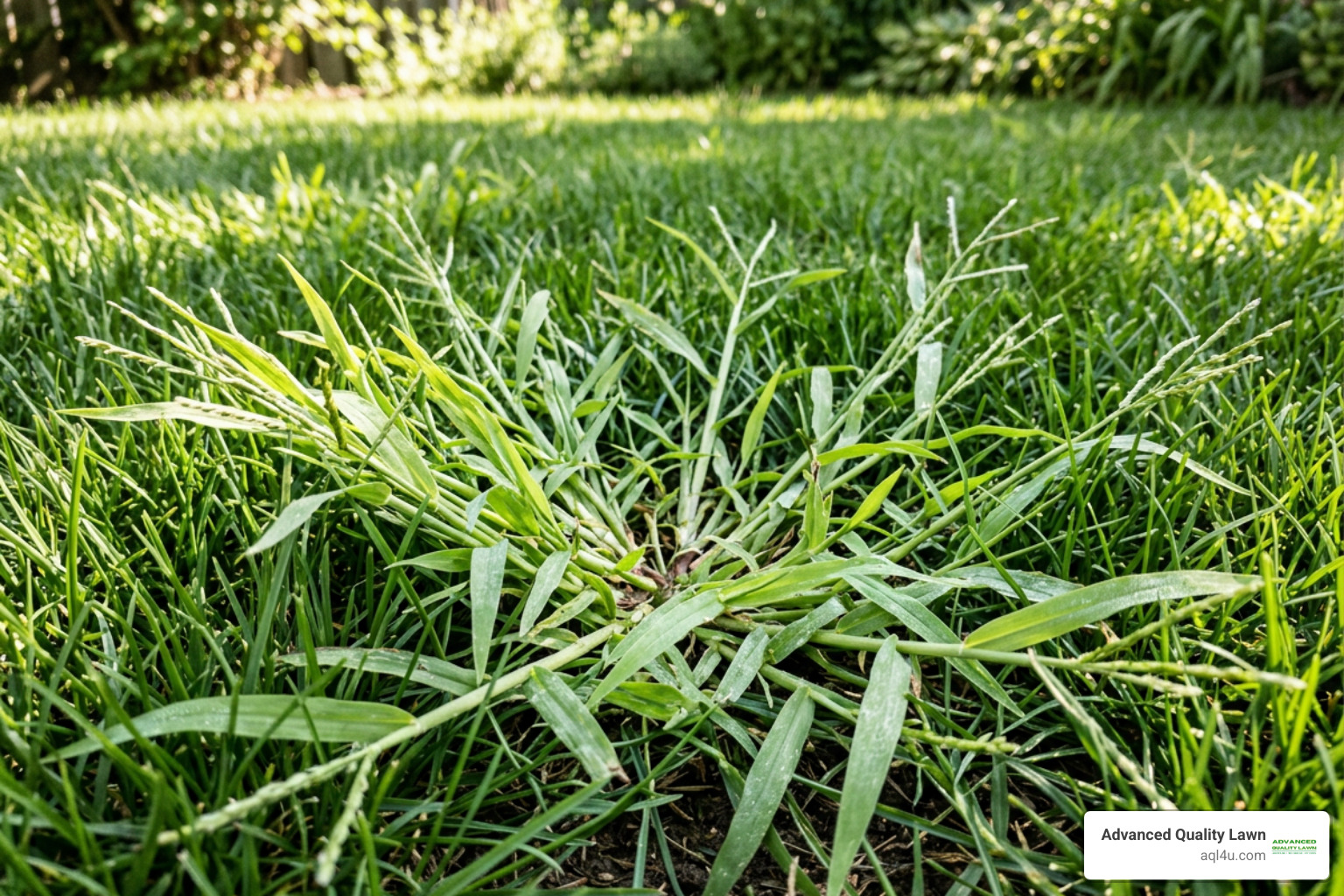
The best fertilizer to kill crabgrass is usually a granular lawn food combined with a crabgrass herbicide, but the right choice depends on whether the weed has already sprouted. For most Ohio lawns, a dithiopyr product is the most flexible option because it can prevent new crabgrass and control very young seedlings, while prodiamine is a strong choice for stopping seeds before they germinate.
| Lawn situation | Best fertilizer type | What it does |
|---|---|---|
| No crabgrass visible yet | Pre-emergent fertilizer with prodiamine or dithiopyr | Stops seeds from developing into plants |
| Tiny new crabgrass seedlings | Dithiopyr fertilizer, also called Dimension | Prevents more seeds and can kill seedlings early |
| Large, mature crabgrass plants | Fertilizer alone is not enough | Requires a labeled post-emergent treatment or removal |
Crabgrass is a warm-season annual that can leave behind a huge seed supply. One plant may produce up to 150,000 seeds, so early prevention matters far more than waiting for a full summer infestation. A well-timed treatment can also feed established turf, helping thicker grass crowd out future weeds.
I am Andrew Day, owner of Advanced Quality Lawn in Northeast Ohio, where our team draws on more than 30 years of lawn care experience to help homeowners choose the best fertilizer to kill crabgrass and build healthier turf. The key is matching the product, timing, and grass type before crabgrass has a chance to spread.
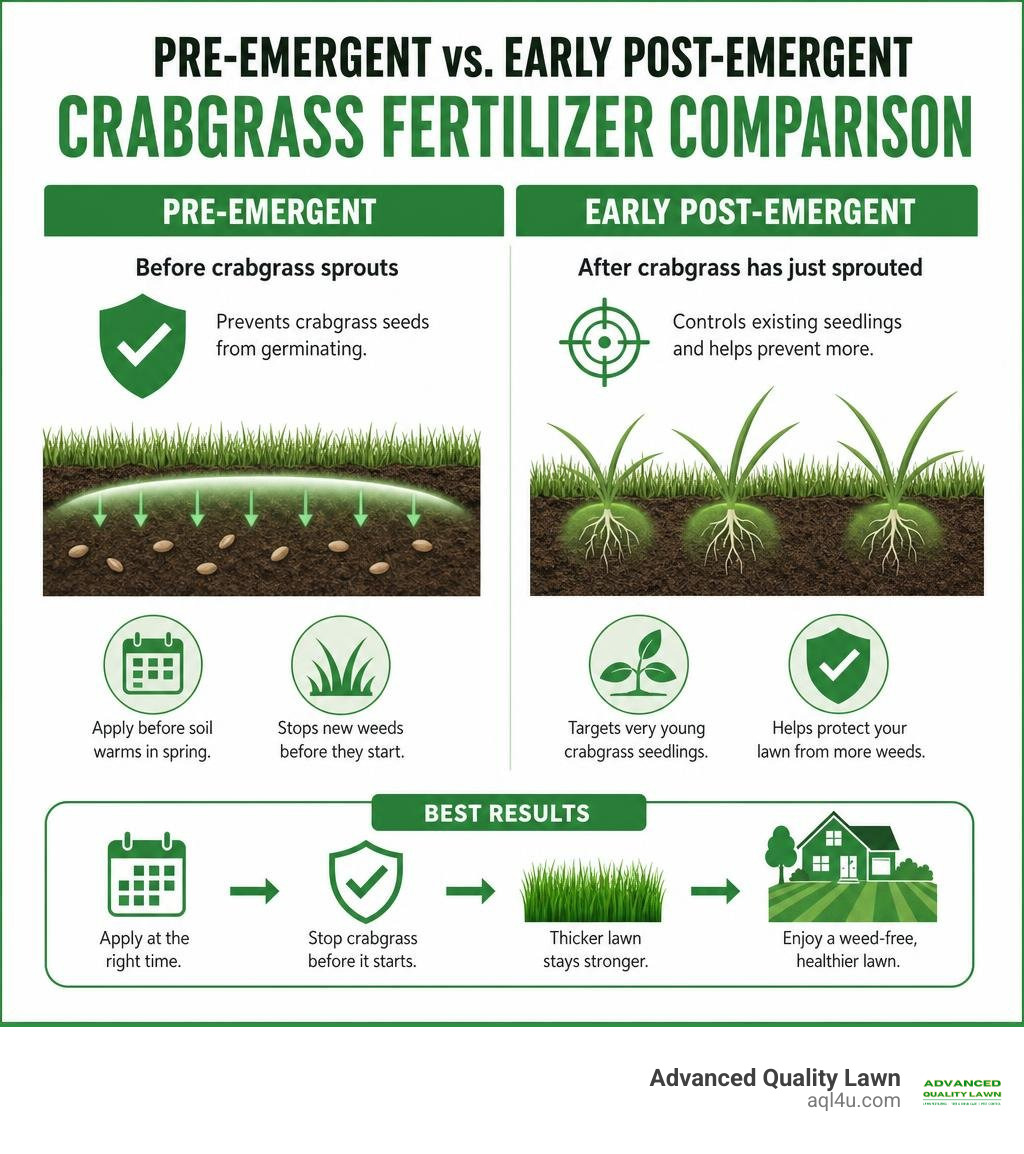
Understanding How Crabgrass Fertilizer Works: Pre-Emergent vs. Post-Emergent
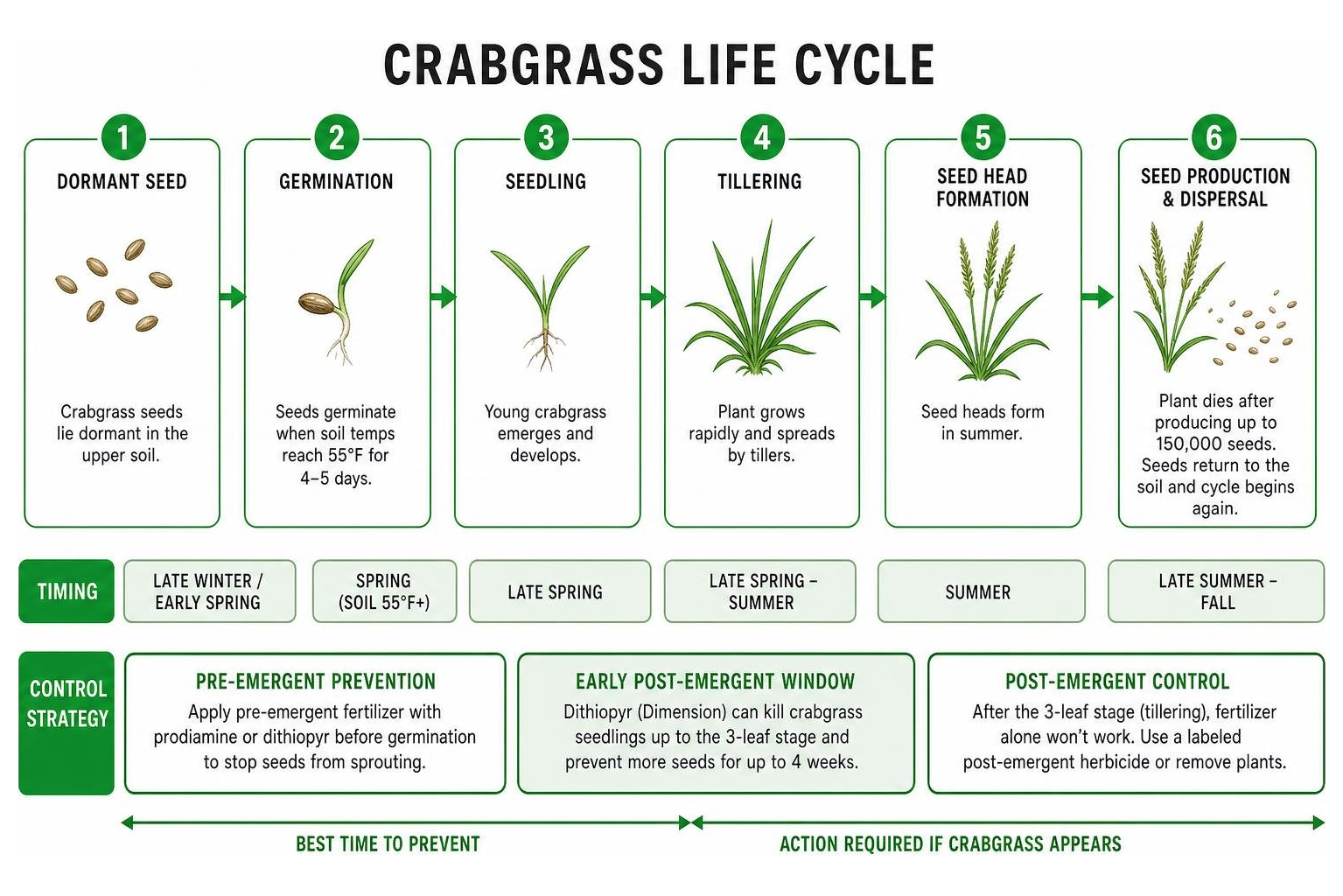
To win the battle against grassy weeds, we must first look at how these stubborn plants grow. Crabgrass operates on an aggressive annual lifecycle. Every spring, dormant seeds sitting in the upper layer of your soil wake up when warm weather arrives. A single healthy crabgrass plant can produce up to 150,000 seeds during its short summer lifecycle. To make matters worse, those tiny seeds can remain viable in the soil for years waiting for the right conditions to sprout.
Crabgrass begins germinating when soil temperatures warm up to 55 degrees Fahrenheit for four to five consecutive days. Once started, seed germination continues until soil temperatures exceed 90°F later in the summer. Because crabgrass can set seed even when mowed as low as half an inch tall, simply cutting the lawn shorter will not stop its reproduction. This is why we turn to targeted turf fertilizers containing active herbicides. You can explore our complete crabgrass control guide 2026 for more insights on managing lawn weeds throughout the season.
Choosing the Best Fertilizer to Kill Crabgrass Seedlings
What happens if early spring catches you off guard and you spot tiny greenish sprouts poking through the soil? That is where early post-emergent action saves the day. Standard pre-emergent products cannot kill weeds once they break the soil surface. However, formulas containing dithiopyr (sold under the trade name Dimension) offer a unique dual-action advantage.
Dithiopyr provides excellent pre-emergent protection while giving you a 4-week post-emergence safety net after germination. It successfully stops young crabgrass seedlings up to the 3-leaf stage of growth. Once crabgrass develops beyond three leaves and reaches the tiller stage with seven leaves, dithiopyr will no longer work, and specialized liquid herbicides become necessary. If you need details on treating young sprouts, read our helpful overview on dithiopyr post emergent applications.
Pre-Emergent Fertilizers for Crabgrass Prevention
If you get ahead of the game early in spring, pre-emergent products create an invisible barrier right at the soil surface. Active ingredients like prodiamine work by inhibiting weed seed cell division and stopping early root development. As the buried crabgrass seed attempts to sprout, it touches the chemical barrier in the soil and dies before it ever breaks through the surface.
Combining a pre-emergent active ingredient with high-quality lawn fertilizer serves a dual purpose. While the herbicide prevents crabgrass from establishing, the essential nitrogen and potassium feed your desirable grass. This creates a dense, thick turf canopy that naturally blocks sunlight from reaching hidden weed seeds. Check out our guide on the best pre-emergent weed killer for lawns to pick the right strategy for your home.
Key Factors in Choosing the Best Fertilizer to Kill Crabgrass
Selecting the best fertilizer to kill crabgrass comes down to understanding active herbicidal ingredients, nutrient ratios, and grass compatibility. Not all combinations deliver the same results across different soil conditions and grass species.
| Product Formula | Active Ingredient | NPK Ratio | Target Window | Feeding Duration |
|---|---|---|---|---|
| Jonathan Green Veri-Green | Dithiopyr (Dimension) | 20-0-3 | Pre-emergent plus up to 3-leaf stage | Up to 3 months |
| GreenView Crabgrass Control Plus | Dithiopyr (Dimension) | 26-0-4 | Pre-emergent plus 4 weeks post-germination | Up to 8 weeks |
| Pennington Pro Care | 0.37% Prodiamine | 0-0-7 | Strict pre-emergent only | Potassium stress feeding |
| GreenView Spring Formula | Dithiopyr (Dimension) | 5-0-10 | Pre-emergent plus 4 weeks post-germination | Up to 6 weeks |
For homeowners seeking a potassium-heavy option without adding excessive nitrogen, the Pennington Pro Care Crabgrass Control Plus .37 Prodiamine 0-0-7 Turf Fertilizer provides zero-nitrogen root support alongside long-lasting prodiamine weed barrier protection.
Active Ingredients: Prodiamine vs. Dithiopyr (Dimension)
Prodiamine is built for long-term endurance. It forms an exceptionally durable pre-emergent barrier in the soil that can last up to 4 to 6 months depending on the application rate. It offers zero post-emergent activity, meaning it must be on the ground before soil temperatures touch 55°F. It is ideal for homeowners who know they can apply early.
Dithiopyr offers maximum scheduling flexibility. Because it targets crabgrass seedlings up to 4 weeks after germination, you can apply it a little later in spring without losing control. Combining dithiopyr with balanced nitrogen feedings gives your lawn quick greening alongside solid protection. For instance, GreenView® Crabgrass Control Plus Lawn Fertilizer pairs dithiopyr with slow-release nitrogen technology to provide up to 4 months of weed prevention and robust turf nutrition.
Grass Type Compatibility and Turf Sensitivities
Always check your product label to make sure the formula is safe for your grass type. In Northeast Ohio, our lawns consist primarily of cool-season species such as Kentucky bluegrass, perennial ryegrass, and tall fescue. These cool-season grasses tolerate both dithiopyr and prodiamine when applied at recommended rates.
However, warm-season grasses found further south or in specialty lawns require extra caution. Grass types like St. Augustine and centipede grass can be sensitive to specific herbicides. Certain varieties, such as Floratam St. Augustine, should never be treated with specific dithiopyr or combination weed-and-feed products due to risk of severe yellowing or turf burn. For warm-season lawns, consult our detailed crabgrass control centipede lawns guide to avoid accidental grass damage.
Comparing the Best Fertilizer to Kill Crabgrass Formulations
When comparing granular formulas, look closely at the NPK (Nitrogen-Phosphorus-Potassium) numbers printed on the bag:
- 26-0-4 Formulas: High nitrogen content designed to kickstart rapid spring green-up while building a pre-emergent crabgrass shield.
- 20-0-3 Formulas: Balanced nitrogen and potassium blends featuring dithiopyr to offer 3 months of slow-release feeding alongside early seedling control.
- 5-0-10 Formulas: Lower nitrogen with higher soluble potash to enhance stress tolerance and root strength without triggering excessive leaf growth.
- 0-0-7 Formulas: Zero-nitrogen and zero-phosphate formulas dedicated purely to weed prevention and soil potassium replenishment.
Zero-phosphate formulations help safeguard local rivers, lakes, and streams from unwanted nutrient runoff while ensuring compliance with regional environmental standards.
Natural and Eco-Friendly Lawn Options
If you prefer to avoid synthetic chemical herbicides entirely, organic options exist. Corn gluten meal is a natural byproduct of corn processing that acts as a natural pre-emergent weed preventer. It works by drying out the tiny roots of germinating seeds just as they crack open.
Corn gluten meal also contains roughly 10% organic nitrogen by weight, providing a mild, slow-release lawn food. However, natural options require heavy application rates (often 20 lbs per 1,000 square feet) and must be applied precisely before germination. To learn more about organic lawn care strategies, browse our guide on natural pre-emergent weed killer alternatives.
Timing and Application Guidelines for Optimal Results
Timing is the absolute single most critical factor when using pre-emergent lawn products. Put the product down too early in freezing weather, and the chemical barrier may break down before seeds sprout. Apply it too late without dithiopyr, and crabgrass will grow unimpeded.

Nature provides a wonderful visual clock for early spring applications. Keep a close eye on neighborhood landscaping for yellow-blooming forsythia shrubs. When forsythia bushes reach peak full bloom, soil temperatures are hovering right around 55°F. This is your cue to apply your pre-emergent crabgrass fertilizer immediately.
Spreader Settings and Broadcast Techniques
Even distribution ensures you do not end up with patchy weed streaks across your yard. Follow these practical steps for a seamless application:
- Clean and Calibrate: Check your broadcast or drop spreader to ensure the hopper gate opens cleanly and matches the bag settings.
- Header Strips First: Apply two passes along the perimeter headers of your lawn to create turning zones.
- Mow Before Application: Cut your lawn a day or two before spreading granules so the product lands directly on the soil surface rather than catching on tall grass blades.
- Pass with Overlap: Walk at a steady speed, slightly overlapping each pass to avoid leaving untreated gaps.
- Clean Hard Surfaces: Immediately sweep or blow stray granules off driveways and sidewalks back into the lawn to prevent staining and prevent runoff into storm drains.
Watering and Post-Application Mowing Requirements
Granular fertilizers and herbicides cannot work while sitting dry on top of grass blades. They require moisture to dissolve the outer coating and sink down to the soil surface where weed seeds rest.
Ensure your lawn receives at least 0.5 inches of rainfall or dedicated sprinkler irrigation within a few days of application. For prodiamine products, watering must occur within 14 days to properly lock the barrier into the top layer of soil. Keep off the mower for a few days after application so you do not accidentally vacuum up unactivated fertilizer granules.
Lawn Safety, Overseeding, and Pet Precautions
We all want a gorgeous, weed-free yard, but keeping our kids, pets, and new grass seed safe is always top priority.

Reseeding and Overseeding Timeframes
Because pre-emergent herbicides are designed to stop grass seeds from developing roots, they do not differentiate between unwanted crabgrass and high-quality fescue or bluegrass seed. If you apply a crabgrass preventer and then spread new grass seed a week later, your new grass seed will fail to germinate.
Always observe strict waiting periods before overseeding treated turf:
- Standard Dithiopyr Applications: Wait 10 to 12 weeks after a single spring application before sowing new grass seed.
- Prodiamine Formulations: Wait at least 60 to 90 days (3 months) before overseeding.
- Fall Seeding Window: If you apply a crabgrass preventer late in spring, plan your lawn restoration for late August or early September to ensure the chemical barrier has fully dissipated.
For step-by-step instructions on combining lawn repair with weed prevention, read our crabgrass preventer safe seeding guide.
Pet and Family Safety Precautions
Granular crabgrass fertilizers are safe when used strictly according to label directions. The golden rule for family safety is simple: keep children and pets off treated lawn areas until the fertilizer has been watered in and the grass has dried completely.
Always store unused bags in a cool, dry location off the ground and away from children, pets, or food supplies. When spreading granular lawn care products, wear basic protective gear including long sleeves, long pants, gloves, and closed-toe shoes with socks. Check out our comprehensive advice on selecting a pet safe pre-emergent routine for extra peace of mind.
Frequently Asked Questions About Crabgrass Fertilizer
Why won't standard broadleaf weed and feed kill crabgrass?
Standard weed-and-feed products contain selective herbicides engineered to kill broadleaf weeds like dandelions and clover without harming turfgrass. Because crabgrass is a true grassy weed belonging to the same botanical family as desirable lawn grasses, broadleaf weed killers simply ignore it. Controlling crabgrass requires specialized grassy weed herbicides like dithiopyr or prodiamine.
Can starter fertilizer be applied alongside crabgrass preventer?
It is generally not recommended to apply high-nitrogen starter fertilizer at the same time as a weed-and-feed crabgrass preventer. Applying two fertilizer products together can overload your soil with nutrients, leading to severe nitrogen burn that damages turf roots. If you need to feed new grass, stick to dedicated starter fertilizers that contain siduron (Tupersan), which is a rare pre-emergent herbicide safe for new grass seed.
How long must pets stay off the lawn after fertilizer application?
Keep pets off the lawn immediately during application. Once you water in the granules with 0.5 inches of water and allow the grass blades to dry thoroughly (typically 24 hours), it is completely safe for dogs, cats, and family members to return to playing on the lawn.
Conclusion
Stopping crabgrass requires a smart combination of timing, active ingredients, and proper turf nutrition. By applying a dithiopyr or prodiamine granular fertilizer in early spring as soil temperatures reach 55°F, you can prevent up to 150,000 seeds per plant from taking over your yard.
Taking care of a lawn in Northeast Ohio can feel like a full-time job between tricky spring weather and busy summer schedules. If you would rather relax and let local experts handle your turf, our team at Advanced Quality Lawn is ready to help. We bring decades of hands-on experience, full-program guarantees, and custom treatments to keep your yard green and weed-free all year long. Explore our Professional Lawn Care & Maintenance Services today to request your free lawn evaluation!