When Ants Take Over Your Lawn: What You Need to Know

If you're dealing with ants in grass treatment options, here is a quick summary of what actually works:
Quick Answer: How to Treat Ants in Grass
- Granular insecticides (bifenthrin-based) applied with a spreader and watered in
- Bait stations placed near mounds to eliminate the whole colony including the queen
- Diatomaceous earth sprinkled on and around mounds as a natural option
- Beneficial nematodes applied to moist soil for organic control
- Rake mounds flat regularly to disrupt nesting and discourage colonies
For best results, combine one of the above treatments with improved lawn care habits like deeper watering and raising your mowing height.
One ant mound in the corner of your yard is easy to ignore. But when mounds start popping up across your lawn, catching on your mower blades and leaving brown patches behind, the problem is hard to overlook.
Most Ohio homeowners are surprised to learn that not all lawn ants are harmful. Some species actually loosen compacted soil and improve drainage. But when colonies grow large enough to displace soil, smother grass, and create uneven ground, the damage becomes real and the frustration is valid.
The good news is that you do not have to choose between killing the ants and protecting your turf. The right treatment, applied the right way, can eliminate a lawn ant problem without harming your grass.
I'm Andrew Day, owner of Advanced Quality Lawn, and with more than 30 years of experience in lawn care and pest management across Northeast Ohio, I've helped countless homeowners find the right ants in grass treatment approach for their specific situation. In the sections below, I'll walk you through everything you need to know to get your lawn back.
Identifying Common Lawn Ants and Their Impact
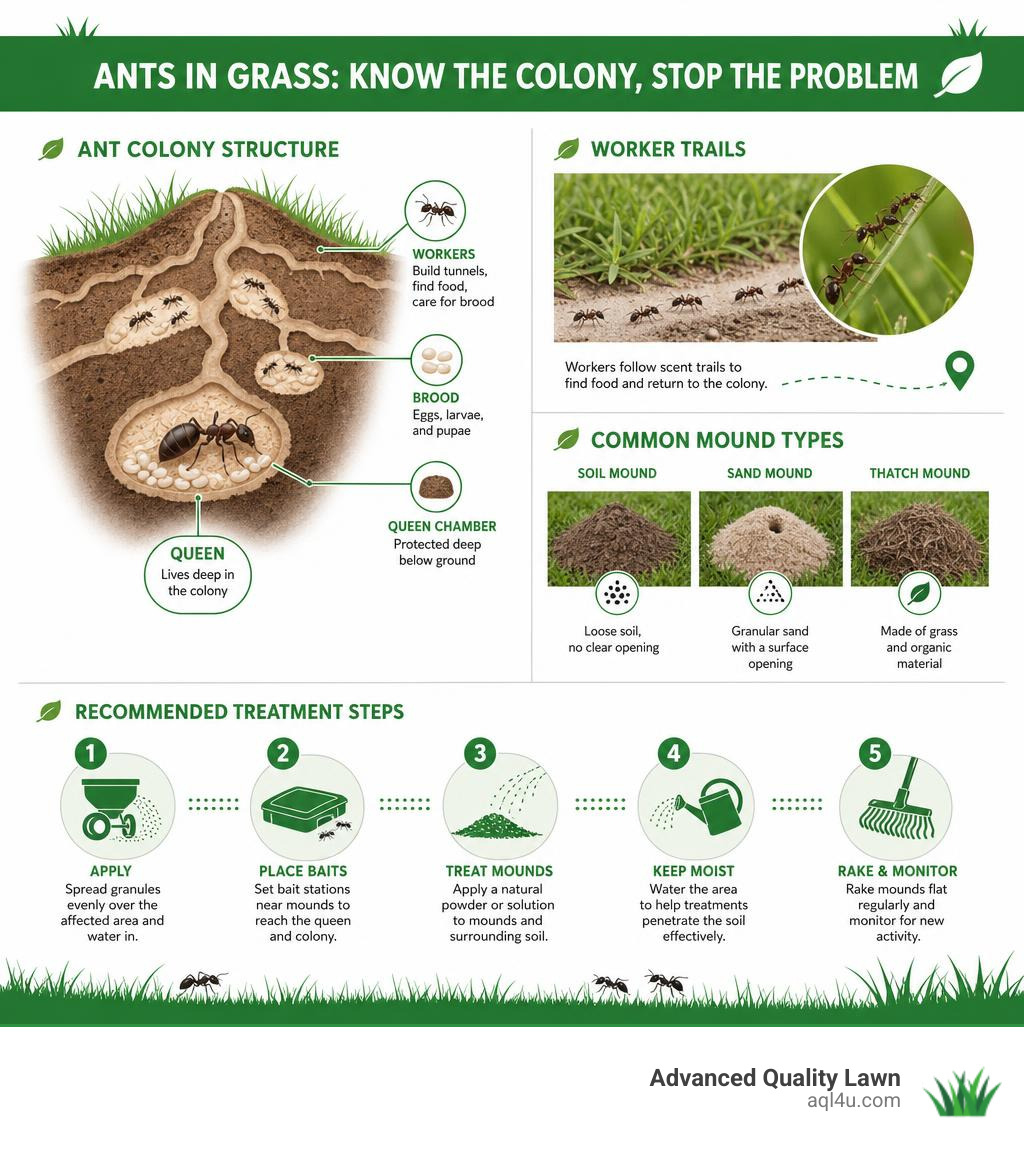
Before you apply any treatment to your lawn, you need to know what kind of ants you are dealing with. Different species have different nesting habits, colony sizes, and impacts on your soil. Identifying the specific pest helps you choose the most effective strategy and avoids wasting time on the wrong solutions.

Here in Northeast Ohio, we typically encounter a few common species of ants in our lawns:
- Yellow Meadow Ants: These are small brown ants that are incredibly common in suburban lawns. They are famous for building dome-shaped mounds covered in grass. If you mow your lawn too short, these mounds become highly visible and can quickly ruin the smooth look of your turf.
- Field Ants: These ants build much larger colonies with multiple entrance holes. Unlike smaller meadow ants, field ants can actually cause localized damage to your grass. They excavate significant amounts of soil, which can smother nearby grass blades and leave bare patches.
- Pavement Ants: These dark brown to black ants love to build nests along the edges of concrete driveways, sidewalks, and patio stones. They push up small, sandy craters of soil between cracks and along the edges of your grass.
- Fire Ants: While fire ants are a major painful nuisance in southern states, they are not a typical threat in our cool Northeast Ohio climate. If you see mounds in our service areas like Hudson or Brecksville, they are almost certainly harmless meadow ants or field ants rather than aggressive stinging fire ants.
Are these ants actually destroying your lawn, or are they just a minor eyesore? The truth is that ants are a natural part of a healthy outdoor ecosystem. In small numbers, their constant digging acts as a free soil aeration service. They break up compacted dirt, improve water penetration, and help decompose organic matter.
However, a massive infestation can quickly turn into a headache. When ants build large mounds, they bury the surrounding grass blades under piles of fine sand and dry soil. This blocks out sunlight and traps moisture, which leads to unsightly brown patches.
Furthermore, some ant species will protect aphids on your garden plants because they harvest the sweet honeydew that aphids produce. This means a major ant problem in your grass can lead to a secondary pest outbreak on your prized roses and shrubs.
To learn more about how these pests interact with your yard, read our detailed guide on Ants Destroying Lawn. For a wider look at managing your garden turf, you can also explore this external resource on How to Get Rid of Ants in Lawn: Effective Solutions for a Healthy Garden.
Choosing the Right Ants in Grass Treatment
When you decide it is time to take action, you must choose a treatment method that matches the size of your infestation and your personal preferences for lawn care. The ideal solution will eliminate the colony without scorching your grass.
There are three primary types of commercial treatments available: granular insecticides, liquid sprays, and bait stations. Each has its own strengths and weaknesses depending on how you plan to use them.
To help you decide, we have put together a quick comparison of these three main options:
| Treatment Type | How It Works | Best For | Grass Safety |
|---|---|---|---|
| Granulars | Spreads dry pellets across the lawn that release active ingredients when watered | Large areas and broad control | High, when watered in properly |
| Liquids | Sprays directly onto mounds or perimeter zones for immediate contact kill | Spot treatments and quick knockdown | Medium, can scorch in hot weather |
| Baits | Ants carry slow-acting poison back to the nest to share with the queen | Complete colony elimination | Very high, no direct contact with grass |
Before selecting a product, it is helpful to understand the Best Insect Control for Lawns to ensure you are using a formula designed specifically for residential turf.
Chemical Ants in Grass Treatment Options
If you have a widespread ant problem, chemical treatments are often the most reliable way to get fast results. Modern turf-safe insecticides typically rely on pyrethroids like bifenthrin. This active ingredient is highly effective against ants but is designed to bind to soil and plant fibers without harming the grass itself.
One popular choice is Hi-Yield Ant Killer Granules, which contains 0.115% bifenthrin. For a standard application, you should apply 1 to 2 pounds of granules per 1,000 square feet. If you are dealing with a severe infestation or persistent mounds, you can increase the rate up to 4 pounds per 1,000 square feet. You can view the official application guidelines on the Hi-Yield Ant Killer Granules Label.
Other highly rated commercial options include Spectracide Triazicide Lawn Insect Killer Granules and Ortho Bug B-Gon Lawn Insect Killer. These granular products are excellent for broad coverage.
The secret to success with any granular ants in grass treatment is watering it in immediately after application. Watering activates the chemical and washes it off the grass blades down into the soil where the ants actually live. This protects your family, pets, and the grass blades from direct exposure.
Natural Ants in Grass Treatment Alternatives
If you prefer to avoid synthetic chemicals, there are several highly effective natural remedies that can help you manage lawn ants without risking damage to your soil or local wildlife.
- Diatomaceous Earth: This is a fine powder made from the fossilized remains of tiny aquatic organisms called diatoms. You must use food-grade diatomaceous earth, not the pool-filter grade. When you sprinkle this powder around ant trails and mound entrances, it acts like tiny shards of glass that dehydrate the insects. It is completely safe for grass, but you will need to reapply it after every rain storm.
- Beneficial Nematodes: These microscopic roundworms are a fantastic organic option. They hunt down ant larvae in the soil and release a bacteria that kills them. For nematodes to work, you must apply them when the soil temperature is above 5 degrees Celsius and keep the lawn consistently moist before and after application.
- Soapy Water: A simple mixture of eco-friendly dish soap and room-temperature water can be sprayed directly onto active mounds. The soap disrupts the cell membranes of the ants and suffocates them. Be sure to apply this only in the early morning or late evening. Applying soapy water in the middle of a hot, sunny day can magnify the sun rays and scorch your grass.
- Baking Soda Bait: You can create a simple, non-toxic trap by mixing equal parts baking soda and powdered sugar. Place this dry mixture in a small container with entry holes near the mound. The sugar attracts the ants, and the baking soda disrupts their internal chemistry once ingested.
For more detailed recipes and home remedies, you can check out this guide on Ants in Lawn: Home Remedies That Work Without Damage.
How to Apply Treatments Safely and Prevent Future Infestations
Applying your chosen treatment correctly is just as important as choosing the right product. Improper application is the primary reason homeowners accidentally damage their lawns during pest control.
To protect your grass, you must pay close attention to application timing and weather conditions. Never apply liquid chemical treatments during the hottest part of the day or when temperatures exceed 85 degrees Fahrenheit. High heat puts natural stress on grass, and adding chemicals on top of that stress can lead to chemical burn.
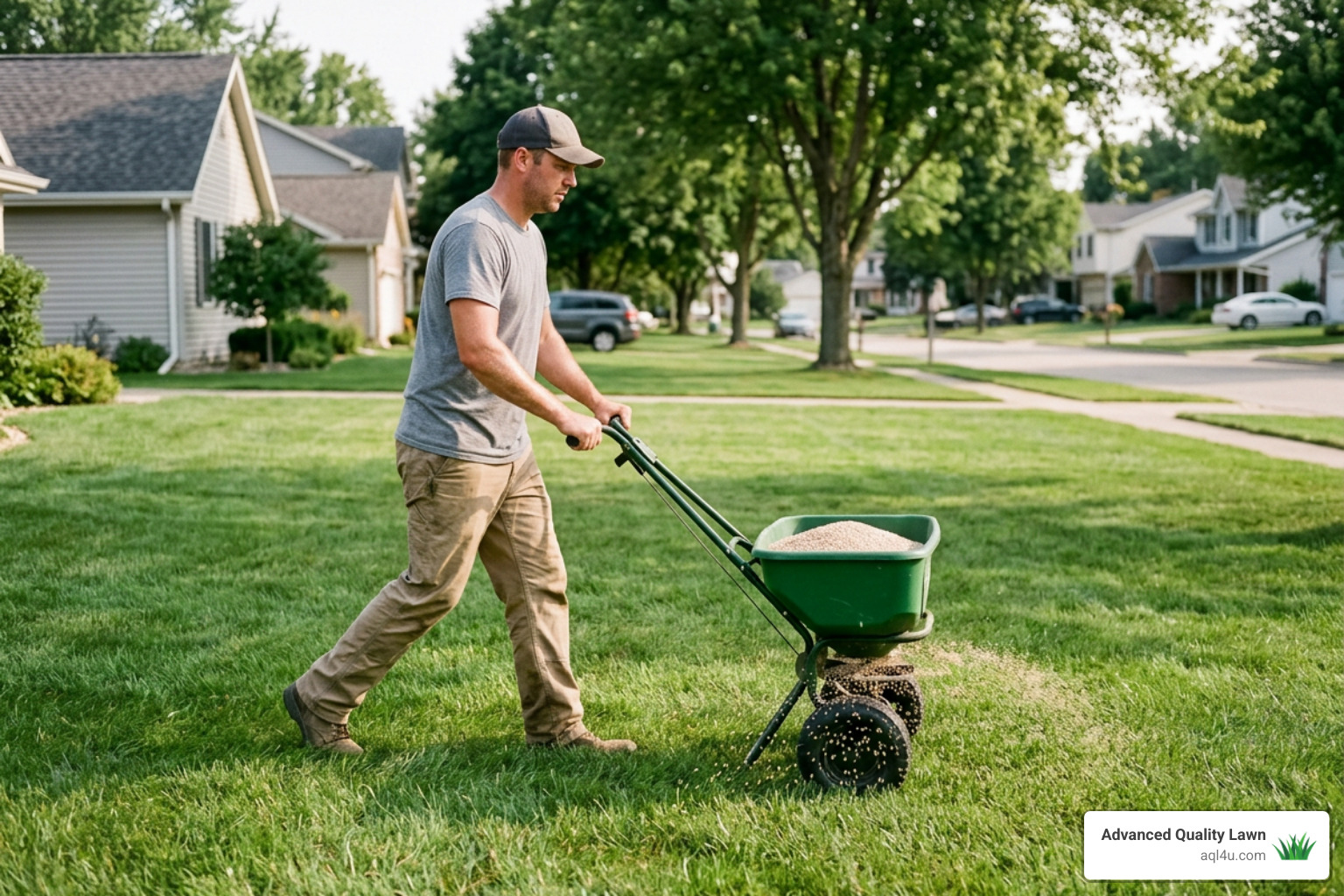
Overapplication is another common mistake. Always use a calibrated mechanical spreader to ensure even distribution of granular products. If you dump a pile of granules in one spot, it can create a localized toxic zone that kills the grass roots. Remember to sweep any stray granules off your driveway and sidewalks back onto the grass to prevent chemical runoff into local storm drains.
For a complete step-by-step walkthrough on how to safely clear your yard of pests, read our Ultimate Guide Kill Ants Yard.
Lawn Care Practices to Prevent Future Ant Infestations
The absolute best defense against ants is a thick, healthy lawn. Ants prefer to nest in dry, sandy, loosely compacted soils where they can easily dig their tunnels. They struggle to establish colonies in dense, vigorous turf with deep root systems.
By adjusting your weekly lawn care habits, you can make your yard far less appealing to queen ants looking to start a new home.
- Raise Your Mowing Height: Keep your grass mowed to a height of at least 3 inches. Taller grass shades the soil, which keeps it cooler and retains moisture. This also naturally hides small ant mounds from view.
- Water Deeply and Infrequently: Instead of watering your lawn for a few minutes every day, give it a deep soaking once or twice a week. This encourages deep root growth and keeps the top layer of soil damp, which ants dislike.
- Aerate and Dethatch: Annual core aeration relieves soil compaction and improves root depth, making the soil structure less favorable for ant nesting.
- Manage Aphids and Scale: Since ants love to feed on the sweet honeydew produced by garden pests, keeping your ornamental plants free of aphids will naturally reduce the food supply for nearby ant colonies.
For more tips on keeping your yard clear of common regional pests, take a look at our guide on Common Ohio Garden Pests and How to Get Rid of Them.
Frequently Asked Questions About Lawn Ants
We hear a lot of questions from homeowners in Northeast Ohio who are trying to balance pest control with lawn health. Here are some of the most common questions we receive.
How long does it take for lawn ant treatments to work?
The timeline depends entirely on the method you choose. Direct contact sprays and soapy water solutions will kill visible ants within a few hours, but they rarely reach deep enough to destroy the queen.
Granular insecticides and bait stations take longer, usually between 1 to 2 weeks. This slow action is actually a benefit. It allows worker ants to carry the active ingredient deep into the underground nest, ensuring the entire colony is eliminated. You will know the treatment succeeded when you stop seeing fresh soil being pushed up to the surface.
Will boiling water or vinegar kill my grass?
Yes, boiling water and vinegar will absolutely kill your grass. While these are popular online home remedies for killing ants, they are non-selective herbicides.
Boiling water cooks the roots of your grass instantly, leaving a permanent dead brown circle. Vinegar contains acetic acid, which dries out and destroys plant tissue. We strongly recommend avoiding these two methods on any active turf areas. Save the boiling water for weeds growing in concrete sidewalk cracks where you do not want anything to grow.
When should I call a professional for lawn ant control?
If you have tried DIY treatments for several weeks and fresh mounds continue to appear, you may be dealing with a massive, deeply established colony. Large properties can also be difficult to treat evenly without professional equipment.
When DIY efforts fall short, it is time to bring in professional help to protect your lawn from further cosmetic damage. You can learn more about our targeted services by visiting our Lawn Pest Control service page.
Conclusion
Dealing with ants in your yard does not mean you have to sacrifice the beauty of your grass. By identifying the specific ant species, choosing lawn-safe treatments like bifenthrin granules or diatomaceous earth, and maintaining a thick, healthy lawn, you can easily keep these pests under control.
At Advanced Quality Lawn, we have spent decades helping homeowners across Akron, Hudson, Brecksville, Medina, and the surrounding Northeast Ohio communities maintain gorgeous, pest-free yards. We pride ourselves on delivering top-tier customer service with reliable service calls and full-program guarantees.
If you want to take the guesswork out of yard care, let our experienced team design a custom program for your home. Contact us today to learn more about our comprehensive Advanced Quality Lawn Care Maintenance plans.