
Why Getting the Best Fertiliser for New Turf Right Matters From Day One

Choosing the best fertiliser for new turf is one of the most important decisions you will make when establishing a new lawn. Get it right and your grass can grow up to 70% thicker and 35% faster than an unfed lawn. Get it wrong and you risk patchy growth, fertilizer burn, or roots that never take hold.
Quick answer: what is the best fertiliser for new turf?
- Use a starter fertiliser with a high-phosphorus NPK ratio such as 24-25-4 or 20-27-5
- Apply at 0.5 to 1 pound of nitrogen per 1,000 square feet (roughly 2.5kg per 100sqm)
- Put it down before or immediately after laying turf or sowing seed
- Do not use weed-and-feed or standard lawn fertiliser on new turf
- Wait 6 to 8 weeks before applying a second, regular maintenance fertiliser
New turf has very different needs from an established lawn. Young roots are fragile and need phosphorus to anchor themselves quickly into the soil. Standard lawn fertilisers are often low in phosphorus and high in nitrogen, which can burn delicate new growth before it even gets started. Many Ohio homeowners lay sod or seed, water faithfully every day, and still end up with thin or patchy results. In most cases, the problem started before the first blade of grass ever broke through the soil.
My name is Andrew Day, owner of Advanced Quality Lawn, and after more than 30 years helping Northeast Ohio homeowners establish and maintain healthy lawns, I know how much the right best fertiliser for new turf decision shapes everything that follows. Read on and I will walk you through exactly what to use, when to apply it, and how to avoid the mistakes that set new lawns back.
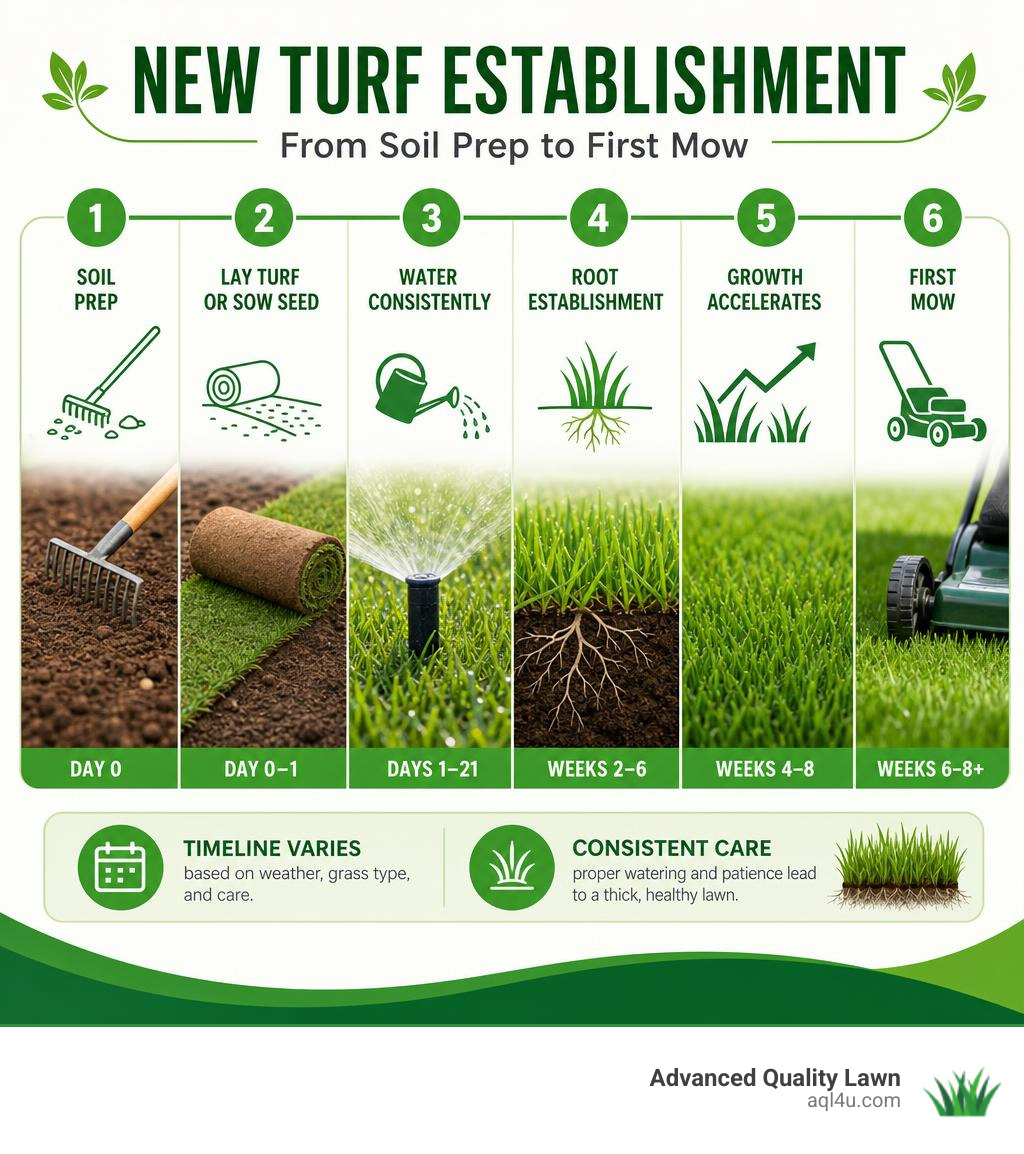
Choosing the Best Fertiliser for New Turf
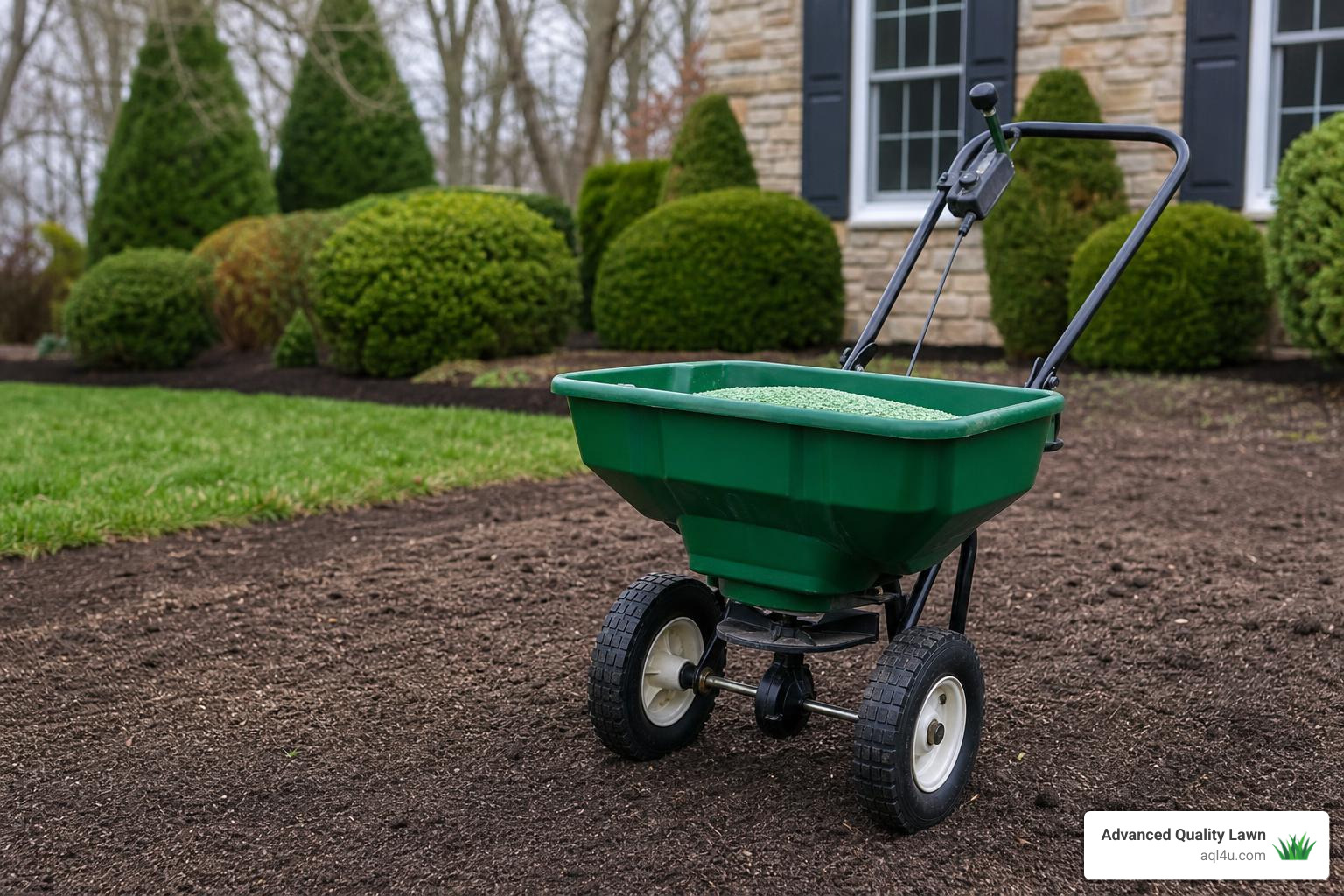
When you walk into a garden centre in Cleveland or Medina, the sheer volume of lawn products can feel overwhelming. To choose the right product, you must first understand the numbers on the bag. Every bag of fertiliser displays three prominent numbers, which represent the NPK ratio.
These numbers show the percentage of nitrogen, phosphorus, and potassium inside the bag. If you want to brush up on the fundamentals of these elements, you can read our guide on fertilizer basics.
For a quick summary:
- Nitrogen (N) drives top growth and gives your grass its vibrant green color.
- Phosphorus (P) stimulates deep root development and early seedling growth.
- Potassium (K) builds overall plant disease resistance and cold tolerance.
Established lawns in Northeast Ohio rarely need extra phosphorus. In fact, many standard maintenance fertilisers contain zero phosphorus to prevent environmental runoff. However, new turf is the major exception to this rule. Because newly laid sod or freshly sown seed has a highly compromised or undeveloped root system, it requires a heavy dose of phosphorus right away.
Before you purchase any product, we highly recommend conducting a soil test. A soil test is the only way to know exactly what nutrients are already present in your soil and whether you need to adjust your pH. For most cool-season grasses in Northeast Ohio, a pH between 6.0 and 7.0 is ideal. If your soil is too acidic or too alkaline, your new turf will struggle to absorb the nutrients you apply, no matter how much high-quality fertilizer you put down.
For homeowners looking for an industry-standard option, Scotts Turf Builder Starter Food is a highly reliable choice. With an NPK ratio of 24-25-4, it provides the massive boost of phosphorus that young roots need to knit into the native soil.
Why Starter Formulas are the Best Fertiliser for New Turf
You might wonder why you cannot just use a standard lawn food that you already have sitting in your garage. The answer lies in how nutrients move through our Northeast Ohio soils.
Northeast Ohio is famous for its heavy clay soils. From Cuyahoga Falls to Broadview Heights, clay soil is dense, easily compacted, and slow to release nutrients. Nitrogen moves through clay relatively easily with water, but phosphorus is highly immobile. It tends to stay exactly where you put it.
Because phosphorus does not travel down through the soil profile easily, established lawns do not need much of it applied to the surface. However, new turf benefits significantly from a direct application of phosphorus. By using a dedicated starter formula, you place this vital nutrient right at the soil surface where the new roots can immediately access it.
If you use a standard high-nitrogen maintenance fertilizer on new turf, you will force the grass to put all its energy into rapid blade growth. Without a strong root system to support that growth, the young grass will quickly collapse, dry out, and die. For a deeper dive into this topic, you can check out our article on the best fertilizer for new grass.
Granular versus Liquid Options for the Best Fertiliser for New Turf
Once you have decided on a starter formula, you must choose between granular and liquid delivery methods. Both options have distinct advantages and disadvantages depending on your budget, equipment, and schedule.
| Feature | Granular Starter Fertiliser | Liquid Starter Fertiliser |
|---|---|---|
| Longevity | Up to 6 to 8 weeks | Usually 2 to 4 weeks |
| Release Speed | Slow and steady | Immediate uptake |
| Application Tool | Push spreader | Hose-end sprayer |
| Risk of Burn | Low (if watered in) | Moderate (if concentrated) |
| Best For | Long-term root establishment | Quick green-up and immediate boost |
Granular fertilisers are dry pellets that you apply using a rotary or drop spreader. They are popular because they dissolve slowly over several weeks, providing a steady stream of nutrients as the turf establishes. This slow-release mechanism is highly forgiving, which makes it the safest choice for busy homeowners in places like Hudson or Solon.
Liquid fertilisers are sprayed directly onto the soil or young foliage. They offer immediate nutrient uptake because the grass does not have to wait for granules to break down. However, because liquids wash through the soil much faster, you will need to reapply them more frequently. If you are interested in exploring liquid options further, you can read our guide on liquid fertilizer options.
How to Apply Starter Fertiliser to New Turf

Now that you have selected the best fertiliser for new turf, you must apply it correctly to avoid damaging your investment. The application process differs slightly depending on whether you are sowing seed or laying sod.
For seeded lawns, you should prepare the soil by raking the top two inches to loosen the dirt. Apply your granular starter fertiliser evenly across the area, then lightly rake the seed into the top quarter-inch of soil. This ensures excellent seed-to-soil contact and places the nutrients exactly where the emerging roots can find them.
For sod installations, we recommend applying your starter fertiliser directly to the bare, prepared soil right before you lay the sod rolls on top. This technique encourages the roots to grow downward into the native soil to seek out the nutrients, rather than staying lazily in the shallow sod layer.
If you want to use a highly specialized pre-installation formula, LawnPride Under Turf Starter is an excellent example of a product designed specifically for this step. It even contains water crystals that store moisture directly under the roots to protect the new turf from drying out during warm summer days.
No matter which product you choose, you must adhere to proper application rates. We recommend applying starter fertiliser at a rate of 0.5 to 1 pound of nitrogen per 1,000 square feet. Applying more than this will not make your grass grow faster. Instead, it will likely cause fertilizer burn and ruin your new lawn. If you are working with warm-season grasses, you can find tailored advice in our Bermuda sod guide.
Common Mistakes to Avoid When Feeding New Turf
Establishing a new lawn is a delicate process, and even well-meaning homeowners can make critical mistakes. Here are the most common errors we see in Northeast Ohio:
- Using Weed-and-Feed Products: This is the absolute worst thing you can do to a new lawn. The herbicides in weed-and-feed products are designed to prevent seeds from germinating and to disrupt plant growth. Applying these chemicals to new seed or fragile young sod will stunt the root system or kill the grass entirely. You should wait until you have mowed your new lawn at least three to four times before applying any weed control.
- Over-fertilizing: More is not better when it comes to nitrogen. High concentrations of fertilizer salts will draw moisture out of the grass roots, causing them to shrivel and turn brown. This is known as nitrogen burn, and it can permanently damage the crown of the grass plant.
- Mowing Too Early: It is tempting to mow as soon as the grass looks tall, but you must give the root system time to anchor. Mowing too early can pull young grass seedlings straight out of the ground.
- Under-watering: Fertilizer needs water to dissolve and activate. If you apply granular fertiliser and do not keep the soil consistently moist, the concentrated salts will sit on the soil surface and scorch the tender young grass blades.
Post-Installation Care and Watering Schedules
Once your new turf is laid and fertilised, your primary job is water management. Without proper moisture, even the best fertiliser for new turf cannot save your lawn.
For the first week after laying sod or sowing seed, you must keep the soil surface constantly moist. We recommend watering twice a day, typically in the early morning and late afternoon, for about 5 to 10 minutes per session. The goal is to keep the top inch of soil damp but not flooded. If you see puddles forming, reduce your watering time.
During the second week, you can transition to watering once per day, but increase the duration slightly to encourage the roots to grow deeper. By the third week, you can drop to watering every other day. Once the turf is fully established, you should transition to a standard deep watering schedule of 1 to 1.5 inches of water per week, delivered in one or two deep watering sessions.
In addition to watering, you must manage your mowing height carefully. Let your new grass reach a height of 3 to 4 inches before you perform your first mow. Set your mower deck high and target a finished height of 2.5 to 3 inches. Always ensure your mower blades are extremely sharp. Dull blades will rip and tear the young grass plants, which can pull them out of the soil or leave them vulnerable to disease.
You should wait about 6 to 8 weeks after your initial starter application before you apply a second round of fertiliser. By this point, your grass will be mature enough to transition to a standard maintenance schedule. For a complete look at seasonal lawn care, you can read our comprehensive grass guide 2026.
Frequently Asked Questions About New Turf Fertilisation
We get a lot of questions from homeowners in Stow, Twinsburg, and Cuyahoga County about how to care for their newly installed lawns. Here are some of the most common questions we answer in the field.
Can you use organic fertilizer like Milorganite on new turf?
Yes, organic options are highly suitable for establishing new turf. Natural organic fertilisers are excellent because they feed the soil microbes while slowly releasing nutrients to the grass. This slow-release nature makes organic options incredibly safe, with virtually zero risk of nitrogen burn.
If you choose to use Milorganite, we recommend applying it at a rate of 12.5 pounds per 1,000 square feet directly on top of your new seed or soil. That organic fertilisers rely on soil microbes to break down the nutrients, which means they work much slower in cool weather. If you are laying turf in the early spring or late autumn when soil temperatures are below 55 degrees, a synthetic starter fertiliser will provide faster, more reliable results. You can compare these two approaches in our article on organic versus synthetic fertilizer.
Should you fertilize before or after laying new sod?
We strongly recommend applying your starter fertiliser to the bare soil directly before you lay your new sod. This pre-planting application places the phosphorus right where the bottom of the sod rolls will make contact with the earth.
Because phosphorus does not move easily through our Northeast Ohio clay, putting the fertiliser down first ensures the nutrients are immediately accessible to the roots. If you apply granular starter fertiliser on top of newly laid sod, it can take weeks for the phosphorus to wash down through the thick thatch layer to reach the root zone.
How long should you wait to mow newly laid turf?
You should wait at least 3 to 4 weeks after laying new sod before you attempt to mow it. Before you start your mower, perform a simple tug test. Gently pull on a handful of the grass blades. If you feel resistance and the sod rolls do not lift off the ground, the roots have successfully anchored themselves into the soil and it is safe to mow.
Always use a high deck setting for your first few mows. Removing too much of the grass blade at once will stress the young plant and slow down its root development.
Conclusion
Establishing a beautiful, healthy lawn from new turf is a rewarding project, but it requires patience, attention to detail, and the right nutrients. By choosing a high-quality starter fertiliser with the correct NPK ratio, preparing your soil properly, and keeping up with a strict watering schedule, you can guarantee your new lawn gets the perfect start.
If you are feeling overwhelmed or simply want to ensure your investment is protected by the pros, the team at Advanced Quality Lawn is here to help. We provide expert lawn care, tree, and shrub services throughout Northeast Ohio, including Akron, Hudson, Brecksville, Medina, and Solon.
We cover 99+ zip codes across multiple counties, and we back all of our work with our full-program guarantees. Give us a call today to discuss your lawn care needs, and let us help you grow the lush, green yard you have always wanted. You can also explore our full range of professional services on our professional lawn care maintenance services page.