Why Autumn Is the Most Important Season for Your Lawn

Autumn feed for grass is one of the single most impactful things you can do for your lawn all year. If you want a greener, thicker, healthier lawn next spring, the work starts right now, before the cold sets in.
Quick answer: What does autumn lawn feed do?
- Rebuilds grass roots after summer heat and foot traffic
- Stores nutrients in the roots through winter dormancy
- Hardens grass against frost, snow mold, and disease
- Helps your lawn green up 2 to 6 weeks earlier in spring
- Keeps turf dense enough to crowd out weeds and moss
Autumn is peak time for grass to store energy. Growth slows above ground, but roots are still active. A properly formulated autumn feed gives those roots exactly what they need before the ground goes cold.
Most homeowners skip this step. That is why their lawns look thin and pale every spring while their neighbor's lawn bounces back fast.
The good news? It does not take much. The right feed, applied at the right time, does most of the heavy lifting for you.
I'm Andrew Day, owner of Advanced Quality Lawn, and with more than 30 years of experience helping Northeast Ohio homeowners apply autumn feed for grass through every kind of Ohio weather, I have seen what separates lawns that thrive in spring from those that barely survive winter. This guide covers everything you need to know to get it right this season.
Why You Need an Autumn Feed for Grass

In Northeast Ohio communities like Hudson, Brecksville, and Solon, our lawns face intense summer heat, drought, and heavy foot traffic. By the time September rolls around, the grass looks tired and worn. Applying an autumn feed for grass is the ultimate way to help your lawn recover.
During the autumn months, cool-season grasses experience a second natural growth spurt. However, unlike the spring growth spurt which focuses on rapid leaf production, autumn growth is concentrated below ground. The grass plant uses photosynthesis to produce carbohydrates, which it stores in its root system. This nutrient storage acts like a winter battery, keeping the grass alive during freezing temperatures and fueling its recovery in the spring.
Without these vital carbohydrate reserves, your lawn enters winter in a weakened state. It becomes highly susceptible to winterkill, frost damage, and lawn diseases. By following the RHS guide to autumn lawn care and implementing essential fall lawn care tips, you can ensure your turf has the strength to survive the harshest winters.
How Autumn Feed for Grass Prevents Winter Damage
When winter arrives in areas like Broadview Heights and Parma, freezing temperatures and heavy snow put immense stress on turf. A high-quality autumn feed for grass increases frost resistance by strengthening the cell walls of the grass blades. This cellular strength prevents ice crystals from rupturing the plant cells.
Additionally, autumn feeding is crucial for disease prevention. Fungal pathogens like snow mold, red thread, and fusarium patch thrive in wet, cold conditions. A dense, well-fed lawn has the natural immunity to resist these pathogens. When you apply the right nutrients, you maintain turf density, leaving no room for opportunistic moss and weeds to take over during the wet winter months.
The Science of Root Growth and Spring Green-Up
The magic of autumn feeding lies in the relationship between soil temperature and photosynthesis. While air temperatures drop, the soil remains relatively warm. This warm soil stimulates root growth, allowing the root system to expand deep into the ground. Deep roots can access water and nutrients that are out of reach for shallow-rooted lawns.
This root development directly impacts how early your lawn wakes up in the spring. Fall fertilizing can lead to a greener lawn up to 2 to 6 weeks earlier in spring. According to research on cool-season grass stockpiling, late-season nutrient applications optimize the accumulation of organic matter and prepare cool-season grasses for excellent performance. By feeding your lawn now, you ensure that as soon as the ground thaws in cities like Medina and Macedonia, your grass has an immediate supply of stored energy to produce lush, green growth.
Essential Nutrients for Late-Season Turf
To choose the right autumn feed for grass, you must understand what nutrients your lawn needs during this specific seasonal transition. Unlike spring fertilizers, which are high in nitrogen to promote rapid top growth, autumn fertilizers focus on root development and winter hardiness.
Before applying any product, we always recommend conducting a soil test. Soil testing helps you identify exactly what nutrients your lawn is lacking, preventing over-application and protecting our local waterways in Northeast Ohio. You can learn more about this by understanding fertilizer basics.
Here is a quick comparison of nutrient ratios for autumn lawn feeding:
| Nutrient | Role in Autumn | Recommended Ratio |
|---|---|---|
| Nitrogen (N) | Minimal top growth, color retention | Low to Moderate (e.g., 10%) |
| Phosphorus (P) | Stimulates deep root development | Low to Moderate (e.g., 5%) |
| Potassium (K) | Enhances disease resistance and winter hardiness | High (e.g., 10% or more) |
Choosing the Right Autumn Feed for Grass Formula
When looking at the NPK ratio on a bag of fertilizer, the three numbers represent the percentages of nitrogen, phosphorus, and potassium. For an autumn feed, you want a formula with low nitrogen and high potassium.
Potassium is the most critical nutrient for winter survival. It regulates water uptake, improves cold tolerance, and strengthens the plant's immune system against winter diseases. Phosphorus is also essential because it directly stimulates root growth, helping new and established grass plants anchor themselves firmly in the soil.
We also look for formulas that contain magnesium. Magnesium is a key component of chlorophyll, which supports photosynthesis. Adding magnesium helps your lawn maintain its green color even as daylight hours decrease in late autumn.
Slow-Release versus Quick-Release Fertilizers
The type of nitrogen in your fertilizer matters just as much as the ratio. Slow-release fertilizers use phased-release granules that slowly break down over a period of up to 90 days. This controlled release provides a steady stream of nutrients to the roots without causing a sudden surge of tender, green growth that could easily be damaged by an early frost.
Quick-release fertilizers deliver nutrients immediately. While this can be useful for a quick green-up in late summer, it increases the risk of nutrient leaching, where valuable minerals wash away into the groundwater before the grass can absorb them. For the best environmental protection and long-term lawn health in communities like Cleveland and Richfield, a slow-release or phased-release formula is always the superior choice.
Step-by-Step Autumn Lawn Maintenance Plan
Applying autumn feed for grass is only one part of a successful seasonal transition. To get the best results, you should combine feeding with other essential maintenance practices.
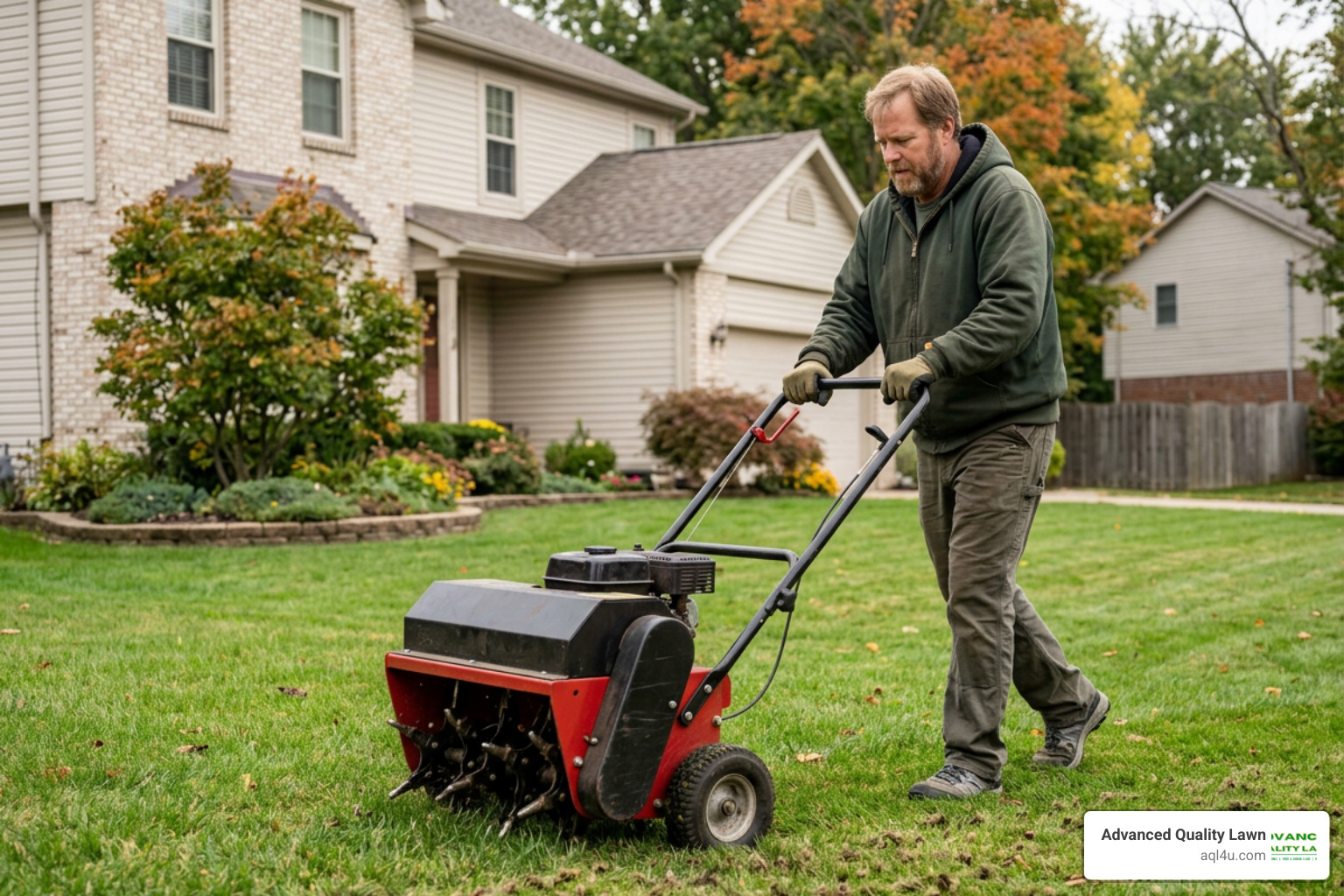
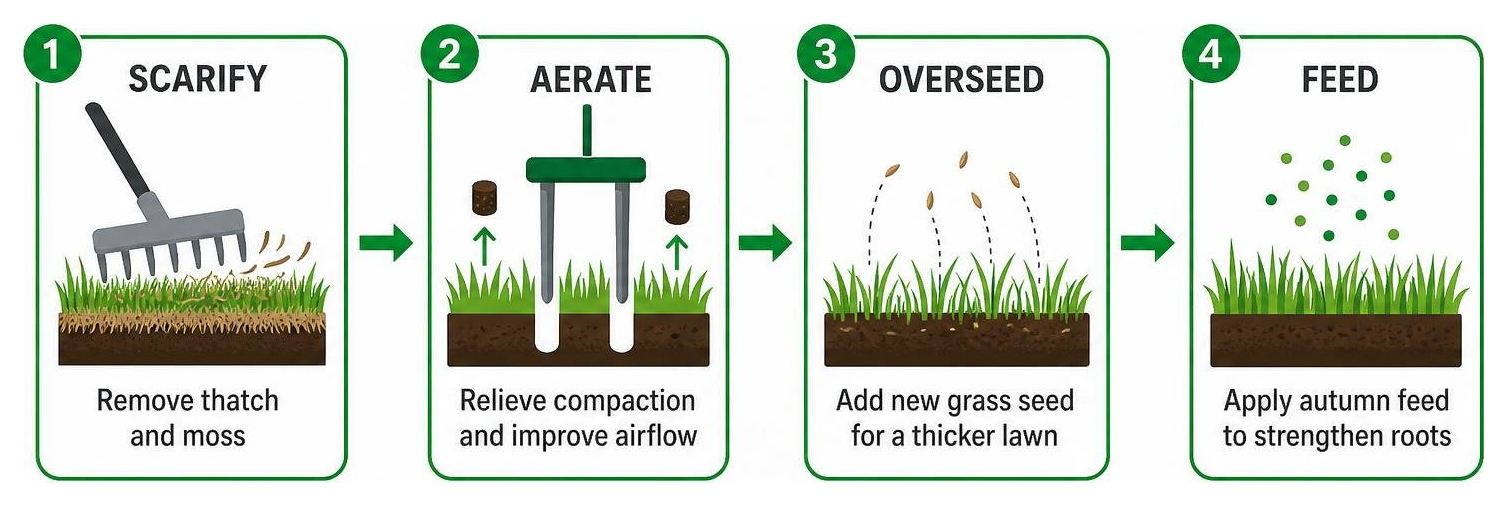
Over the summer, heavy foot traffic and dry conditions compress the soil. This compaction prevents water, oxygen, and nutrients from reaching the root zone. Lawn aeration, which involves removing small plugs of soil, is the best way to relieve compaction.
Another important step is scarifying, which is the process of raking away thatch and moss. Thatch is the layer of dead organic matter that builds up between the green grass blades and the soil. Removing this debris allows your autumn feed to penetrate directly into the soil. You can find a complete guide to these practices in our article on comprehensive fall yard maintenance.
Let us look at a simple step-by-step sequence to prepare your lawn:
Mowing and Watering Adjustments
As the weather cools down in Stow and Twinsburg, you must adjust your mowing and watering habits. We recommend raising your mower blades to leave the grass at a height of around 4cm (about 1.5 to 2 inches). Leaving the grass slightly longer increases the surface area available for photosynthesis, allowing the plants to produce more sugars for winter storage.
Never mow a wet or frosty lawn, as this can bruise the grass blades and create entry points for fungal diseases. Keep watering your lawn if the autumn weather is dry. Grass roots still need hydration to absorb the nutrients from your autumn feed. Proper hydration also helps prevent frost damage, as moist soil holds heat better than dry soil.
Overseeding and Feeding New Grass
Autumn is the absolute best time to repair bare patches and overseed your lawn. The warm soil and cool air create perfect conditions for seed germination. If you are sowing new grass seed, you will need a specialized starter fertilizer.
New grass seeds have different nutrient requirements than established turf. They need higher levels of phosphorus to encourage quick root establishment. You can read our best fertilizer for new grass seed fall guide to learn how to balance seeding and feeding without burning the delicate new sprouts.
Frequently Asked Questions about Autumn Lawn Care
When is the best time to apply autumn lawn feed?
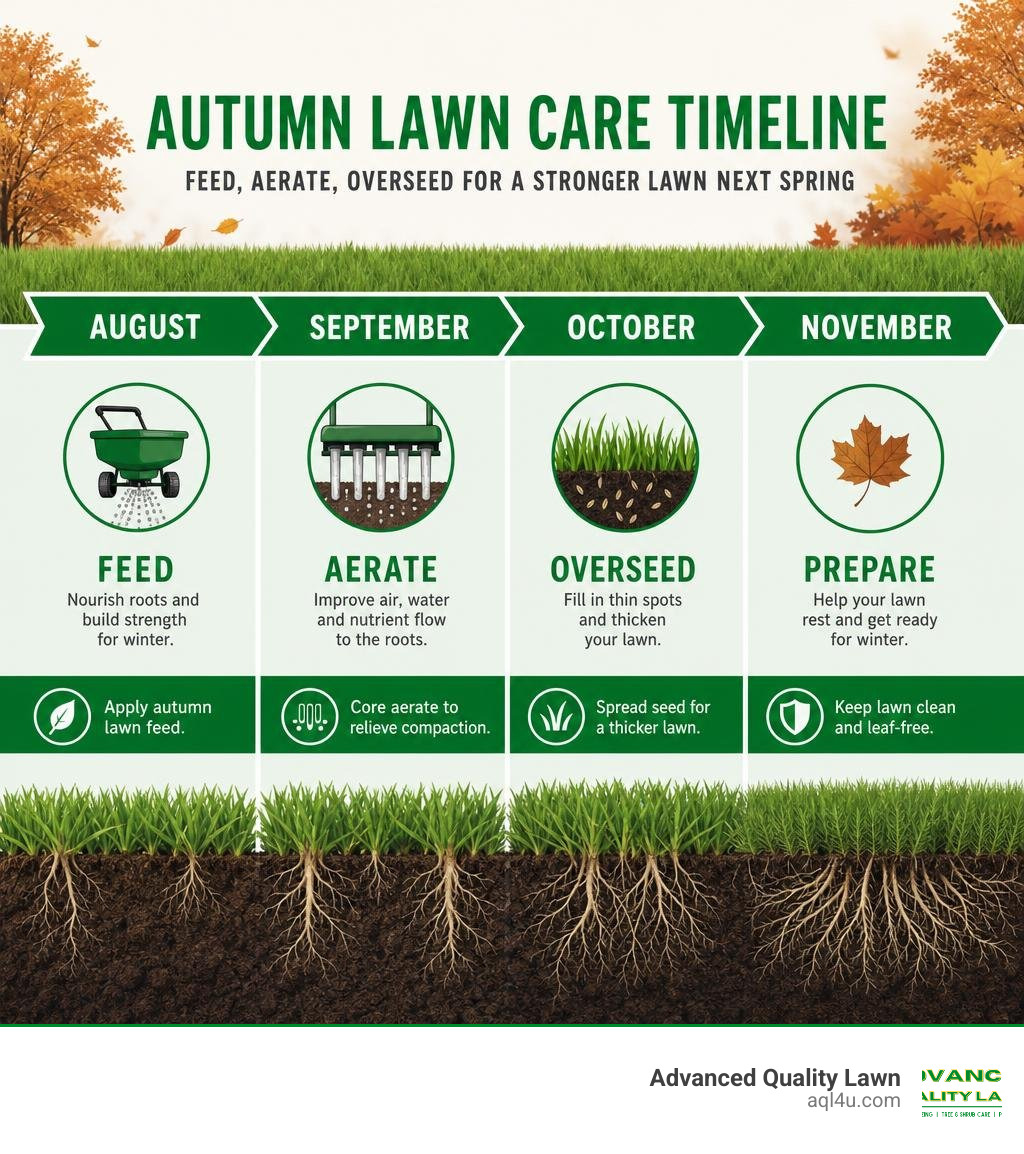
The ideal timing depends on soil temperatures and your local climate. In Northeast Ohio, the best window is between late August and late October, before the first hard frost. Applying the feed during this period ensures the soil is still warm enough for the roots to actively absorb the nutrients. If you wait until the ground is frozen, the grass will be dormant, and the fertilizer will simply wash away.
Can I use spring fertilizer in the autumn?
You should never use spring fertilizer in the autumn. Spring formulas contain high levels of quick-release nitrogen designed to stimulate rapid leaf growth. If you apply this in the fall, your grass will produce tender, watery growth that will immediately be killed by the first hard frost. This leaves your lawn weakened and highly vulnerable to snow mold and winterkill.
Should I feed wildflower meadows or new lawns in the fall?
Wildflower meadows have very different nutrient needs than traditional grass lawns. Wildflowers actually thrive in poor, low-nutrient soils. Applying fertilizer to a wildflower meadow will encourage aggressive grasses to grow and crowd out the flowers.
However, new grass lawns definitely need a fall feeding. Using an establishment fertilizer helps the young root systems develop the strength they need to survive their very first winter. For more details on this, check out our guide on the best fertilizer for new grass.
Conclusion
Preparing your lawn for winter does not have to be a stressful chore. By applying a high-quality autumn feed for grass and combining it with aeration and proper mowing, you can guarantee a beautiful, lush green lawn when spring arrives.
At Advanced Quality Lawn, we have spent decades perfecting seasonal lawn care for homeowners in Akron, Brecksville, Solon, Chagrin Falls, Copley, Bainbridge, Streetsboro, Boston Heights, Cuyahoga Falls, Peninsula, Independence, Seven Hills, North Royalton, and Sagamore Hills. We cover multiple counties across Northeast Ohio, including Summit County, Medina County, Cuyahoga County, Portage County, Wayne County, Geauga County, Lorain County, and Stark County.
Our team provides excellent customer service with free service calls and full-program guarantees. Let us take the guesswork out of your seasonal lawn care. Contact us today to schedule professional lawn care maintenance and give your grass the ultimate autumn boost.