How to Choose the Best Buffalo Fertiliser for Your Yard
The Best Fertiliser for Buffalo Grass: A Quick Answer Before We Dive In

The best fertiliser for buffalo grass is a slow-release granular formula with a balanced NPK ratio (such as 10-5-10 or similar), low phosphorus, and boosted iron. Here are the top options to consider:
| Fertiliser Type | Best For | Key Benefit |
|---|---|---|
| Slow-release granular (balanced NPK) | Established lawns, general feeding | Feeds for up to 3 months, no surge growth |
| Nitrogen-heavy granular | Spring feeding | Kickstarts growth after dormancy |
| Potassium-rich granular | Summer feeding | Improves heat and drought tolerance |
| Liquid balanced fertiliser | Quick colour fix, even coverage | Fast absorption through leaf and root |
| Iron supplement or chelate | Year-round colour boost | Deepens green colour without excess growth |
Quick tips:
- Apply fertiliser 3 times per year: spring, summer, and autumn
- Always water in after application to prevent leaf burn
- Avoid high-phosphorus formulas on buffalo grass
- Look for at least 35% slow-release nitrogen content
Buffalo grass, including popular varieties like Sir Walter, Sapphire, and Palmetto, is tough and low-maintenance. But even the hardiest lawn needs the right nutrients to stay dense, green, and healthy through the seasons.
If you have ever noticed your buffalo lawn looking pale, patchy, or just a little tired, the fix is usually simpler than you think. The right fertiliser, applied at the right time, makes a significant difference.
I'm Andrew Day, owner of Advanced Quality Lawn, and with over 30 years of lawn care experience serving homeowners across Northeast Ohio, I have seen how choosing the best fertiliser for buffalo grass can completely transform a struggling lawn into a lush, green standout. In the sections below, I will walk you through exactly what to look for, what to avoid, and how to build a simple feeding schedule that works.
Essential Nutrients for Healthy Buffalo Turf
To keep your lawn looking its best in places like Akron or Cuyahoga Falls, we have to understand exactly what this grass is hungry for. Buffalo grass is a warm-season variety that thrives on a specific diet. Unlike some of the cool-season grasses we see in Northeast Ohio, buffalo grass has a unique growth habit that requires a careful balance of minerals.
Nitrogen is the most important part of the equation for that deep green color we all want. It is the primary engine for leaf growth and photosynthesis. For buffalo grass, we generally recommend between one and two pounds of nitrogen per 1,000 square feet every year. This ensures the grass stays thick enough to naturally choke out weeds. If you want to dive deeper into the science of plant food, you can check out our guide on Fertilizer 101: What it is and When to Use It.
Phosphorus is next on the list and it is all about the roots. While it is essential for getting a new lawn established, buffalo grass actually prefers lower levels of phosphorus once it is mature. High levels of phosphorus can sometimes encourage weed growth or lead to environmental runoff issues in our local Ohio waterways.
Potassium is the nutrient that provides the "muscle" for your lawn. It helps the grass resist diseases and stay strong during the hot, dry spells we often get in July and August. It also helps the lawn prepare for the cold winter dormancy period that hits us here in Summit and Medina Counties.
Finally, we cannot forget iron. Buffalo grass is more prone to iron deficiency than many other grass types. This often shows up as "chlorosis" where the blades turn a pale yellow while the veins stay green. Adding an iron supplement is often the secret to achieving that "golf course green" without forcing the grass to grow so fast that you have to mow it every three days. For more tips on keeping your yard in peak condition, see our article on Maintaining Healthy Grass.
Selecting the Best Fertiliser for Buffalo Grass
When you walk into a garden center in Stow or Hudson, you will likely see two main options: granular and liquid. Choosing the best fertiliser for buffalo grass depends on your goals and how much time you want to spend on maintenance.
| Feature | Granular Fertiliser | Liquid Fertiliser |
|---|---|---|
| Application Method | Spreader (Drop or Rotary) | Hose-on or Pump Sprayer |
| Speed of Results | Slow to Moderate (1 to 2 weeks) | Fast (within days) |
| Longevity | Long (up to 12 weeks) | Short (2 to 4 weeks) |
| Risk of Burn | Low (if slow-release) | Moderate (if concentrated) |
| Best Use | Routine maintenance | Quick green-up or fixing patches |
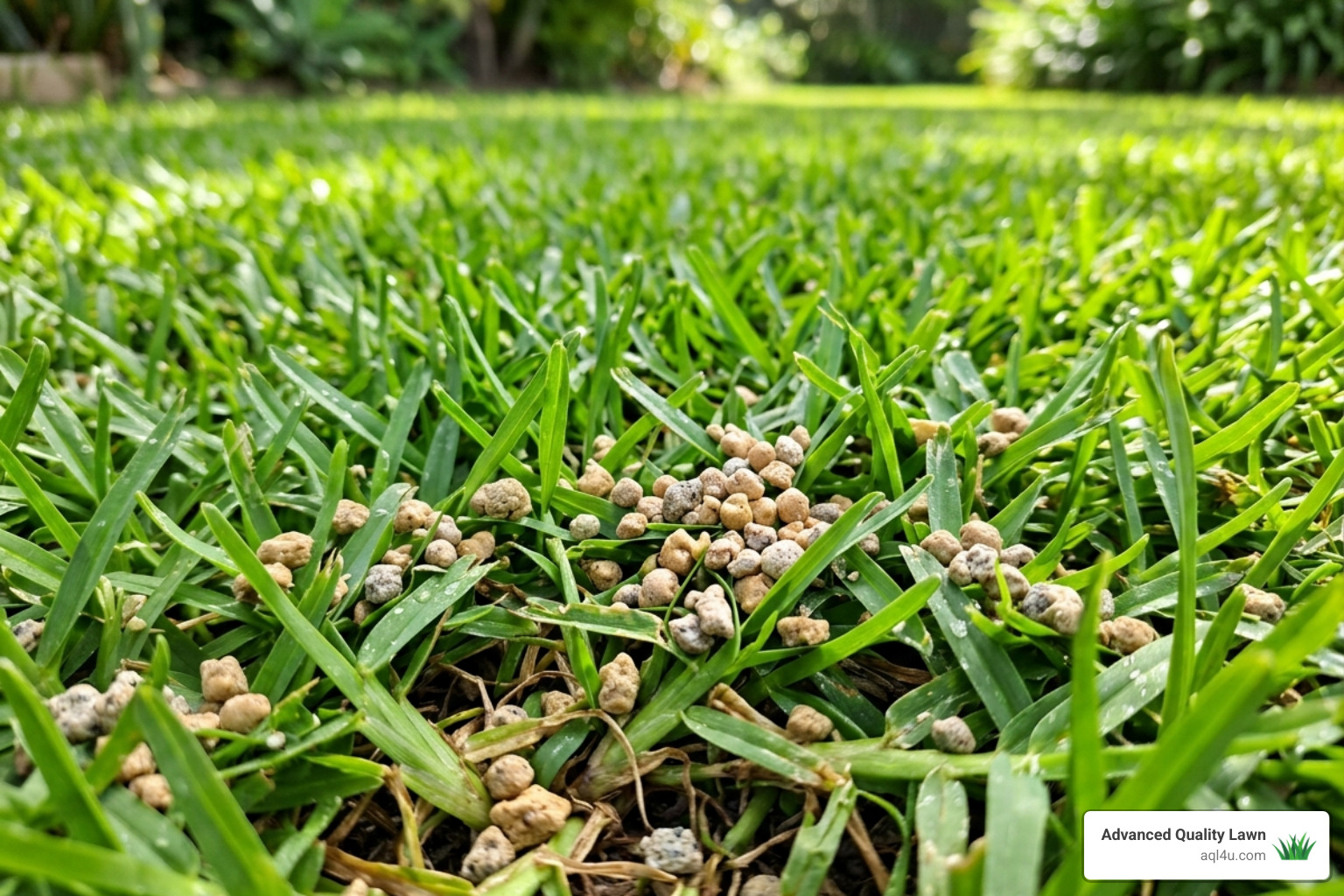
Granular fertilisers are the most popular choice for a reason. They are easy to apply and provide a steady stream of nutrients over a long period. We especially recommend slow-release granules because they prevent "surge growth" which can lead to excessive thatch build-up. Thatch is a layer of organic matter that can stop water and air from reaching the roots. Since buffalo grass grows via above-ground runners, managing thatch is vital.
If you are trying to decide between natural and chemical options, you might find our comparison of Is Organic Fertilizer Better Than Synthetic Fertilizer? helpful. Organic fertilisers are great for improving soil structure over time, which is a huge plus if you are dealing with the heavy clay soils common in Northeast Ohio. For those looking for specific organic recommendations, the Best Buffalo Grass Seed and Organic Fertilizers guide offers some excellent insights into sustainable lawn care.
Why Slow-Release is the Best Fertiliser for Buffalo Grass
In our professional opinion, slow-release technology is a game-changer for buffalo lawns. Standard fertilisers often dump all their nutrients at once. This leads to a massive spike in growth that requires constant mowing and then leaves the grass starving just a week later.
Slow-release granules are coated so that they break down gradually over about three months. This matches the natural pace at which buffalo grass roots can actually absorb the food. It also drastically reduces the risk of nutrient leaching, which is when fertiliser washes away into the ground water before the grass can use it. This is particularly important for those of us living near the lakes and rivers in Geauga and Portage Counties. You can learn more about how these products work in our look at Synthetic Fertilizer.
Using Liquid Options as the Best Fertiliser for Buffalo Grass
Liquid fertilisers serve a different purpose. Because they are absorbed through both the leaf blade and the roots, they provide almost instant results. If you have a big event coming up in your backyard in Solon or Twinsburg and your lawn looks a bit dull, a liquid application can green it up in just a few days.
Liquid feeding also ensures even coverage. Sometimes granular spreaders can leave "stripes" if they are not calibrated correctly. Liquids avoid this issue entirely. However, because they are used up so quickly by the plant, you will need to apply them more frequently than granular products. We often use liquids as a supplement to a solid granular program. For more details on application methods, check out our section on Lawn Fertilizing.
Seasonal Fertilising Schedule for Buffalo Lawns
Timing is everything. If you fertilise at the wrong time of year, you are essentially throwing money away. Buffalo grass is a warm-season grass, which means its biological clock is very different from the Kentucky Bluegrass or Fescue you might see at your neighbor's house.
In Northeast Ohio, buffalo grass usually stays dormant until the soil temperatures really warm up. This means you should avoid fertilising in the very early spring. If you apply nitrogen in March or April, the buffalo grass is still asleep and won't eat it. Instead, you will just be feeding the weeds that are starting to pop up in your Cleveland or Parma yard.
We recommend the following schedule for the best fertiliser for buffalo grass performance:
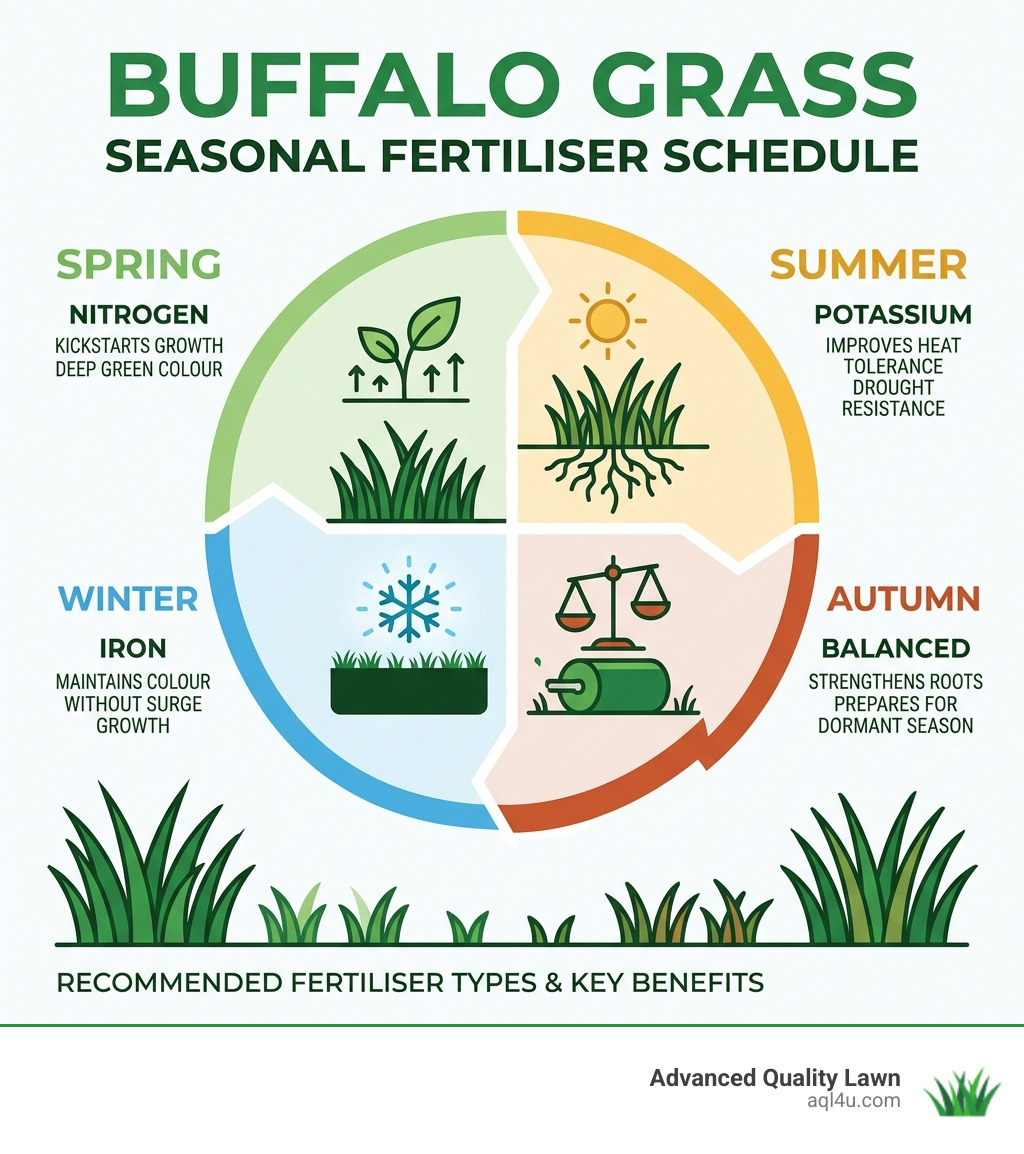
- Late Spring (Late May to Early June): This is the most important feed of the year. Use a nitrogen-rich fertiliser to wake the lawn up and encourage it to spread and thicken. This helps the lawn recover from winter and prepare for the summer heat.
- Mid-Summer (July): Apply a potassium-focused fertiliser. This helps the grass handle the stress of high temperatures and potential drought. If your lawn is looking a bit yellow, this is also a great time for an iron boost.
- Late Summer to Early Autumn (Late August to September): Use a balanced slow-release formula. This strengthens the root system and helps the grass store energy for the upcoming winter. Do not fertilise after mid-September, as the grass needs to start slowing down for its winter nap.
For a more detailed breakdown of timing, you can read How and When to Fertilize Buffalograss Lawns or our internal guide on When to Use Fertilizer.
Application Tips to Prevent Lawn Burn
There is nothing more heartbreaking than trying to help your lawn and accidentally ending up with brown, burnt patches. Fertiliser burn happens when the salts in the fertiliser pull moisture out of the grass blades.
To avoid this, we always follow these golden rules:
First, never estimate the amount of fertiliser you need. Measure your lawn area in square feet first. Most bags will tell you exactly how much area they cover. If you have a 5,000 square foot yard in Broadview Heights, do not just dump a bag meant for 10,000 square feet onto it.
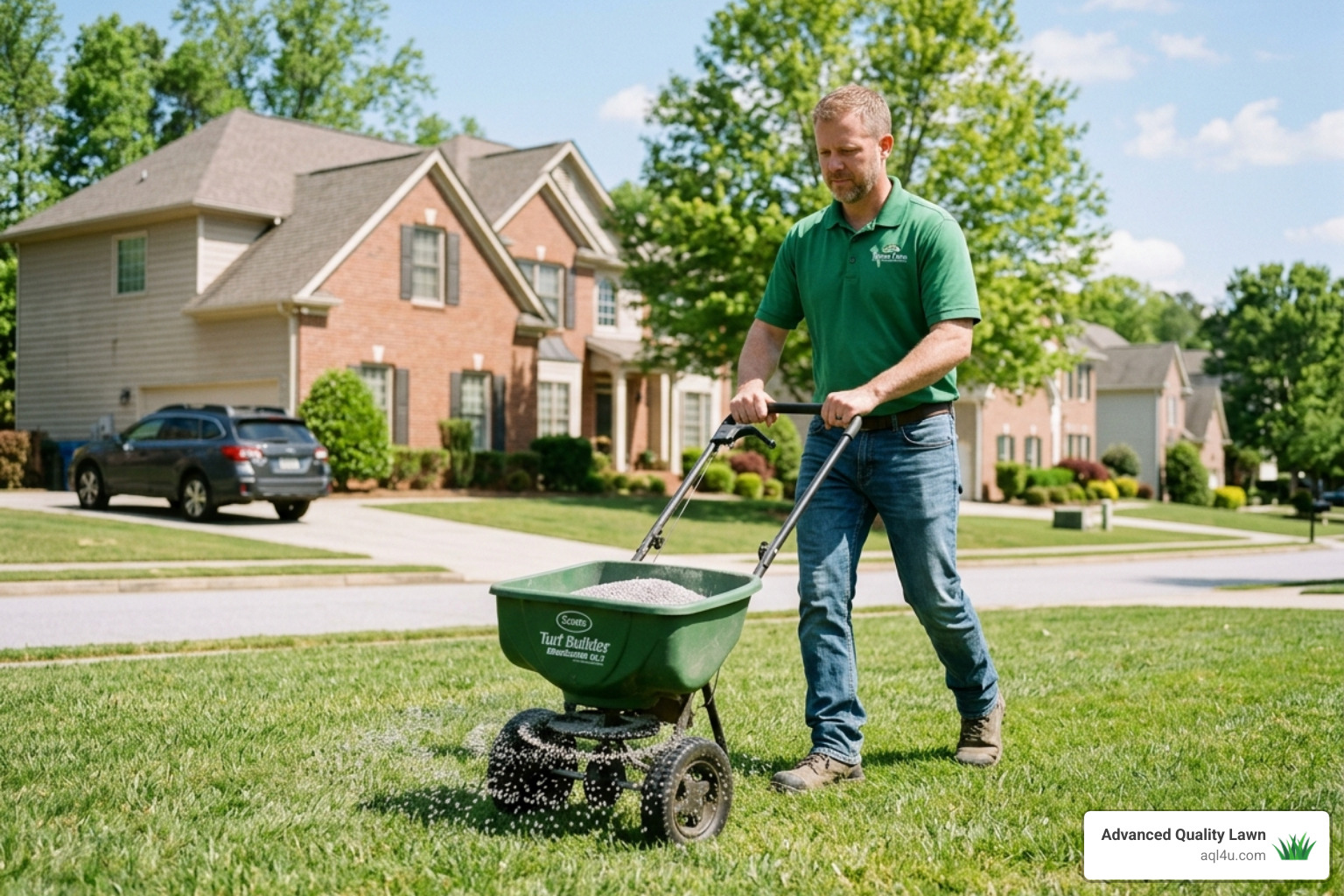
Second, use a high-quality spreader. A rotary spreader is usually better than a drop spreader for buffalo grass because it fans the granules out more evenly, reducing the risk of concentrated "hot spots." We always suggest applying the fertiliser in two different directions (a criss-cross pattern) to ensure no spots are missed.
Third, always water the lawn thoroughly after applying granular fertiliser. This washes the nutrients off the leaves and down into the soil where the roots can get to them. If you leave the granules sitting on the blades in the hot sun, you are asking for trouble.
Finally, keep an eye on your soil pH. Buffalo grass loves a pH between 6.0 and 7.0. If your soil is too acidic or too alkaline, the grass won't be able to "unlock" the nutrients you are providing, no matter how much you fertilise. You can find more professional advice on this in How to Fertilize Your Lawn and our general Grass Care resources.
Frequently Asked Questions about Buffalo Grass Care
We get a lot of questions from homeowners in places like Medina and Richfield about the specifics of buffalo grass. Here are some of the most common things we hear.
Should I use high-phosphorus fertiliser on buffalo grass?
The short answer is usually no. While phosphorus is great for root development in new turf, established buffalo grass does not need much of it. In fact, many of the best fertiliser for buffalo grass options are labeled as "low phosphorus" or "phosphorus-free."
Using too much phosphorus can lead to environmental issues like algae blooms in local ponds. If you are putting down a brand new lawn, you can use a starter fertiliser with a bit more phosphorus to get those roots moving. Otherwise, stick to a formula where the middle number on the NPK label is low. You can find more about this in our article on the Best Fertilizer for New Grass.
How often should I fertilise established buffalo grass?
For an established lawn in Northeast Ohio, three times a year is the sweet spot. We recommend feeding every six to eight weeks during the active growing season, which generally runs from late May through early September.
If you fertilise more often than that, you might end up with too much thatch. If you fertilise less, the lawn might lose its density and allow weeds to take over. Buffalo grass is naturally low-maintenance, so you do not need to baby it as much as other varieties. Check out our Lawn Fertilizing tag for more frequency tips.
Are buffalo-safe fertilisers pet-friendly?
Many modern fertilisers are safe for pets and children once they have been watered in and allowed to dry. However, we always recommend reading the label carefully. Organic options are often the safest bet for families with curious dogs.
If you use a synthetic product, just keep the pets off the grass for 24 hours after you have watered it in. This gives the granules time to dissolve and move into the soil. For more on natural options, see our guide on Organic Fertilizer.
Conclusion
Choosing the best fertiliser for buffalo grass does not have to be a complicated chore. By focusing on slow-release nitrogen, keeping an eye on iron levels, and sticking to a simple three-time-a-year schedule, you can enjoy a lush, green lawn that is the envy of your neighborhood.
At Advanced Quality Lawn, we have spent decades perfecting lawn care for residents throughout Akron and the surrounding Northeast Ohio counties. We know the local soil, we understand our unique climate, and we are dedicated to providing excellent customer service. Whether you are in Macedonia, Streetsboro, or North Royalton, we are here to help your yard reach its full potential.
If you would rather spend your weekends enjoying your lawn instead of working on it, let us take the guesswork out of the process. Our full-program guarantees and expert technicians ensure your buffalo grass gets exactly what it needs, exactly when it needs it. Contact us today to learn more about our Professional Lawn Care Services and how we can make your yard look better than ever!