The Huge Mistake People Make Killing Grubs in the Fall
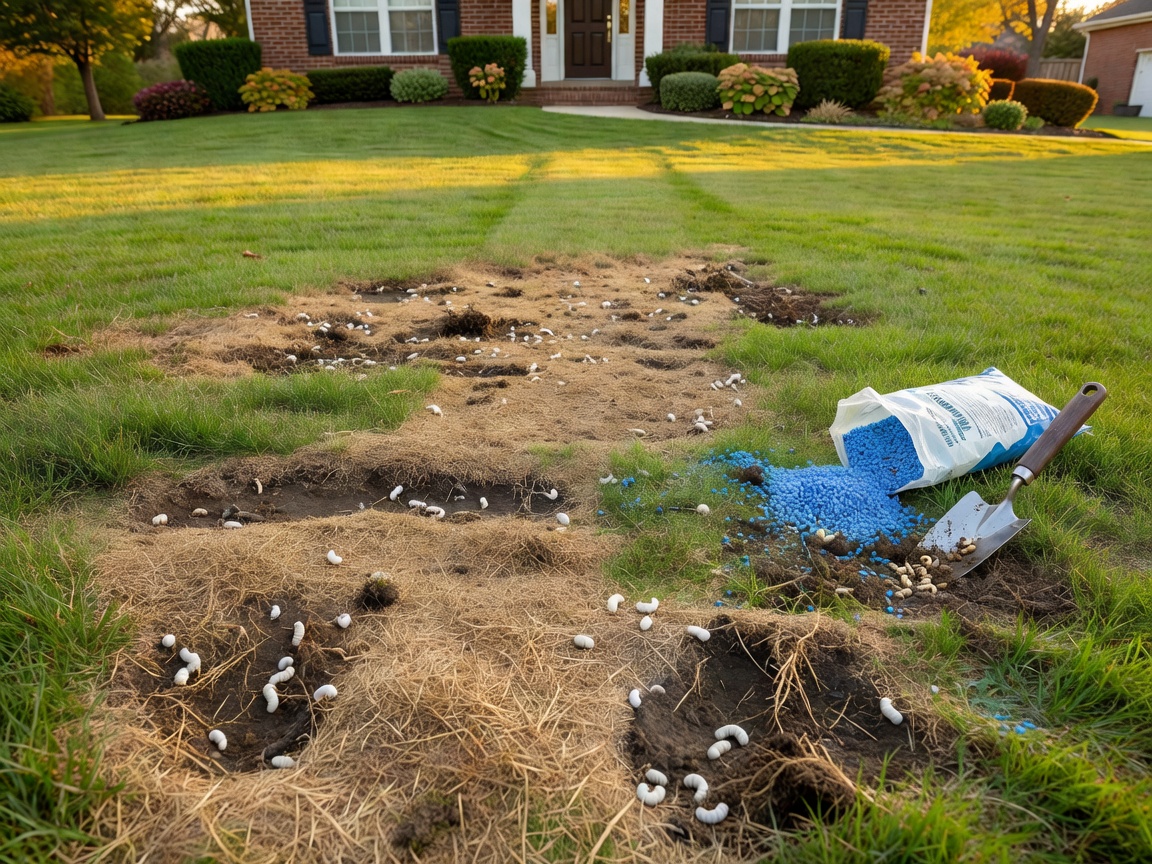
The Fatal Fall Mistake: Why Late Treatment and Wrong Products Fail
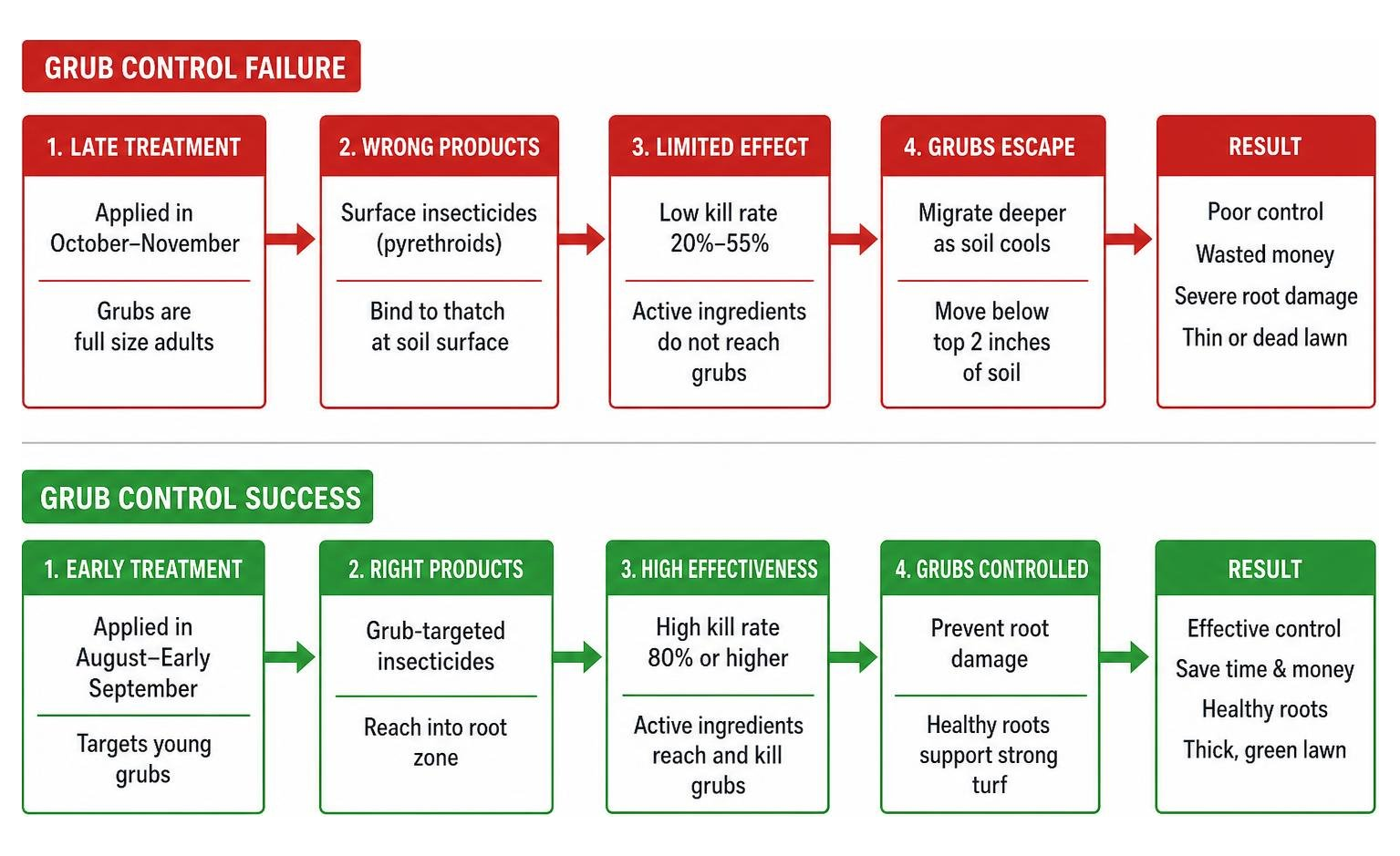
The biggest mistake homeowners make every single year is waiting until October or November to deal with lawn grubs. By late fall, white grubs have grown into full size adults in their larval stage. They have already eaten the majority of your turfgrass root system, and as soil temperatures drop, they begin migrating several inches down into the dirt to survive the winter.
Applying treatments in late October yields poor results. Curative insecticides achieve only a 20% to 55% kill rate on mature grubs late in the season, compared to an 80% or higher kill rate when applied in August or early September. Once those grubs move below the top two inches of soil, chemical treatments simply cannot reach them effectively. You end up spending hard earned money on products that sit uselessly near the surface while the grubs rest comfortably below. For detailed insights on white grub life cycles, visit Grubs | Cornell IPM.
How Surface Insecticides Waste Money and Time
Another major error is purchasing standard surface insect sprays or granules. Many popular products off store shelves contain active pyrethroid ingredients such as bifenthrin, permethrin, cyfluthrin, or gamma-cyhalothrin. While these compounds work wonderfully for surface pests like ants, chinch bugs, or armyworms, they are completely useless against subsurface white grubs.
Pyrethroids bind tightly to the organic matter and thatch layer right at the soil surface. Even if you pour water over them, the active ingredients will not leach down two inches into the root zone where grubs live and feed. You can review our full guide on Best Insect Control for Lawns to learn more about which formulas target specific lawn pests. Using a surface insecticide for grubs wastes time, costs money, and leaves your grass vulnerable to total root destruction.
The Best Way to Get Rid of Grubs in Lawn During Early Fall
If you discover active root damage in late August or September, the best way to get rid of grubs in lawn areas is to apply a true fast acting curative insecticide. Look specifically for products containing active ingredients like trichlorfon or carbaryl.
Trichlorfon acts rapidly on contact and through ingestion. It breaks down quickly in the soil, providing a fast knockdown within 24 to 48 hours. This stops feeding immediately so your grass can begin holding onto the remaining soil before freezing winter temperatures arrive.
How to Confirm an Infestation: Scouting and Damage Thresholds
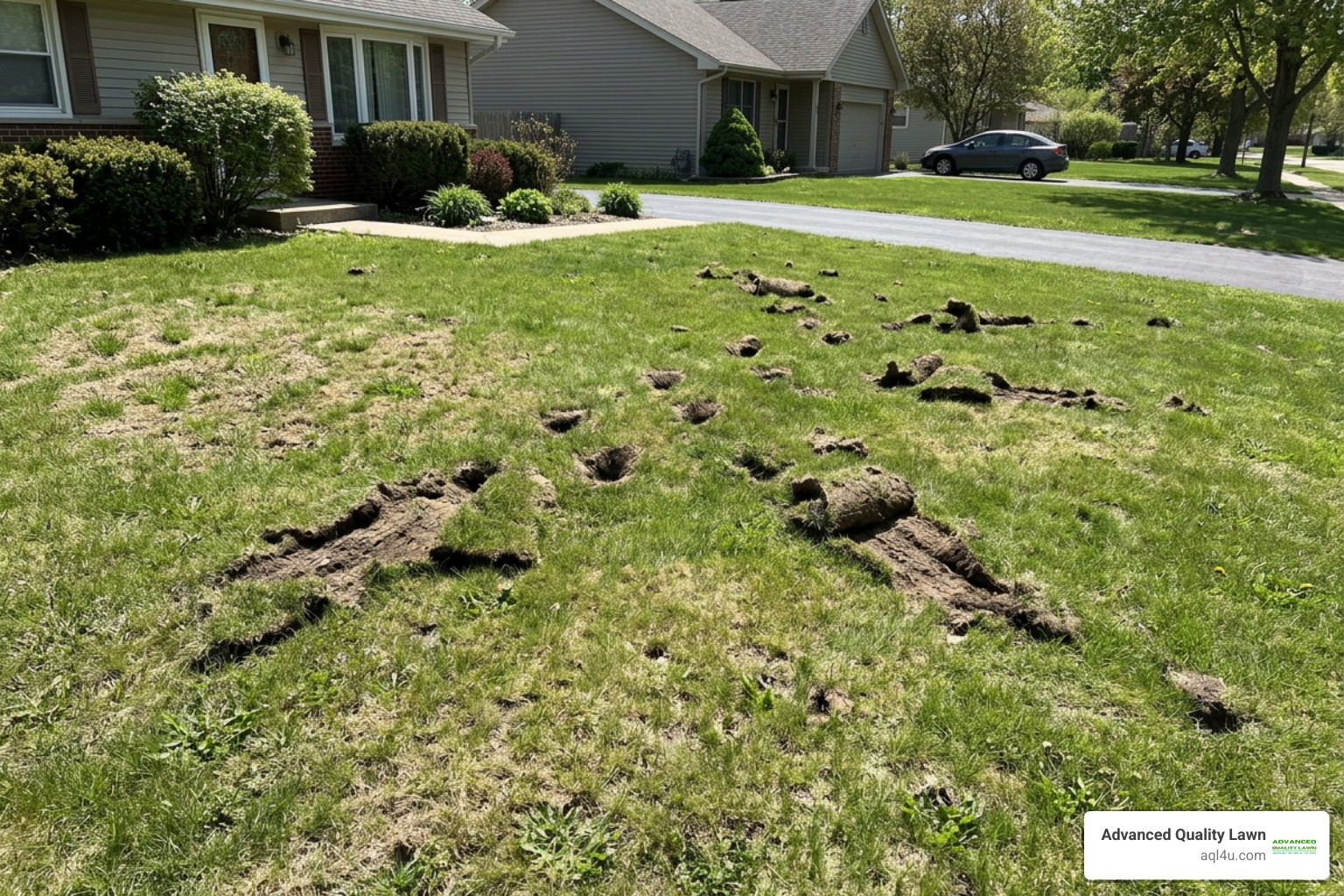
Before rushing to the store for a bag of chemical treatment, you must verify that grubs are actually causing the problem. Brown grass can easily be caused by summer drought, soil compaction, or fungal diseases like dollar spot.
One obvious visual sign of a subsurface grub issue is animal activity. Skunks, raccoons, opossums, and birds love to feast on fat white grubs. If you wake up to find shallow cone-shaped holes or large patches of turf flipped over like a plowed field, animals are hunting grubs underneath your lawn.
To scout for grubs directly, perform a simple spade test:
- Select an area on the edge where dead brown grass meets healthy green grass.
- Use a flat spade to cut a one-square-foot section of sod about two to three inches deep.
- Pry up the sod flap and roll it back.
- Sift through the top two inches of exposed soil and count the white C-shaped larvae with tan head capsules.
Different grass species tolerate different amounts of grub feeding before showing physical damage.
| Grass Species Type | Average Healthy Tolerance Threshold | Action Recommended Threshold |
|---|---|---|
| Kentucky Bluegrass | 5 grubs per sq ft | 8 to 10+ grubs per sq ft |
| Perennial Ryegrass | 5 grubs per sq ft | 8 to 10+ grubs per sq ft |
| Tall Fescue | 6 to 8 grubs per sq ft | 12 to 14+ grubs per sq ft |
If you find fewer than five grubs per square foot in a healthy lawn, no chemical treatment is needed. Healthy turf easily grows new roots to replace minor feeding losses.
The Best Way to Get Rid of Grubs in Lawn Areas Showing Spongy Damage
When grub density passes the critical threshold of 10 or more larvae per square foot, the entire root zone gets completely severed. This creates a distinct spongy feeling underfoot as you walk across the lawn.
In these damaged areas, perform the cut-and-roll test. Grasp a handful of grass and pull upward. If grubs have destroyed the root zone, the sod will peel right off the dirt surface like an unrolled strip of carpet. You will see small C-shaped grubs lying exposed on top of the bare soil underneath.
The Best Way to Get Rid of Grubs in Lawn: Preventive vs. Curative Treatments
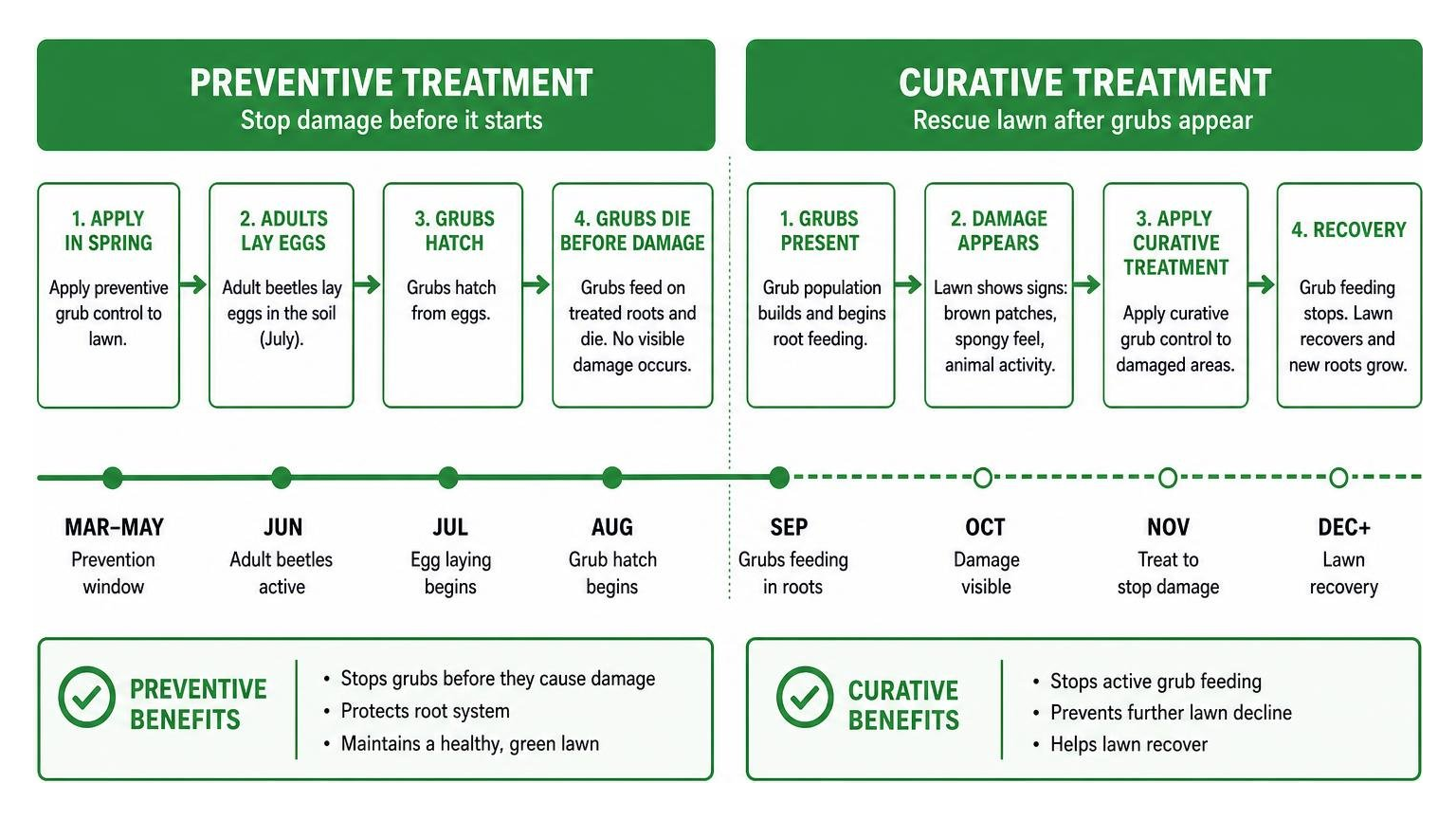
Managing lawn grubs successfully requires understanding the difference between preventive and curative strategies. Treating preventively stops damage before it starts, while curative products act as a rescue mission after grubs appear. Check out this guide on How to choose and when to apply grub control products for your lawn from Turf for additional insights on selecting products.
Preventive Control Active Ingredients and Spring Application
Preventive grub control relies on systemic active ingredients that are absorbed by the grass roots. When adult scarab beetles, such as Japanese beetles or European chafers, lay eggs in July, the newly hatched grubs take a bite of the treated root system and die before causing visible turf damage.
Common preventive active ingredients include:
- Chlorantraniliprole: Excellent low toxicity option that can be applied early in spring, from April through May, because it dissolves slowly and stays in the root zone all season.
- Imidacloprid, Thiamethoxam, Clothianidin: Systemic neonicotinoids best applied in June or early July just prior to egg hatch.
To learn more about systemic timing, read our article on Best Way to Kill Grubs in Lawn.
Natural and Biological Grub Killers
For homeowners seeking chemical free alternatives, biological controls offer safe options when used under the right conditions. Learn more in this guide on How to Kill Grubs in Lawn Naturally: Step by Step Guide on Garden Truth.
Beneficial nematodes, specifically Heterorhabditis bacteriophora, actively search out grubs in the soil. These microscopic organisms enter the grub and release bacteria that kill the host within 48 hours. Nematodes can achieve 60% to 100% control, but they require soil temperatures above 60°F and consistent soil moisture before and after application to survive.
Milky spore disease (Bacillus popilliae) is another natural option, but it comes with limitations. Milky spore infects only Japanese beetle grubs and does not work against European chafers or June bugs. Furthermore, milky spore can take two to three years to build up protective colonies in the soil, achieving only a 20% to 25% infection rate in colder northern climates.
Step-by-Step Guide to Applying Treatments and Repairing Lawn Damage

Applying a grub product properly is just as important as choosing the right active ingredient. Follow these steps to ensure your application works and your lawn recovers quickly.
Step 1: Prepare and Water In Products Safely
Before applying any granular pesticide, mow the lawn to remove flowering weeds like clover or dandelions. This prevents pollinating bees from visiting blooms that might carry chemical residues.
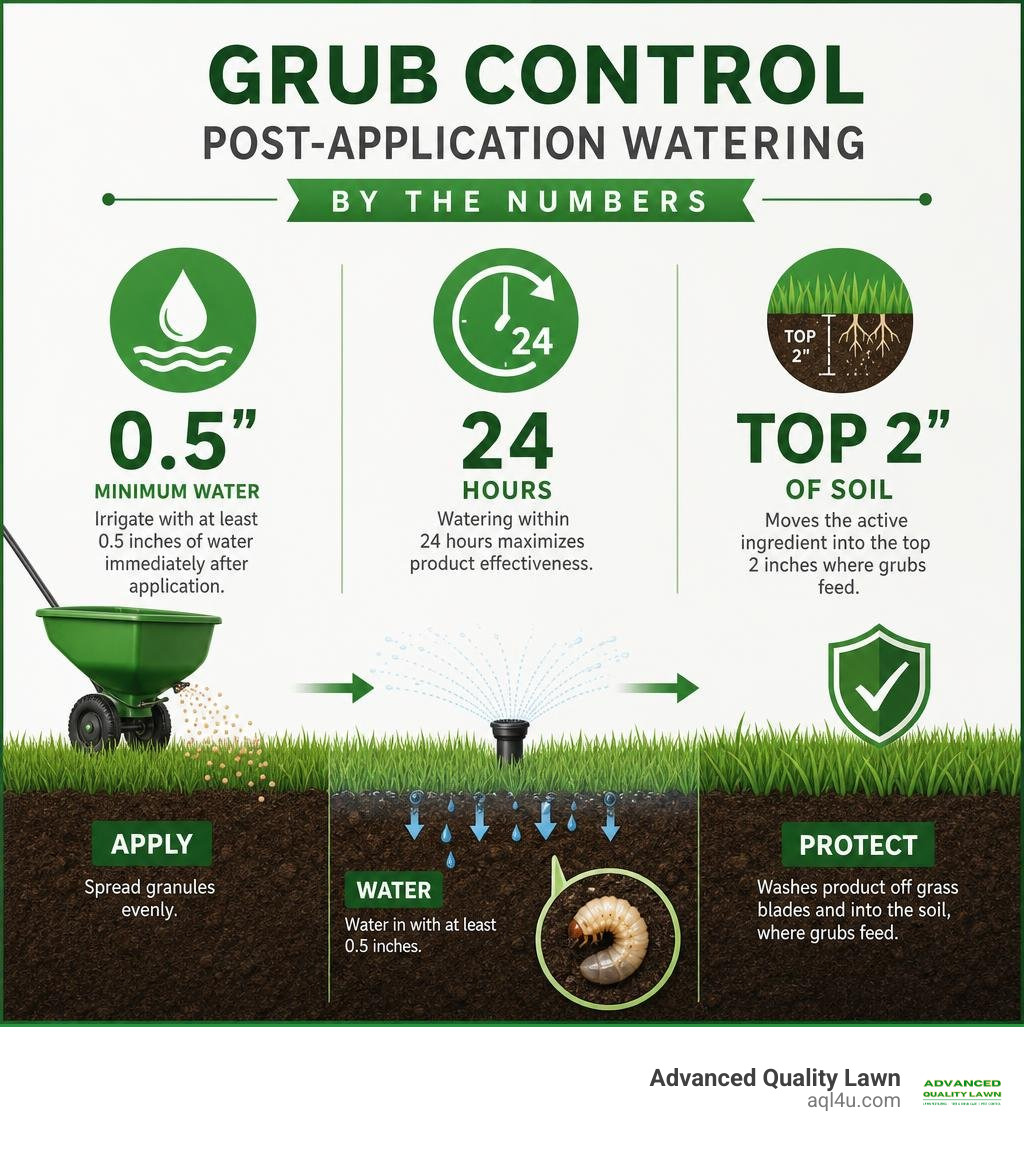
Spread granular products evenly using a properly calibrated broadcast spreader. Immediately after application, irrigate the lawn with at least 0.5 inches of water. You can place an empty tuna can or coffee mug on the lawn to measure irrigation depth.
Watering serves two critical purposes:
- It washes the active ingredient off grass blades down into the top two inches of soil where grubs feed.
- It prevents sunlight from breaking down sensitive chemical molecules on the surface.
For additional seasonal insect prevention, see The Unwelcome Guests: Tent Caterpillars and White Grubs in Your Yard as well as our Ultimate Bug Control Guide 2026.
Step 2: Reseed and Restore Dead Turf
If grubs have destroyed sections of your lawn, turf recovery requires active restoration in early fall:
- Rake out all dead grass, thatch, and loose debris from the affected patches.
- Loosen the top inch of exposed soil with a hard-toothed garden rake or tiller.
- Spread topsoil or compost over the area to create a smooth seedbed.
- Broadcast high quality grass seed, such as turf-type tall fescue or perennial ryegrass, suited for Northeast Ohio lawns.
- Lightly rake the seed into the topsoil and keep the area consistently moist by watering lightly twice a day until seedlings germinate.
Frequently Asked Questions about Lawn Grub Control
Will lawn grubs go away on their own?
Small populations of four or five grubs per square foot will cycle naturally without causing noticeable harm. However, severe infestations with ten or more grubs per square foot will not fix themselves. Large populations will continue eating grass roots until cold weather forces them underground, and surviving grubs will return in spring to feed briefly before pupating into adult beetles.
Can I apply grub killer and grass seed at the same time?
Yes, you can apply curative grub controls like trichlorfon on the same day you sow grass seed. Grub insecticides target soil insects and do not interfere with seed germination. However, make sure to apply the grub granulars, water them in thoroughly, and then rake and seed the area so you do not disturb the newly spread grass seed.
How much water is required after applying grub treatments?
You must water the lawn with 0.5 inches of water within 24 hours of applying any granular grub control product. Without this irrigation, the active ingredients remain stuck on surface grass leaves and thatch where sunlight degrades them, leaving grubs untouched in the root zone.
Conclusion
Finding the best way to get rid of grubs in lawn comes down to timing and using the right product for the job. Avoid the mistake of waiting until late October when mature grubs go deep into the soil. Use preventive treatments in June or July if you have recurring infestations, or apply fast acting curative products in late summer at the first sign of root loss.
If you are tired of guessing about treatment timing or repairing animal digging damage on your lawn every fall, let our team of experts handle it for you. Advanced Quality Lawn provides custom grub management, lawn care, and tree care services across Akron, Cuyahoga County, Summit County, and surrounding Northeast Ohio communities. Explore our full range of Professional Lawn Care Services or contact us today to protect your yard all season long!