
Safe and Effective Ways to Remove Crabgrass from Zoysia Grass
Why Killing Crabgrass in Zoysia Requires the Right Approach
The best way to kill crabgrass in zoysia depends on when you catch it and how bad the infestation is. Here is a quick overview:
- Pre-emergent herbicide (best long-term prevention): Apply prodiamine or dithiopyr in early spring when soil temperatures reach 55°F. This stops crabgrass before it sprouts.
- Post-emergent herbicide (best for active crabgrass): Use quinclorac (Drive XLR8) with a methylated seed oil surfactant to kill crabgrass that is already growing. Results appear in 7 to 14 days.
- Celsius WG (best all-around option): Controls crabgrass and other weeds with minimal stress to zoysia turf.
- Manual removal (best for small patches): Pull crabgrass by the root after rain, then patch bare spots to prevent regrowth.
- Dense turf maintenance (best long-term defense): A healthy zoysia lawn with 80 to 90% coverage can suppress up to 90% of crabgrass naturally.
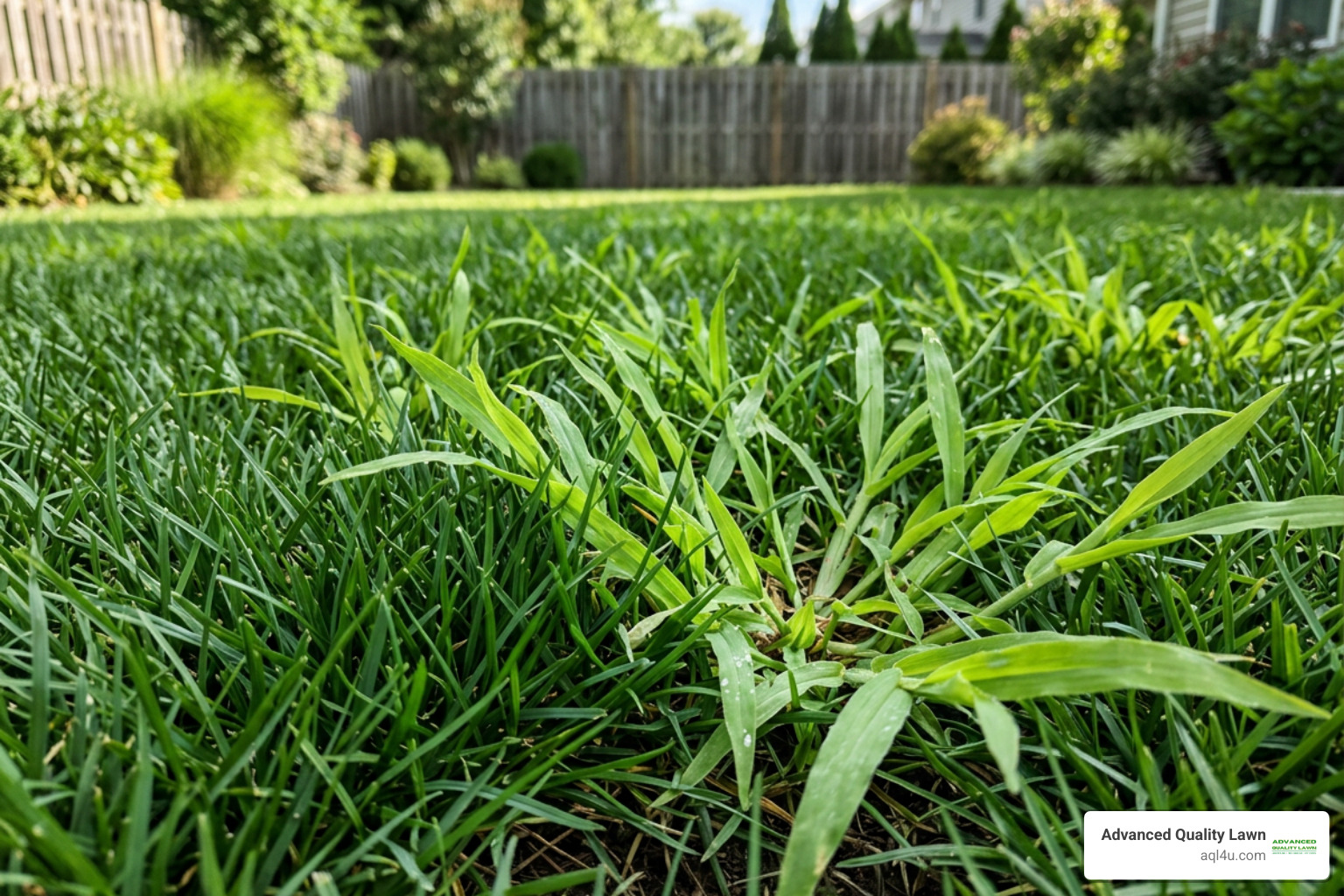
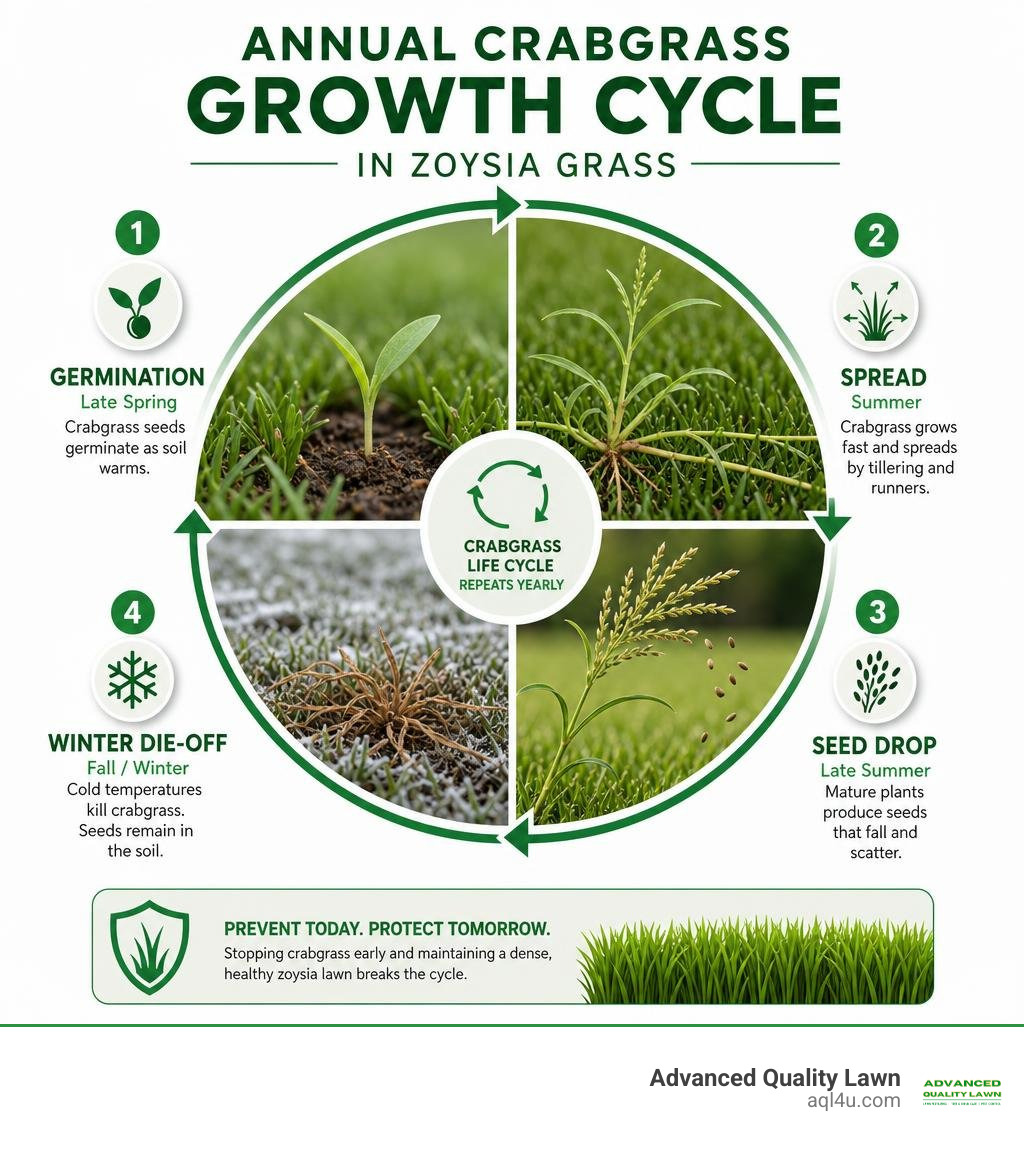
Crabgrass is one of the most stubborn weeds a zoysia lawn owner can face. It germinates when soil temperatures hit 55 to 60°F, grows fast, and spreads aggressively. A single plant can produce over 150,000 seeds and 700 runners in one season. Left unchecked, it can take over large sections of your lawn before summer is even halfway done.
The tricky part with zoysia is that not every herbicide is safe for it. Some popular products, like Tenacity (mesotrione), can damage or discolor zoysia turf. Others, like Dismiss NXT, target nutsedge rather than crabgrass and will not solve the problem if used alone. Choosing the wrong product wastes time and can set your lawn back.
The good news is that zoysia is one of the most competitive warm-season grasses available. With the right treatment plan and consistent care, you can clear out crabgrass and build a lawn thick enough to resist future invasions.
I'm Andrew Day, owner of Advanced Quality Lawn, and with over 30 years of experience helping Northeast Ohio homeowners find the best way to kill crabgrass in zoysia and other warm-season turf challenges, I've seen what works and what makes the problem worse. In this guide, I'll walk you through every effective option, from targeted herbicides to cultural practices, so you can take back your lawn with confidence.
Best Way to Kill Crabgrass in Zoysia Using Post-Emergent Herbicides
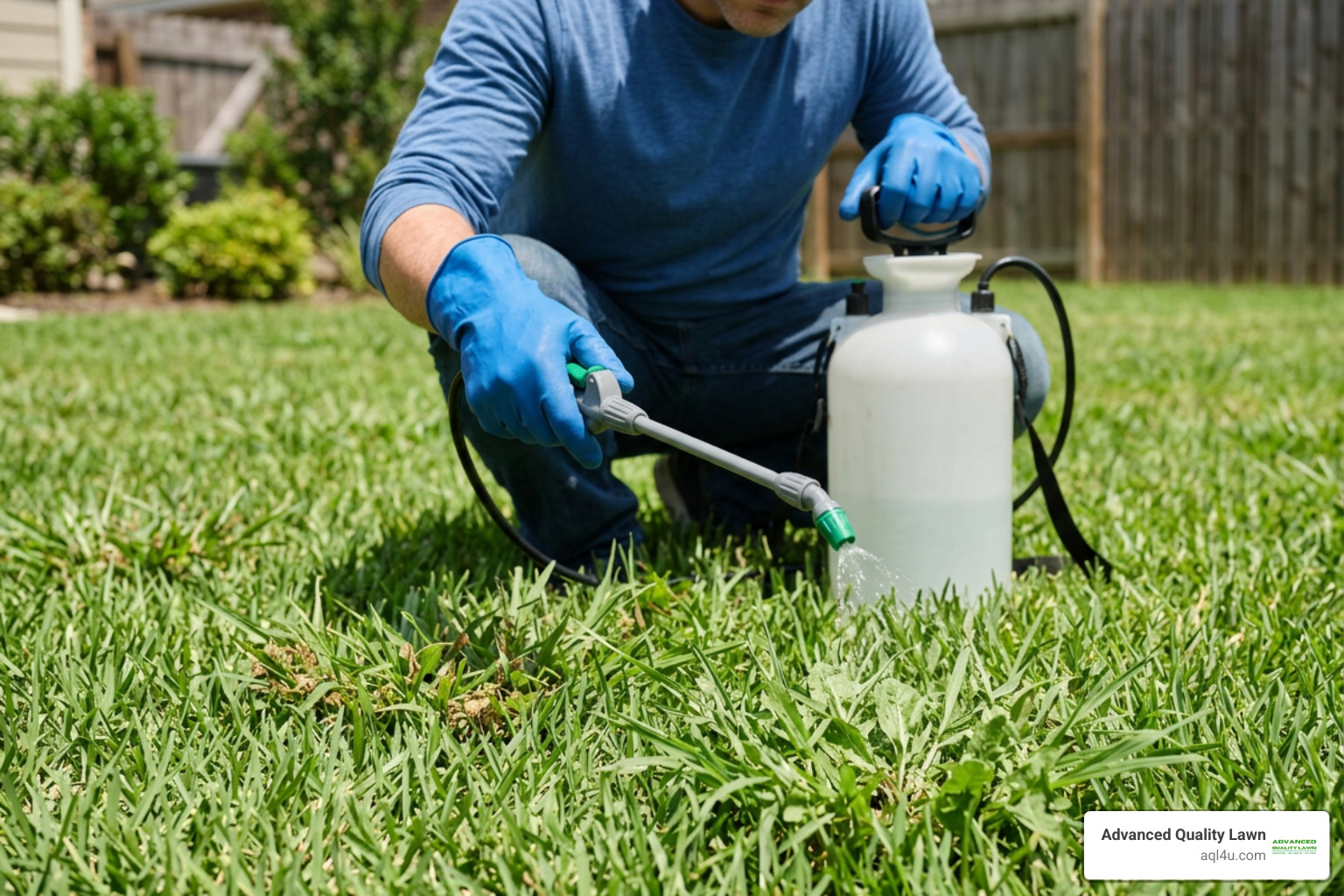
When crabgrass has already established itself in your yard, pre-emergent products will no longer solve the issue. You need selective post-emergent herbicides designed to eliminate active weeds without destroying your desirable turfgrass. Finding the best way to kill crabgrass in zoysia requires choosing products that target the specific biochemistry of grassy weeds while keeping warm-season turf completely safe.
Post-emergent weed controls work through direct foliar uptake. The chemical enters through the leaves, travels down into the root system, and halts weed development. Because zoysia grass goes through delicate growth phases throughout the year, product selection and application timing are critical. Applying an incompatible chemical can cause severe turf discoloration, growth stunting, or permanent lawn damage.
For effective post-emergent crabgrass eradication, home lawn care enthusiasts rely on targeted products like quinclorac, as well as combination formulations such as Celsius WG. To learn more about selecting products for various lawn types, check out our guide on the Best Crabgrass Killer for Lawns. You can also explore expert reviews on selective post emergent options for zoysia to see how different formulas behave under warm weather conditions.
Drive XLR8 and Quinclorac as the Best Way to Kill Crabgrass in Zoysia
Quinclorac is widely regarded by lawn care professionals as the premier active ingredient for eliminating post-emergent crabgrass in established zoysia turf. Commercial formulations such as Drive XLR8 deliver high systemic performance against mature crabgrass plants while maintaining excellent tolerance on zoysia grass varieties.
The primary advantage of Drive XLR8 is its water-based formulation, which allows rapid absorption into weed tissue. Drive XLR8 becomes rainfast in less than one hour, reducing the risk of rain washing the active ingredient away. Once absorbed, quinclorac accumulates in the growing points of crabgrass, causing leaf curling, chlorosis, and eventual death.
To achieve optimal results with quinclorac, you must mix it with an appropriate adjuvant. Adding a methylated seed oil (MSO) surfactant breaks down the waxy cuticle on crabgrass leaves, allowing the herbicide to penetrate deeply into the plant foliage. Without an MSO surfactant, spray droplets tend to bead up and roll off crabgrass blades, significantly reducing effectiveness.
The typical treatment timeline for Drive XLR8 on zoysia lawns includes:
- Initial uptake: Foliar absorption occurs within 1 to 2 hours post-application.
- Visible symptoms: Yellowing, twisting, and reddening of crabgrass stems appear within 7 to 14 days.
- Complete weed mortality: Total plant decay occurs within 21 days.
- Residual protection: Drive XLR8 provides short-term residual control for up to 30 days.
During application, avoid spraying when ambient air temperatures exceed 85°F. High heat combined with post-emergent applications can cause temporary turf stress or yellowing on zoysia grass. Applying treatments in the cooler morning hours ensures optimal plant uptake and protects your lawn canopy.
Comparing Quinclorac, Celsius, and Dismiss NXT
Not all post-emergent lawn products target the same weed species. Homeowners frequently confuse crabgrass killers with general weed sprays or sedge treatments, leading to poor results and wasted chemical investments.
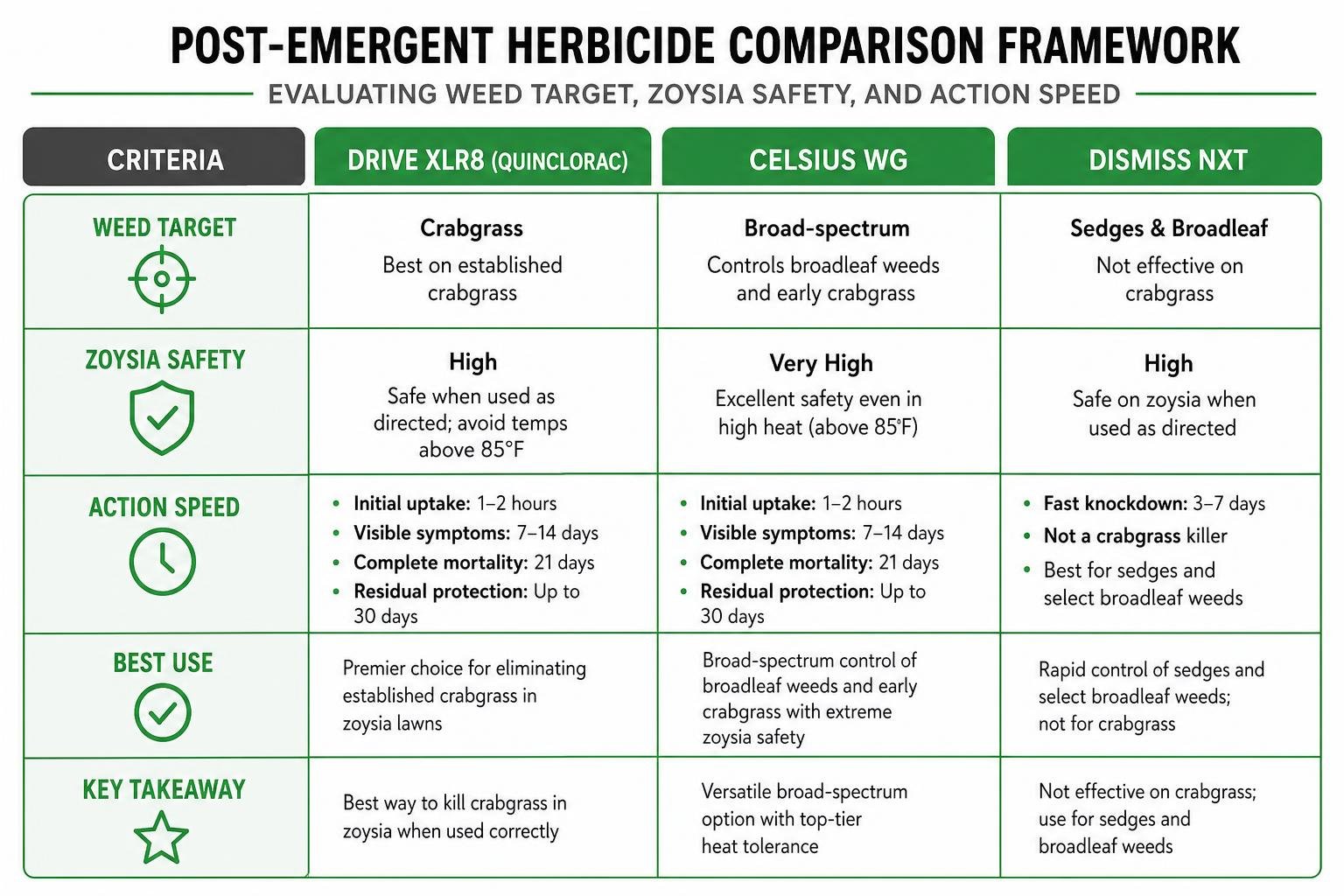
Celsius WG is an outstanding broad-spectrum herbicide option for zoysia turf. Containing thiencarbazone-methyl, iodosulfuron-methyl-sodium, and dicamba, Celsius WG controls a wide range of broadleaf weeds alongside early-stage crabgrass. Unlike quinclorac, Celsius WG displays extreme turf safety across elevated temperature ranges, making it an excellent option during hot summer periods when air temperatures exceed 85°F.
Dismiss NXT, on the other hand, contains sulfentrazone and carfentrazone-ethyl. It is specifically formulated to rapidly knock down yellow and purple nutsedge, sedges, and select broadleaf weeds. However, Dismiss NXT does not deliver effective control against mature crabgrass. Applying Dismiss NXT expecting to kill established crabgrass will result in frustration, as the weed will continue to thrive while your turf experiences unnecessary chemical exposure.
The following comparison matrix highlights key differences among these popular post-emergent lawn options:
| Herbicide Product | Active Ingredients | Primary Target Weeds | Zoysia Turf Safety Level | Max Temperature Threshold |
|---|---|---|---|---|
| Drive XLR8 | Quinclorac | Crabgrass, foxtail, signalgrass | Excellent on established zoysia | Do not apply above 85°F |
| Celsius WG | Thiencarbazone, Iodosulfuron, Dicamba | Crabgrass, broadleaf weeds, spurge | Outstanding safe application profile | Safe up to 90°F+ |
| Dismiss NXT | Sulfentrazone, Carfentrazone | Yellow nutsedge, purple sedge, green kyllinga | Safe when applied according to label | Apply under 85°F for minimal stress |
When evaluating these choices, use quinclorac when dealing specifically with crabgrass outbreaks. Select Celsius WG if you face a mixture of crabgrass and broadleaf weeds like spurge or dandelion, and save Dismiss NXT strictly for sedge infestations.
Pre-Emergent Herbicides and Timing for Crabgrass Prevention
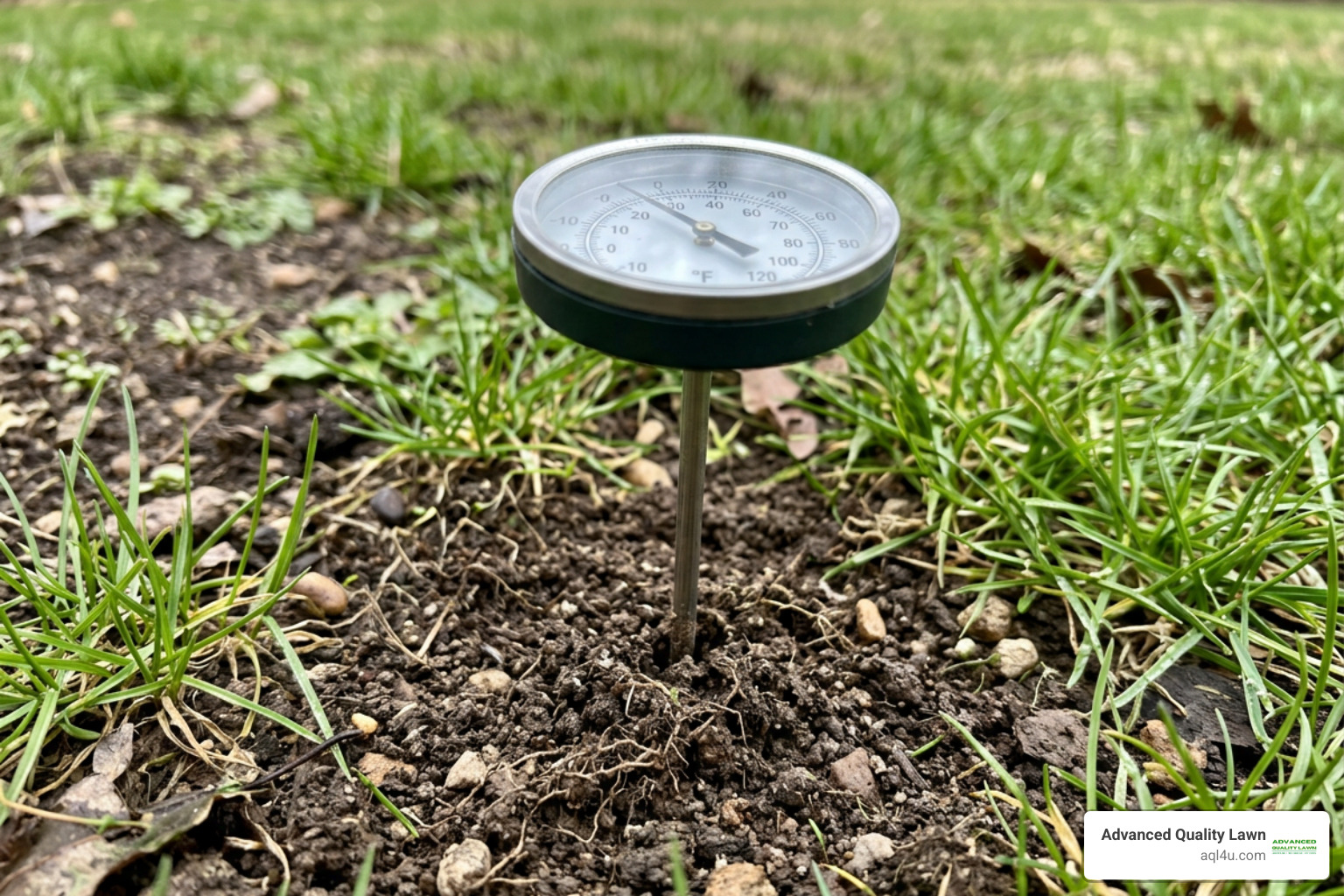
While post-emergent sprays eliminate visible weeds, applying a well-timed pre-emergent herbicide is single-handedly the best way to kill crabgrass in zoysia over the long term. Pre-emergent herbicides do not destroy existing weeds or destroy un-germinated seeds. Instead, they form a invisible chemical barrier along the soil surface. When dormant crabgrass seeds absorb moisture and attempt to sprout, the chemical stops cell division in root tips, killing the germinating seedling before it emerges through the soil.
According to university turf research, properly applied pre-emergent herbicides yield over 90% control against annual crabgrass emergence. High-performing active ingredients for zoysia turf include prodiamine (Barricade) and dithiopyr (Dimension). Dithiopyr provides a unique double benefit by offering early post-emergent control on tiny, young crabgrass seedlings if spring application timing is slightly delayed.
To explore product options and granular formulation details, review our complete guide on the Best Pre-Emergent Weed Killer for Lawns.
Soil Temperature Triggers and Pre-Emergent Application
Achieving successful crabgrass prevention requires monitoring local soil conditions rather than relying on arbitrary calendar dates. Crabgrass seeds begin germination when soil temperatures reach 55°F at a depth of 2 to 4 inches for three consecutive days.
In Northeast Ohio communities such as Medina, Hudson, and Stow, this 55°F soil temperature window typically occurs between late March and mid-April. Applying pre-emergent treatments too late after soil temperatures pass 60°F allows thousands of crabgrass seeds to sprout beneath the surface unhindered.
Follow these essential steps when executing a pre-emergent program:
- Monitor soil temperature: Use a meat or soil thermometer pushed 2 to 4 inches into bare garden or lawn soil in full sun.
- Apply uniformly: Use a calibrated broadcast spreader to distribute granular products evenly across the entire lawn canopy.
- Activate the barrier: Water the lawn with 0.25 to 0.5 inches of water within 48 hours of application to dissolve granules and move active ingredients into the upper root zone.
- Maintain barrier integrity: Avoid heavy aeration, power raking, or soil disturbance after application, as breaking the soil chemical barrier allows crabgrass seeds to germinate freely.
Pre-emergent products like prodiamine deliver long-lasting protective residuals ranging from 4 to 8 weeks depending on application rates. Pre-emergents inhibit all seed germination equally. If you plan to plant zoysia grass seed or install new plugs, you must wait 8 to 12 weeks after a pre-emergent treatment to avoid killing new vegetative tissue.
How Zoysia Grass Naturally Chokes Out Weeds
Chemical herbicides are effective tools, but building a dense, mature turf canopy is the ultimate long-term strategy for suppressing lawn weeds. A healthy zoysia lawn boasting 80 to 90% surface coverage can naturally suppress up to 90% of crabgrass emergence without relying heavily on chemical sprays.
Zoysia grass spreads through two distinct vegetative mechanisms: above-ground runners known as stolons and underground stems called rhizomes. As these structures intertwine, they create a dense, woven mat of foliage and thick root mass that physically crowds out weed invaders.

Crabgrass seeds require direct sunlight exposure to initiate germination. When a zoysia lawn maintains high canopy density, it completely shades the soil surface. Deprived of warmth and sunlight, dormant crabgrass seeds remain trapped beneath the dense turf canopy where they cannot sprout. Read our comprehensive resource on zoysia grass weed suppression potential to learn more about biological competition. If you need step-by-step guidance on clearing out current weeds before strengthening your turf canopy, check out our Crabgrass Removal Guide 2026.
Cultural Care Practices for Turf Density
To maximize zoysia grass natural weed defense, you must tailor your seasonal maintenance habits to support thick turf canopy development. Adopting proper cultural care practices ensures your lawn stays resilient against weed encroachment.
- Maintain ideal mowing height: Mow zoysia at a height of 1.0 to 2.5 inches. Keeping grass blades within this height range encourages strong lateral stolon growth and creates a thick, sun-blocking canopy.
- Irrigate deeply and infrequently: Deliver approximately 1 inch of water per week, including natural rainfall. Deep soaking sessions encourage deep, healthy root development, whereas frequent shallow watering keeps the soil surface moist and invites shallow-rooted crabgrass to thrive.
- Fertilize with moderate nitrogen: Zoysia requires low to moderate fertilization. Apply roughly 2 lbs of nitrogen per 1,000 square feet annually, split into small applications between late spring and mid-summer. Avoid early spring fertilization before zoysia reaches 50% green-up, as excess nutrients applied too early feed emerging crabgrass rather than your lawn.
- Perform spring core aeration: Aerate compacted lawn soils in late spring or early summer during active zoysia growth. Aeration relieves soil compaction, improves water infiltration, and promotes rapid stolon expansion across bare lawn patches.
Manual Removal Techniques for the Best Way to Kill Crabgrass in Zoysia Patches
When isolated patches of crabgrass pop up in an otherwise healthy zoysia lawn, manual removal remains the fastest, safest, and most environmentally friendly solution. Hand pulling prevents small weed clusters from developing mature seed heads that could contaminate your lawn for years to come.
To manually remove crabgrass successfully, execute the following steps:
- Wait for moist soil conditions: Irrigate the lawn deeply or perform weed pulling immediately following rain when soil is soft and pliable.
- Grasp at the crown: Reach down to the base of the plant where all stems diverge near the root line.
- Extract completely: Pull upward with steady, firm pressure to extract the central taproot and lateral root system intact. Snapping stems at ground level allows the plant to regrow rapidly from dormant crown nodes.
- Dispose of pulled weeds properly: Bag and discard pulled crabgrass plants immediately. Never toss pulled weeds into home compost piles, as crabgrass seeds survive composting temperatures and can re-infest garden beds later.
- Patch bare soil gaps: Fill small bare spots with compost and encourage surrounding zoysia stolons to cover the open space, or insert healthy zoysia plugs to prevent replacement weed seeds from taking hold.
Treating Crabgrass in Flower Beds and Non Lawn Areas
Crabgrass does not restrict its growth to open lawn spaces. It routinely invades ornamental flower beds, mulched tree rings, gravel walkways, and patio joints where selective lawn herbicides may not be appropriate. Controlling crabgrass in landscape zones requires techniques that protect shallow ornamental roots and sensitive flower foliage.
In mulched garden spaces, maintaining a continuous 3 to 4 inch layer of organic bark mulch provides exceptional physical weed suppression. Organic mulch blocks sunlight from reaching hidden seeds, preventing surface germination. Avoid using synthetic plastic landscape fabrics beneath mulch, as blowing dirt accumulates on top of the plastic over time, creating a fresh layer of soil where crabgrass seeds germinate easily while making future plant maintenance difficult.
When dealing with severe crabgrass escapes in landscape beds, you can apply non-selective herbicides containing glyphosate directly to weed foliage using targeted application techniques:
- Foliar leaf painting: Wear chemical-resistant gloves, dip a small paintbrush or sponge into dilute glyphosate solution, and paint the chemical directly onto individual crabgrass leaves while protecting nearby ornamental foliage.
- Physical cardboard shielding: Place thick cardboard or plastic barriers around desirable perennial flowers and shrubs to block chemical drift while spot-treating adjacent weeds with a hand sprayer.
- Granular bed pre-emergents: Apply ornamental-safe pre-emergent granules containing active ingredients like isoxaben or trifluralin over mulched beds in early spring to suppress weed seeds without harming established garden plants.
Common Mistakes to Avoid When Treating Crabgrass
Treating crabgrass in zoysia lawns requires balance. Avoiding common lawn care missteps will keep your turf healthy, dense, and fully capable of crowding out opportunistic weeds.
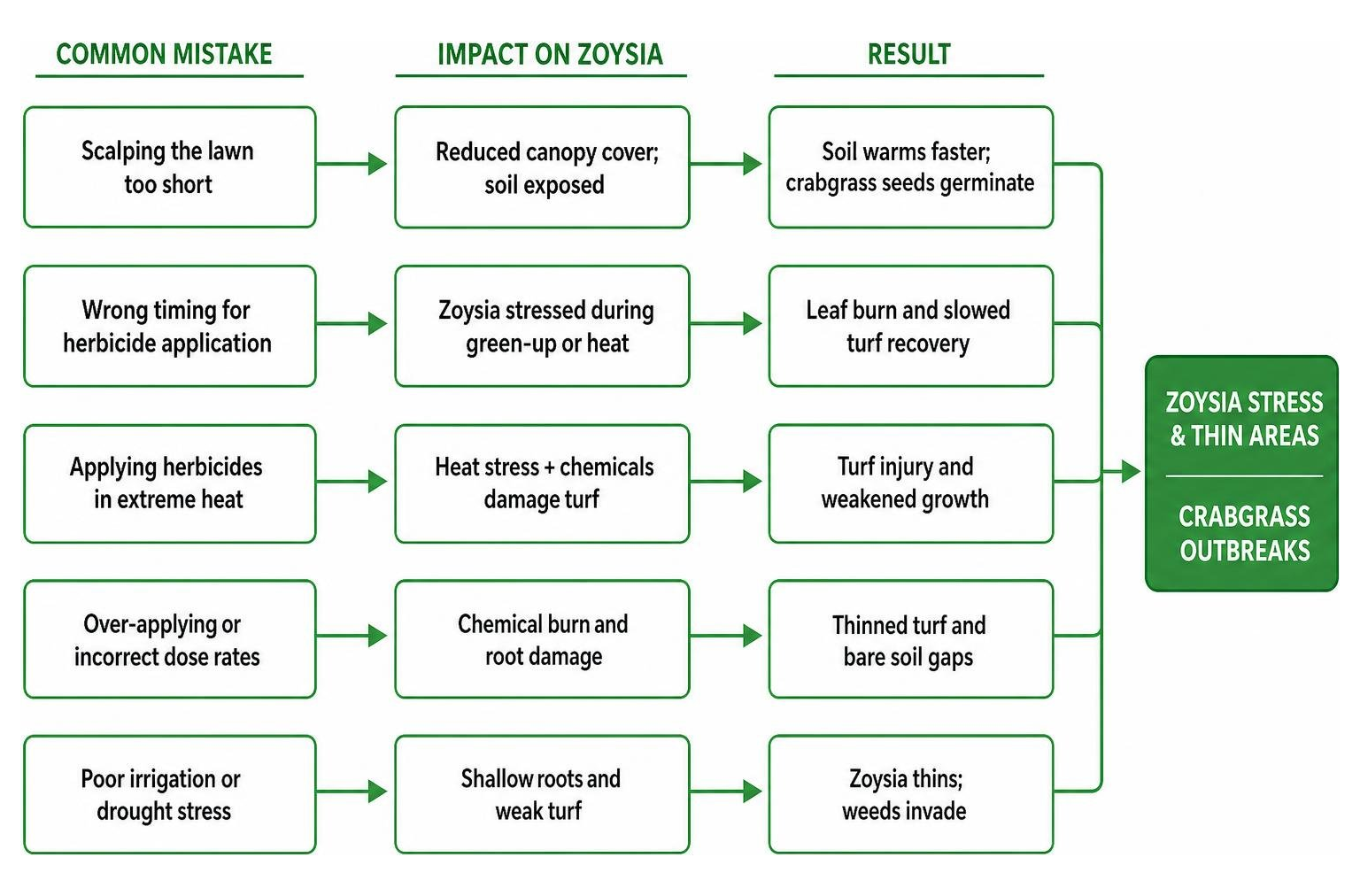
One major mistake is scalping the lawn during spring cleanup. Lowering your mower deck too short strips away turf canopy cover, exposing bare soil directly to sunlight right as soil temperatures reach the 55°F crabgrass germination threshold. Always keep mowing heights within the recommended 1.0 to 2.5 inch range.
Another frequent error is applying post-emergent herbicides during early spring green-up or periods of high summer heat stress. Spraying selective weed killers while zoysia is breaking winter dormancy or suffering from summer drought causes severe leaf burning and stalls active lawn growth. Always defer chemical applications until zoysia is actively growing, healthy, and hydrated, and never apply liquid sprays when ambient air temperatures exceed 85°F.
Over-applying or improperly calculating chemical dose rates can also cause permanent turf injury. Chemical burning from miscalibrated sprayers weakens zoysia roots, opening up bare soil gaps where weeds can quickly return. For a complete list of weed identification tips and prevention strategies, consult our ultimate resource, the Ultimate Weeds and Crabgrass Guide.
Frequently Asked Questions About Crabgrass Control in Zoysia
Can Zoysia Grass Recover After Herbicide Injury?
Yes, zoysia grass is a resilient warm-season turfgrass capable of recovering from temporary herbicide injury. If a post-emergent spray causes temporary yellowing or growth stunting, immediately irrigate the lawn deeply with 0.5 to 1 inch of water to flush chemical residue from root zones and relieve physiological stress. Hold off on additional chemical treatments and allow your lawn two to three weeks of deep watering and moderate sunshine to recover. Once active stolon growth resumes, zoysia will push out fresh green tissue and fill in damaged spots.
What Should You Do If a Lawn Care Company Applies the Wrong Chemical?
If an inexperienced applicator uses an incompatible product on your lawn, such as spraying broadleaf-only products or sedge treatments like Dismiss when treating crabgrass, take action right away. Request the product label and Safety Data Sheet (SDS) from the applicator to identify active ingredients. Water the treated lawn deeply immediately after misapplication to dilute the chemical barrier near leaf surfaces and flush active compounds deeper down past shallow root zones. If turf damage occurs, contact licensed lawn management professionals to set up a lawn recovery program that includes core aeration, topdressing, and localized zoysia plugging.
Are There Organic Alternatives to Chemical Crabgrass Killers?
Corn gluten meal is a popular organic option that functions as a natural pre-emergent weed suppressor. Applied at a rate of 15 to 20 lbs per 1,000 square feet in early spring, corn gluten meal releases natural dipeptides that inhibit root development in sprouting seeds. However, organic pre-emergents are noticeably less effective than synthetic options like prodiamine or dithiopyr. Furthermore, corn gluten meal contains roughly 10% nitrogen by weight, meaning if applied after crabgrass seeds have already sprouted, it will fertilize active weeds rather than suppress them. Combining manual hand pulling with deep watering and elevated mowing remains the most effective non-chemical approach for managing weeds in zoysia turf.
Conclusion
Finding the best way to kill crabgrass in zoysia comes down to timing, accurate weed identification, and consistent lawn maintenance. By pairing targeted early spring pre-emergent barriers with selective post-emergent treatments like Drive XLR8 or Celsius WG, you can remove stubborn weeds while protecting your lawn. Combining chemical treatments with smart cultural practices like deep watering, correct mowing heights, and spring core aeration helps build a dense, weed-resistant turf canopy that naturally keeps crabgrass out year after year.
Managing lawn care timing and product safety can feel overwhelming, especially with unpredictable weather patterns across Northeast Ohio. At Advanced Quality Lawn, we provide complete, professional lawn care solutions across Akron, Cleveland, Medina, Summit County, and surrounding communities. From custom pre-emergent programs to targeted weed treatments, our experienced team helps keep your lawn healthy, green, and weed-free all season long. Contact us today to explore our professional lawn care and maintenance services and schedule your personalized lawn evaluation!