
Ditch the Chemicals with These Natural Pre-Emergent Weed Killers
Why More Ohio Homeowners Are Switching to Natural Pre-Emergent Weed Killers

A natural pre emergent weed killer is one of the most effective tools you can use to stop weeds before they ever break the surface. Here are the most popular options:
- Corn gluten meal (most widely used): Apply 20 lbs per 1,000 sq ft in early spring and again in late summer
- Paper mulch and weed barriers: Physical prevention with no chemicals needed
- OMRI-listed granular products (such as Preen Natural Vegetable Garden Weed Preventer): 100% corn gluten meal, safe around edibles
- Espoma Organic Weed Preventer: Combines pre-emergent control with slow-release nitrogen fertilization
All of these work before weeds sprout. None of them will kill weeds that are already growing.
Weeds are a constant battle for Ohio homeowners. The frustration is real: you put time and money into your lawn, and then crabgrass, dandelions, and clover move right in.
Many people reach for synthetic herbicides out of habit. But research shows that common commercial weed killers can pose risks to pets, kids, and local wildlife. That concern is pushing more homeowners toward natural alternatives.
The good news? Natural options have come a long way. Products made from corn gluten meal and other plant-based ingredients can prevent weeds from germinating without leaving harsh chemicals behind in your soil.
This guide covers the best natural pre-emergent options available, how to use them, and when to apply them for the best results in Ohio's climate.
I'm Andrew Day, owner of Advanced Quality Lawn, with over 30 years of hands-on experience helping Northeast Ohio homeowners build healthier, greener yards using smarter lawn care practices, including natural pre emergent weed killer strategies that actually hold up through Ohio's unpredictable seasons. If you want results without the chemical risk, you're in the right place.
Understanding How a Natural Pre-Emergent Weed Killer Works
To win the war against weeds in Northeast Ohio, you have to understand the enemy. Most of the pesky invaders we deal with, like crabgrass, are annuals. This means they die off in the winter but leave behind thousands of seeds waiting for the first sign of spring warmth.
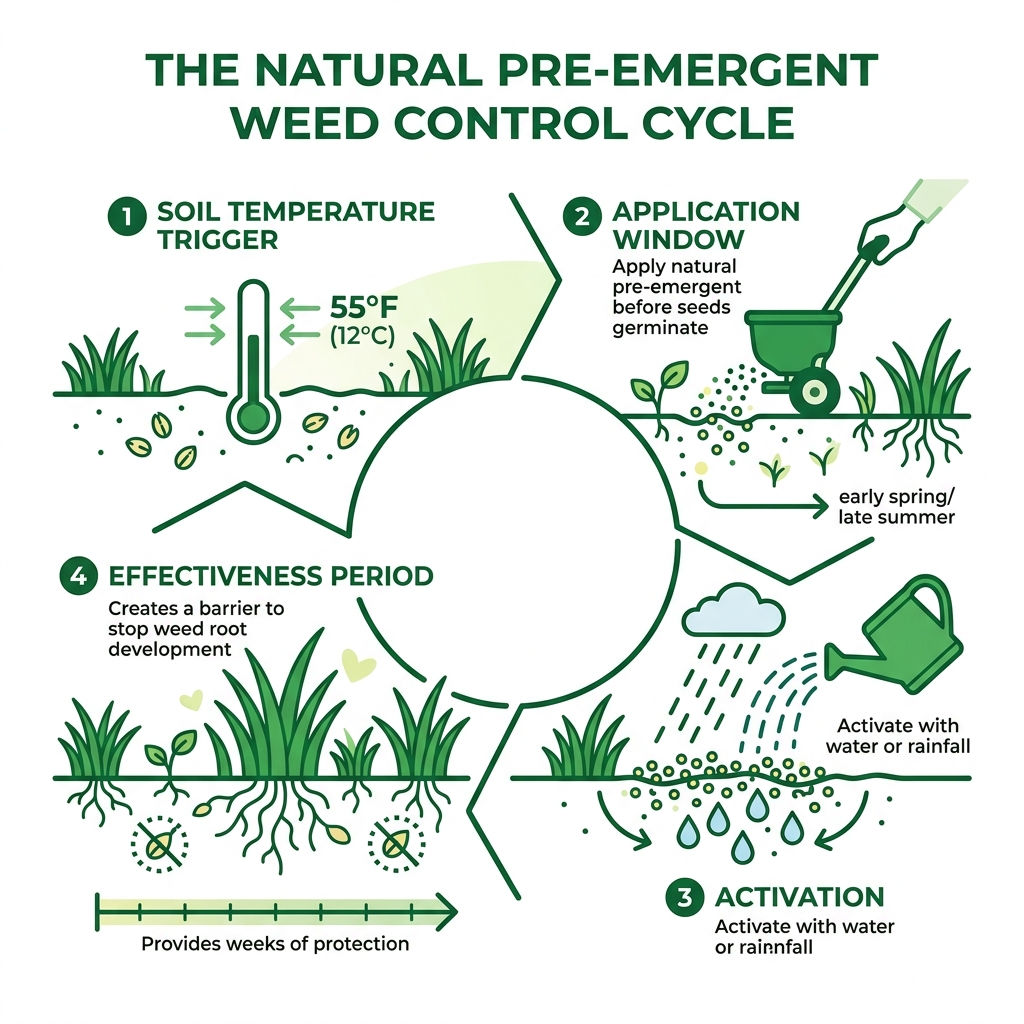
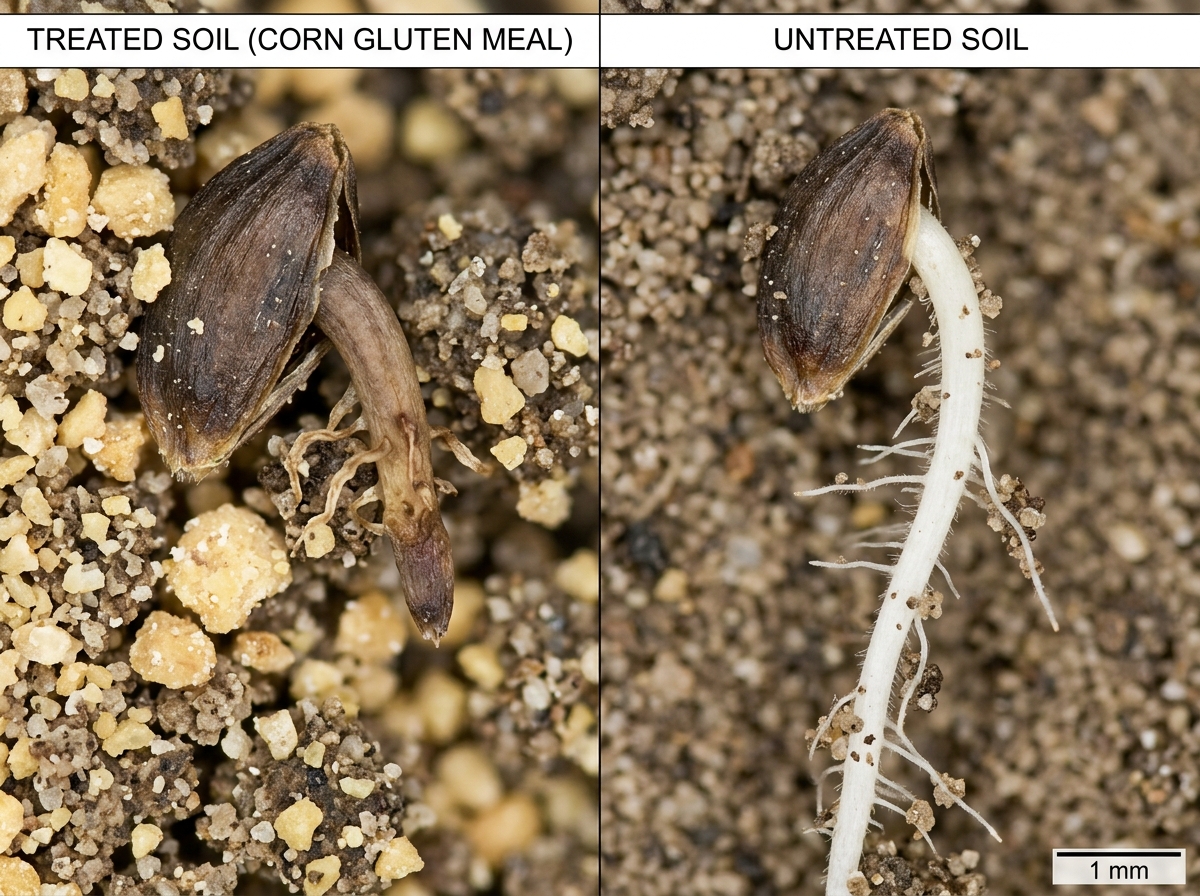
A natural pre emergent weed killer does not actually kill the seed itself. Instead, it creates a biological or physical barrier that interrupts the germination process. When a weed seed begins to sprout, it sends out a tiny primary root. Natural inhibitors, specifically the proteins found in corn gluten meal, stop that root from developing properly. Without a functioning root, the seedling cannot take in water or nutrients and quickly dies before it ever pokes its head above the soil.
This is why timing is so critical. If you wait until you see the weed, the pre-emergent window has already slammed shut. You can learn more about the differences in our guide on Natural Weed Preventer or Natural Weed Killer: Which is Best?. Focusing on Weed Prevention is always easier than trying to kill a fully grown dandelion with a deep taproot.
Benefits of a Natural Pre-Emergent Weed Killer for Soil Health
One of the biggest reasons we recommend organic options for our neighbors in places like Hudson and Stow is the long-term impact on your dirt. Synthetic chemicals can sometimes be hard on the beneficial microbes and earthworms that keep your soil alive.
In contrast, a natural pre emergent weed killer like corn gluten meal actually feeds the soil. As it breaks down over five to six weeks, it adds organic matter. This encourages microbial activity which helps your grass roots grow deeper and stronger. Healthy soil is your best defense against Yard Weeds because thick, vigorous grass simply leaves no room for weeds to move in.
Pre-Emergent vs Post-Emergent Methods
It helps to think of pre-emergents as a "shield" and post-emergents as a "sword."
- Pre-Emergent: This is your preventative strike. It targets seeds as they wake up. It is non-selective in many cases, meaning it can stop your "good" grass seed from growing too, so you have to be careful if you are planning to overseed.
- Post-Emergent: This is for the weeds you can already see. While there are natural post-emergents like horticultural vinegar or citrus oil, they are often non-selective and can harm your grass if you aren't careful.
For a truly chemical-free approach, many homeowners combine these methods. They use a pre-emergent in the spring and then use Weed Control Without Chemicals: Best Organic Methods from The Spruce like hand-pulling or heat treatments for any stragglers that make it through.
Top Organic Solutions for Lawns and Gardens
When you are looking to buy a natural pre emergent weed killer, you will find a few heavy hitters that consistently perform well in our Northeast Ohio climate.
| Feature | Corn Gluten Meal | Synthetic Pre-Emergent |
|---|---|---|
| Active Ingredient | Corn Protein | Trifluralin or similar |
| Soil Impact | Adds Nutrients | Can leave residues |
| Safety | Safe for pets/kids | Often requires wait time |
| Fertilization | 10% Nitrogen | Usually none |
| Effect on existing weeds | None | None |
Corn gluten meal is the gold standard for organic lawn care. It was discovered by researchers at Iowa State University and has become a staple for those avoiding synthetic toxins. For garden beds, you might also consider paper mulches or heavy organic compost layers which act as a physical Pre-emergent for Garden Beds.
Choosing the Right Natural Pre-Emergent Weed Killer for Your Garden
If you are working in a vegetable garden in Solon or a flower bed in Chagrin Falls, you want to be sure the product is safe for things you intend to eat. Look for the OMRI-listed seal. This means the Organic Materials Review Institute has verified the product is suitable for organic production.
Products like Preen Natural Vegetable Garden Weed Preventer are made of 100% corn gluten meal. They are excellent for use around established plants that are at least three inches tall. Using a Crabgrass Preventer in Flower Beds ensures your ornamental plants don't have to compete with aggressive grasses for water and nutrients.
Corn Gluten Meal as a Dual Purpose Fertilizer
One of the coolest things about corn gluten is that it is roughly 10% nitrogen by weight. This gives it an NPK ratio often around 10-0-0 or 9-0-0. When you apply it at the recommended rate for weed control, you are also giving your lawn a significant boost of slow-release nitrogen.
This nitrogen releases gradually over three to four months, providing a steady "meal" for your grass rather than the sudden spike and crash you get with some cheap synthetic fertilizers. The result is a deep green color that lasts much longer. It is a win-win: you stop the weeds and feed the "good guys" at the same time.
Timing Your Application for Maximum Success
In Northeast Ohio, timing is everything. If you apply your natural pre emergent weed killer too early, it might wash away before the seeds wake up. If you apply it too late, the weeds have already established their roots and will laugh at your efforts.
The magic number for most spring weeds, especially crabgrass, is 55 degrees. When the soil temperature hits 55 degrees Fahrenheit for several days in a row, the seeds begin to stir. A great natural indicator is the forsythia bush. When those bright yellow flowers start to bloom, it is time to get your pre-emergent down.
For more specific tips on this troublesome weed, check out our resource on the Best Herbicide for Crabgrass.
Spring and Fall Application Windows
We generally recommend two main windows for application in our region:
- Early Spring (Mid-March to Early May): This targets crabgrass, foxtail, and barnyard grass. In a typical Ohio spring, mid-April is often the "sweet spot."
- Late Summer/Early Fall (Mid-August to September): This targets winter annuals like annual bluegrass and common chickweed that germinate in the fall and pop up as soon as the snow melts.
Consistency is key. Research shows that corn gluten meal becomes more effective every year you use it as the weed seed bank in your soil begins to dwindle.
Climate and Weather Considerations
Weather plays a huge role in how well these natural products work. Corn gluten meal needs a little bit of water to "activate" the proteins. A light rain or a quick sprinkle with the hose is perfect.
However, heavy spring downpours can be a problem. If we get a massive rainstorm right after you apply, it can wash the granules away or dilute the effectiveness. Since corn gluten meal remains active in the soil for about five to six weeks, you may need a second application if the spring is particularly wet or if the weed germination period is extended.
Limitations and Best Practices for Organic Control
While we love natural solutions, we have to be honest about their limits. A natural pre emergent weed killer is not a "miracle in a bag." It requires a bit more strategy than just spraying a chemical and walking away.
First, these products are non-selective regarding seeds. If you put down corn gluten meal and then try to patch a bare spot with new grass seed, that grass seed will likely fail to sprout. You usually need to wait at least six to eight weeks after a corn gluten application before you can successfully plant new grass.
Also, these products do nothing to Weed Removal for weeds that are already there. If you see a dandelion, you'll need to pull it by hand or use a natural post-emergent spot treatment.
Complementary Cultural Practices
The best weed control is a thick, healthy lawn. We always tell our clients in Akron and Cuyahoga Falls that you can't rely on products alone. You need good "cultural practices" to support your natural pre-emergent:
- Mow High: Keep your mower deck at the highest setting (3 to 4 inches). Taller grass shades the soil, keeping it cooler and making it much harder for weed seeds to get the sunlight they need to germinate.
- Overseed in the Fall: Since you can't seed in the spring when using pre-emergents, make fall your time for Crabgrass Removal and thickening the turf.
- Aeration: This relieves soil compaction and helps water and air reach the roots of your grass, making it more competitive against weeds.
Application Rates and Methods
For corn gluten meal to work as a weed preventer, you have to use the right amount. A light dusting won't do it.
The standard recommendation is 20 lbs per 1,000 square feet.
- Use a broadcast or drop spreader to ensure even coverage.
- Overlap your passes slightly to avoid leaving "strips" where weeds can sneak through.
- If you are using a concentrated product like Inhibitor 18-0-6, follow the specific bag instructions, which often call for 3 to 4 lbs per 1,000 square feet.
After spreading, water the area lightly. Then, the most important part: let it dry out. The "root-killing" action of corn gluten actually happens during a brief dry period after the seeds have first tried to sprout.
Frequently Asked Questions
Will a natural pre-emergent kill my existing grass?
No. One of the best things about a natural pre emergent weed killer like corn gluten meal is that it is completely safe for established plants. It only affects the very first root of a germinating seed. Your existing lawn, flowers, and shrubs have deep, established root systems that won't be bothered at all. In fact, the nitrogen in the corn gluten will likely make your grass look better than ever.
Is corn gluten meal safe for pets and children?
Yes! This is the primary reason many of our customers in Northeast Ohio make the switch. Corn gluten meal is a byproduct of the corn milling process (often used in animal feed). There is no "re-entry period" required. Your kids and dogs can run on the lawn immediately after you apply it. It is one of the few truly "worry-free" ways to handle lawn care.
Can I plant new seeds immediately after application?
No. Because the product stops seeds from developing roots, it will treat your expensive grass seed just like a weed seed. If you need to do major repair work or overseeding, it is best to skip the spring pre-emergent in those specific areas or wait until the fall to do your seeding.
Conclusion
Switching to a natural pre emergent weed killer is a journey, not a one-time event. It is about building a healthier ecosystem in your backyard from the soil up. While it takes a bit more timing and knowledge than using traditional chemicals, the payoff is a beautiful, green space that is safe for your family and the environment.
At Advanced Quality Lawn, we've spent decades perfecting the balance of effective weed control and environmental responsibility. We know the unique challenges of Northeast Ohio lawns, from the heavy clay soils of Medina to the lake-effect weather in Cleveland.
If you are ready to ditch the harsh chemicals but still want a lawn that makes the neighbors jealous, we are here to help. Whether you need professional application services or just some expert advice on your organic journey, we've got you covered.
Explore our full range of lawn care services and see how we can help you achieve a thick, weed-free lawn the natural way. Let's grow something great together!