Top Rated Crabgrass and Weed Killers for a Pristine Lawn
Why Finding the best crabgrass killer for lawns Matters More Than You Think

The best crabgrass killer for lawns depends on whether crabgrass has already sprouted or not. Here is a quick breakdown of top-rated options:
| Product | Type | Best For |
|---|---|---|
| Drive XLR8 | Post-emergent | Mature crabgrass, all stages |
| Tenacity (Mesotrione) | Pre and post-emergent | Cool-season lawns, nutsedge |
| Spectracide Weed Stop Plus Crabgrass Killer | Post-emergent | Broad weed control, 470+ weeds |
| Preen Lawn Crabgrass Control | Pre and early post-emergent | Season-long prevention |
| Gordon's Trimec Crabgrass Plus | Post-emergent | Crabgrass plus broadleaf weeds |
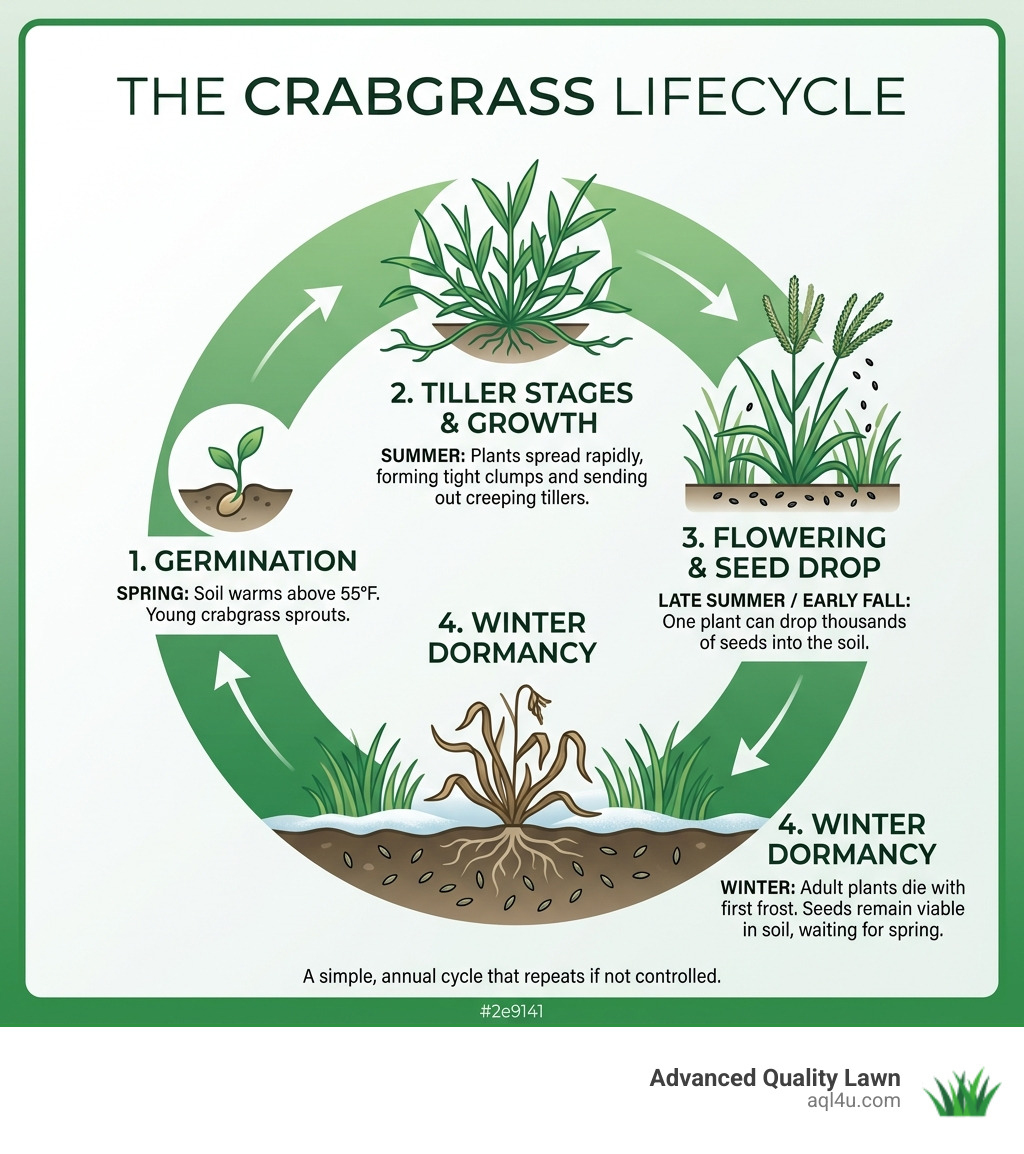
Crabgrass (Digitaria sanguinalis) is an annual weed. It germinates in spring, spreads aggressively through summer, and dies at first frost. But before it dies, each plant drops thousands of seeds into your soil. Those seeds wait out winter and start the whole cycle again next year.
For Ohio homeowners, that cycle can feel relentless. Bare patches, thin turf, and warm soil give crabgrass exactly what it needs to take over a lawn that looked fine just weeks earlier.
Choosing the right product at the right time is the difference between a clean lawn and a losing battle.
I'm Andrew Day, owner of Advanced Quality Lawn, and with over 30 years of lawn care experience in Northeast Ohio, I've tested and applied virtually every crabgrass killer on the market across hundreds of local properties. In this guide, I'll share what actually works so you can find the best crabgrass killer for lawns like yours without the guesswork.
Understanding Pre-Emergent and Post-Emergent Control
In our decades of experience serving Northeast Ohio, we have found that the biggest mistake homeowners make is using the wrong tool for the job. To win the war against weeds, you have to understand the two main categories of herbicides.
Pre-Emergent: The Invisible Shield
Pre-emergent herbicides are designed to stop crabgrass before it ever breaks the surface. These products create a chemical barrier in the top layer of your soil. When a crabgrass seed tries to sprout and hit that barrier, it fails to grow.
Timing is everything here. In April 2026, we are looking for soil temperatures to hit 55 degrees Fahrenheit for three consecutive days. That is the magic number when crabgrass begins to germinate. If you apply your Best Pre Emergent Weed Killer For Lawns too late, the seeds have already sprouted and the barrier will not do anything to the growing plants.
Post-Emergent: The Search and Destroy
If you can see the crabgrass, you need a post-emergent. These chemicals are absorbed through the leaves and travel down to kill the root system. However, post-emergents are highly sensitive to the growth stage of the weed.
Crabgrass grows in tiller stages. A tiller is basically a secondary stem that branches out from the main plant. According to Scientific research on postemergence herbicides, most standard store bought killers work best on young crabgrass with fewer than four tillers. Once the plant matures and begins to look like a thick bunch of crab legs, you need professional grade solutions to achieve total root elimination.
Best Crabgrass Killer for Lawns: Top Product Picks for 2026
Choosing the best crabgrass killer for lawns in April 2026 requires looking at both effectiveness and safety for your specific grass type. Here in Northeast Ohio, most of our customers have cool-season grasses like Kentucky Bluegrass, Perennial Ryegrass, or Tall Fescue.
The following table highlights the heavy hitters we trust for different scenarios.
| Product Name | Active Ingredient | Primary Use Case |
|---|---|---|
| Drive XLR8 | Quinclorac (18.92%) | Tough, mature crabgrass |
| Tenacity | Mesotrione (40%) | New seeding and specialty weeds |
| Spectracide Weed Stop | 2,4-D, Quinclorac, Dicamba | General broadleaf and crabgrass |
| Trimec Crabgrass Plus | 2,4-D, Quinclorac, Dicamba | Established lawn weed cleanup |
One of the most popular consumer options is Spectracide ® Weed Stop ® For Lawns Plus Crabgrass Killer Concentrate. This product is widely available and claims to kill over 470 types of weeds. It produces visible results in as little as five hours, which is great for homeowners who want to see immediate action. When searching for the Best Herbicide For Crabgrass, we often recommend looking for products containing Quinclorac, as it is the gold standard for post-emergent control.
Professional Grade Post-Emergent Solutions
When we encounter a lawn that is heavily infested with mature crabgrass, we reach for Drive XLR8. This is a professional grade herbicide containing 18.92% Quinclorac. Unlike many retail products that struggle with older weeds, Drive XLR8 is specifically formulated to control crabgrass even after it has reached the four-tiller stage.
It uses a proprietary water based formula that allows for faster absorption into the plant. In our experience, it is the Best Way To Get Rid Of Crabgrass when the weeds have already taken over. One bottle can treat up to an acre, making it very cost effective for large properties in areas like Medina or Summit County. Just remember that it requires a surfactant, such as methylated seed oil, to help the chemical stick to the waxy leaves of the crabgrass.
Best Crabgrass Killer for Lawns with Broadleaf Weeds
Rarely does a lawn have only crabgrass. Usually, you are also dealing with dandelions, clover, and chickweed. This is where a Broadleaf And Crabgrass Herbicide becomes essential.
Gordon's® Trimec® Crabgrass Plus Lawn Weed Killer Concentrate is a fantastic multi-tasker. It combines the power of Quinclorac with the classic Trimec formulation that has been used for over 50 years. It controls over 200 broadleaf weeds while simultaneously targeting emerged crabgrass. It is rainfast in about an hour, though we always suggest waiting 24 hours before any heavy irrigation to ensure the roots are fully reached.
Best Crabgrass Killer for Lawns and Specialty Weeds
If your lawn has a mix of Dandelions And Crabgrass along with difficult weeds like yellow nutsedge, Tenacity is the clear winner. The active ingredient, Mesotrione, is unique because it works as both a pre-emergent and a post-emergent.
Tenacity is the Best Weed Killer For Nutsedge And Crabgrass because it stops photosynthesis in the weed. You will know it is working because the weeds will literally turn bright white before they die. This "whitening" can sometimes happen to your good grass too, but do not panic. It is usually temporary and the turf will recover while the weeds perish. It is also one of the few products you can use while seeding your lawn, which is a huge advantage for fall renovations.
Application Best Practices and Timing
Even the best crabgrass killer for lawns will fail if it is applied incorrectly. We have seen many well-meaning homeowners accidentally damage their turf or waste money by ignoring the fine print.

Temperature Limits
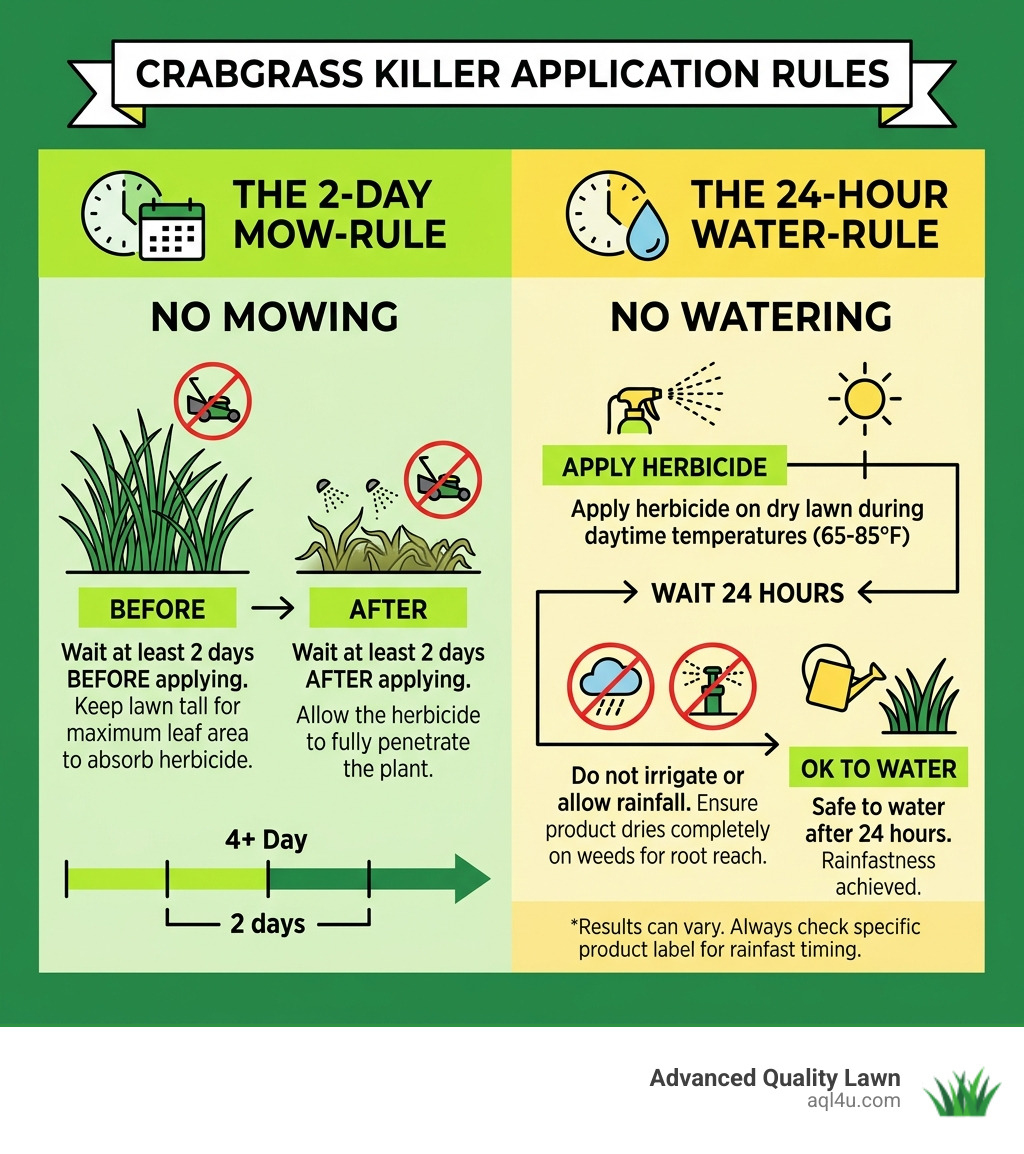
Most post-emergent crabgrass killers should be applied when daytime temperatures are between 65 and 85 degrees Fahrenheit. If you spray when it is over 90 degrees, you risk "burning" your desirable grass. The heat puts stress on the lawn, and adding chemicals can be the tipping point that causes brown patches.
The Power of Surfactants
Many professional herbicides like Drive XLR8 or Tenacity require a surfactant. Think of a surfactant as a "sticker." Crabgrass leaves have a waxy coating that causes water to bead up and roll off. A surfactant breaks that surface tension, allowing the herbicide to spread out and soak into the plant. Without it, you might only get 50% effectiveness.
Mowing and Watering
Do not mow your lawn for at least two days before or after an application. You want plenty of leaf surface area on the crabgrass to absorb the chemical. After spraying, do not water the lawn for at least 24 hours. You want the product to dry completely on the weed.
If you are planning to put down new grass seed, you must be careful. Most pre-emergents will prevent your grass seed from growing just as effectively as they prevent crabgrass. Check our Crabgrass Preventer Safe Seeding Guide to see how long you need to wait between treating and seeding. Usually, this is a window of 8 to 12 weeks.
Frequently Asked Questions about Crabgrass Control
How long does it take for crabgrass killers to work?
Most post-emergent products like Spectracide® Weed Stop® For Lawns₃ Plus Crabgrass Killer RTU 1 Gal show visible wilting or color changes within 5 to 24 hours. However, total root death usually takes 7 to 14 days. If you are using a product like Tenacity, the whitening process may take up to 21 days for full control.
Can I use crabgrass killer on newly seeded lawns?
This is a tricky one. Most standard crabgrass killers will kill young, tender grass seedlings. Generally, you should wait until you have mowed your new grass at least three times before applying a post-emergent. If you need protection while seeding, Tenacity is one of the few safe options, but always read the label for your specific grass type.
Will these products harm my desirable grass?
When used according to the label, selective herbicides will not harm your lawn. However, "selective" is the keyword. If you use a non-selective product like Roundup, it will kill everything it touches. Also, some grasses are sensitive to specific ingredients. For example, Drive XLR8 should not be used on St. Augustine or Centipede grass. Fortunately, in Northeast Ohio, our standard Kentucky Bluegrass and Fescue lawns are very tolerant of most crabgrass killers.
Can I use these products in my garden?
Be very careful here. Most lawn herbicides are designed for turf. Using a Crabgrass Preventer In Flower Beds requires a product specifically labeled for ornamental use, such as Preen Garden Weed Preventer. If you spray a lawn herbicide near your flowers or shrubs, the "drift" from the spray can cause significant damage to your broadleaf plants.
Conclusion
Finding the best crabgrass killer for lawns is about more than just picking a bottle off a shelf. It requires understanding the lifecycle of the weed, the needs of your specific grass type, and the precise timing of the Ohio seasons.
While DIY products like 1 gal. Weed Stop for Lawns Plus Crabgrass Killer Ready-To-Use ... are great for spot treatments, a truly pristine lawn often requires a more comprehensive approach. Each crabgrass plant can produce thousands of seeds, meaning a small problem this year can become a total takeover by next summer.
At Advanced Quality Lawn, we take the guesswork out of the process. We provide expert lawn care services across Northeast Ohio, from Hudson and Brecksville to Stow and Twinsburg. Our full-program guarantees ensure that your lawn stays thick, green, and weed-free all season long. We use professional-grade products and precision equipment that deliver results far beyond what you can find at a big-box store.
If you are tired of battling crabgrass and want a lawn you can finally be proud of, we are here to help. Our team understands the local soil conditions and climate patterns of Summit, Medina, and Cuyahoga counties better than anyone else.
Ready to reclaim your yard? More info about lawn maintenance services is just a click away. Let us handle the chemistry and the timing so you can get back to enjoying your pristine lawn.