Why Your Lawn Craves a 4-in-1 Feeding Frenzy
What is 4 in one lawn feed and how does it work

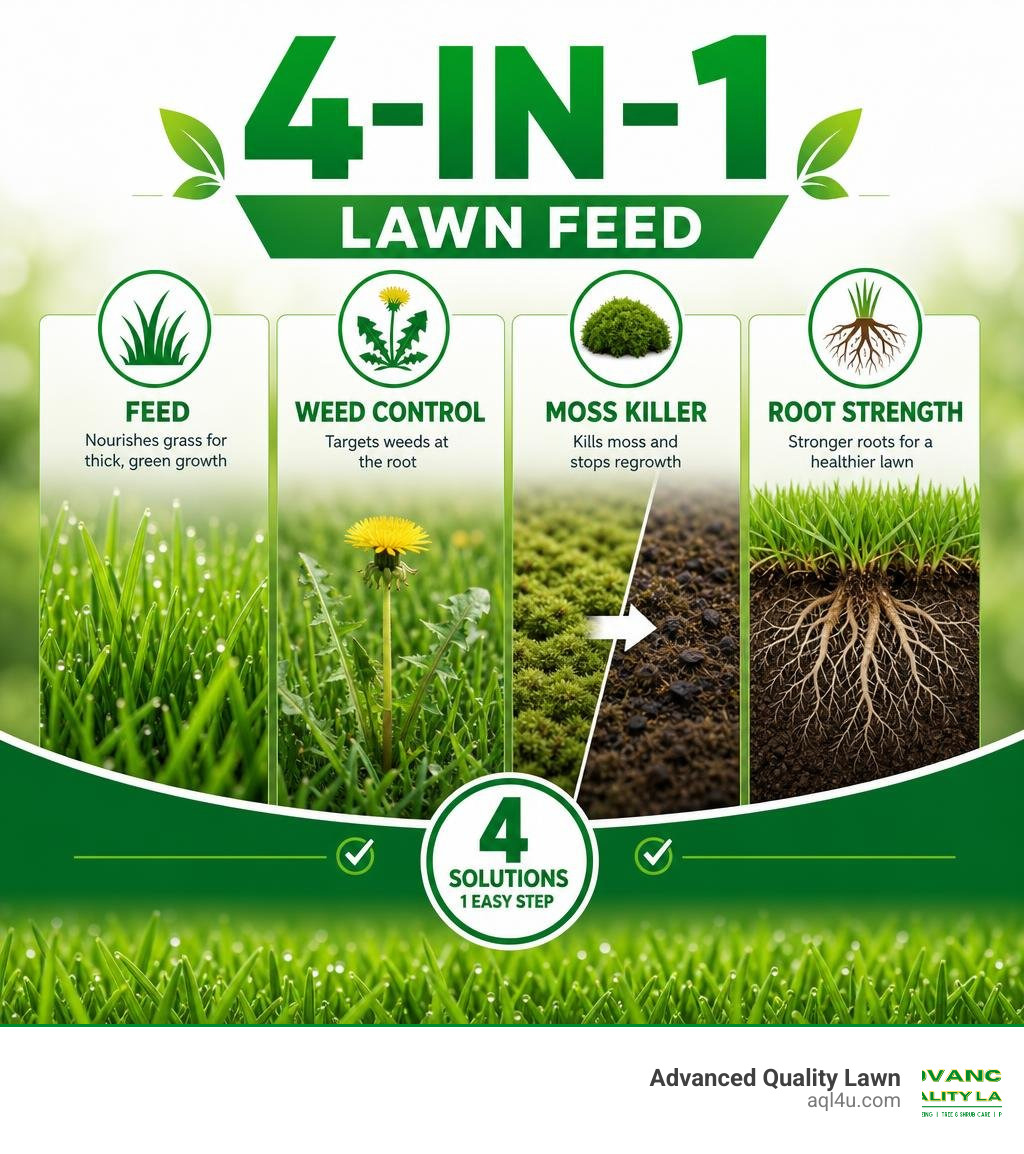
A 4 in one lawn feed is a single granular product that feeds your grass, kills weeds, eliminates moss, and strengthens roots all at once. Here is what you need to know at a glance:
- Feeds grass: Nitrogen and potassium promote thick, green growth
- Kills weeds: Selective herbicides target dandelions, clover, plantains, and more
- Eliminates moss: Iron sulphate causes moss to blacken and die within two weeks
- Strengthens roots: Balanced nutrients build resilience against heat and drought
- Results timeline: Greener lawn in 7 days, moss gone in 2 weeks, weeds dead in 3 to 5 weeks
- How often: Apply a maximum of twice per year with at least three months between applications
If your lawn looks tired, patchy, or overrun with weeds and moss, you are not alone. Ohio's clay-heavy soils and unpredictable seasons make it genuinely hard to keep grass healthy. Most homeowners either buy multiple separate products and spend a full weekend treating their lawn, or they do nothing and watch the weeds take over. There is a smarter middle ground.
A 4 in one lawn feed tackles all four problems in a single pass. No juggling multiple products. No guessing what to apply first.
I'm Andrew Day, owner of Advanced Quality Lawn, and with over 30 years of experience helping Northeast Ohio homeowners achieve healthier, greener lawns, I have seen how the right 4 in one lawn feed can transform a struggling yard quickly and efficiently. Read on for everything you need to apply it correctly and get real results.
A 4 in one lawn feed is a granular treatment designed to simplify your seasonal yard care routine. Instead of spending weeks coordinating different chemical applications, you spread these tiny granules across your yard to address multiple issues simultaneously. It uses a clever triple action formula that targets the soil, the weeds, and the moss while giving your grass a massive boost of energy.
When the granules land on your lawn, they require moisture to activate. Once watered in, the fertilizer elements dissolve into the soil to feed the root system. At the same time, the selective weed control ingredients are absorbed by the leaves of broadleaf weeds. The moss killer, which is typically powered by iron, goes to work on contact by drying out moss and cutting off its access to water.
Understanding how these components interact is key to a beautiful yard. If you want to dive deeper into the science of soil nutrients, you can read our guide on Fertilizer 101: What Is It and When Should You Use It.

Active ingredients in a 4 in one lawn feed
The magic of a 4 in one lawn feed lies in its chemical makeup. Manufacturers carefully balance nutrients and herbicides so they work together without neutralizing each other. The primary ingredients include:
- Nitrogen: This is the ultimate growth booster. It stimulates rapid chlorophyll production, which gives your lawn that deep green color and helps the grass blades grow thick and strong.
- Potassium: While nitrogen focuses on the top growth, potassium works underground. It builds cellular strength, improves water absorption, and helps your lawn resist diseases and harsh weather.
- Iron Sulphate: This serves two purposes. It acts as an incredibly effective moss killer and also helps green up your grass without causing excessive, watery growth.
- Selective Herbicides: These are specialized weed killers like MCPA, mecoprop-P, and dicamba. They are designed to target broadleaf weeds while leaving your grass completely unharmed.
How it compares to separate lawn products
Many homeowners wonder if they should buy separate products instead of an all-in-one mix. While individual treatments allow for highly targeted applications, they require a lot more time, effort, and money.
If you have a lawn with only a few isolated weeds and no moss, separate treatments might make sense. However, if your yard is fighting a multi-front war against weeds, moss, and poor nutrition, a multi-action feed is the most efficient choice.
| Feature | Multi-Action 4-in-1 Feed | Separate Lawn Treatments |
|---|---|---|
| Application Time | One quick pass with a spreader | Multiple passes over several weeks |
| Cost Effectiveness | High savings on packaging and shipping | Expensive to buy three or four separate bags |
| Risk of Over-Application | Low if you follow the bag instructions | High if you mix up chemical schedules |
| Targeted Accuracy | Treats the entire lawn uniformly | Better for treating single isolated spots |
| Storage Space | Only requires storing one bag | Multiple bottles and bags cluttering the garage |
The key benefits of multi-action lawn care
Using a multi-action product does more than just save you a trip to the garden center. It actively coordinates the recovery of your turf.
When you apply a 4 in one lawn feed, the rapid greening effect is usually visible in just 7 days. As the nitrogen feeds the grass, the selective herbicides begin to systematically eradicate weeds like dandelions, clover, and plantains over a three to five week period.
Simultaneously, the iron sulphate targets moss. Moss competes heavily with your grass for space, water, and vital nutrients. By eliminating the moss and weeds, you free up valuable real estate in the soil. The grass can then use the potassium and nitrogen to strengthen its roots and fill in the bare patches.
Many modern formulas also include water-saving technology. This helps your lawn retain moisture during dry spells, which builds excellent drought resistance. If you are curious about how different types of plant food affect long-term soil health, take a look at our article discussing Is Organic Fertilizer Better Than Synthetic Fertilizer.
Choosing the right 4 in one lawn feed for your grass
Not all lawn feeds are created equal. You need to choose a product with the right NPK ratio for your specific grass type.
In Northeast Ohio, our lawns consist of cool-season grasses like Kentucky Bluegrass, Perennial Ryegrass, and Fine Fescues. These grasses thrive with a higher nitrogen content in the spring and autumn to support their natural growth cycles.
You should also look closely at coverage rates and bag sizes to avoid running out halfway through the job. For example, a standard 2.8 kg bag typically covers 80 square meters, while a larger 12.6 kg bag can treat up to 360 square meters. If you have a massive suburban yard, look for commercial-grade options like a 20 kg bag that covers up to 624 square meters. To help you make the right choice for your turf, check out our Best Fertiliser for Grass Guide 2026.
Application guide for seasonal success
To get the best results from your 4 in one lawn feed, you must apply it evenly. Applying too much product in one spot can cause nitrogen scorch, which turns the grass blades brown. Applying too little will leave you with patchy, uneven greening.
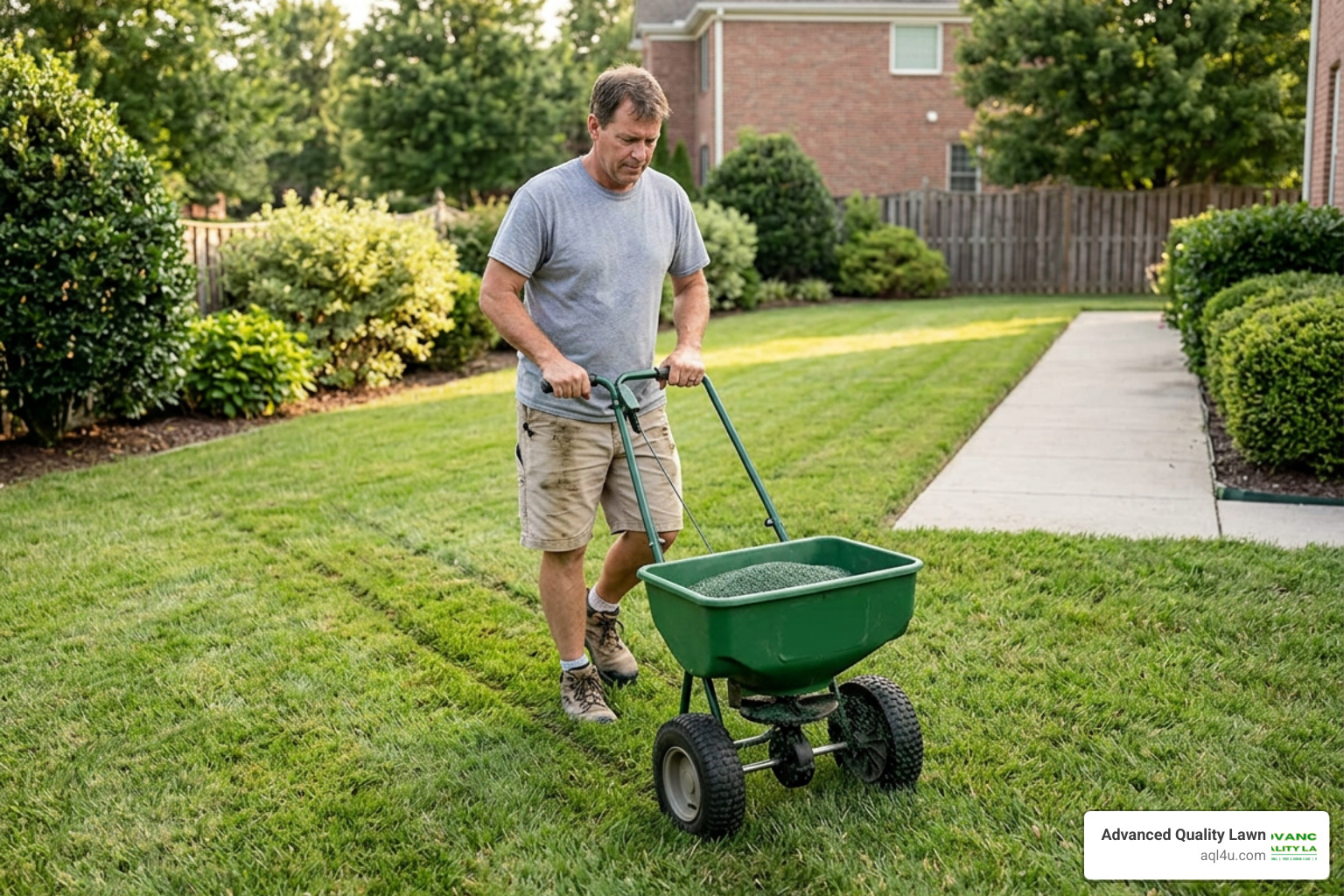
For the most reliable results, we always recommend using a calibrated lawn spreader rather than throwing the granules by hand. If you must apply it by hand, wear protective gloves, mark out your lawn into one-meter squares, and carefully weigh out the recommended dose, which is usually between 32 and 35 grams per square meter.
To ensure the granules can make contact with the soil, avoid mowing your lawn for three days before you plan to apply the treatment. For a complete walkthrough on proper spreading techniques, read our guide on How to Fertilize Your Lawn.
When to apply 4 in one lawn feed for maximum impact
Timing is everything when it comes to lawn chemistry. You should only apply a 4 in one lawn feed when the grass, weeds, and moss are actively growing.
The ideal window in Northeast Ohio is during the spring months of April and May. This is when the soil is naturally moist and temperatures are warm enough to trigger active weed growth. You can also apply a second treatment in late summer or early autumn, typically between August and September, to prepare your lawn for the winter.
Never apply this product during periods of severe drought, heavy frost, or when heavy rain is expected. You can apply it a maximum of twice a year, and you must leave a minimum of three months between applications to protect the soil.
Safety precautions for family and pets
Because these products contain active herbicides and concentrated iron, safety must be your top priority.
Always keep children and pets off the treated area until the granules have been thoroughly watered in and the grass is completely dry. This usually takes between 12 and 24 hours.
You also need to be extremely careful around hard surfaces. The iron sulphate in the granules will oxidize when it meets water, which creates permanent rust stains on concrete, brick patios, driveways, and wooden decking. If you spill any granules on these surfaces, sweep them up immediately before they get wet.
Frequently Asked Questions about multi-action treatments
We hear many of the same questions from homeowners in Copley, Medina, and Chagrin Falls who are trying these products for the first time. Here are the facts you need to know.
How quickly does moss turn black after treatment
The iron sulphate in the mixture reacts incredibly quickly. Within hours of application, you will notice the moss starting to darken. Within 7 to 14 days, the moss will turn completely black and die.
Do not panic when your lawn looks dark and patchy. This is a normal part of the process. Once the moss is dead, you must rake or scarify it out of the lawn to let air and light reach the soil.
When is it safe for pets to return to the grass
Do not let dogs, cats, or grazing animals onto the lawn immediately after application. Wait until the product has been watered in by rain or a sprinkler system. Once the lawn has dried completely, it is safe for family and pets to return to the yard. For grazing animals like rabbits or guinea pigs, wait until any treated weeds have completely died and been cleared away.
How long must I wait before reseeding
Because the selective herbicides in a 4 in one lawn feed are designed to stop seeds from germinating, you must wait at least eight weeks after application before sowing new grass seed.
If you have recently planted new seed, do not apply a 4-in-1 treatment until the new grass is at least six months old. Doing so too early will kill the delicate young grass plants. For more tips on establishing a fresh yard, read our guide on the Best Fertilizer for New Grass.
Conclusion
While retail 4 in one lawn feed products are incredibly convenient for quick DIY touchups, maintaining a truly pristine yard year-round takes a lot of continuous effort. Ohio's dense clay soil often suffers from severe compaction, which requires professional aeration and customized nutrient programs to truly thrive.
At Advanced Quality Lawn, we provide expert lawn care, tree, and shrub services across Akron and the surrounding Northeast Ohio communities, including Hudson, Brecksville, Solon, and Cuyahoga Falls. We back our customized multi-application programs with full-service guarantees and outstanding customer support.
Let us handle the hard work and heavy lifting for you. Schedule professional lawn care maintenance today and get the lush, weed-free yard you deserve.