
Why Akron Homeowners Are Turning to Crabgrass Treatment Pros
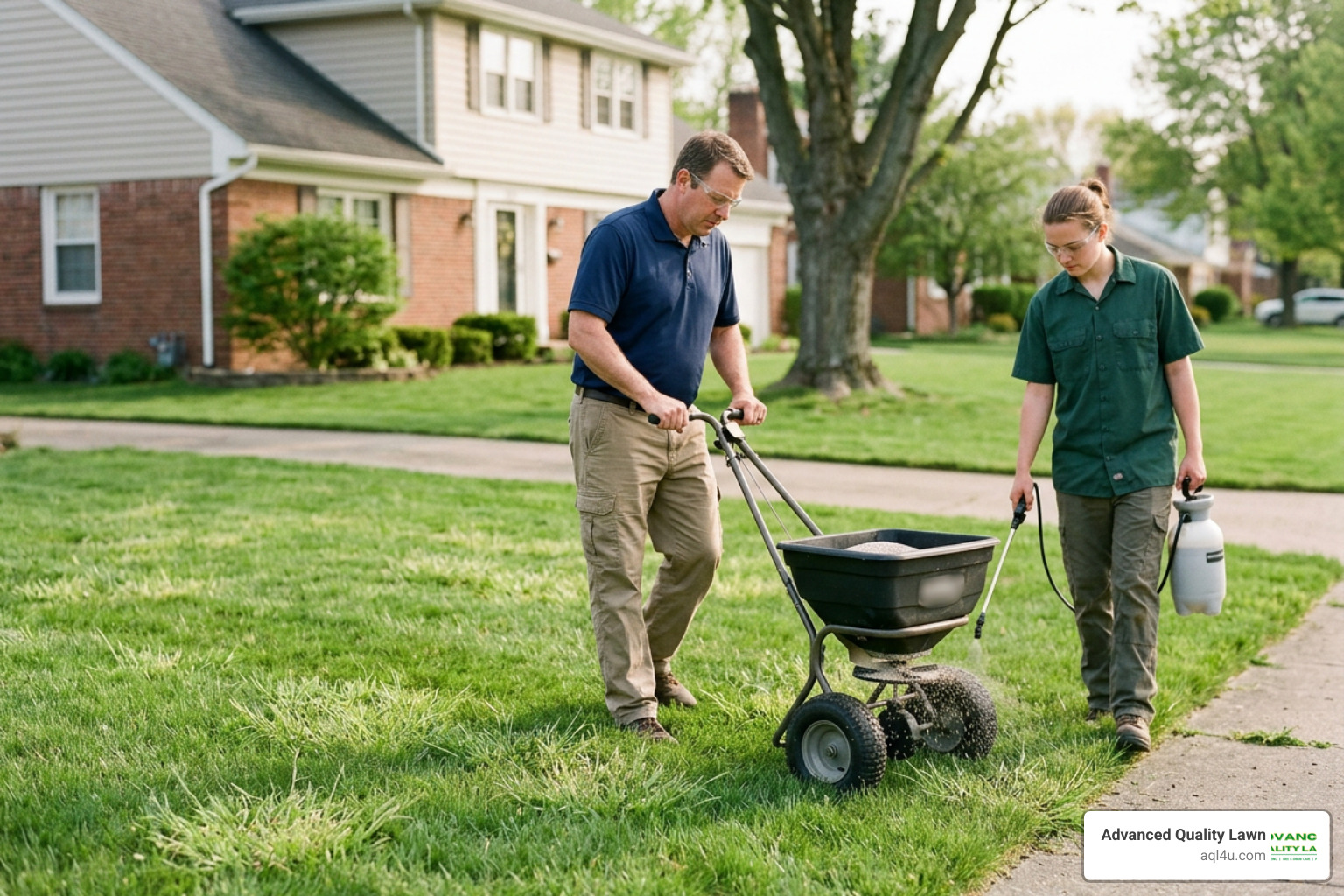
Akron crabgrass treatment pros can save your lawn before the problem gets out of hand. Here is a quick look at what they offer:
| What You Need | What Pros Provide |
|---|---|
| Stop crabgrass before it sprouts | Pre-emergent herbicide applied mid-March to mid-April |
| Kill existing crabgrass | Post-emergent spot treatments on young plants |
| Long-term prevention | Seasonal programs with cultural practice guidance |
| Peace of mind | EPA-registered products, satisfaction guarantees |
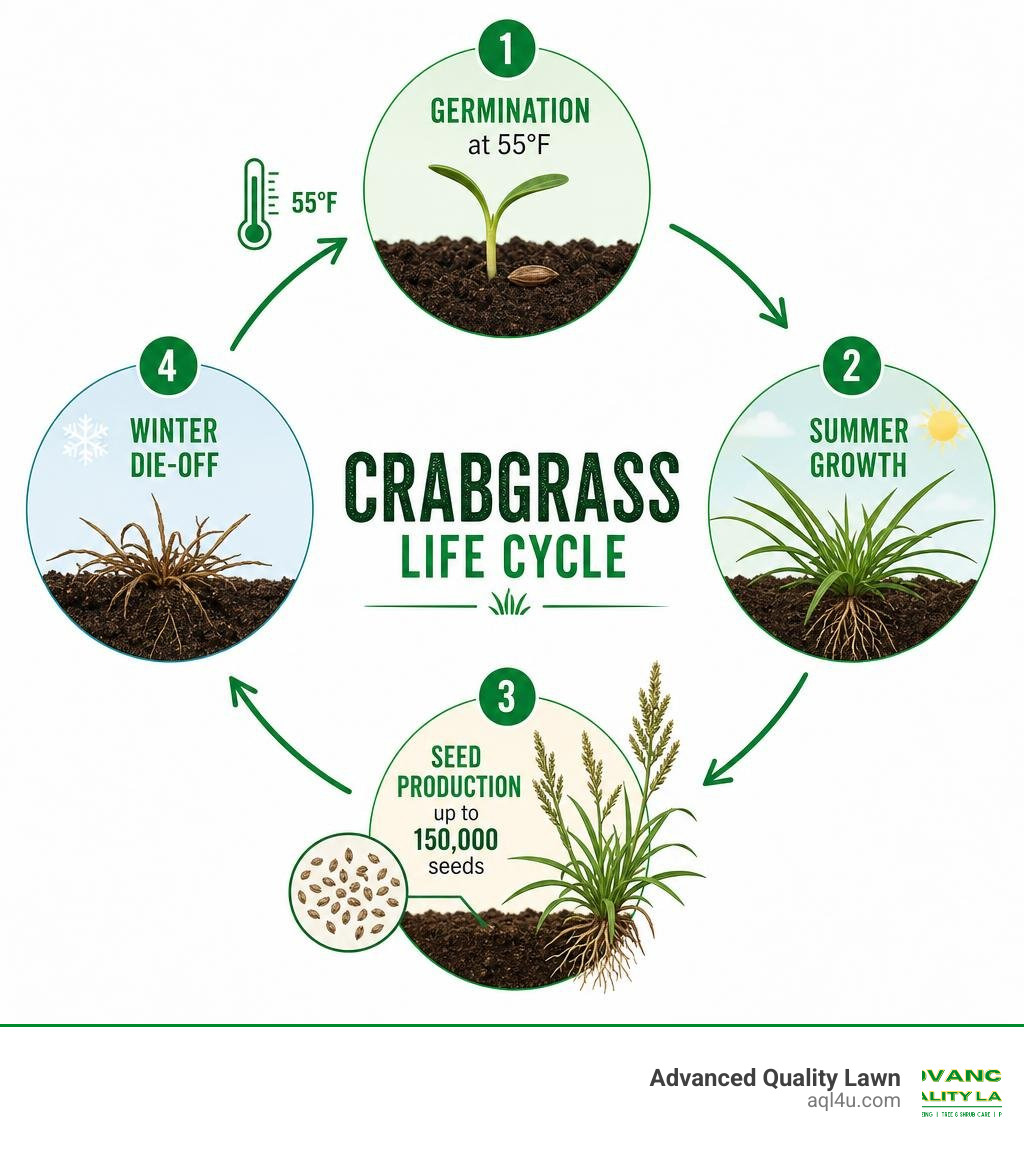
Crabgrass is one of the most stubborn weeds Akron homeowners deal with every summer. It is an opportunistic annual weed that sprouts wherever bare soil, sunlight, and water meet. And here is the part that makes it so hard to beat: a single plant can produce up to 150,000 seeds before it dies in the fall. Those seeds sit in your soil and wait for next spring. Miss your prevention window once, and you are playing catch-up all season.
The good news is that catching it early with the right professional program makes a real difference. Pre-emergent herbicides applied correctly are 80 to 90 percent effective at blocking crabgrass before it ever breaks ground.
I'm Andrew Day, owner of Advanced Quality Lawn, and with more than 30 years of experience helping Northeast Ohio homeowners fight back against crabgrass, I have seen what separates a lawn that stays clean all season from one that gets overrun. My team at Advanced Quality Lawn has built our Akron crabgrass treatment pros approach around precise timing, quality products, and personalized service that larger national chains simply cannot match.
Why Crabgrass Persists and How to Treat It in Akron

To understand why crabgrass is such a persistent headache in places like Copley, Hudson, and Stow, we have to look at our local climate. Akron sits in USDA Hardiness Zone 6a. This means our lawns are dominated by cool-season grasses like Kentucky bluegrass, tall fescue, and perennial ryegrass. These grasses thrive in the spring and fall but struggle during the hot, dry summer months.
When summer heat hits, cool-season grasses slow down their growth and can even go semi-dormant. This is exactly when crabgrass strikes. As an annual warm-season weed, crabgrass loves the heat. If your lawn has thin areas, bare spots, or soil compaction from heavy foot traffic, crabgrass will quickly move in to claim that real estate.
Each mature crabgrass plant produces up to 150,000 seeds that remain viable in the soil for years. When you try to pull it out by hand, you might feel a sense of accomplishment, but you are often leaving behind a massive seed bank ready to explode the following spring. This is why a strategic approach to crabgrass control for lawns is absolutely necessary.
When it comes to professional treatment, there are two primary routes: chemical pre-emergent herbicides and organic options like corn gluten meal. Both have their place, but they work in very different ways.
Chemical pre-emergent herbicides create a microscopic barrier in the top layer of your soil. When a crabgrass seed germinates, its tiny root hits this barrier and stops growing, which prevents the weed from ever emerging. It is highly effective and provides reliable protection for up to twelve weeks.
On the other hand, corn gluten meal is a popular organic alternative. It works by releasing natural peptides that inhibit the root development of germinating seeds. It also doubles as a mild nitrogen fertilizer, giving your lawn a gentle green-up. However, corn gluten meal is less forgiving. It requires multiple applications over several consecutive seasons to build up enough effectiveness to rival chemical options, and it must be timed perfectly to work.
Here is a quick comparison to help you weigh your options:
| Feature | Chemical Pre-Emergents | Corn Gluten Meal (Organic) |
|---|---|---|
| Effectiveness | 80 to 90 percent control | 40 to 60 percent control initially |
| Action Mechanism | Creates chemical barrier in soil | Releases natural root-inhibiting peptides |
| Nutritional Value | None (must be paired with fertilizer) | Contains approximately 10 percent nitrogen |
| Safety Profile | Safe for family and pets once fully dry | Completely non-toxic from the start |
| Soil Health Impact | Minimal when applied at correct label rates | Adds organic matter and feeds soil microbes |
| Application Window | Strict spring timing before germination | Strict spring timing, requires multiple years |
For homeowners dealing with severe infestations, using the best herbicide for crabgrass in a targeted chemical program is usually the fastest way to regain control. Once the lawn is thick and healthy, transitioning to more organic-focused maintenance becomes much easier.
Timing is Everything for Akron Crabgrass Treatment Pros

If there is one golden rule in lawn care, it is that timing determines your success. You can buy the most expensive product on the market, but if you apply it at the wrong time, you might as well throw your money away.
The secret to timing pre-emergent applications lies in monitoring soil temperatures rather than looking at the calendar. Crabgrass seeds begin to germinate when soil temperatures at a two inch depth consistently reach 55 degrees Fahrenheit for three to five consecutive days. In Northeast Ohio, this critical window typically opens between mid-March and mid-April.
Because we cannot all walk around with soil thermometers in our pockets, nature provides its own visual cue. When you see the bright yellow blooms of forsythia bushes in your neighborhood, you know the soil is warming up and the crabgrass germination window is officially open.
If you apply your pre-emergent too early, the product can break down before the seeds actually begin to sprout. If you apply it too late, the seeds have already germinated, and standard pre-emergents will not do anything to stop them.
To solve this problem, we often utilize a split-application strategy. Instead of putting down one heavy dose of pre-emergent in early spring, we apply a half-rate when the soil hits 55 degrees, followed by a second half-rate six to eight weeks later when soil temperatures approach 65 degrees. This split method extends your protection from eight weeks to nearly twenty weeks, ensuring your lawn remains protected through the hottest days of July and August.
It is also important to remember that standard pre-emergents do not know the difference between a crabgrass seed and a high-quality grass seed. If you plan to overseed your lawn to fill in bare spots, you must consult a crabgrass preventer safe seeding guide to avoid accidentally killing your new grass. Standard pre-emergents will prevent new grass seed from growing for up to twelve weeks, which is why we generally recommend saving major seeding projects for the fall.
Cultural Practices and Post-Emergent Solutions
While professional treatments are incredibly effective, they work best when paired with good cultural practices. In fact, university studies have shown that maintaining a tall, thick lawn can prevent more crabgrass than any chemical on the market.
Your first line of defense is your lawn mower. Many homeowners make the mistake of scalping their lawns in the summer. When you cut your grass too short, you allow sunlight to reach the soil surface, which triggers dormant crabgrass seeds to wake up and grow. By raising your mowing height to 3.5 or 4 inches, you create a thick canopy that shades the soil, naturally choking out weed seedlings.
Your watering habits also play a major role. Watering your lawn lightly every day keeps the surface soil constantly moist, which is exactly what shallow-rooted crabgrass seeds need to thrive. Instead, practice deep and infrequent watering. Apply about one inch of water once or twice a week. This encourages your desirable grass roots to grow deep into the soil while leaving the surface dry enough to discourage weed germination.
To build a lawn that naturally resists weeds, we recommend a complete approach to lawn maintenance in Akron Ohio. This includes fall core aeration to relieve soil compaction and overseeding to crowd out potential weed zones.
If you missed the spring pre-emergent window and already have crabgrass spreading across your yard, do not panic. While prevention is always the best way to get rid of crabgrass, we have highly effective post-emergent solutions.
Post-emergent herbicides are designed to target active, growing weeds without harming your desirable turfgrass. However, timing is still important. Post-emergent treatments are about 40 to 60 percent effective on mature, woody crabgrass plants, but they are incredibly effective when applied to young crabgrass that only has a few leaves.
If you only have a few stray clumps along your driveway or sidewalk, hand pulling can be effective if you catch them before they go to seed. Just make sure to pull the entire root system. For larger areas, our professional weed control services provide the precise, targeted spot treatments needed to clear out the weeds and help your grass recover.
Frequently Asked Questions About Akron Lawn Care
How much do akron crabgrass treatment pros charge for lawn care?
The cost of professional crabgrass control in Akron depends on several factors, including the size of your lawn, the severity of the weed pressure, and the frequency of the treatments. For a standard residential property, individual visits for targeted weed control generally start around sixty-five dollars.
Most homeowners find the best value in a comprehensive seasonal program that bundles pre-emergent applications, post-emergent weed control, and custom fertilization. These annual programs typically range from two hundred sixty dollars to five hundred twenty dollars spread over four to six visits. Investing in professional Akron lawn weed control saves you the time, hassle, and expense of buying specialty equipment and trial-and-error retail products.
What results can I expect from hiring akron crabgrass treatment pros?
When you hire a professional team, you can realistically expect a 90 percent reduction in crabgrass and other common weeds within the first season. It is important to remember that lawn care is a process, not a one-time event.
During the first few weeks, you will see existing weeds begin to curl, yellow, and die off. Over the course of a multi-season program, your lawn will naturally become thicker and denser, which makes it much harder for new weeds to find a foothold. For a complete breakdown of what to expect during your lawn transition, you can read our crabgrass removal guide 2026.
Is professional crabgrass treatment safe for my family and pets?
Yes, professional treatments are entirely safe when applied correctly by licensed experts. At Advanced Quality Lawn, we only use EPA-registered products applied at precise, calibrated label rates.
After we complete an application, we ask that you keep children and pets off the grass until the product has completely dried, which typically takes one to two hours depending on the weather. Once dry, the product binds to the soil and grass blades, making it perfectly safe for your family to return to the yard and enjoy the lawn.
Conclusion
A beautiful, weed-free lawn does not happen by accident. It requires a combination of science, timing, and consistent care. By understanding how crabgrass grows and partnering with local experts who know how to treat it, you can enjoy a thick, green yard all summer long.
At Advanced Quality Lawn, we pride ourselves on delivering excellent customer service, full-program guarantees, and reliable coverage across 99 plus zip codes in Summit, Medina, Cuyahoga, Portage, and surrounding counties. We treat your lawn as if it were our own, taking the guesswork out of weed control and fertilization.
Ready to transform your yard? More info about lawn care maintenance services is just a click away. Contact us today to schedule your free estimate and take the first step toward a flawless lawn.