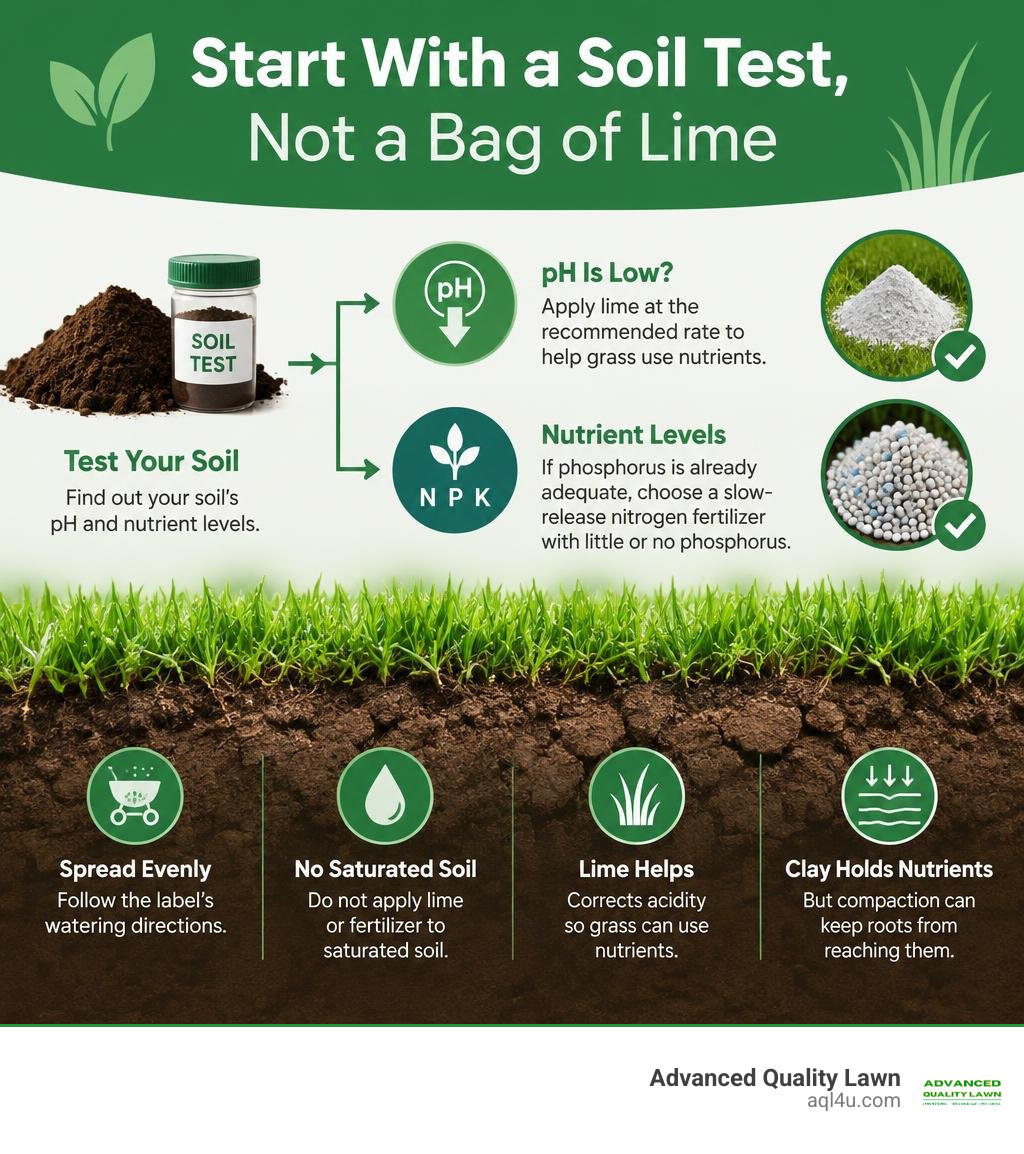
Start With a Soil Test, Not a Bag of Lime

The best fertilizer for a clay soil lawn depends on a soil test. If phosphorus is already adequate, choose a slow-release nitrogen fertilizer with little or no phosphorus. If the test shows low pH, apply lime at the recommended rate to help grass use nutrients. Spread it evenly and follow the label's watering directions. Do not apply lime or fertilizer to saturated soil.
Clay holds nutrients well, but compaction can keep roots from reaching them. Lime corrects acidity when needed. It cannot fix poor drainage on its own.
I'm Andrew Day of Advanced Quality Lawn in Northeast Ohio. My team draws on more than 30 years of company experience to help homeowners choose the best fertilizer for clay soil lawn care and address the soil problems behind thin grass.
Understanding Soil pH, Compaction, and Clay Soil Nutrient Dynamics
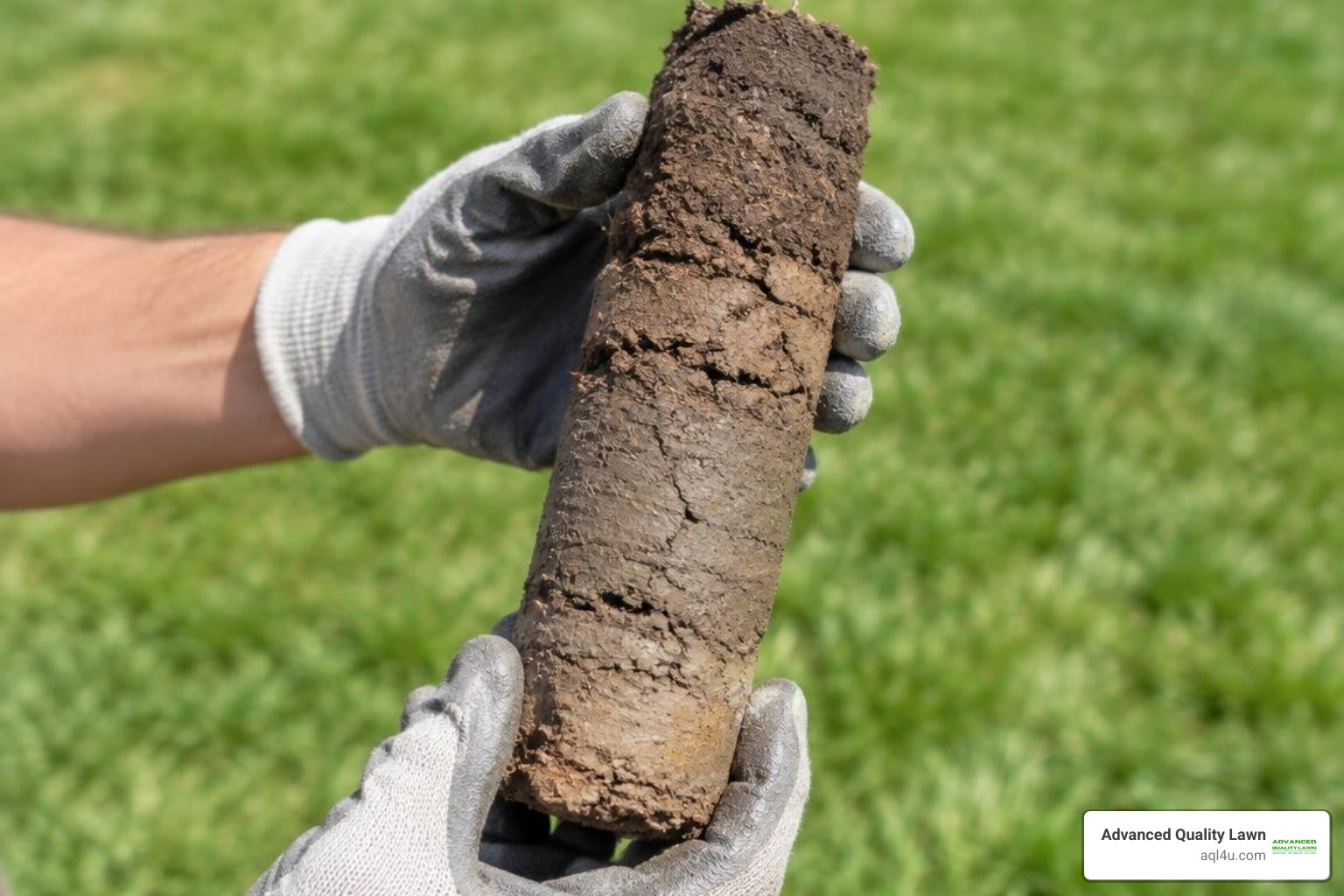
Clay soil contains microscopic, plate-like mineral particles that pack tightly together. Because of their tiny size, these particles create exceptionally small pore spaces. While this structure makes clay fantastic at holding onto moisture, it also causes severe drainage challenges and quick compaction under foot traffic or lawn mowers.
Understanding how clay behaves chemically helps explain why simply throwing down standard turf food rarely produces a lush yard. Dense soils possess a high Cation Exchange Capacity, often abbreviated as CEC. CEC measures the soil's ability to hold onto essential plant nutrients like calcium, magnesium, and potassium. In sandy soils, water rushes through and washes nutrients away. In heavy clay, nutrients stick tightly to the microscopic soil plates.
However, high nutrient capacity does not mean your grass can automatically drink up those minerals. When poor drainage keeps clay waterlogged, oxygen cannot reach the root zone. Grass roots require oxygen for cellular respiration to absorb water and minerals. Without oxygen, root systems stay shallow and weak. For deeper insight into physical clay dynamics, review guidelines on managing clay soils to see how soil texture impacts long-term turf vitality.
Why Clay Soils Lock Up Fertilizer and Turn Acidic
When clay soil becomes compacted and acidic, chemical lockup occurs. Heavy clay soils across regions like Northeast Ohio frequently drop into acidic territory with a pH below 6.0. Turfgrass species like Kentucky bluegrass, perennial ryegrass, and tall fescue thrive best in a slightly acidic to near-neutral range between 6.0 and 7.0.
When the pH drops below 6.0, essential elements such as nitrogen, phosphorus, and potassium bind tightly to clay particles or convert into insoluble chemical forms. At very low pH levels, aluminum and manganese become overly soluble, causing root toxicity that stunts root tips. Applying more standard synthetic fertilizer to an acidic clay lawn does not fix pale grass. The roots simply cannot take up the nutrients, leaving your turf hungry despite an abundance of food sitting in the dirt.
The Crucial First Step: Testing pH and Cation Exchange Capacity
Guessing your soil's fertility needs is the quickest way to waste money and damage your lawn. Before purchasing any soil amendment or nutrient bag, you must take a proper soil test.
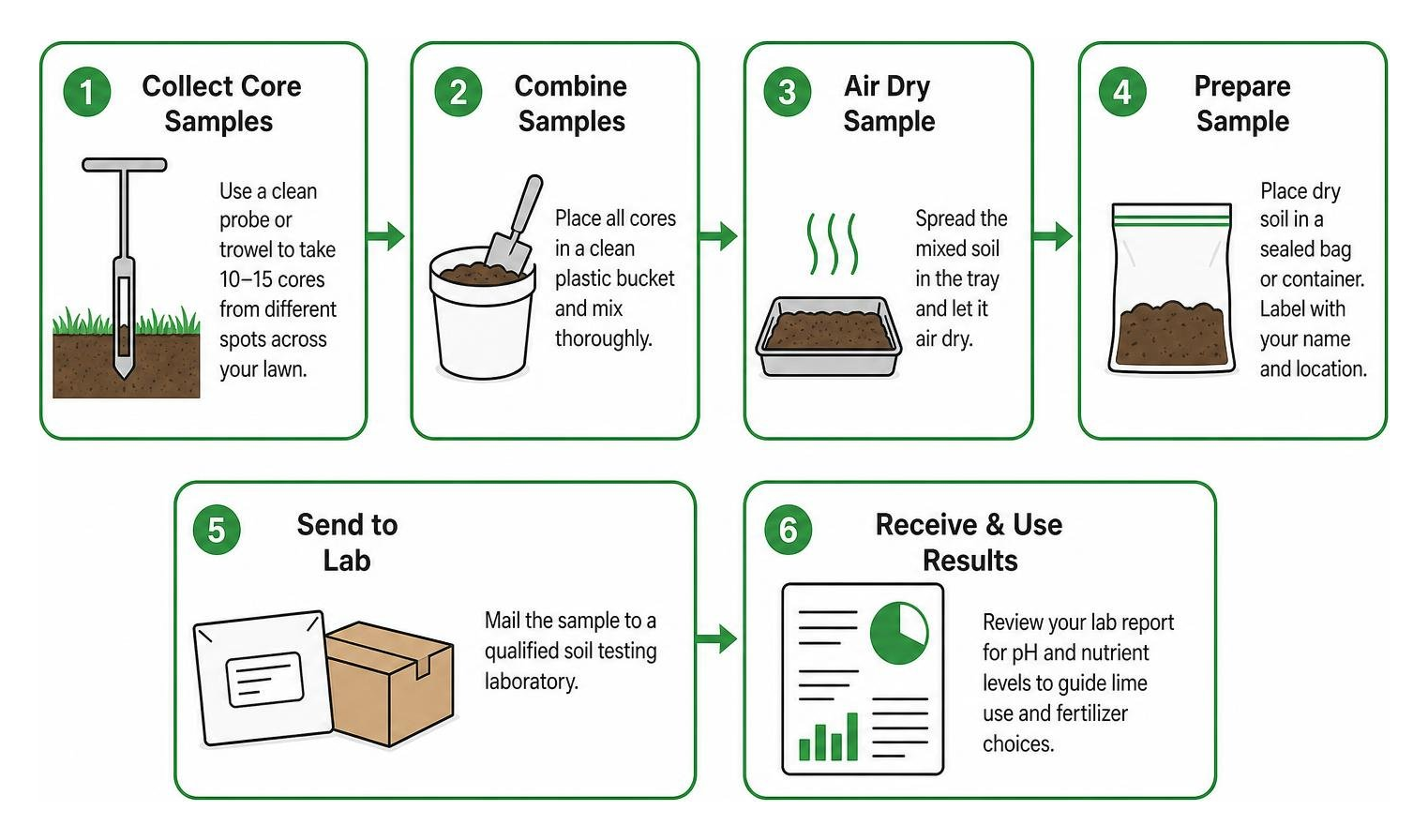
A lab test determines your soil's water pH, buffer pH, organic matter percentage, and exact base saturation of cations. Using a clean soil probe or trowel, collect 10 to 15 small core samples from various spots across your yard at a depth of 3 to 4 inches. Mix these subsamples in a clean plastic bucket, let the soil air dry, and send a composite sample to a qualified testing laboratory. To avoid errors, you can book professional lawn soil testing to get lab-calibrated results that tell you the exact pounds of lime and nutrients your specific yard requires.
Choosing the Best Fertilizer for Clay Soil Lawn Nutrition
Dense soils require a customized approach to plant nutrition. Because clay has a high CEC, it holds nitrogen and potassium far better than sandy ground. Feeding clay requires slow-release products that feed the lawn steadily without overloading the root zone or creating high salt levels. Reviewing our balanced lawn fertilizer guide will help you understand how different nutrients interact with dense turf environments.
The ideal feeding program for heavy clay focuses on:
- Controlled-release nitrogen sources that provide steady feeding over 8 to 10 weeks
- High-potassium formulas in late summer to improve heat and stress tolerance
- Iron supplements to promote deep emerald color without forcing excessive top growth
Ideal NPK Ratios and Why High Phosphorus Fails in Clay
Every fertilizer bag displays three numbers representing its NPK ratio: Nitrogen (N), Phosphorus (P), and Potassium (K). For established lawns on heavy clay, high-phosphorus fertilizers are almost always a bad choice.
Clay soils naturally bind and retain phosphorus very effectively. Unless a fresh soil test reveals an outright phosphorus deficiency or you are planting brand new grass seed, established clay lawns rarely need extra phosphate. Applying high-phosphorus products leads to unnecessary accumulation and environmental runoff into local waterways. Instead, look for nitrogen-forward blends with zero phosphorus and moderate potassium, such as a 20-0-10 or 16-0-8 analysis. Potassium strengthens cell walls, helping grass blades resist drought stress and foot traffic on hard soil.
Granular vs. Liquid Options for Dense Soil
Both granular and liquid fertilizers have distinct strengths when managed on heavy clay.
| Feature | Granular Fertilizer | Liquid Fertilizer |
|---|---|---|
| Nutrient Delivery Speed | Slow and steady over 6 to 10 weeks | Rapid uptake through foliage within days |
| Soil Penetration | Breaks down slowly with moisture | Can run off if applied to hard, dry crusts |
| Risk of Leaf Burn | Low when using slow-release formulas | Moderate if applied during hot, sunny afternoons |
| Soil Structure Impact | Organic granules feed microbes | Does not add bulk organic content |
| Application Frequency | 2 to 4 times per growing season | Every 4 to 6 weeks during active growth |
Granular fertilizers work best as the foundation of your lawn program because their slow-release coatings provide consistent feeding without causing rapid growth surges. Liquid fertilizers work well as supplemental treatments, especially when delivering chelated iron or foliar micronutrients directly to the grass blades when compacted roots struggle with soil uptake.
Pairing Nutrients with Humic Acid, Compost, and Gypsum
Fertilizer feeds the grass plant, but soil conditioners improve the physical environment where roots live. Combining your fertilizer applications with natural soil conditioners helps break up heavy clay over time.
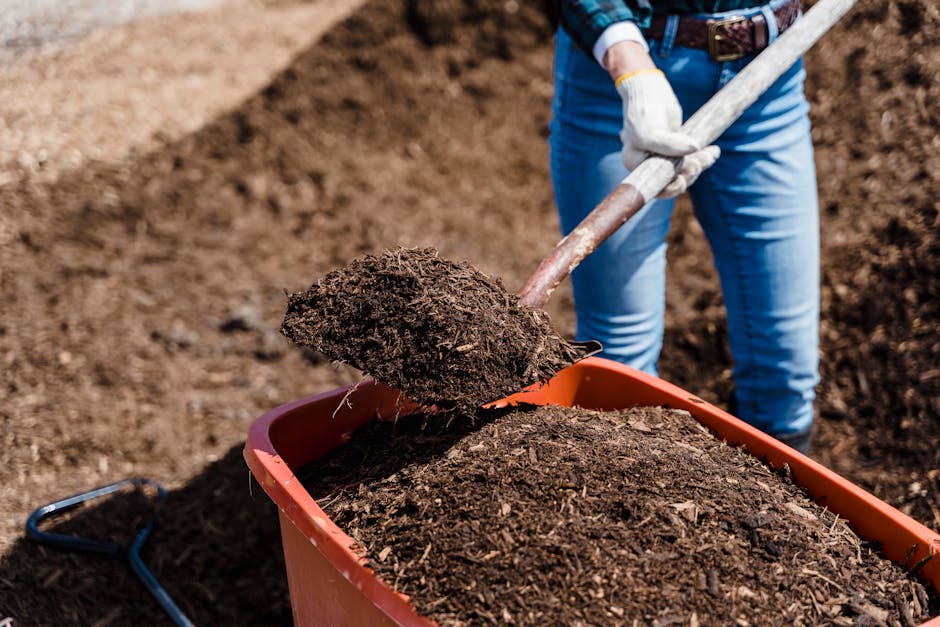
- Humic Acid and Biochar: Humic substances stimulate beneficial soil microbes, enhance root permeability, and help chelate micronutrients in dense clay. Products that blend humic acid with granulated biochar provide microscopic carbon structures that keep soil loose.
- Compost Topdressing: Applying a thin quarter-inch layer of finely screened compost adds rich organic matter. Over several seasons, earthworms pull this organic material down into the clay, naturally improving aeration and soil texture. According to research on soil management, incorporating at least 2 inches of organic matter into new beds or topdressing established turf regularly transforms heavy ground over time.
- Gypsum (Calcium Sulfate): Gypsum helps loosen clay soils damaged by high sodium levels or road salt accumulation by replacing sodium ions with calcium. Reviewing university extension recommendations can help you decide whether gypsum or organic topdressing is the best fit for your yard's specific soil chemistry.
How to Apply Lime to Acidic Clay Without Burning Your Grass
Lime is an all-natural mineral amendment derived from ground limestone rock, primarily consisting of calcium carbonate. Because pure agricultural lime is not a concentrated chemical salt like synthetic fast-release nitrogen, lime does not chemically burn grass blades when applied correctly.
The true danger comes from misapplication. Applying massive amounts of lime all at once can spike your surface soil pH too quickly, locking out trace minerals like iron and causing yellowing. Additionally, dropping heavy piles of lime dust on wet grass can physically smother the turf and block out sunlight.
To apply lime safely:
- Always base your application rate on an accurate soil test report.
- Never apply more than 50 pounds of lime per 1,000 square feet in a single treatment. If your soil test calls for 100 pounds, split the job into two separate treatments spaced 6 to 8 weeks apart.
- Use a properly calibrated broadcast spreader to guarantee even distribution without overlapping heavy stripes.
- Water your lawn thoroughly after application to wash mineral granules off the grass blades and into the soil.
Integrating Lime with Your Lawn Recovery Program
Timing matters when applying lime alongside your seasonal fertilizer. If you spread fast-release nitrogen fertilizer and agricultural lime at the exact same moment, a chemical reaction can occur. The alkaline lime reacts with ammonium-based nitrogen, converting valuable nutrients into ammonia gas that escapes into the atmosphere. This process, known as nitrogen volatilization, wastes your fertilizer and leaves grass hungry.
To get the best results, separate your lime and nitrogen fertilizer applications by at least two to three weeks. Spreading lime first allows the calcium to begin dissolving into the soil matrix. As the lime begins balancing soil acidity, your subsequent fertilizer treatments will be absorbed much more efficiently by your lawn.
Pelletized vs. Pulverized Lime: Avoiding Turf Burn
Limestone comes in two primary forms for residential lawn care: pulverized lime and pelletized lime.
Pulverized lime is crushed into a fine, flour-like powder. While it is inexpensive and reacts relatively quickly with soil moisture, it creates massive clouds of dust that blow into neighboring properties. It also clings to damp grass blades, creating a pasty film that can smother turf and cause localized damage.
Pelletized lime is made by binding finely ground limestone into uniform, dust-free spherical pellets using a water-soluble binding agent. It flows smoothly through broadcast spreaders, drops cleanly past grass blades down to the soil surface, and breaks down easily once watered. For home lawns on dense clay, pelletized lime is the cleanest, safest, and most reliable option.
Seasonal Timing and Cultural Practices for Clay Lawns
Managing a lawn on clay soil requires working with natural seasonal rhythms and soil temperatures. In regions with cool-season grasses like Northeast Ohio, turf experiences its strongest root development during the cool, moist periods of spring and autumn.
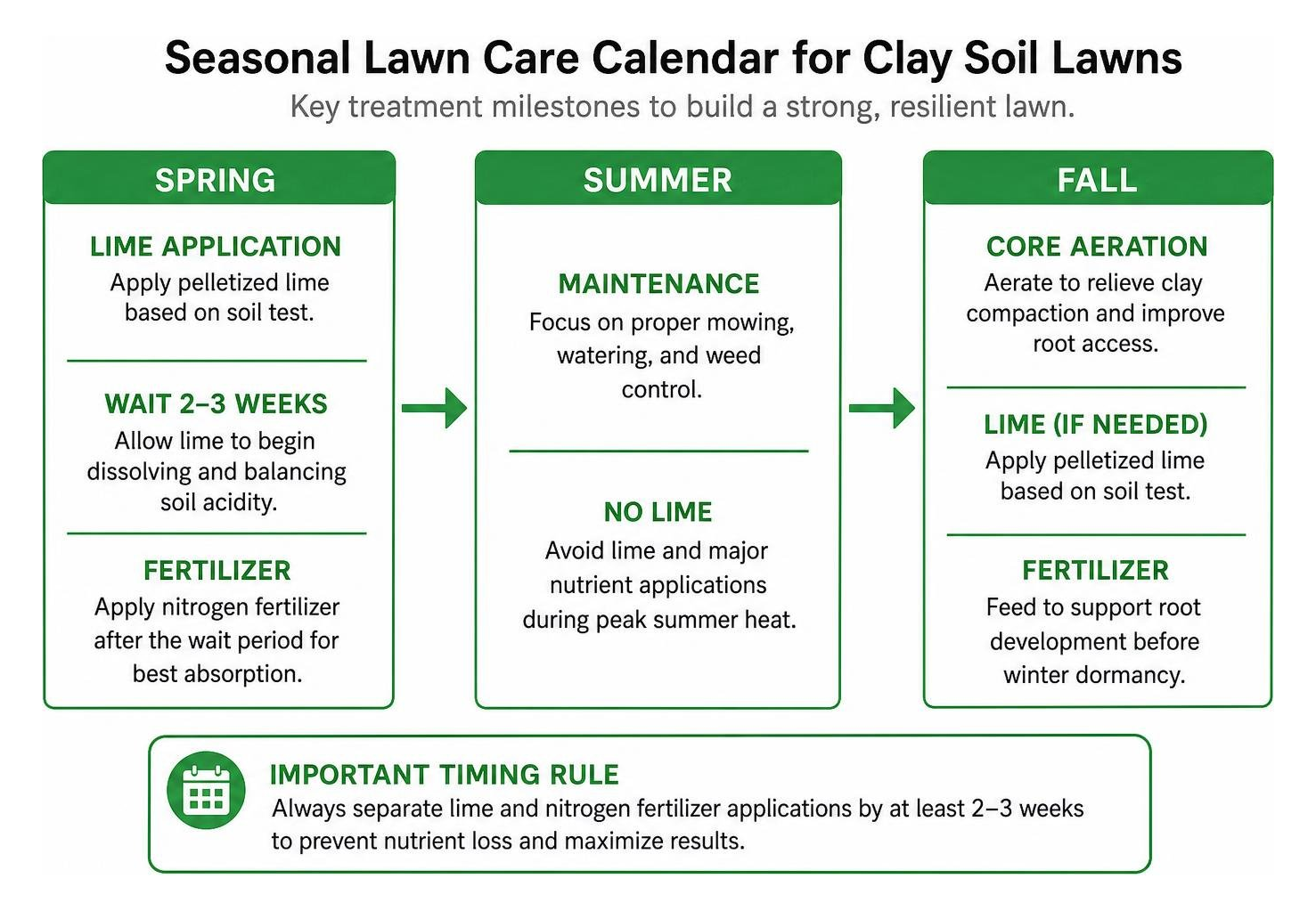
When planning your spring schedule, consult our spring fertilizer guide to time pre-emergents and light feedings accurately. As cool weather returns, check our guide on the best fall lawn fertilizer to feed root development before winter dormancy sets in.
Coordinating Core Aeration with Turf Health
No fertilizer program can overcome severely compacted clay on its own. Dense clay requires mechanical decompression through annual core aeration.
A core aerator pulls thousands of hollow soil plugs out of your lawn, leaving open holes 2 to 3 inches deep. This physical process accomplishes several vital goals:
- Breaks open hard subsoil layers to let air and water reach deep roots
- Relieves lateral pressure between tightly packed clay particles
- Creates open channels that carry lime, organic topdressing, and fertilizer deep into the root zone
Scheduling core aeration and overseeding during the late summer or early fall gives cool-season grasses the ideal environment to establish deep, drought-tough root systems in clay ground.
Weed-and-Feed Risks and Frequency on Poorly Drained Turf
Weed-and-feed products combine broadleaf herbicides with synthetic nitrogen fertilizer in a single granular product. While these combination products seem convenient, they carry distinct risks on heavy clay yards.
Clay soil absorbs water slowly. If you apply a weed-and-feed product right before unexpected heavy rain, standing surface water will wash the herbicide granules into low spots or garden beds. This creates concentrated pools of weed killer that can injure desirable grass, damage nearby ornamental shrubs, and contaminate local storm drains. For heavy clay turf, applying dedicated liquid spot treatments to visible weeds and using separate slow-release fertilizers is a safer, more effective strategy.
Frequently Asked Questions About Fertilizing and Liming Clay Soil
Can Fertilizer and Lime Alone Fix Standing Water and Compaction?
No. Fertilizer provides plant nutrients, and lime raises soil pH, but neither product changes the physical texture of compacted clay. While adding calcium via gypsum or lime can assist soil flocculation in specific chemical environments, relieving severe compaction requires physical intervention. Mechanical core aeration, compost topdressing, and proper yard grading are necessary to fix standing water and hardpan layers permanently.
How Often Should I Fertilize a Clay Soil Lawn Compared to Sandy Soil?
Clay lawns should be fertilized less frequently than sandy lawns. Because clay holds nutrients tightly thanks to its high CEC, minerals do not leach out of the root zone quickly. While sandy lawns require light, frequent feedings every 3 to 4 weeks, an established cool-season lawn on clay thrives on just 2 to 4 slow-release granular feedings spread across the entire growing season.
Are Weed-and-Feed Products Safe on Heavy Clay Lawns?
They can be used safely only if applied under ideal conditions, but they carry higher risks on dense soil. If the soil is already saturated, herbicide granules cannot settle properly and often wash away into puddles, resulting in poor weed control and dead grass patches. Applying fertilizer and weed control in separate, targeted applications produces better results on clay ground.
Conclusion
Transforming dense, stubborn clay soil into a vibrant outdoor space takes the right combination of patience, balanced nutrition, and physical soil care. By starting with an accurate soil test, choosing slow-release nitrogen fertilizers, and applying pelletized lime in safe, split applications, you can correct acidic soil conditions without harming your turf. Combining these nutritional steps with annual core aeration helps your lawn develop the deep, resilient root system needed to thrive year after year.
If you are dealing with hard, compacted ground or uneven turf growth across Northeast Ohio, you do not have to tackle it alone. Our team at Advanced Quality Lawn provides custom fertilization, liming, and soil conditioning plans tailored to your property. Explore our comprehensive lawn care maintenance options today to give your yard the professional care it deserves.