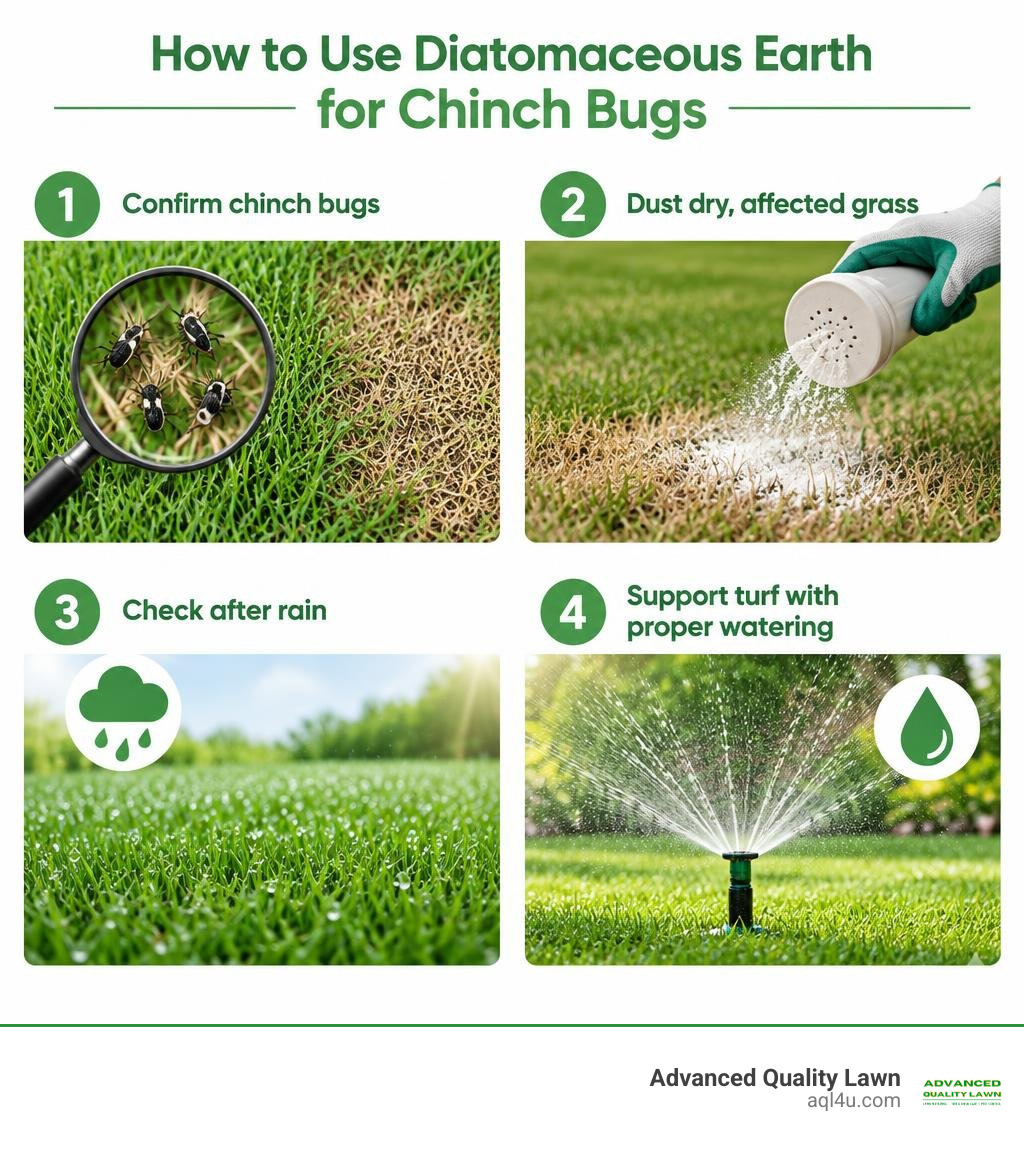
How to Use Diatomaceous Earth for Chinch Bugs
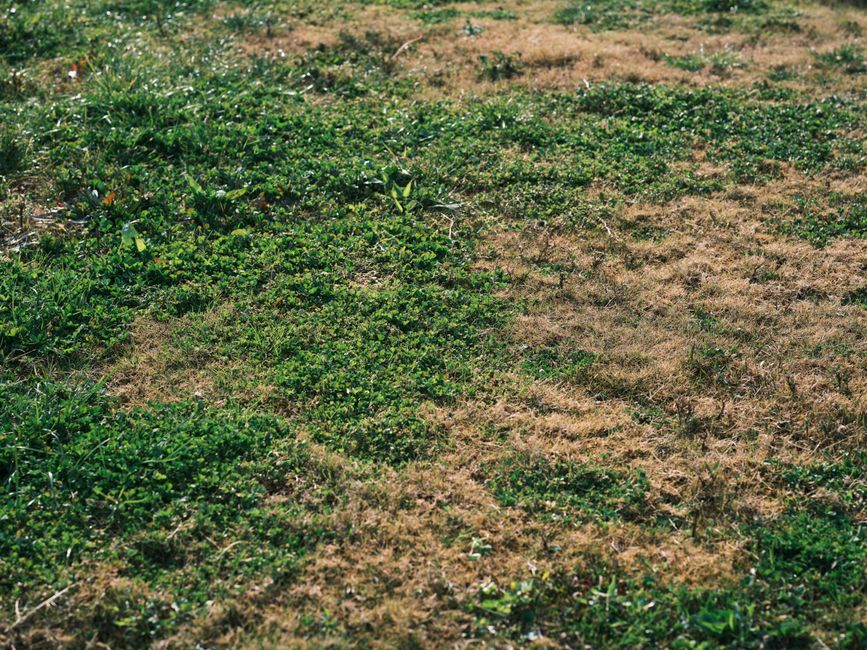
First, check for chinch bugs at the edge of a spreading brown patch. If you find them, lightly dust the dry, affected grass and its edges with a diatomaceous earth product labeled for lawn pest control. Avoid breathing the dust, and follow the label. Check the area again after rain or irrigation and reapply once the grass is dry if bugs remain.
Diatomaceous earth can dry out bugs that touch it, but it may not reach every bug hiding in the turf. Proper watering and regular checks are just as important, especially when chinch bug damage looks like drought stress.
I'm Andrew Day, owner of Advanced Quality Lawn in Northeast Ohio, where our team draws on more than 30 years of industry experience. I'll walk you through using diatomaceous earth for chinch bugs as one part of a practical lawn care plan.
Understanding Diatomaceous Earth and How It Kills Lawn Pests
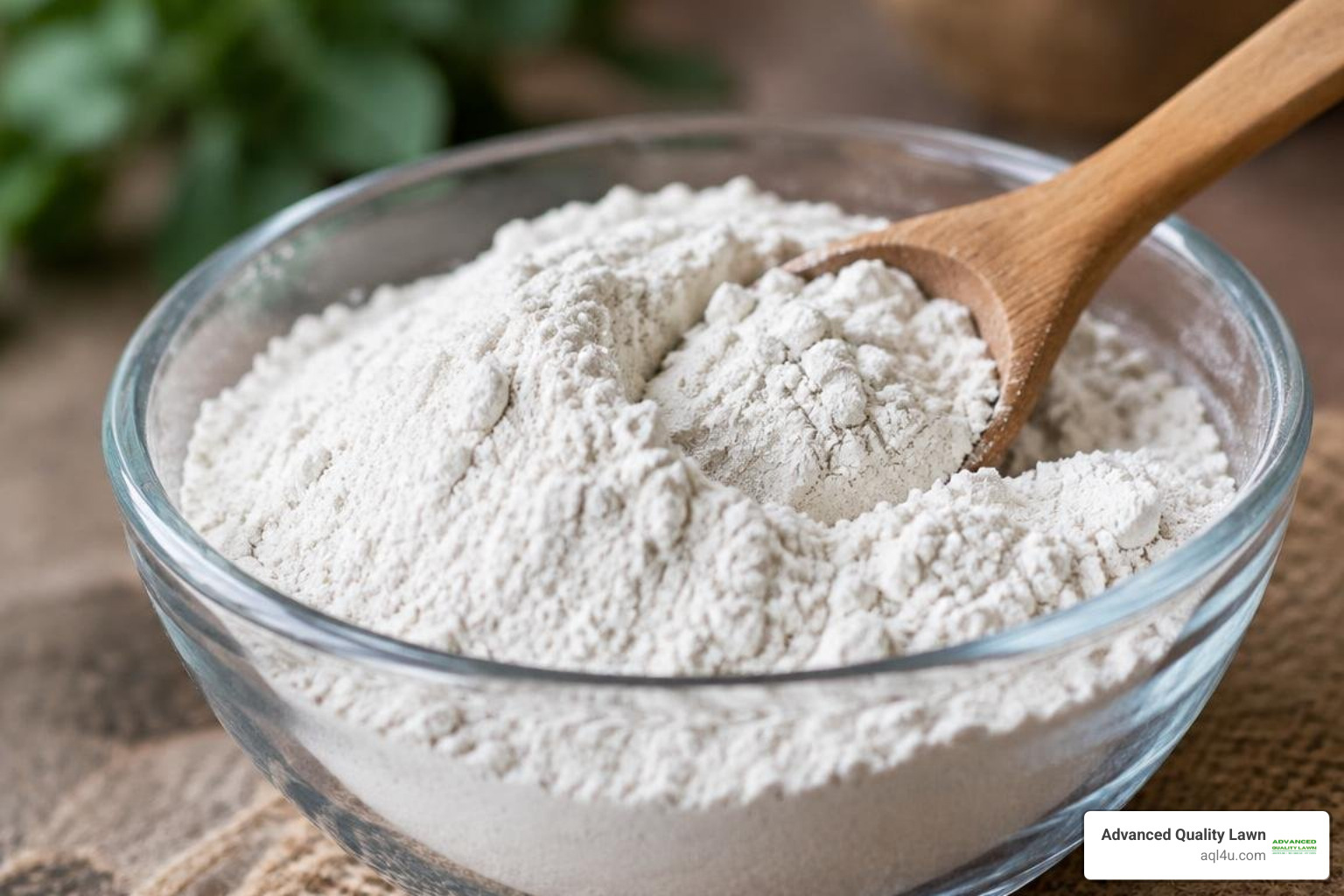
Diatomaceous earth looks like a soft, harmless chalk powder to our eyes, but under a microscope, it tells a very different story. This natural powder consists of the fossilized remains of ancient diatoms, which are single-celled aquatic algae with hard shells made of natural silica. Over millions of years, these tiny shells accumulated in deep lakebeds and riverbeds. When ground down, they produce an ultra-fine dust with microscopic edges as sharp as shattered glass.
Insects rely on an outer protective waxy cuticle to hold moisture inside their tiny bodies. When hairy chinch bugs (Blissus leucopterus) walk through the dust, the microscopic silica particles absorb the lipids from that waxy layer while scraping away the outer shell. Once this protective barrier is ruptured, the pest rapidly loses moisture through evaporation.
This mode of action is purely mechanical rather than chemical. Because it relies on physical abrasion and desiccation, insects cannot build up genetic resistance over time. If a chinch bug ingests the powder while grooming, the sharp particles can also disrupt internal organs, digestion, and respiration.
According to research highlighted in Lower-Risk Insect Control Research from UNR Extension, mechanical desiccation dusts offer a lower-risk solution for soft-bodied and crawling lawn invaders. Many homeowners who have used diatomaceous earth for ants in lawn areas find that this exact same physical mechanism helps knock down surface-feeding bugs in damaged turfgrass.
Food-Grade vs. Pool-Grade Diatomaceous Earth for Chinch Bugs
Before you buy any bag of powder from a home improvement store, you must understand that not all diatomaceous earth products are created equal. The two main types available on the market are food-grade and pool-grade, and mixing them up can create serious hazards for your family and your turf.
Food-grade powder is uncalcined, meaning it is mined and packaged without high-heat processing. It consists almost entirely of amorphous silica, with less than 1 percent crystalline silica. This makes it safe for garden applications, livestock feed supplements, and residential lawn use.
Pool-grade powder, on the other hand, undergoes intense heat treatment known as calcination. This process turns the raw diatoms into crystalline silica, which is designed to filter tiny particles out of swimming pool water. Crystalline silica is a hazardous substance that causes chronic respiratory damage when inhaled. It should never be used on your lawn or garden beds.
| Feature | Food-Grade Diatomaceous Earth | Pool-Grade Diatomaceous Earth |
|---|---|---|
| Primary Silica Form | Amorphous silica (>99%) | Crystalline silica (high concentration) |
| Heat Processing | Unheated / Natural milling | High-heat calcination |
| Intended Application | Agriculture, garden pests, feed | Swimming pool filtration |
| Lawn Pest Suitability | Safe and effective for turf | Unsafe, do not use outdoors |
| Inhalation Risk | Temporary mild irritation | Severe chronic lung hazard |
Always inspect the product packaging to confirm that you are purchasing uncalcined, food-grade powder with an EPA registration for outdoor pest management.
Safety for Pets, Humans, and Beneficial Insects
Food-grade powder is non-toxic to mammals, birds, and earthworms living deep in the soil profile. Your pets and children can safely play on the grass once the powder settles. However, because it is an ultra-fine, moisture-absorbing dust, breathing in the cloud can irritate delicate nasal passages, throat tissues, and lung linings. It can also dry out your eyes and skin. Whenever you pour, mix, or dust the powder, put on a well-fitted dust mask and protective safety goggles.
The biggest trade-off with this organic remedy is that it does not distinguish between bad bugs and good bugs. If beneficial predators like big-eyed bugs (Geocoris species), ladybugs, predatory ground beetles, or honeybees come into contact with dry powder, they can also suffer cuticle damage.
To protect your local ecosystem, never dust flowering clover, weeds with blooms, or garden blossoms where bees forage. Target your applications strictly to damaged, non-flowering turf patches where chinch bugs are actively congregating.
Step-by-Step Guide: Applying Diatomaceous Earth for Chinch Bugs
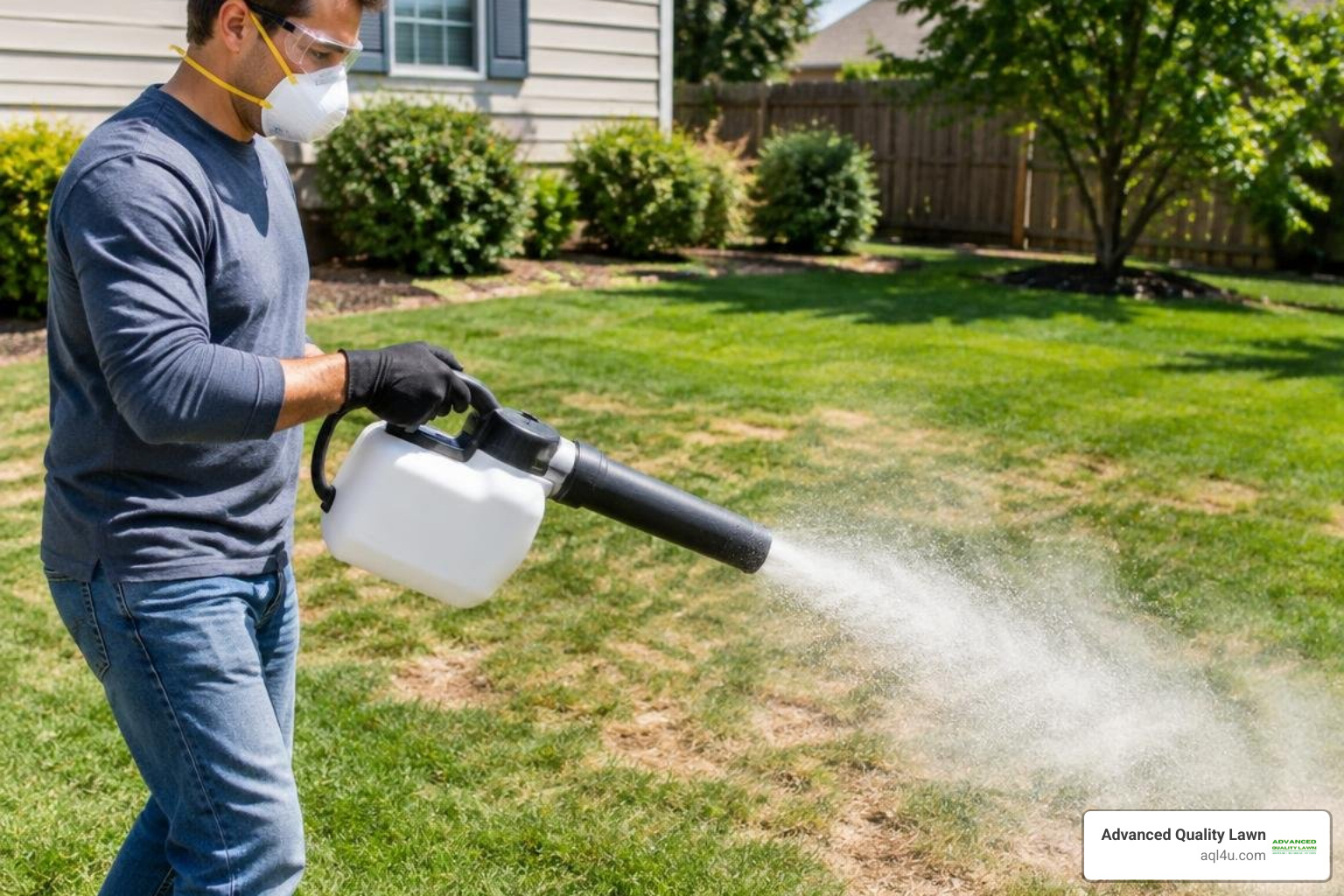
Treating your yard naturally takes patience and precision. Finding the best way to kill chinch bugs starts with diagnosing the exact insect problem before coating your lawn in white dust.
Step 1: Confirming Infestations with Diagnostic Field Tests
Chinch bug damage often looks like ordinary drought stress. The grass turns yellow, withers, thins out, and eventually turns into a crisp, irregular brown patch. If you water the area and the grass fails to green up within a few days, you should test for active feeding.
Adult chinch bugs are tiny, measuring about 3/16 of an inch long, with black bodies and white wings folded over their backs, showing a distinct dark triangular mark. Immature nymphs are even smaller, starting out bright orange-red with a white band across their midsection before darkening as they mature.
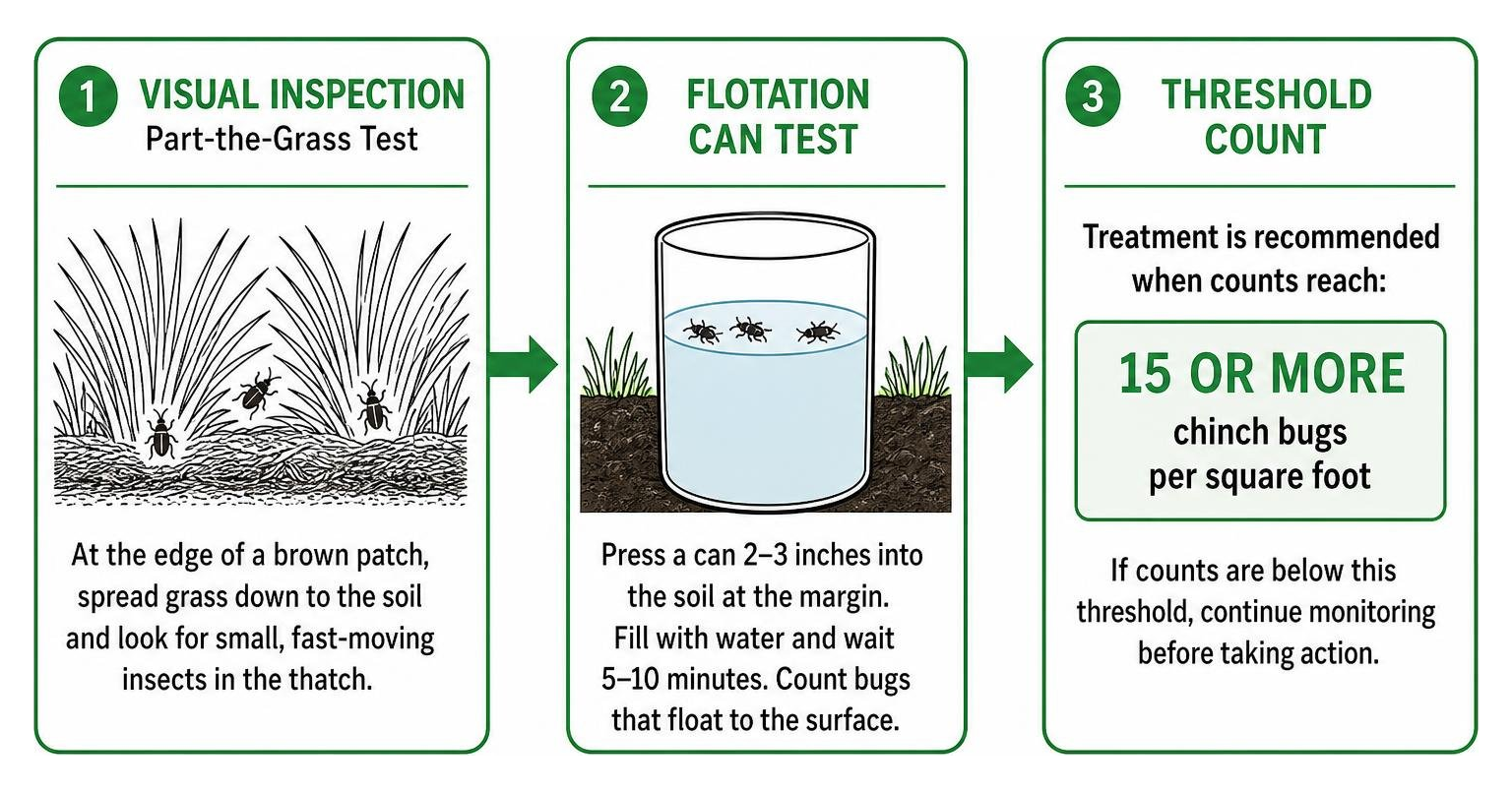
You can confirm their presence right away using two straightforward field checks:
- The Part-the-Grass Test: Walk to the outer border where brown, dead grass meets green, living blades. Chinch bugs continuously move outward to feed on fresh turf. Get down on your hands and knees, spread the grass blades apart down to the soil surface, and watch for small, fast-moving insects scurrying through the thatch layer.
- The Flotation Can Test: Take a large metal coffee can or tin food can and cut out both the top and bottom lids. Press one end of the cylinder two to three inches deep into the soil along the margin of the damaged grass. Fill the cylinder with water and keep it topped off for five to ten minutes. Any bugs hiding in the thatch will float to the water surface.
If you count more than 20 bugs floating in your test can, you have an active infestation that requires immediate chinch bug control action.
Step 2: Preparing Turf and Applying Diatomaceous Earth for Chinch Bugs
Applying the powder randomly over tall, wet grass will waste your product and leave your lawn unprotected. Follow this preparation and application procedure to get the best contact rate:
- Mow the Lawn First: Mow your grass to your normal summer height of around three inches. Rake away excess surface clippings so the powder can reach down into the crown of the plant.
- Wait for Bone-Dry Conditions: Check the weather forecast and pick a sunny day with calm winds. The grass blades, the thatch, and the topsoil must be completely dry before you begin.
- Choose the Right Tool: For small patches along driveways, patios, or curbs, use a handheld bulb duster or a hand-crank rotary powder duster. For broader lawn areas, you can load a clean broadcast spreader with the powder.
- Calculate Your Application Rate: Aim for an even dusting of approximately 1 pound of food-grade powder per 500 square feet of infested turf.
- Dust the Margins: Focus heavily on the active transition border between green and brown grass. Dust at least two feet beyond the visible edge of the damage to intercept expanding nymph populations.
Apply a thin, even haze over the grass blades rather than dumping heavy piles that can smother the turf.
Step 3: Reapplication Timing and Moisture Management
Diatomaceous earth only works when it is bone dry. Moisture is its main enemy outdoors. When wet, the microscopic pores in the silica diatoms fill with water, rendering them unable to absorb the insect's protective waxy oils.
Morning dew, sprinkler cycles, and afternoon rainfall will temporarily deactivate the dust. While the silica does not wash out of existence immediately, it clumps together into a paste that loses its sharp abrasive qualities.
For continuous protection, coordinate your treatments around your watering schedule:
- Give your lawn its normal deep watering session early in the week.
- Let the grass blades and thatch dry out completely for a full afternoon.
- Apply the powder over the dry turf.
- Keep irrigation turned off for at least 48 to 72 hours to allow the powder to work against moving nymphs and adults.
- Inspect the turf again after any significant rain storm, and reapply a light layer once the lawn dries if fresh bugs continue to emerge.
For more detailed seasonal strategies, check our ultimate bug control guide 2026 to keep your lawn protected through shifting weather patterns.
Evaluating Diatomaceous Earth Within Integrated Pest Management
Diatomaceous earth is a valuable natural tool, but relying solely on dust applications can leave gaps in your yard defense. Exploring our lawn bug control complete guide shows that sustainable pest suppression works best when you combine biological, cultural, and mechanical tactics together.
Combining Diatomaceous Earth with Cultural and Mechanical Controls
A healthy, vigorous lawn can naturally withstand light bug feeding without developing unsightly dead zones. Incorporating supportive cultural practices creates a resilient environment where pests struggle to survive:
- The Dish Soap Drench: Mix 2 tablespoons of mild liquid dish soap into a gallon of water and pour it over a small, infested patch. Lay a white cloth or flannel sheet over the wet grass. Within 15 minutes, bugs will crawl to the surface and cling to the fabric, allowing you to remove them before dusting the area.
- Turf Vacuuming: For severe localized clusters along concrete edges, you can use a standard outdoor shop vacuum to physically pull hundreds of active nymphs out of the upper thatch layer before dusting.
- Thatch Reduction and Aeration: Thatch layers thicker than half an inch act as an insulated hotel for bugs. Core aerate and power-rake your lawn in early autumn to open up the soil and expose pests to natural predators.
- Proper Watering Habits: Chinch bugs love hot, dry, sunbaked turf. Water deeply and infrequently, delivering 1 to 1.5 inches of water per week in a single morning session. This simple habit keeps soil cool and supports healthy fungal pathogens that naturally suppress bug populations.
- Balanced Turf Nutrition: Avoid applying excessive quick-release nitrogen fertilizers in midsummer. High nitrogen causes rapid, tender grass growth that acts as an open buffet for hungry nymphs.
Frequently Asked Questions About Chinch Bug Control
How Quickly Does Diatomaceous Earth Kill Chinch Bugs?
Unlike fast-acting chemical contact sprays, diatomaceous earth is not an instant knockdown solution. Once a bug crawls through the powder and scratches its outer cuticle, it typically takes between 24 and 72 hours for complete desiccation and mortality to occur.
Because bug eggs resting deep in the thatch are protected from the powder, you should plan to monitor the area for two to three weeks to catch newly hatched nymphs as they emerge.
Does Diatomaceous Earth Wash Away After Rain or Sprinklers?
Rain and heavy irrigation do not completely wash away the silica minerals, but moisture will stop their drying action. When the particles get soaked, they clump together and cannot absorb insect lipids.
Once the lawn dries out thoroughly in the sun, some of the powder will regain its abrasive properties. However, because heavy downpours drive particles down into the soil bed below where bugs crawl, you should reapply a fresh, light dusting over the dry grass surface after heavy storms.
Are There Regional or Legal Restrictions on Using Diatomaceous Earth?
In the United States, diatomaceous earth products formulated for outdoor insect control are approved by the Environmental Protection Agency (EPA) and are widely permitted for residential lawn care across all states.
In Canada, however, the Pest Management Regulatory Agency (PMRA) enforces stricter specific-use registrations. While diatomaceous earth is sold there for certain indoor and structural pests, it is not broadly registered as an over-the-counter lawn treatment for turf pests. Always read and follow the specific label directions printed on your product container.
Conclusion
Protecting your turf from seasonal pests does not have to mean dousing your soil in harsh synthetic chemicals. By identifying feeding patches early, confirming bug numbers with a simple flotation test, and dusting with food-grade silica powder, you can stop pests naturally while keeping your yard safe for pets and children.
A resilient lawn relies on steady moisture, proper mowing heights, regular thatch management, and balanced seasonal nutrition. If you want peace of mind with guaranteed results across Summit, Medina, Cuyahoga, Portage, Wayne, Geauga, Lorain, or Stark County, our local team at Advanced Quality Lawn is ready to help. Explore our professional lawn care and maintenance programs today to keep your yard green, thick, and healthy all season long.