
Why Autumn Feeding Matters: The Agronomic Science of Winter Preparation
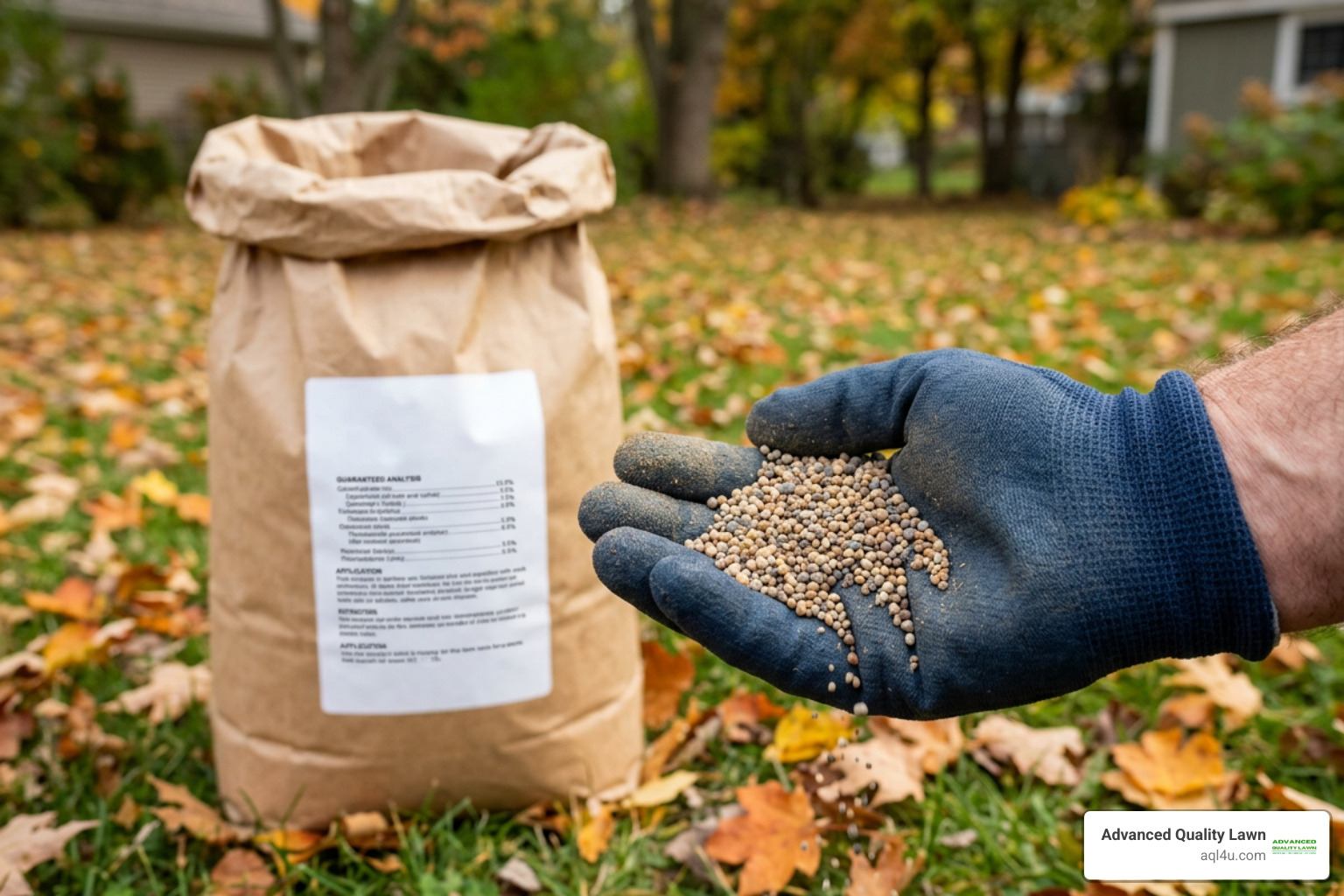
The best fall lawn fertilizer for cool-season turf is a zero-phosphorus formula containing high slow-release nitrogen and elevated potassium, such as a 24-0-12 or 32-0-10 N-P-K ratio. Applying these balanced nutrients when soil temperatures are between 50 and 70 degrees F strengthens roots, repairs summer damage, and builds winter hardiness.
While many homeowners assume spring is the most critical time to feed turf, autumn is the most biologically productive window of the entire year for northern lawns. During late summer and early autumn, the biology of cool-season grass shifts dramatically. As air temperatures drop, vertical blade growth slows down while the soil stays insulated and warm. This temperature gap triggers an essential survival mechanism in your lawn.
Instead of spending energy producing leafy top growth that requires constant mowing, the plant redirects its photosynthetic energy downward. Grass blades manufacture carbohydrates and transport them directly to the crowns and root systems. These stored sugars act like antifreeze inside the plant cells, lowering the freezing point of intracellular water and protecting the root structure from harsh freeze and thaw cycles.
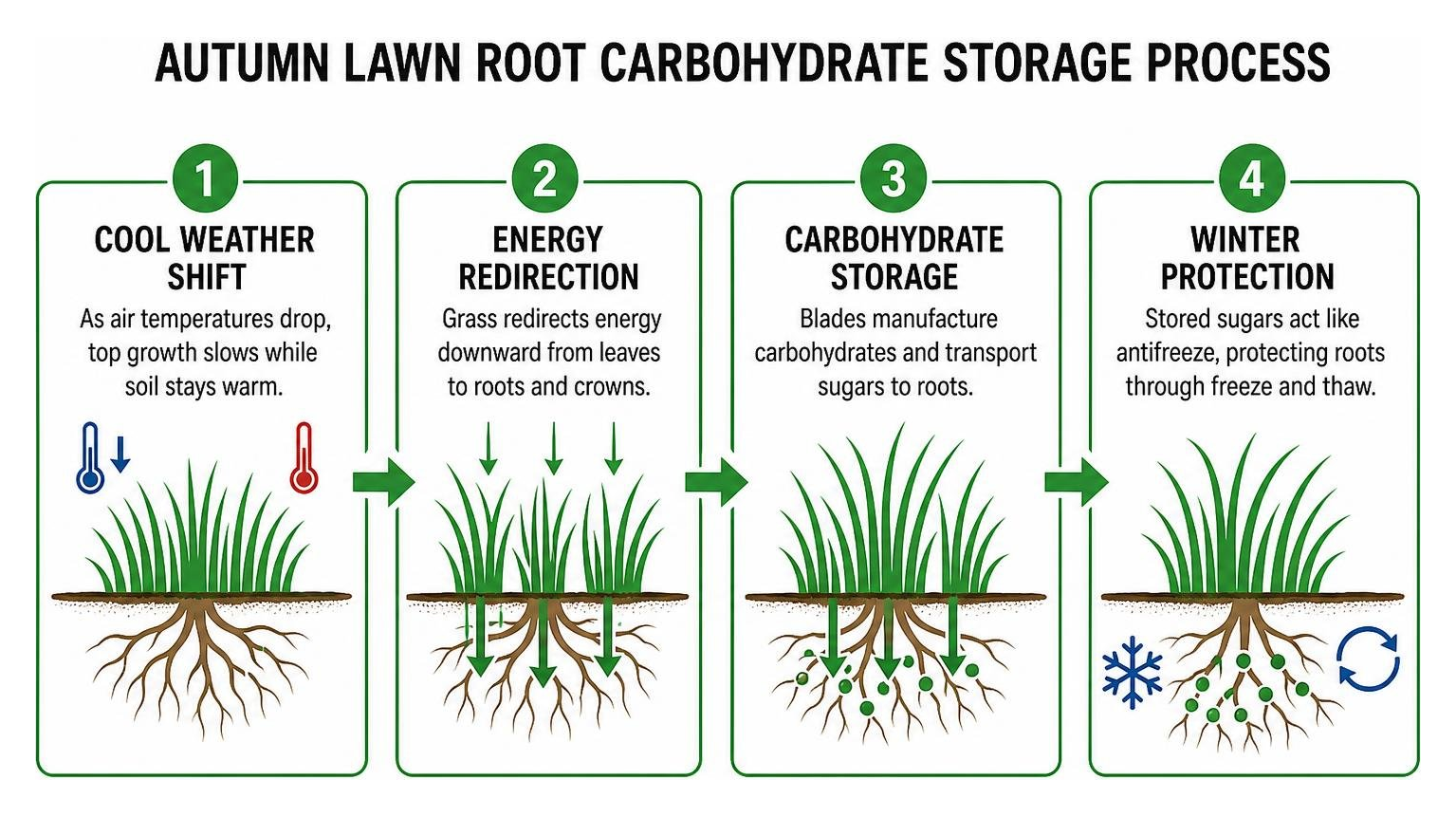
A comprehensive autumn feed for grass provides the essential macronutrients needed to build extensive subterranean root systems. Roots continue expanding throughout October and November long after the top of the grass has stopped growing. When turf receives the right nutrients during this window, it recovers quickly from summer heat, fills in thin patches, and strengthens cell walls against winter desiccation.
Understanding winter lawn care: why it matters more than you think comes down to spring performance. Lawns that receive proper autumn nutrition green up 3 to 4 weeks earlier in March without requiring heavy spring nitrogen applications that encourage fungal diseases like leaf spot or snow mold.
Fall Fertilizer vs. Winterizer: Demystifying Turf Terminology
The lawn care industry uses the terms fall fertilizer and winterizer interchangeably, which creates confusion for many homeowners. In practical terms, a winterizer is simply a specialized granular fertilizer formulated for late-season turf physiology.
Standard spring and summer fertilizers contain high amounts of quick-release nitrogen to stimulate immediate foliar growth and rich green color. A true winterizer, by contrast, features moderate nitrogen paired with elevated potassium levels. The nitrogen in a late-season product is designed to maintain chlorophyll production and support root metabolism without forcing lush, tender blade growth.
The primary difference lies in the potassium concentration and the nitrogen release mechanism. Late-season applications focus on cellular hardening and carbohydrate storage rather than visual growth spurts.
How to Choose the Best Fall Lawn Fertilizer Formulation
Selecting the right product requires looking beyond the marketing claims on the front of the bag and reading the guaranteed analysis label on the back. Every fertilizer package displays three prominent numbers representing the percentage by weight of nitrogen (N), phosphorus (P), and potassium (K).
Understanding fertilizer 101: what is it and when should you use it ensures you give the soil exactly what it needs while protecting local watersheds. To make an informed choice, consult regional soil temperature and nutrient guidelines before applying any product.
Fourteen states, along with numerous local municipalities across the Midwest and Northeast, regulate or ban phosphorus applications on established turfgrass to prevent toxic algae blooms in freshwater systems. Unless you are establishing a new lawn from seed, always choose a formula with zero phosphorus (a middle number of 0).
Best Fall Lawn Fertilizer Ratios for Cool-Season Grass
Cool-season grasses, including Kentucky bluegrass, Turf-Type Tall Fescue, and perennial ryegrass, require a balanced nutrient ratio tailored to seasonal changes. High nitrogen combined with double-digit potassium delivers the best results for northern lawns.
| Feeding Timing | Target N-P-K Ratio | Primary Biological Objective | Nitrogen Release Profile |
|---|---|---|---|
| Early Fall (Late Aug to Mid-Sept) | 24-0-12 or 32-0-10 | Summer recovery, shoot density, crown growth | 50% to 70% Slow-Release |
| Late Fall (Late Oct to Mid-Nov) | 20-0-10 or 10-0-20 | Root carbohydrate storage, cold hardiness | Fast-to-Controlled Release |
High-performance retail blends such as Scotts Turf Builder WinterGuard Fall Lawn Food feature a 32-0-10 profile, providing sustained nutrition for early autumn recovery. For extended feeding across large properties, commercial-grade options like GreenView Fall Lawn Food with GreenSmart offer a 22-0-10 formula that nourishes roots for up to 8 weeks.
Selecting the Best Fall Lawn Fertilizer for Stress Recovery and Winter Hardiness
Potassium is the key nutrient for winter survival. While nitrogen fuels metabolic energy and green color, potassium strengthens plant cell walls and regulates internal water pressure. This cellular strength helps turf resist freezing damage, dry winter winds, and foot traffic on frosted turf.
Potassium also helps suppress common cold-weather fungal pathogens, such as pink and gray snow mold. Products formulated with potassium sulfate (sulfate of potash) deliver clean, low-salt potassium that plant roots absorb efficiently in cool soils.
Organic vs. Synthetic Autumn Grass Feeds
Choosing between organic and synthetic fertilizers depends on application timing and soil temperature. Synthetic granular fertilizers use polymer-coated urea or sulfur-coated urea to release nitrogen gradually based on moisture and temperature. These slow-release prills provide consistent feeding across several weeks without causing sudden growth spikes.
Organic fertilizers rely on active soil microbes to break down complex proteins into plant-usable nitrogen. Because soil microbial activity drops significantly when soil temperatures fall below 55 degrees F, organic fertilizers work best in late August and September. If you are applying nutrients later in October or November, synthetic slow-release or stabilized nitrogen formulations deliver superior nutrient uptake. Our detailed best fertiliser for grass guide 2026 explains how these nitrogen release curves operate throughout the year.
Optimal Application Timing by Grass Type and Soil Temperature
Successful autumn feeding depends on soil temperature rather than specific calendar dates. Air temperatures fluctuate rapidly with passing cold fronts, but soil temperatures shift slowly over several weeks.
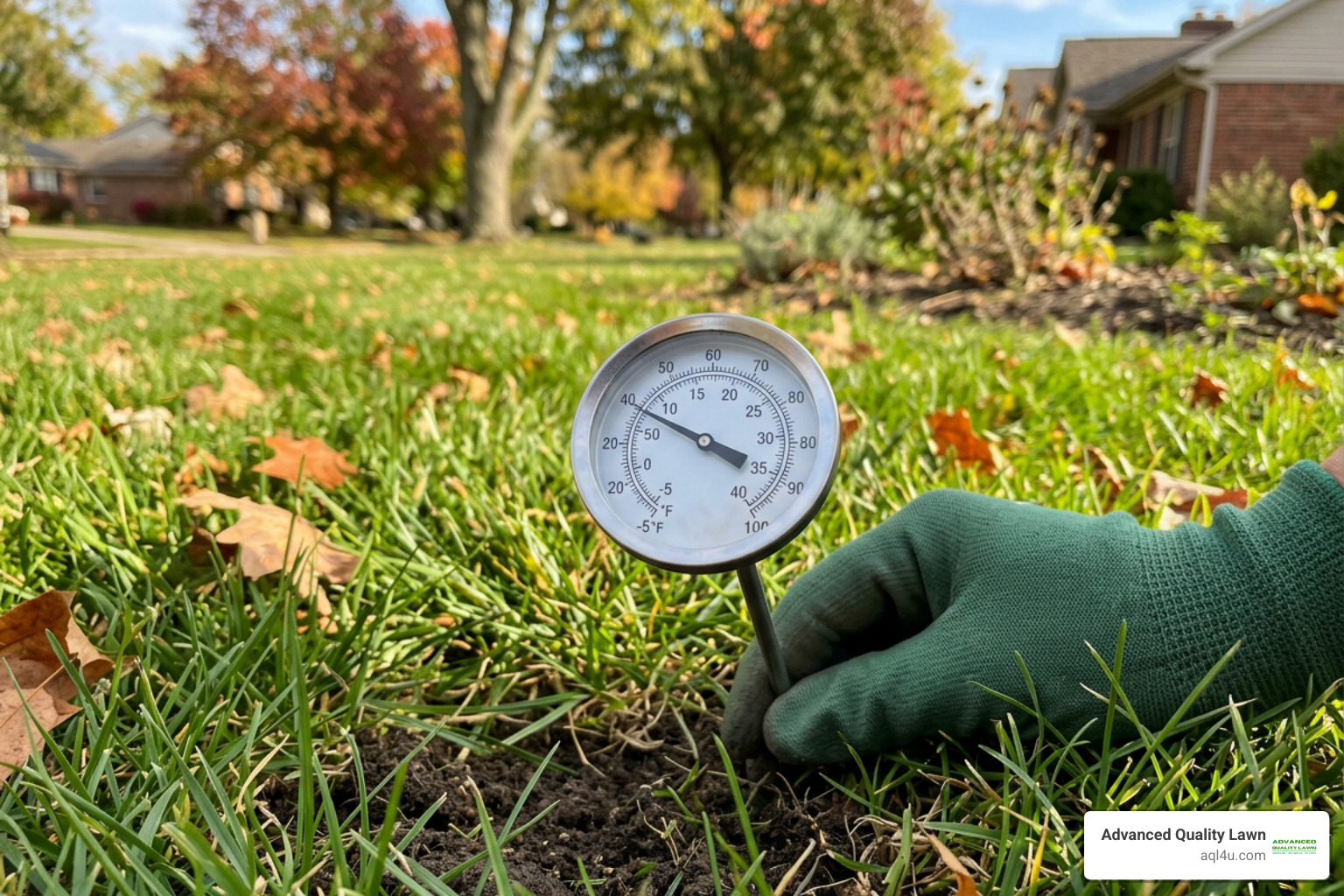
Measure soil temperature at a 2-inch depth using an inexpensive soil thermometer inserted in a sunny area of your yard during the morning.
- 65 to 70 degrees F: Ideal timing for early fall recovery feeding, core aeration, and overseeding.
- 50 to 55 degrees F: The sweet spot for late-fall root feeding and winterizer applications.
- Below 45 degrees F: Turf root uptake slows dramatically. Stop all fertilizer applications to prevent nutrient leaching.
Reviewing practical fall lawn care tips helps keep your maintenance steps aligned with regional weather patterns.
The Two-Pass Fall Feeding Schedule for Northern Lawns
For optimal density and root depth, northern lawns benefit from a structured two-pass autumn feeding schedule:
- Pass One (Late August to Mid-September): Apply approximately 1.0 pound of actual nitrogen per 1,000 square feet using a slow-release formula like a 24-0-12 or 32-0-10. This application helps the lawn recover from summer traffic, drought, and heat stress.
- Pass Two (Late October to Mid-November): Apply 0.5 to 0.75 pounds of actual nitrogen per 1,000 square feet with elevated potassium shortly after your final regular mowing of the season, while the turf is still green but vertical growth has stopped.
Using the best grass feed in two planned passes builds a durable turf canopy that enters winter fully charged.
Warm-Season Turf Considerations: Bermuda and Zoysia Caution
Warm-season turf species like Bermuda, Zoysia, Centipede, and St. Augustine behave differently than northern cool-season grasses. As autumn arrives, warm-season grasses prepare for total winter dormancy, with their above-ground foliage turning brown.
Applying high nitrogen to warm-season turf in late autumn forces tender green growth right before freezing weather arrives. This new growth cannot harden off in time, leaving the turf vulnerable to severe frost damage and crown freeze, commonly known as winterkill. For warm-season lawns, stop all nitrogen applications at least 6 to 8 weeks before the average first frost date. Any late-season feeding on southern turf should focus entirely on potassium (such as a 0-0-50 sulfate of potash) to support dormancy without triggering unwanted blade growth.
Coordinating Fertilizer with Aeration, Overseeding, and Weed Control
Autumn is the ideal season for comprehensive lawn renovation, but combining multiple treatments requires proper sequencing.
Core aeration relieves soil compaction and breaks through heavy thatch, creating open channels for air, water, and nutrients to reach the root zone. When overseeding thin turf, always use a dedicated starter fertilizer containing balanced nitrogen and phosphorus. Our best fertilizer for new grass seed fall guide outlines the right nutrient ratios for young seedlings.
Overseeding vs. Fall Pre-Emergents: Avoiding Costly Conflicts
A common mistake in autumn lawn care is attempting to apply a pre-emergent herbicide and grass seed at the same time. Pre-emergent herbicides, such as dithiopyr or prodiamine, form a chemical barrier in the upper soil profile that stops germinating seeds from developing roots.
Because these herbicides prevent all seed germination, they will destroy newly scattered grass seed. If your priority is overseeding, skip fall pre-emergents entirely and target broadleaf weeds using selective post-emergent spot treatments once new seedlings have been mowed at least three times.
If you are not overseeding and want to stop invasive winter annuals like annual bluegrass (Poa annua), henbit, or chickweed, apply a fall pre-emergent in September when soil temperatures reach 68 to 70 degrees F. For broader weed management guidelines, review our weed and feed ultimate guide 2026.
Fertilizer Math: Calculating Exact Product Rates per 1,000 Square Feet
Applying the correct amount of fertilizer prevents turf burn and avoids wasting money on unneeded product. Always calculate product amounts based on the target pounds of actual nitrogen per 1,000 square feet.
To calculate how much product you need to deliver 1.0 pound of nitrogen, divide 100 by the first number (the nitrogen percentage) on the fertilizer bag:
- For a 25-0-12 fertilizer: 100 divided by 25 equals 4.0 pounds of product per 1,000 square feet.
- For a 32-0-10 fertilizer: 100 divided by 32 equals 3.1 pounds of product per 1,000 square feet.
Multiply the resulting number by the total square footage of your lawn divided by 1,000. For example, a 6,000-square-foot lawn using a 25-0-12 blend requires 24 pounds of fertilizer (4.0 x 6 = 24).
For consistent coverage, apply half the measured product walking in parallel lines across the lawn, then apply the remaining half walking in perpendicular lines. After spreading, sweep all stray fertilizer granules off driveways, sidewalks, and patios back onto the grass, then water the lawn with approximately 0.25 inches of moisture to activate the nutrients. Following a structured fall yard maintenance routine keeps your application clean and effective.
Frequently Asked Questions About Autumn Lawn Fertilization
When is it too late in the season to apply fall fertilizer?
It is too late to apply fertilizer once the average soil temperature at a 2-inch depth drops below 45 degrees F, or whenever the ground is frozen. Below 45 degrees F, turf roots enter winter dormancy and cannot absorb nutrients. Any fertilizer applied to frozen soil remains on the surface and washes into storm drains during late-season rain or snowmelt.
Do I need a professional soil test before applying fall fertilizer?
A laboratory soil test costs around $15 and provides invaluable baseline data about your soil chemistry. It measures current pH levels, available potassium, phosphorus concentrations, and organic matter content. A soil test confirms whether your lawn truly needs supplemental potassium and ensures you stay compliant with state environmental regulations regarding phosphorus applications.
What are the most common mistakes homeowners make when fertilizing in the fall?
The most frequent mistakes include applying quick-release nitrogen too late in the season, failing to water granules into the soil root zone, using high-nitrogen products on warm-season grasses entering dormancy, and guessing at spreader settings instead of calculating exact square footage. Relying on calendar dates rather than monitoring actual soil temperatures also leads to misapplied products and poor nutrient uptake.
Professional Fall Turf Nutrition and Next Steps
Achieving a healthy, resilient lawn requires precise timing, proper product selection, and accurate equipment calibration. Advanced Quality Lawn provides custom seasonal fertilization and weed management programs throughout Summit, Medina, Cuyahoga, Portage, Geauga, and surrounding Northeast Ohio counties.
Our experienced technicians ensure your lawn receives the exact nutrients needed to recover from summer stress and survive harsh winter freezes. Explore our professional lawn care and maintenance services to request a customized property evaluation and secure guaranteed seasonal turf protection for your home.