How to Fix Yellow St. Augustine Grass with the Best Fertilizer
Why Your Lawn is Yellow and How the Best Fertilizer for St. Augustine Grass Fixes It
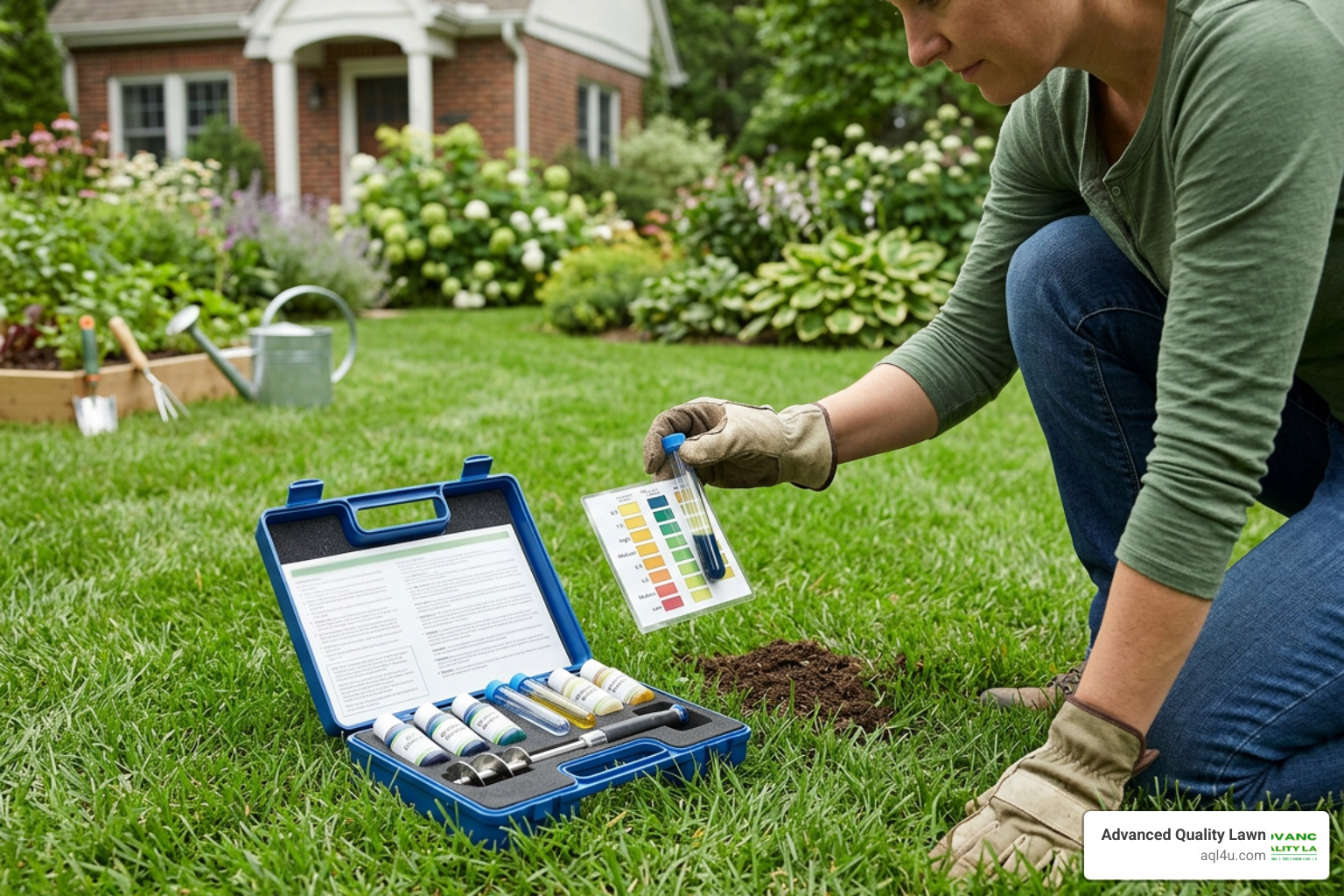
When you look out at your yard and see pale yellow blades instead of a deep green carpet, your turf is trying to tell you something. In the lawn care world, this yellowing is often called chlorosis. Chlorosis happens when your grass cannot produce enough chlorophyll, which is the green pigment that absorbs sunlight and helps the plant feed itself.
There are a few major reasons why your St. Augustine lawn might turn yellow. The most common culprit is a lack of nitrogen, which is the primary driver of leafy green growth. However, iron deficiency is another massive issue for this specific turf grass. If you notice that the veins of the grass blades remain green while the space between them turns yellow, you are dealing with iron chlorosis.
Soil pH plays a major role in how your lawn absorbs these nutrients. St. Augustine grass prefers a soil pH between 6.0 and 7.5. If your soil pH rises above 7.0, which is common in alkaline soils, the iron in the ground becomes chemically locked up. Even if there is plenty of iron in your dirt, the roots cannot physically absorb it. Sandy soils also present a unique challenge because they do not hold onto nutrients very well. Heavy rains can wash away nitrogen and potassium before your lawn has a chance to drink them in.
Before you run to the store and buy the strongest product on the shelf, you should understand how fertilizer works. Our guide on Fertilizer 101: What Is It and When Should You Use It explains the basics of soil nutrition and how different elements support plant health. Applying the best fertilizer for St. Augustine grass will correct these deficiencies, lower your soil stress, and bring back that rich green color.
Choosing the Right Nutrient Ratios and Fertilizer Types
To get the best results, you must understand what you are feeding your lawn. Every bag of fertilizer has three numbers on the front, which represent the NPK ratio. These numbers stand for Nitrogen, Phosphorus, and Potassium.
- Nitrogen (N): This is the first number and the most important for St. Augustine grass. It drives rapid growth and deep green color.
- Phosphorus (P): This is the middle number, which supports root development. Many established lawns do not need extra phosphorus, and some local areas even restrict its use to protect water sources.
- Potassium (K): This is the third number, which helps your grass build strong cell walls, resist diseases, and survive cold weather or drought.
When choosing between slow-release and quick-release options, we almost always recommend slow-release formulas for St. Augustine lawns.
| Fertilizer Feature | Slow-Release Fertilizers | Quick-Release Fertilizers |
|---|---|---|
| Greening Speed | Gradual, takes 1 to 2 weeks | Fast, visible in 3 to 7 days |
| Feeding Duration | Feeds continuously for 8 to 10 weeks | Feeds for 2 to 4 weeks |
| Burn Risk | Extremely low risk of burning grass | High risk if not watered in properly |
| Growth Spikes | Steady, manageable growth | Sudden surge in growth, requires more mowing |
| Environmental Impact | Low risk of runoff and leaching | High risk of washing away in heavy rain |
St. Augustine grass needs about 2 to 4 pounds of actual nitrogen per 1,000 square feet each year. If you use a quick-release product, you risk forcing too much rapid growth. This sudden growth can attract pests like chinch bugs and lead to thatch buildup.
You also have to decide between organic and synthetic options. Organic fertilizers like Milorganite use natural materials to feed the soil microbes, which slowly release nutrients to the roots. If you want to dive deeper into this choice, check out our article on Is Organic Fertilizer Better Than Synthetic Fertilizer to see which fits your lawn care philosophy.
Finding the Best Fertilizer for St. Augustine Grass at Retail Stores
When you visit a local garden center or home improvement store, the sheer number of options can feel overwhelming. To find the best fertilizer for St. Augustine grass, you should look for specific formulas.
A 16-4-8 ratio is one of the most balanced and effective options for general feeding. This ratio provides plenty of nitrogen for greening, a touch of phosphorus for root health, and a good dose of potassium for overall strength. Another excellent choice is a 15-0-15 ratio, which is ideal if you live in an area with phosphorus restrictions or if your soil test shows you already have high phosphorus levels.
For more details on balanced liquid options, you can read about how a 16-4-8 Liquid Fertilizer can simplify your application process. Always look at the back label of the bag to check the slow-release nitrogen percentage. You want a product where at least 30 percent, and ideally 50 percent or more, of the nitrogen is water-insoluble or slow-release.
Granular versus Liquid Options
Both granular and liquid fertilizers have a place in a great St. Augustine lawn care routine.
Granular fertilizers are the best choice for your main seasonal feedings. They consist of small pellets that you spread across your yard with a broadcast spreader. These granules break down slowly over several weeks, providing a steady stream of food to the root zone. They are easy to apply and highly forgiving for beginners.
Liquid fertilizers are perfect when you need a fast green-up or want to apply micronutrients like chelated iron. Because liquid nutrients are absorbed directly through the grass blades and the soil surface, you will often see results within a few days. If your lawn is looking yellow and stressed, a liquid application of chelated iron can resolve the issue without pushing excessive growth.
Whichever option you choose, you must prevent fertilizer burn. Applying granular fertilizer to wet grass can cause the pellets to stick to the blades and cause chemical burns. Always apply granular products when the grass is completely dry, and then water your lawn immediately with at least one-quarter inch of water to wash the nutrients down into the soil.
The Ultimate Seasonal St. Augustine Fertilization Schedule
Timing is everything when it comes to keeping your turf healthy. Because St. Augustine is a warm-season grass, its growth cycle is tied directly to soil temperatures.

You should only apply fertilizer when your grass is actively growing. If you apply nutrients too early in the spring or too late in the fall, the grass cannot use them. This leads to wasted money and potential environmental runoff. A good rule of thumb is to apply pre-emergent weed control when soil temperatures consistently reach 55 degrees Fahrenheit, and hold off on your first fertilizer application until your grass has fully greened up and you have mowed it at least twice.
Spring and Summer Applications of the Best Fertilizer for St. Augustine Grass
Your spring fertilization should begin about three weeks after your lawn fully wakes up from winter dormancy. This is usually when daily high temperatures are consistently warm. For this first application, use a high-quality granular product with a 16-4-8 or 15-0-15 ratio. This will support the grass as it recovers from winter and begins its active growing phase.
During the peak summer months, you must be careful. Many areas experience high heat and drought, which can put stress on your lawn. In some coastal regions, there are summer nitrogen blackout periods where applying nitrogen is prohibited to protect local waterways.
If you want to maintain a deep green color without using heavy nitrogen during the hot summer, you can use iron sulfate or chelated iron instead. Iron gives the grass a beautiful dark green hue without causing the rapid surge in growth that attracts chinch bugs. If you are also managing other grass types or establishing new turf, you might find our Best Fertiliser for Grass Guide 2026 helpful for coordinating your seasonal lawn care tasks.
Fall and Winter Care
As the summer heat begins to fade, your fertilization strategy should shift from growth to preparation. Your fall application is incredibly important for helping your St. Augustine grass survive the colder months ahead.
For your late summer or early fall application, choose a fertilizer that is heavy in potassium, such as a 10-0-20 formula. Potassium strengthens the root system, improves disease resistance, and builds cold hardiness. This root development is what allows your grass to bounce back quickly in the spring.
Once your grass enters winter dormancy, you should stop all fertilizer applications. Feeding dormant grass is a waste of resources because the plant is not actively taking up nutrients, and it can actually make your lawn more susceptible to winter injury and fungal diseases.
Frequently Asked Questions About St. Augustine Lawn Care
Taking care of a St. Augustine lawn can raise plenty of questions, especially when you are trying to balance watering, mowing, and nutrient applications. Here are some of the most common questions we hear from homeowners.
How often should I fertilize St. Augustine grass?
You should fertilize your St. Augustine grass every six to eight weeks during its active growing season. For most warm-season regions, this means applying fertilizer three to four times per year.
Make sure you do not exceed the annual nitrogen limits for your soil type. Sandy soils generally require more frequent, lighter applications because nutrients leach quickly, while clay soils hold onto nutrients much longer. If you are working on establishing a brand-new lawn from seed or sod, the rules are slightly different. You can read our advice on the Best Fertilizer for New Grass to help your new lawn get off to a perfect start.
Is organic fertilizer effective for St. Augustine grass?
Yes, organic fertilizer is highly effective for St. Augustine lawns. Products like Milorganite 6-4-0 are excellent because they release nitrogen very slowly over a period of eight to ten weeks.
This slow release makes it virtually impossible to burn your lawn, even if you make a mistake during application. Organic options also feed the beneficial microbes in your soil, which improves the overall soil structure and helps your lawn hold onto moisture more effectively. If you are looking to establish other warm-season turf types, you can check out our Ultimate Guide Best Fertilizer New Bermuda Sod for specialized establishment tips.
How do I avoid fertilizer burn on St. Augustine grass?
Fertilizer burn happens when high concentrations of nitrogen salts draw moisture out of the grass blades, leaving brown or yellow streaks across your yard. To avoid this issue, always follow these simple steps:
- Calibrate your spreader: Make sure your spreader settings match the recommendation on the fertilizer bag.
- Apply to dry grass: Never apply granular fertilizer when there is dew or water on the grass blades.
- Water it in immediately: Apply at least one-quarter inch of water right after fertilizing to wash the nutrients off the blades and into the soil.
- Avoid spilling: Fill your spreader on your driveway or sidewalk, not on the grass, to prevent accidental concentrated spills.
Conclusion
Achieving a thick, vibrant St. Augustine lawn does not have to be a guessing game. By choosing the best fertilizer for St. Augustine grass, paying attention to soil pH, and keeping a consistent seasonal schedule, you can easily fix yellowing and enjoy a beautiful green yard.
While taking care of your lawn can be a rewarding DIY project, we know that busy schedules can make it hard to keep up with soil testing, timing, and precise applications. If you live in Northeast Ohio, we can help you keep your property looking its absolute best.
At Advanced Quality Lawn, we provide premium lawn care, tree, and shrub services across Akron, Hudson, Brecksville, Copley, Bainbridge, Solon, Chagrin Falls, Broadview Heights, Parma, Medina, Macedonia, Cleveland, Richfield, Stow, Twinsburg, Streetsboro, Boston Heights, Cuyahoga Falls, Peninsula, Independence, Seven Hills, North Royalton, and Sagamore Hills. We proudly cover more than 99 zip codes across Summit County, Medina County, Cuyahoga County, Portage County, Wayne County, Geauga County, Lorain County, and Stark County.
Our team is dedicated to providing excellent customer service, free service calls, and full-program guarantees. For more details on how we can take the hard work out of your lawn care routine, check out our More info about lawn care services page and contact us today.