
Chinch Bug Control for St. Augustine Grass Starts With a Bug Check
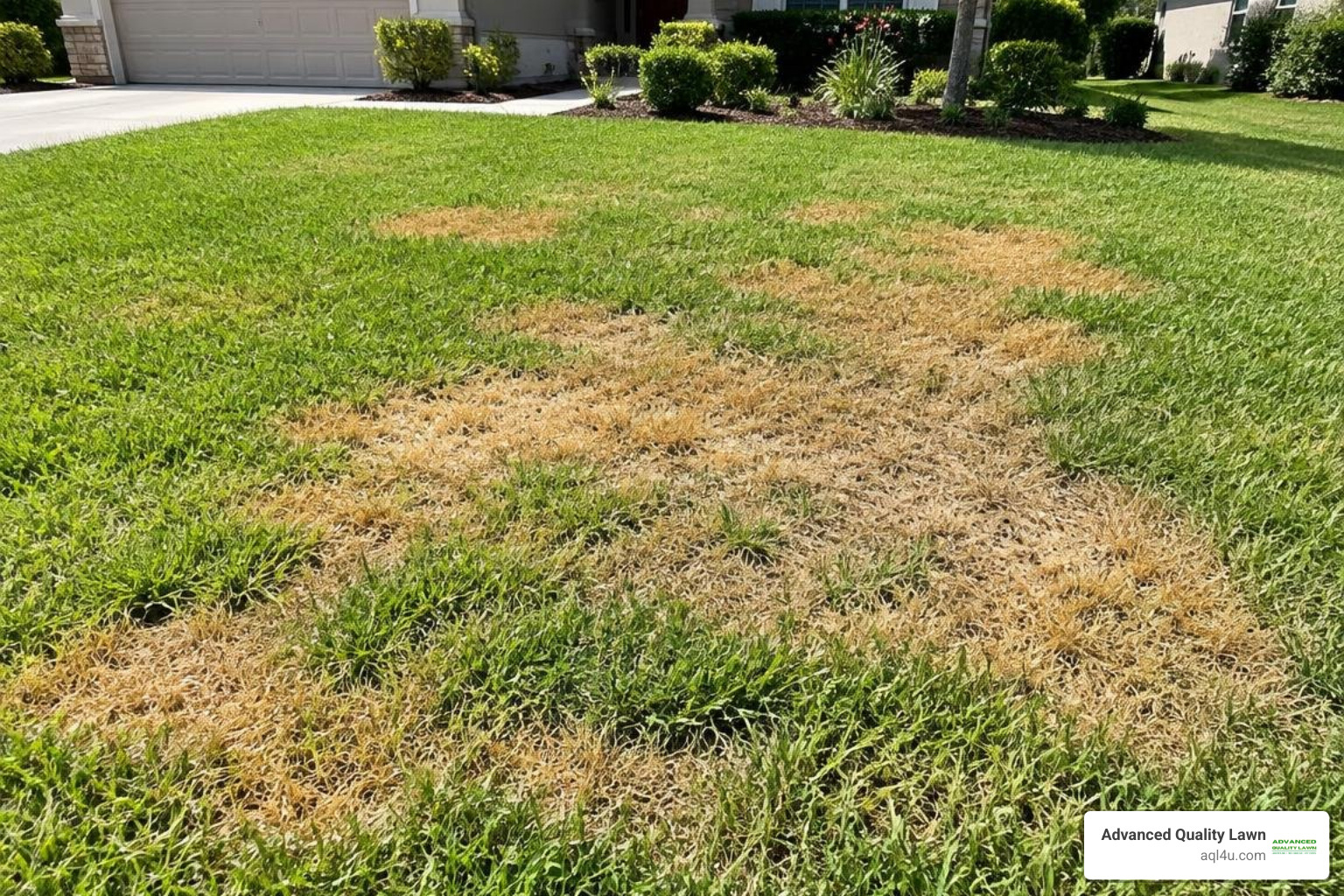
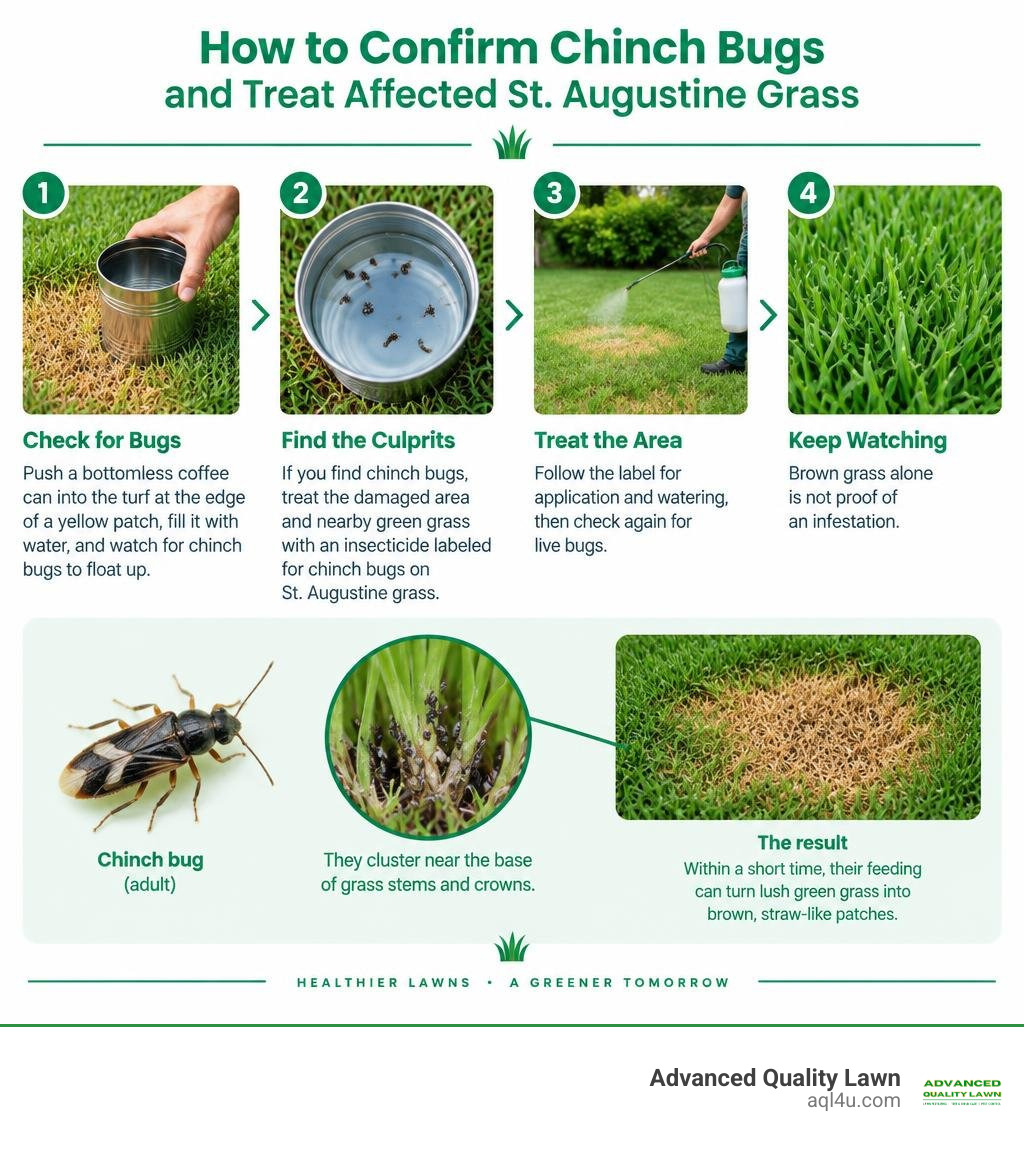
Confirm the bugs before you treat. Push a bottomless coffee can into the turf at the edge of a yellow patch, fill it with water, and watch for chinch bugs to float up. If you find them, treat the damaged area and nearby green grass with an insecticide labeled for chinch bugs on St. Augustine grass. Follow the label for application and watering, then check again for live bugs. Brown grass alone is not proof of an infestation.
I'm Andrew Day, owner of Advanced Quality Lawn in Northeast Ohio. Our team has more than 30 years of lawn care and pest management experience, and this guide walks you through chinch bug control for st augustine grass.
Understanding Chinch Bug Damage in St. Augustine Grass
Chinch bugs are among the most destructive turf pests you will ever encounter. The southern chinch bug (Blissus insularis) specifically targets warm-season grasses, with St. Augustine grass being its favorite host. These tiny insects gather in massive numbers within the turf canopy, quickly turning lush green blades into dead, straw-like patches.
The destruction happens fast because of how these insects feed. Adult chinch bugs and young nymphs cluster near the base of grass stems and crowns. When several hundred bugs crowd into a single square foot of turf, the grass simply cannot keep up with the physical stress and sap loss.
| Diagnostic Factor | Chinch Bug Damage | Drought Stress | Fungal Disease |
|---|---|---|---|
| Initial Visual Symptom | Irregular yellowing halos spreading outward | Uniform dull, bluish-gray turf wilt | Circular rings, distinct patches, or leaf lesions |
| Response to Deep Watering | Turf remains yellow and continues dying | Grass greens up and recovers within 24 to 48 hours | No recovery, extra moisture often worsens infection |
| Primary Lawn Location | Hot, full sun areas along driveways and curbs | High spots, slopes, and light sandy soils | Shaded zones, low spots, or wet turf areas |
| Stolon Condition | Brown, hollow, withered, and fully dead | Shriveled foliage but green, viable crowns | Soft, rotting, or water-soaked tissue |
| Physical Pest Presence | Visible nymphs and adults in thatch layer | No pests present | Fungal mycelium or leaf spots visible |
Insect Biology and Feeding Mechanics
Southern chinch bugs cause severe lawn decline through their specialized piercing-sucking mouthparts. They insert a slender beak directly into grass vascular tissue to extract essential plant fluids. During feeding, they inject toxic saliva into the plant. This salivary toxin clogs the internal xylem vessels, blocking the upward flow of water and nutrients. Even if your soil contains plenty of moisture, the grass wilts and starves from the inside out.
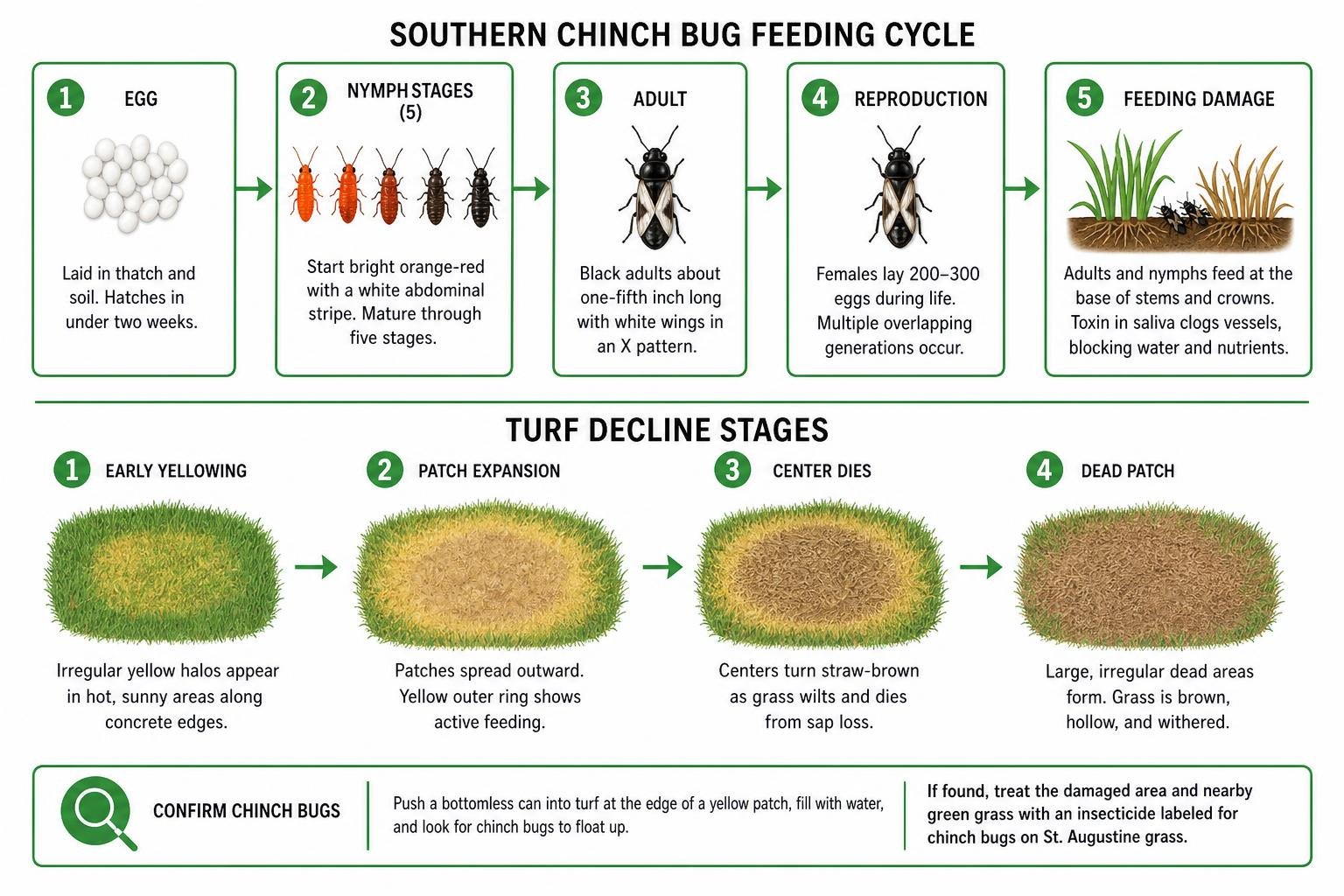
The life cycle accelerates rapidly under hot summer conditions. A single female chinch bug can lay 200 to 300 eggs during her adult life. At optimal temperatures between 70°F and 90°F, eggs hatch in just under two weeks. The nymphs pass through five developmental stages before becoming winged adults. Nymphs begin as tiny, bright orange-red insects with a prominent white stripe across their abdomen. As they mature, they darken to reddish-brown and finally become black adults roughly one-fifth of an inch long with distinctive white wings folded in an X pattern over their backs. As highlighted in UGA Extension research on southern chinch bug biology, these pests can produce multiple overlapping generations each year in warm climates.
Identifying Damage vs Drought Stress and Fungus
Telling chinch bug damage apart from drought stress or lawn fungus is essential for proper treatment. Chinch bug injury usually begins along hot concrete edges, sidewalks, and driveways where radiant heat speeds up insect metabolism. You will first notice irregular yellowing patches that do not follow neat circular lines. Over a week or two, the centers of these patches turn straw-brown while the outer perimeter shows a bright yellow halo where active bugs continue feeding on healthy grass.
Drought stress looks uniform across wide sections of turf, giving the lawn a dull, footprint-holding appearance that bounces back within a couple days of deep irrigation. Fungal problems like large patch often produce circular patterns with distinct leaf lesions or rotten stem bases during humid, cooler periods. In contrast, chinch bug damage does not improve after watering. If your turf stays yellow and continues to collapse despite heavy irrigation, active insects are likely feeding in your thatch.
Diagnosing Infestations and the Flotation Test Method
Never apply chemical products based on brown grass alone. Proper diagnosis confirms that active insects are causing the issue and ensures you apply treatments only when insect numbers exceed damaging levels. Visible lawn damage typically begins when populations reach 20 to 25 chinch bugs per square foot. In severe infestations, populations along patch edges can exceed 100 bugs per square foot.
Visual Canopy Inspection and Soap Flush
Before running a water test, perform a quick visual inspection. Walk to the outer edge of a yellowing patch where the dying grass meets healthy green turf. Get down on your hands and knees, part the grass canopy with your fingers down to the soil surface, and check the thatch layer. Chinch bugs avoid bright open sunlight, so you will see them scurrying across stolons and soil particles into deeper thatch.
You can also use a gentle soap flush to bring hidden nymphs to the surface. Mix two tablespoons of mild liquid dish soap into one gallon of water and pour the solution evenly over a two-square-foot area along the damaged turf border. Within three to five minutes, the soapy mixture irritates the bugs and forces nymphs and adults to crawl up onto the grass blades for easy counting.
Step-by-Step Coffee Can Flotation Test
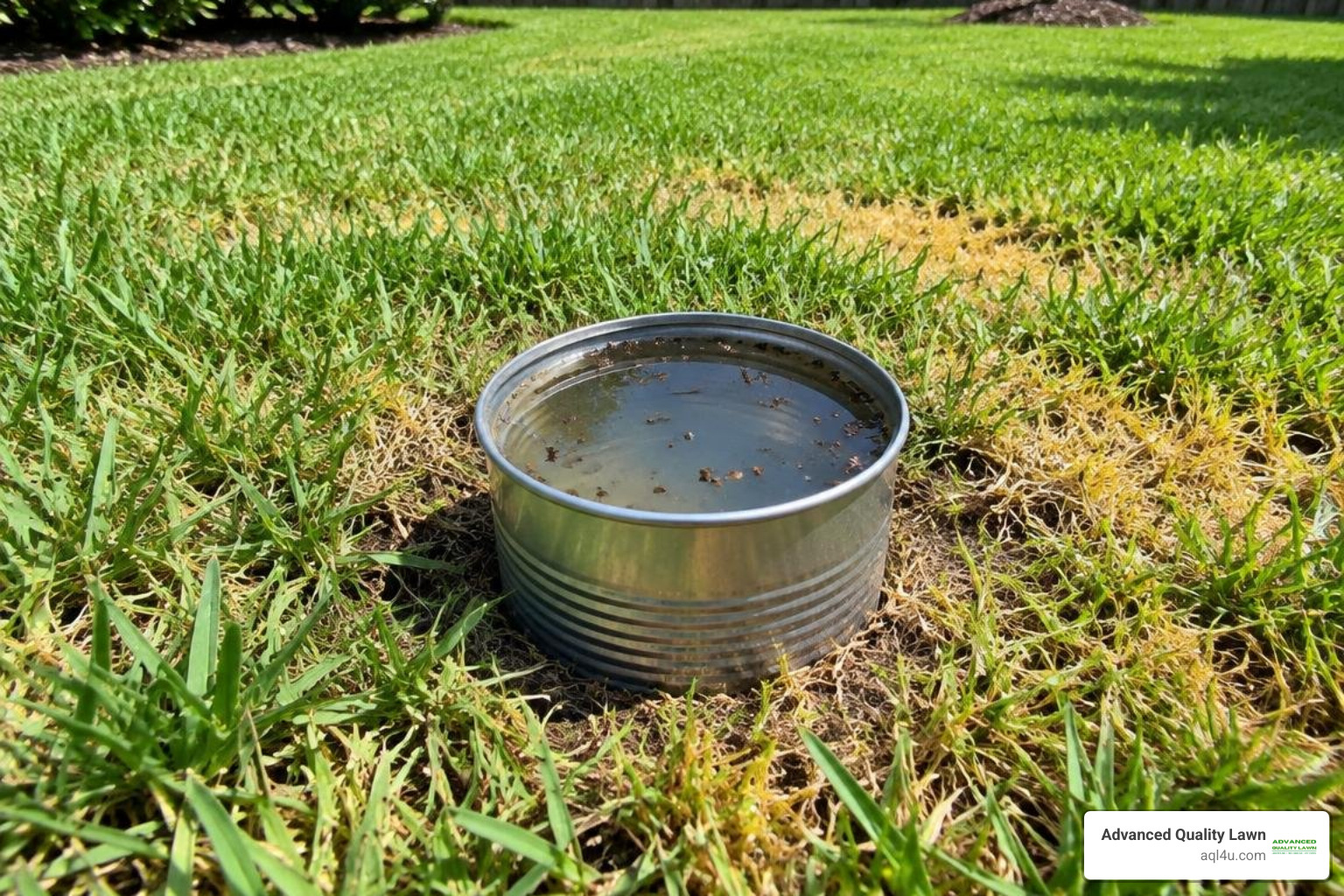
The flotation test remains the most reliable field method for confirming chinch bug density. Follow these steps:
- Take a large metal coffee can or metal cylinder and cut out both the top and bottom lids to create an open metal pipe.
- Choose a test spot right on the border where yellowing turf meets green, healthy grass.
- Push and twist the metal cylinder down into the turf and soil until the bottom edge sits two to three inches deep.
- Fill the cylinder with clean water, keeping the water level near the top rim for five to ten minutes. If the water drains quickly into sandy soil, keep adding water from a garden hose to maintain the water level.
- Watch the water surface closely as bugs detach from the thatch and float to the top. Count the number of black adults and reddish nymphs that surface.
As outlined in Texas A&M AgriLife guidance on chinch bug management, finding more than two to five floating bugs inside a standard cylinder confirms an active infestation that warrants prompt treatment.
Effective Chemical and Biological Chinch Bug Control for St Augustine Grass
Stopping an active chinch bug outbreak requires targeted treatments that reach the thatch layer where the pests feed. Applying the wrong product or applying it improperly leaves your turf vulnerable while wasting time and money.
| Insecticide Class | Common Active Ingredients | Primary Mode of Action | Recommended Application Context | Residual Control Window |
|---|---|---|---|---|
| Pyrethroids | Bifenthrin, Cyfluthrin, Permethrin | Contact nerve toxin (sodium channel blocker) | Fast knockdown of surface populations when no resistance exists | 7 to 14 days |
| Neonicotinoids | Imidacloprid, Clothianidin, Thiamethoxam | Systemic nerve toxin (acetylcholine mimic) | Extended systemic uptake through roots into grass sap | 3 to 6 weeks |
| Organophosphates | Trichlorfon | Contact acetylcholinesterase inhibitor | Rapid emergency knockdown for resistant populations | 24 to 48 hours |
| Insect Growth Regulators (IGR) | Pyriproxyfen, Novaluron | Chitin synthesis and juvenile hormone disruptor | Long-term nymph suppression and egg sterilization | 4 to 8 weeks |
| Biological Pathogens | Beauveria bassiana | Parasitic fungal spores penetrating cuticle | Organic management under humid, moderate temperature conditions | 7 to 10 days |
Fast Knockdown Insecticides and Resistance Management
Chemical control options fall into two main categories: contact insecticides and systemic treatments. Contact products like pyrethroids provide rapid knockdown when sprayed directly on exposed insects. However, heavy reliance on pyrethroids has created widespread insecticide resistance in many southern chinch bug populations. In recent years, southern chinch bugs have shown clear resistance to common active ingredients including bifenthrin, deltamethrin, and lambda-cyhalothrin.
To manage resistance and protect your turf, learn the proven ways to kill chinch bugs through proactive chemical rotation. Never apply the same chemical class back to back. If you apply a pyrethroid for initial contact control, follow up two to three weeks later with a different mode of action, such as a neonicotinoid or an insect growth regulator. Systemic neonicotinoids are absorbed by the grass roots and translocated throughout the foliage, providing extended protection as pests feed on the sap. For emergency knockdown of severe infestations, fast-acting active ingredients like trichlorfon eliminate feeding insects within 24 hours.
Application Protocols and Chinch Bug Control for St Augustine Grass
Applying treatments with high precision makes all the difference in achieving successful pest control. Chinch bugs live in thick thatch, so surface sprays that sit on top of the grass canopy will not reach the pests. When using liquid sprays, apply high carrier volumes of three to five gallons of water per 1,000 square feet to drive the active ingredients down to the soil line.

Granular products offer an easy and reliable solution for homeowners. When choosing effective lawn insect killer granules, calibrate your broadcast spreader according to the product label to ensure even distribution. Always apply granules across the damaged zone plus a ten-foot green buffer around the perimeter to catch escaping bugs. Immediately water in granular treatments with one-quarter to one-half inch of irrigation to dissolve the granules and carry the chemistry into the root zone.
Biological and Organic Alternatives
Homeowners seeking organic lawn care options can use several natural controls against chinch bugs. Beneficial entomopathogenic nematodes (Steinernema carpocapsae) actively seek out and parasitize chinch bug nymphs in moist thatch. Apply beneficial nematodes during early morning hours or on overcast days when soil temperatures stay between 60°F and 85°F, and keep the soil consistently damp for several days after application.
Another proven bio-insecticide is Beauveria bassiana, a naturally occurring soil fungus. When fungal spores land on chinch bugs, they germinate, penetrate the insect exoskeleton, and kill the pest from within under humid conditions. You can also integrate targeted insect control for lawns by protecting natural predatory insects like big-eyed bugs (Geocoris), minute pirate bugs, and beneficial ground beetles. Big-eyed bugs look very similar to chinch bugs but feature wider heads and large, prominent eyes that help them hunt pest nymphs across the turf canopy.
Cultural Lawn Care and Prevention Strategies
Maintaining healthy turf through balanced cultural practices provides your best defense against insect damage. Stressed, over-fertilized, or heavily thatched lawns create ideal conditions for chinch bug populations to explode.
- Mow your lawn at a consistent height of 3.5 to 4.0 inches to shade the soil surface and cool the turf root zone.
- Water deeply and infrequently, applying one inch of water per week in one or two early morning watering sessions.
- Avoid applying high levels of fast-release synthetic nitrogen during the peak heat of midsummer.
- Core aerate and dethatch regularly to keep the organic thatch layer under one-half inch thick.
- Test your lawn soil every two to three years to correct underlying nutrient imbalances and optimize soil pH.
- Preserve beneficial predatory insects by avoiding unnecessary broad-spectrum insecticide sprays across healthy turf.
Thatch Reduction, Mowing, and Proper Irrigation
Thick thatch creates an ideal shelter for chinch bugs, protecting them from heat, predators, and pesticide sprays. When the spongy layer between green blades and the soil surface exceeds half an inch, use vertical mowing or core aeration during active spring growth to remove excess organic matter.
Mowing and watering habits also affect your lawn's pest resistance. Maintain your mower blades sharp and follow our seasonal bug control guide for 2026 to manage seasonal turf stresses. Mowing St. Augustine grass too short weakens root systems and exposes the soil to excess sunlight. Watering deeply once or twice a week early in the morning encourages deep root growth and prevents the hot, dry micro-environments that chinch bugs love.
Cultivar Selection and Chinch Bug Control for St Augustine Grass
When installing new sod or renovating damaged sections of your lawn, selecting the right grass variety offers long-term protection. Turfgrass breeders have developed several St. Augustine cultivars with improved insect tolerance. Varieties such as 'Captiva' and 'FX-10' demonstrate natural tolerance against southern chinch bug feeding.
Older, traditional cultivars like 'Floratam' were originally bred for chinch bug resistance, but pest populations have overcome that resistance in many regions over recent decades. Cultivars like 'Raleigh' and 'Seville' remain highly susceptible to insect feeding and require regular scouting during hot summer months.
Lawn Restoration and When to Hire Professionals
Once you eliminate active chinch bugs, evaluate the extent of lawn damage to plan your lawn restoration. St. Augustine grass spreads through aboveground runners called stolons. If the stolons are still firm and green at the crown, the grass will gradually recover on its own with proper care.
Turf Recovery, Plugging, and Fertilization
If chinch bug feeding has killed the stolons, turning them into dry, brittle, hollow straw, that section of turf will not regenerate naturally. Rake away the dead material to expose bare soil. You can repair small bare spots by installing fresh grass plugs or sod squares spaced several inches apart.
Support recovering turf with proper nutrition. Follow a balanced fertilizer schedule for St. Augustine turf that uses slow-release nitrogen, potassium, and micronutrients. Keep patched areas moist until new roots anchor into the soil, and avoid foot traffic while the runners knit together across bare soil.
Evaluating Professional Intervention Thresholds
Knowing when to call for professional lawn care support saves valuable time and prevents total lawn loss. Consider contacting a professional team under the following circumstances:
- Bug feeding damage covers more than 20 to 30 percent of your total lawn area.
- DIY insecticide applications fail to stop pest activity within 10 to 14 days due to chemical resistance.
- Your lawn suffers recurring chinch bug damage year after year along high-heat zones.
- You lack the specialized commercial equipment needed to penetrate dense thatch with high-volume treatments.
At Advanced Quality Lawn, we provide comprehensive lawn care, tree, and shrub services throughout Northeast Ohio, including communities across Summit County, Medina County, Cuyahoga County, Portage County, Geauga County, Wayne County, Lorain County, and Stark County. Our experienced technicians understand local soil conditions and seasonal insect pressures, providing guaranteed treatments that restore your lawn's health.
Frequently Asked Questions About Chinch Bug Management
How fast do chinch bugs spread across a lawn?
Chinch bugs spread very quickly, especially during hot, dry weather. A small patch measuring two feet across can expand to cover hundreds of square feet within two to three weeks if left untreated. As populations multiply, adult bugs and nymphs migrate outward toward green, healthy grass, causing rapid turf decline.
Can St. Augustine grass fully recover from chinch bug damage?
Yes, St. Augustine grass can recover if the underlying stolons and root crowns remain alive. Lightly damaged turf with yellowing foliage typically recovers within four to six weeks once the insects are eliminated and balanced watering resumes. If the stolons are completely dry, brittle, and dead, you will need to install fresh sod or grass plugs to fill the bare spots.
Why did pyrethroid insecticide fail to kill my chinch bugs?
Pyrethroid failures usually occur for two main reasons. The first is insecticide resistance, as many southern chinch bug populations have developed tolerance to active ingredients like bifenthrin. The second common cause is insufficient application volume. If granular or liquid treatments are not watered into the dense thatch layer where bugs shelter, the product cannot reach the target pests.
Conclusion
Successfully protecting your turf from destructive insects requires early scouting, accurate identification, and a well-planned integrated pest management approach. By identifying symptoms early and using the simple coffee can flotation test, you can confirm pest activity before severe damage spreads across your yard. Rotate your chemical modes of action, reduce thick thatch, and maintain proper mowing and watering habits to keep your lawn thick, green, and resilient throughout the summer.
If your lawn shows signs of insect pressure or you want a customized treatment program, explore our professional lawn care and maintenance services. Our team at Advanced Quality Lawn delivers proven solutions and full-program guarantees to keep your property looking its best season after season.