A Guide to the Best Solution to Kill Weeds for Good
Why Weeds Are Harder to Beat Than You Think

The best solution to kill weeds depends on where they are growing and how stubborn they are. Here is a quick answer to get you started:
Best solutions to kill weeds by situation:
| Situation | Best Solution |
|---|---|
| Driveways and paths | Vinegar, salt, and dish soap spray |
| Garden beds (replanting soon) | Vinegar and dish soap only |
| Lawn weeds | Selective herbicide or hand-pulling |
| Gravel areas | Non-selective herbicide or boiling water |
| Large infestations | Systemic herbicide (e.g., glyphosate-based) |
| Prevention | Pre-emergent herbicide or thick turf |
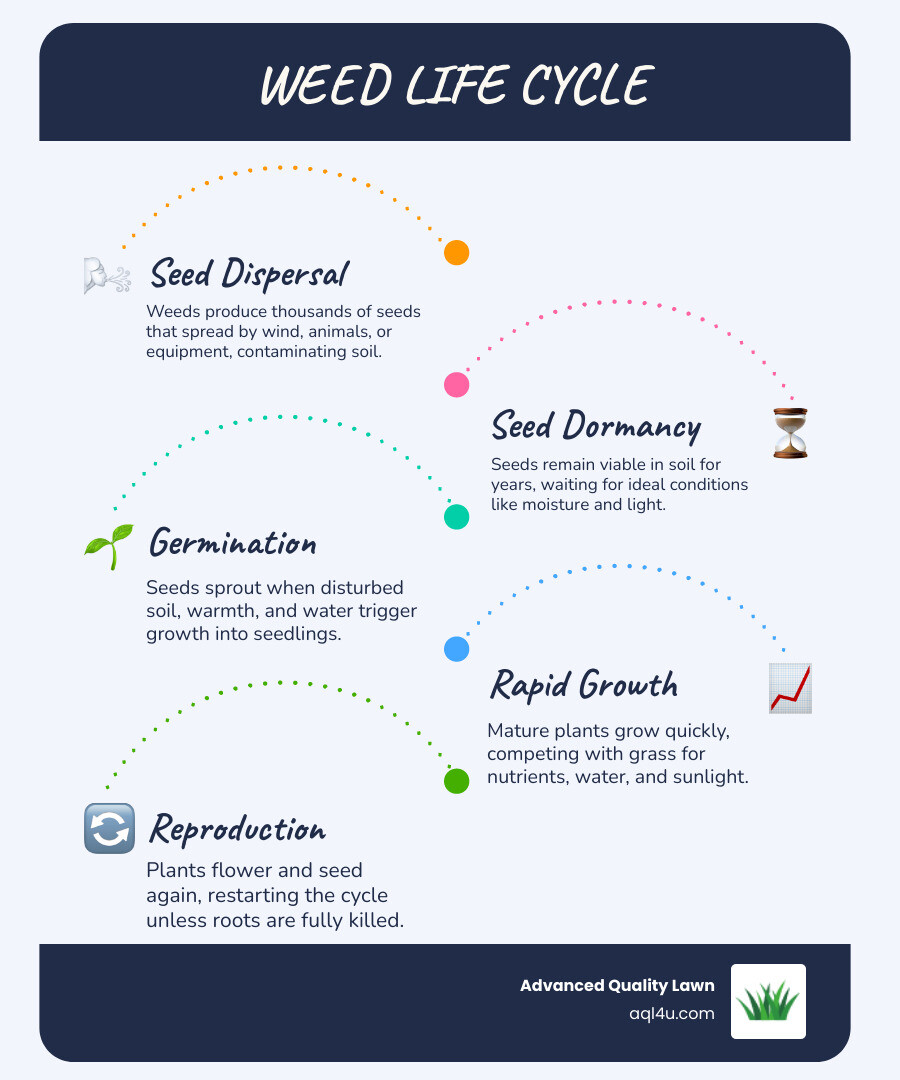
If you have ever pulled a weed, felt proud, and then watched three more appear in its place a week later, you are not alone. Weeds are remarkably good at surviving. Their seeds can stay dormant in soil for years, just waiting for a gap in your lawn or a bit of bare soil to exploit. Some creeping varieties, like Ground Ivy, even leave nodes behind when you pull them, and each node can grow into a new plant.
That cycle is exactly why so many homeowners in Northeast Ohio feel like they are fighting a losing battle every spring and summer.
I'm Andrew Day, owner of Advanced Quality Lawn, and with more than 30 years of lawn care experience in Northeast Ohio, I have seen which approaches actually break that weed cycle and which ones just delay the problem. In this guide, I will walk you through the best solution to kill weeds for every situation, from simple kitchen remedies to professional-grade treatments.
The Best Solution to Kill Weeds Using Natural Ingredients
Many of our neighbors in Akron and the surrounding Northeast Ohio areas prefer starting with items already in their pantry. It is a cost-effective way to manage smaller patches of weeds without immediately reaching for heavy commercial products. When we talk about a homemade weed killer, we are usually looking at three main ingredients: white vinegar, table salt, and liquid dish soap.
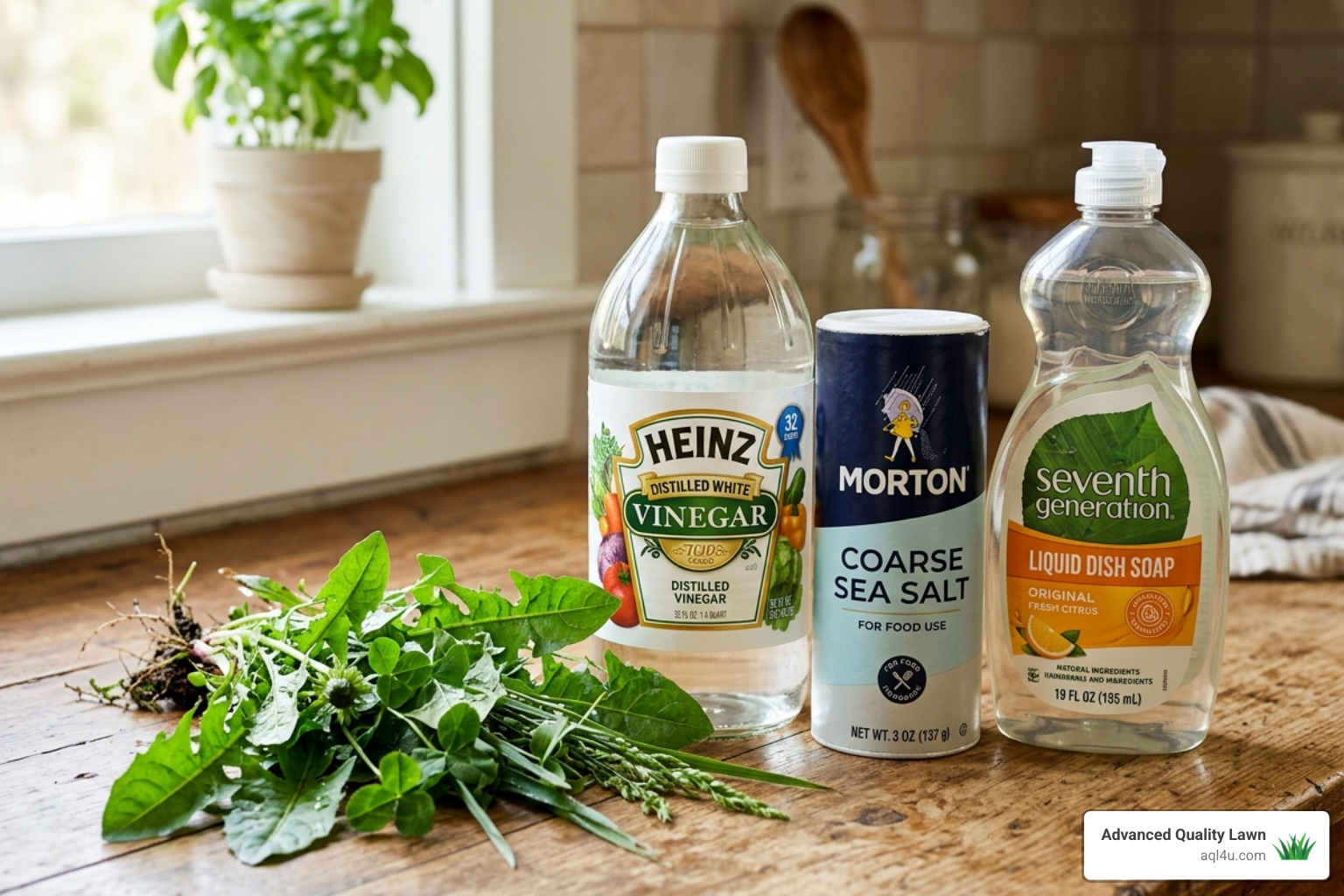
The science behind this mixture is quite simple. The vinegar contains acetic acid, which acts as a desiccant. This means it sucks the moisture out of the plant leaves on contact. Table salt (sodium chloride) takes it a step further by dehydrating the plant from the inside out and, if used in high enough concentrations, sterilizing the soil so nothing grows back.
The most important part of this recipe is the dish soap. In the lawn care world, we call this a surfactant. Most weed leaves have a waxy coating that causes water to bead up and roll off. The soap breaks that surface tension, allowing the vinegar and salt to stick to the leaf and penetrate the plant cells.
Here is the standard "permanent" recipe for areas like driveways:
- 1 gallon of white vinegar (5% acidity works, but 10% to 20% is faster)
- 1 cup of table salt
- 1 tablespoon of liquid dish soap
Mix these in a sprayer and apply on a hot, sunny day. The sun accelerates the drying process, often showing results in just a few hours.
Why Vinegar is the Best Solution to Kill Weeds in Cracks
If you have weeds popping up in the cracks of your sidewalk in Hudson or your driveway in Copley, vinegar is often the best solution to kill weeds quickly. Because these areas are surrounded by concrete or asphalt, you do not have to worry about the solution drifting onto a prized rose bush or your Kentucky Bluegrass.
For these tough spots, horticultural vinegar is the way to go. While the vinegar in your kitchen is usually 5% acetic acid, horticultural versions can range from 20% to 30%. USDA field studies have shown that even a 5% concentration can knock out Canada thistle, while the higher 20% concentrations can kill weeds like pigweed and foxtail in a matter of hours.
That vinegar is a contact herbicide. It only kills the green parts of the plant it touches. It does not travel down to the roots. For annual weeds with shallow roots, this is perfect. For deep-rooted perennials, you might need to spray a few times to finally starve the plant. You can learn more about how to kill weeds naturally by focusing on these high-acidity applications during the hottest part of the day.
Finding the Best Solution to Kill Weeds Without Harming Grass
The biggest challenge for homeowners in Medina or Stow is killing the weeds without killing the lawn. This is where the vinegar and salt method fails. Vinegar and salt are non-selective, meaning they will kill your grass just as fast as they kill a dandelion.
To protect your turf, you need a selective control approach. Selective herbicides are designed to target broadleaf weeds like clover, chickweed, and dandelions and crabgrass while leaving your grass blades unharmed.
If you only have one or two weeds, the best solution to kill weeds is often the oldest one: hand-pulling. However, you have to be careful. If you are dealing with something like Creeping Charlie, pulling it can actually make the problem worse if you leave any part of the root or stem behind. For a larger infestation, a broadleaf and crabgrass herbicide application is usually necessary to get the lawn back to a healthy state.
Comparing Contact and Systemic Herbicides for Maximum Control
When choosing the best solution to kill weeds, it helps to understand how different products work. There are two main categories: contact and systemic.
| Feature | Contact Herbicides (e.g., Vinegar) | Systemic Herbicides (e.g., Glyphosate) |
|---|---|---|
| Speed | Very fast (hours) | Slow (7 to 14 days) |
| Root Kill | Rare (only kills what it touches) | Excellent (travels to the root) |
| Best For | Annuals and young weeds | Perennials and tough brush |
| Selectivity | Usually non-selective | Usually non-selective |
Systemic herbicides, like those found in products such as Roundup or Eraser, are absorbed by the leaves and moved throughout the entire plant. This is the best solution to kill weeds that are deep-rooted or invasive. If you have a patch of poison ivy or a stubborn clump of tall fescue in your flower bed, a systemic product will ensure the entire plant dies, roots and all.
However, there are trade-offs. Glyphosate has faced significant scrutiny and health controversies in recent years, leading many families in Northeast Ohio to look for safer alternatives. If you do use these products, it is vital to follow the label exactly. For example, if you are treating a lawn, you must use a product specifically labeled as a selective herbicide for crabgrass to avoid leaving large brown dead spots in your yard. You can find more herbicide options for managing weeds that balance safety and effectiveness.
Permanent Removal and Prevention Strategies
Killing a weed is only half the battle. The other half is making sure it never comes back. If you want a permanent solution for areas where you never want growth again, such as a gravel parking pad or a brick patio in Chagrin Falls, you have a few options.
- Boiling Water: This is a surprisingly effective and chemical-free way to kill weeds in sidewalk cracks. The heat collapses the plant cells instantly. It is great for driveways but should never be used near your lawn or garden plants.
- Soil Sterilization: Adding a heavy amount of salt to the vinegar mix will eventually sterilize the soil. This is great for a gravel path but a disaster for a garden bed. Use salt with extreme caution.
- Solarization: If you have a large area of weeds, you can cover it with a dark tarp or clear plastic for 2 to 4 weeks during the summer. The trapped heat essentially cooks the weeds and the seeds in the soil.
- Mulching: In garden beds, the best solution to kill weeds is to prevent them from seeing the sun. A 2 to 3 inch layer of organic mulch or wood chips blocks the light that weed seeds need to germinate. Using a crabgrass preventer in flower beds before you mulch adds an extra layer of protection.
- Flame Weeding: Using a propane torch to "singe" weeds is effective for gravel and pavement. You do not need to turn the weed to ash; just enough heat to wilt the leaves will usually do the trick.
For your lawn, the best solution to kill weeds is a thick, healthy stand of grass. Weeds are opportunists. They fill in the gaps where grass is thin. By mowing high (3 inches or more), fertilizing properly, and using the best pre-emergent weed killer for lawns, you create a canopy that shades the soil and prevents weed seeds from ever taking hold.
Frequently Asked Questions about Weed Control
What kills weeds permanently without chemicals?
If you want to avoid traditional herbicides entirely, the best solution to kill weeds permanently is a combination of heat and deprivation. Boiling water works well for immediate kills on hard surfaces. For garden areas, solarization (using a tarp to heat the soil) can kill even the most stubborn seeds.
Another natural option is corn gluten meal. While it won't kill an existing weed, it acts as a natural pre-emergent by preventing new seeds from forming roots. This is a popular pre-emergent for garden beds among those who want to keep their vegetable patches organic.
Are homemade weed killers safe for pets and kids?
Generally, yes. Vinegar, salt, and dish soap are all household staples. However, "natural" does not always mean "harmless." High-strength horticultural vinegar can cause skin and eye irritation, and salt can be harmful to soil health if it runs off into your lawn.
The best practice is to keep pets and children off the treated area until the spray has completely dried. Once dry, the vinegar has done its job and the area is safe. This is a much shorter waiting period than many commercial products, which often require 24 to 48 hours of restricted access.
How long should I wait to replant after treatment?
This depends entirely on what you used.
- Vinegar: Acetic acid degrades very quickly in the soil. You can usually replant within 48 hours.
- Boiling Water: You can replant as soon as the soil cools down.
- Salt: Be very careful here. Salt stays in the soil for a long time and can prevent anything from growing for months or even years.
- Commercial Herbicides: Always check the label. Some products, like those containing Dithiopyr post-emergent, may require you to wait several weeks or even months before sowing new grass seed. For general weed and grass killers, a wait of 7 to 14 days is common.
Conclusion
Finding the best solution to kill weeds does not have to be an endless struggle. Whether you choose a DIY vinegar spray for your patio or a professional-grade selective herbicide for your lawn, the key is consistency and timing. A healthy lawn is your best defense. By keeping your grass thick and well-maintained, you leave no room for invaders to move in.
At Advanced Quality Lawn, we have spent decades helping our neighbors throughout Northeast Ohio—from Cleveland and Solon to Medina and Akron—achieve the pristine yards they deserve. We pride ourselves on excellent customer service and a full-program guarantee that takes the guesswork out of weed control.
If you are tired of spending your weekends pulling dandelions or searching for the right spray, let us handle the hard work for you. We cover over 99 zip codes across Summit, Cuyahoga, Portage, and Medina counties, ensuring your landscape stays healthy and weed-free all season long.
For more expert advice or to schedule a service, visit our website for more info about lawn maintenance. We are here to make sure your lawn is the best on the block.